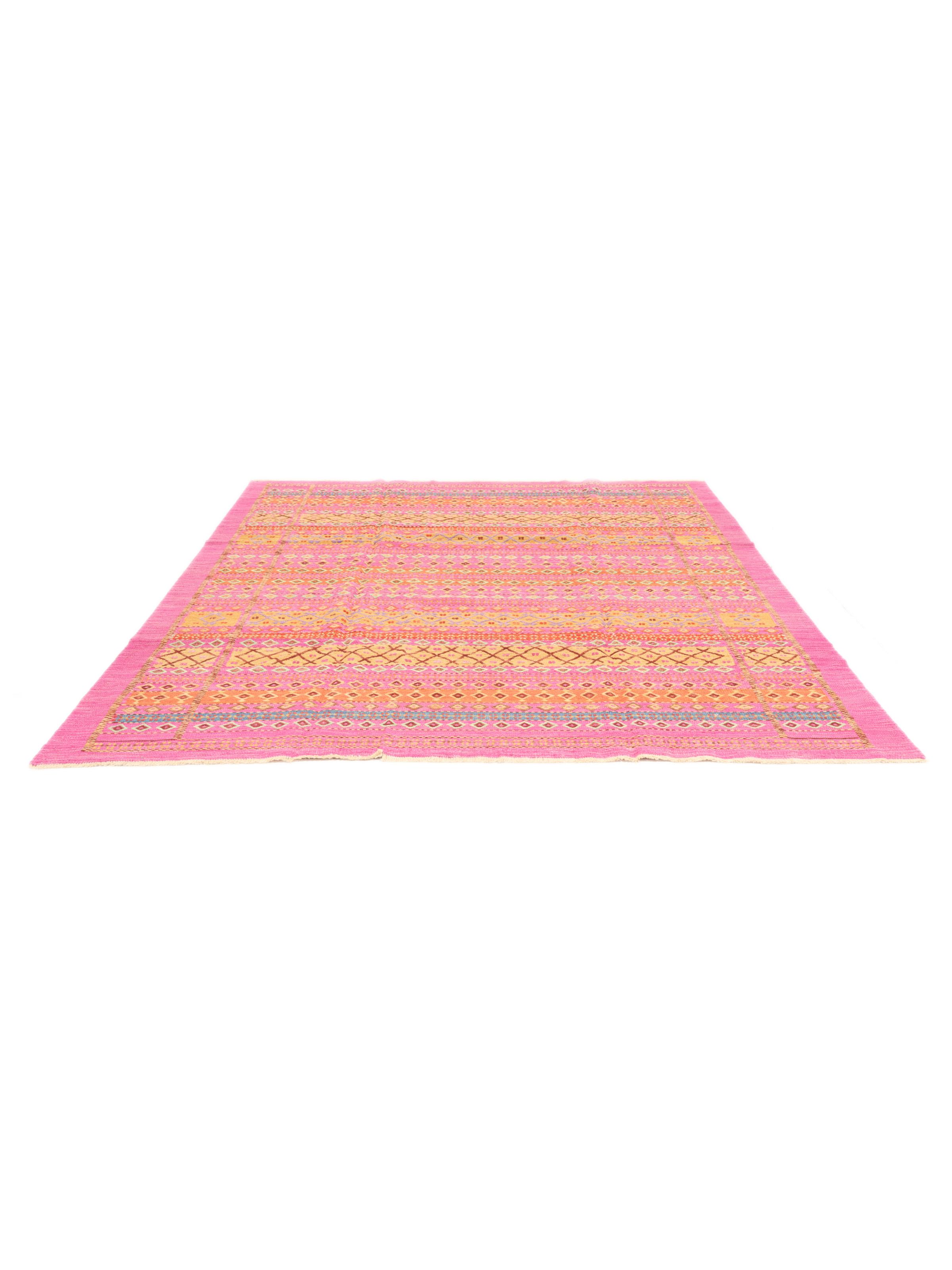
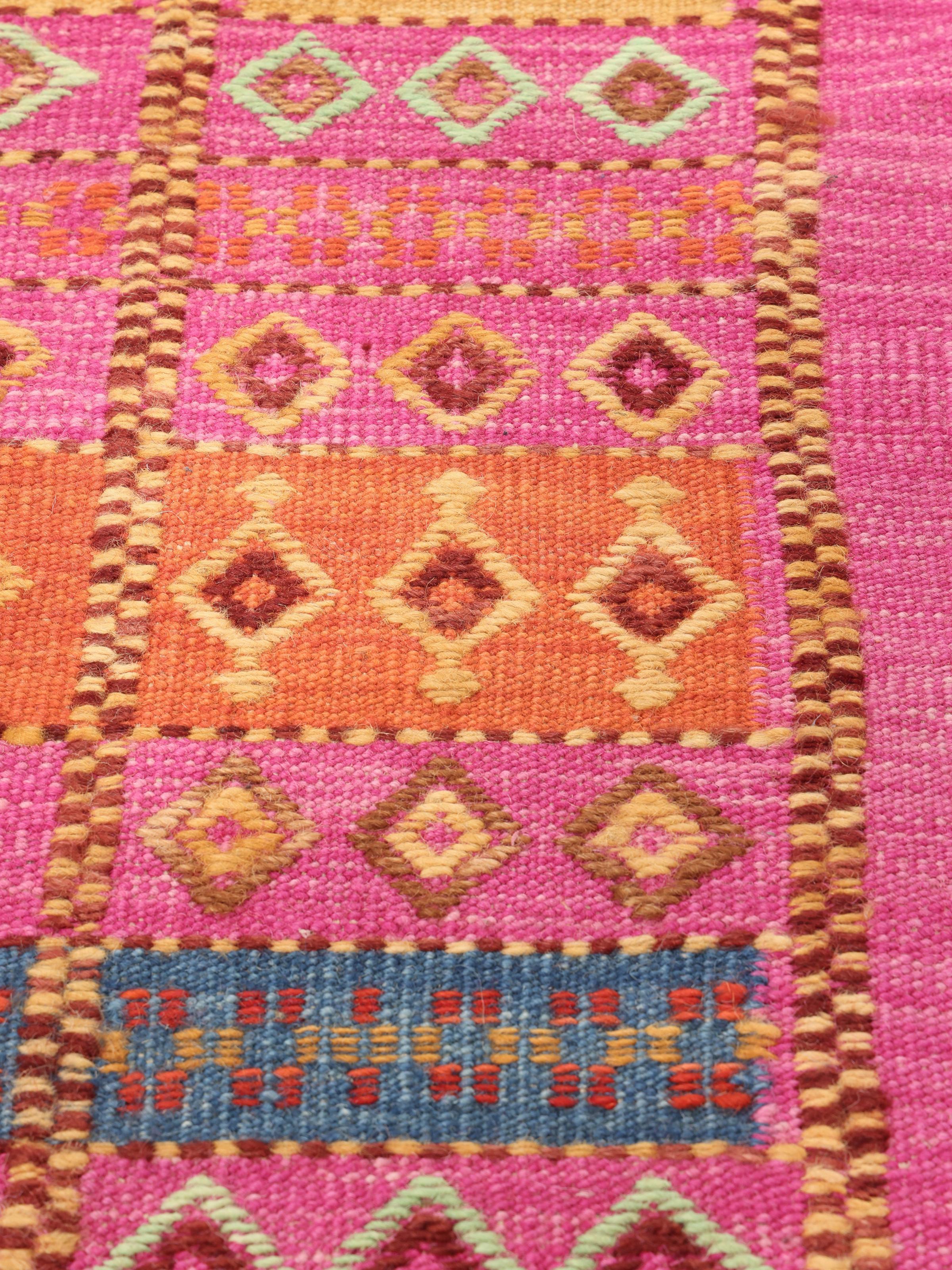
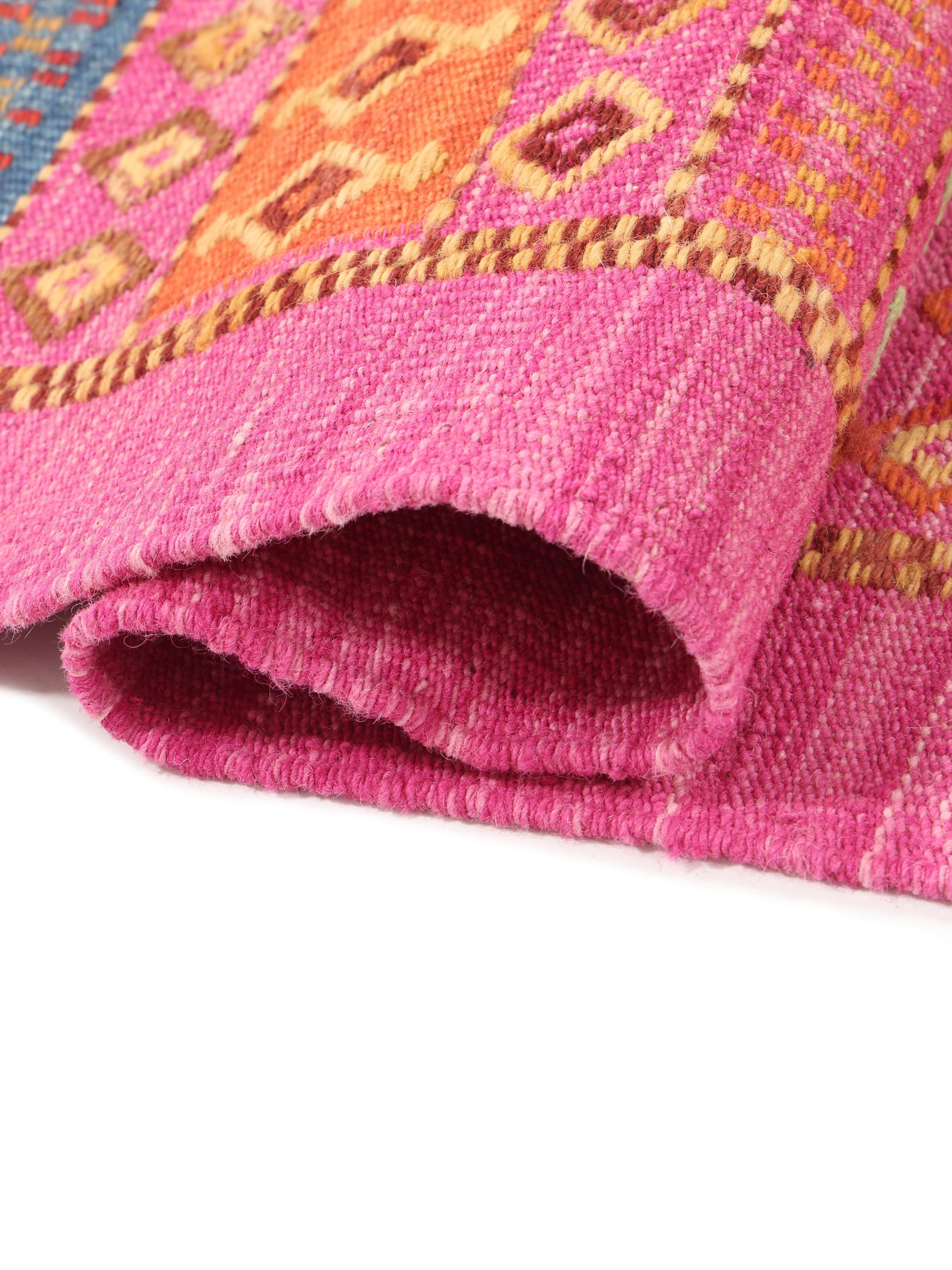
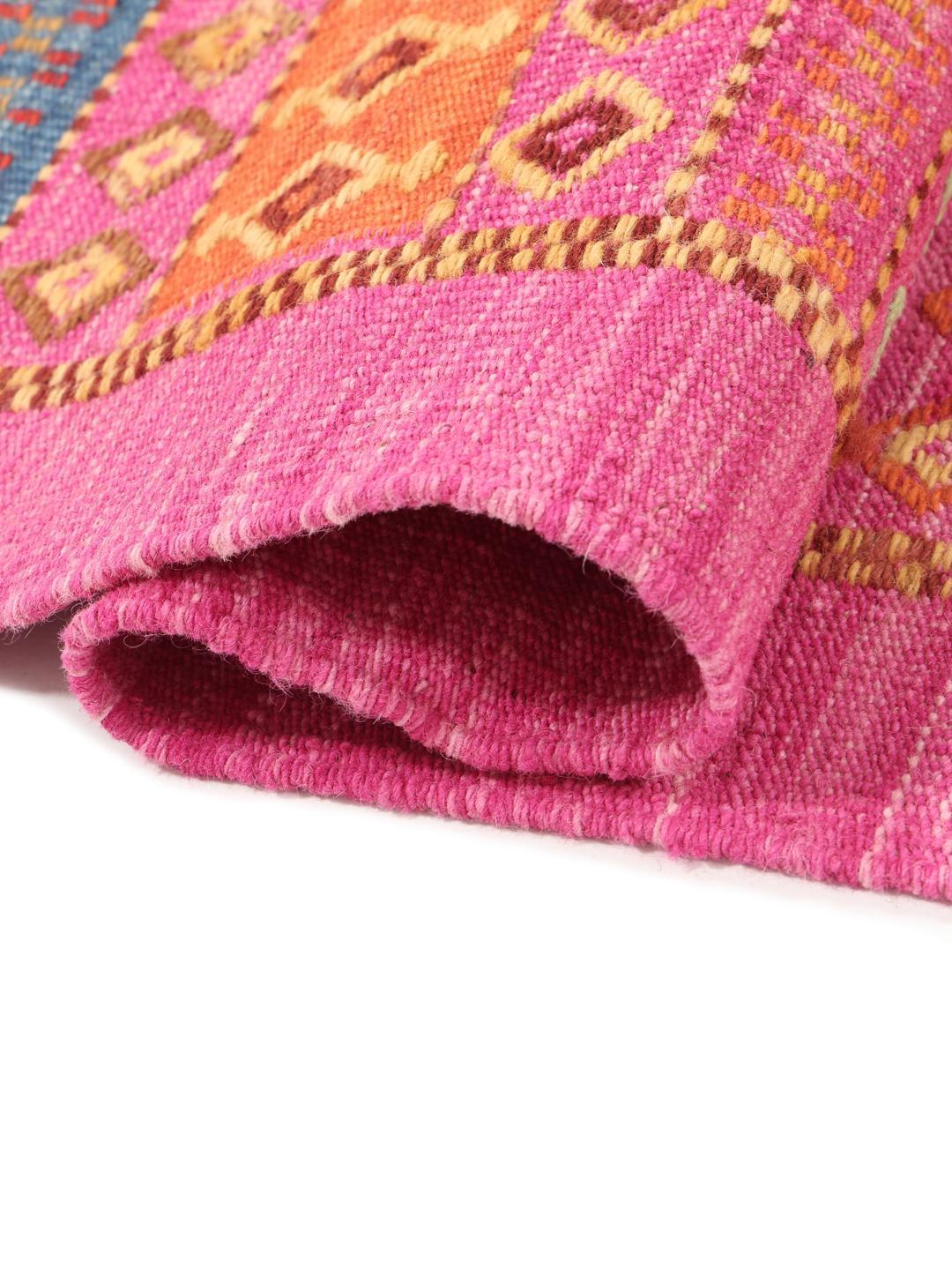
The art of the Kelim has been a central pillar of Middle Eastern textile culture for centuries, serving both practical and decorative purposes for nomadic and village communities. These flat-woven rugs are distinguished by their lack of a pile, created by interweaving warp and weft threads to produce a smooth, durable surface. Historically, they were essential for their portability, used as floor coverings, wall hangings, and storage bags, making them integral to a mobile way of life.
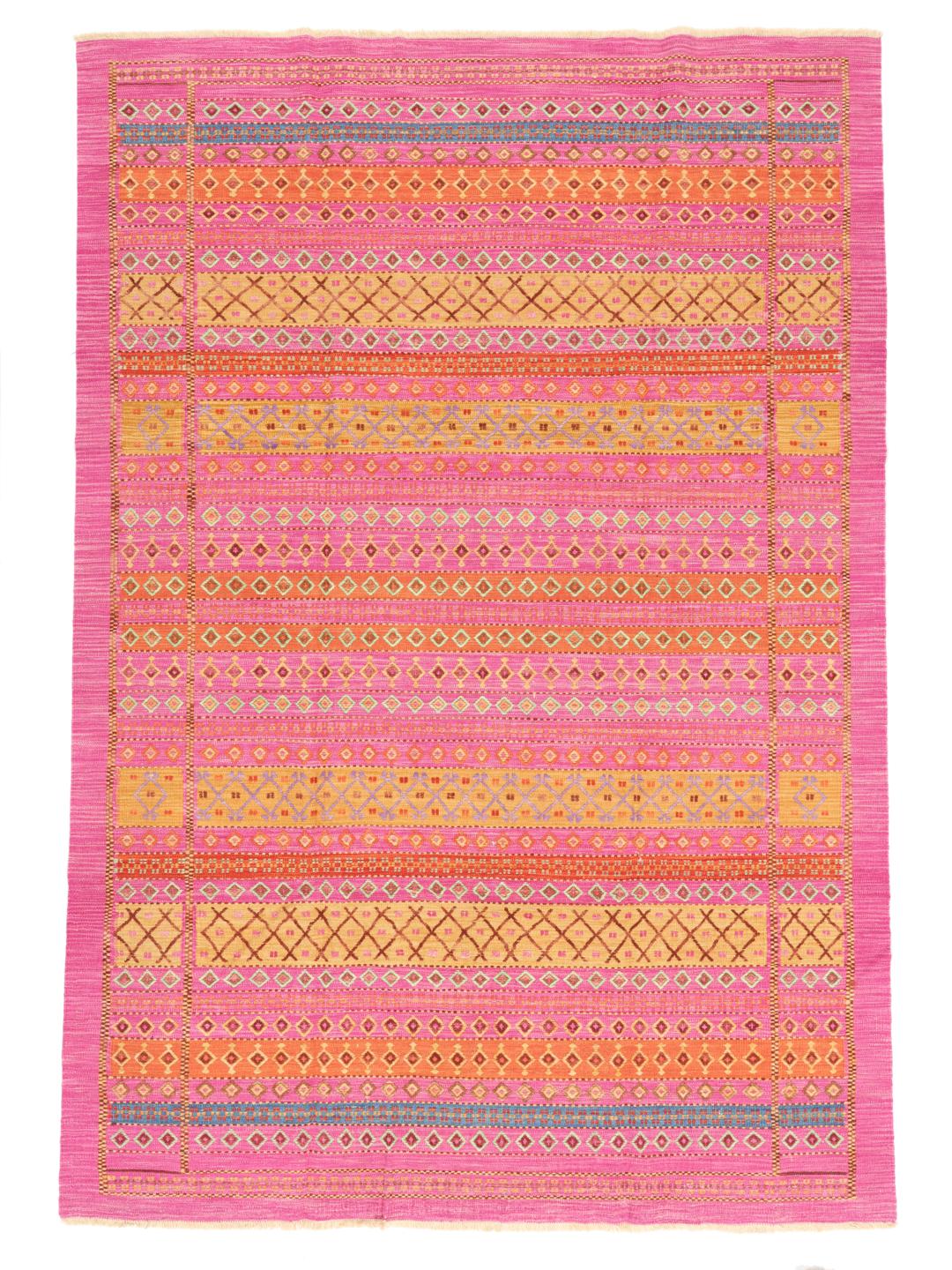
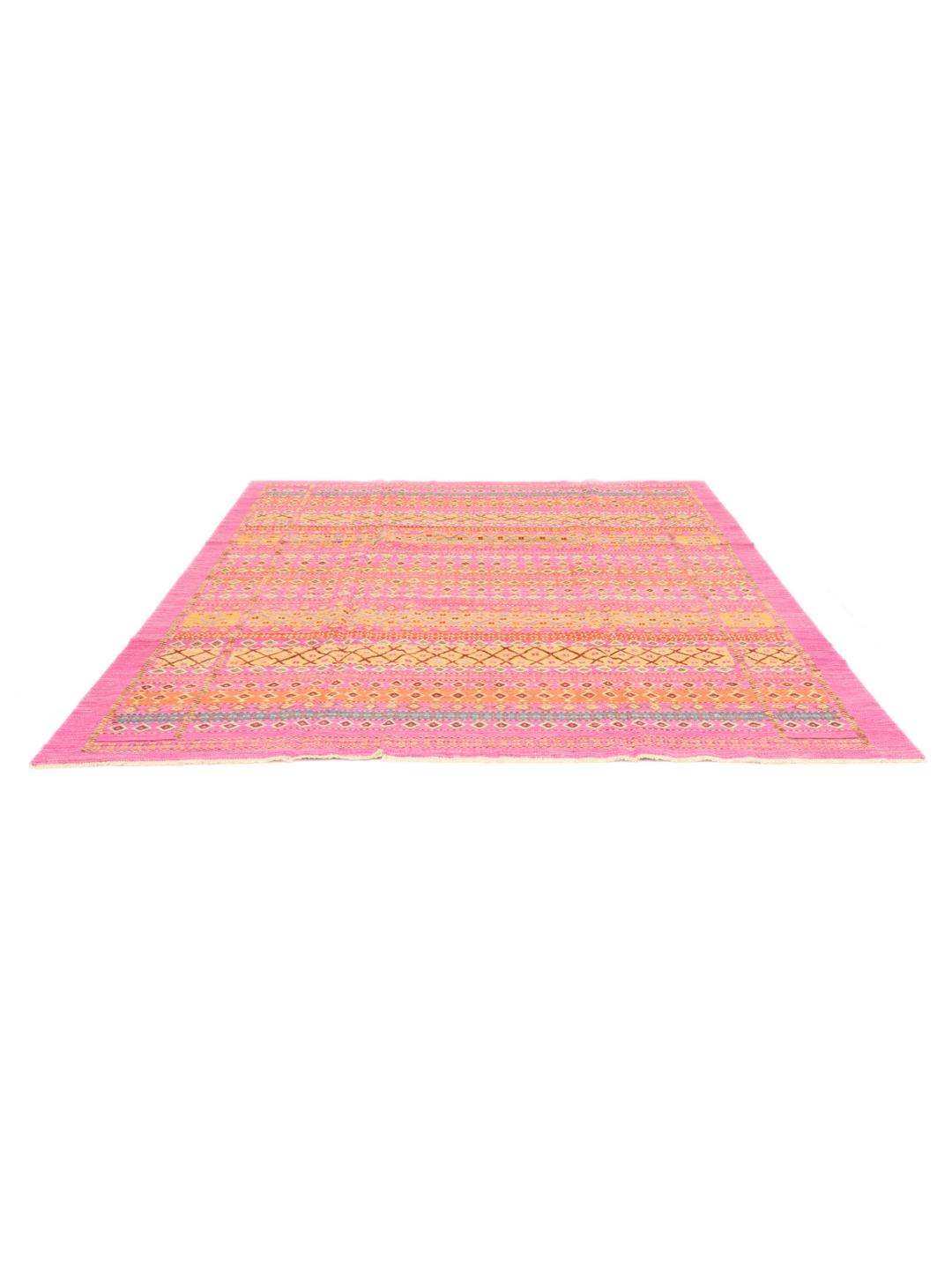
The term Suzani refers to a specific tradition of needlework, often featuring bold floral or geometric motifs, which has been adapted into the weaving techniques of modern Afghan artisans. By combining the flat-weave structure of a Kelim with the decorative language of traditional embroidery, these rugs bridge the gap between architectural floor art and soft, intricate textile design. The result is a piece that feels both grounded in ancient history and visually fresh for contemporary living.
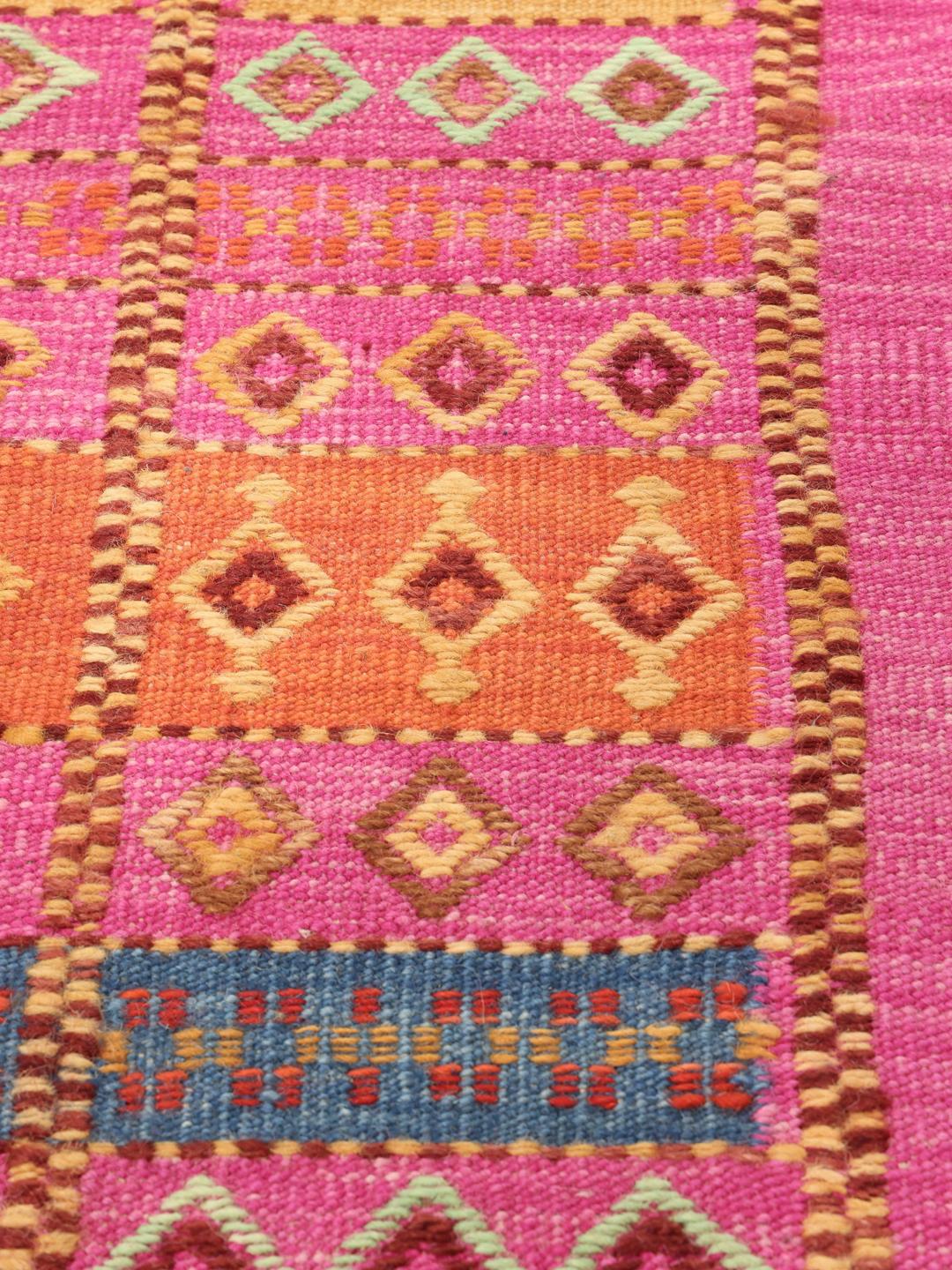
The patterns found in these rugs are deeply symbolic, often drawing upon a vocabulary of geometric shapes that have been passed down through generations. The use of repeating diamonds, borders, and linear motifs creates a sense of balance and order, while the vibrant colour palette—typically derived from natural dyes—reflects the surrounding landscape of the region. Every border and medallion serves as a link to the past, preserving design traditions that might otherwise be lost to modern industrialisation.
Collecting a Kelim is an investment in a living heritage. These rugs are highly valued for their authenticity and the skill required to produce them without the aid of modern technology. When you bring a piece like this into your home, you are not just acquiring a floor covering; you are maintaining a connection to a long-standing craft tradition that celebrates the beauty of human patience, the importance of cultural identity, and the enduring quality of natural materials.