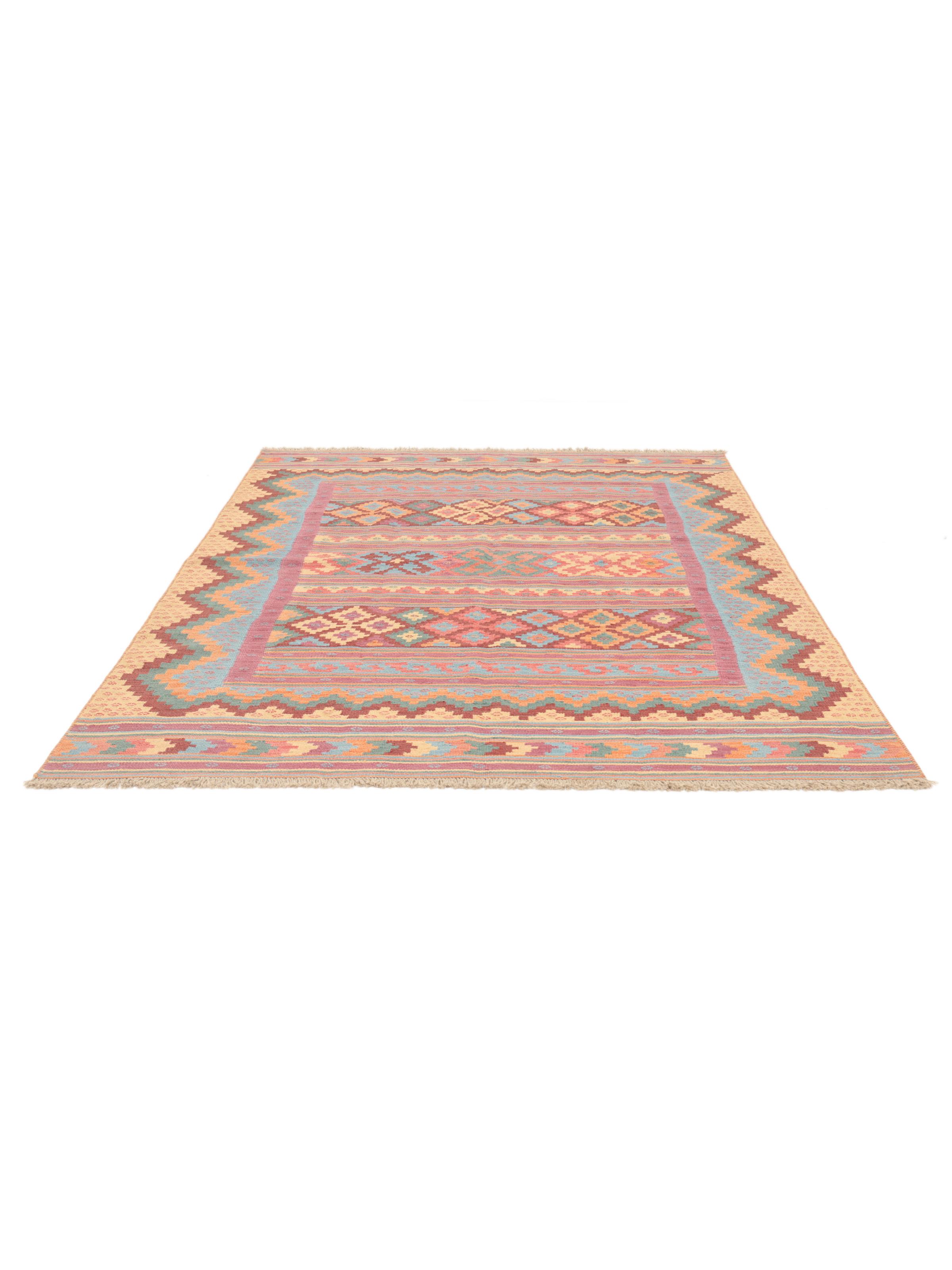
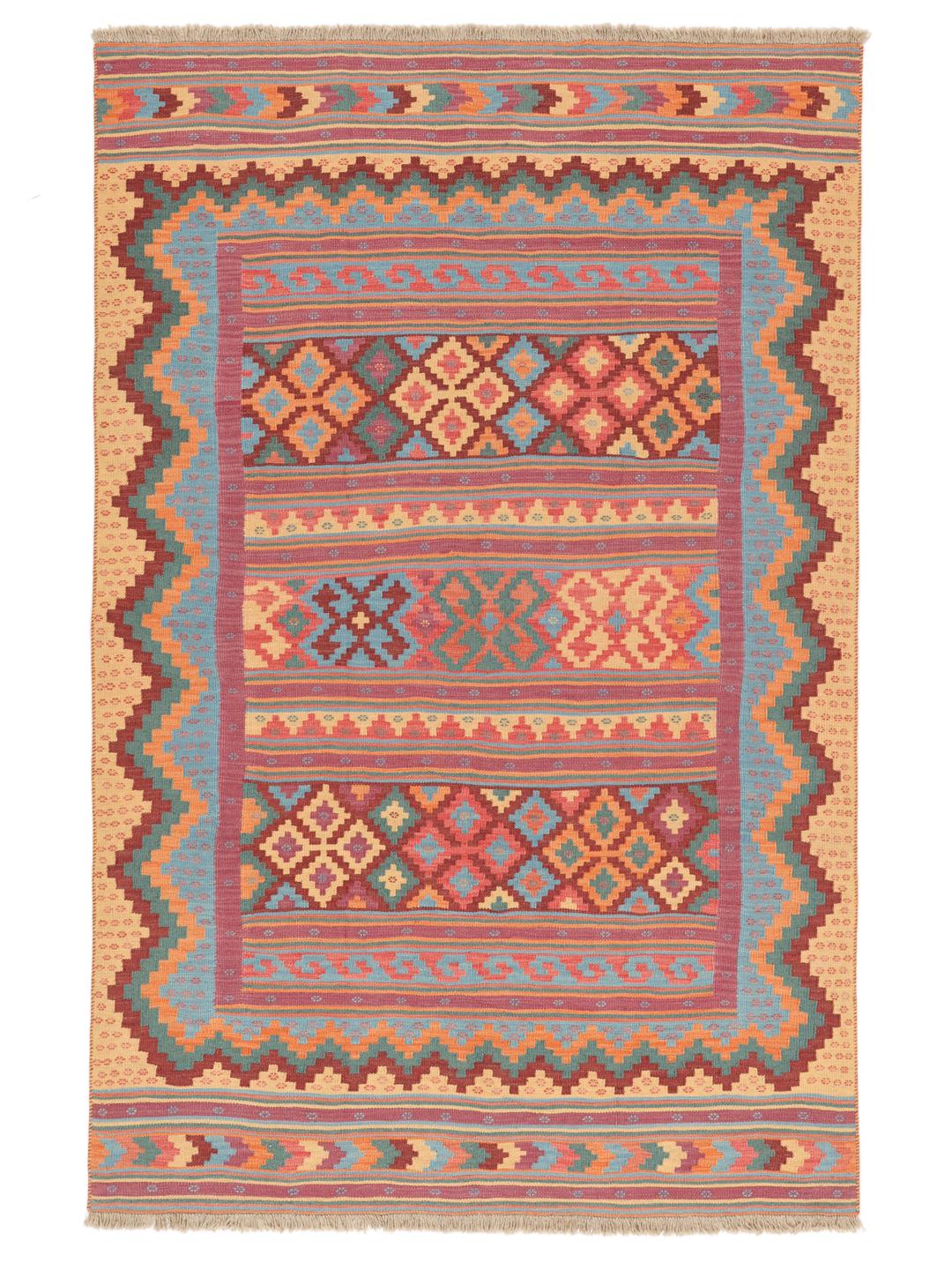
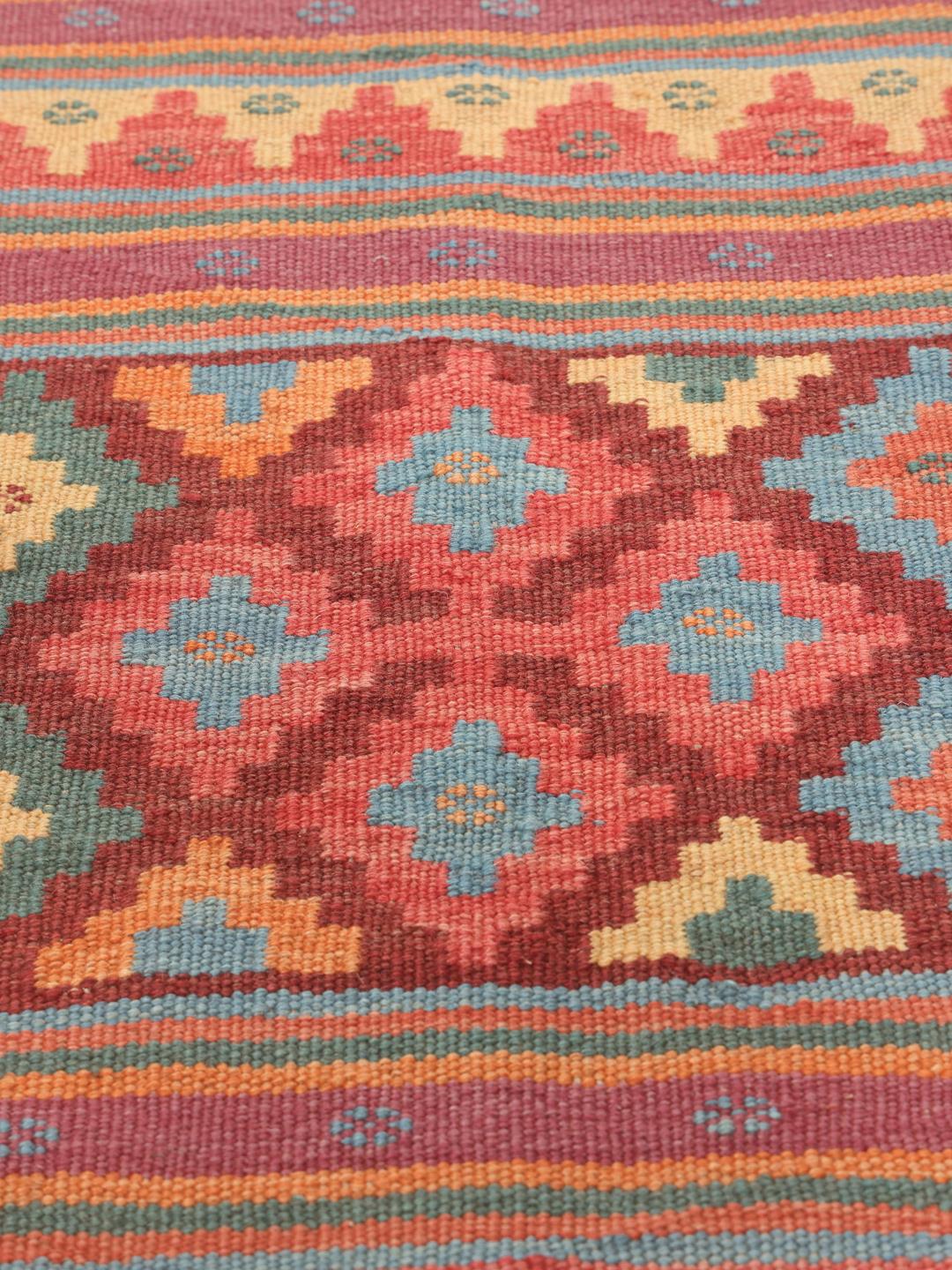
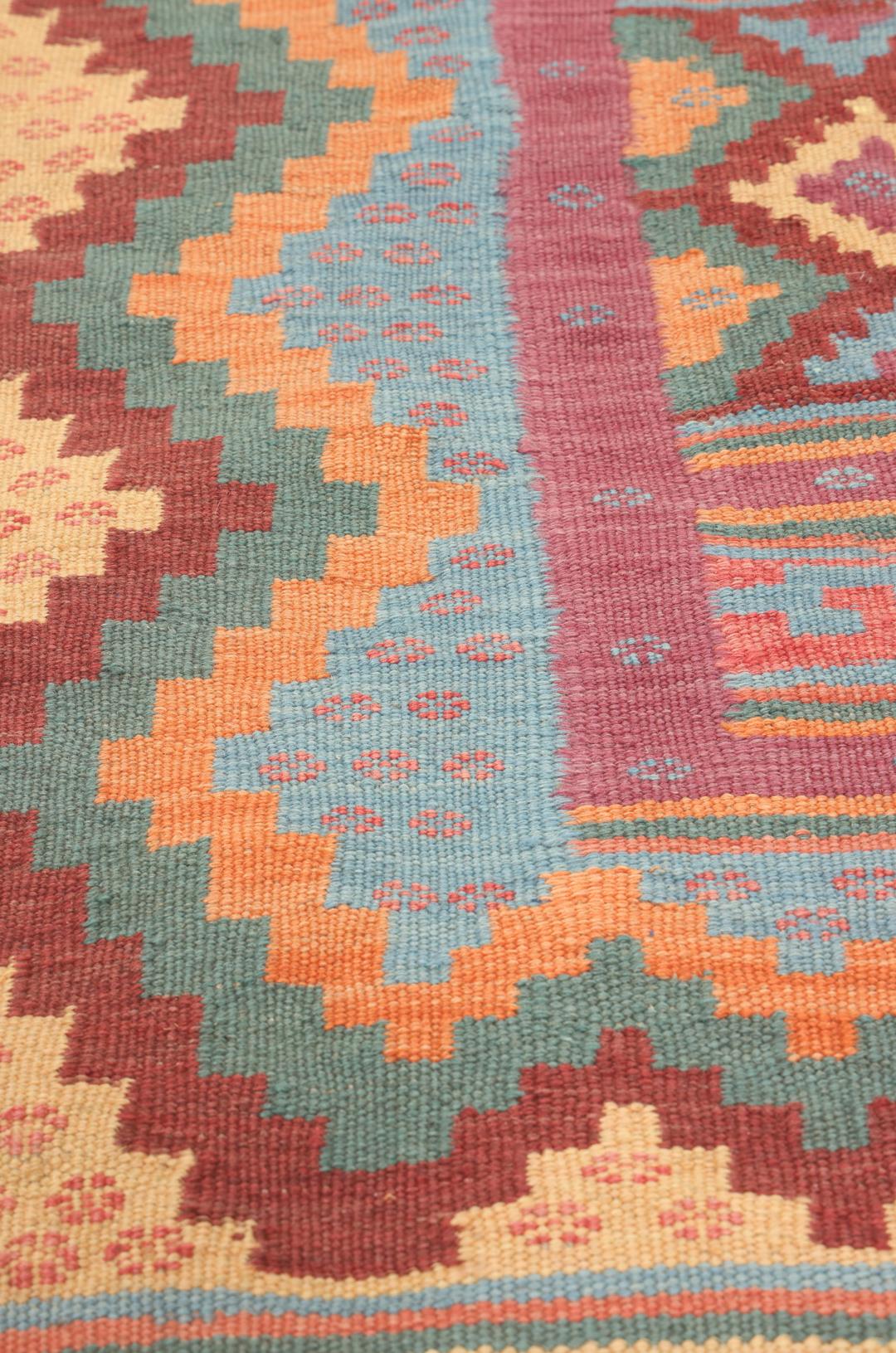
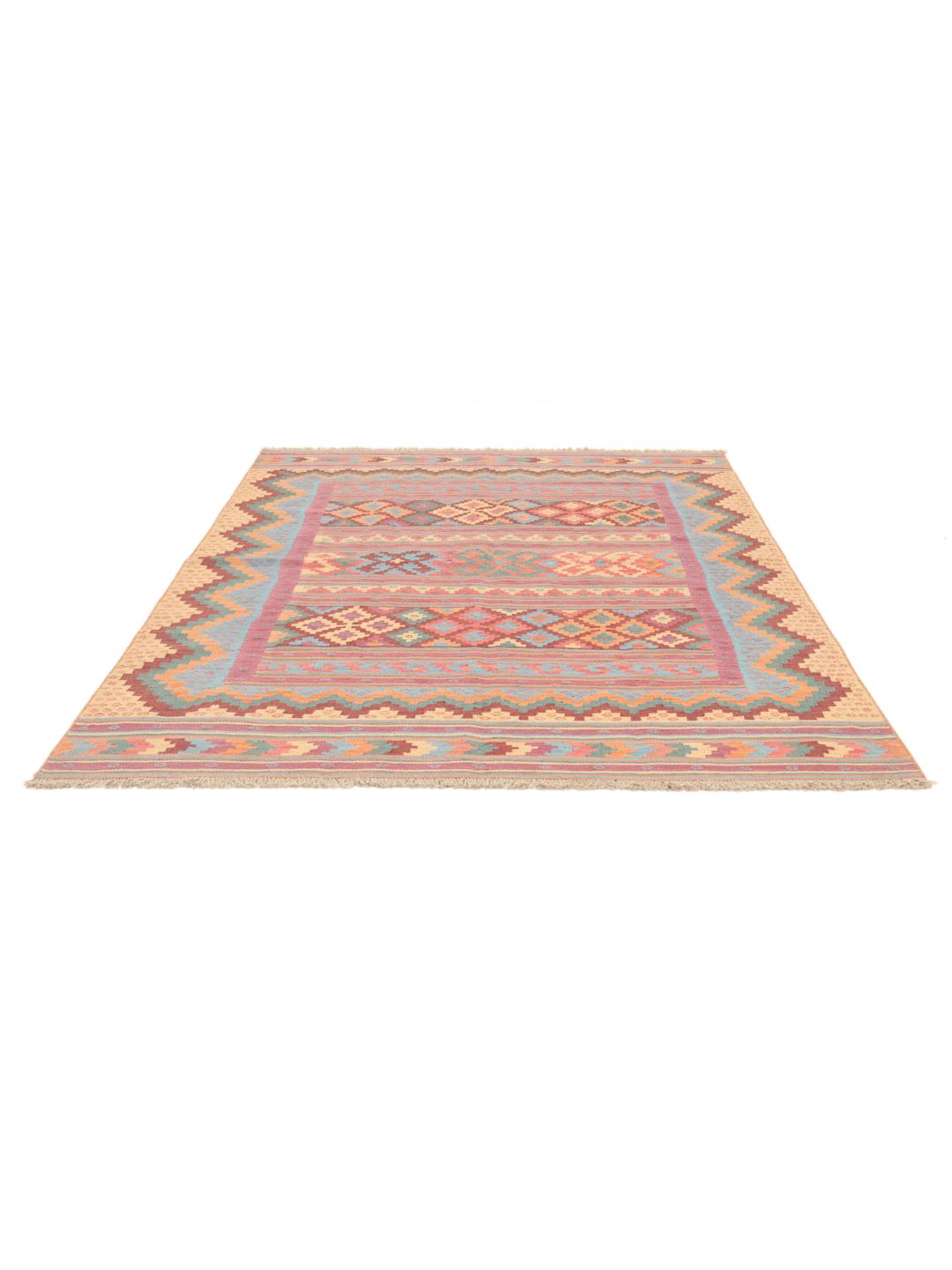
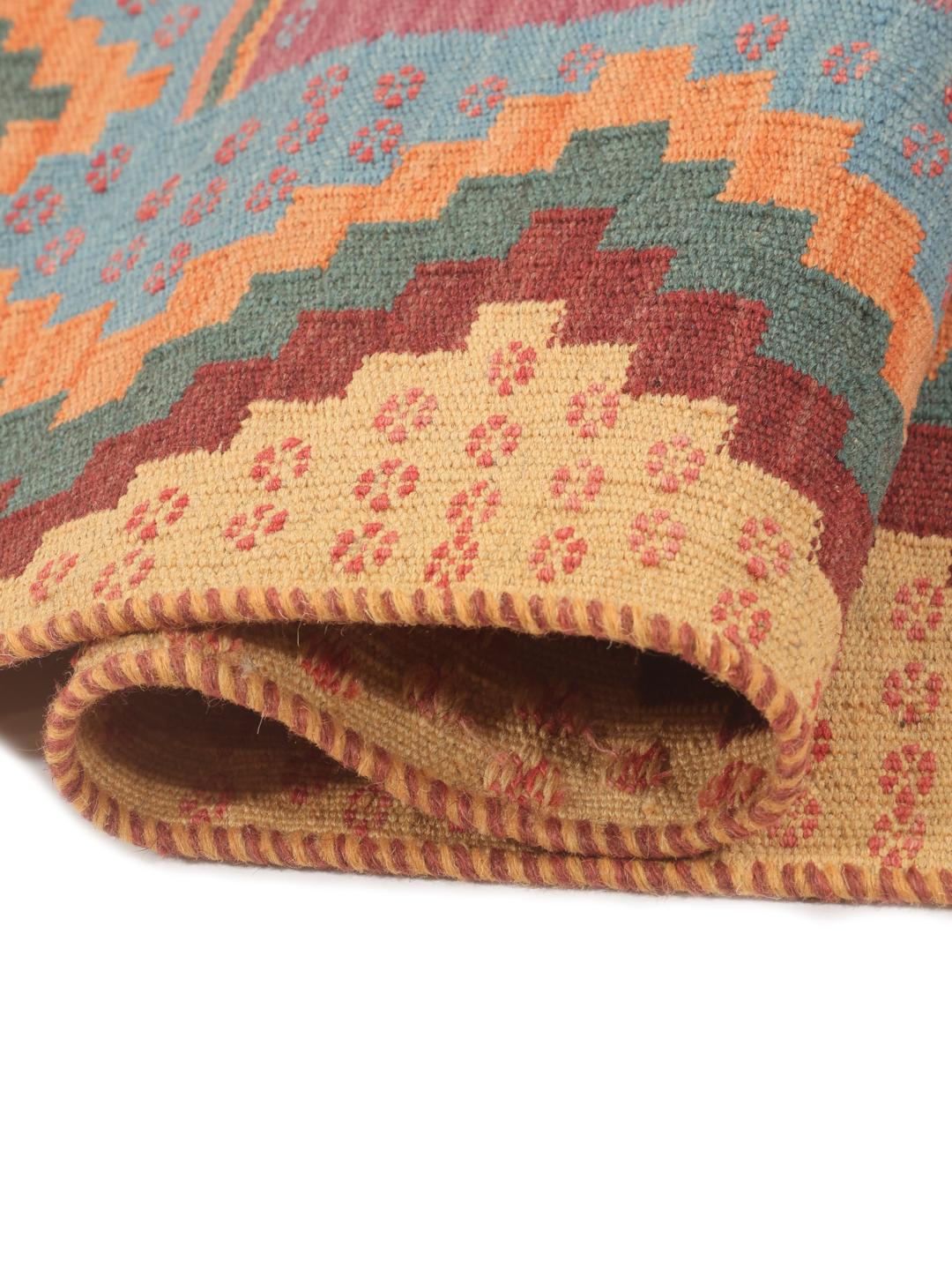
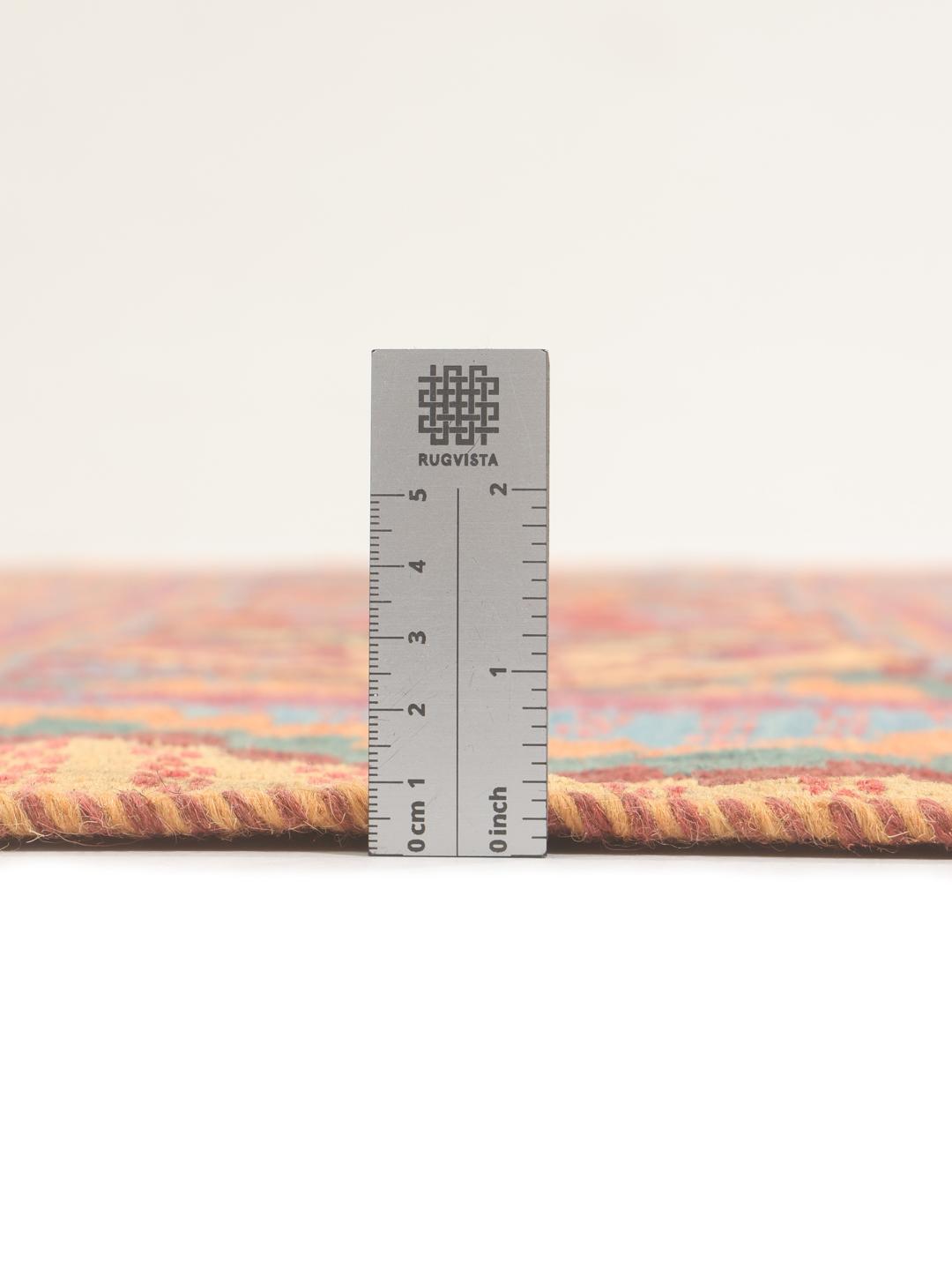
Kilim rugs are a proud tradition of the Middle East, with the Fars region being particularly renowned for its vibrant and durable flat-woven textiles. These rugs are traditionally woven by nomadic tribes, who developed these intricate designs to serve as both functional floor coverings and artistic expressions of their cultural identity. The knowledge of weaving and natural dyeing has been passed down through generations, ensuring that these techniques remain alive today.
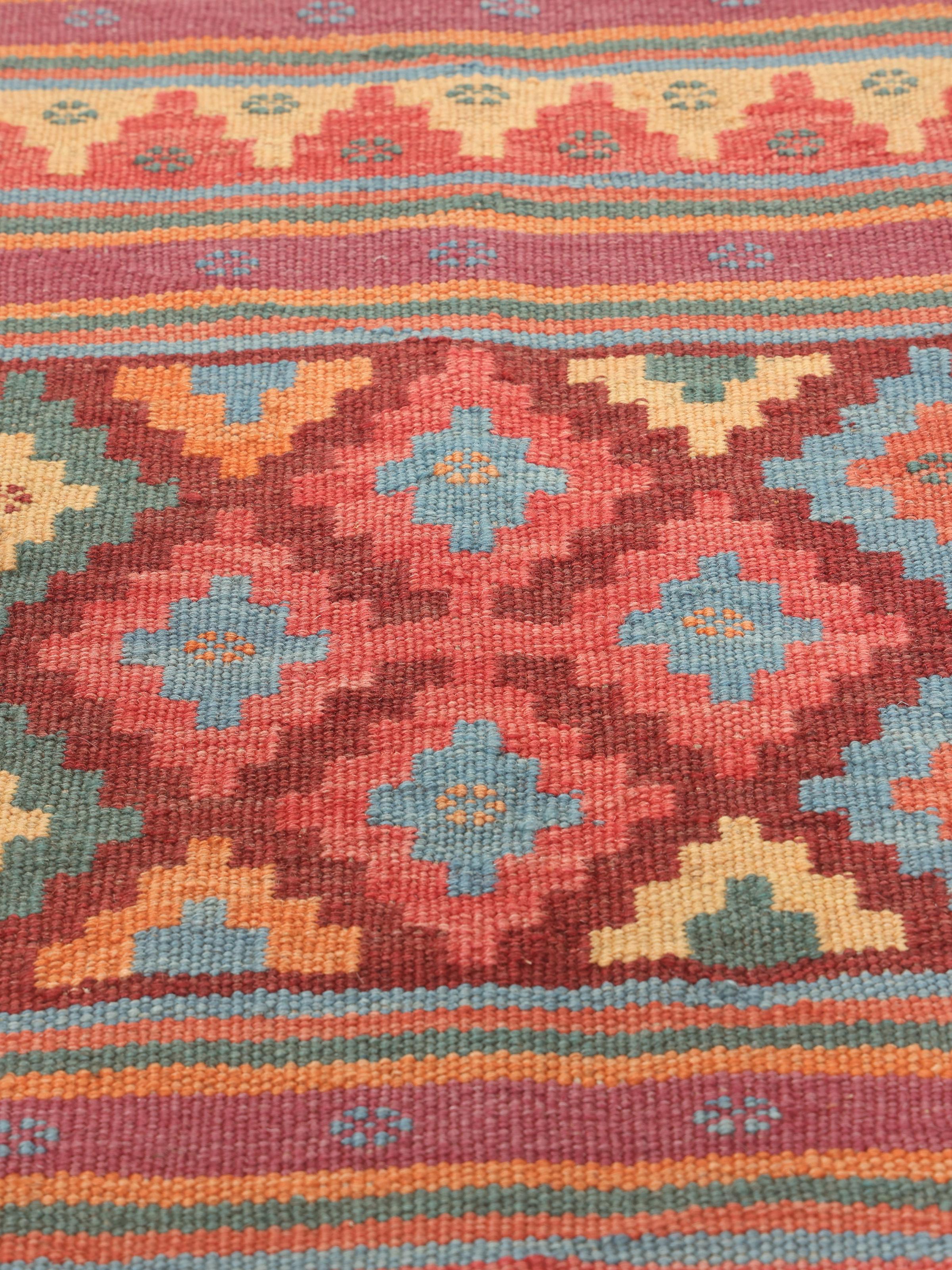
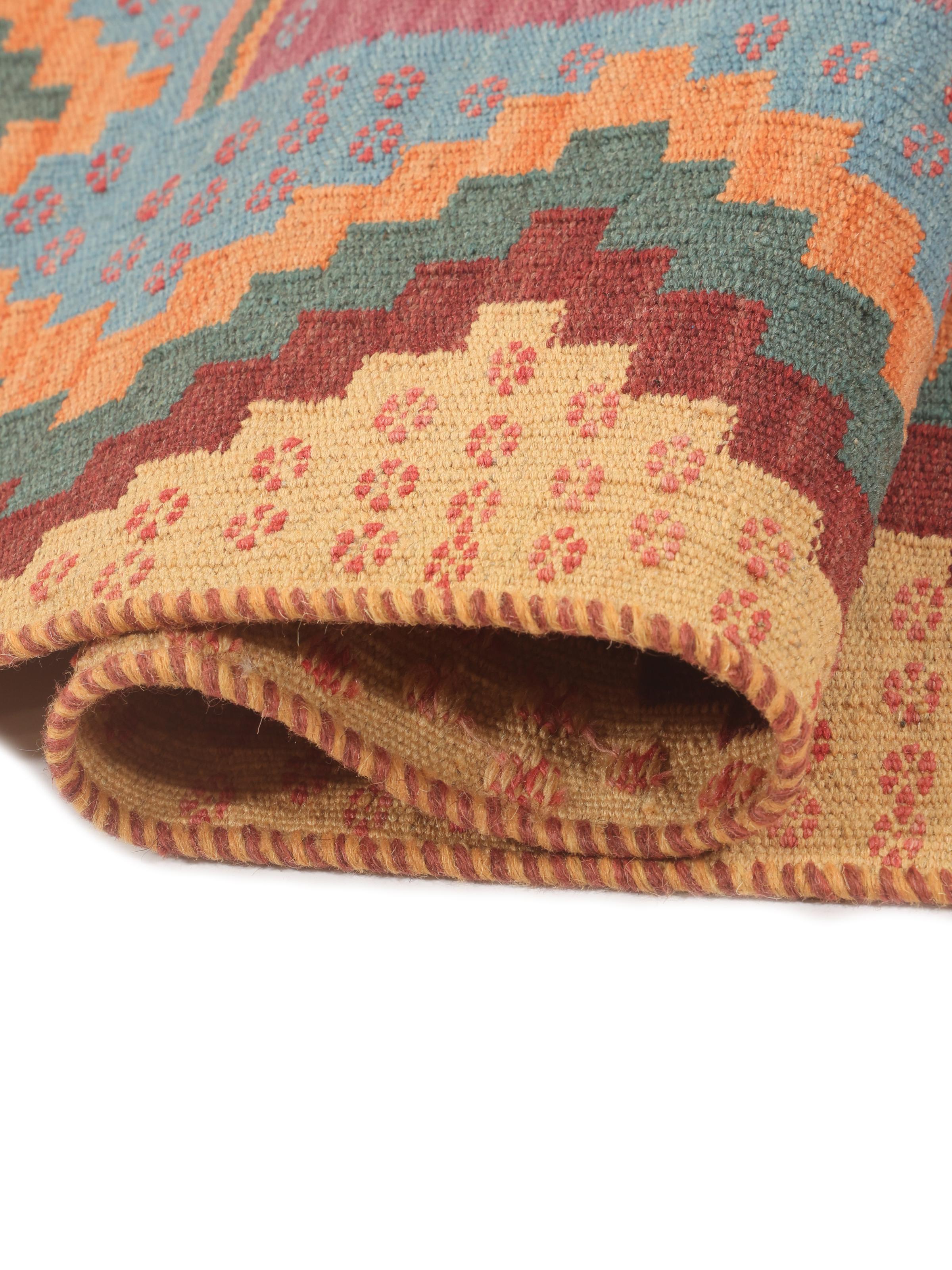
The term 'Kilim' refers specifically to the tapestry-weave construction, which distinguishes these rugs from pile-woven counterparts. Because they are flat-woven, Kilims are lightweight yet incredibly strong, making them ideal for the nomadic lifestyle where portability and durability were paramount. The precision required to create these intricate patterns without the use of a foundation pile is a hallmark of the master weaver's skill.
Signature design elements in Fars Kilims often include symbolic geometric figures, such as diamonds and stylised floral motifs, arranged in repeating patterns. These designs are highly significant, often representing local legends, protective symbols, or the natural environment surrounding the weavers. The borders are frequently just as detailed as the centre, serving to contain the energetic patterns and provide a sense of structure to the overall composition.
Collecting a Kilim is an investment in cultural heritage and human skill. Because every rug is created by hand in a unique, non-repetitive process, collectors value these pieces for their authenticity and the personal touch of the artisan. Owning a Kilim from this region means owning a piece of history that continues to tell the story of the artisans who crafted it, preserving a way of life that is as enduring as the wool itself.