Kilims represent one of the most enduring textile traditions of the Middle East. Historically, these flat-woven rugs served as essential, functional items for nomadic and village life, used as floor coverings, wall hangings, and even as storage bags. Their development was deeply tied to the daily needs of the people who created them.
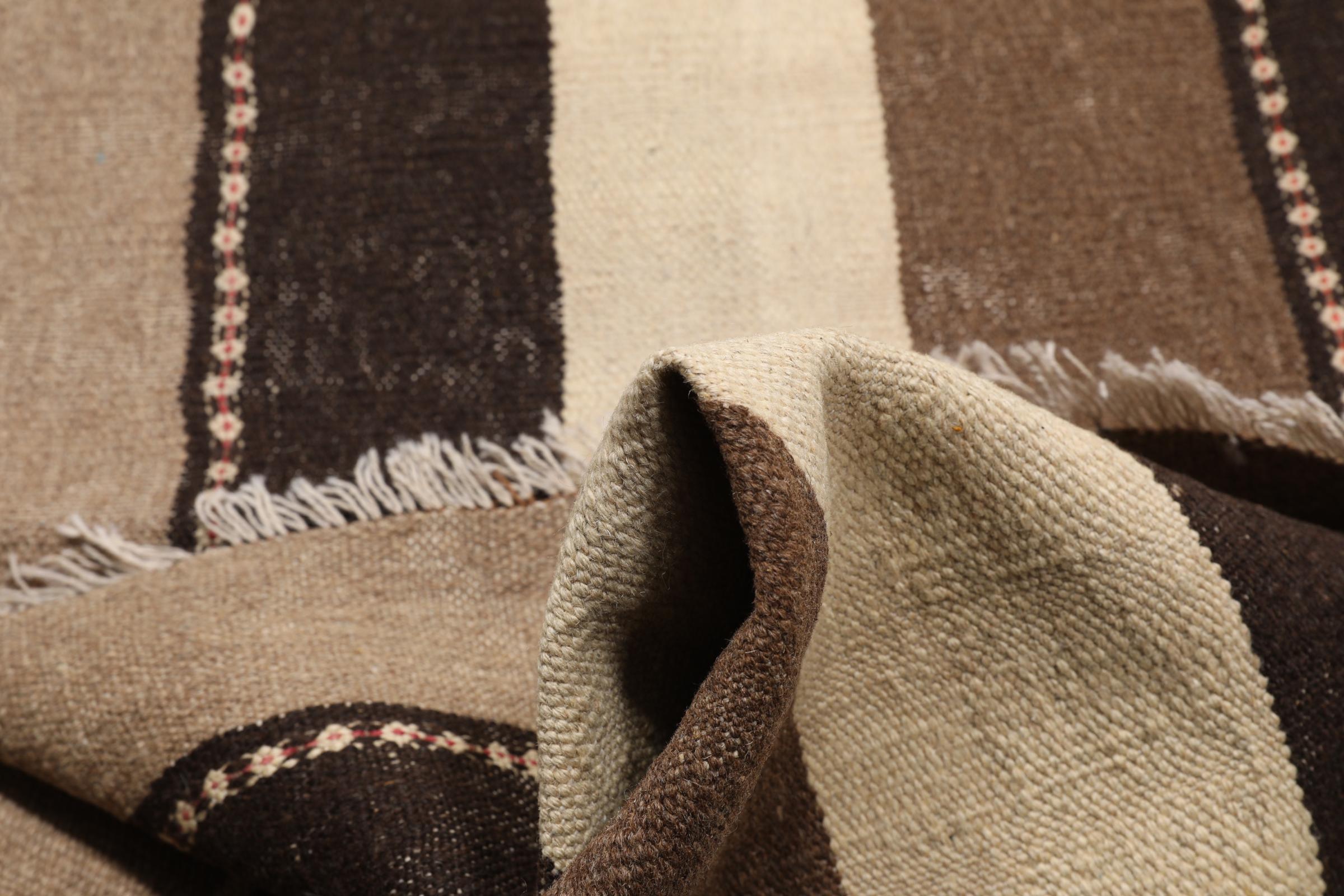
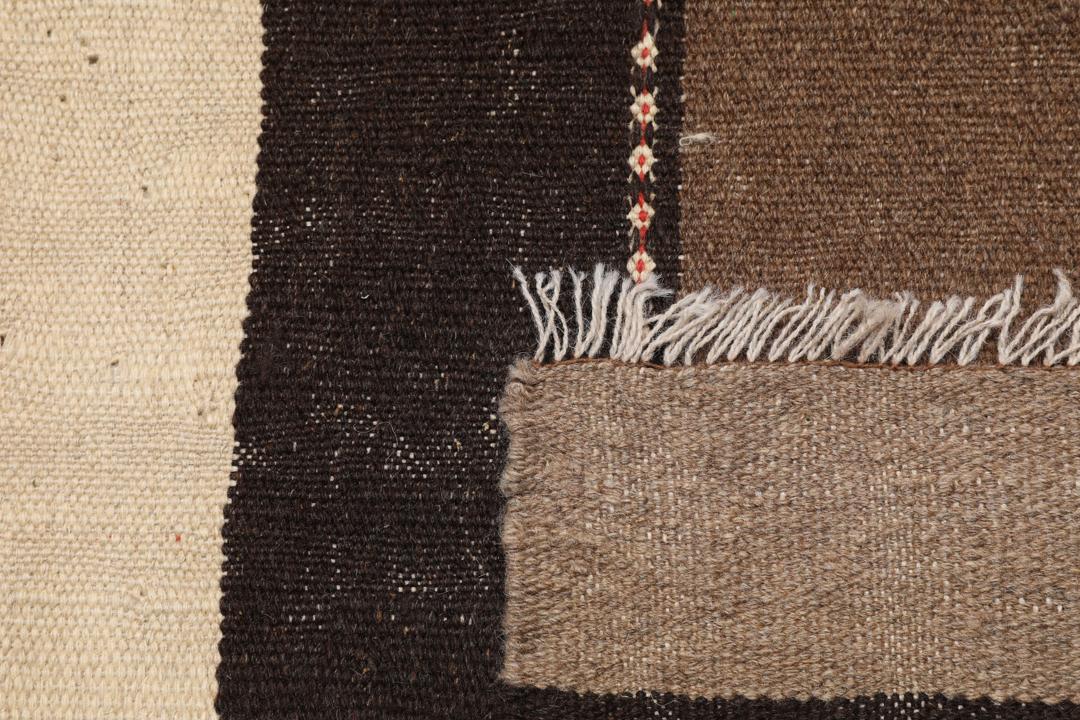
The term kilim refers specifically to the weaving technique where the weft threads are pulled tightly over the warp threads, completely hiding the vertical foundation. This method produces a thin, durable, and reversible textile that is prized for its strength and utility, setting it apart from traditional pile-knotted rugs.
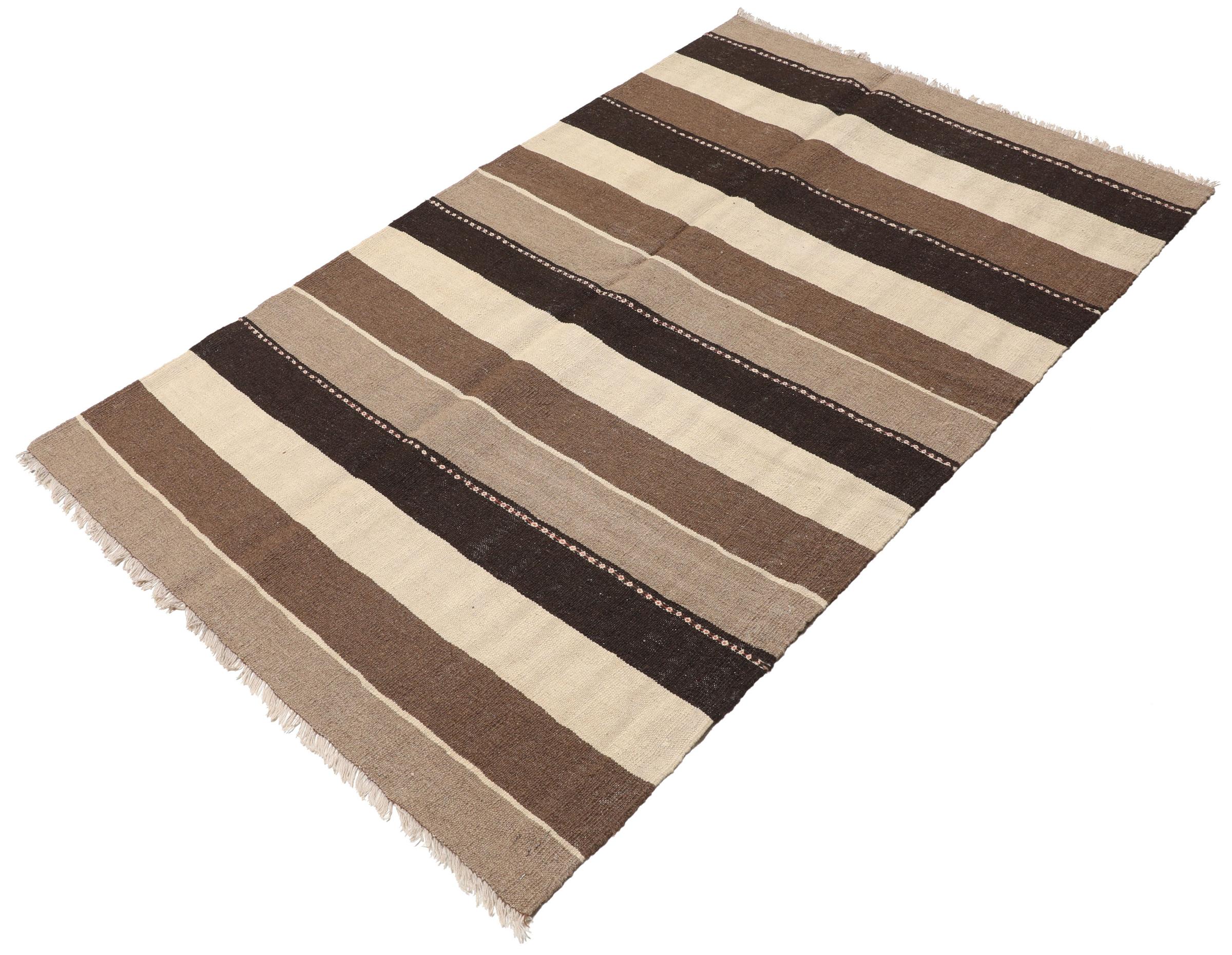
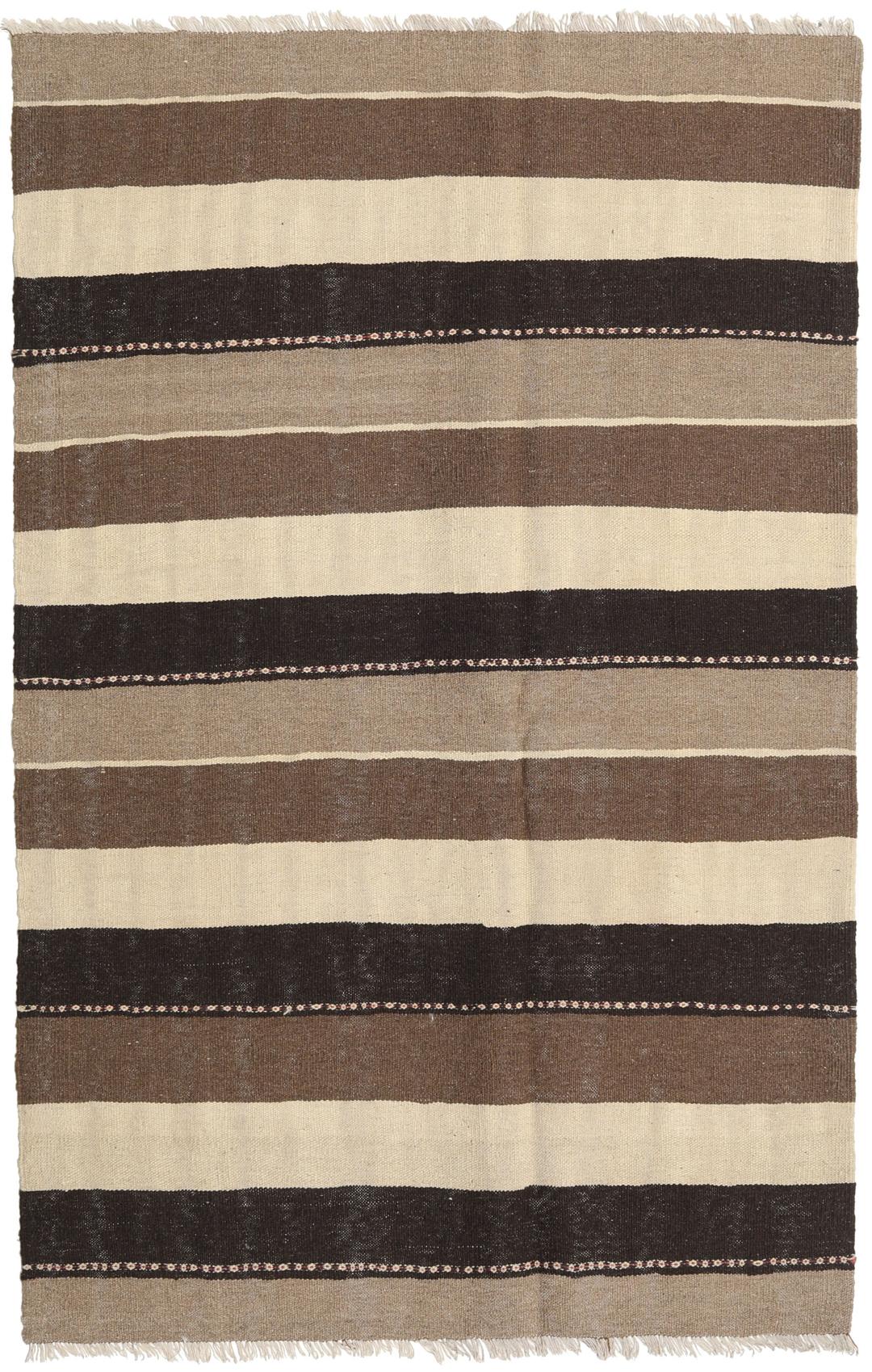
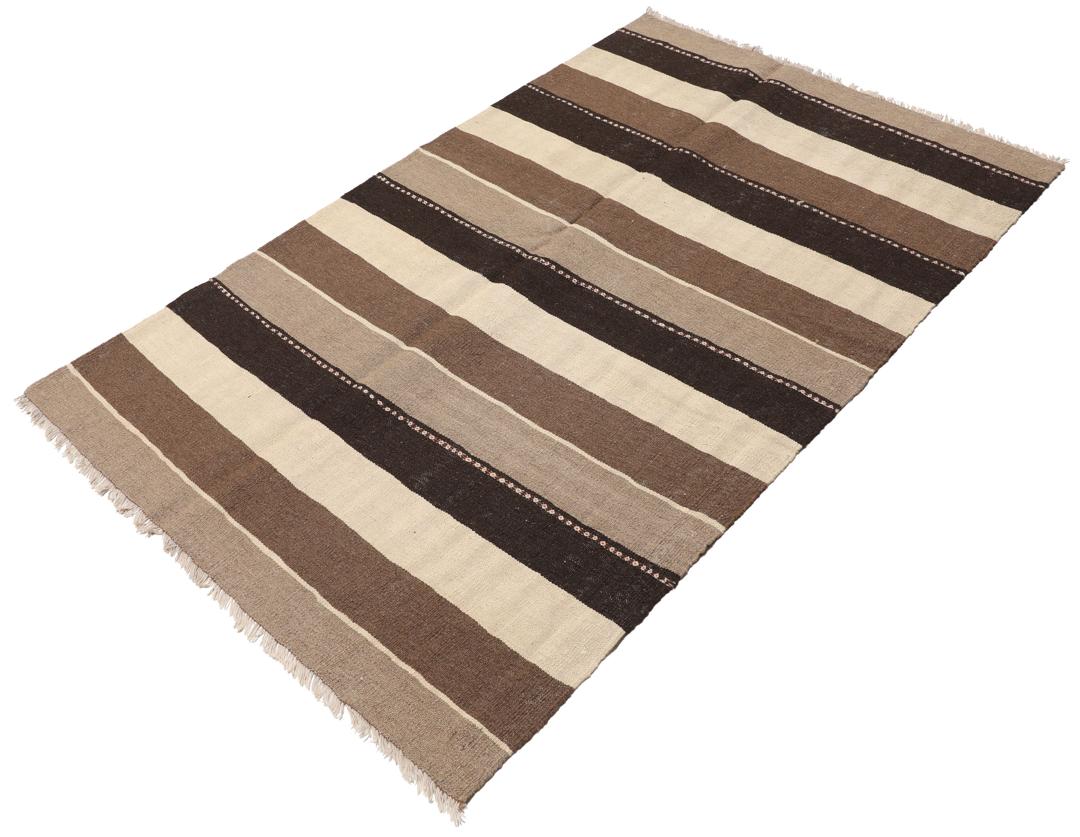
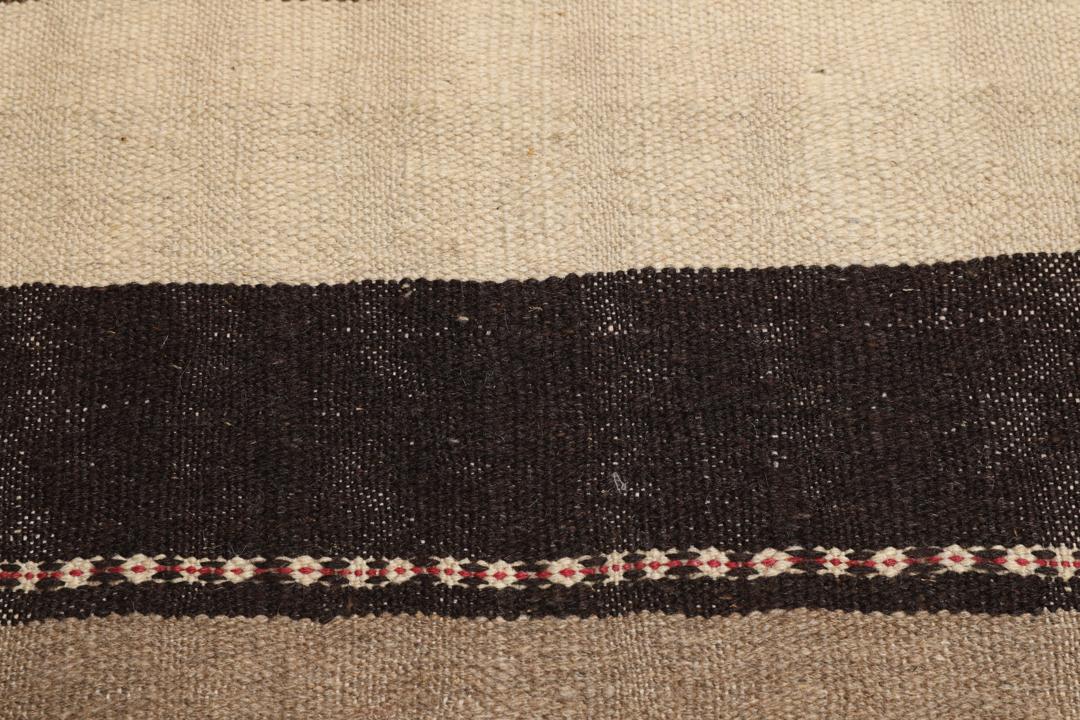
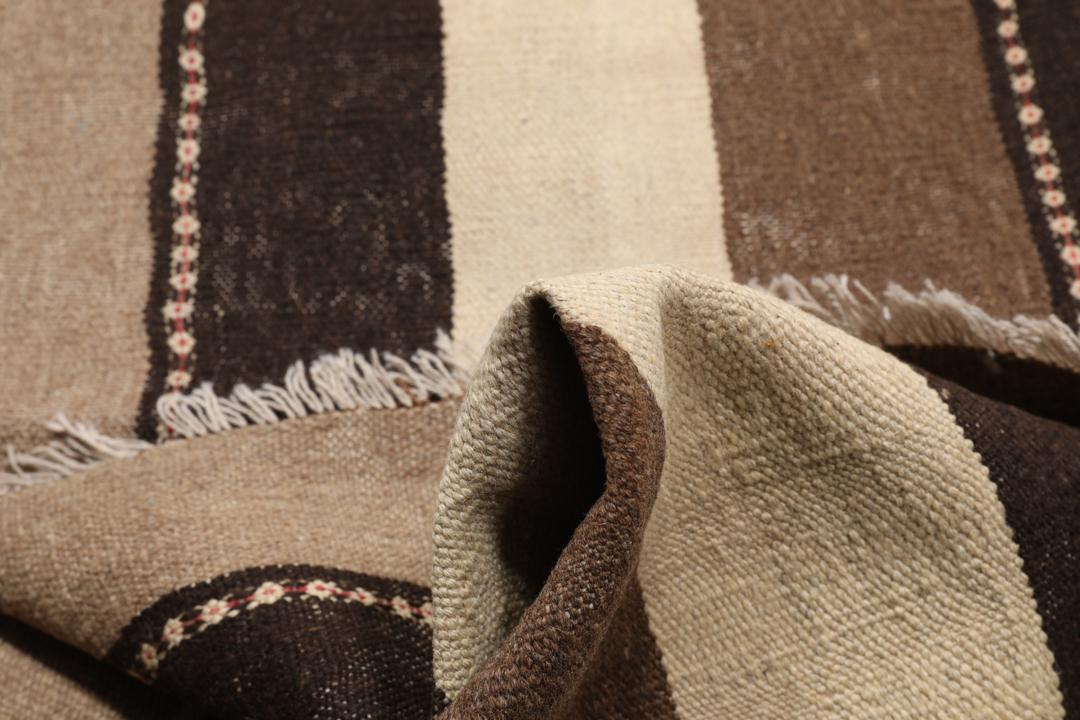
Visually, this tradition is celebrated for its geometric clarity and bold use of colour. Stripes, diamonds, and medallions are common motifs, often inspired by the natural environment and local cultural symbols. This specific rug emphasises the beauty of simple, rhythmic stripes, which highlight the technical precision required to keep the lines perfectly straight across the entire width of the loom.
Today, these rugs are highly sought after by collectors and interior enthusiasts alike for their historical weight and artistic simplicity. Owning a kilim is an investment in a living heritage, representing a level of skill and cultural continuity that is increasingly rare in our modern, automated world.