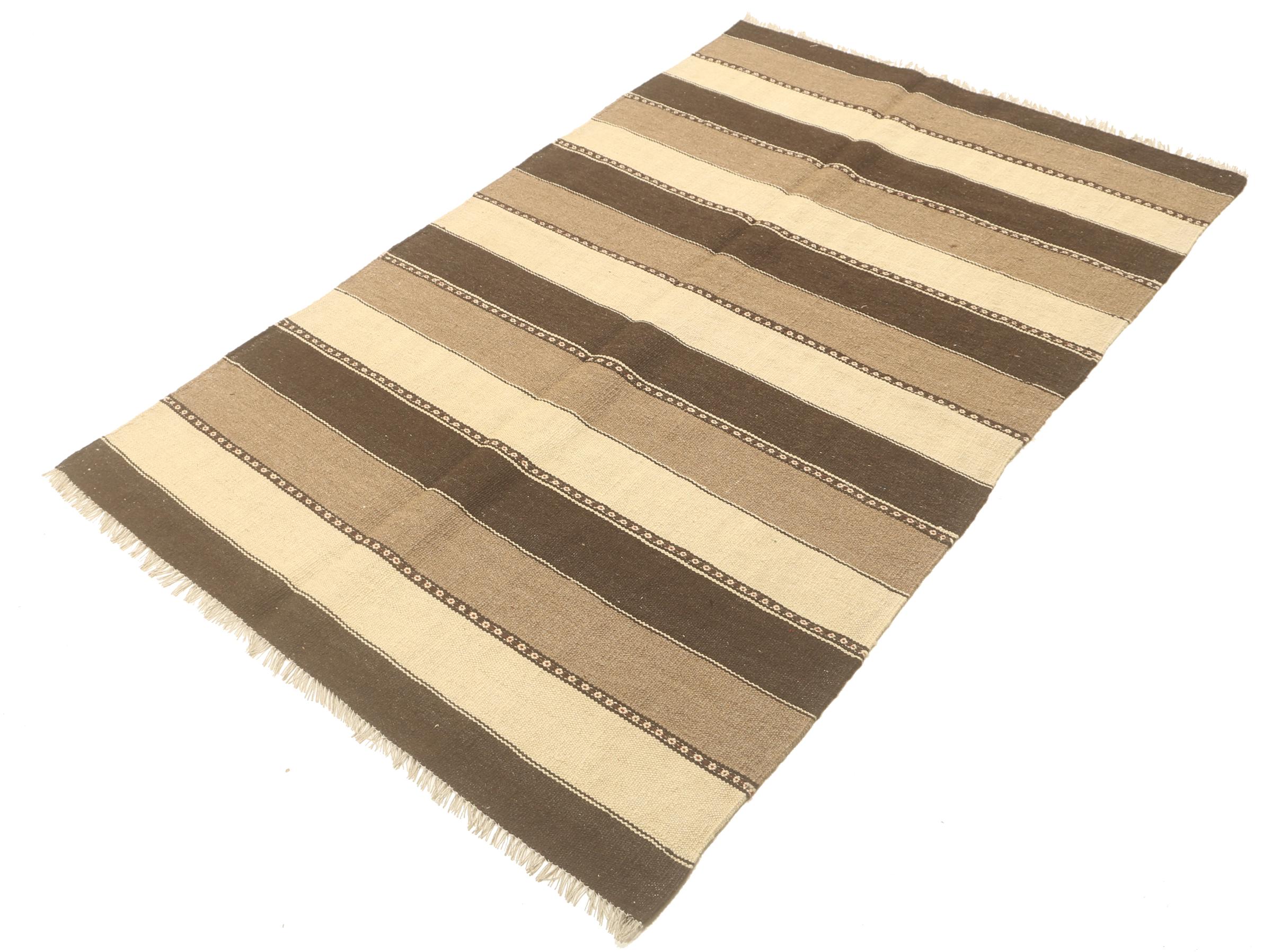
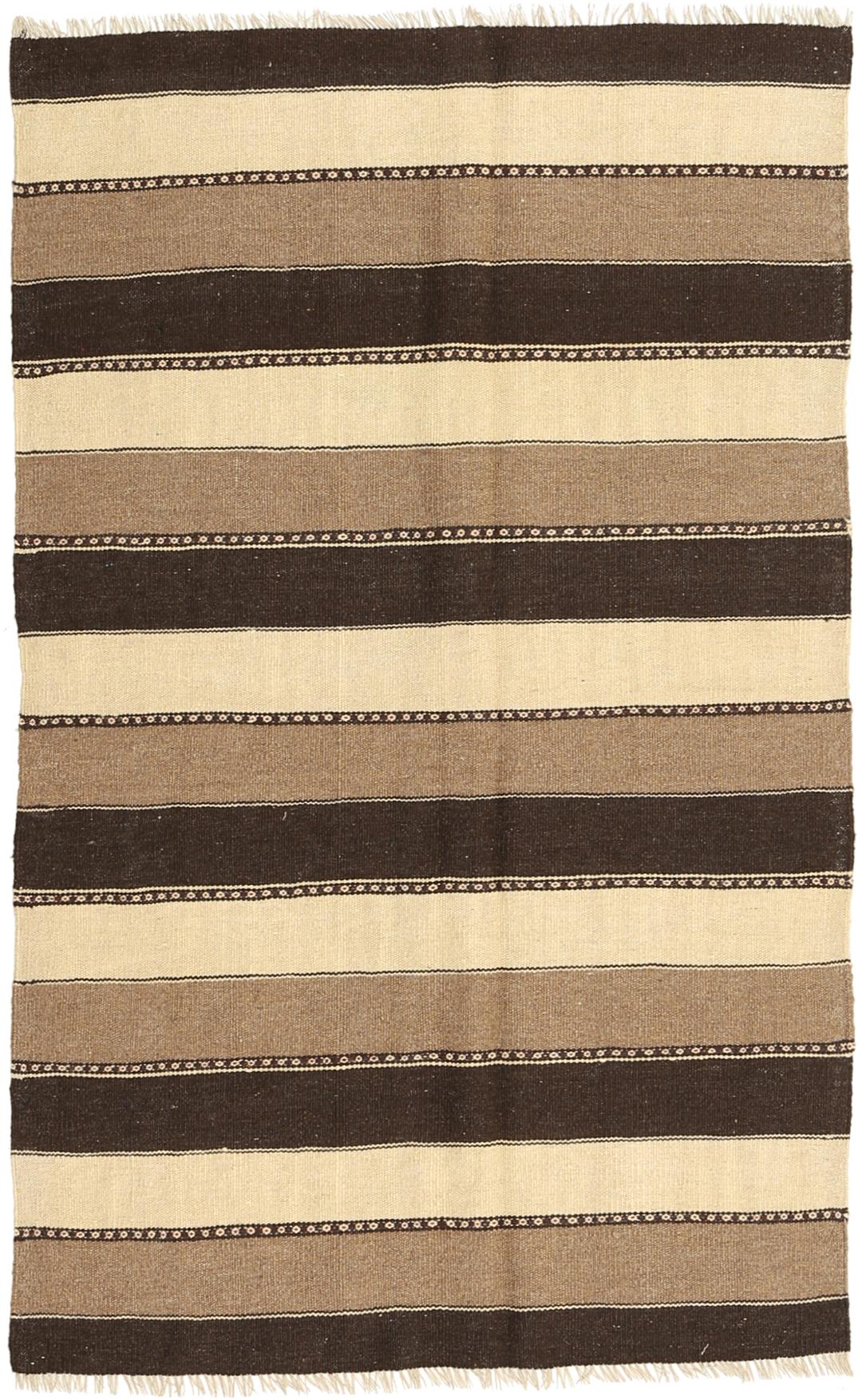
Kilim rugs are a cornerstone of Middle Eastern textile history, traditionally woven by nomadic and semi-nomadic tribes. These flat-woven textiles were originally designed to be versatile and portable, serving as floor coverings, wall hangings, or even bags for daily life on the move.
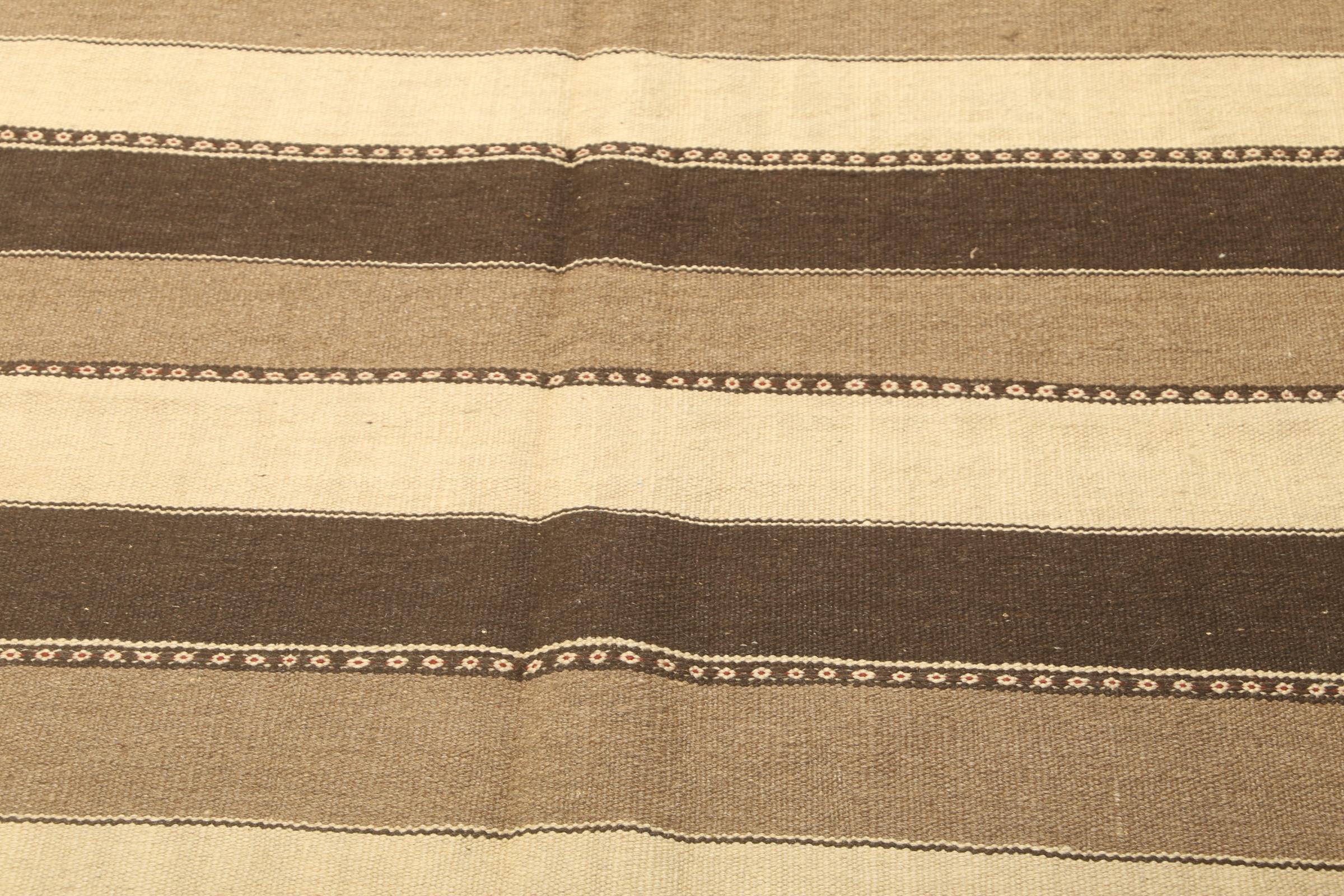
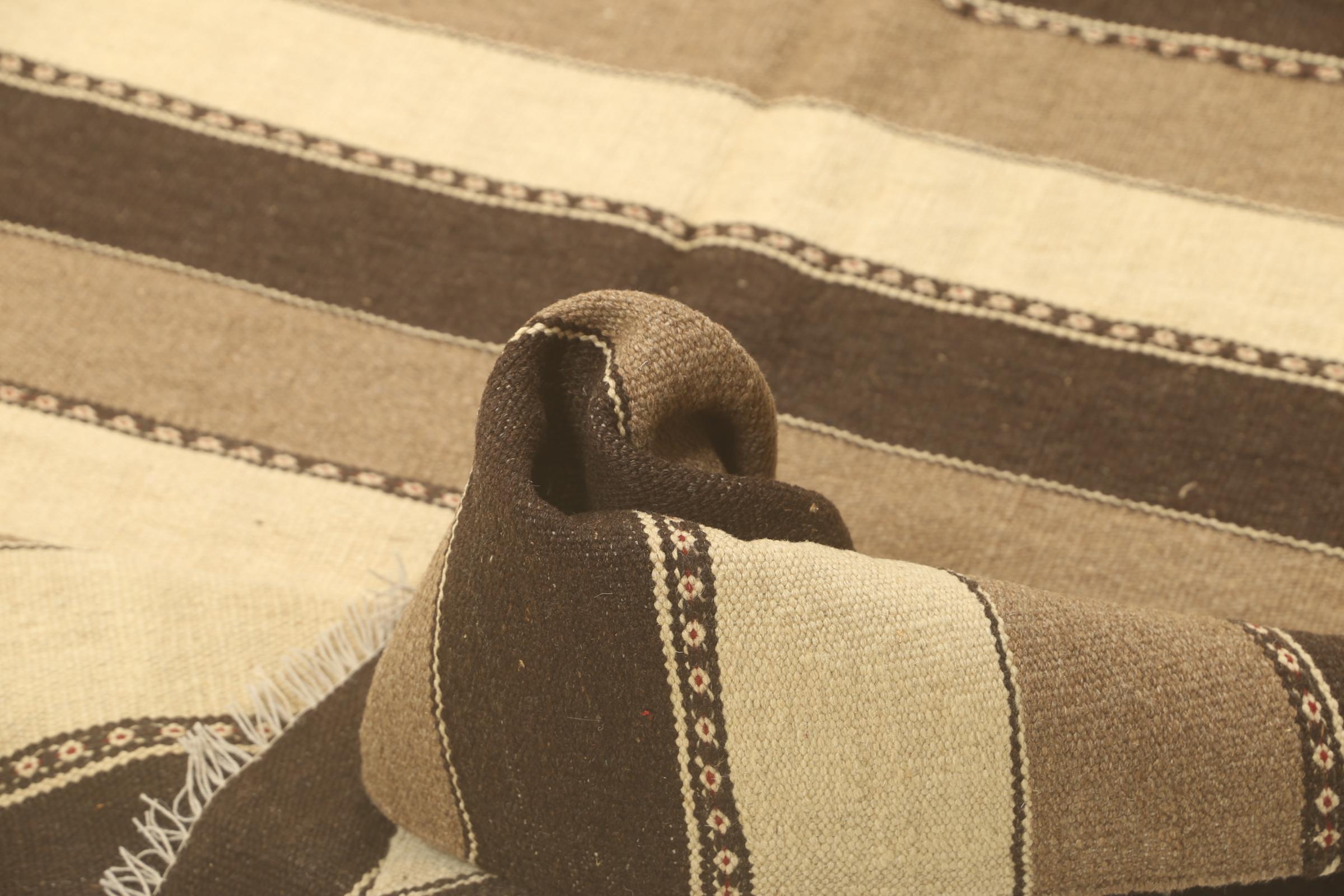
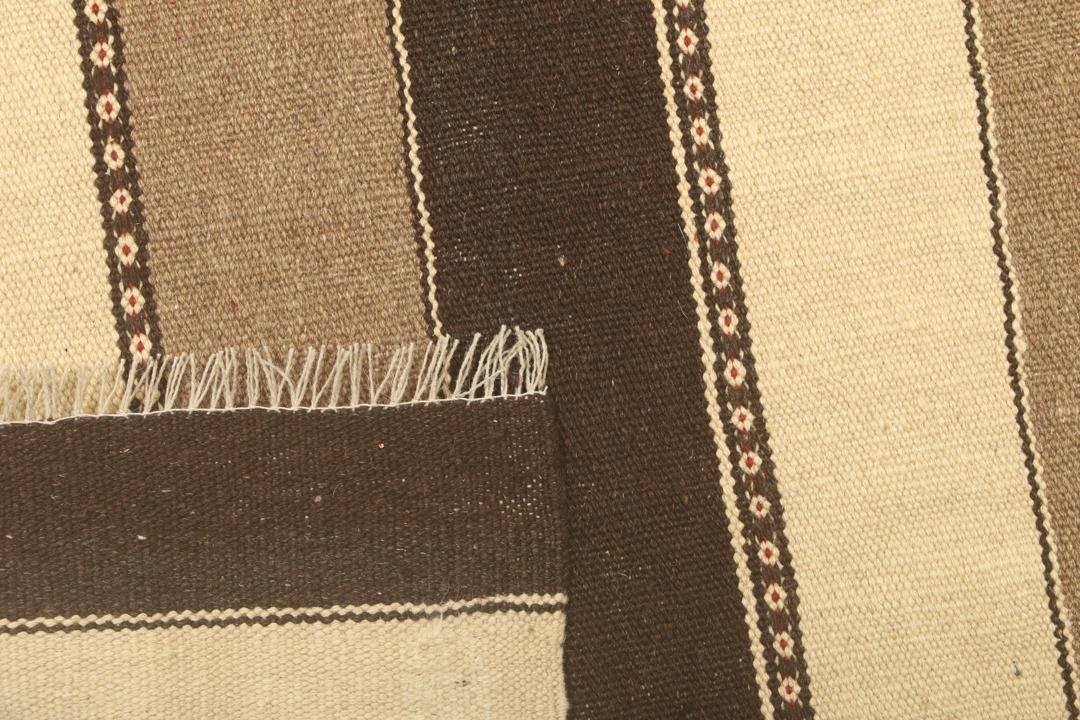
The term kilim refers specifically to the slit-weave technique used to create these rugs. In this method, the weft threads are woven back and forth over the warp, creating sharp, clean lines where colours change. This technique is what gives the rug its iconic flat surface and allows for the bold, geometric patterns often associated with the tradition.
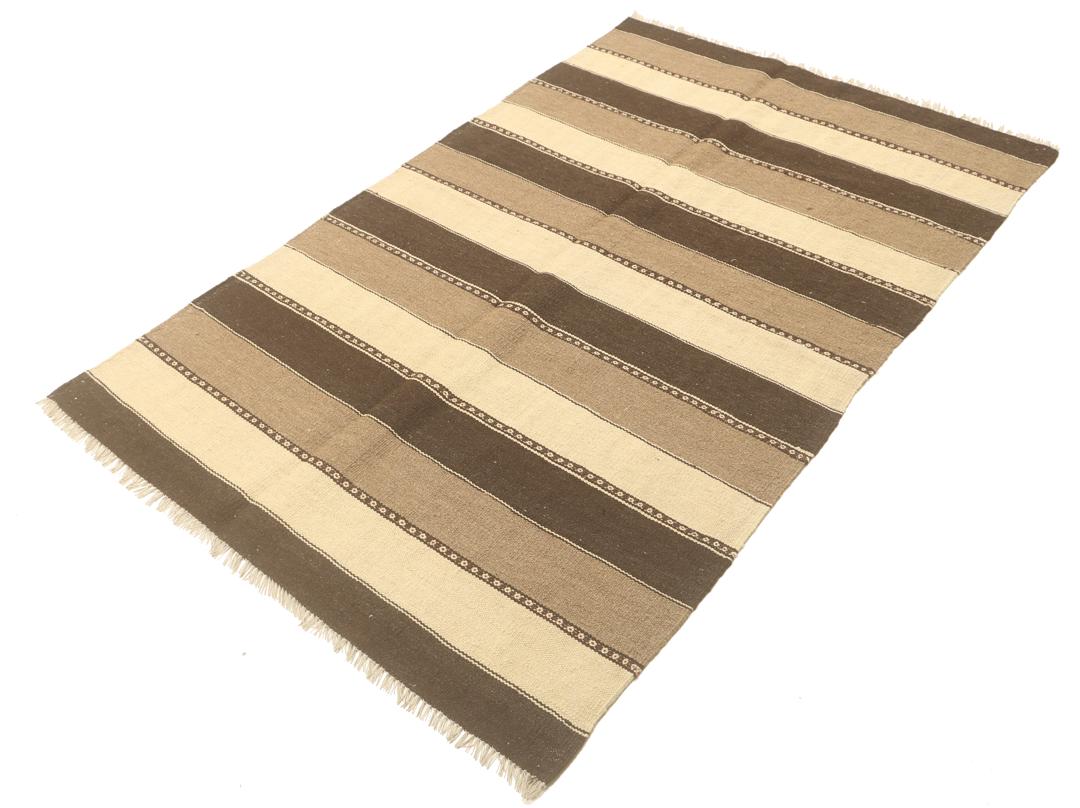
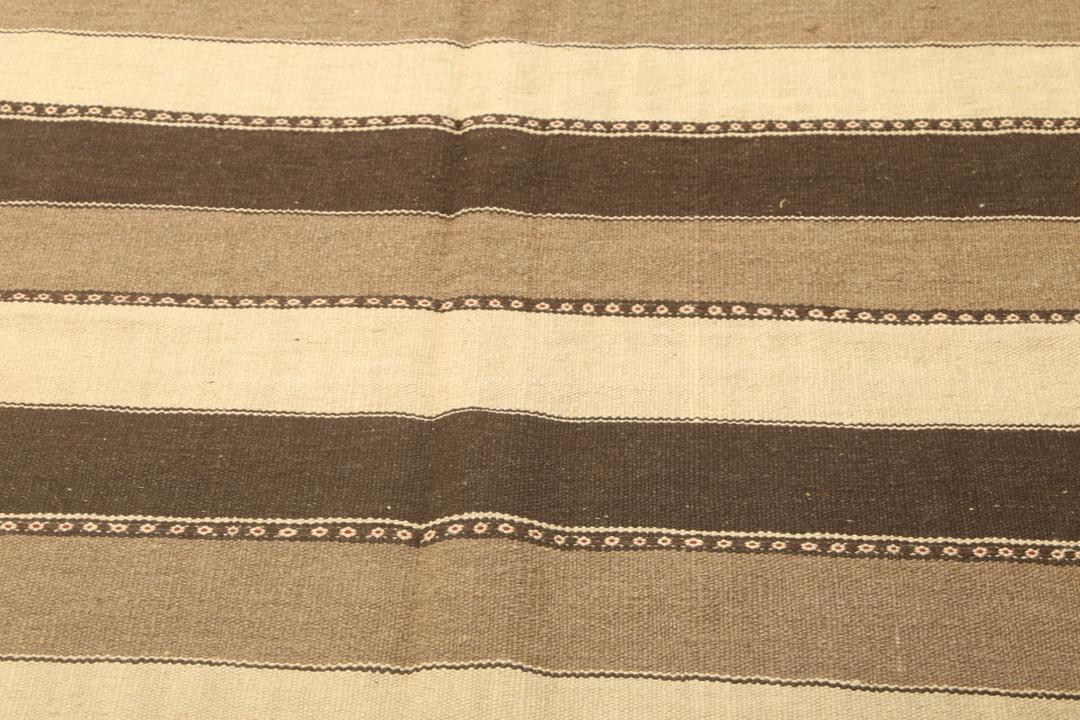
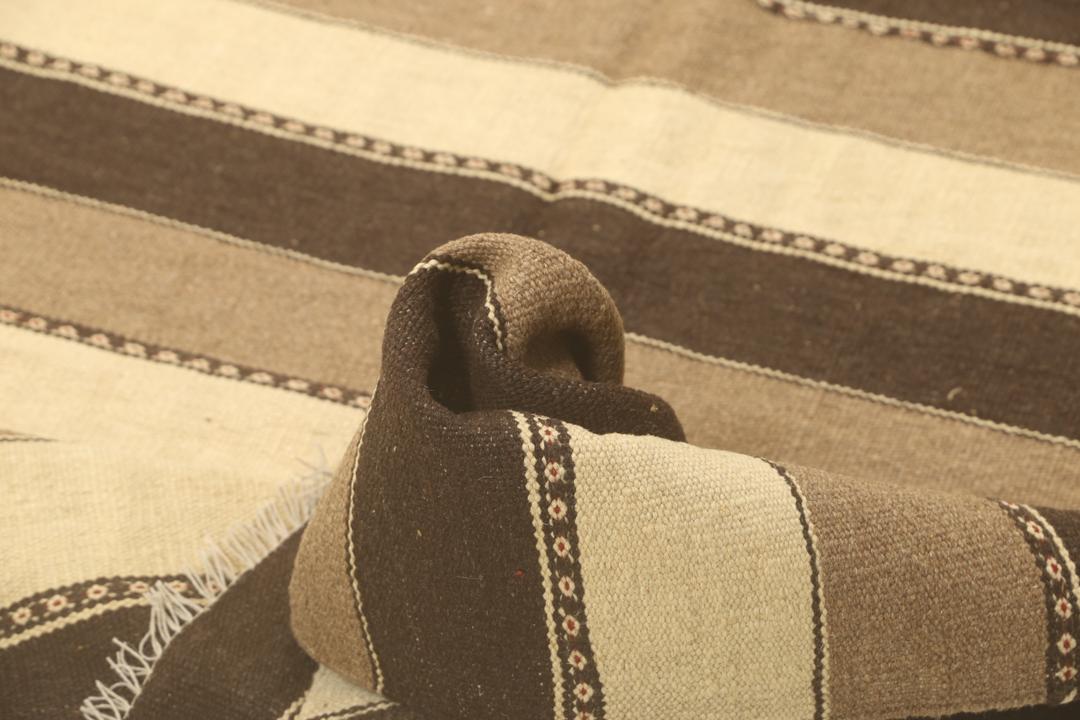
Striped patterns, such as the one featured here, are among the oldest and most fundamental designs in kilim weaving. These patterns often reflect the natural surroundings of the weavers and the specific dyes available in their region, utilising earthy tones and simple, rhythmic repetitions to create a sophisticated visual effect.
Owning a kilim is an investment in a living tradition. These rugs are highly valued by collectors not only for their aesthetic appeal but for the skill required to maintain uniform tension throughout the weaving process. Each piece serves as a testament to the weaver's heritage and the enduring nature of hand-crafted textiles.