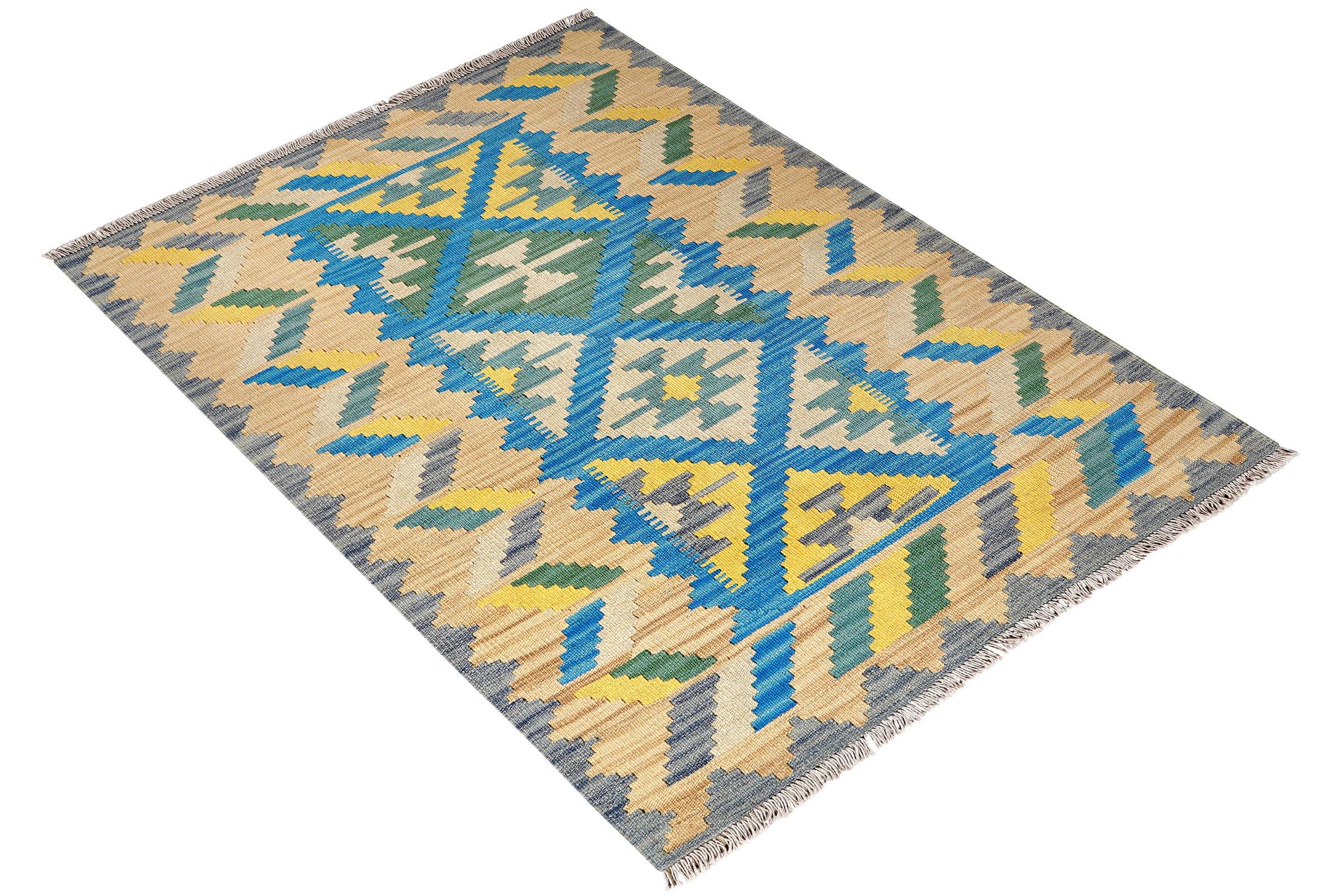
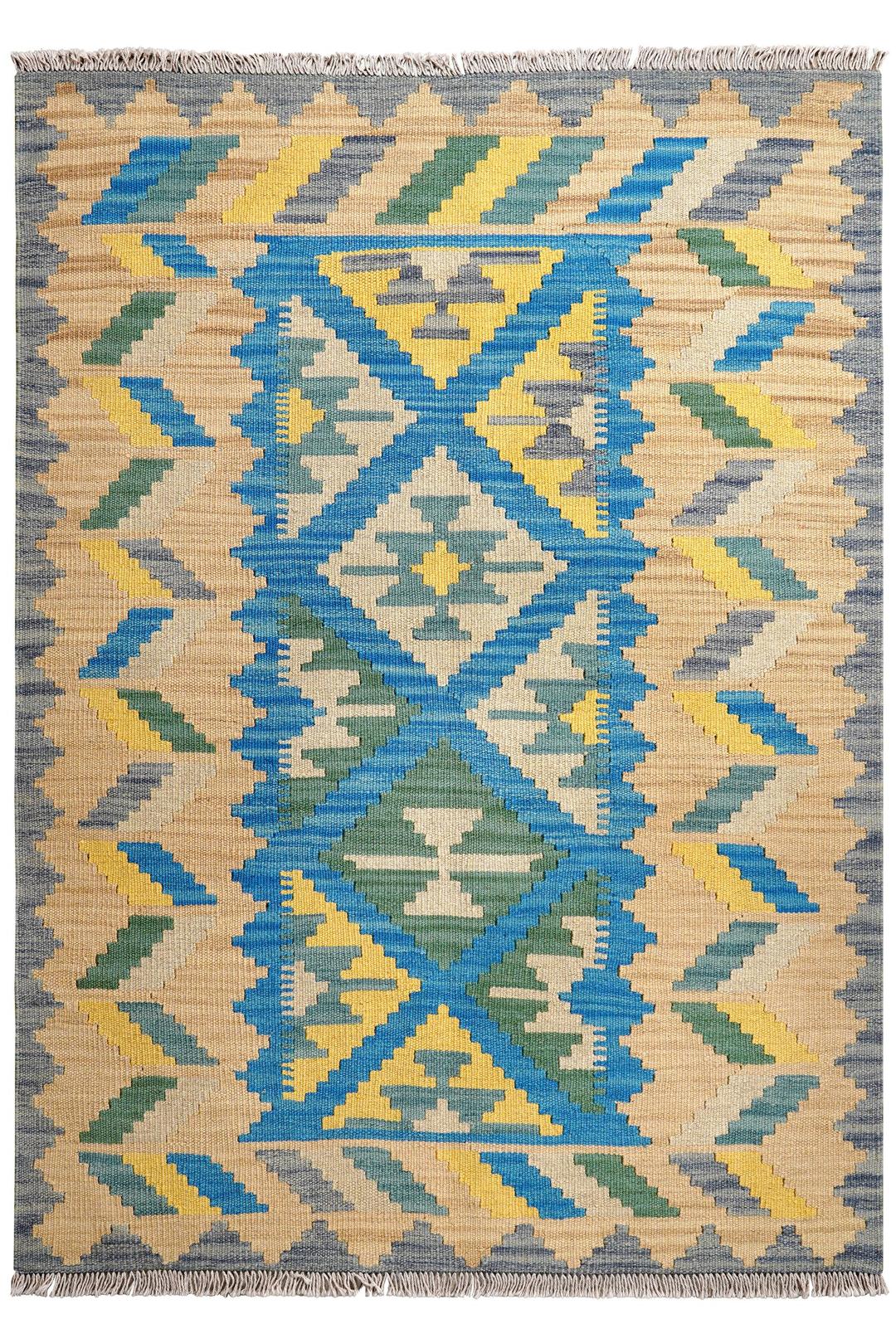
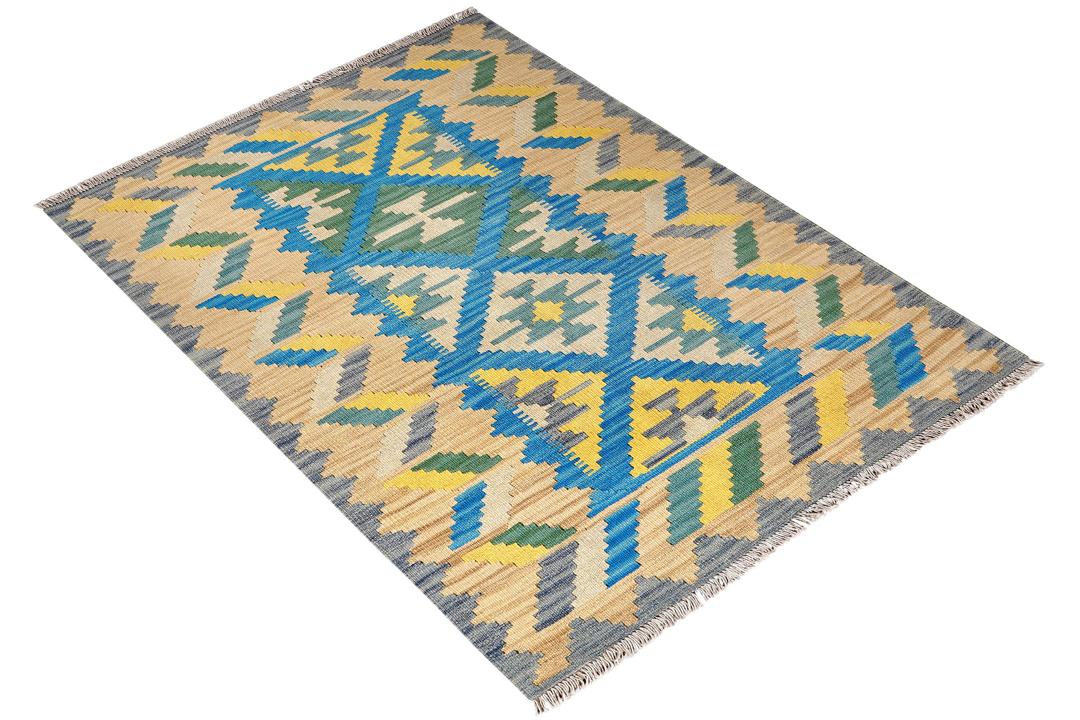
Ghashghai kilims originate from the nomadic Ghashghai tribes of the Middle East, renowned for their weaving traditions. These flatwoven textiles were traditionally created for practical use in tribal life, serving as floor coverings, tent dividers, and storage bags designed to endure regular travel.
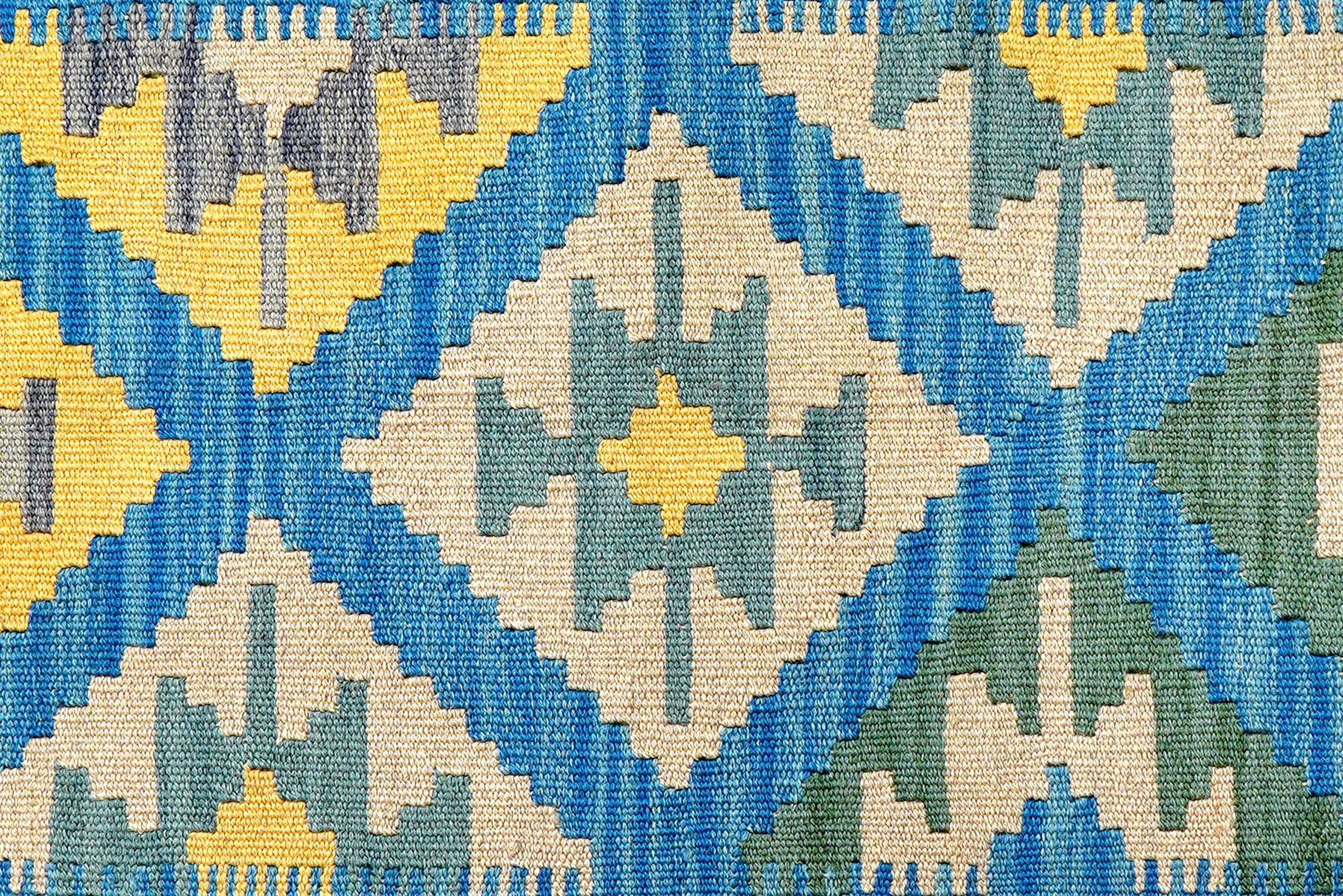
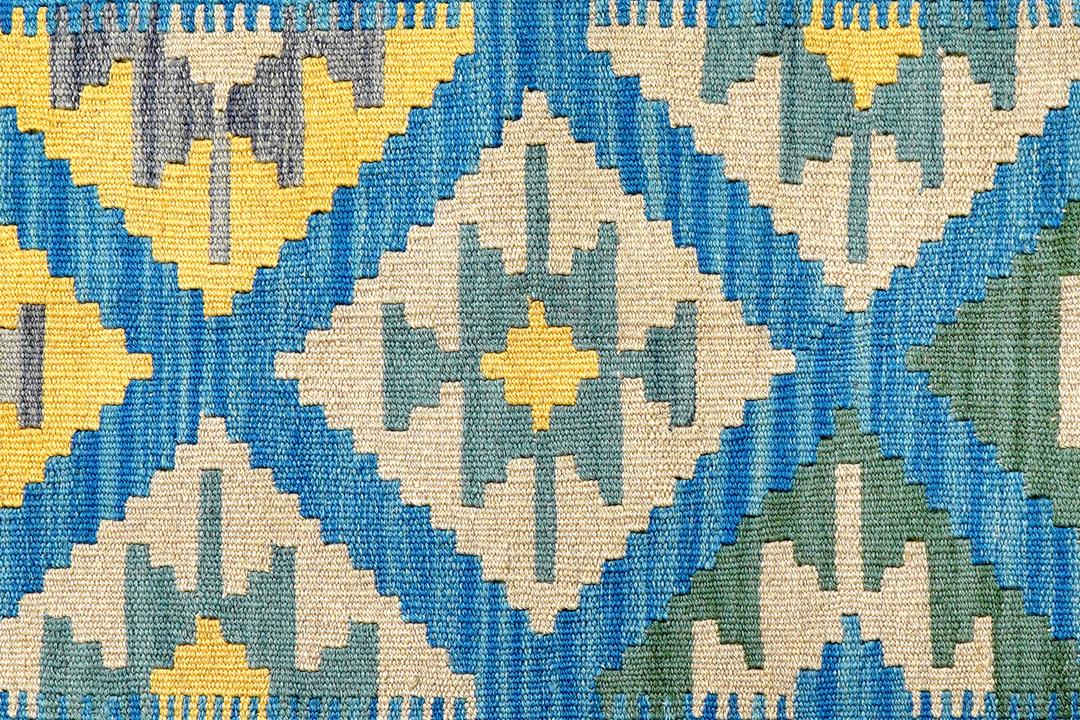
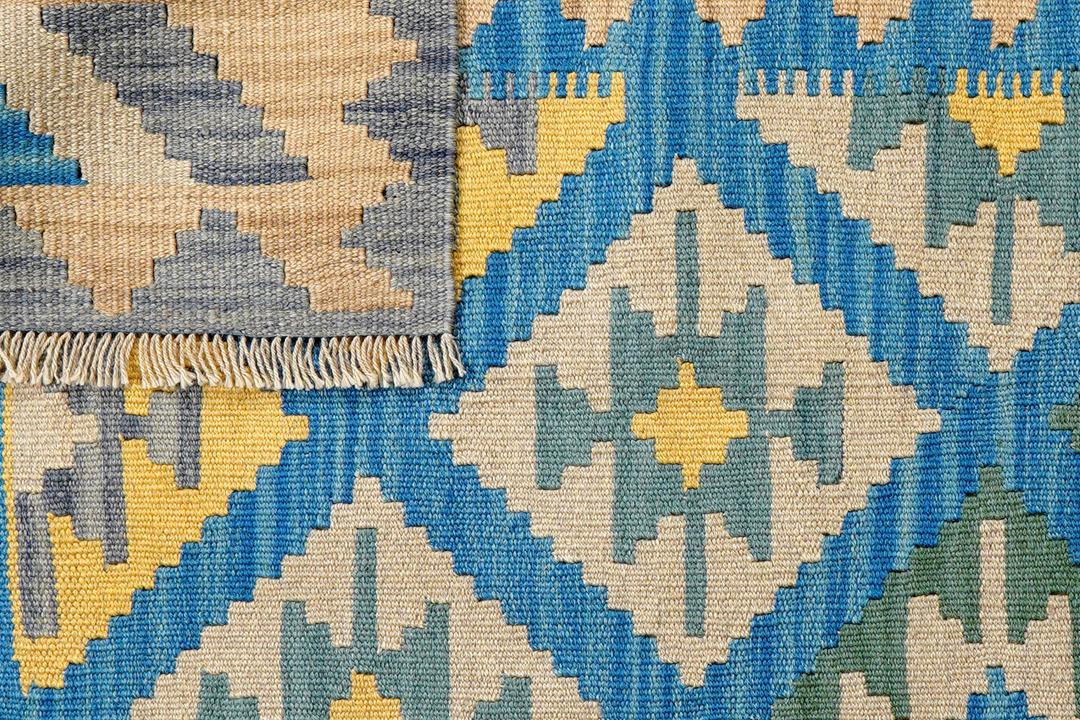
Unlike pile rugs, a kelim is flatwoven without tufts, resulting in a flexible and lightweight textile. The weaving method relies on tapestry techniques where colored threads create the decorative geometric motifs directly within the weave, producing clear, graphic designs visible on both sides.
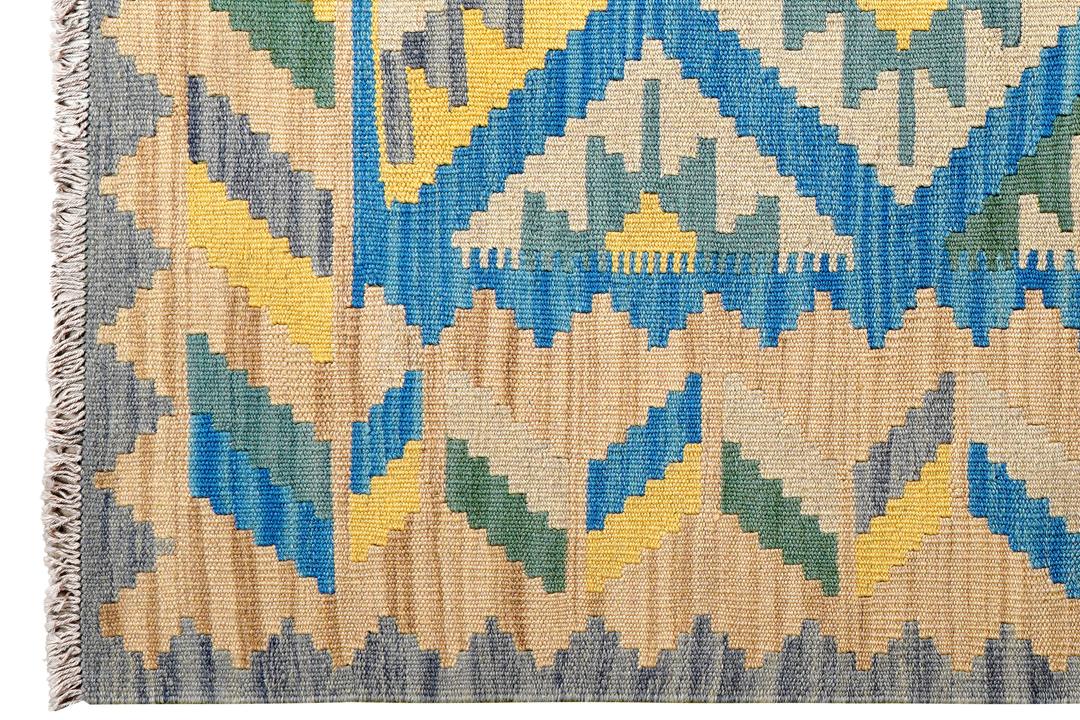
The visual language of Ghashghai weaving relies heavily on geometric motifs, including diamonds, chevrons, and stepped medallions. These patterns are often combined with traditional borders and contrasting fields of blue, beige, green, and yellow, creating dynamic visual rhythm across the rug surface.
Collectors and design enthusiasts value Ghashghai kilims for their expressive artistry and genuine folk tradition. Owning a hand-woven piece connects your living space to centuries of nomadic heritage, offering a distinct cultural weight that mass-produced textiles cannot replicate.