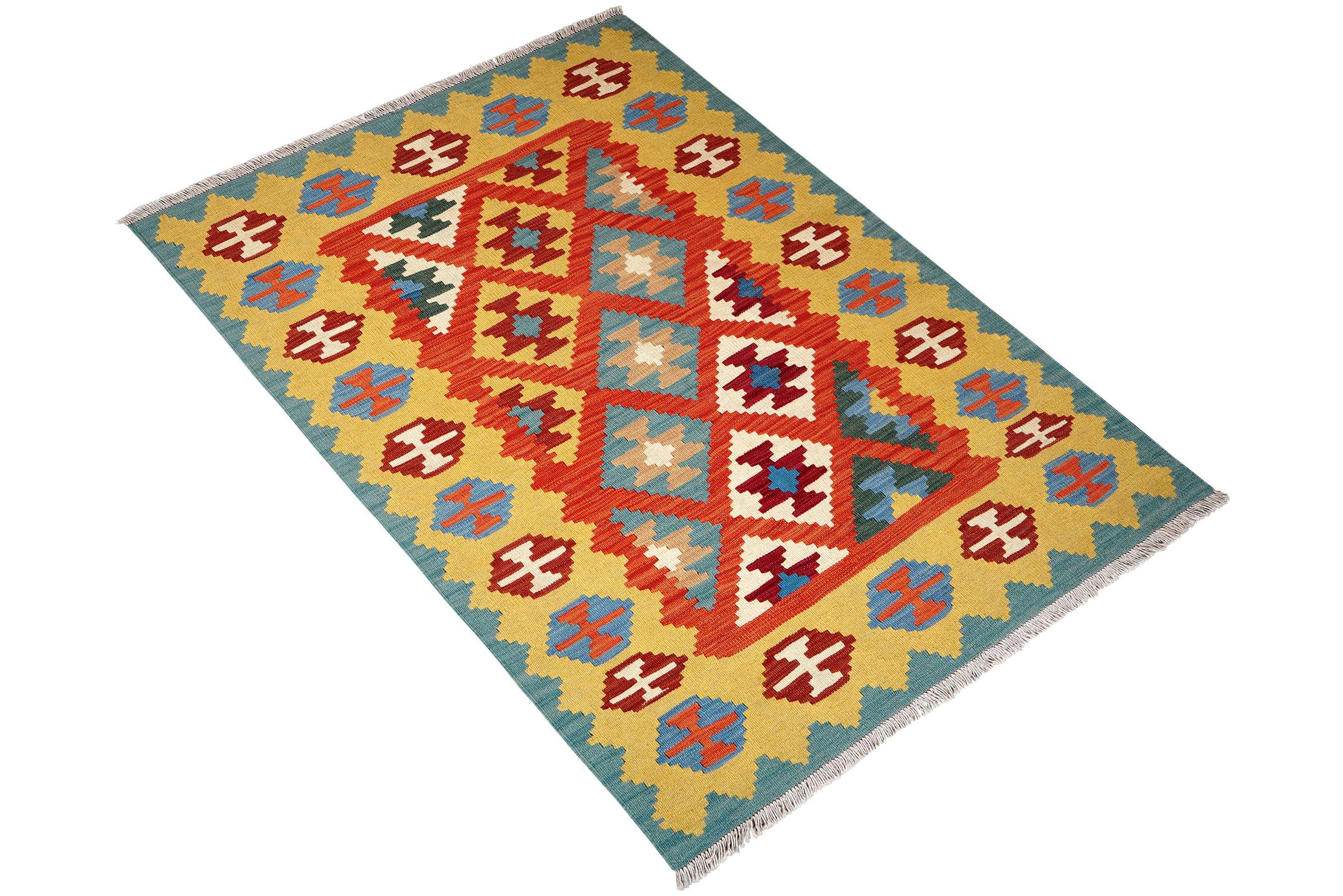
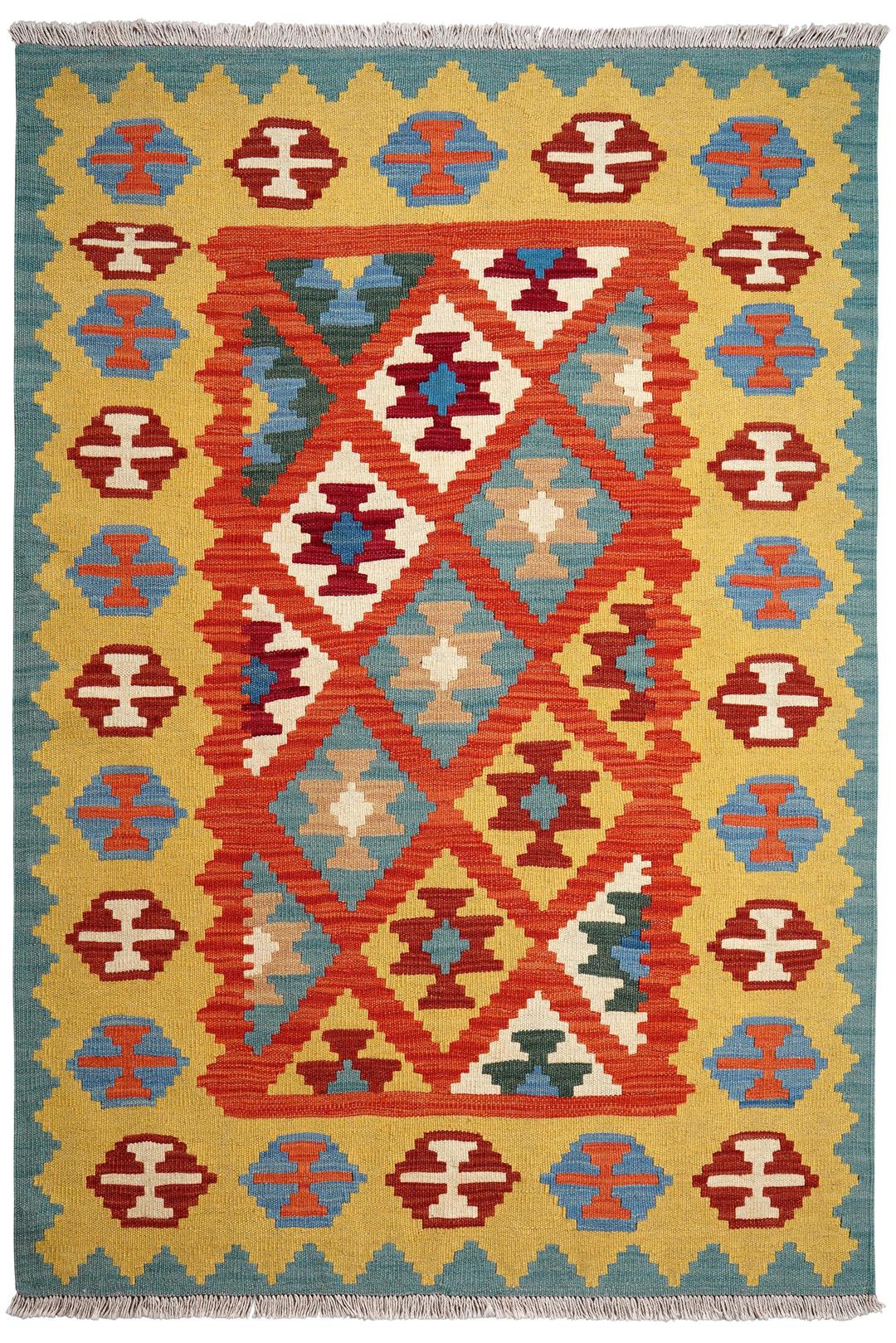
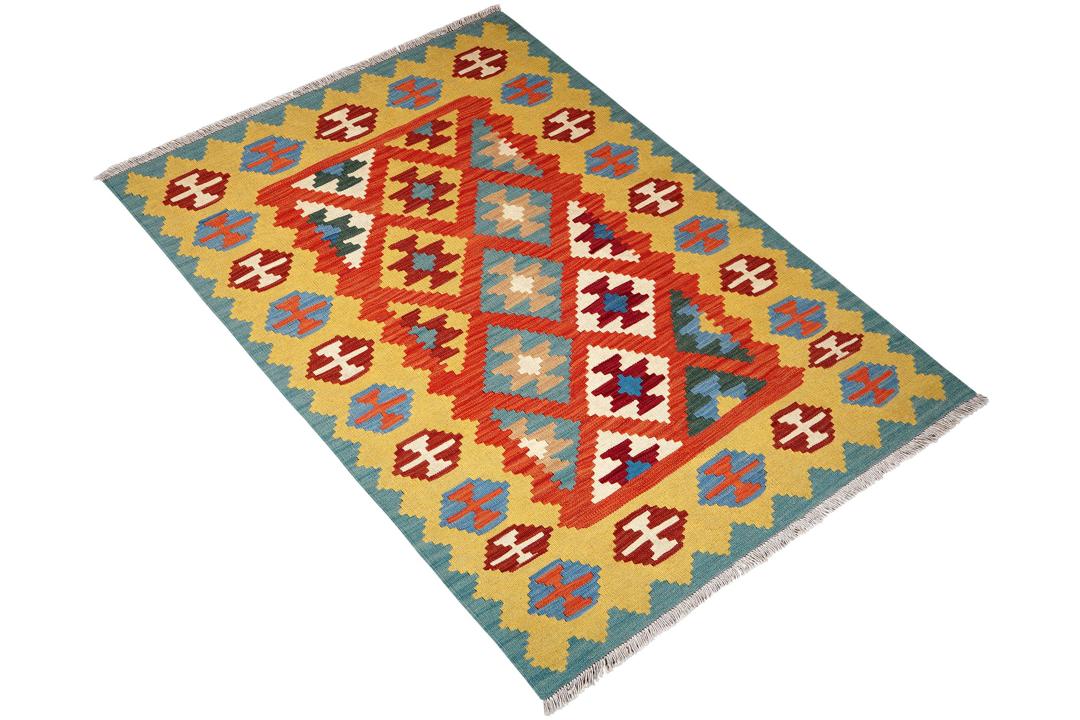
Ghashghai kilims originate from the nomadic tribes of the Middle East, historically crafted by migratory weavers who drew inspiration from their surrounding landscapes, daily tribal life, and ancestral symbols. These flatwoven textiles were originally made for practical domestic use within nomadic tents, serving as floor coverings, blankets, and storage bags.
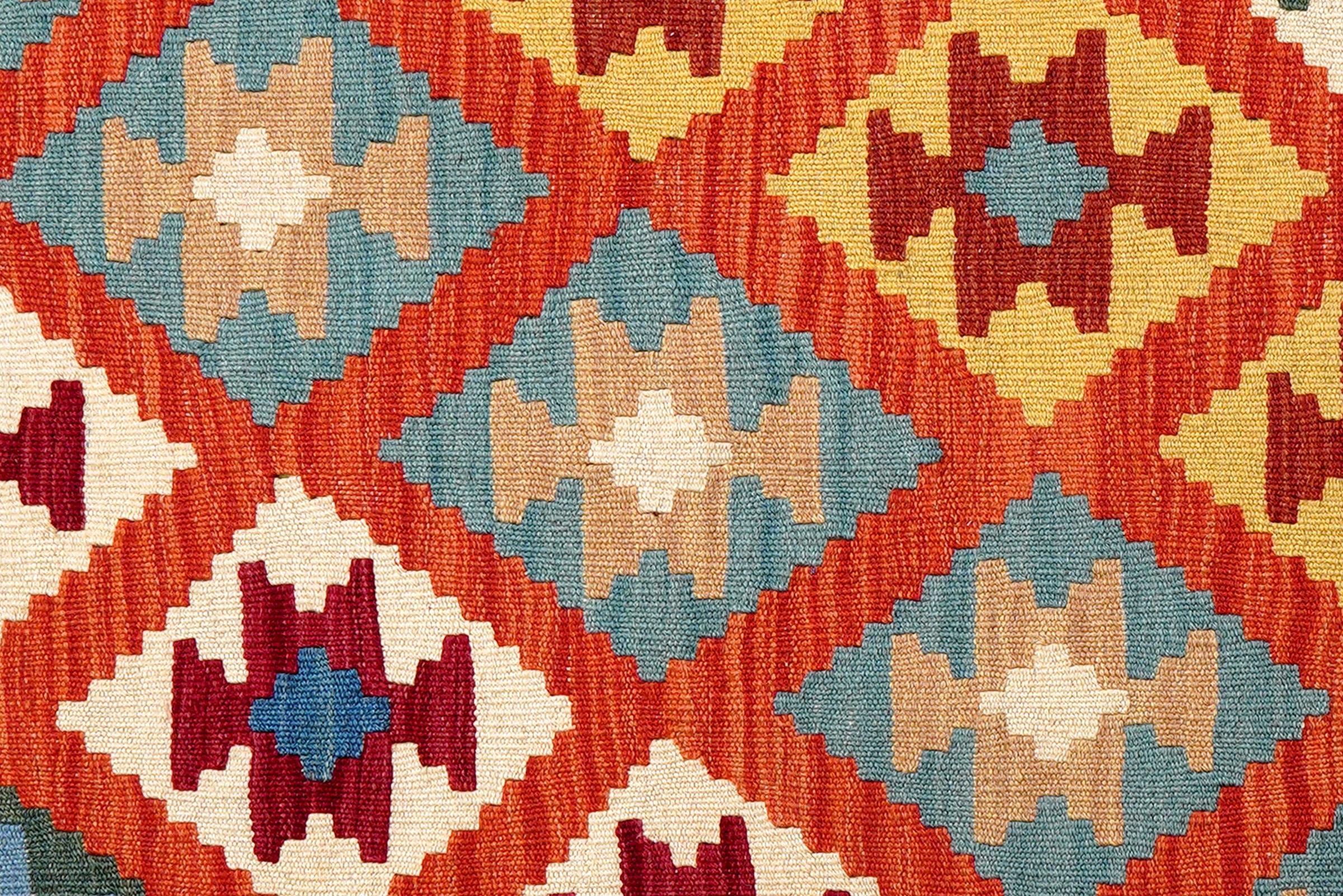
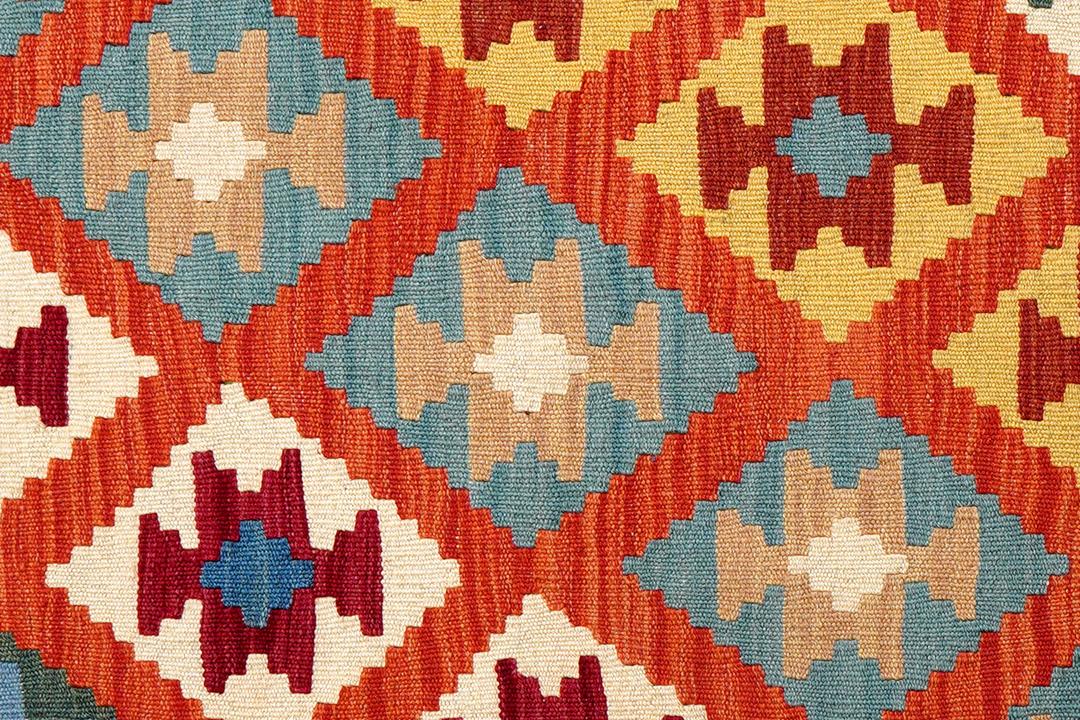
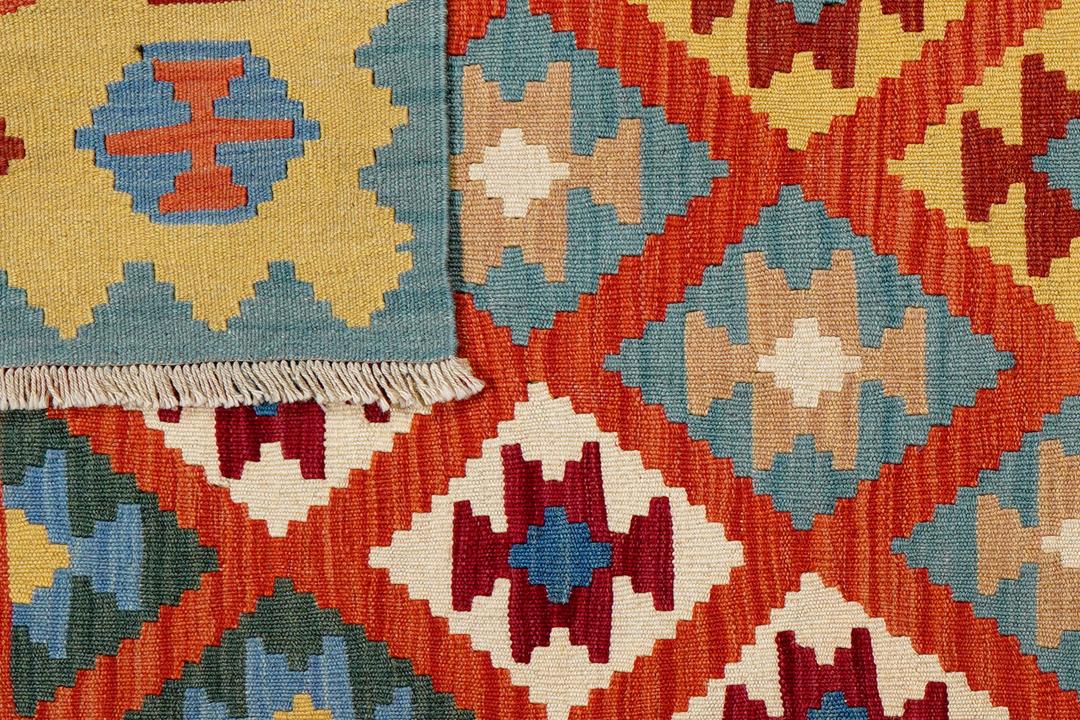
Unlike pile rugs, a kilim is created using a flatweave technique where the warp and weft threads are tightly woven together to create a smooth, pileless surface. Using natural wool for the foundation gives the weave elasticity and durability, allowing the rug to remain lightweight yet resilient against daily wear.
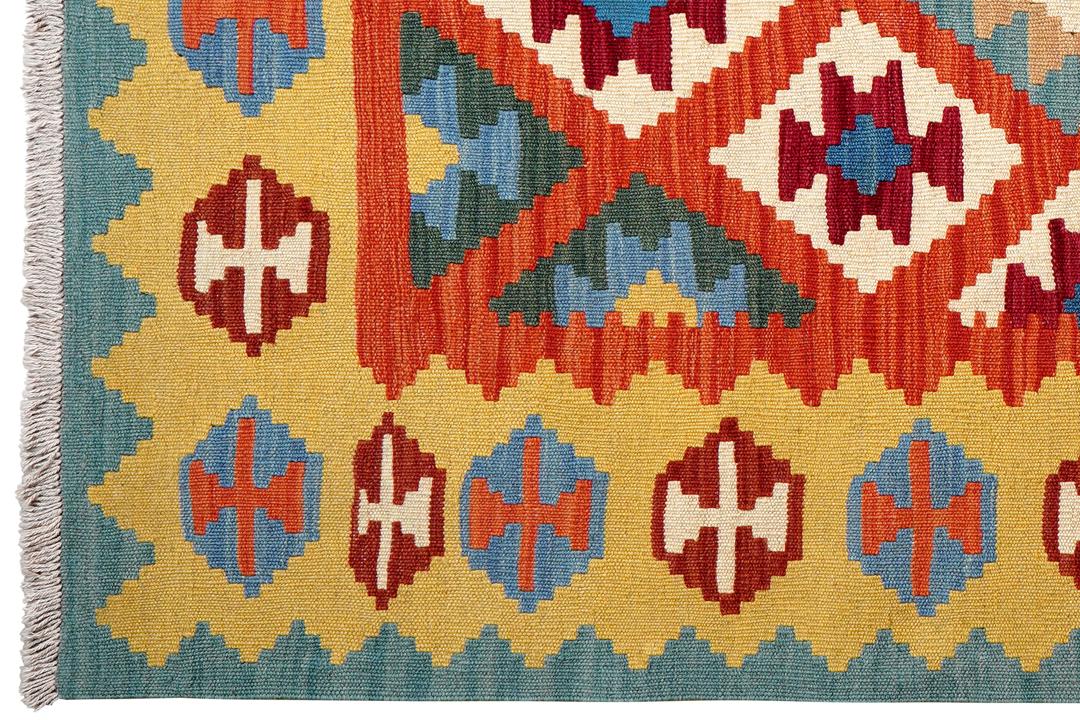
The visual language of Ghashghai weaving is defined by bold geometric forms, diamond medallions, and protective tribal symbols. Vibrant shades of yellow, red, teal, and terracotta are characteristic of this tradition, creating energetic compositions framed by formal geometric borders that anchor the design.
Today, Ghashghai kilims are highly valued by collectors and interior enthusiasts worldwide for their expressive artistic freedom and authentic cultural heritage. Owning a traditional flatweave from this heritage connects your living space to centuries of nomadic craft and human storytelling.