The Kelim tradition is deeply rooted in the history of the Middle East and Central Asia, where these flat-woven rugs have served as essential functional items for nomadic and settled communities for centuries. The term Nimbaft refers to a specific style of weaving that is often associated with the skilled artisans of Afghanistan, who have preserved these ancient techniques through generations. These rugs were traditionally used as floor coverings, wall hangings, and even as saddlebags, reflecting their versatility and cultural importance.
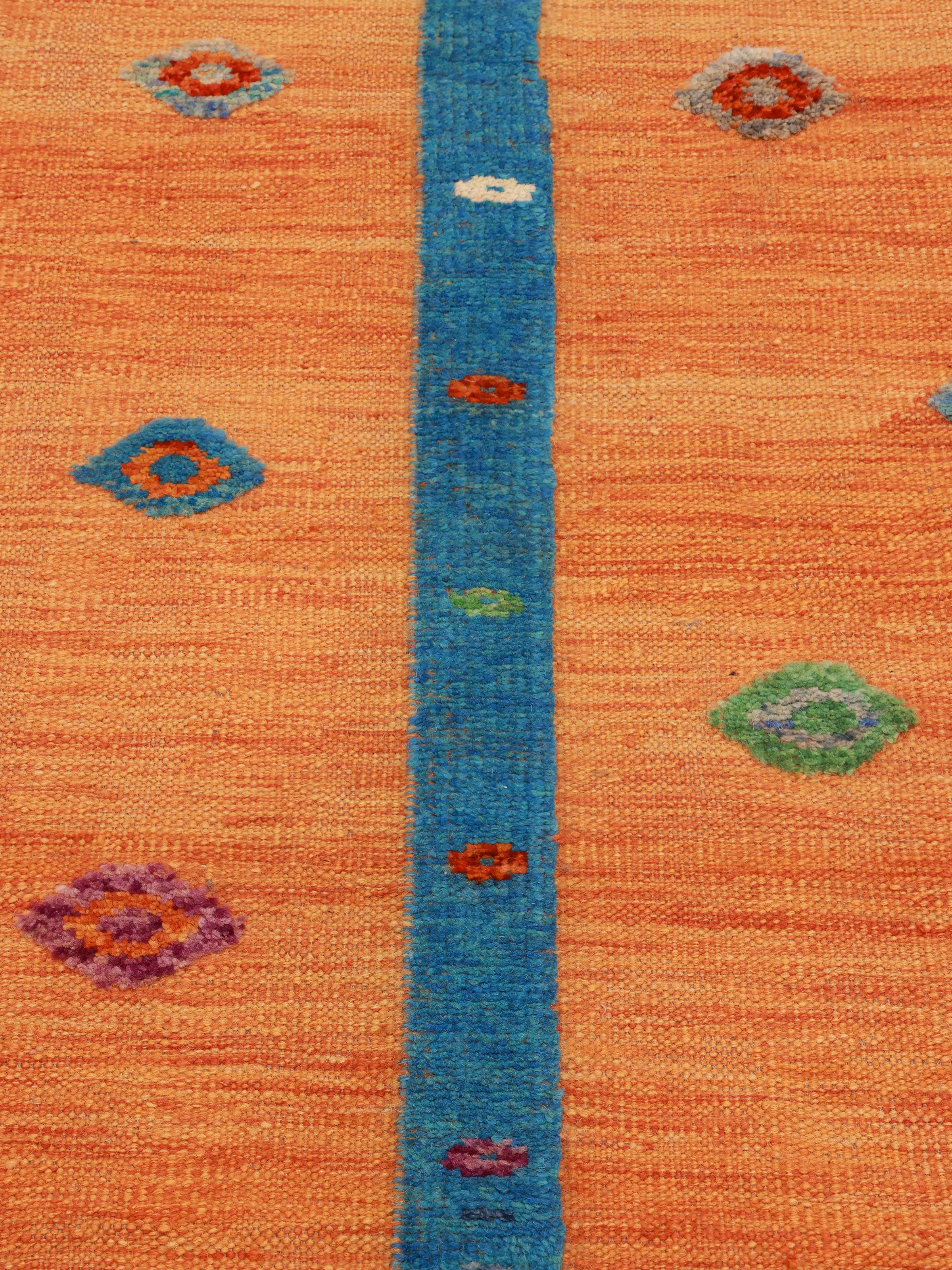
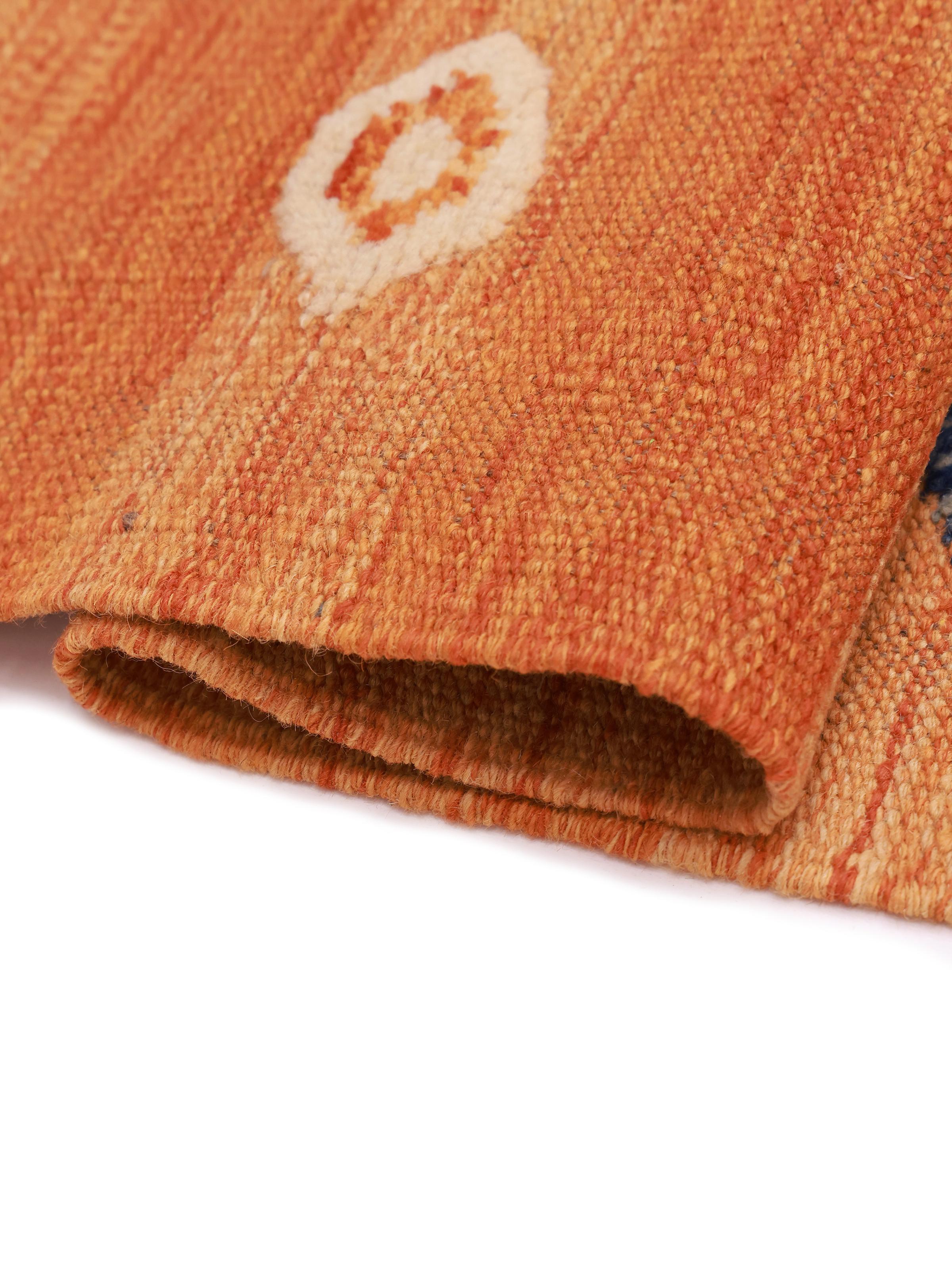
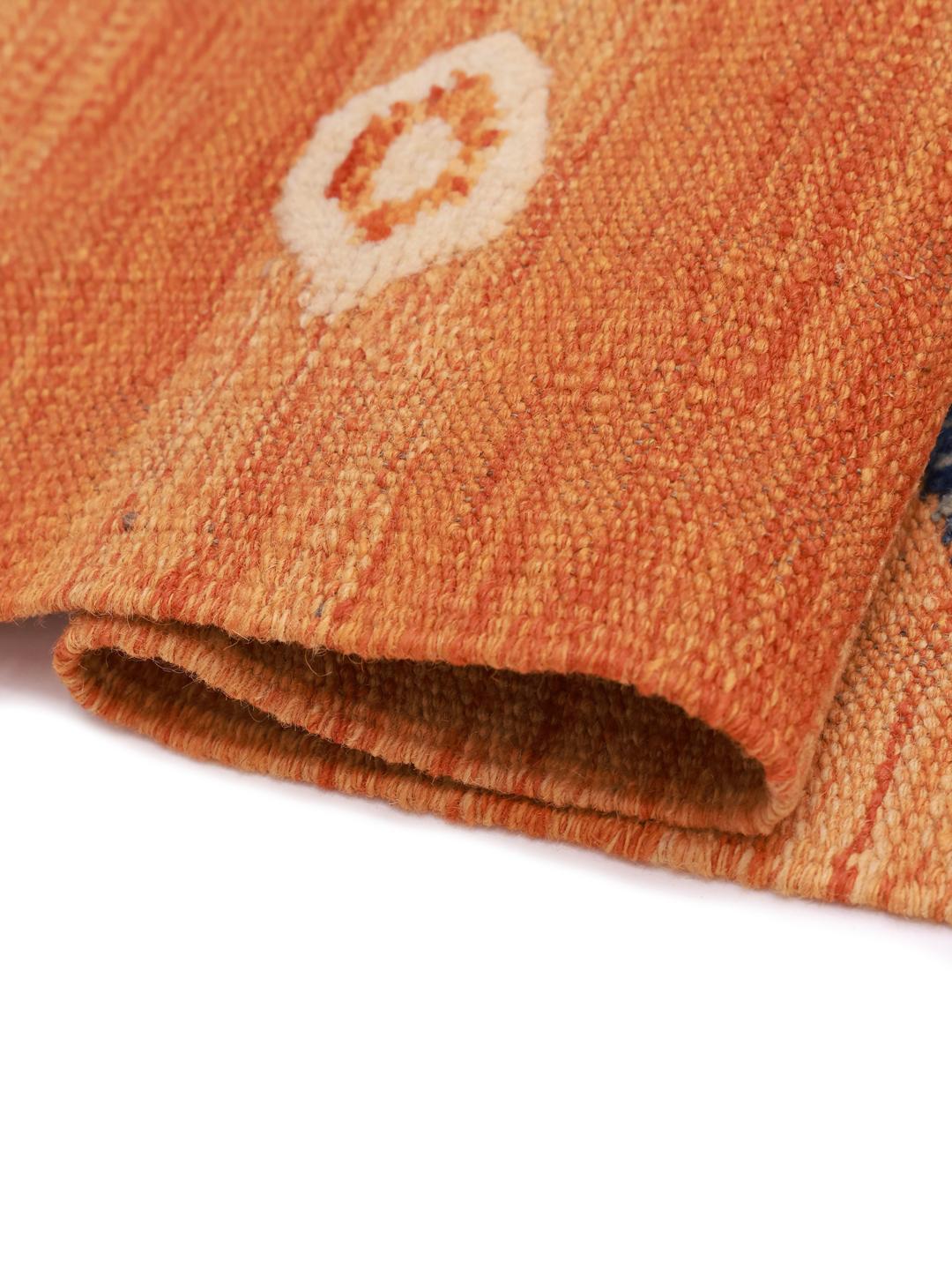
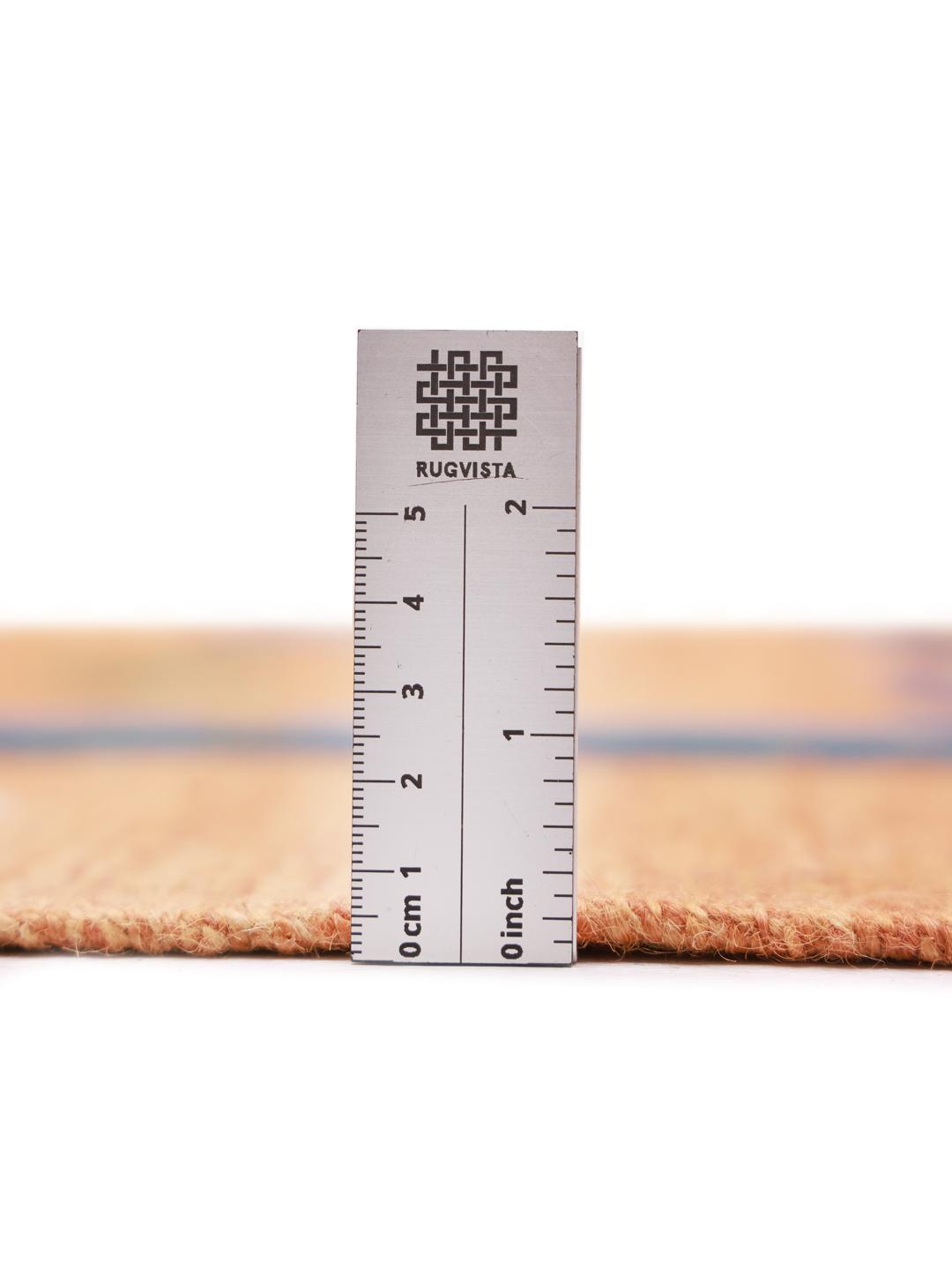
A key aspect of the Kelim's construction is the absence of a pile, which distinguishes it from knotted rugs. The weaver achieves the pattern by interweaving the coloured weft threads with the warp, a process that creates a reversible rug with a clean, graphic appearance. This technique allows for sharp, crisp designs and a lightweight, portable nature that has made these rugs highly prized for their ability to be moved and repurposed within the home.
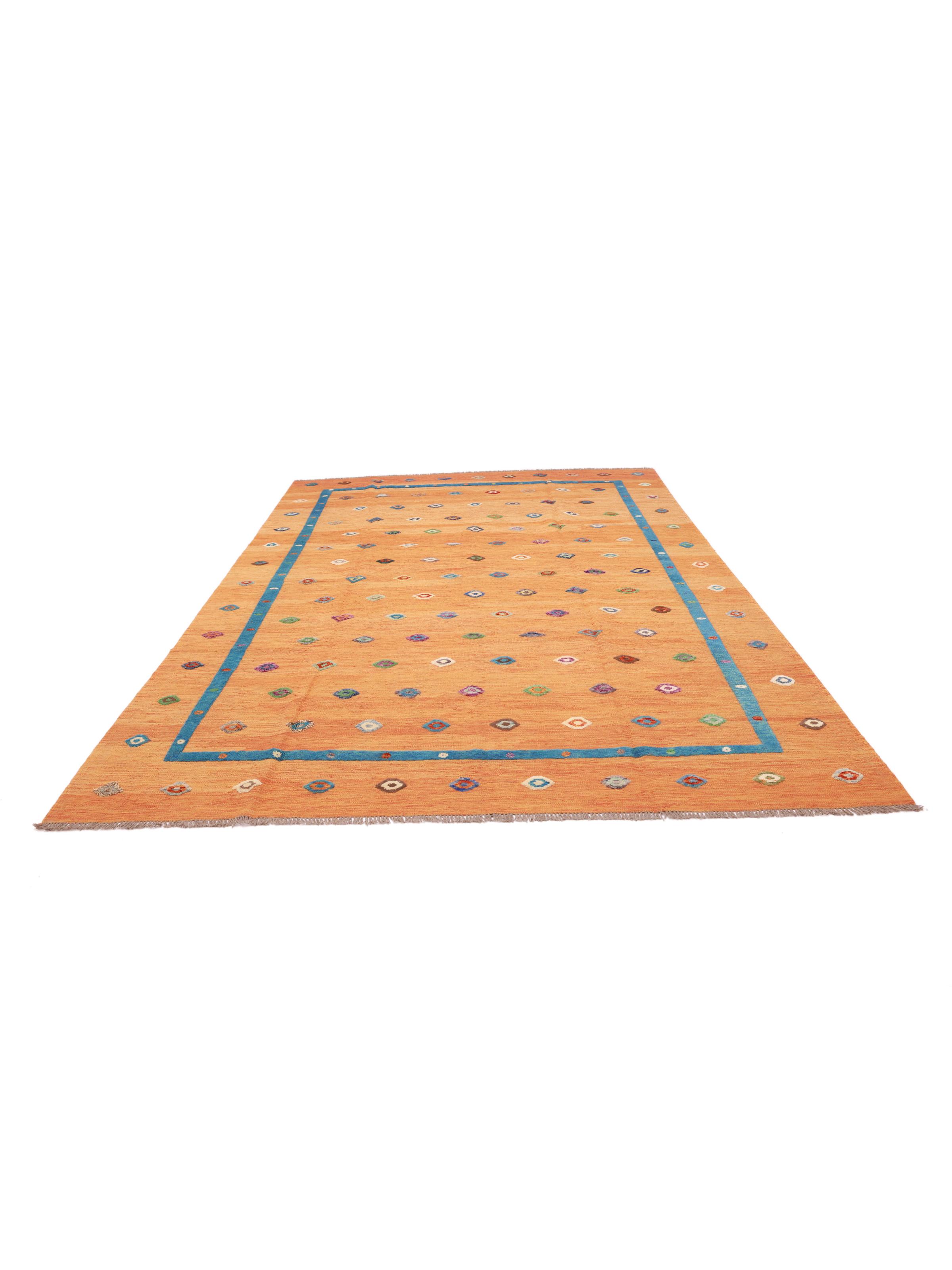
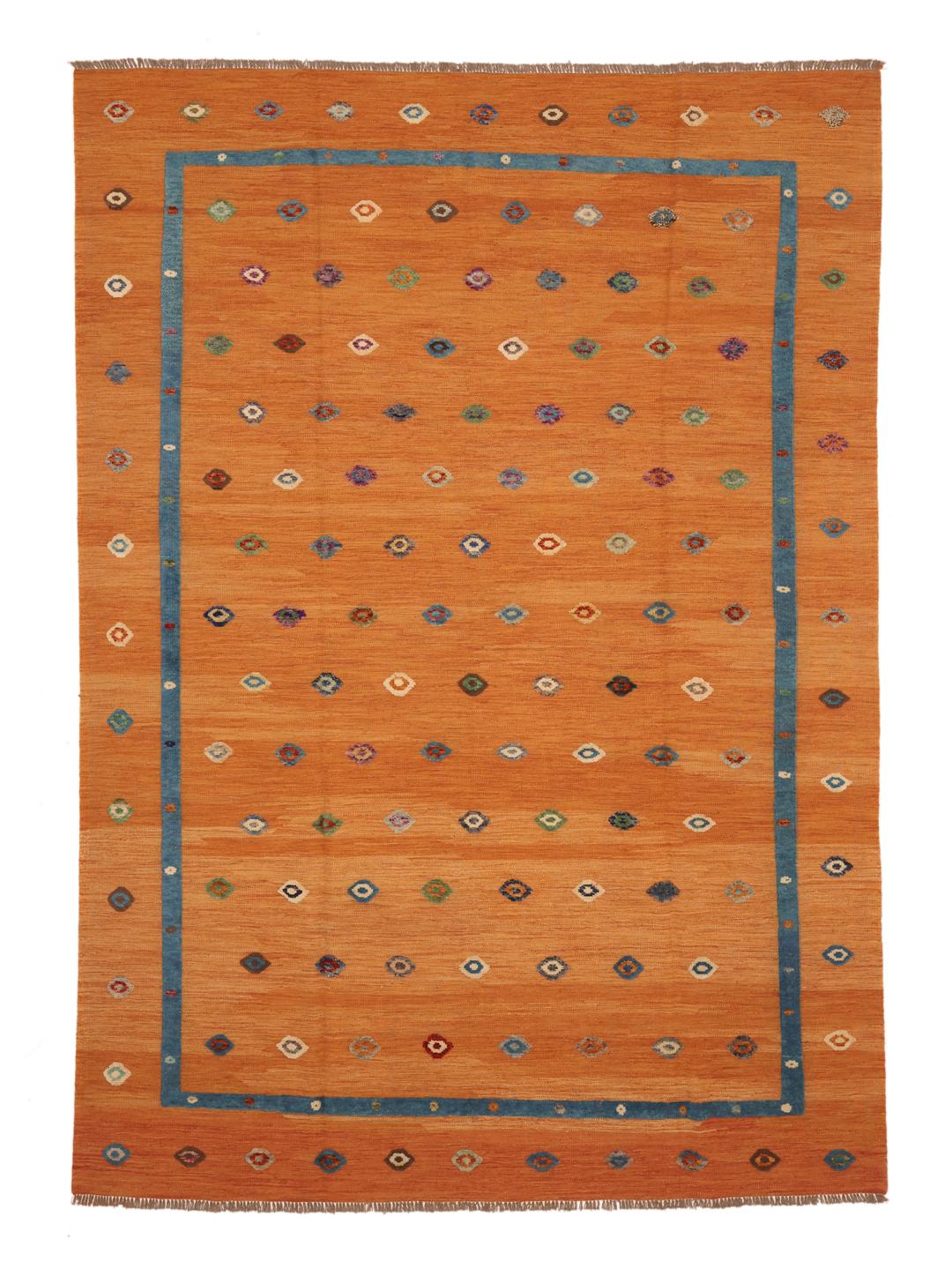
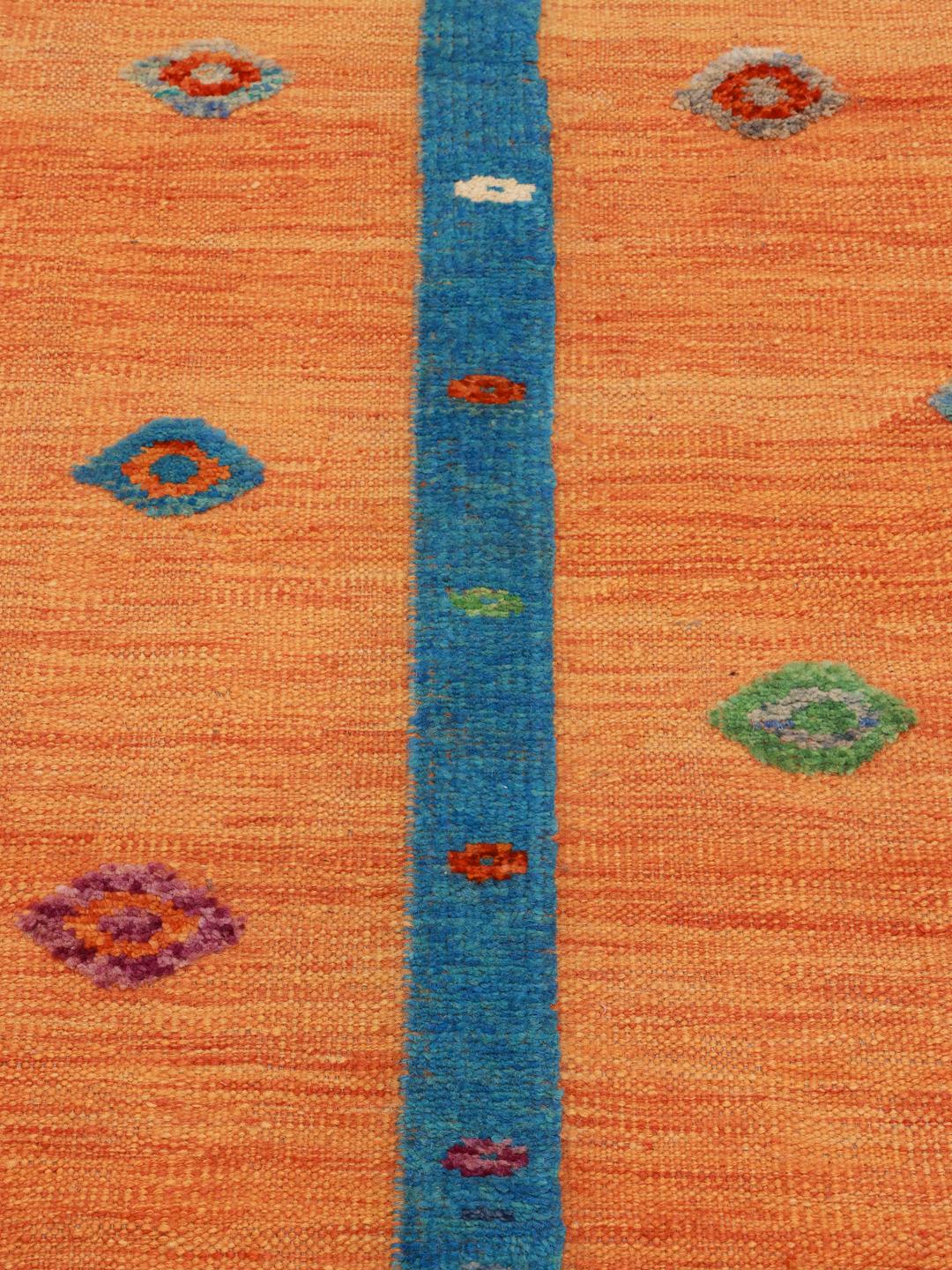
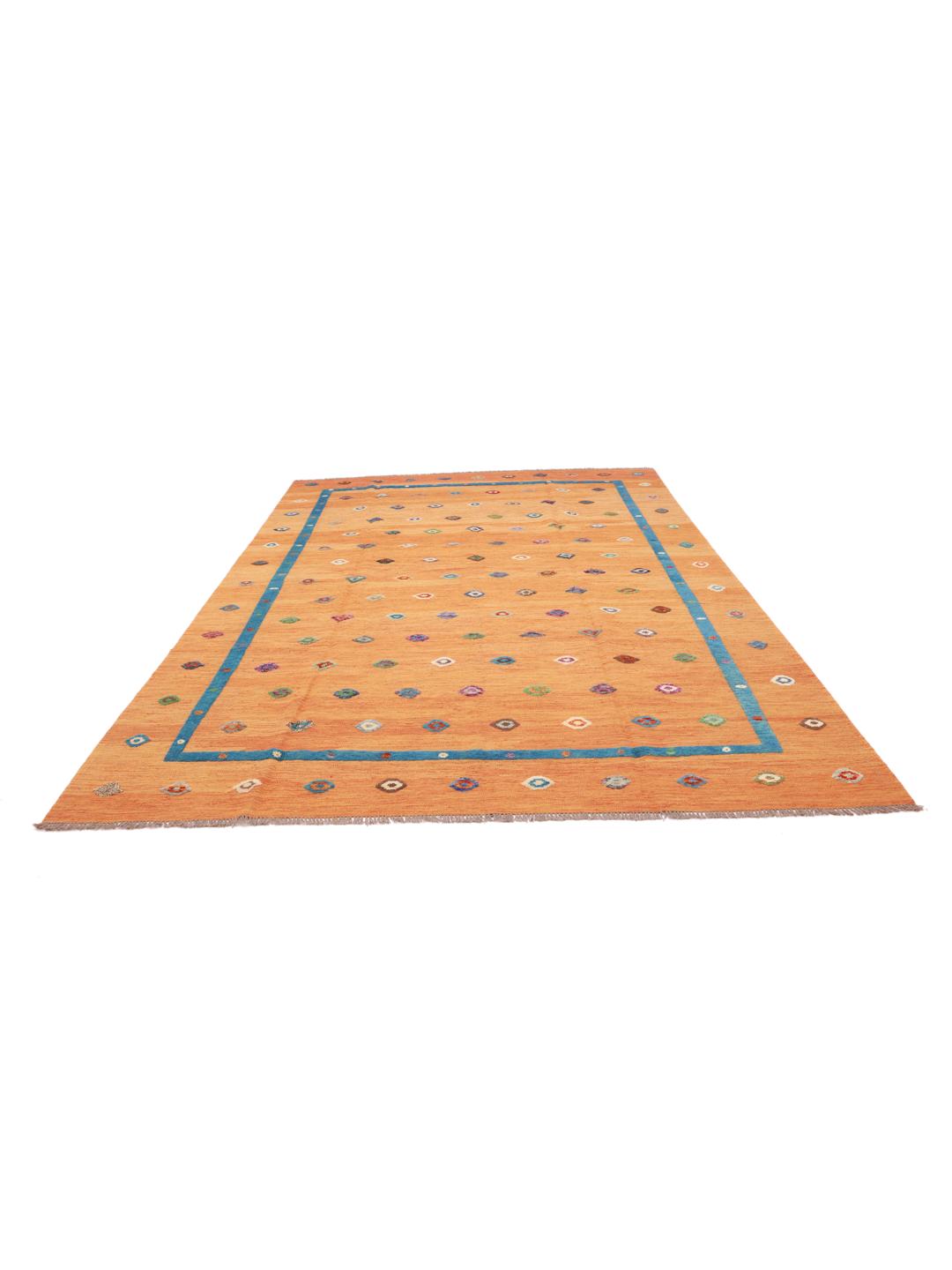
Visually, these rugs are often defined by their geometric language. While traditional patterns may include tribal symbols and protective motifs, the Nimbaft style often features a more restrained, scattered distribution of these shapes, allowing the field colour to take centre stage. The inclusion of a formal border, as seen in this piece, provides a sense of structure and frame, common in rugs designed to define a specific space within a room.
Owning an Afghan Kelim is an opportunity to connect with a long-standing heritage of craftsmanship. These rugs are not mass-produced, but rather the result of a slow, human-centred process that values tradition and natural materials. Collectors and homeowners alike value these pieces for their authenticity, the depth of their cultural narrative, and the way they bring a sense of history and warmth to a modern home environment.