Kelim weaving has deep roots across Central Asia and the Middle East, originating as a practical craft for nomadic communities who needed durable, lightweight floor coverings and storage bags. Over centuries, these utilitarian textiles evolved into sophisticated expressions of regional identity, with distinct weaving centres developing their own signature styles and colour palettes.
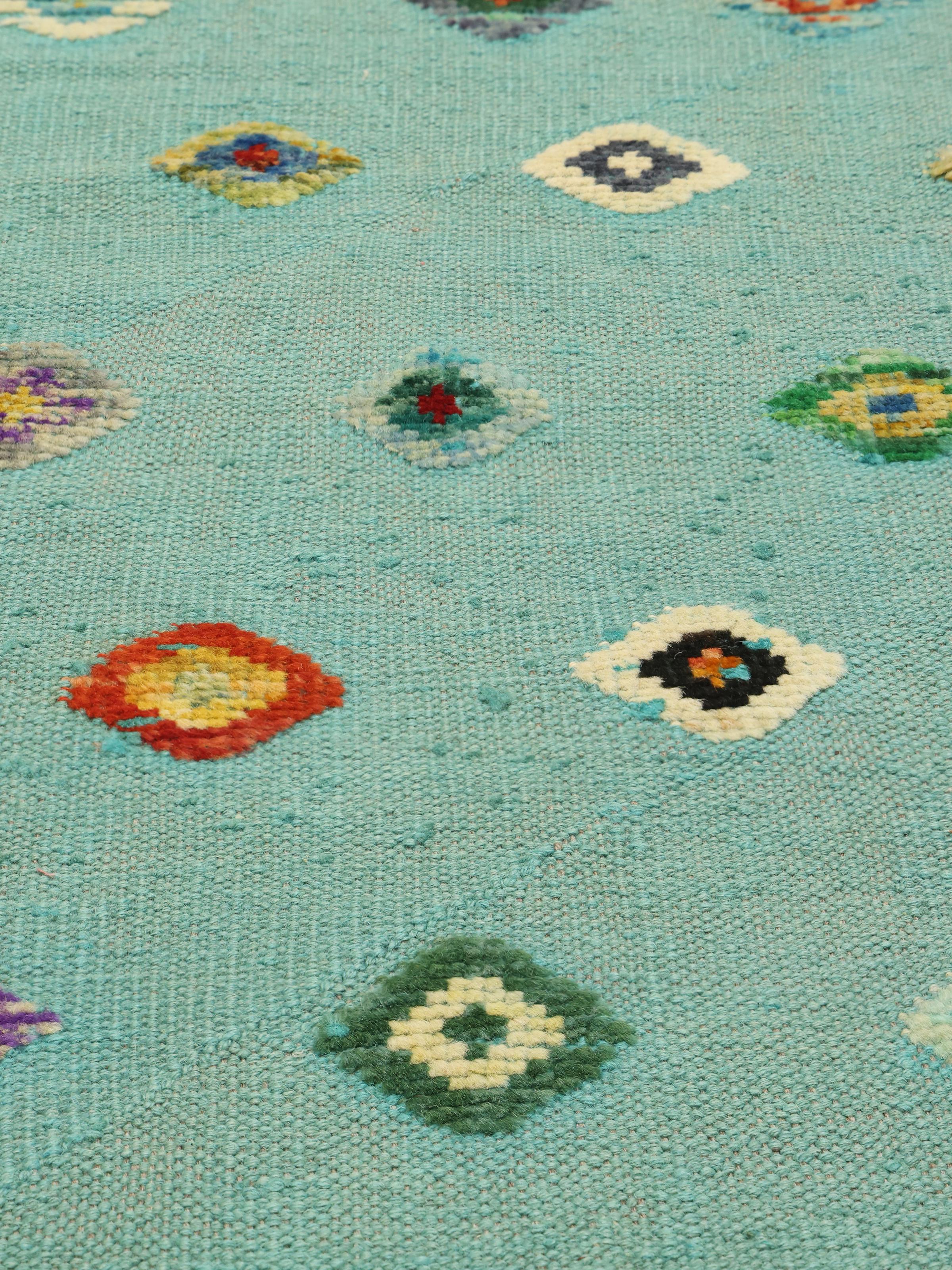
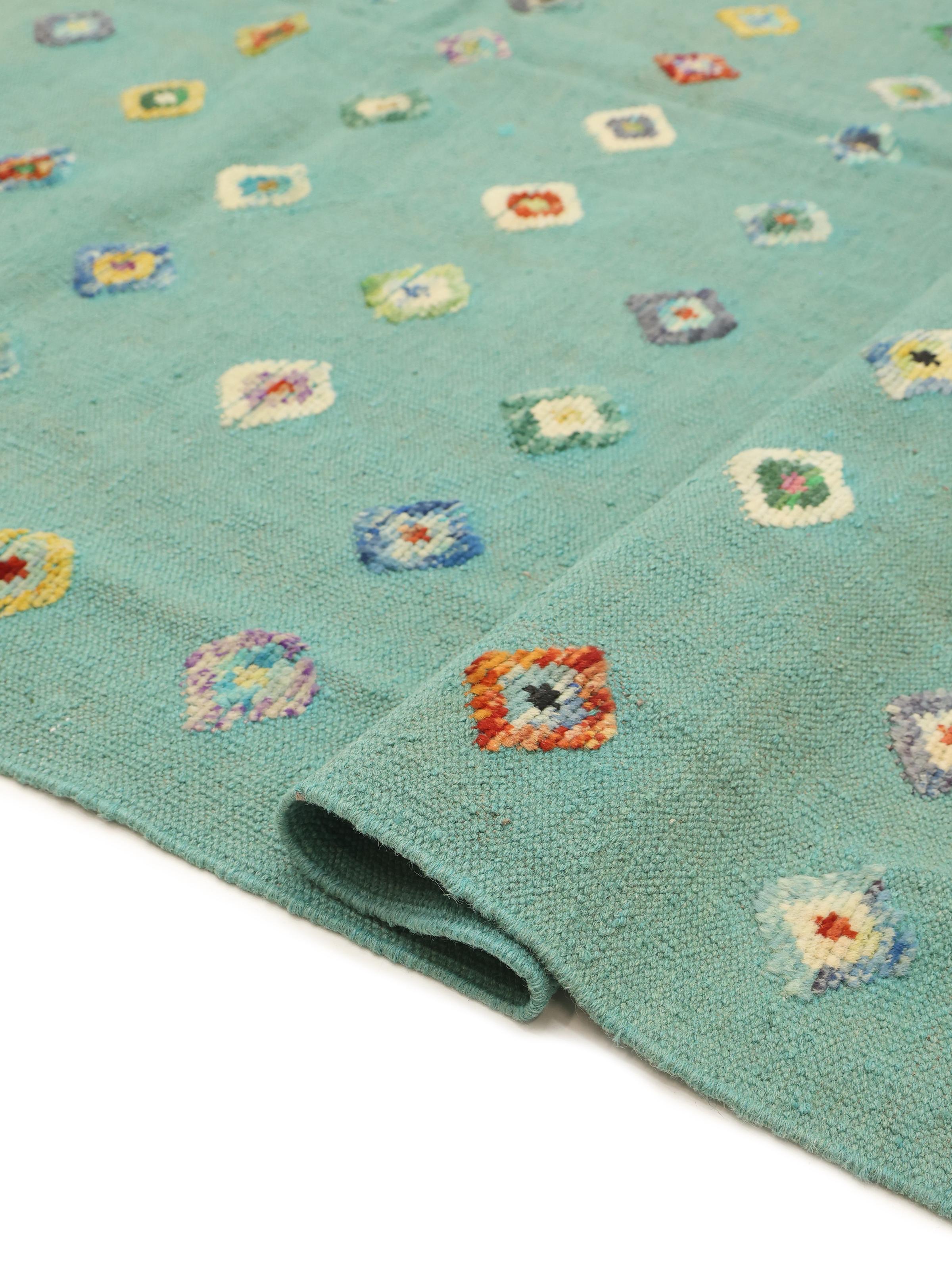
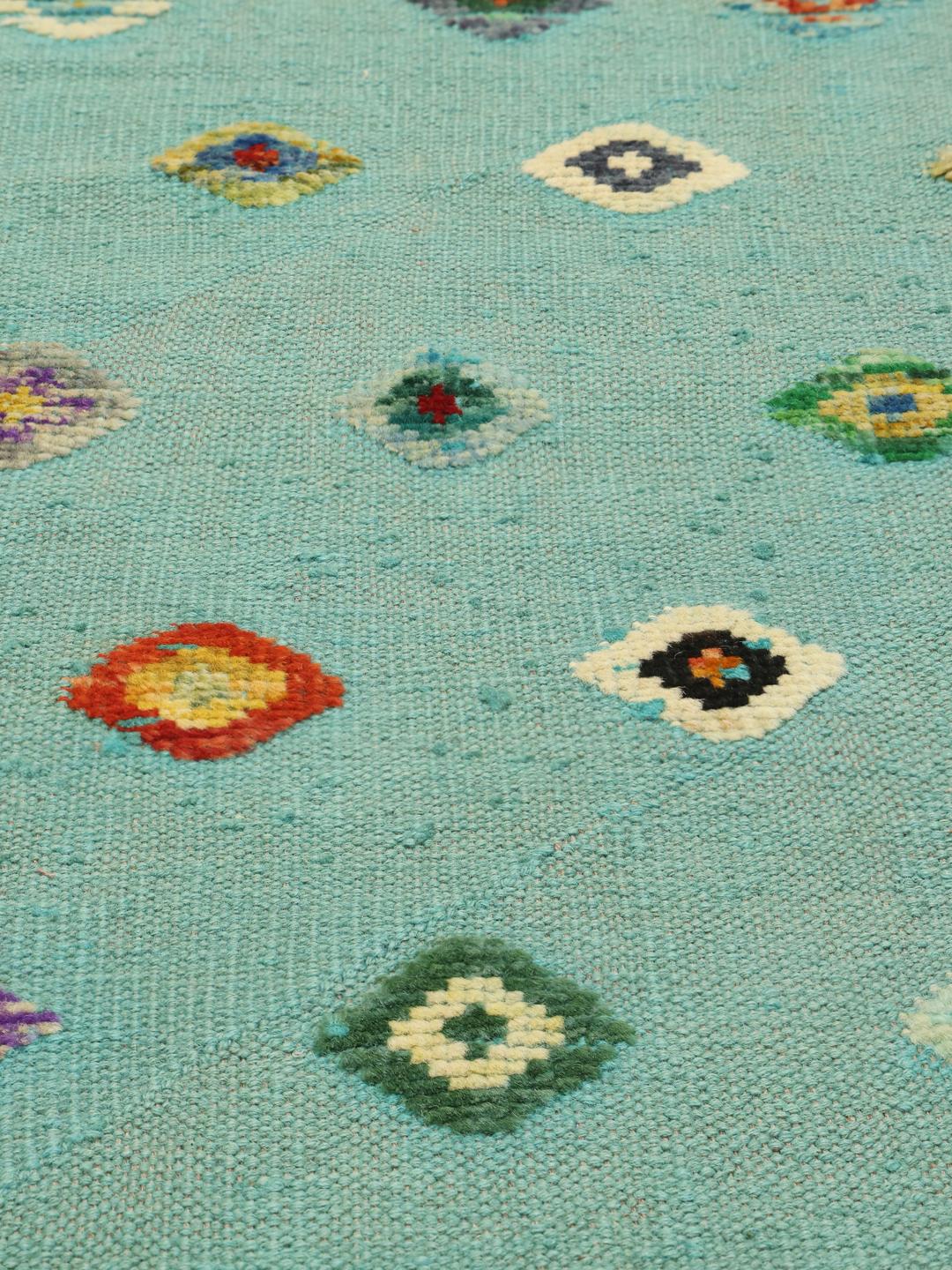
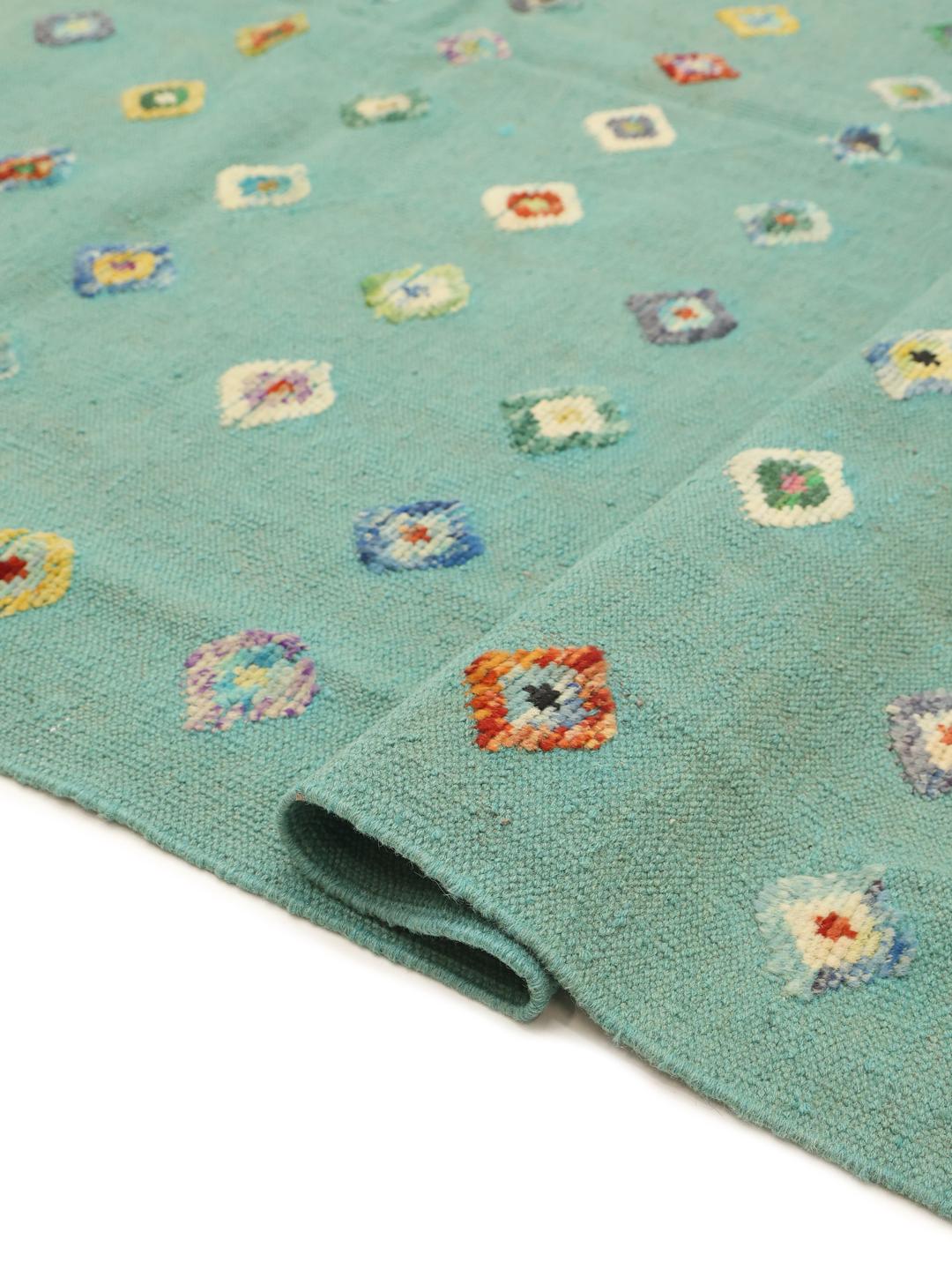
The term Nimbaft refers to a specific regional variant of flatweaving traditions, known for its balanced structure and distinct approach to pattern layout. Unlike pile rugs made with knotted techniques, flatweaves are constructed by tightly interlacing horizontal and vertical threads, creating a smooth, reversible textile that emphasises graphic clarity and structural strength.
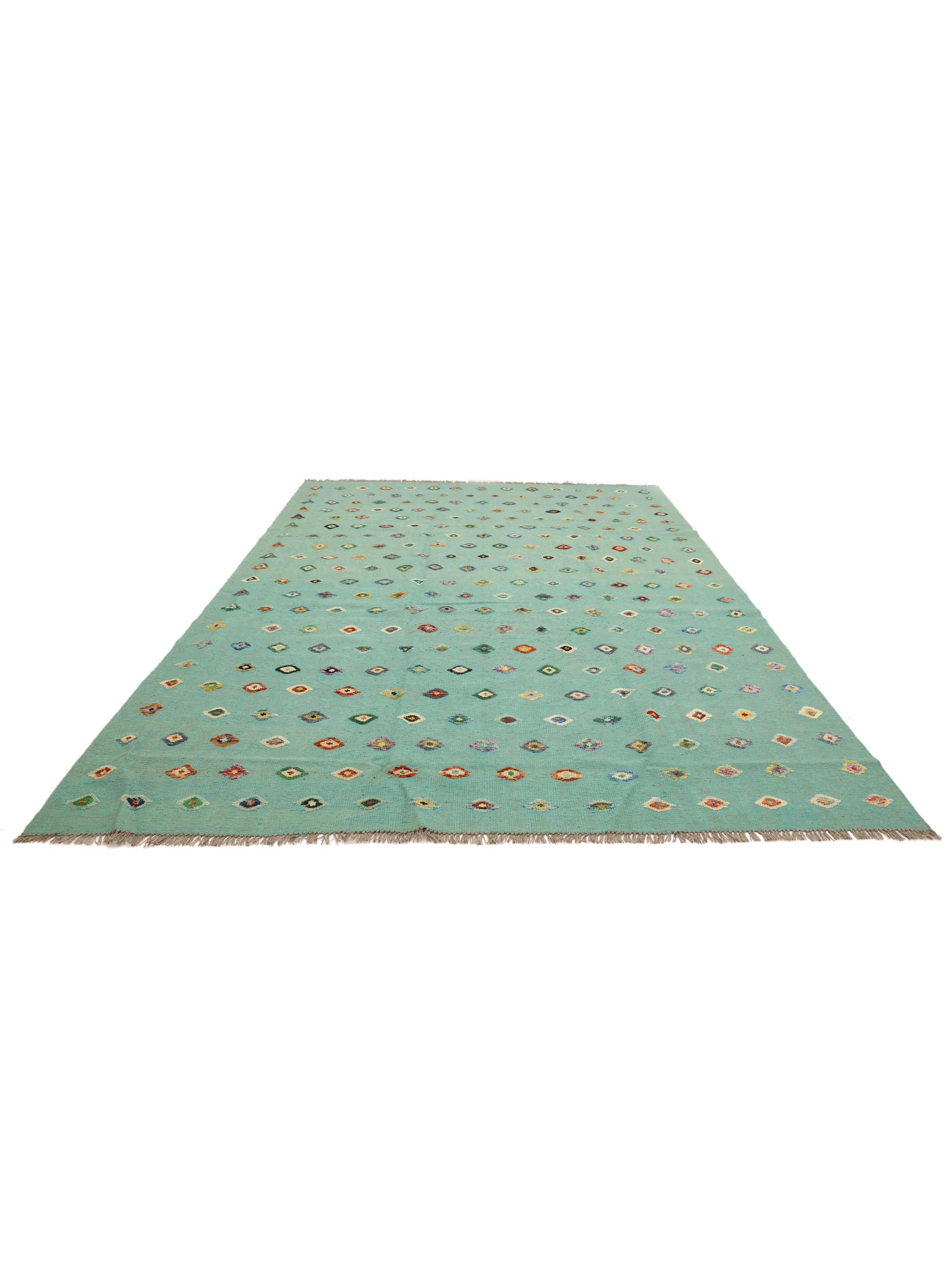
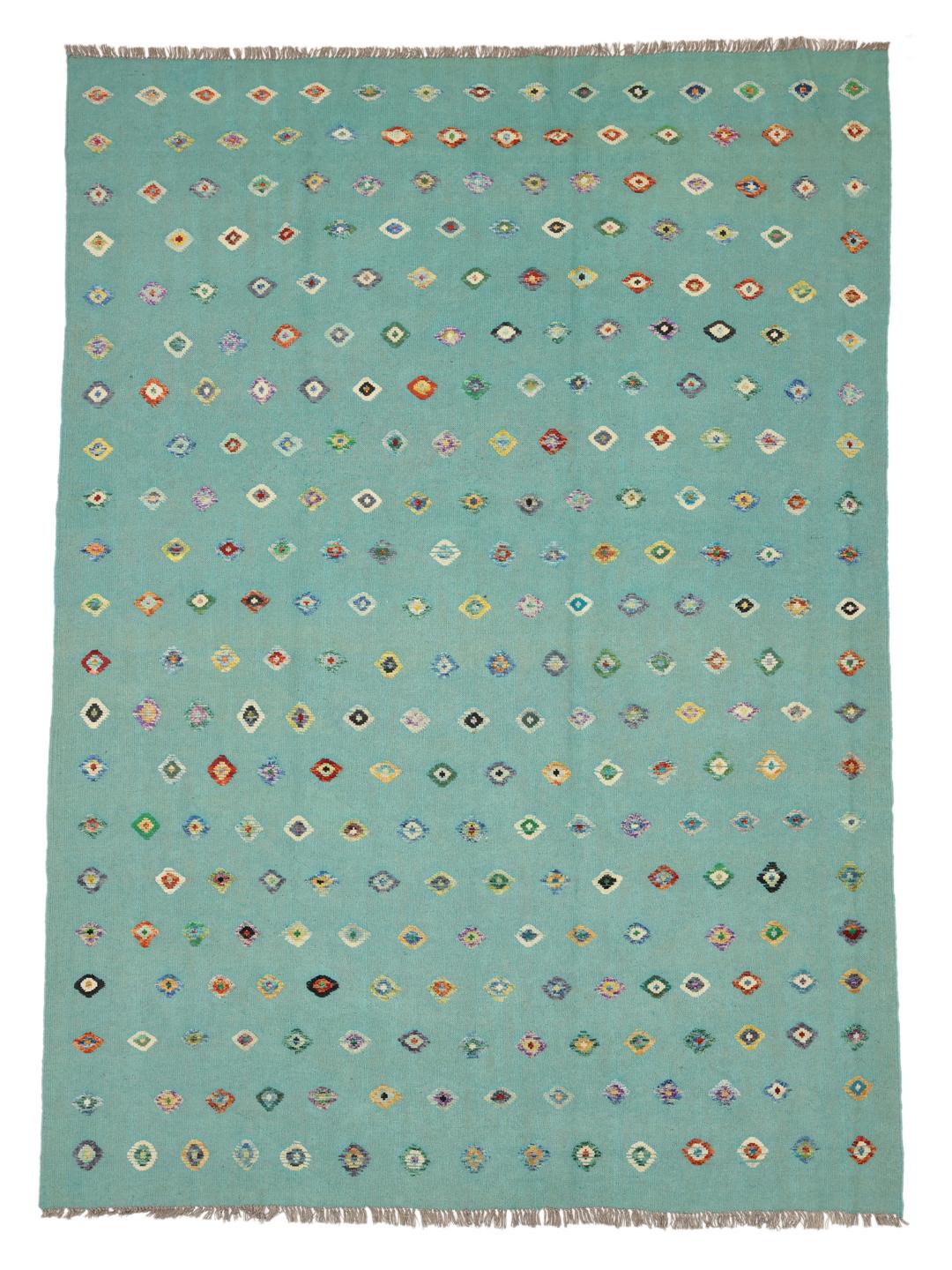
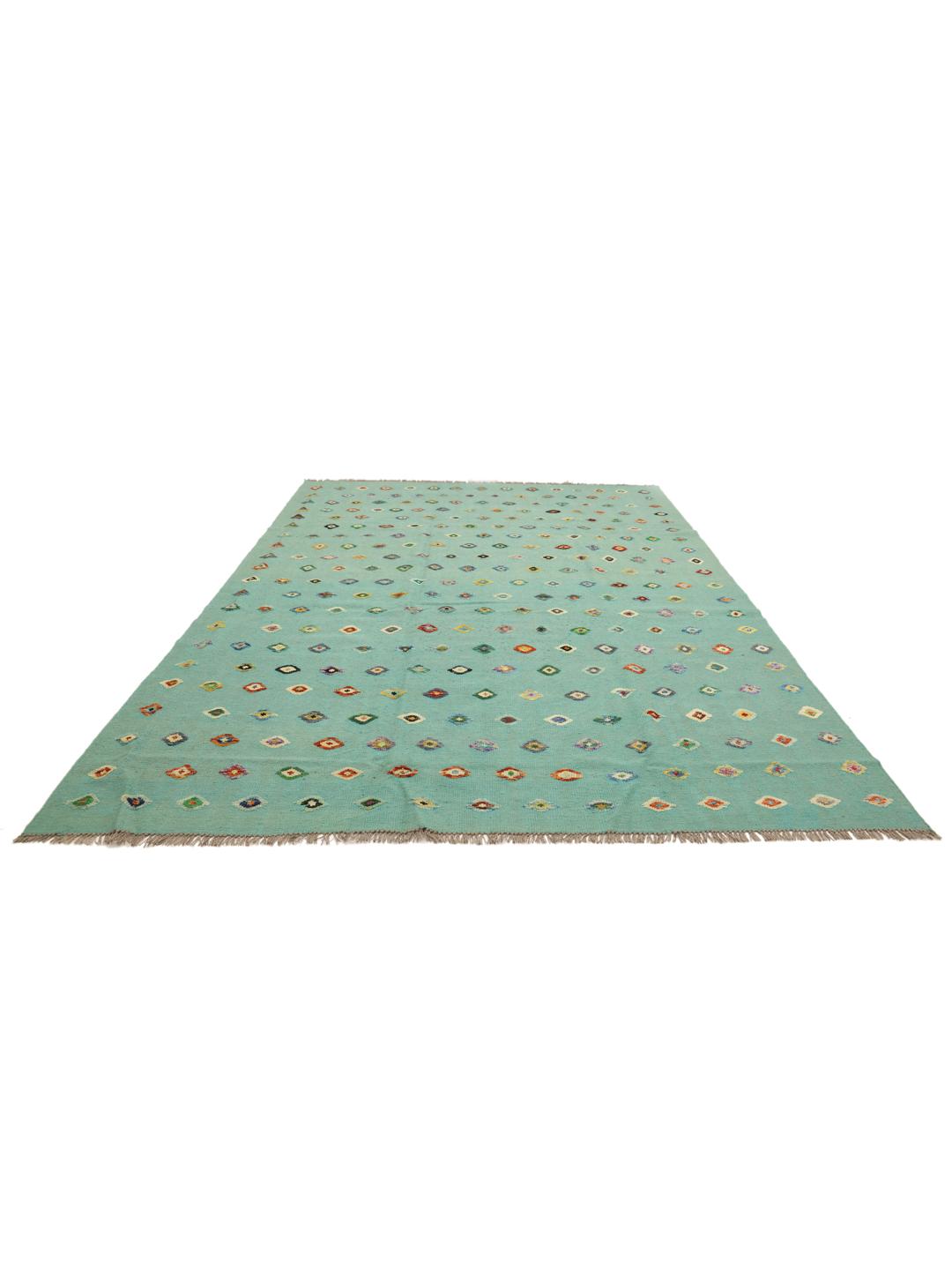
The visual language of Afghan kilims typically features geometric motifs, diamond symbols, and traditional tribal markers arranged in rhythmic rows across the field. In this particular piece, delicate geometric elements float across a soothing teal background, creating a balanced composition that bridges traditional motifs with contemporary aesthetic sensibilities.
Owning a traditional flatweave connects your home to a rich lineage of textile craftsmanship and storytelling. Collectors and interior enthusiasts value these pieces for their authenticity, cultural depth, and the tangible evidence of human artistry preserved in every thread and motif.