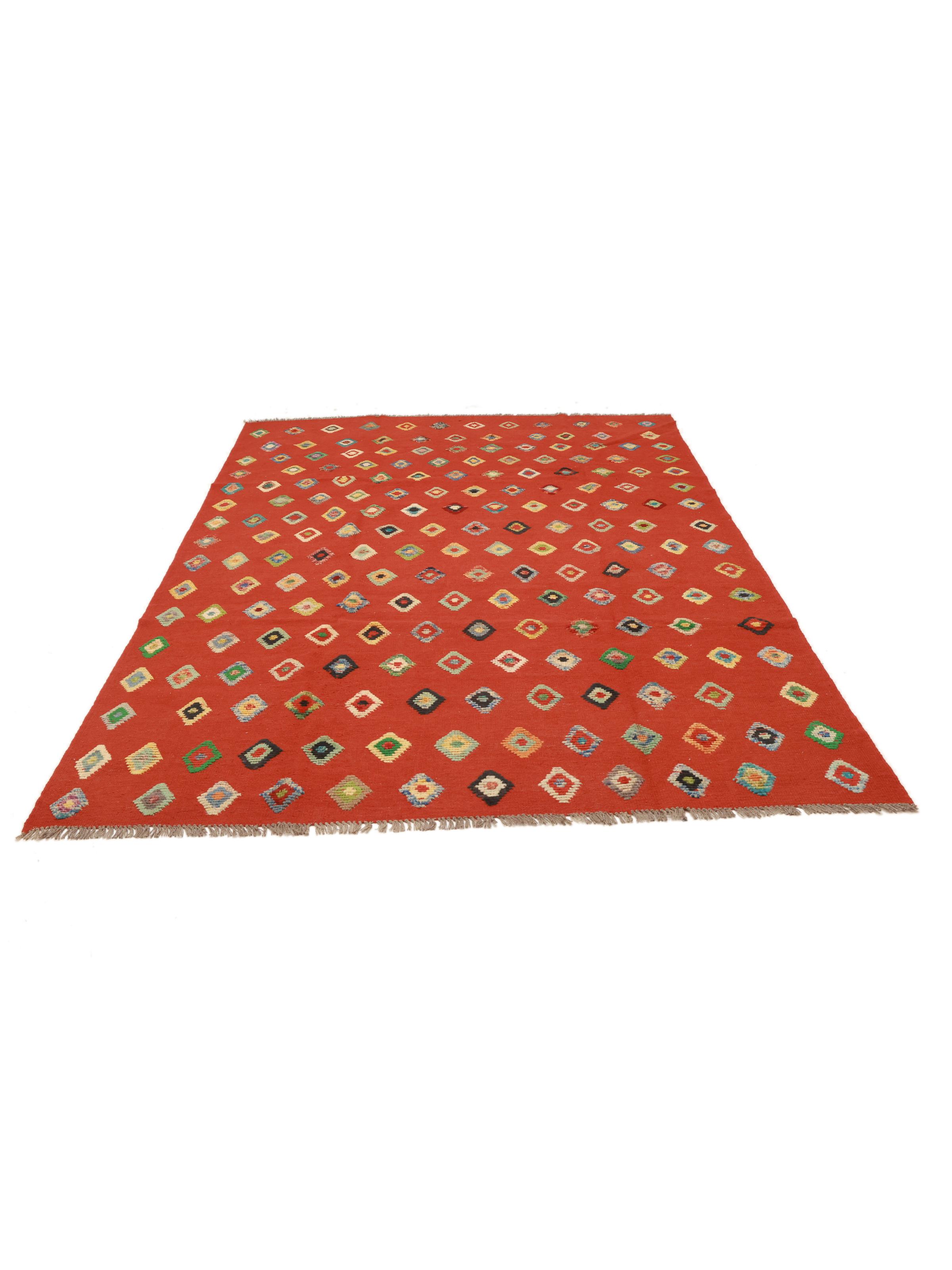
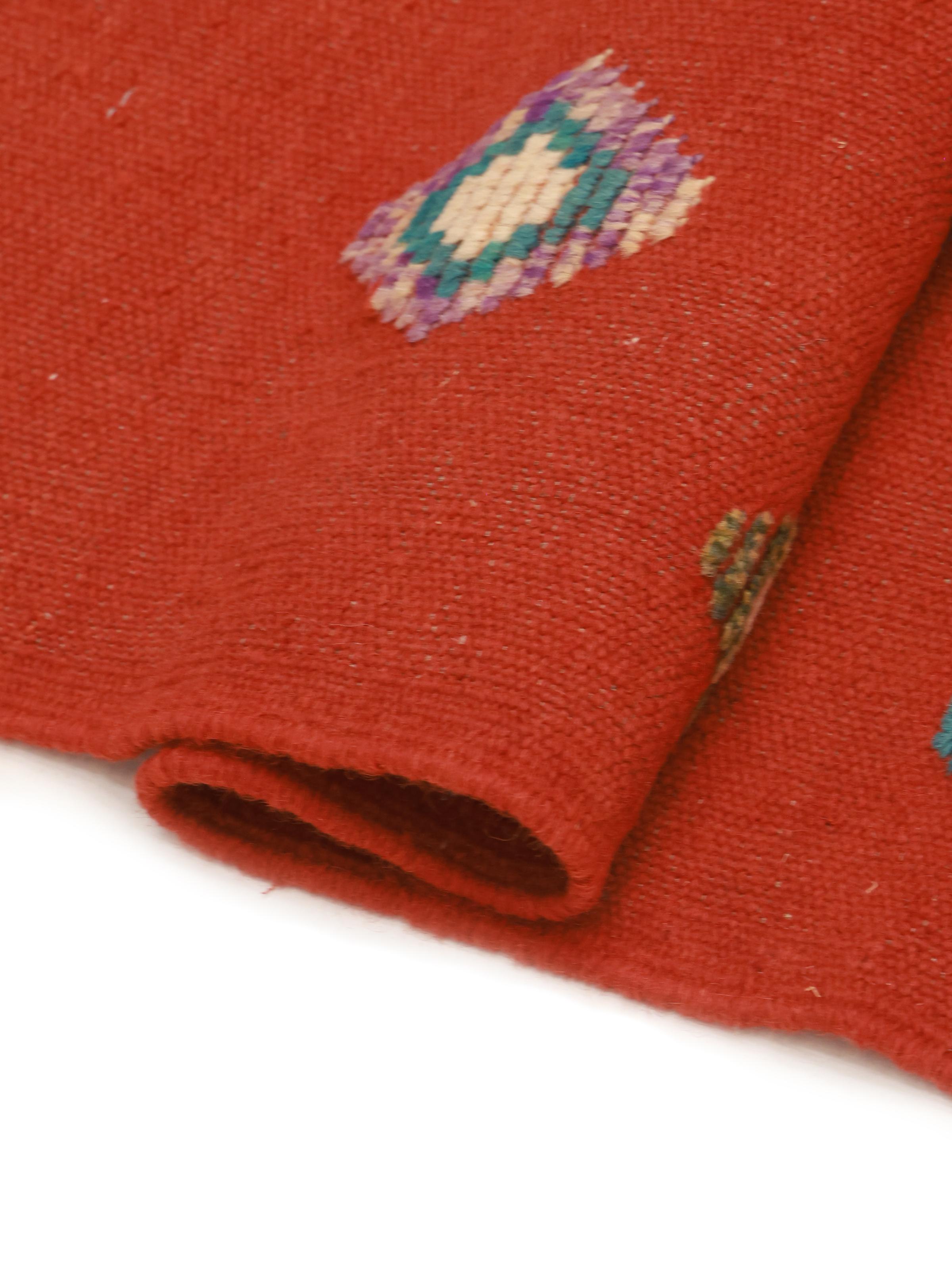
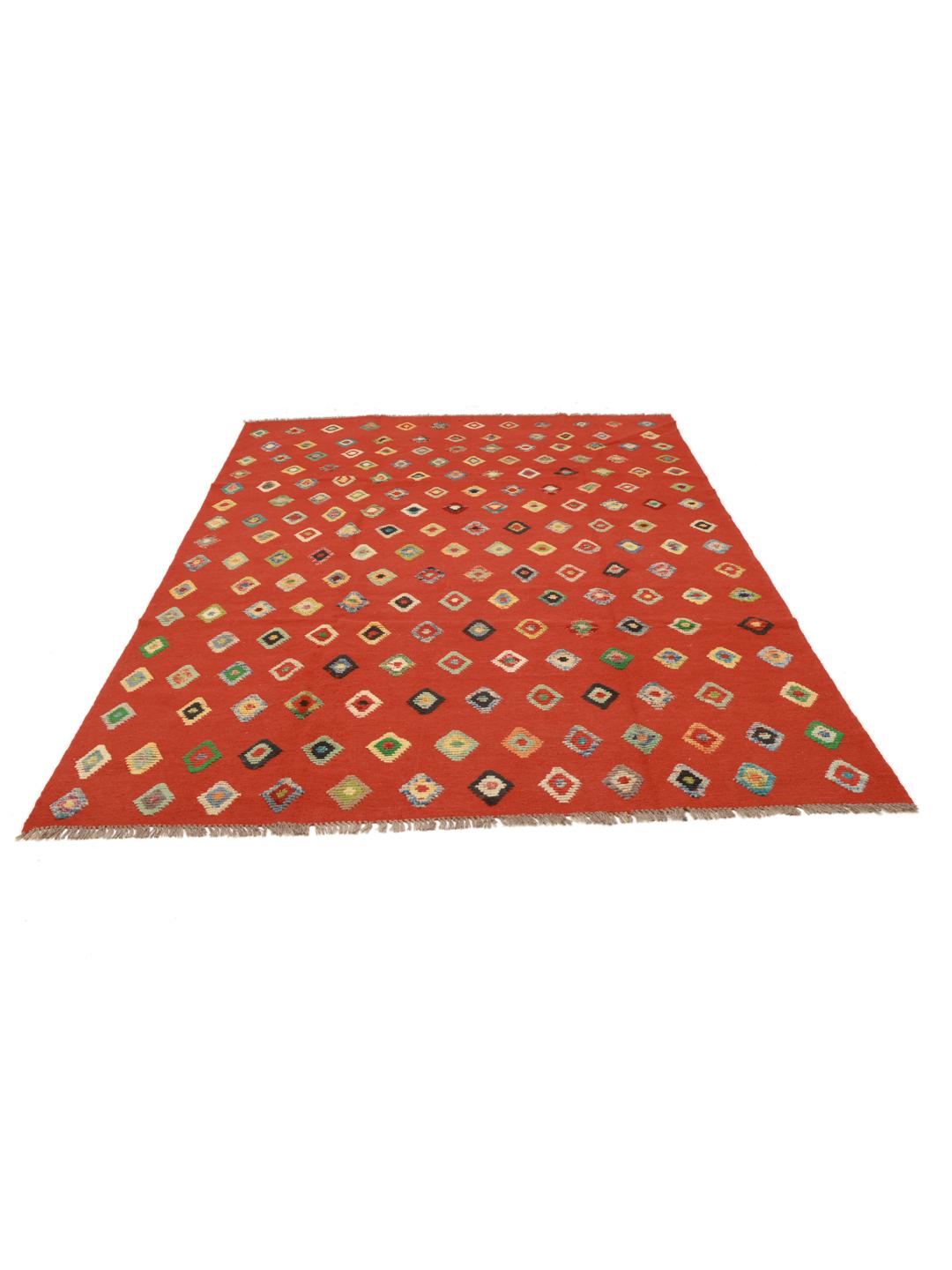
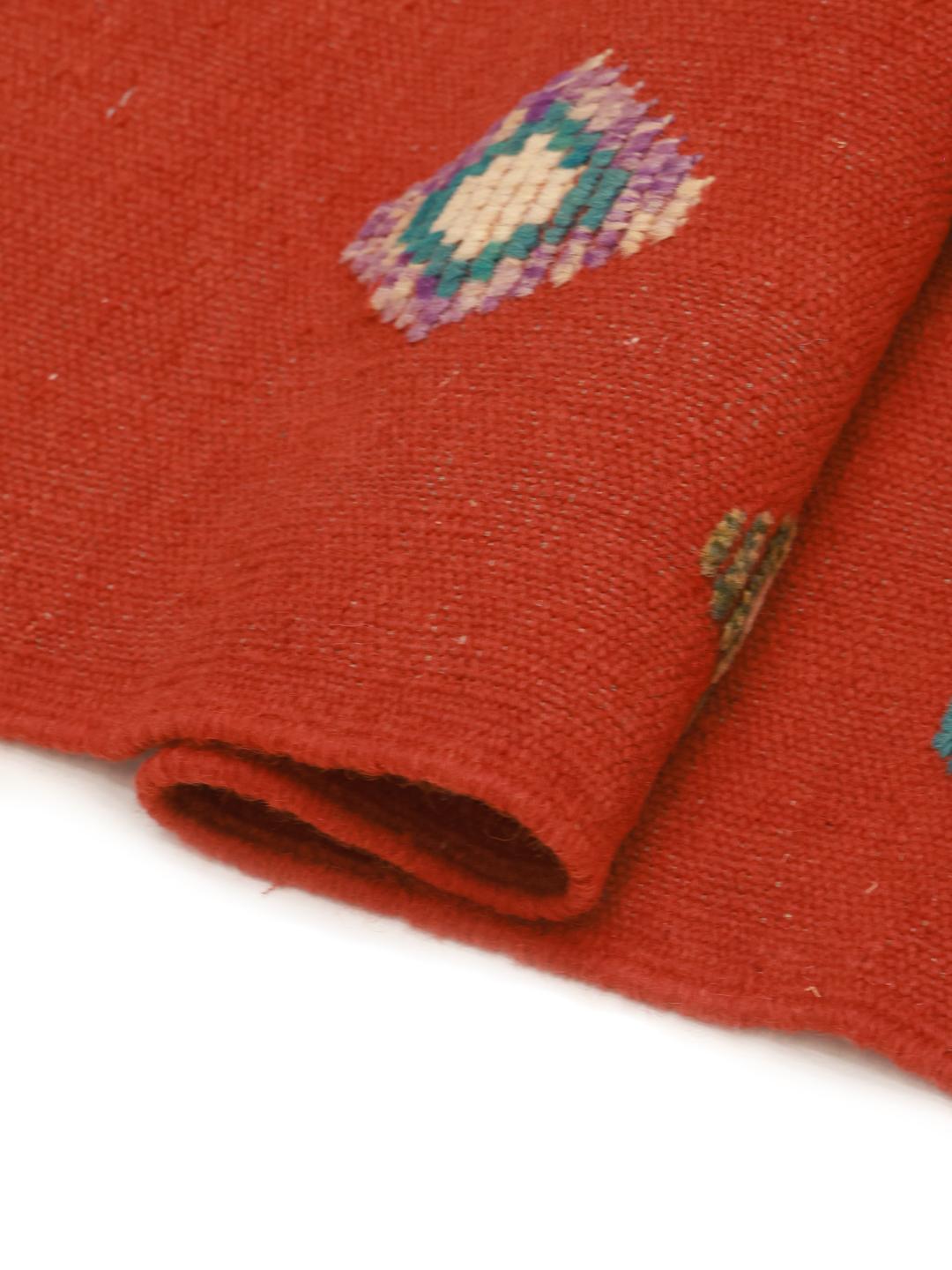
The Kelim Nimbaft tradition finds its roots in the rich, nomadic weaving culture of Afghanistan. These rugs are highly regarded for their functional beauty, historically serving as versatile floor coverings, wall hangings, or storage bags for travelling families. The term 'Kelim' refers to the flat-weaving technique that distinguishes these pieces from knotted rugs, resulting in a lightweight, double-sided textile that is as practical as it is beautiful.
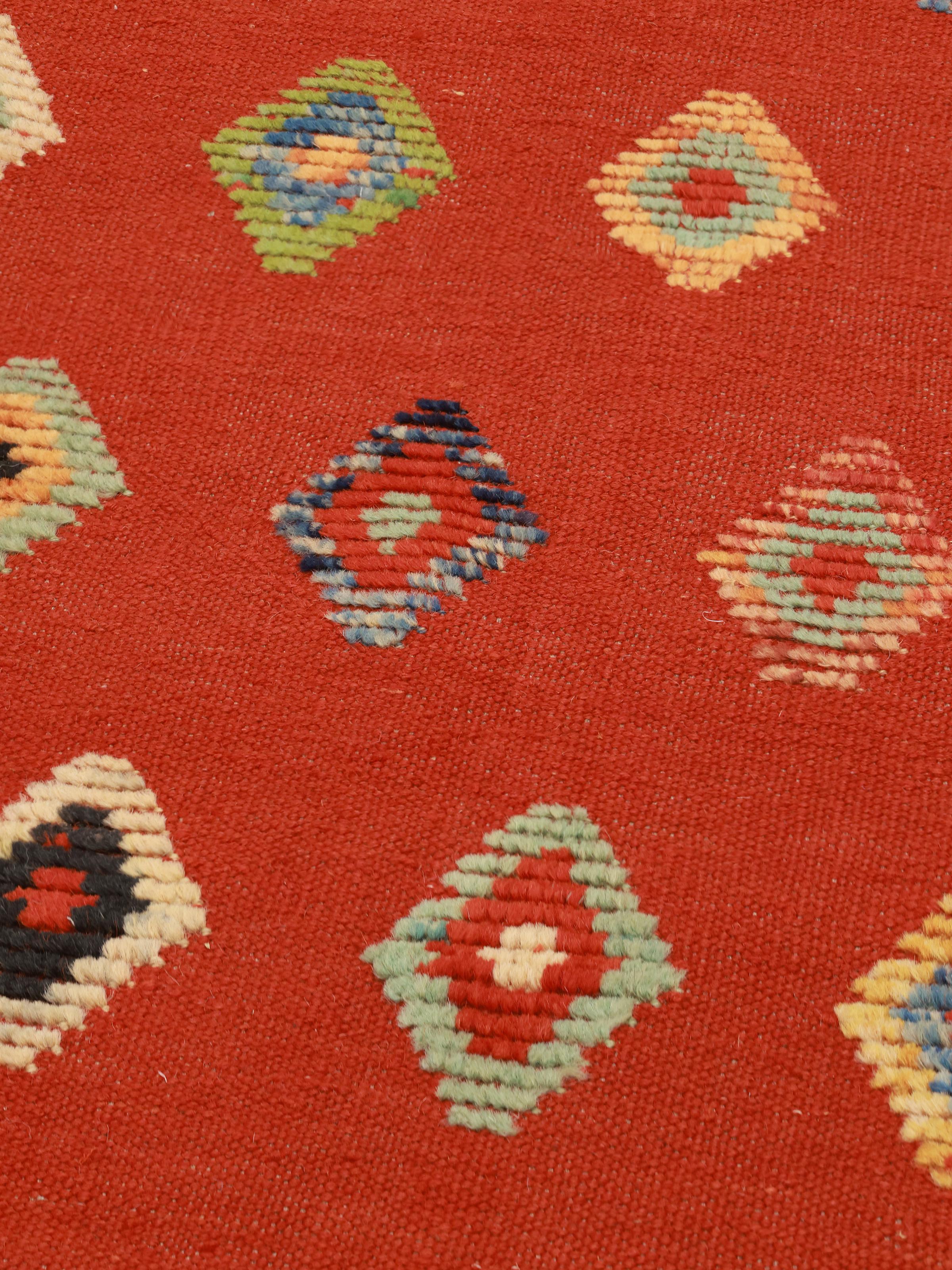
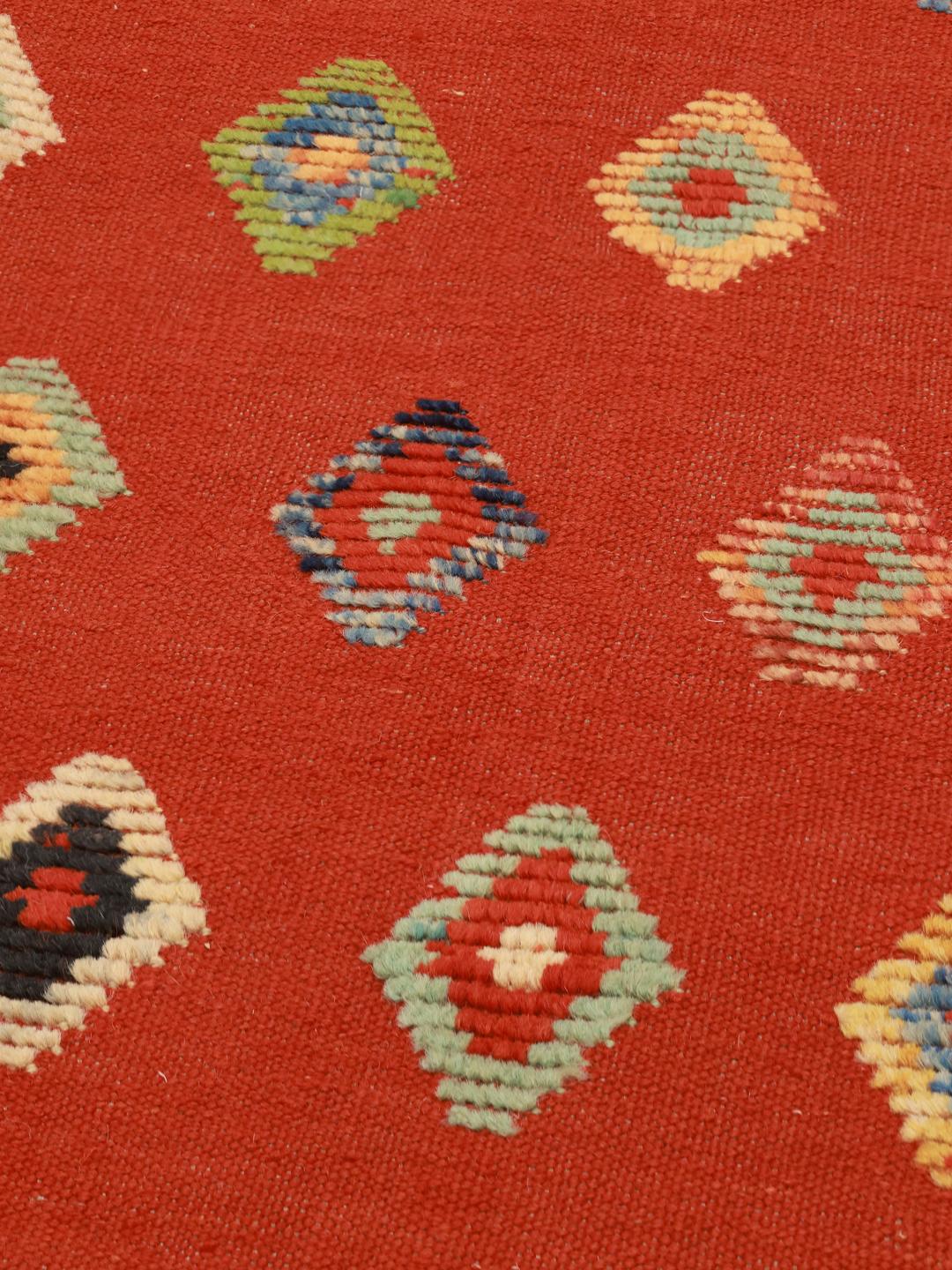
The 'Nimbaft' style is characterised by its meticulous attention to detail and its specific, often geometric, design language. By using a flat-weave technique, the artisans create a surface where the pattern is woven directly into the foundation. This method requires a high level of skill, as the weaver must constantly manage colour changes and intricate motif placement without the support of a pile, resulting in a refined and durable final product.
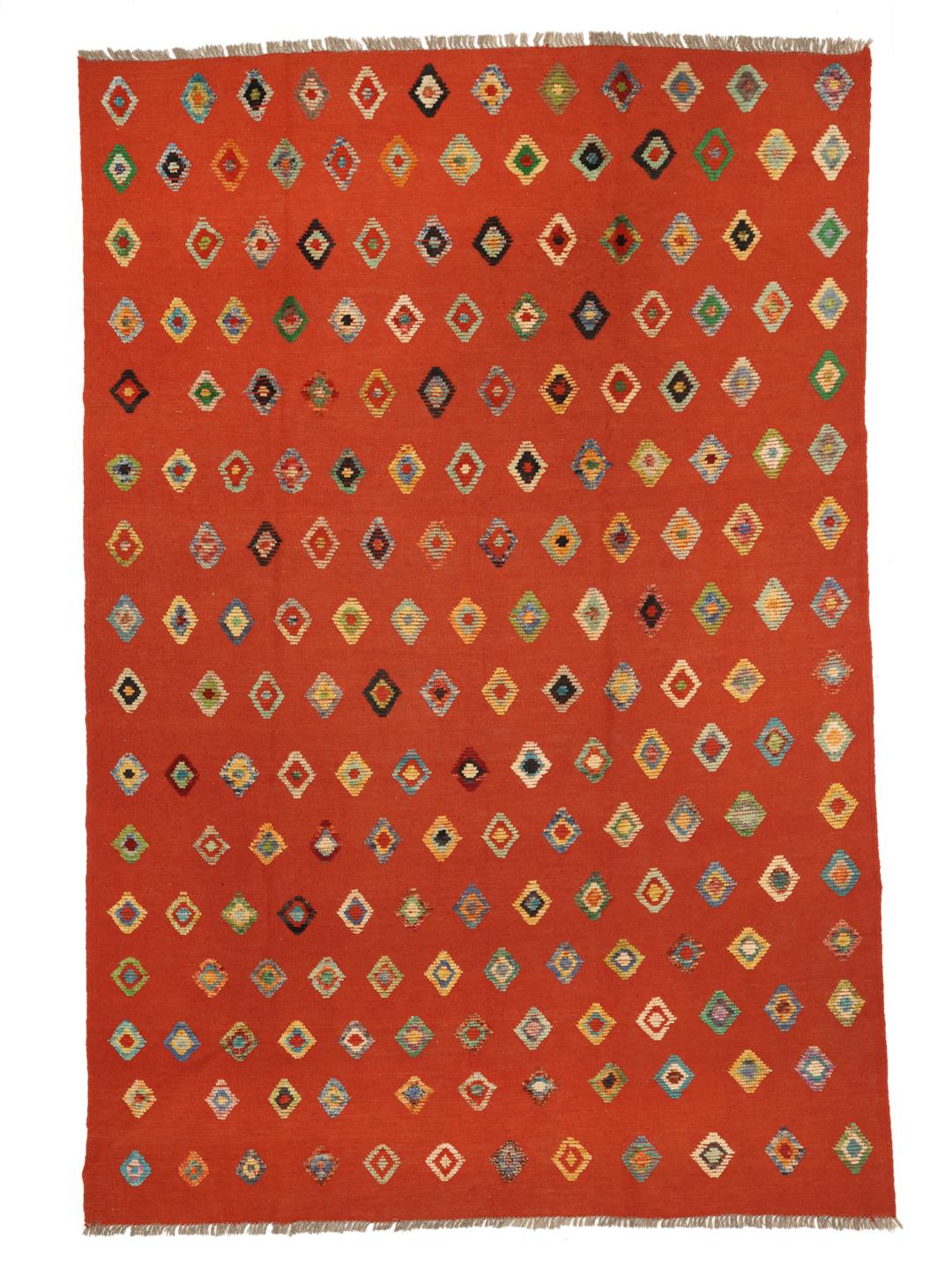
Visually, these rugs are defined by their use of bold, earthy tones and precise geometric motifs. The diamond pattern seen here is a classic signature, often representing protective symbols or elements from the natural landscape of the Afghan highlands. The use of a vibrant red field is deeply traditional, reflecting the natural dyes historically available in the region and the cultural importance of warmth and vitality in the home.
Owning an authentic Afghan Kelim is a way to connect with a legacy of craftsmanship that has survived for generations. These rugs are valued by collectors not only for their aesthetic appeal but for the skill and patience required to produce them. By choosing a hand-woven piece, you are supporting a living tradition and preserving a form of cultural expression that values human connection and lasting quality over mass manufacturing.