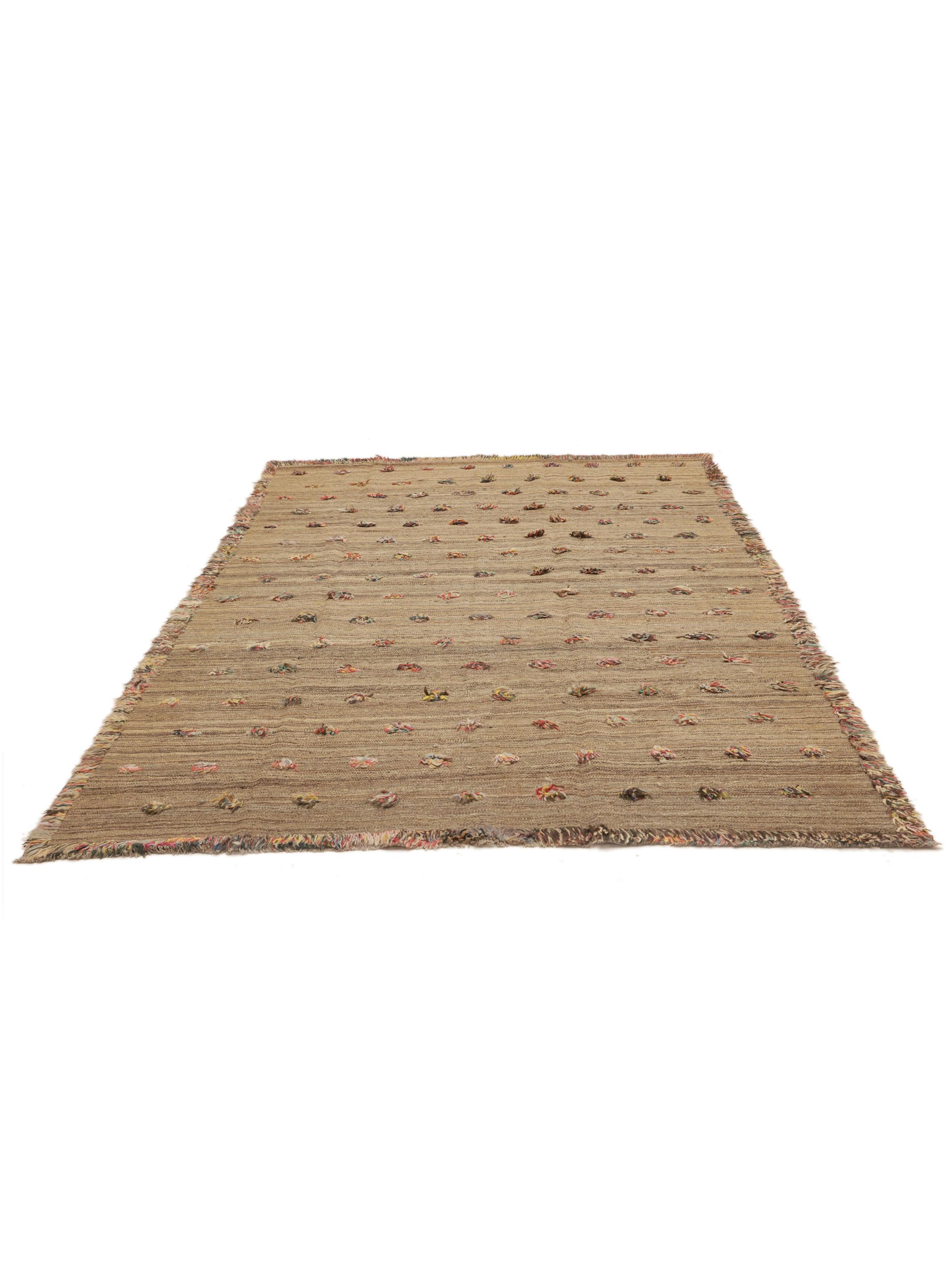
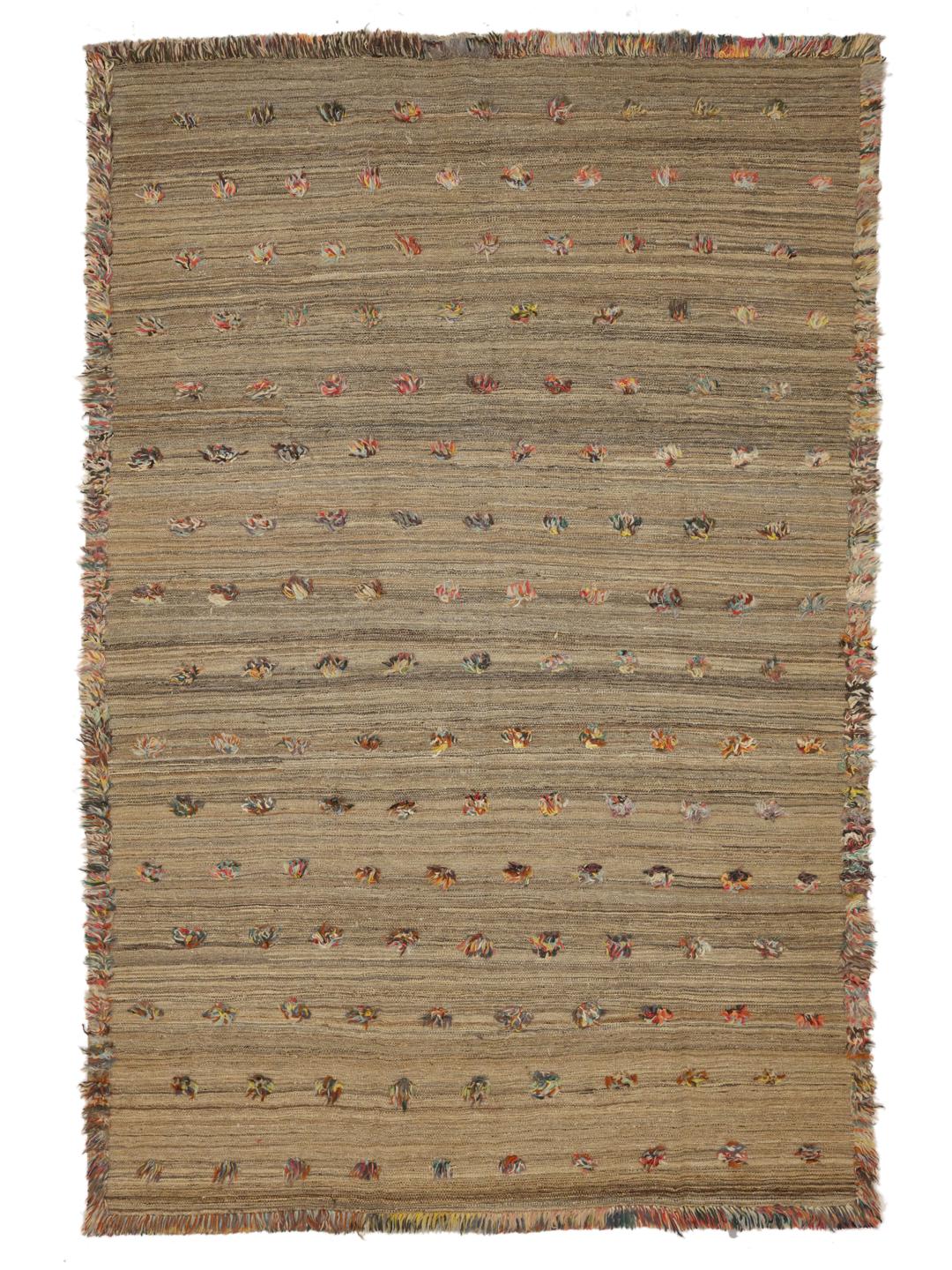
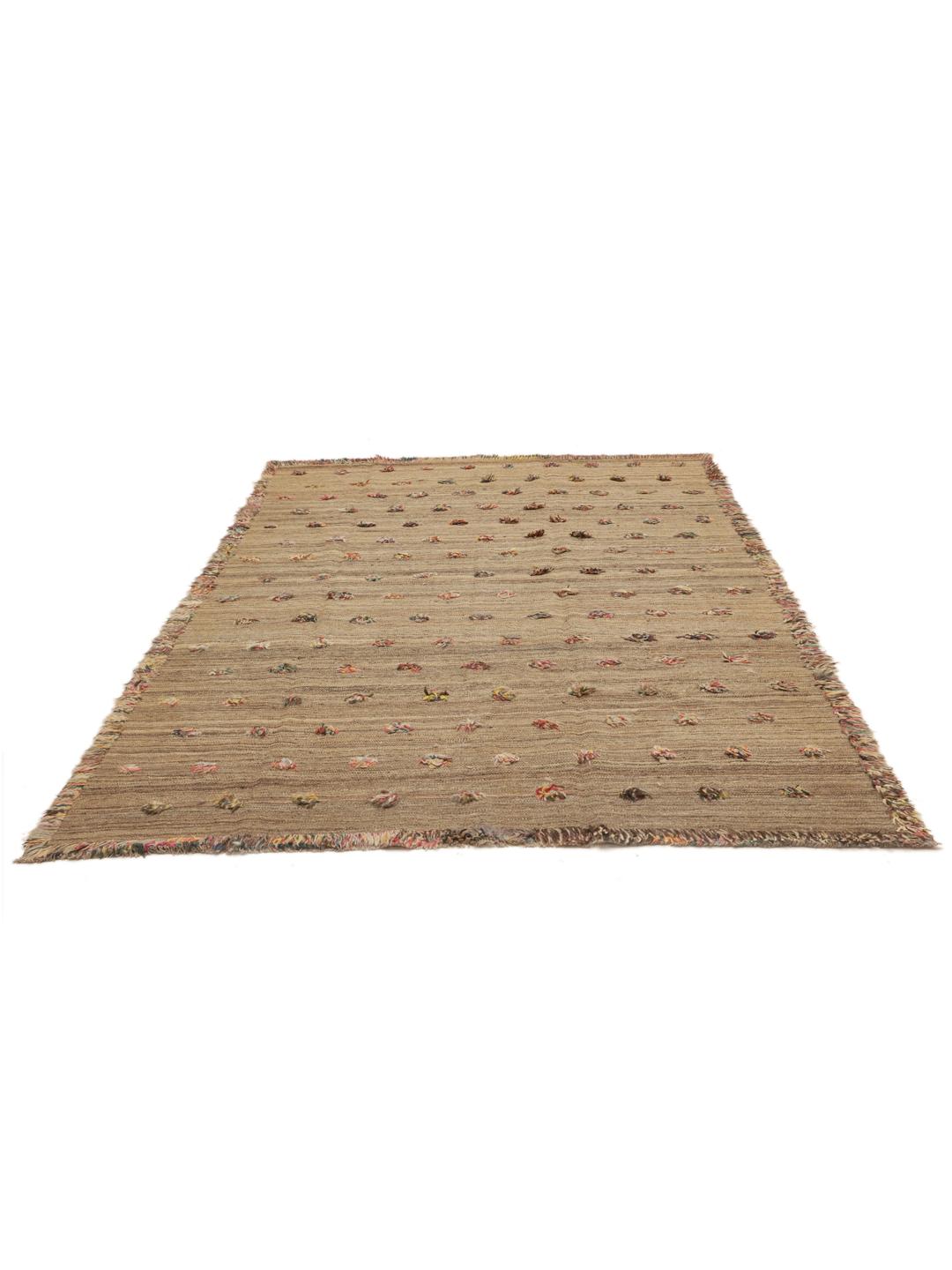
The Kelim Nimbaft originates from the rich weaving traditions of Afghanistan, where nomadic and village life have long influenced the creation of functional textiles. These rugs are historically significant for their role in everyday life, serving as floor coverings, blankets, and storage bags for families across the region. The term Kelim refers to the flat-weaving technique used, which is one of the oldest and most versatile methods of rug making in the Middle East.
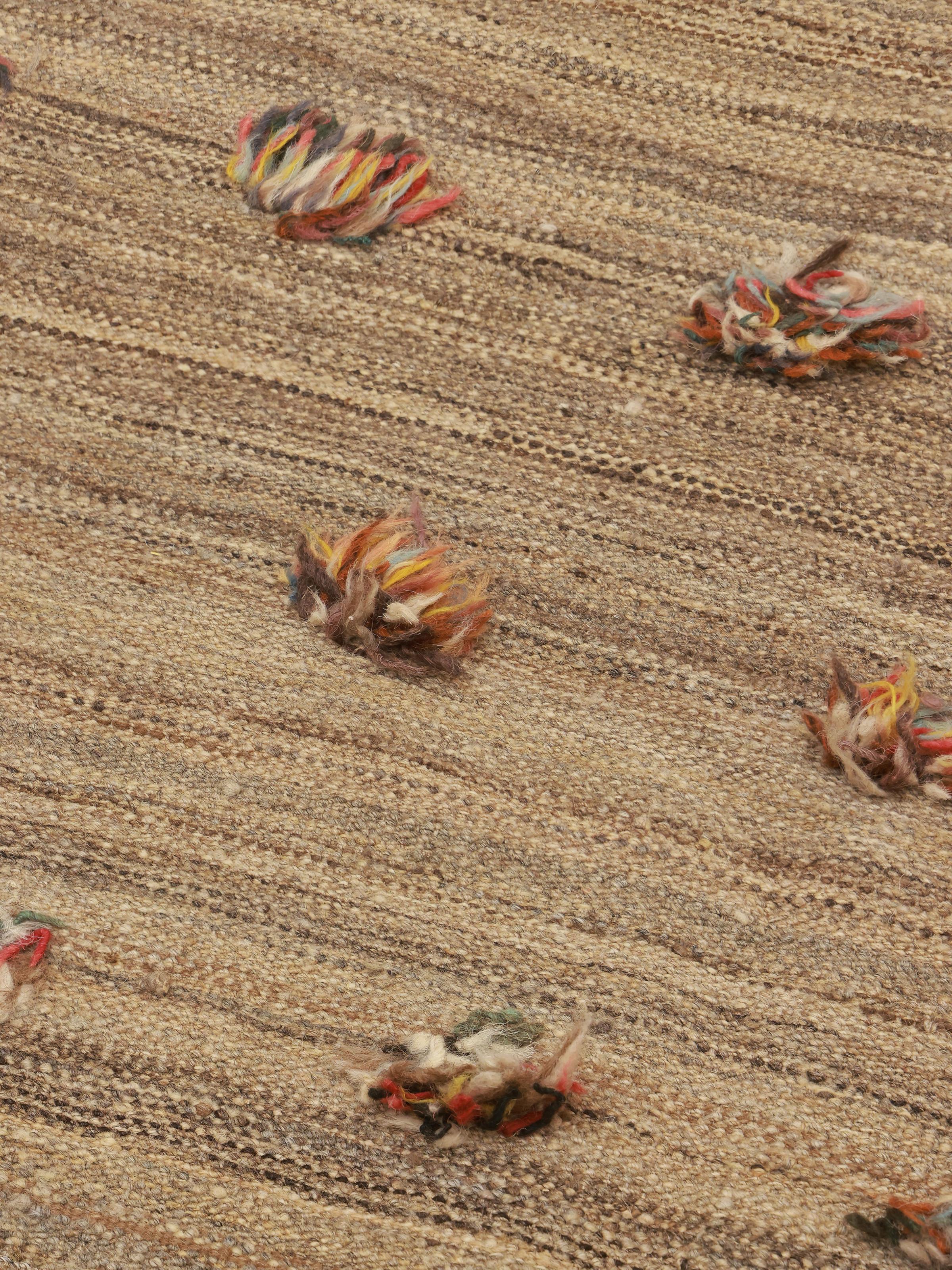
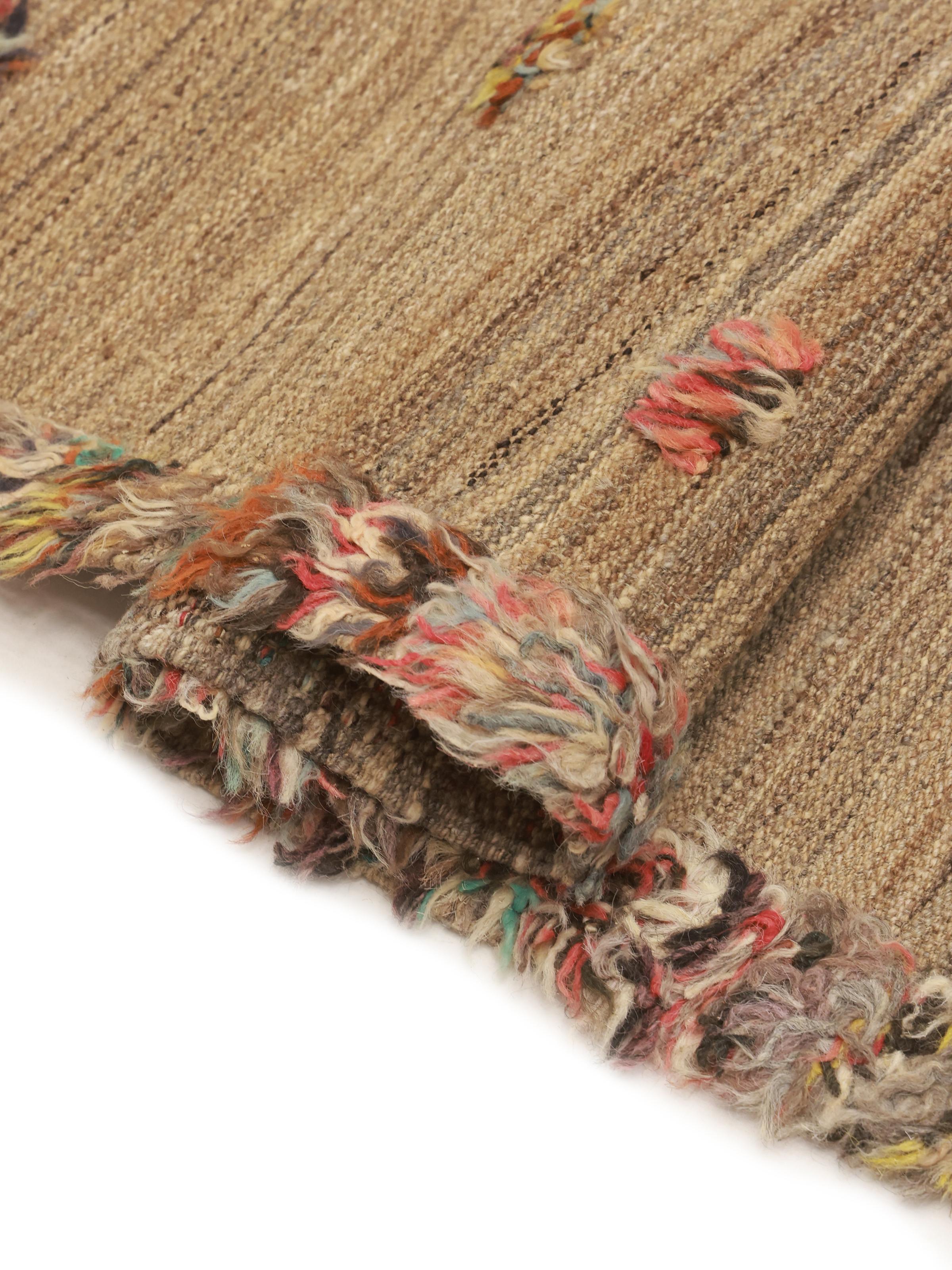
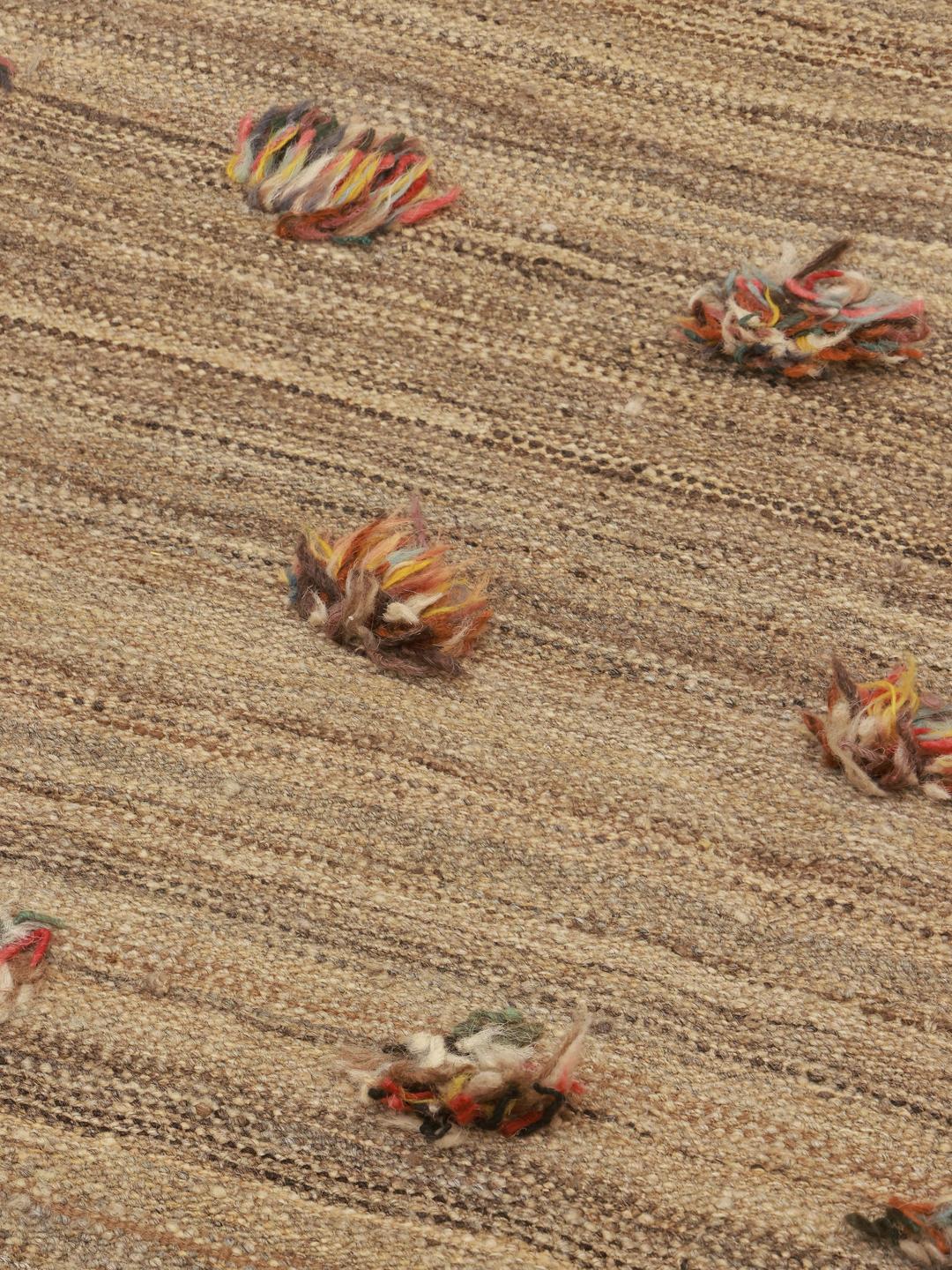
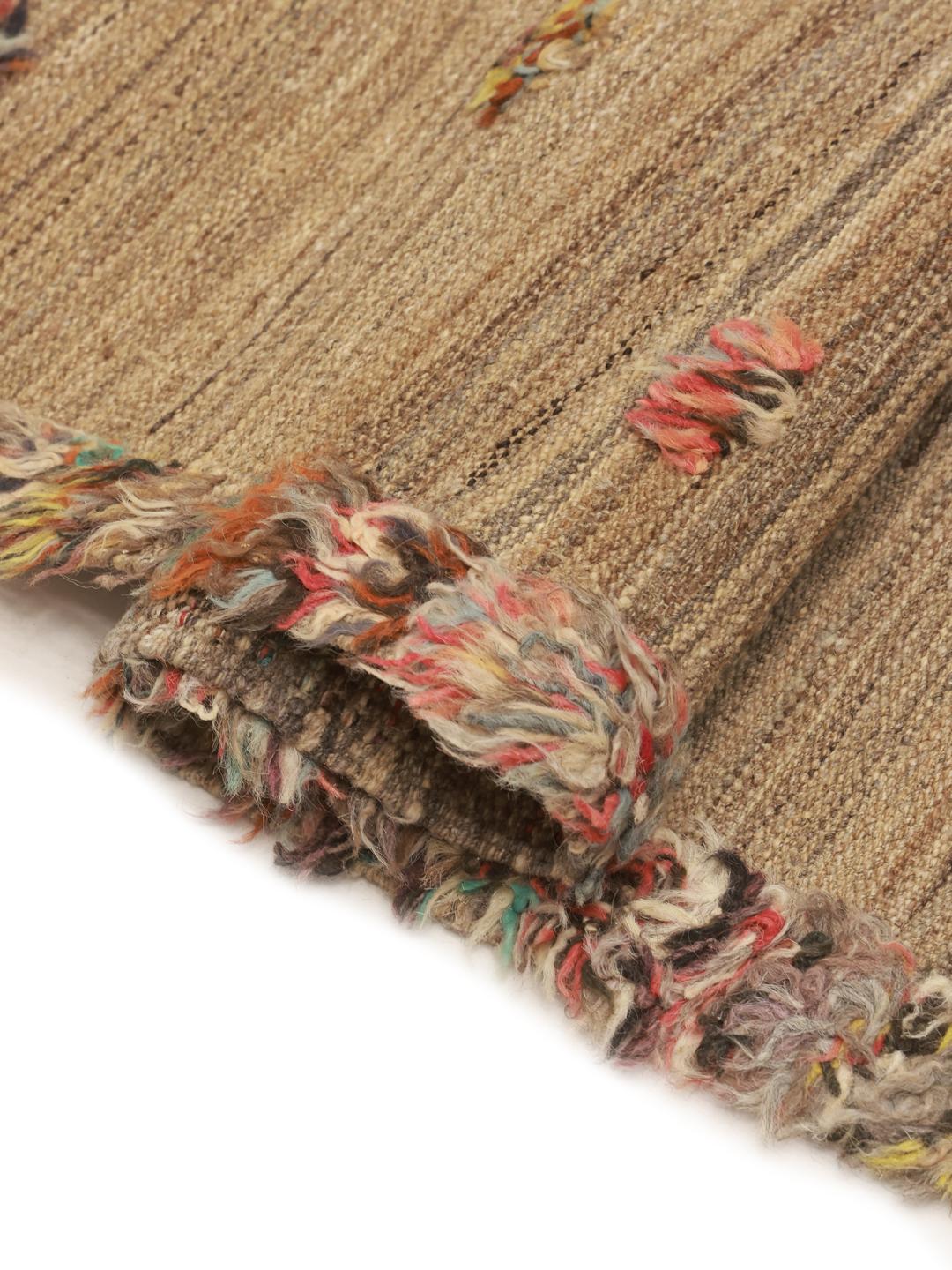
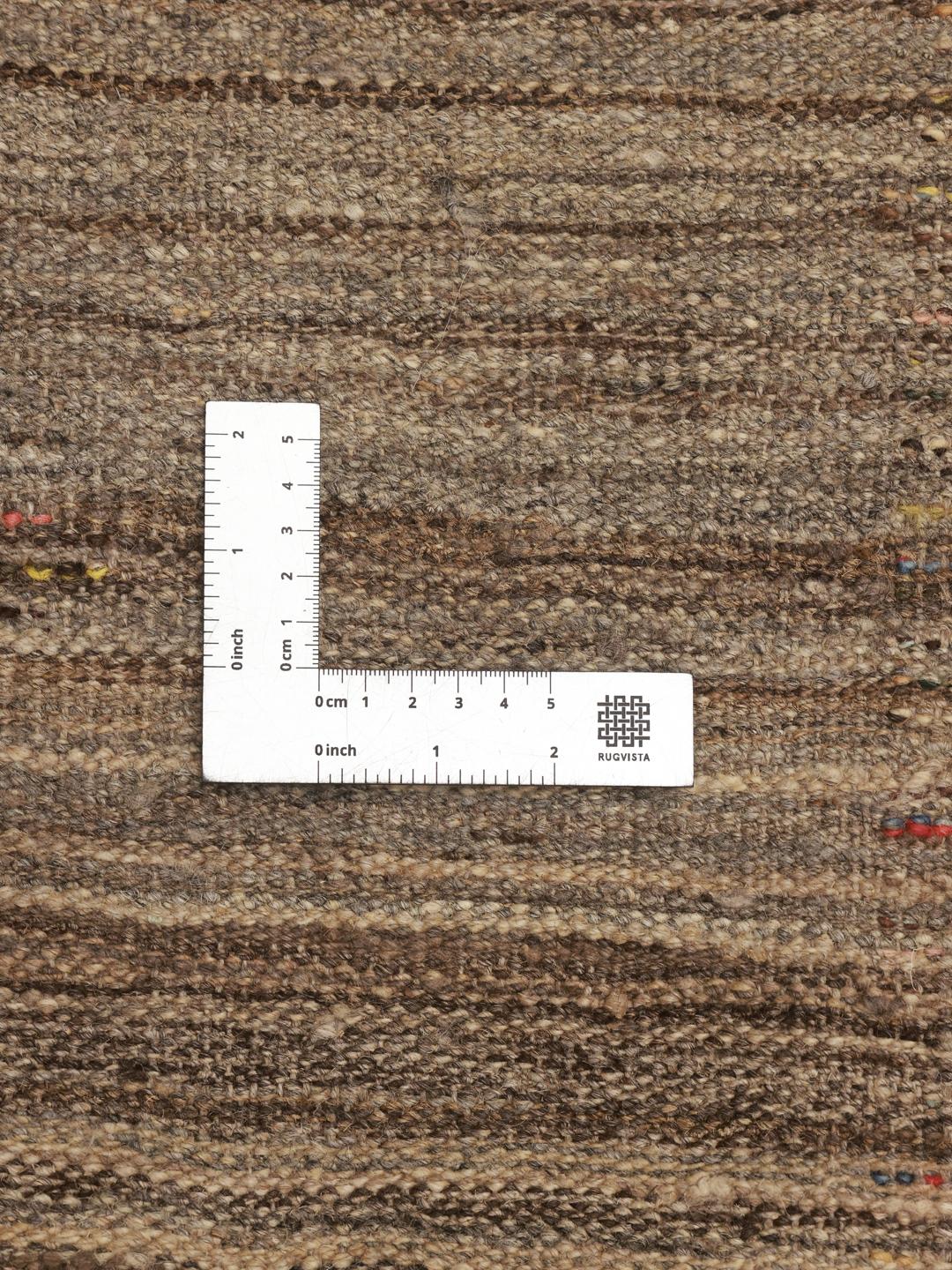
The Nimbaft style is particularly notable for its added texture, where small tufts or knots of wool are inserted into the flat-woven foundation. This technique requires an expert understanding of tension and material density, as the weaver must balance the flat, sturdy base with the soft, decorative pile. This hybrid construction not only creates a visually engaging surface but also adds a layer of depth and durability that distinguishes it from standard flat-woven rugs.
Visually, these rugs often reflect the landscape of their origin, utilising natural, undyed wool colours as a background for more vibrant, symbolic motifs. The inclusion of colourful accents, as seen in this piece, is a hallmark of the tradition, representing a celebration of natural dyes and an artistic expression of the weaver's environment. The stripes and repeating elements are designed to create a sense of rhythm and harmony.
Owning a Kelim Nimbaft is an investment in a storied craft that bridges the gap between ancient necessity and contemporary interior design. These pieces are highly valued by collectors for their authenticity and the skill required to maintain the traditions of the region. By bringing one into your home, you are preserving a piece of cultural heritage that showcases the dedication of the artisans who keep this ancient craft alive.