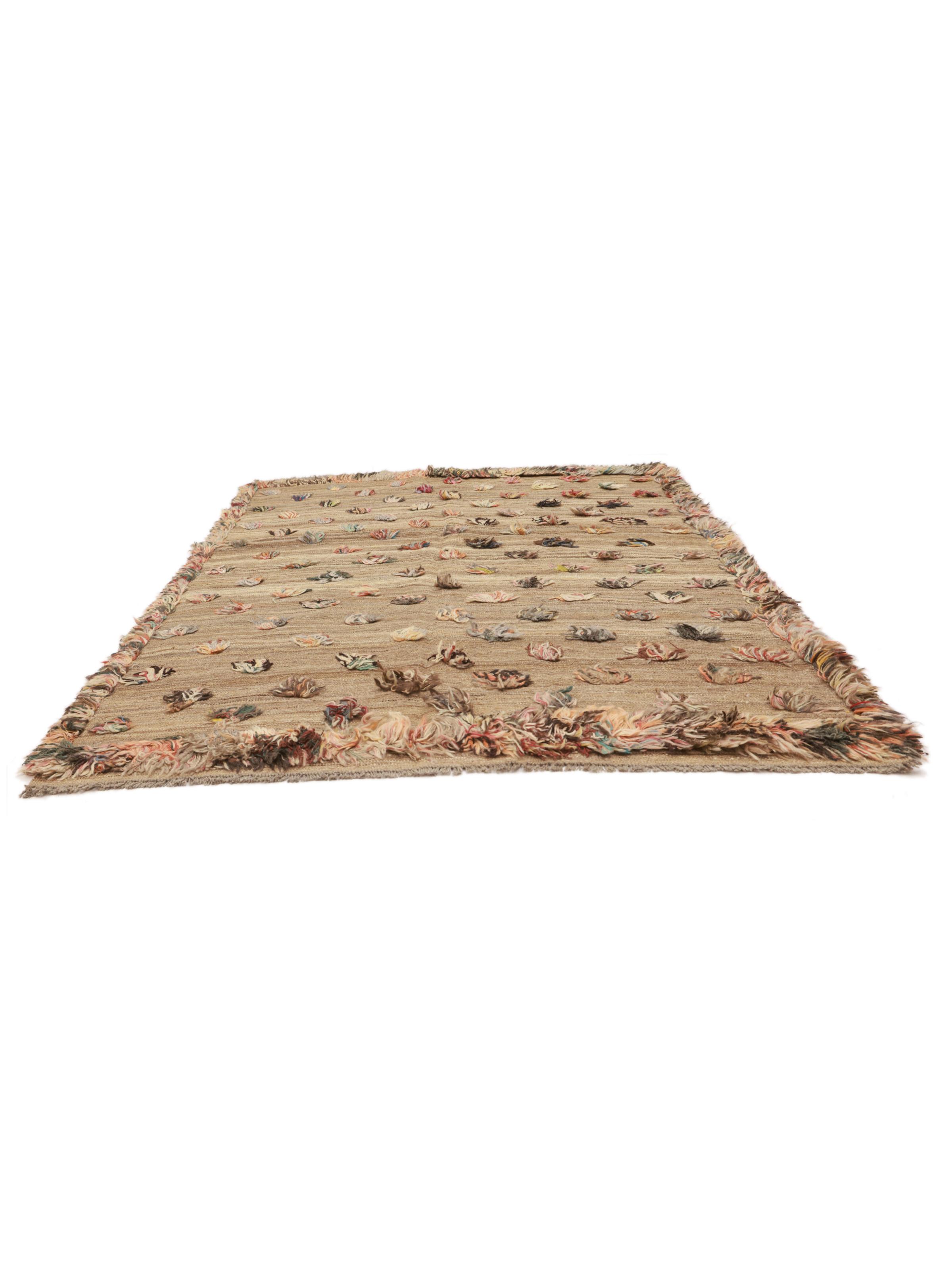
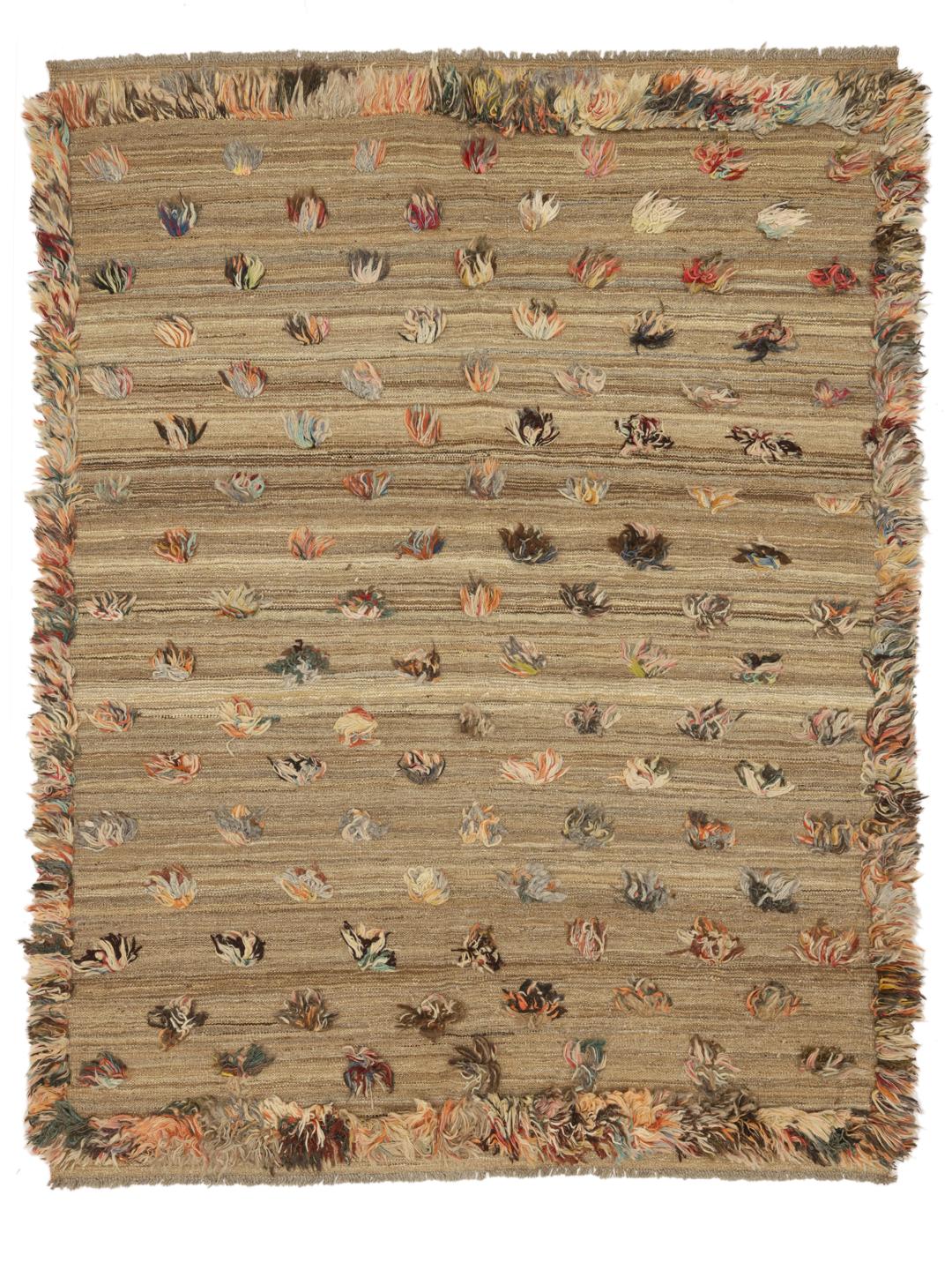
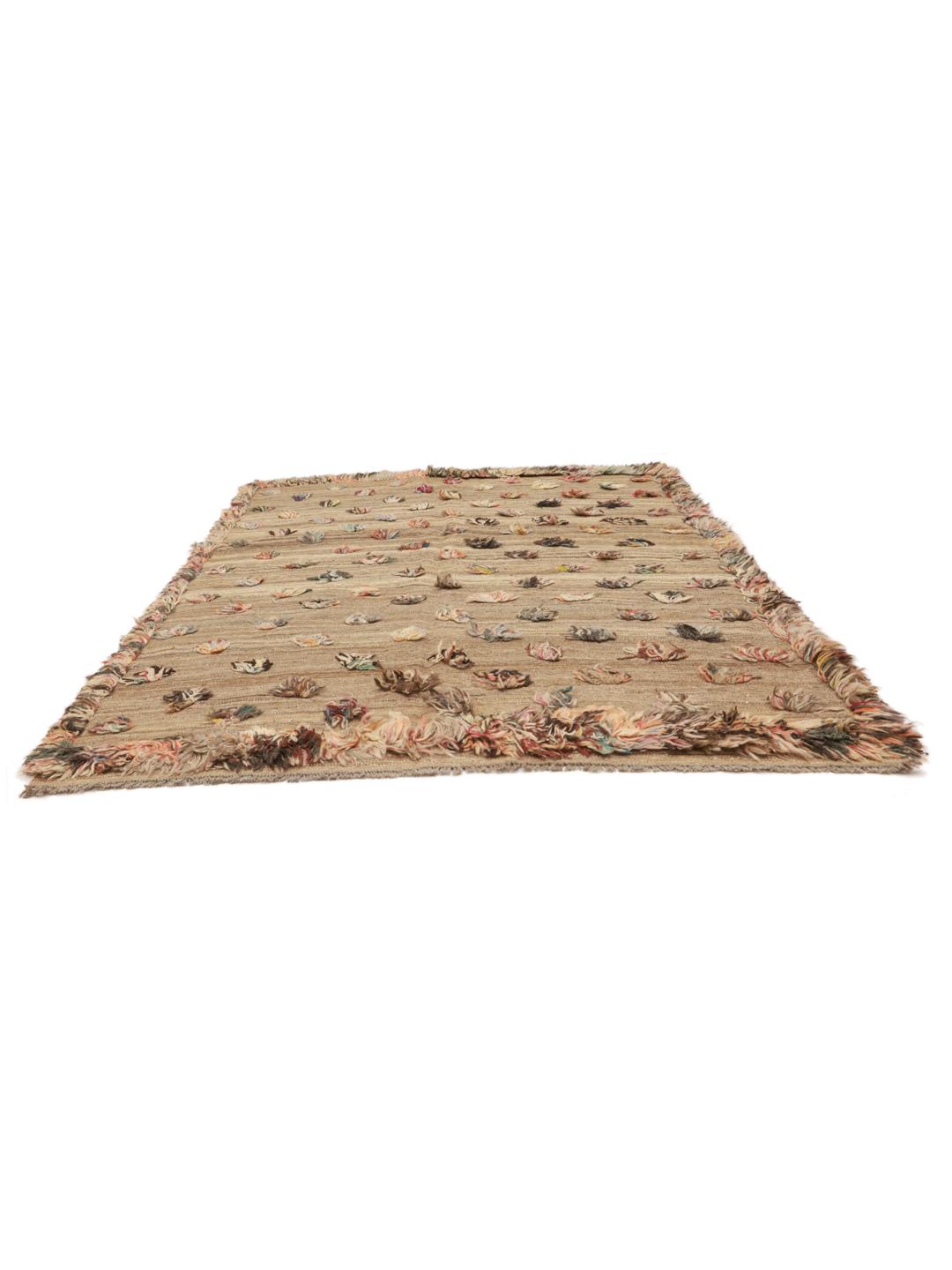
The Kelim Nimbaft represents a fascinating evolution within the rich landscape of Afghan textile traditions. While the term kilim refers to the ancient, widespread practice of flat-weaving across the Middle East, the Nimbaft is a distinctive variation that introduces a three-dimensional element to the traditional flat surface.
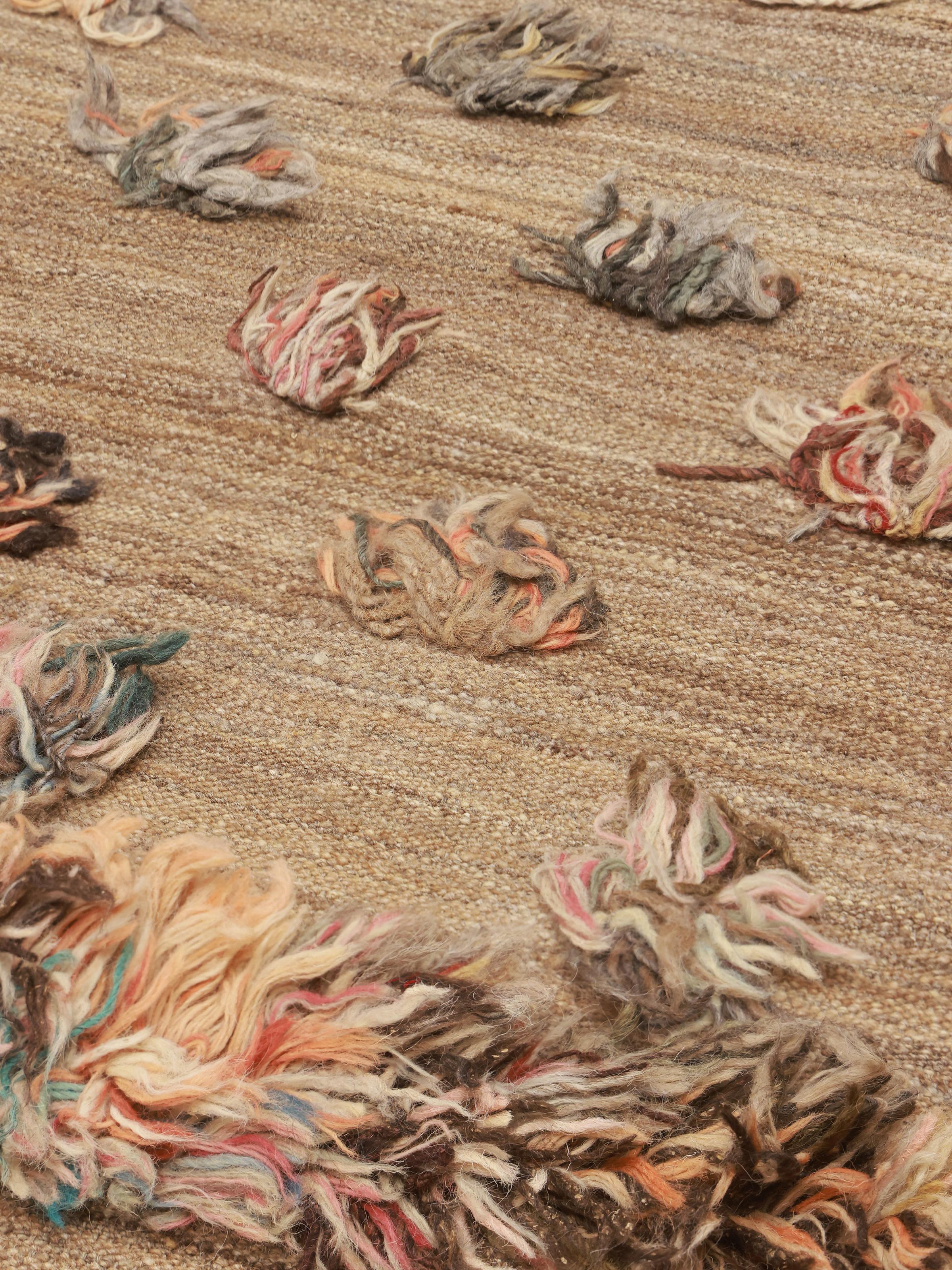
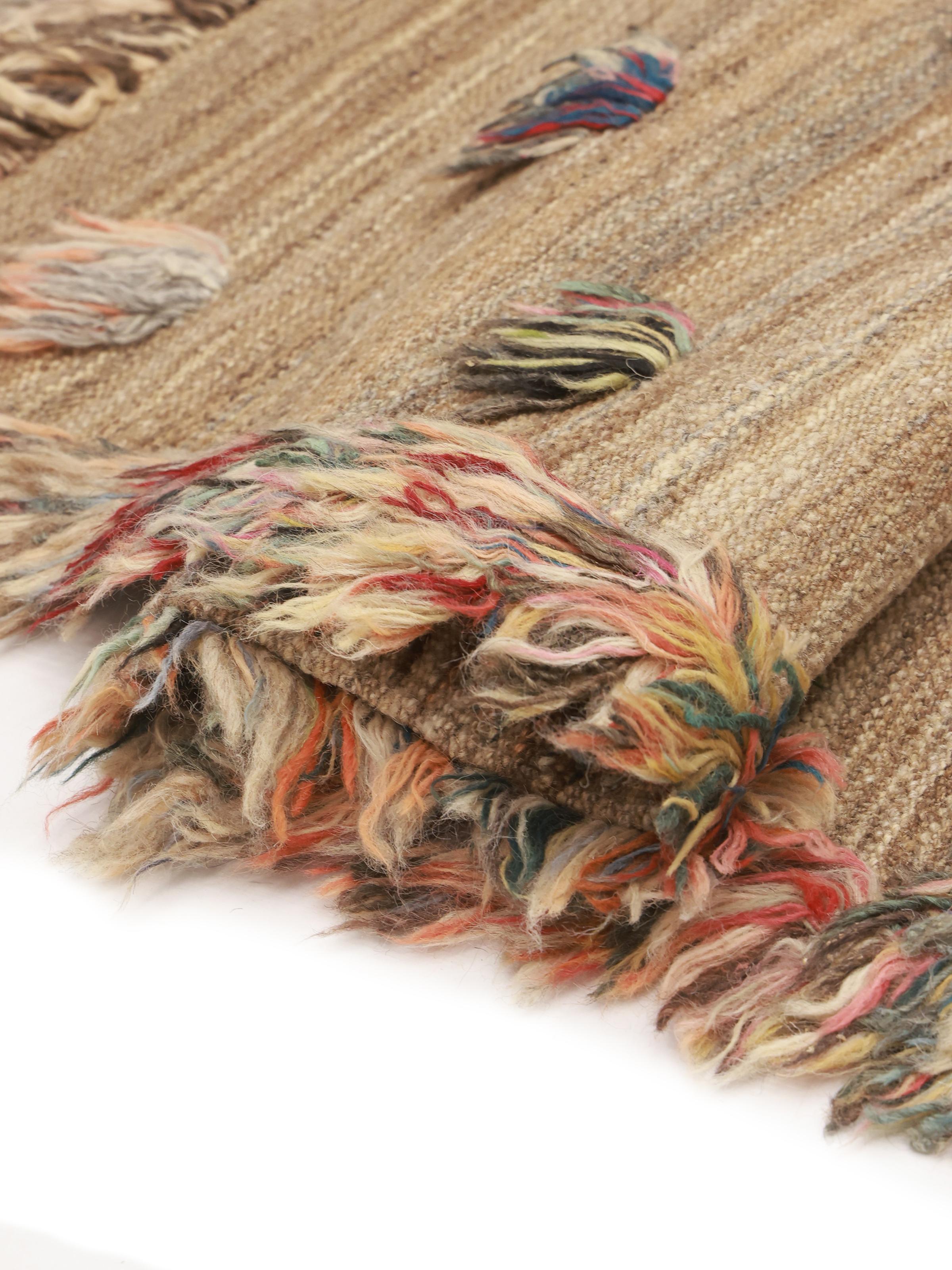
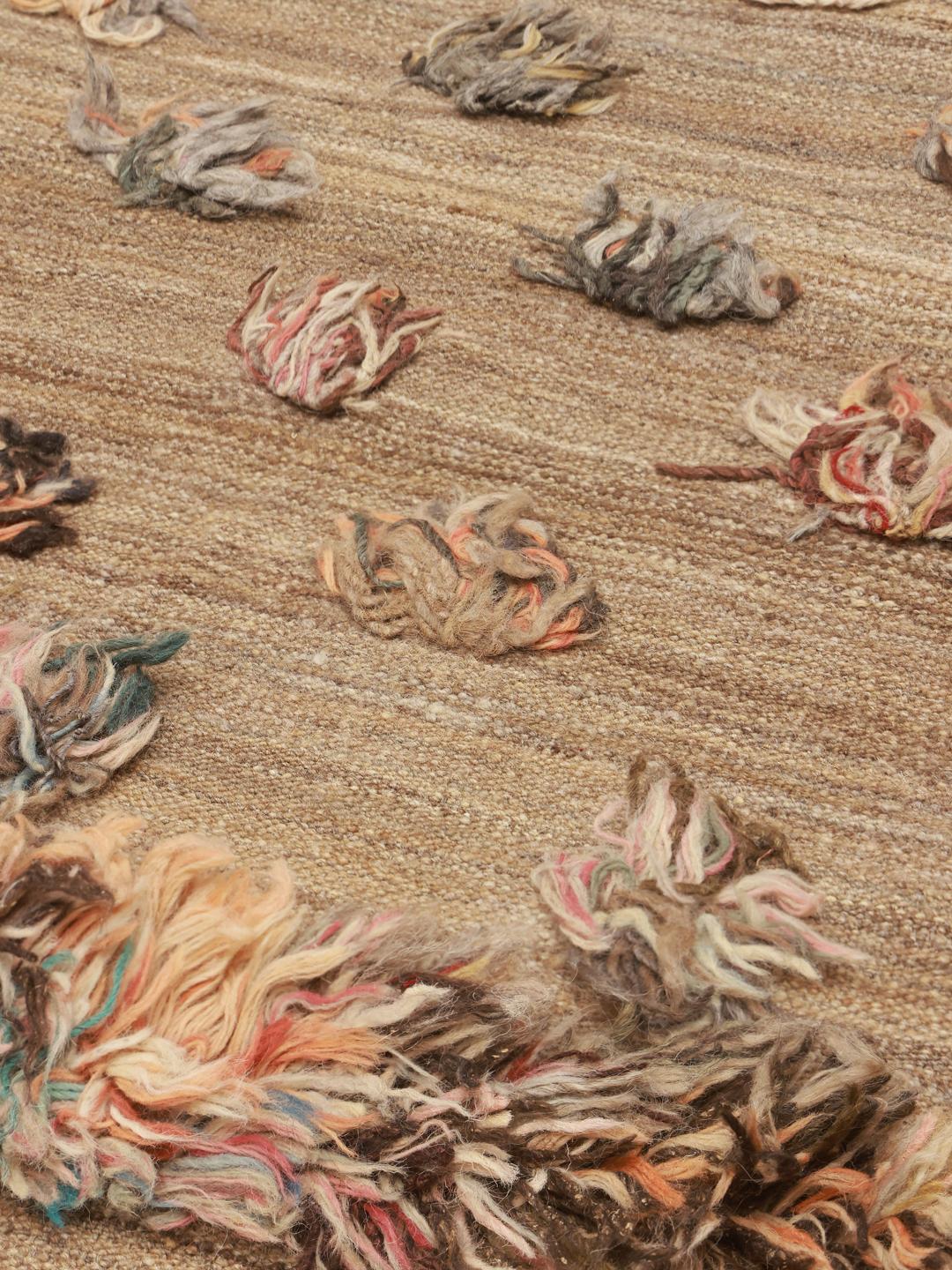
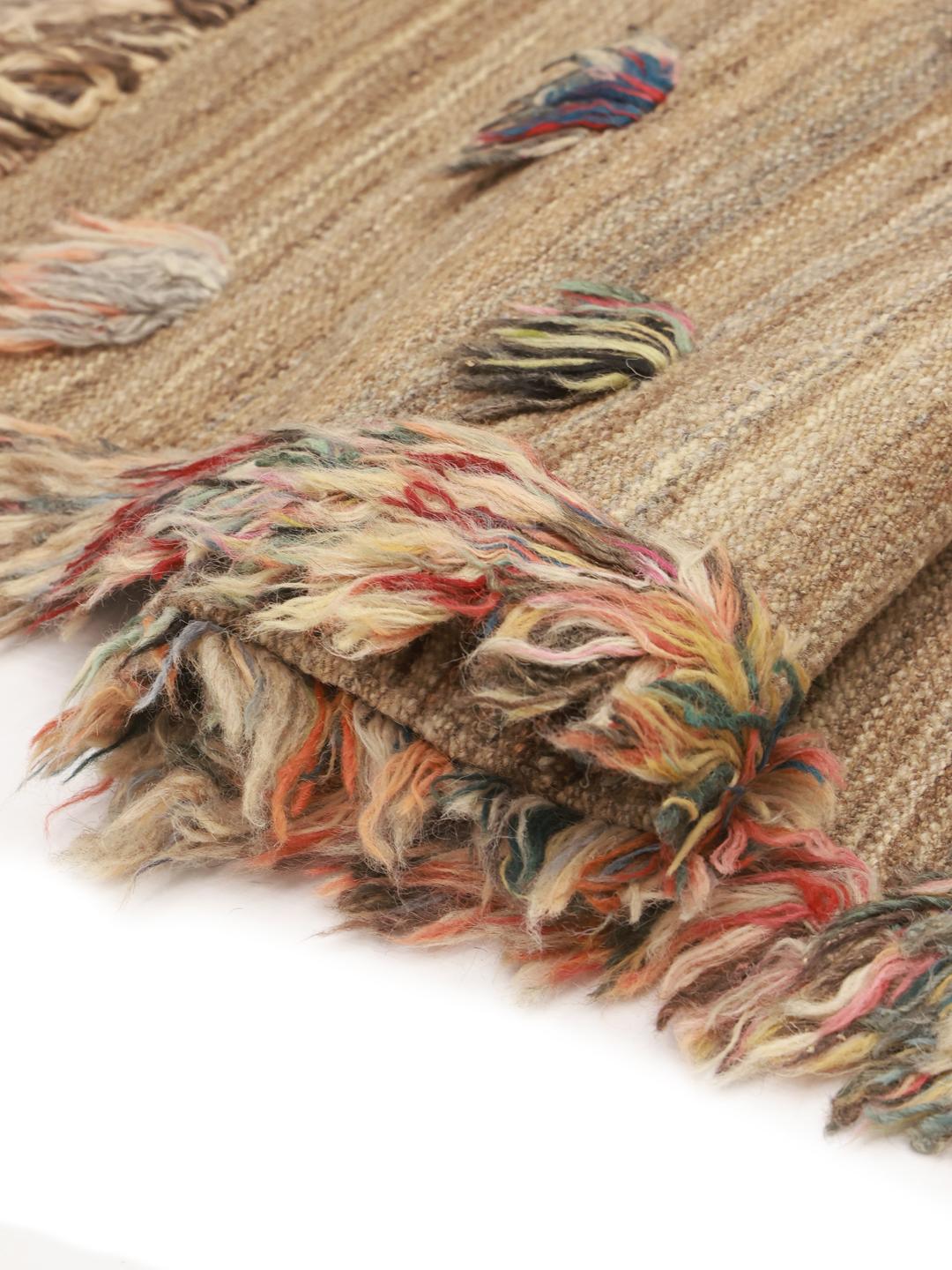
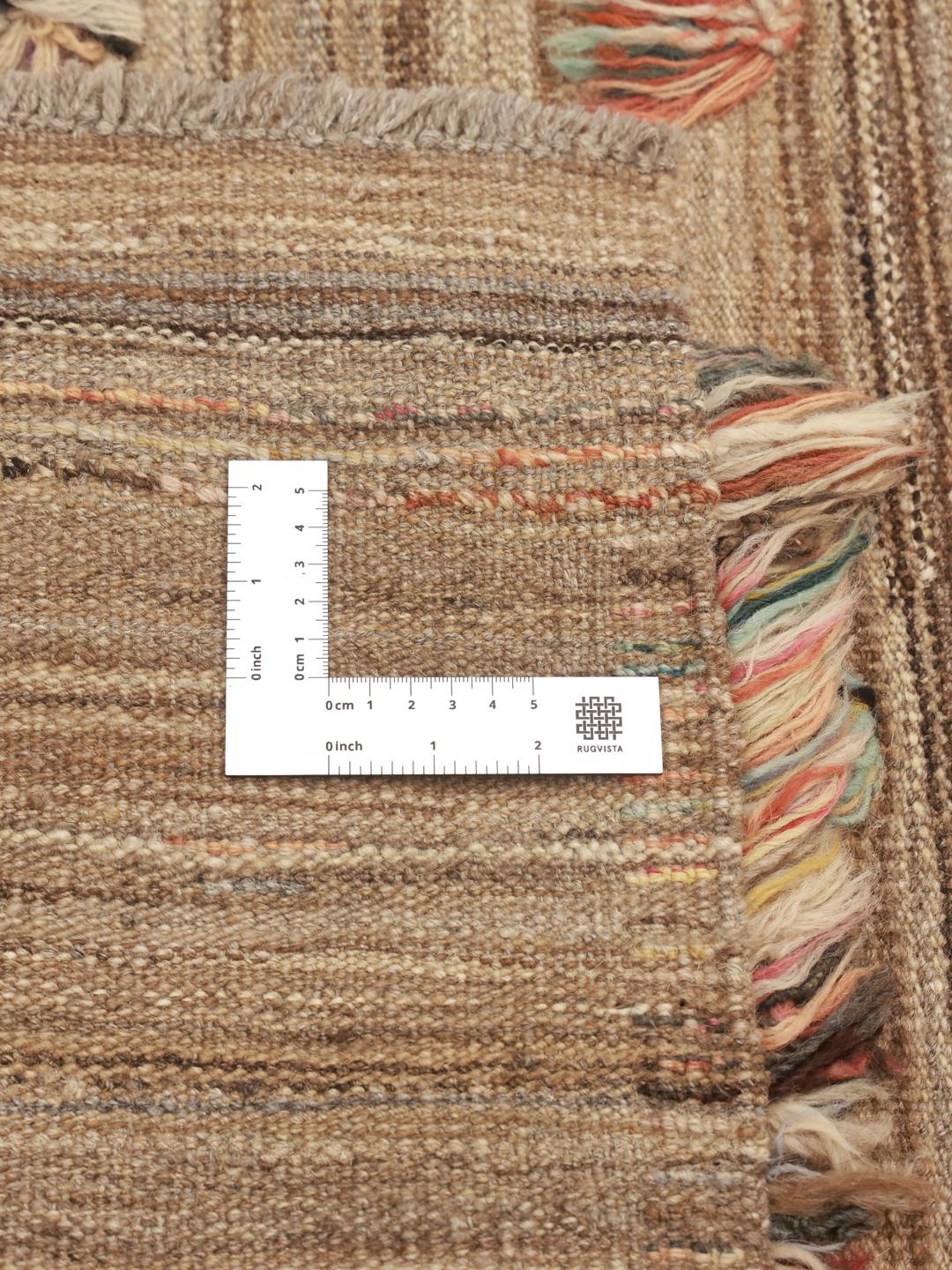
The term itself hints at the construction, where artisans integrate additional wool tufts into the weave. This technique requires a refined balance, as the weaver must maintain the integrity of the base while precisely inserting these decorative elements. It is a process that highlights the maker's ability to innovate within established cultural boundaries.
Visually, these rugs are defined by their earthy, natural palettes, often derived from local wool sources, punctuated by vibrant, hand-dyed accents. The scattered, organic placement of the tufts gives each piece a rhythmic, almost playful appearance that contrasts beautifully with the formal, geometric structures often found in other regional flat-weaves.
Collecting a Nimbaft rug is an opportunity to preserve a specific branch of Afghan craft history. These pieces are valued not only for their utility and warmth but also for the way they bridge the gap between ancient weaving techniques and contemporary design sensibilities. Owning one is a testament to an appreciation for skilled, human-centric artistry.