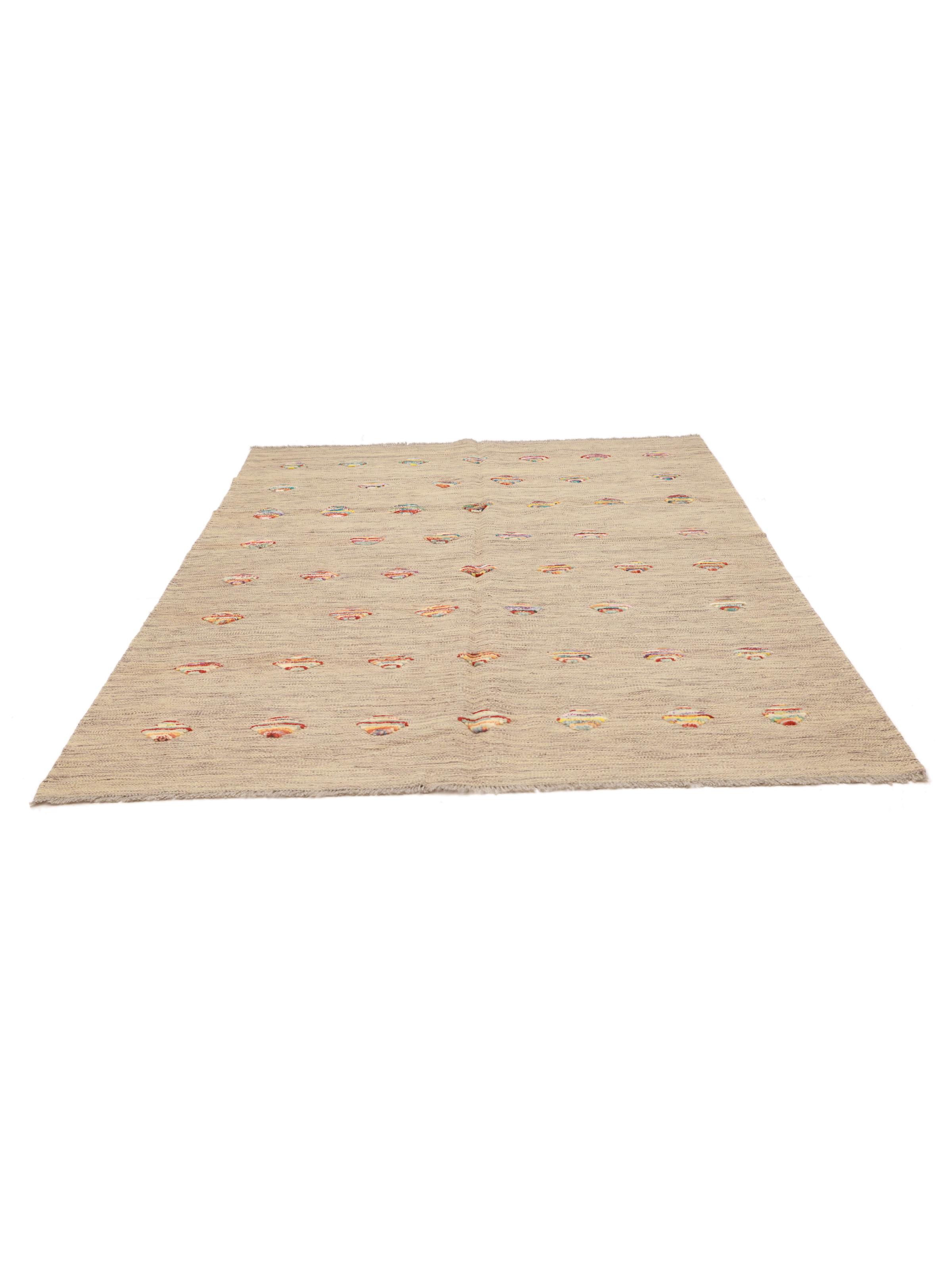
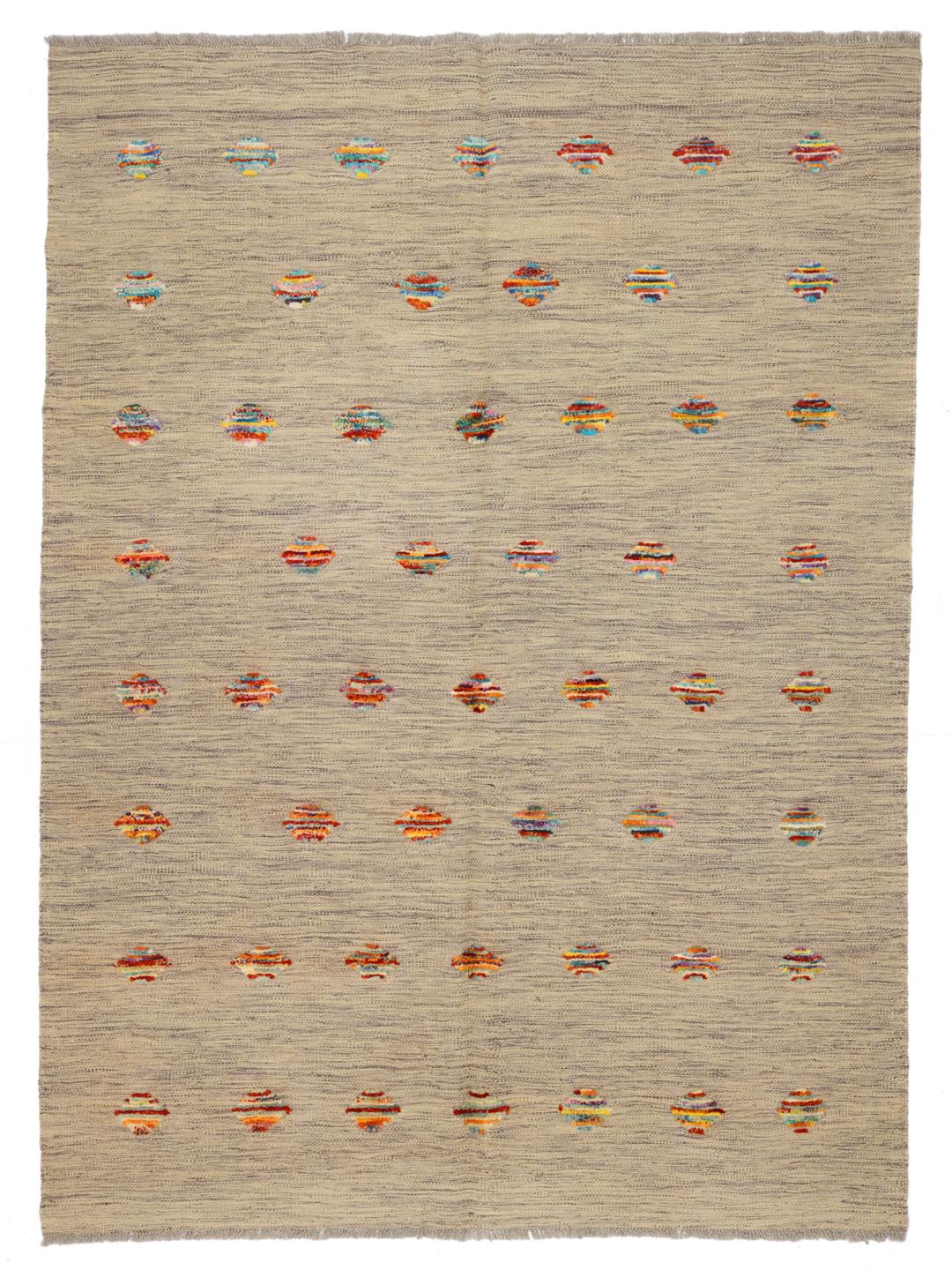
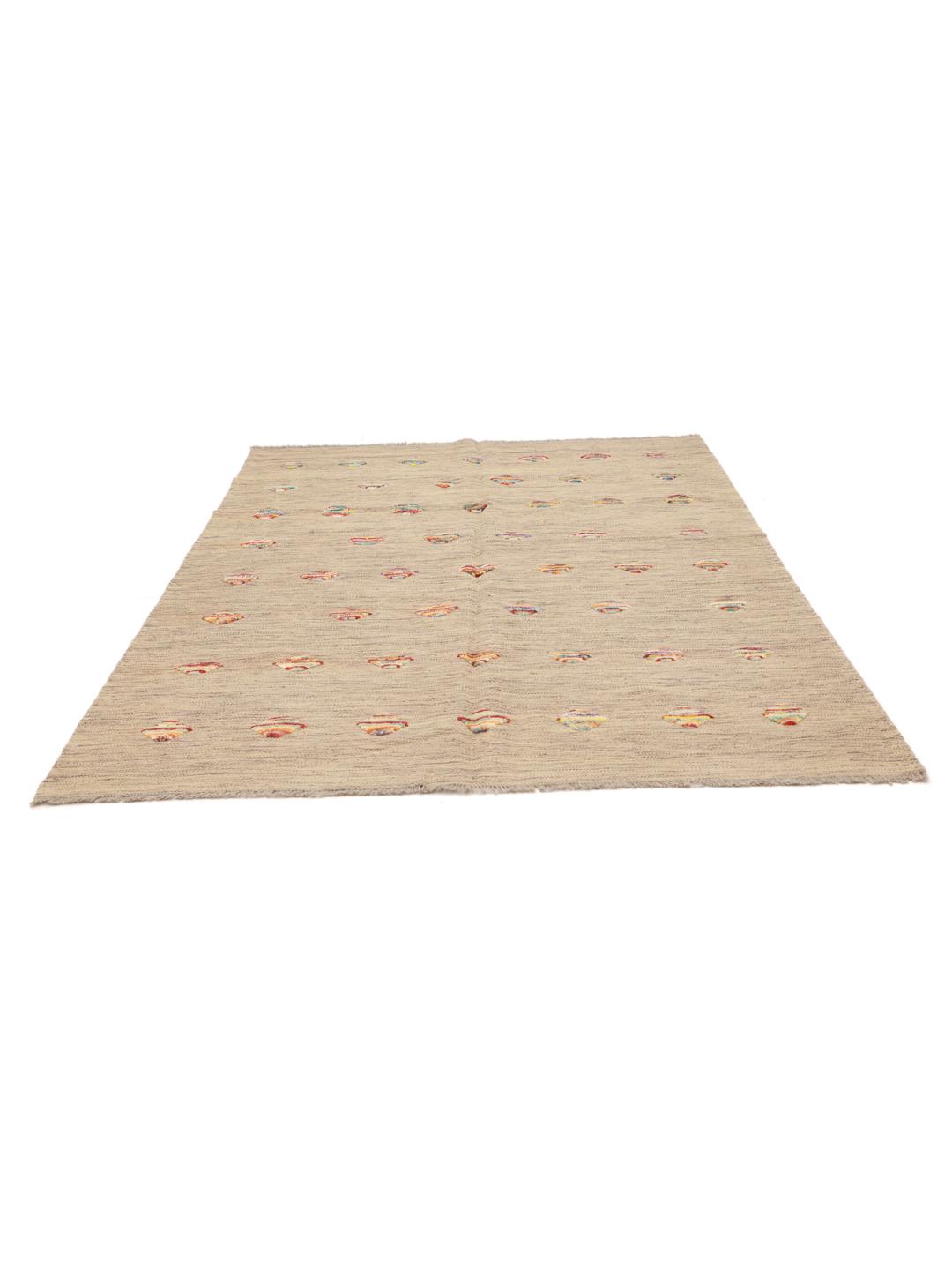
The art of the Kelim originates from the nomadic tribes of the Middle East and Central Asia, where these flat-woven rugs served as essential, portable furnishings. Over centuries, these traditions migrated and evolved, with Afghanistan becoming a renowned hub for producing rugs that balance ancient techniques with evolving design sensibilities. The Nimbaft style is a reflection of this cultural journey, blending historical weaving methods with a more modern, minimal visual language.
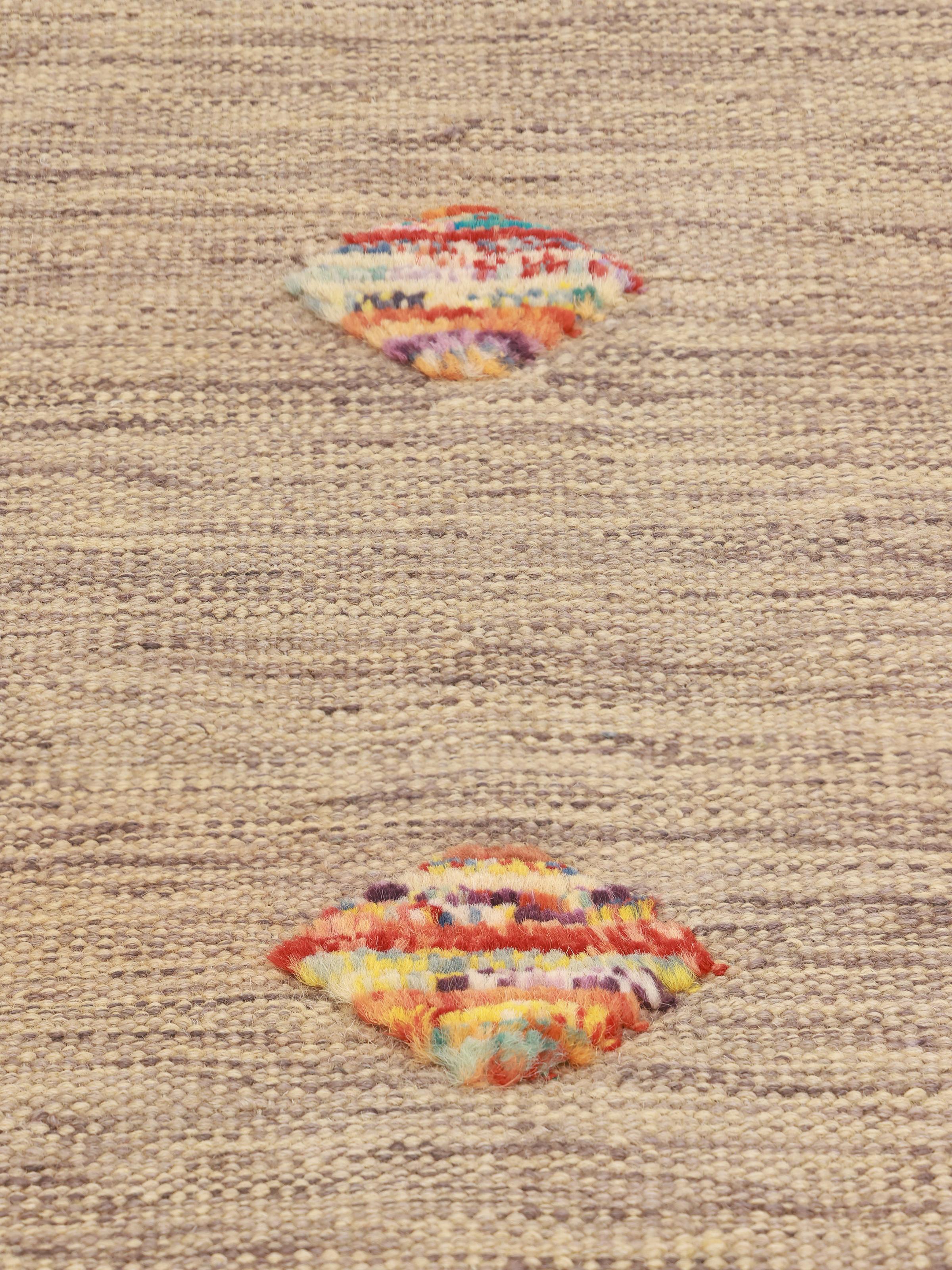
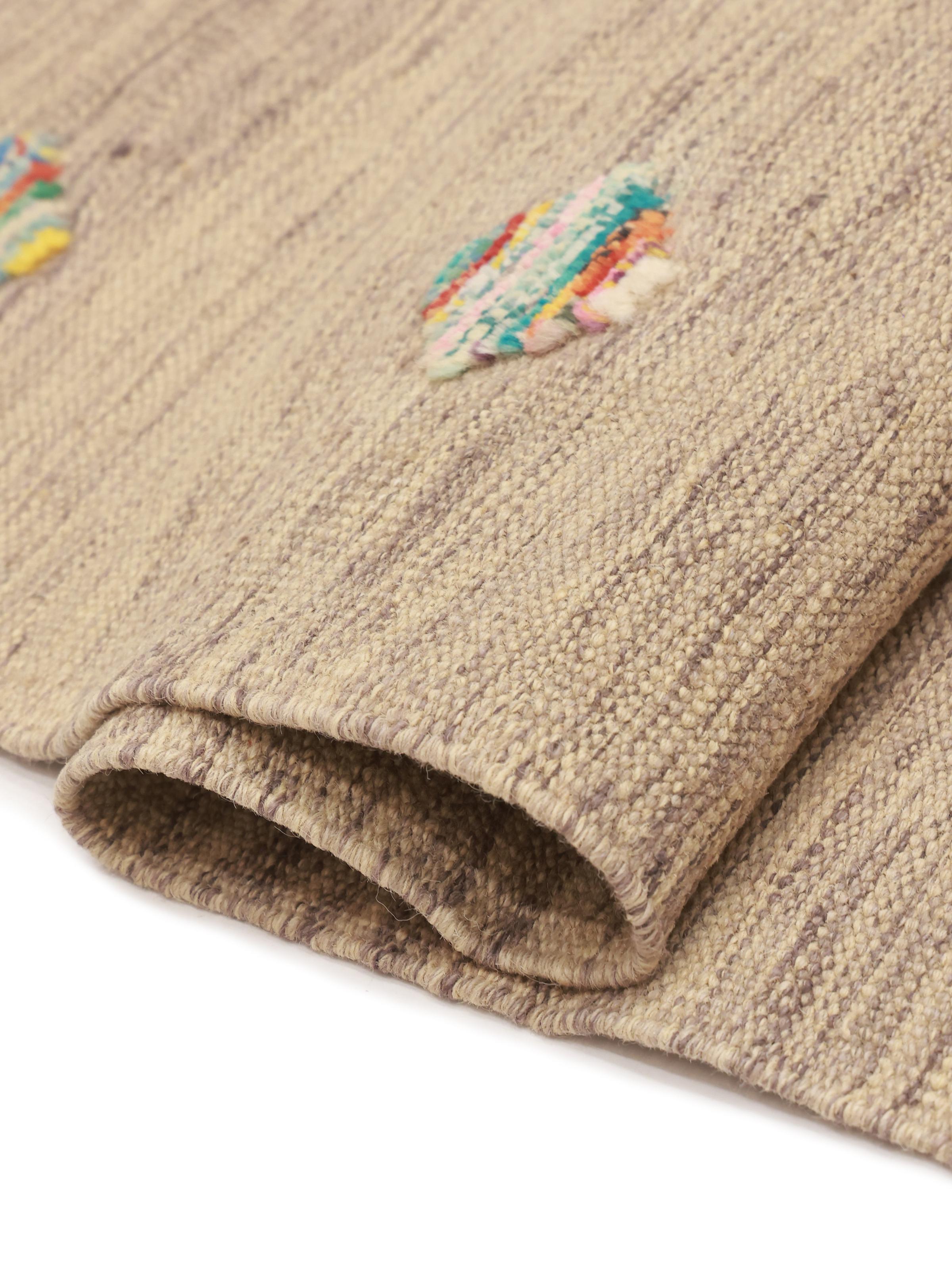
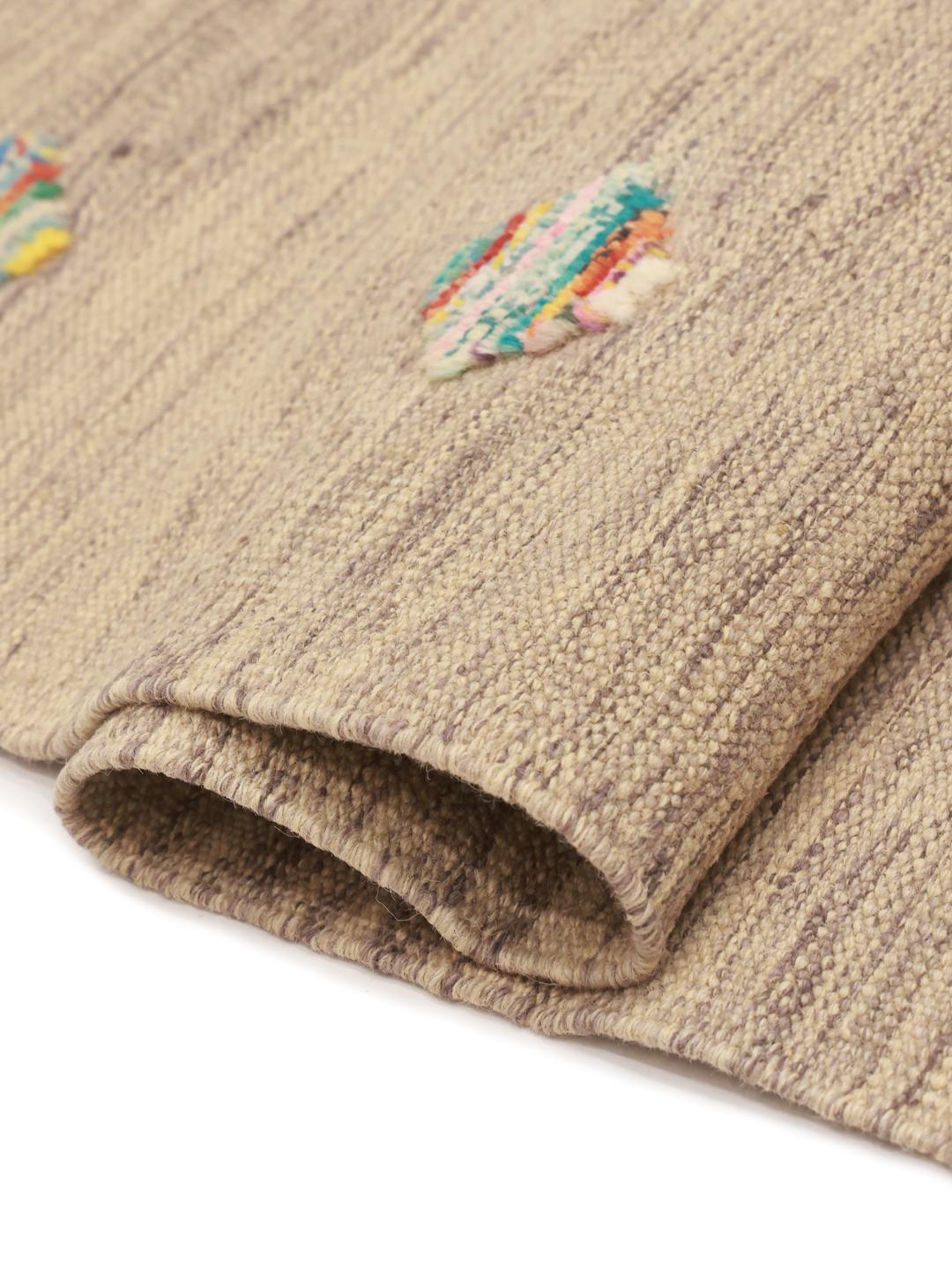
The term Kelim refers to the specific technique of tapestry weaving, where the weft threads are passed back and forth through the warp to create the pattern. Unlike knotted rugs, this method produces a thin, durable, and reversible textile. This construction is highly valued for its versatility, as the absence of a pile makes these rugs lighter and more adaptable to different climates and living environments.
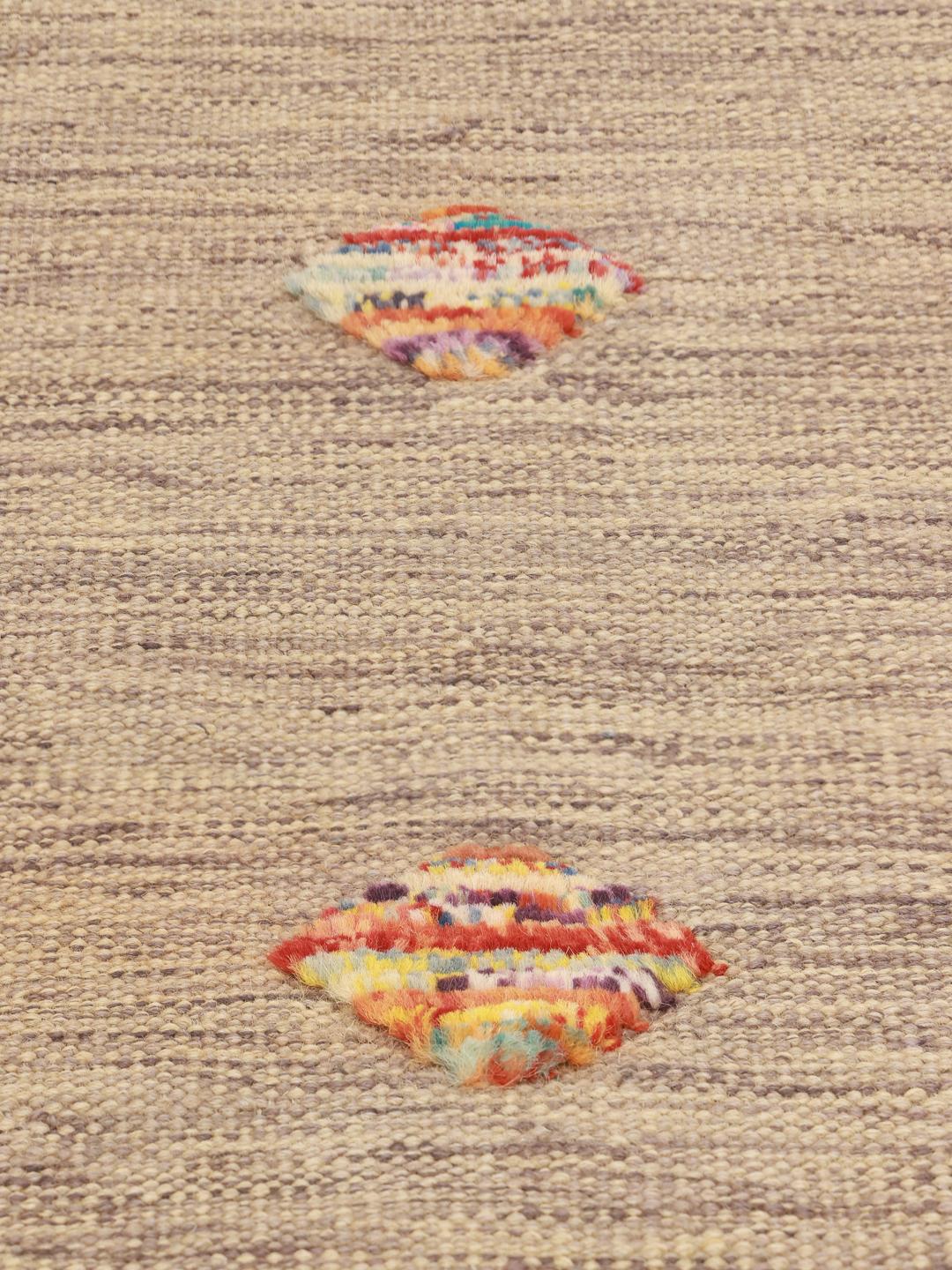
Signature design elements of these rugs often include geometric motifs, though the Nimbaft style is distinguished by its use of negative space. By placing vibrant, scattered patterns against a neutral field, the weaver creates a rhythmic, modern look that remains deeply rooted in traditional Afghan aesthetics. The use of natural, hand-spun wool ensures that each piece retains a subtle variation in tone, adding to its organic and authentic character.
Owning a hand-woven Kelim is an appreciation of the skill and patience required to preserve these ancient crafts. These rugs are highly collected not only for their aesthetic beauty but as emblems of cultural heritage and human ingenuity. By choosing a piece like this, you are supporting a legacy of craftsmanship that has been passed down through generations, ensuring that these traditions continue to thrive in our modern homes.