Kelim rugs have long been a cornerstone of nomadic life across the Middle East and Central Asia. Originally created by tribal weavers for practical use as floor coverings, tent dividers, and storage bags, these rugs were designed to be durable, portable, and visually meaningful, often incorporating symbols and colours that reflected the weaver's environment and cultural identity.
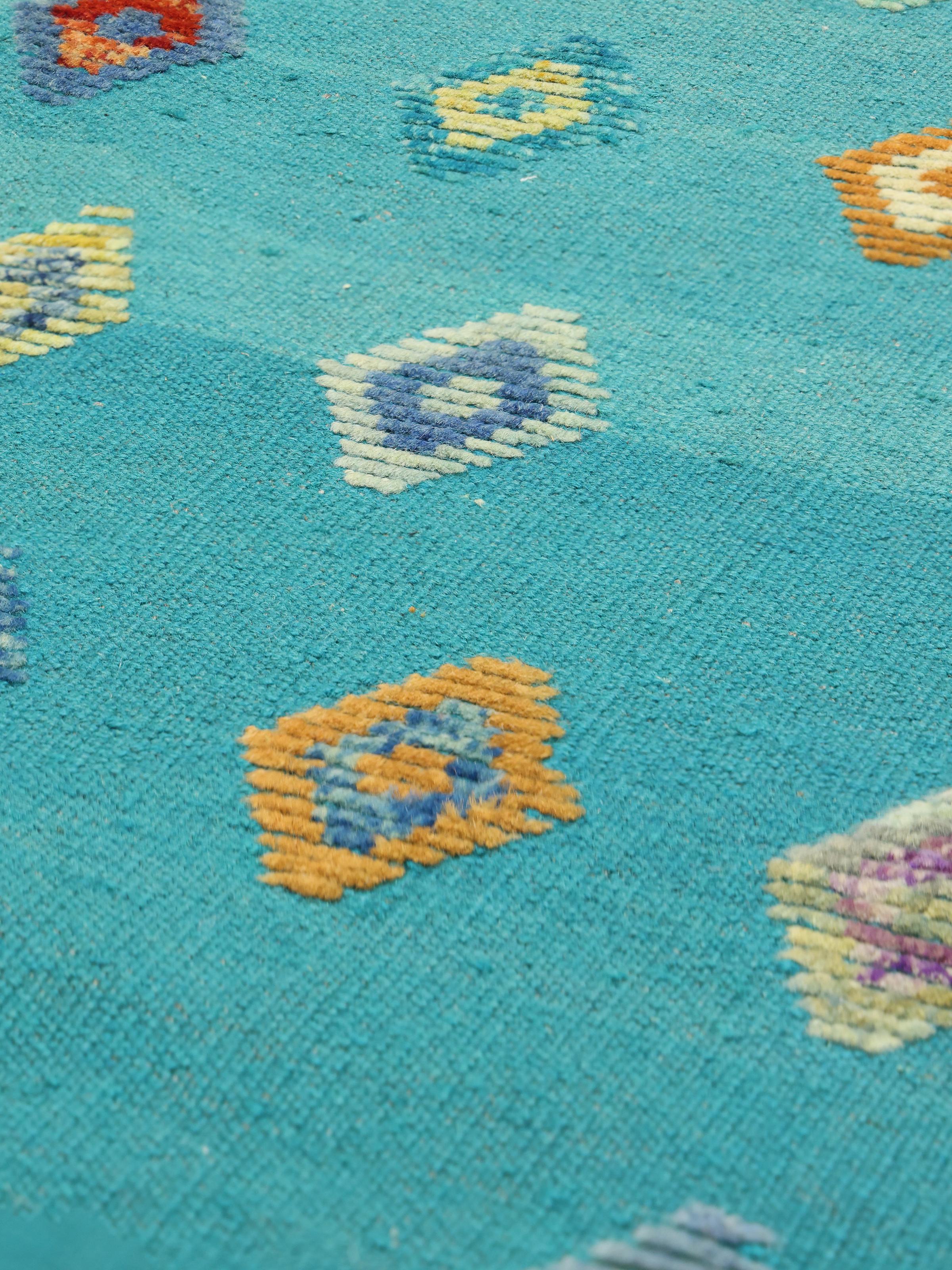
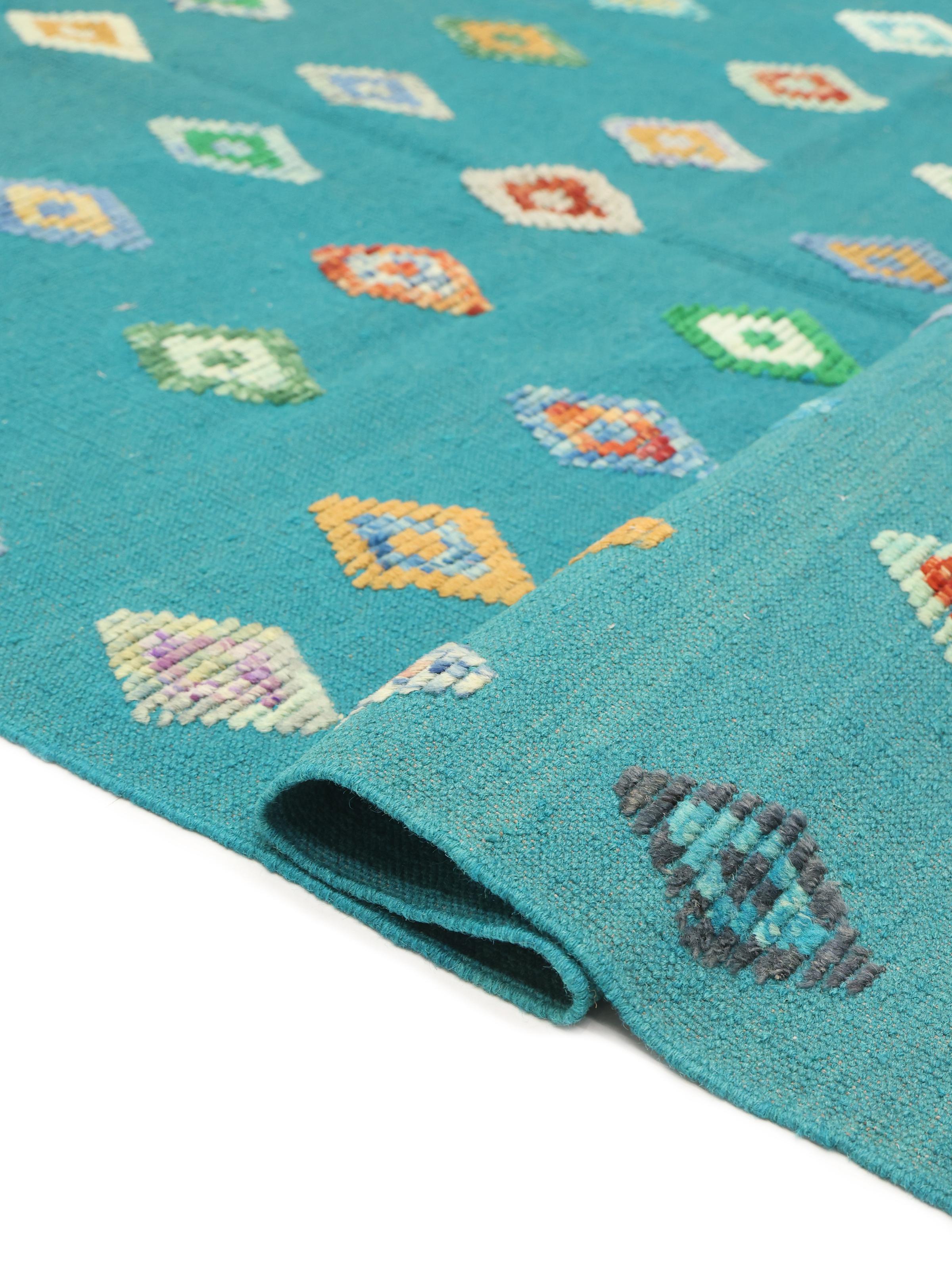
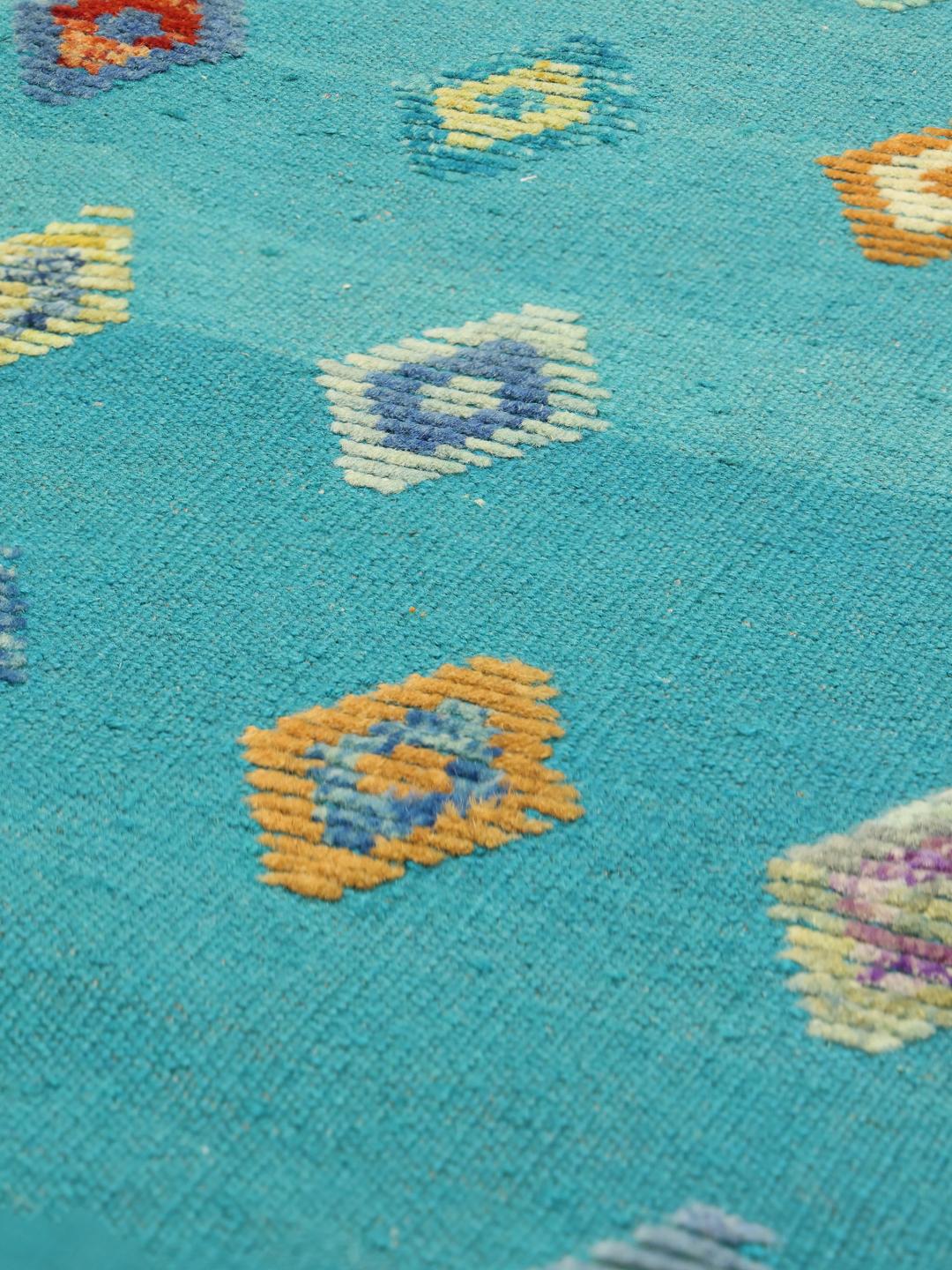
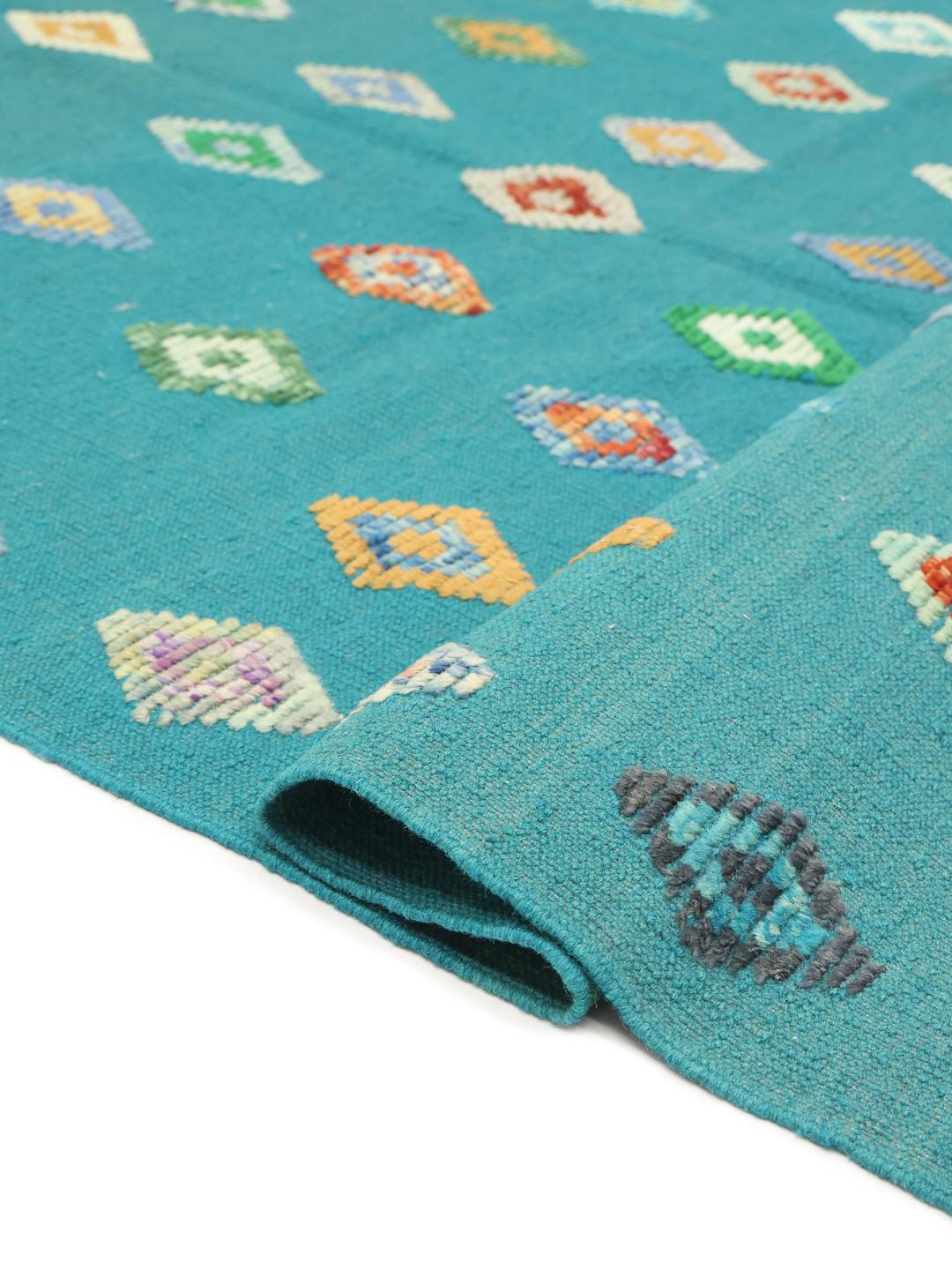
The term 'Kelim' refers to the specific flat-weaving technique where the design is created by the weft threads, resulting in a rug that is identical on both sides. This method requires a deep understanding of geometry and colour theory, as the weaver must plan the intricate patterns without the guidance of a pre-drawn template, relying entirely on memory and tradition.
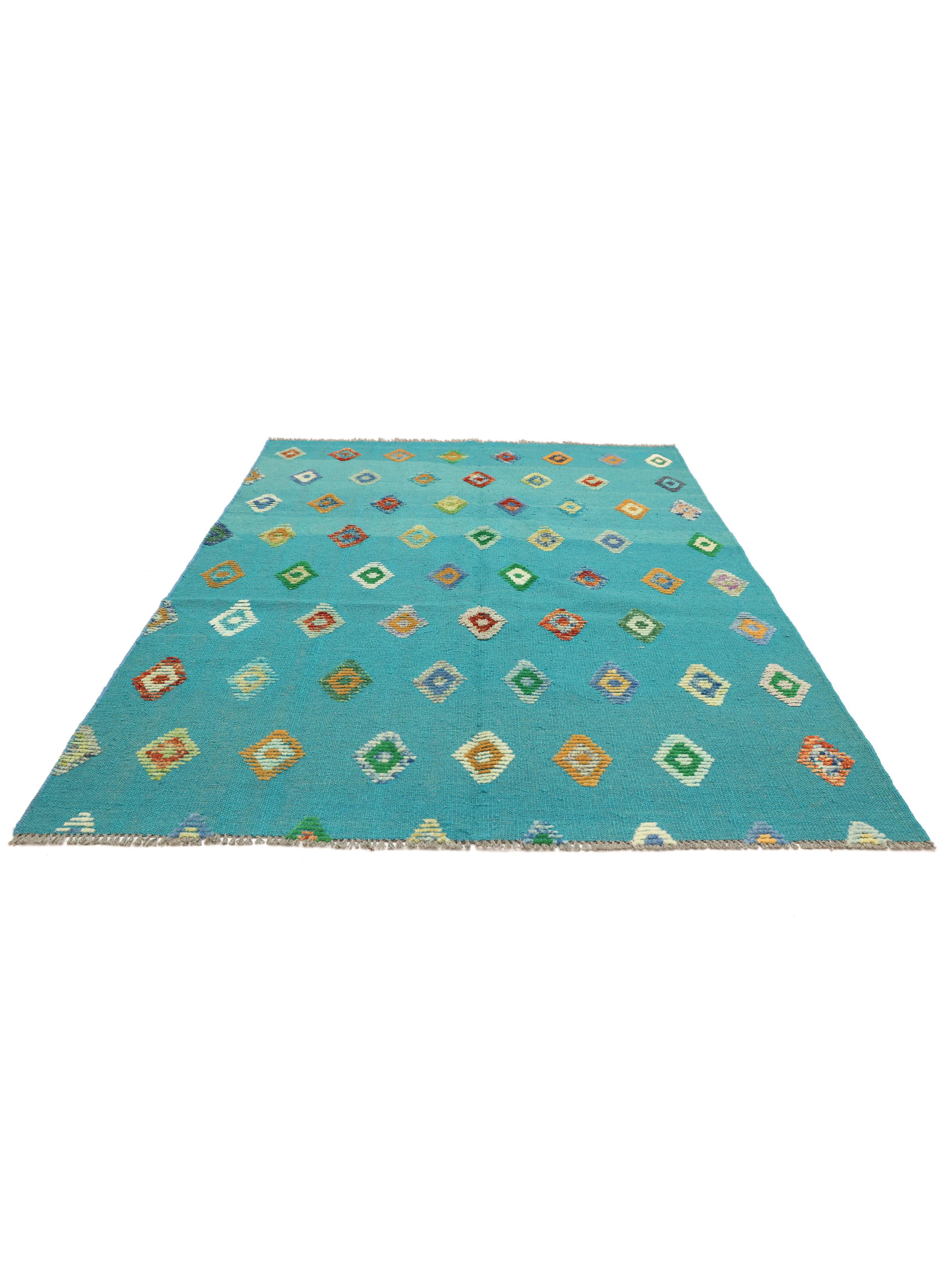
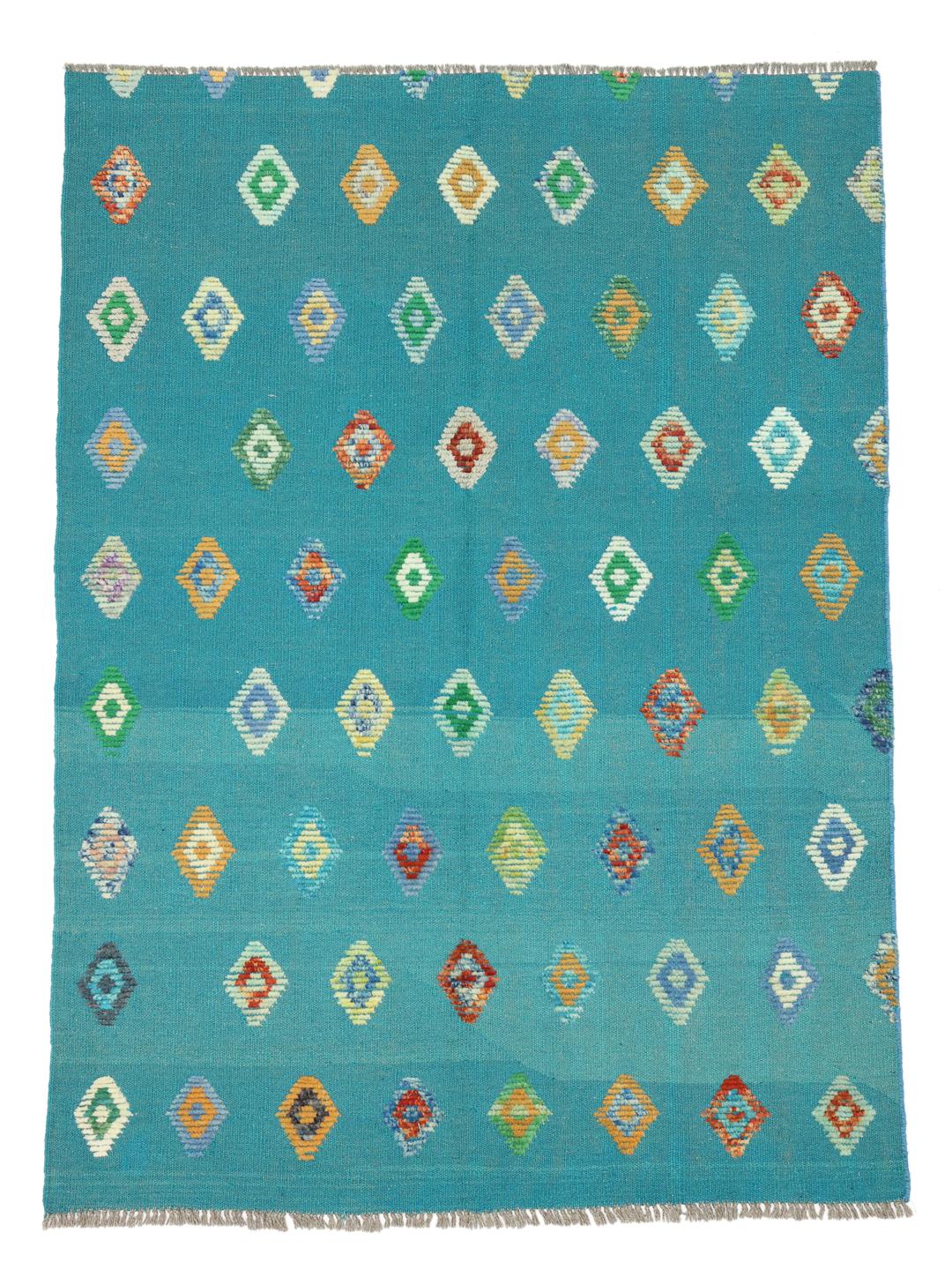
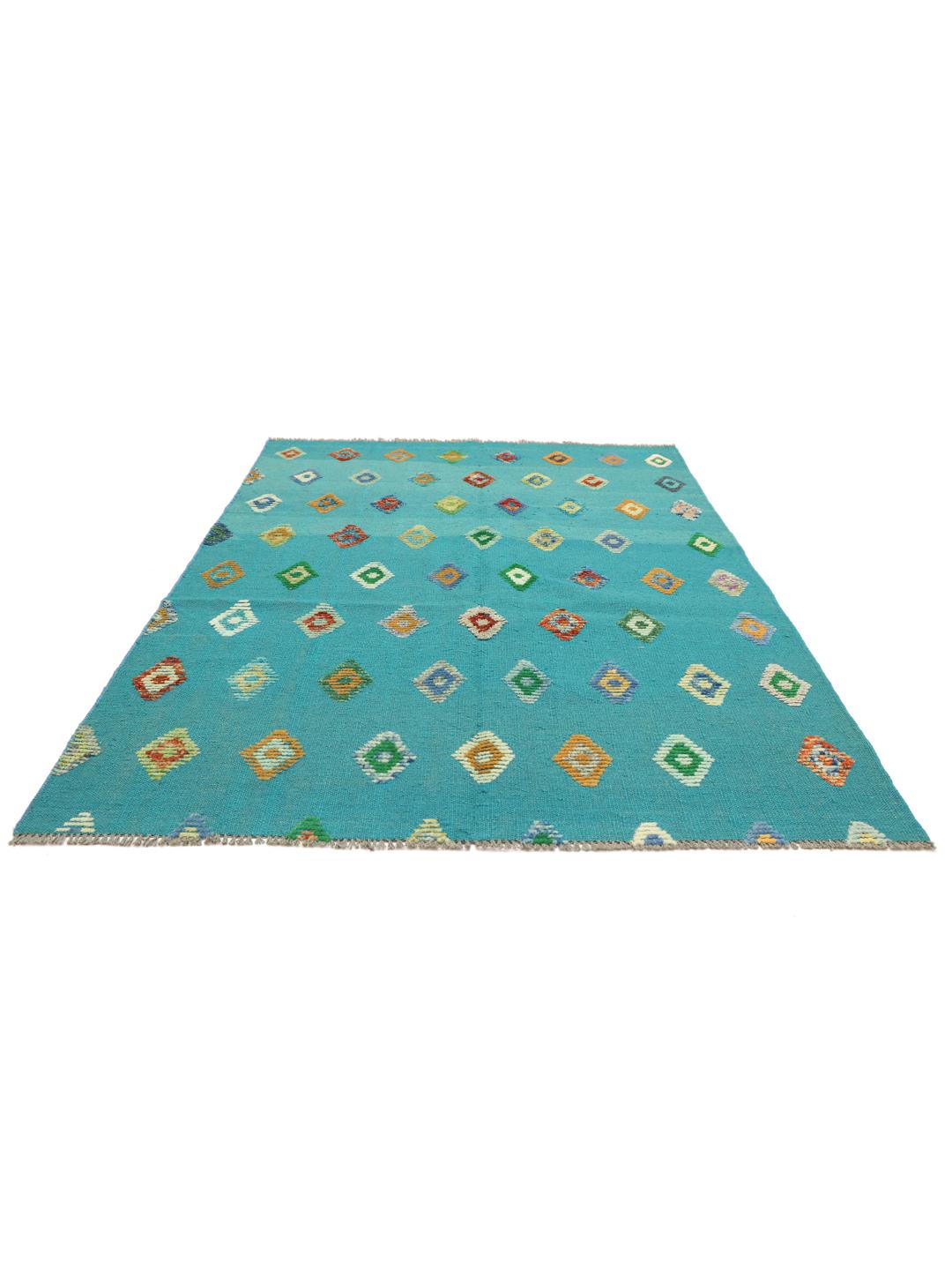
The motifs found on this piece, specifically the diamond shapes, are classic elements of this weaving tradition. These geometric forms often represent protective talismans or stylized natural elements, arranged in organised rows to create a rhythmic, harmonious visual flow. The use of vibrant, contrasting colours against a bold field is a hallmark of the expressive style found in many contemporary Afghan workshops.
Collecting a Kelim is an investment in a storied craft that bridges the gap between ancient nomadic utility and modern home aesthetics. By choosing this piece, you are supporting a legacy of hand-weaving that values human intuition and patience, preserving a cultural narrative that continues to evolve with every thread.