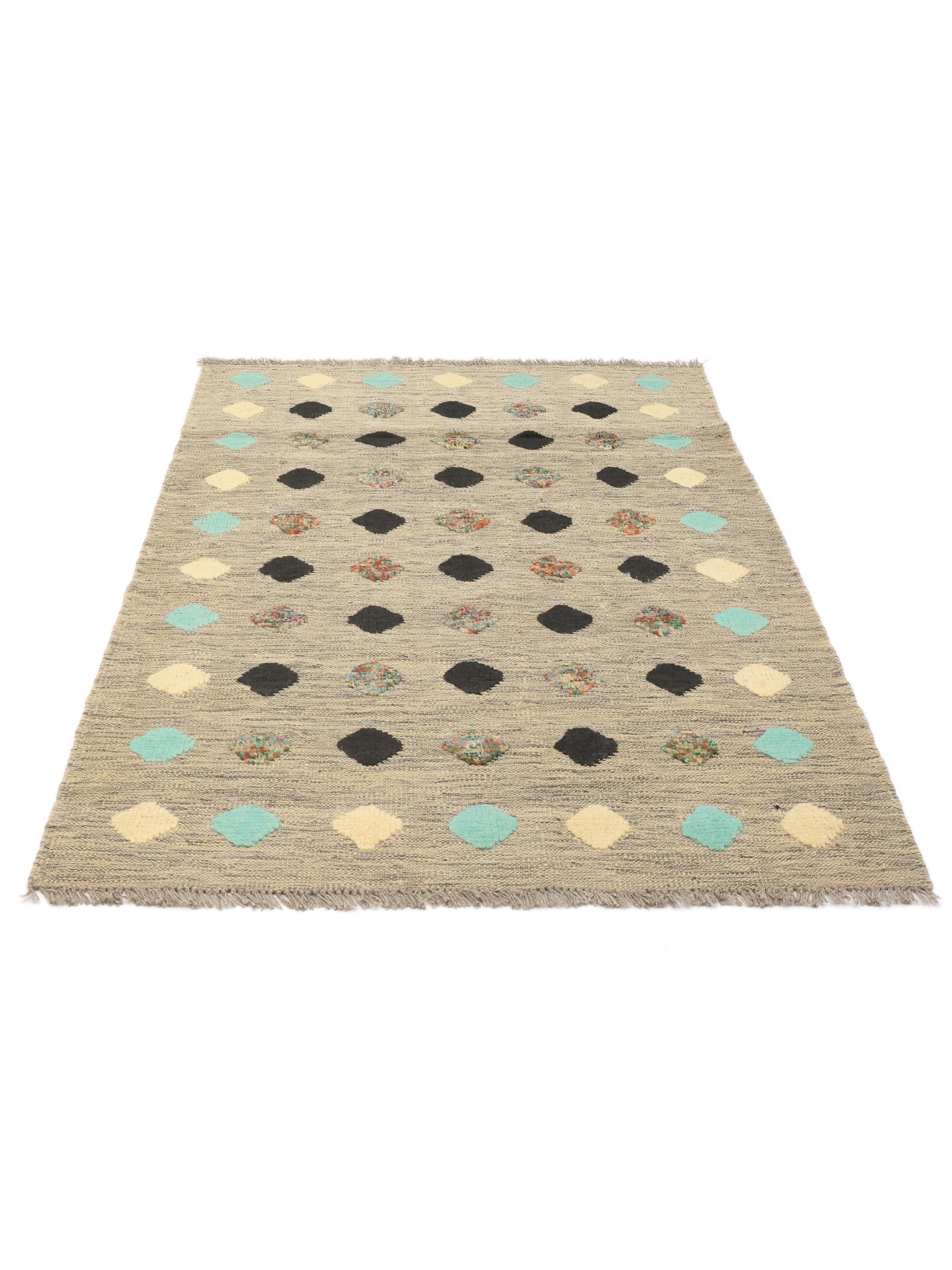
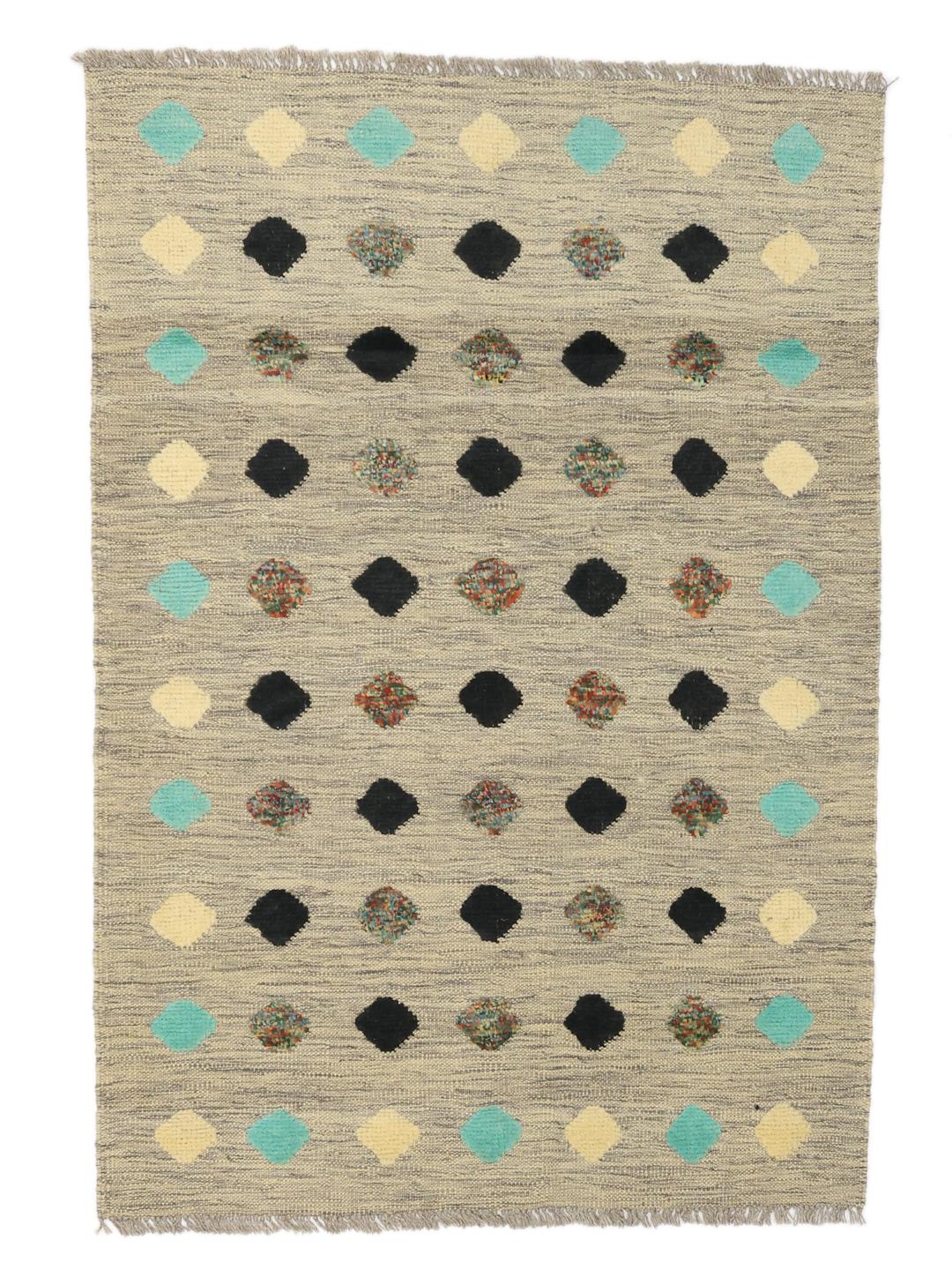
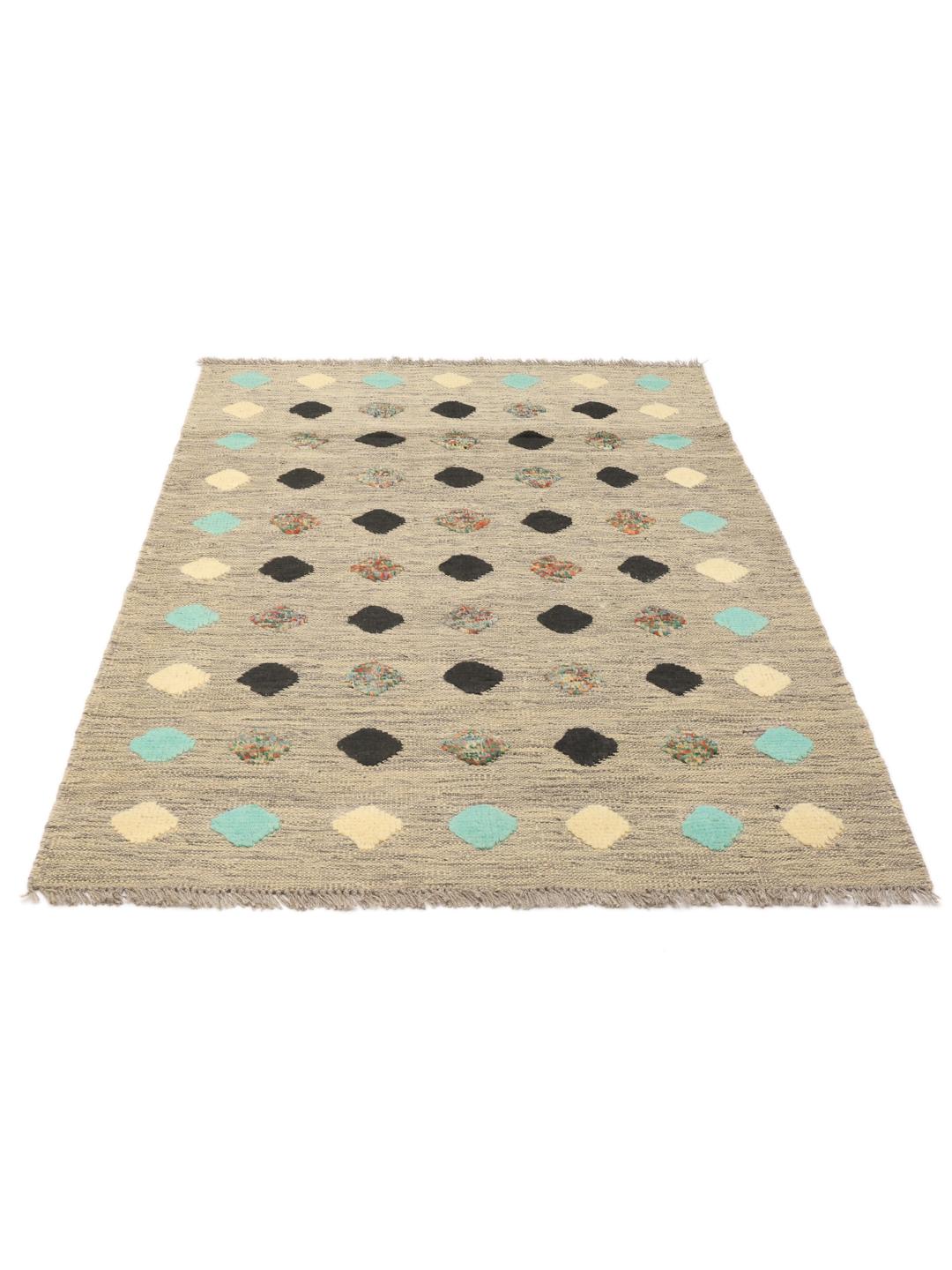
The Kelim tradition is deeply rooted in the nomadic and village cultures of the Middle East and Central Asia. These rugs were historically created by tribal weavers as functional items for daily use, serving as floor coverings, tent decorations, or saddlebags. Over centuries, these traditions have evolved into the sophisticated craft we see today, with Afghanistan remaining a key region for the production of high-quality, authentic pieces.
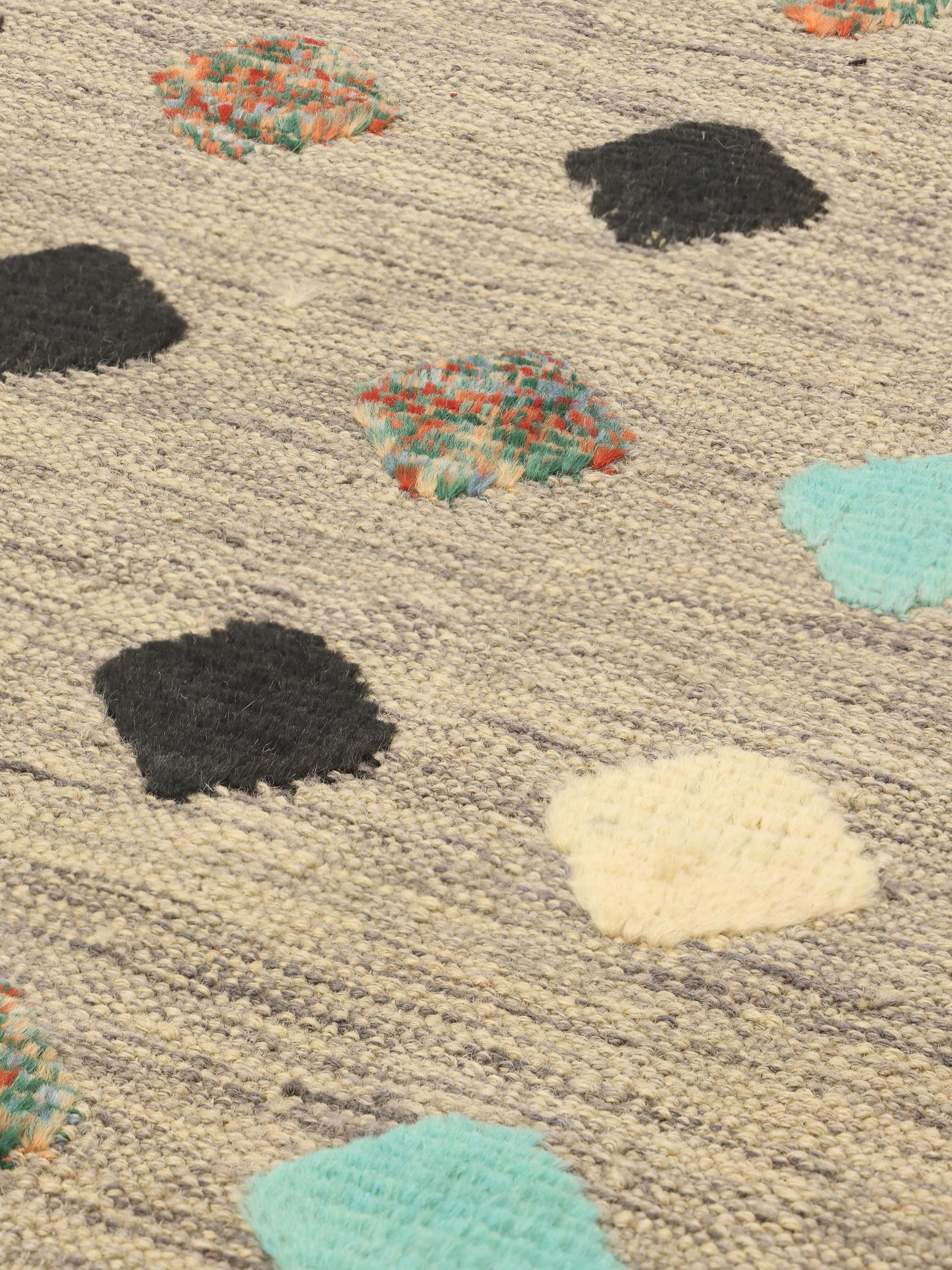
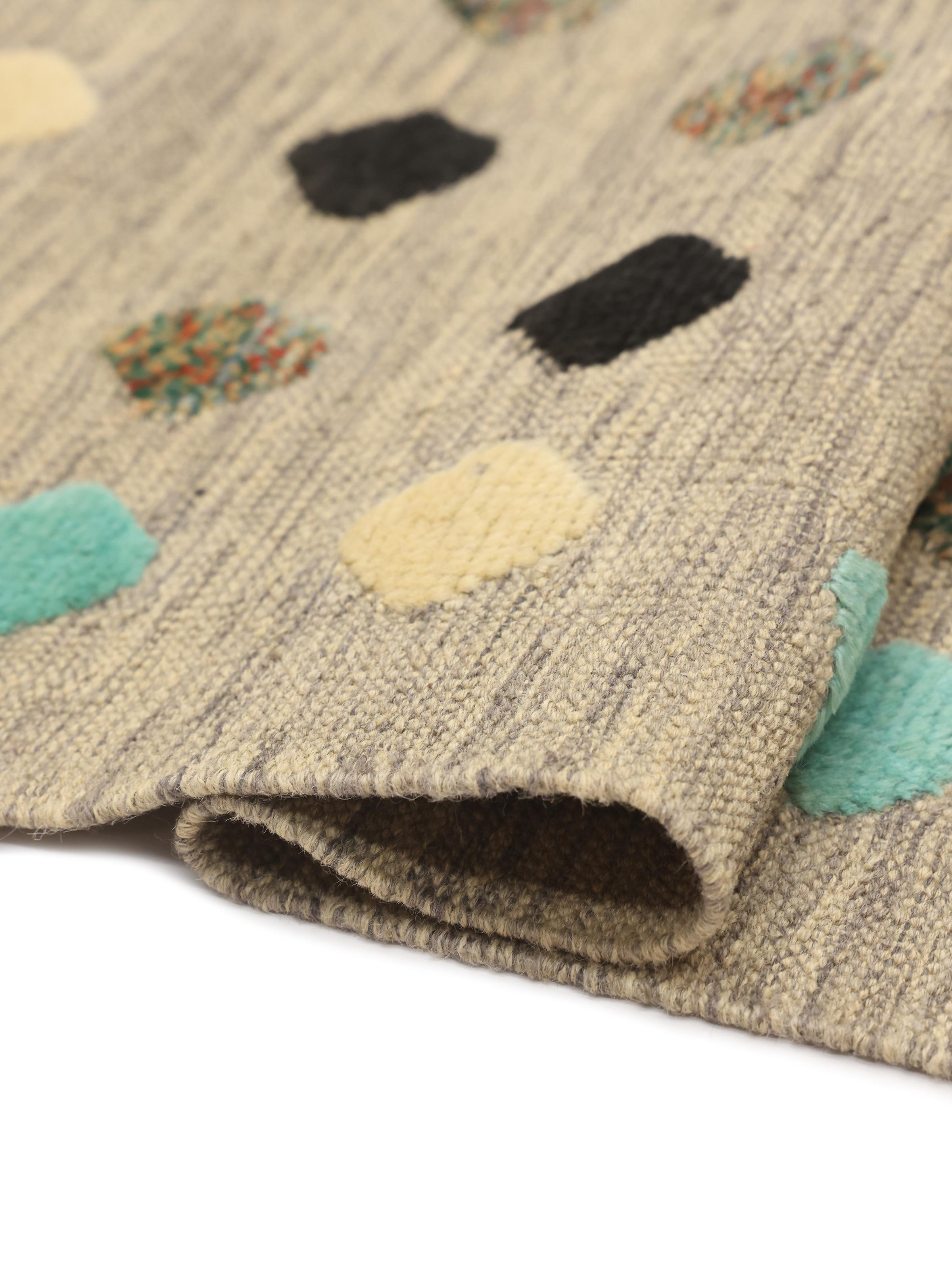
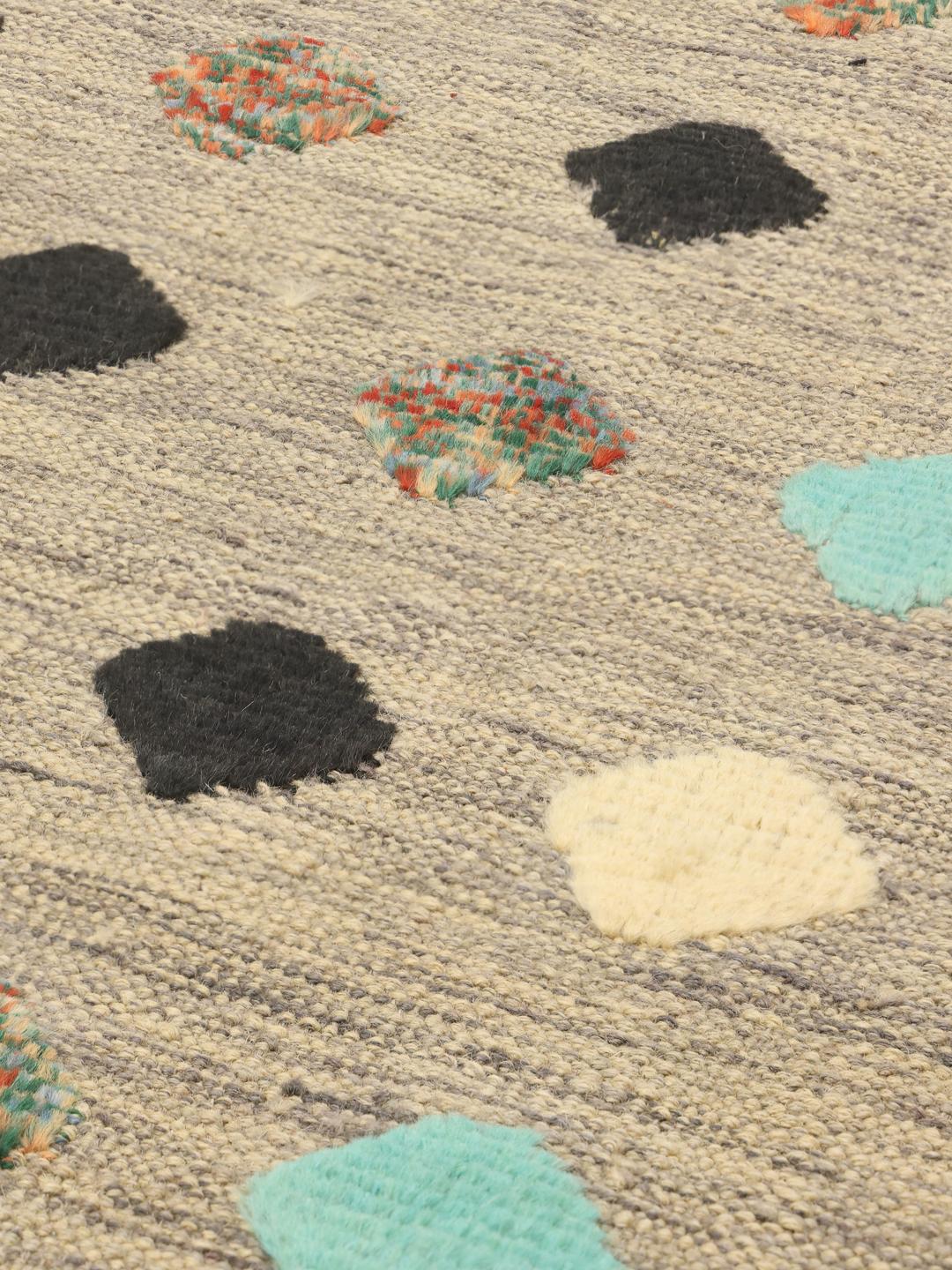
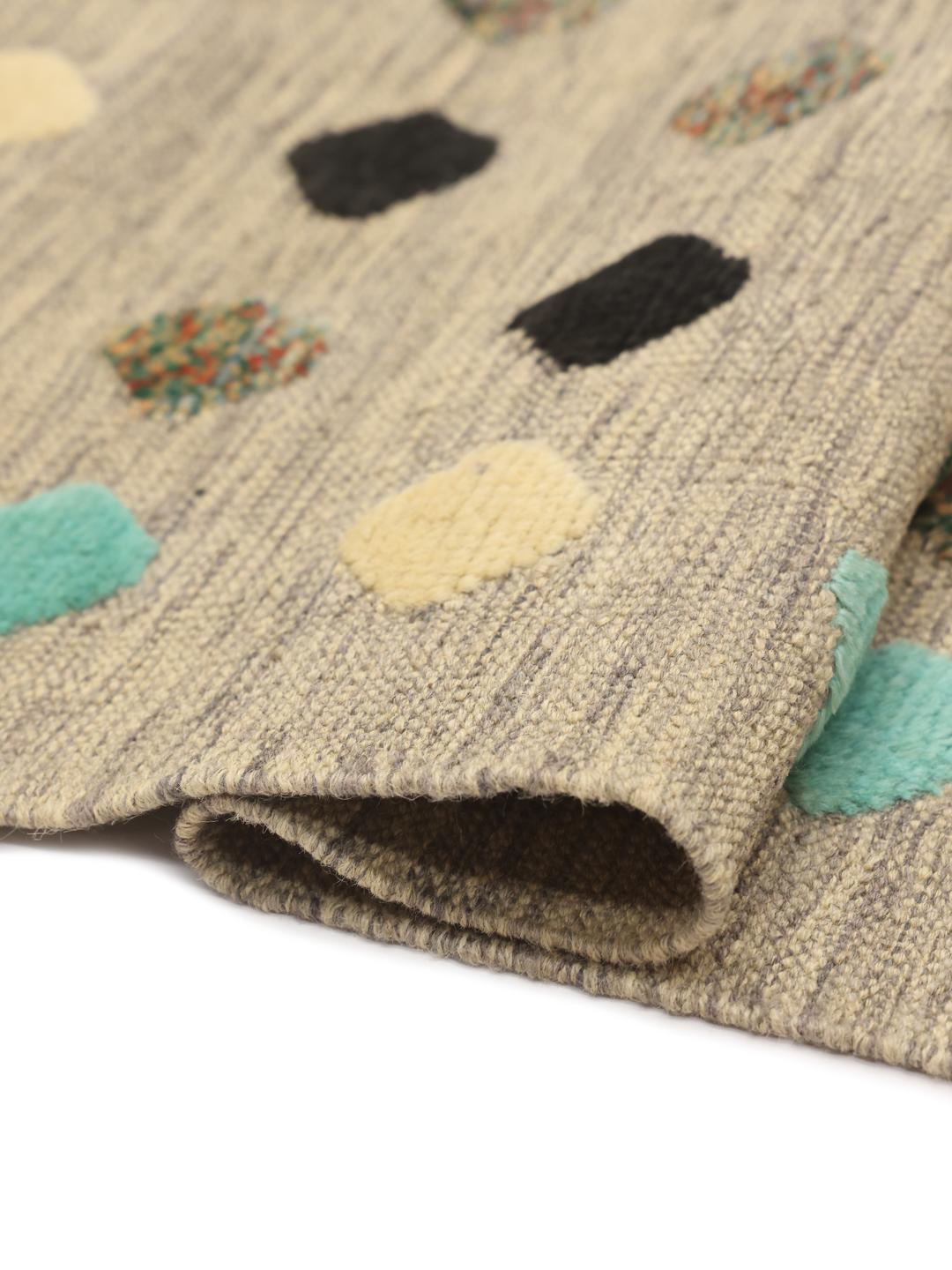
Technically, a Kelim is a flat-weave rug, meaning it is crafted without the pile knots found in traditional knotted rugs. This specific construction allows for a reversible, lightweight, and incredibly durable product. The term Nimbaft often refers to a specific style of weaving that balances the tightness of the weave with a softer, more flexible feel, making it highly versatile for modern homes.
The design language of this Kelim is characterised by its geometric clarity and bold use of colour. The motifs seen here are traditional, often representing symbols of prosperity, protection, or the natural landscape of the weaving region. While the base is kept neutral, the vibrant accents within the patterns provide a striking contrast that is typical of the artistic expression found in Afghan weaving communities.
Collecting a Kelim is an investment in human skill and cultural heritage. Each rug tells the story of the weaver and their environment, preserved through generations of passed-down knowledge. By owning such a piece, you are supporting a legacy of traditional craft, ensuring these ancient techniques continue to thrive in the contemporary world.