Kelim weaving has ancient roots across Central Asia and the Middle East, where nomadic and village communities traditionally created flatwoven textiles for everyday use as floor coverings, blankets, and storage bags. Over generations, these utilitarian crafts evolved into a celebrated artistic tradition, with Afghan weavers passing down distinct techniques and regional patterns through families.
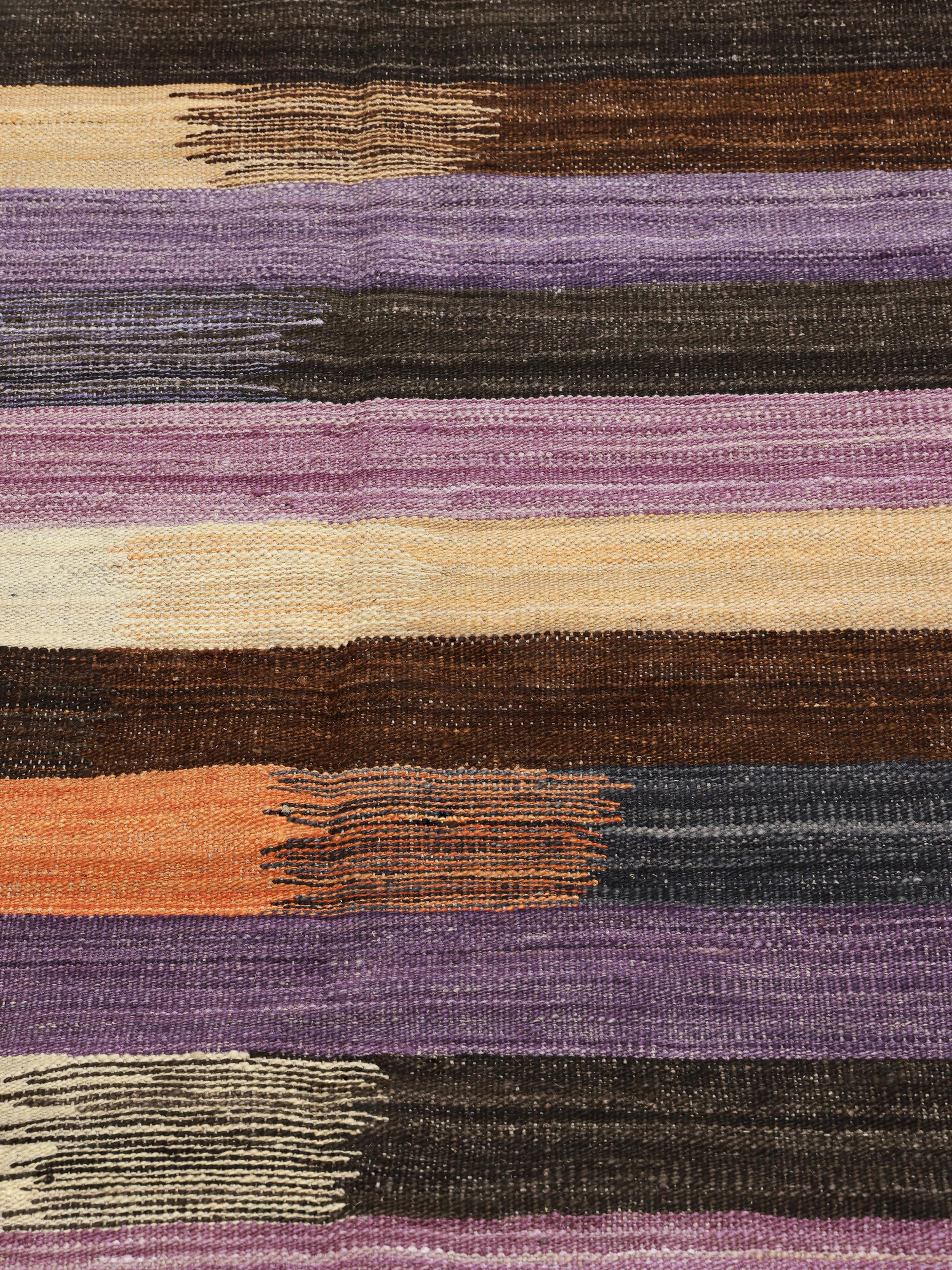
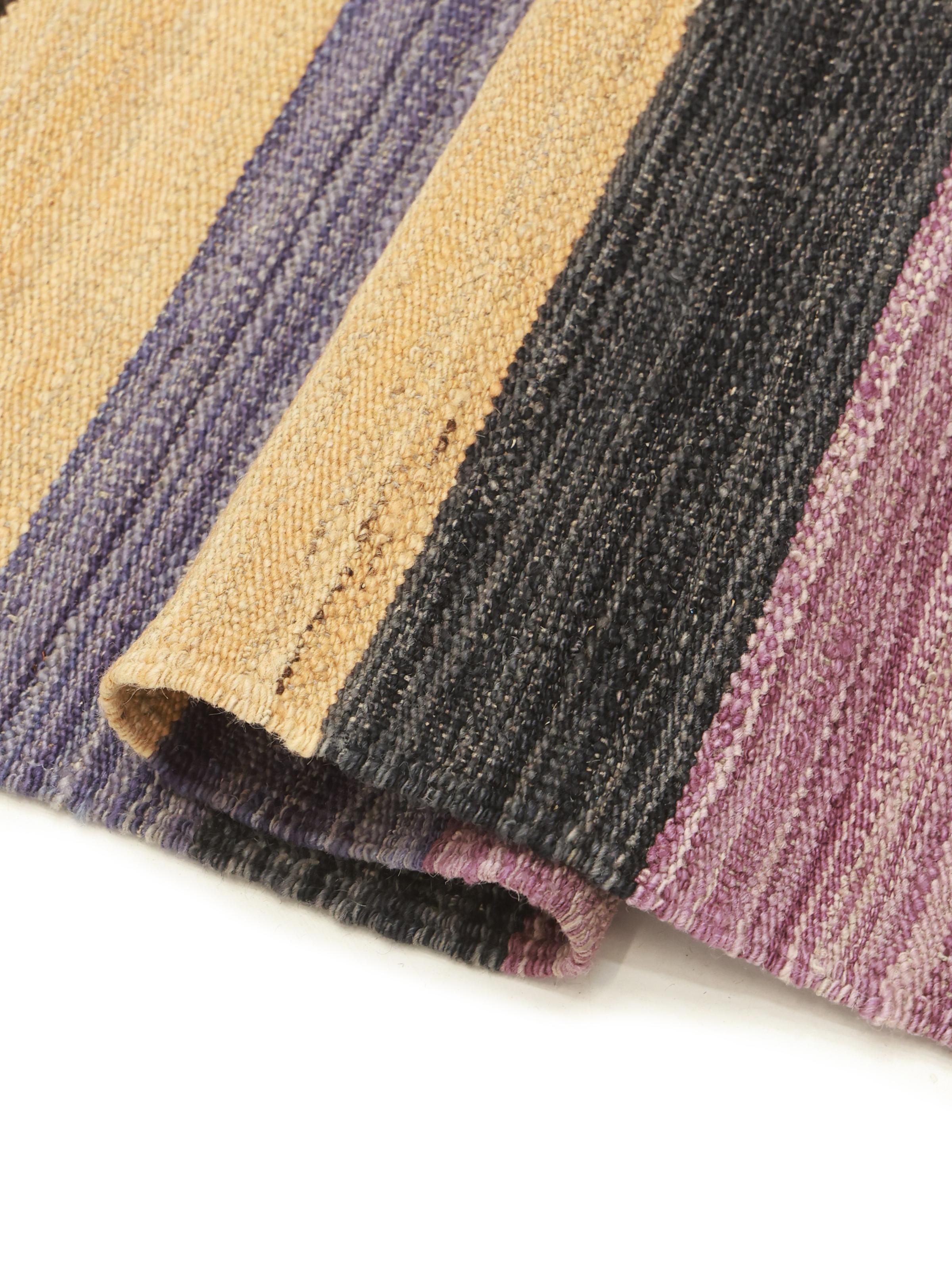
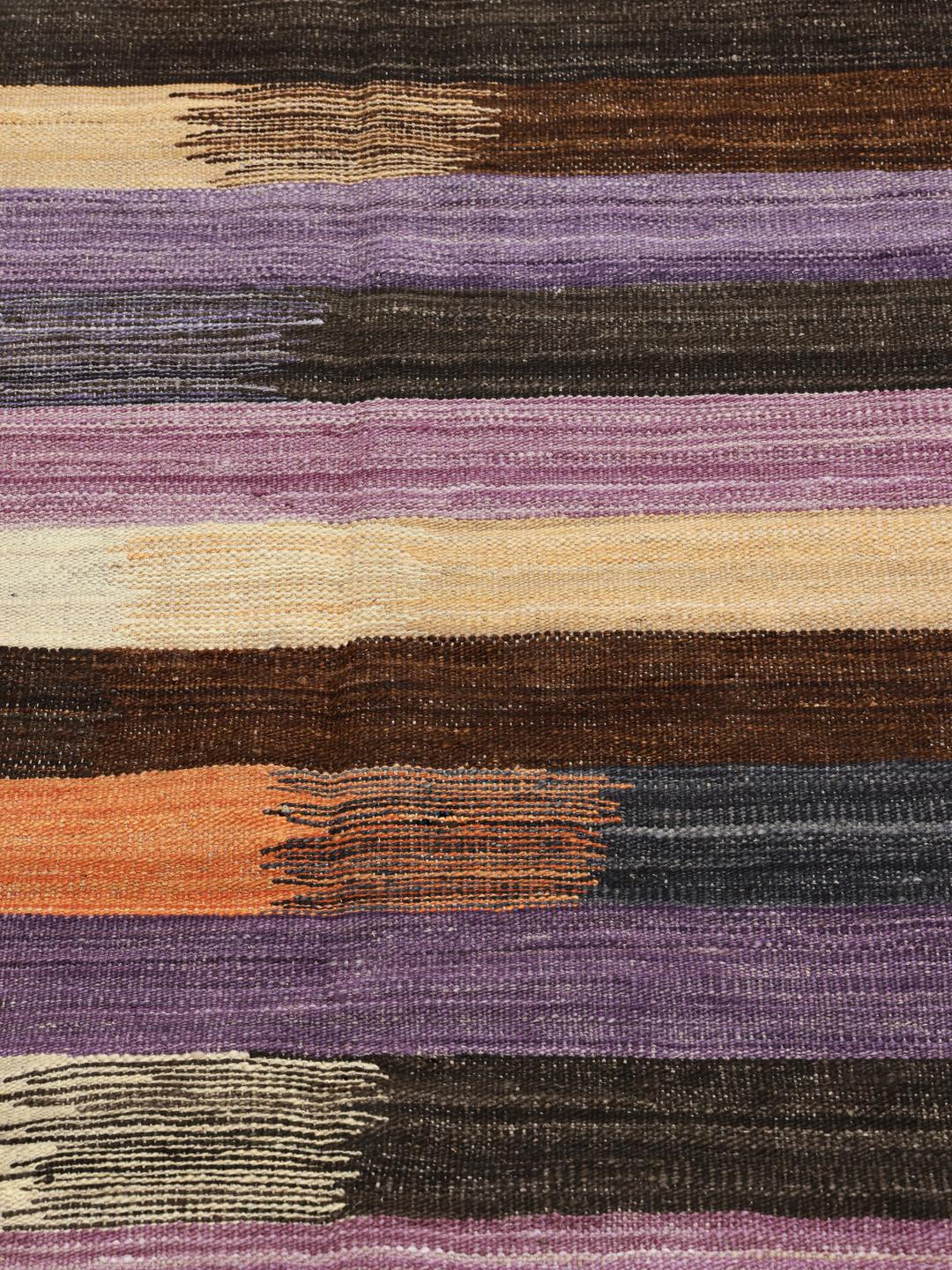
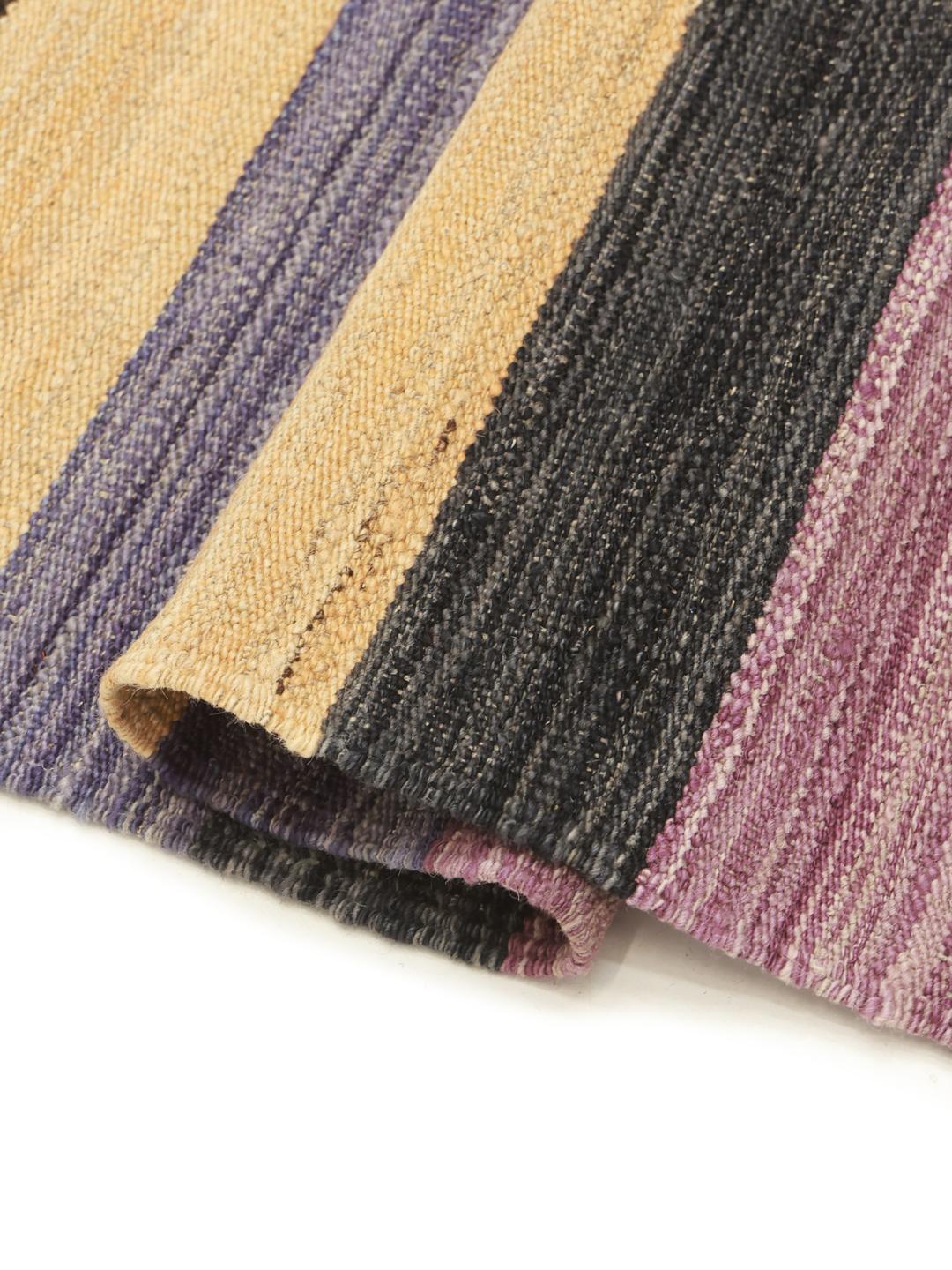
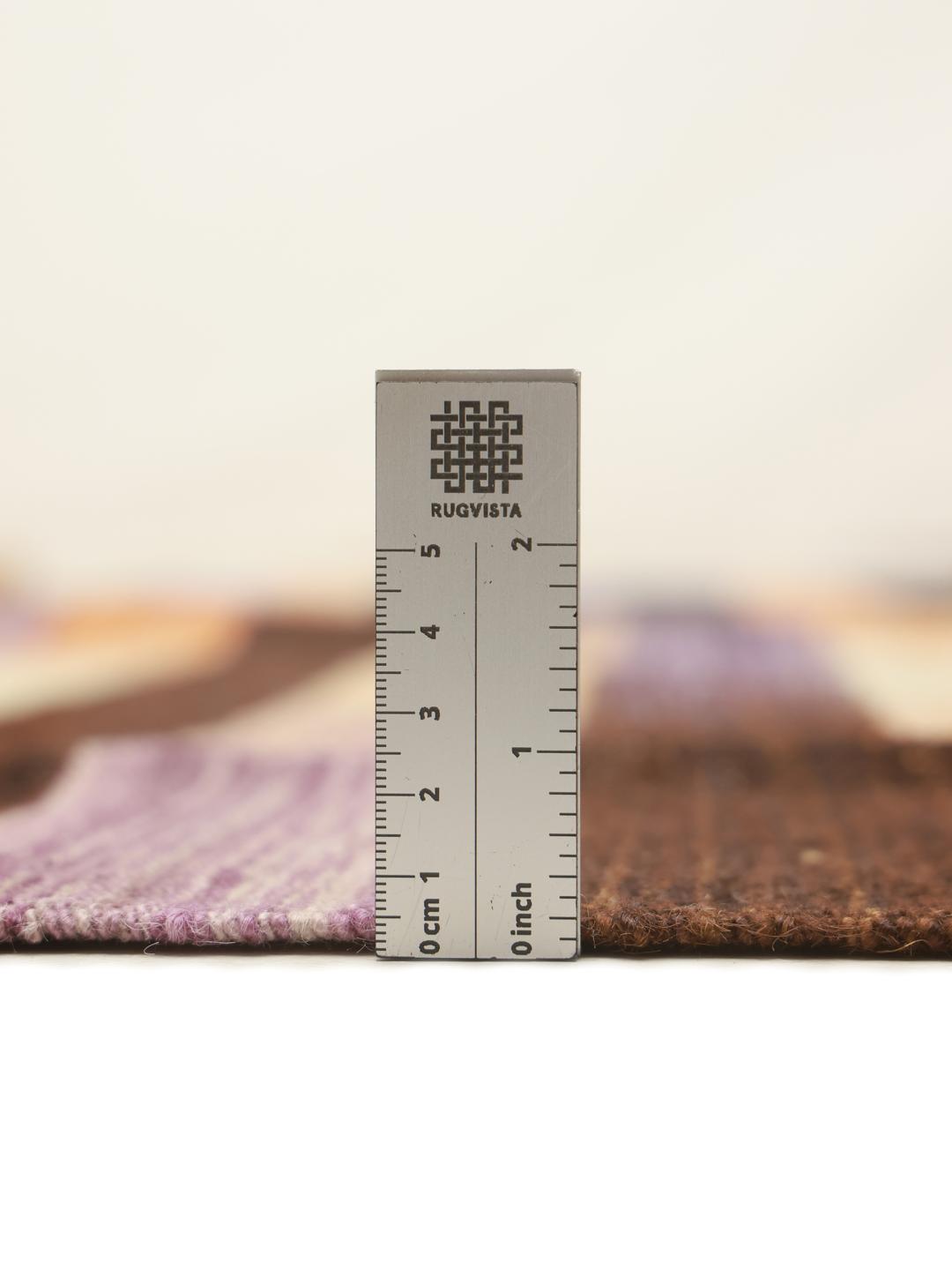
The term kelim refers to a flatweave construction where no pile is knotted into the foundation. Instead, the coloured weft threads are tightly interlaced by hand across the vertical warp threads, producing a lightweight yet durable textile that lies flat on the floor and can often be used on both sides.
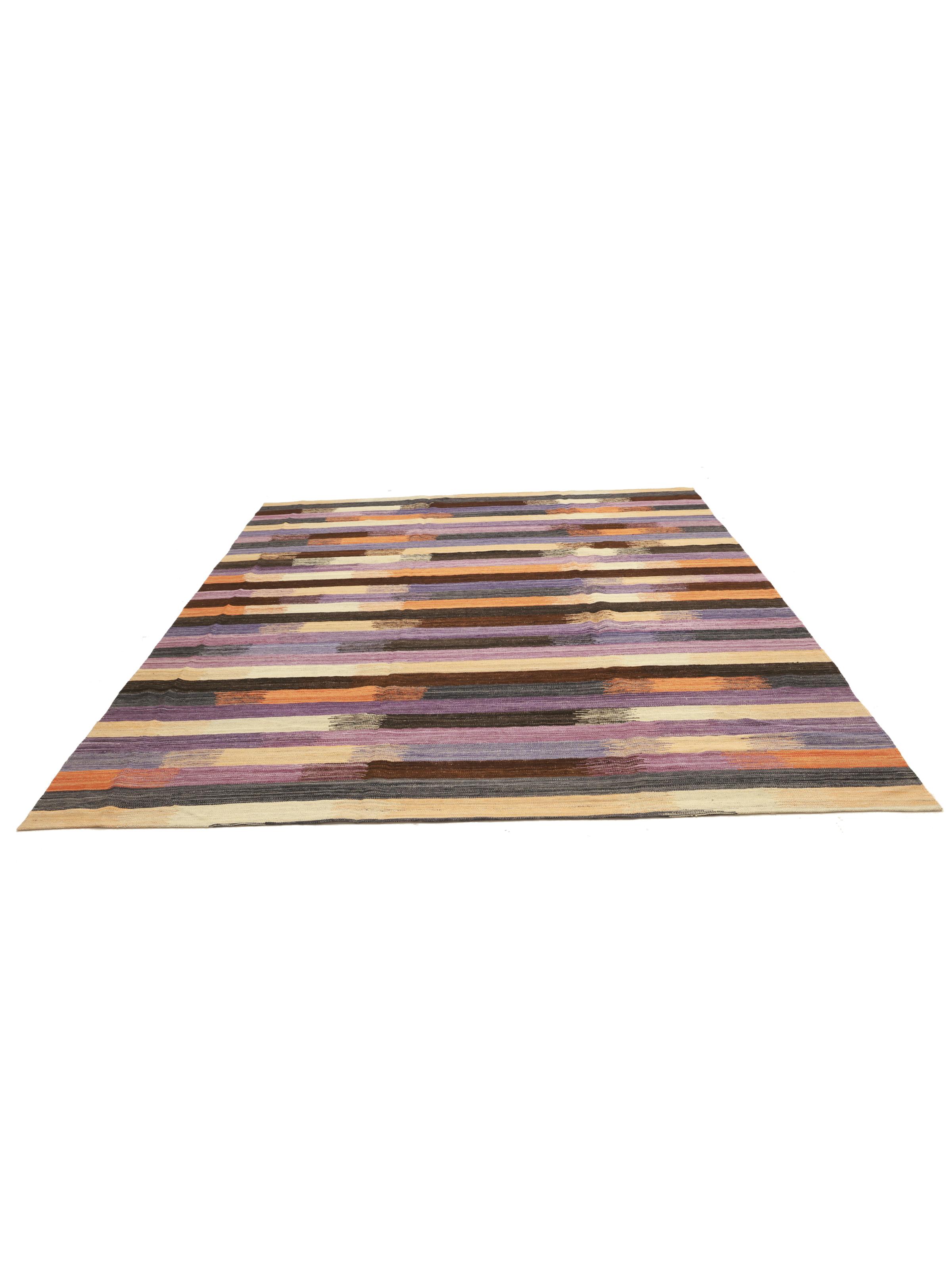
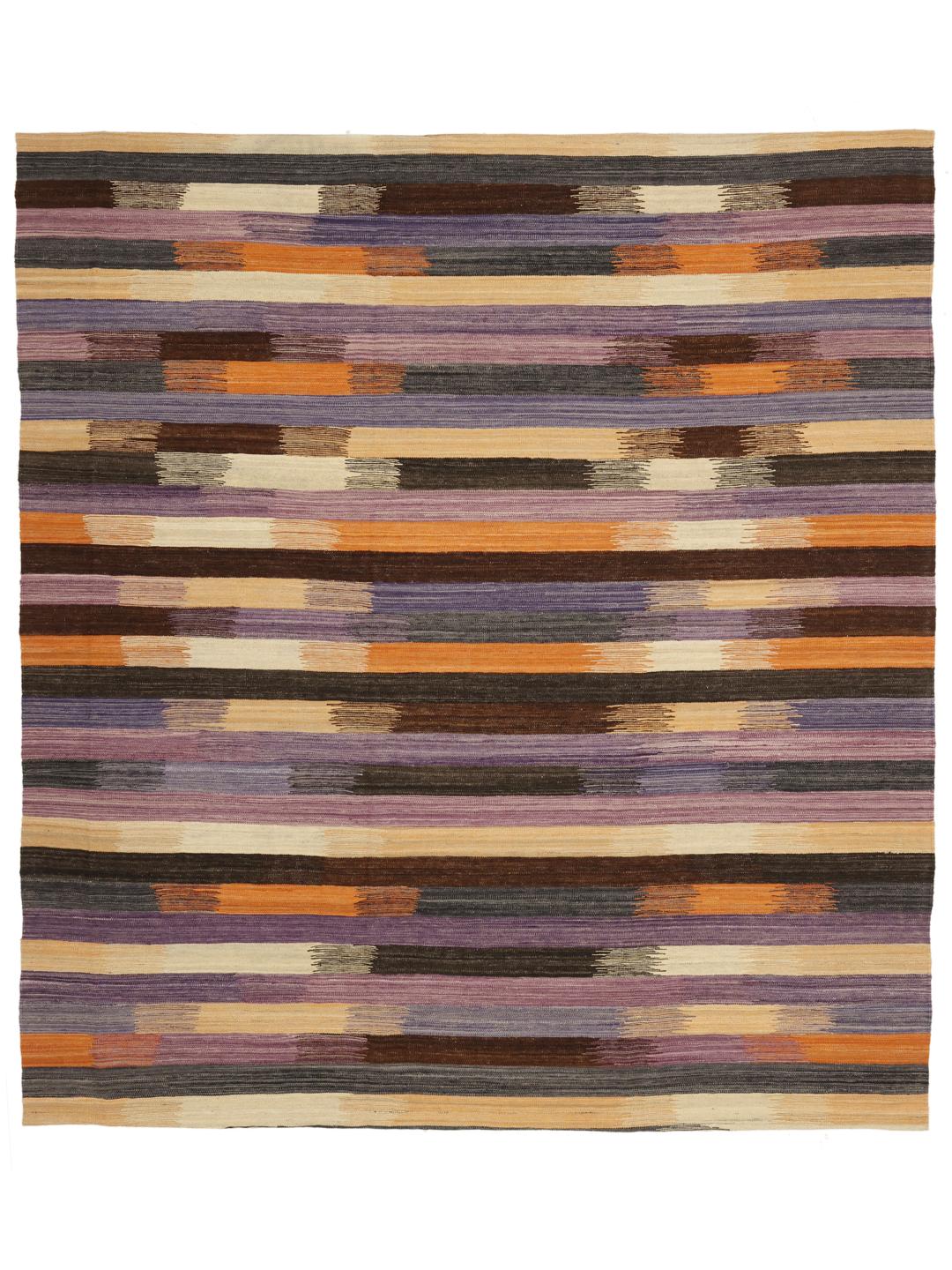
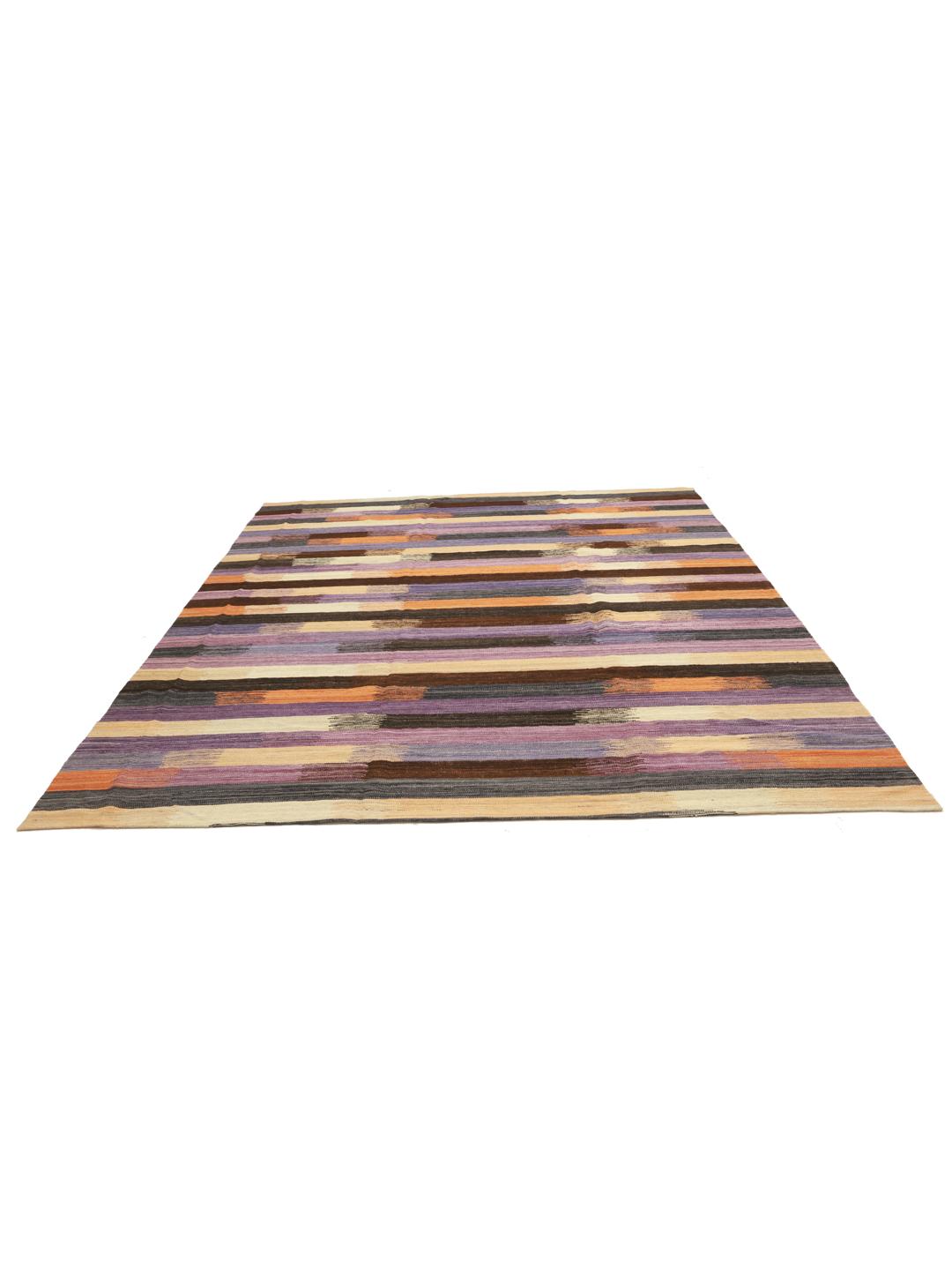
Traditional kelim design relies heavily on geometric motifs, bands, and stripes dictated by the mechanics of the handloom. While older village pieces often served tribal functions, modern iterations like this one adapt those ancient weaving methods into contemporary colour palettes and balanced compositions that suit modern homes.
Collecting a hand-woven kelim connects your home to a living heritage of textile craftsmanship. Each piece represents hours of careful human labour, preserving cultural traditions that value sustainability, natural materials, and lasting quality over mass production.