Kelim rugs hold a revered place in the rich textile heritage of Central Asia and the Middle East, originating as essential, durable furnishings for nomadic and village communities. Traditionally woven without a pile, these flatweave textiles were prized by nomads for their versatility, lightweight portability, and resilience against the harsh demands of daily life. Over generations, the craft evolved from practical floor coverings and storage bags into celebrated works of decorative art, spreading from ancient trade routes into modern homes worldwide.
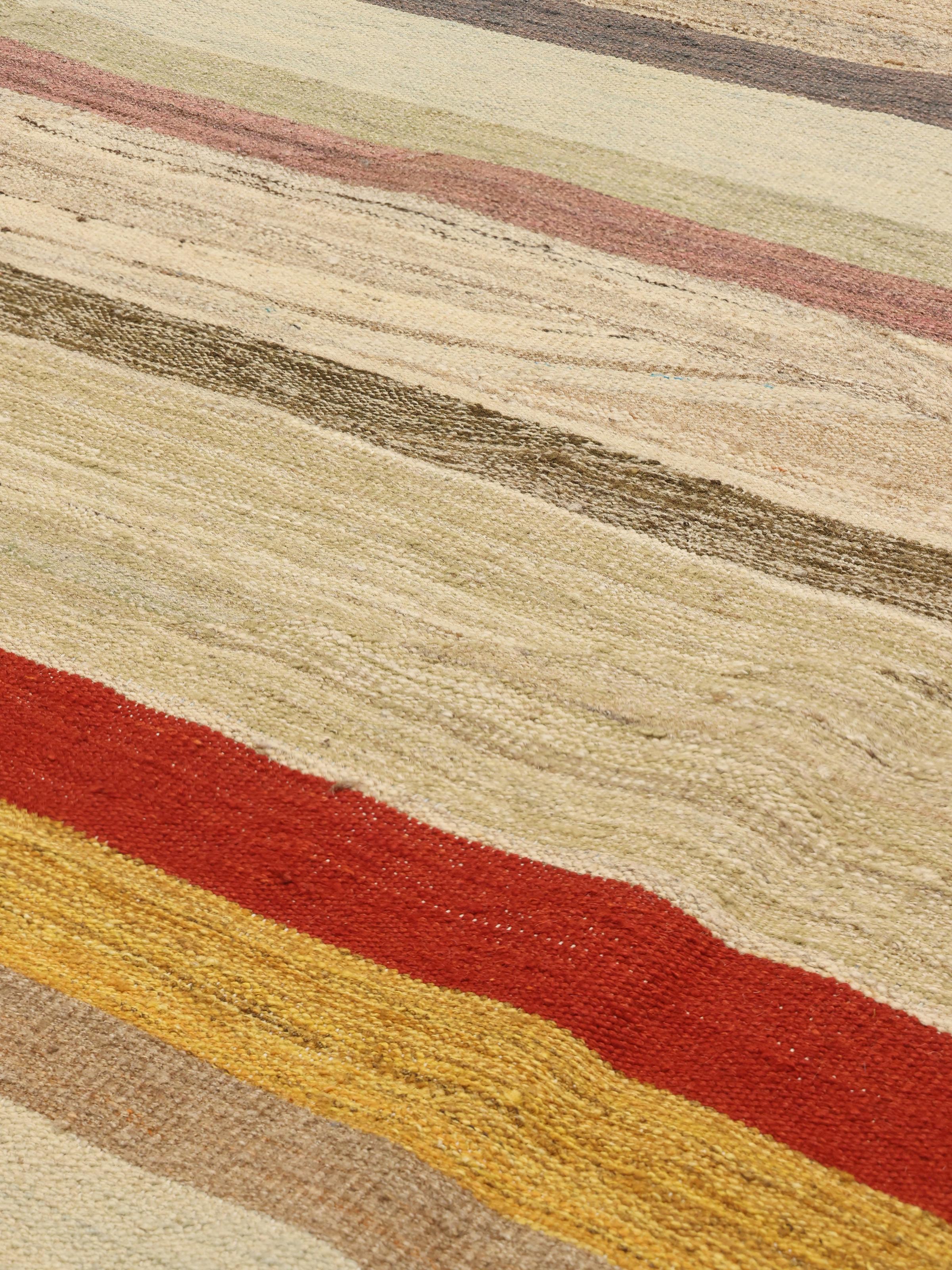
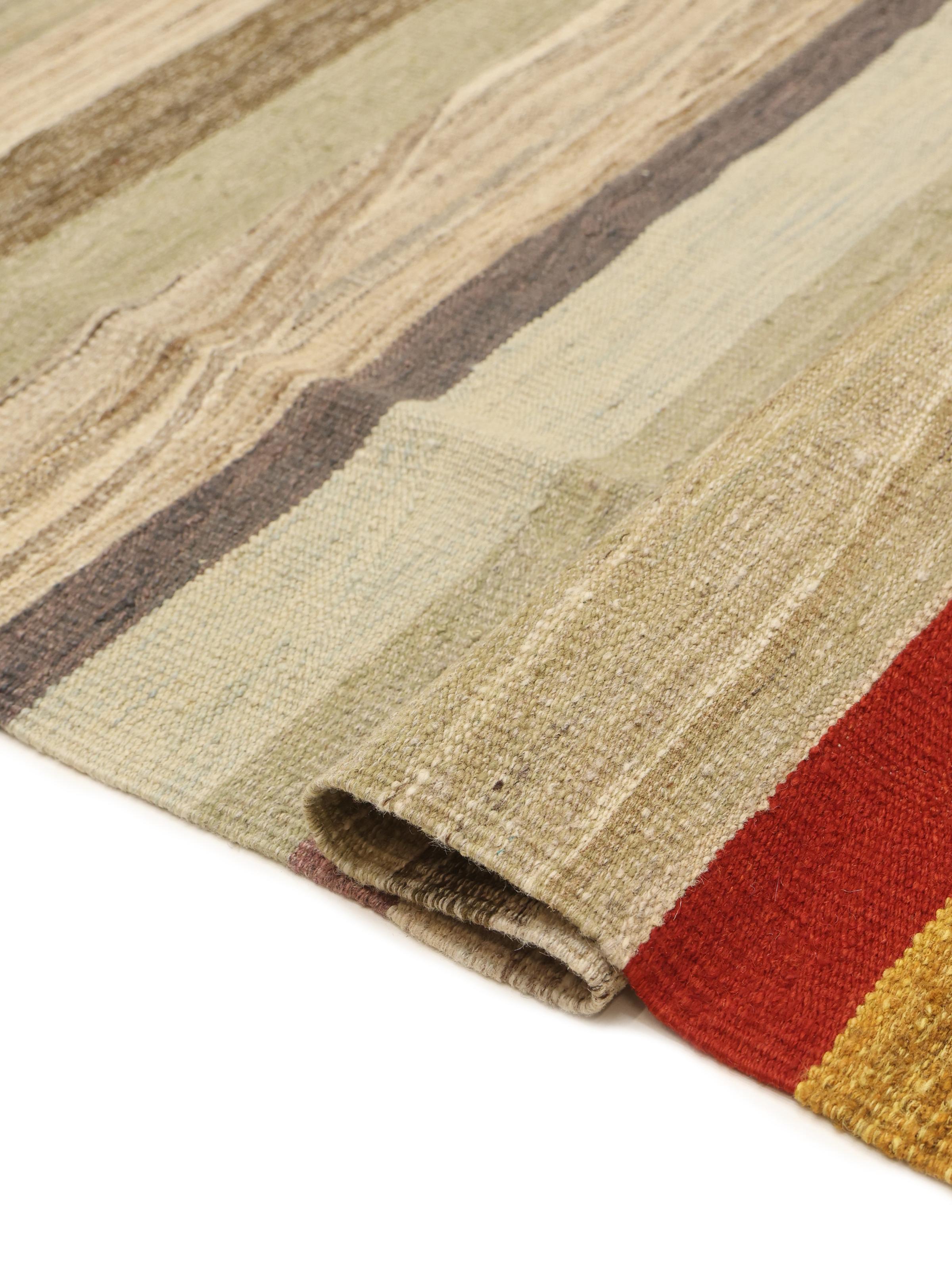
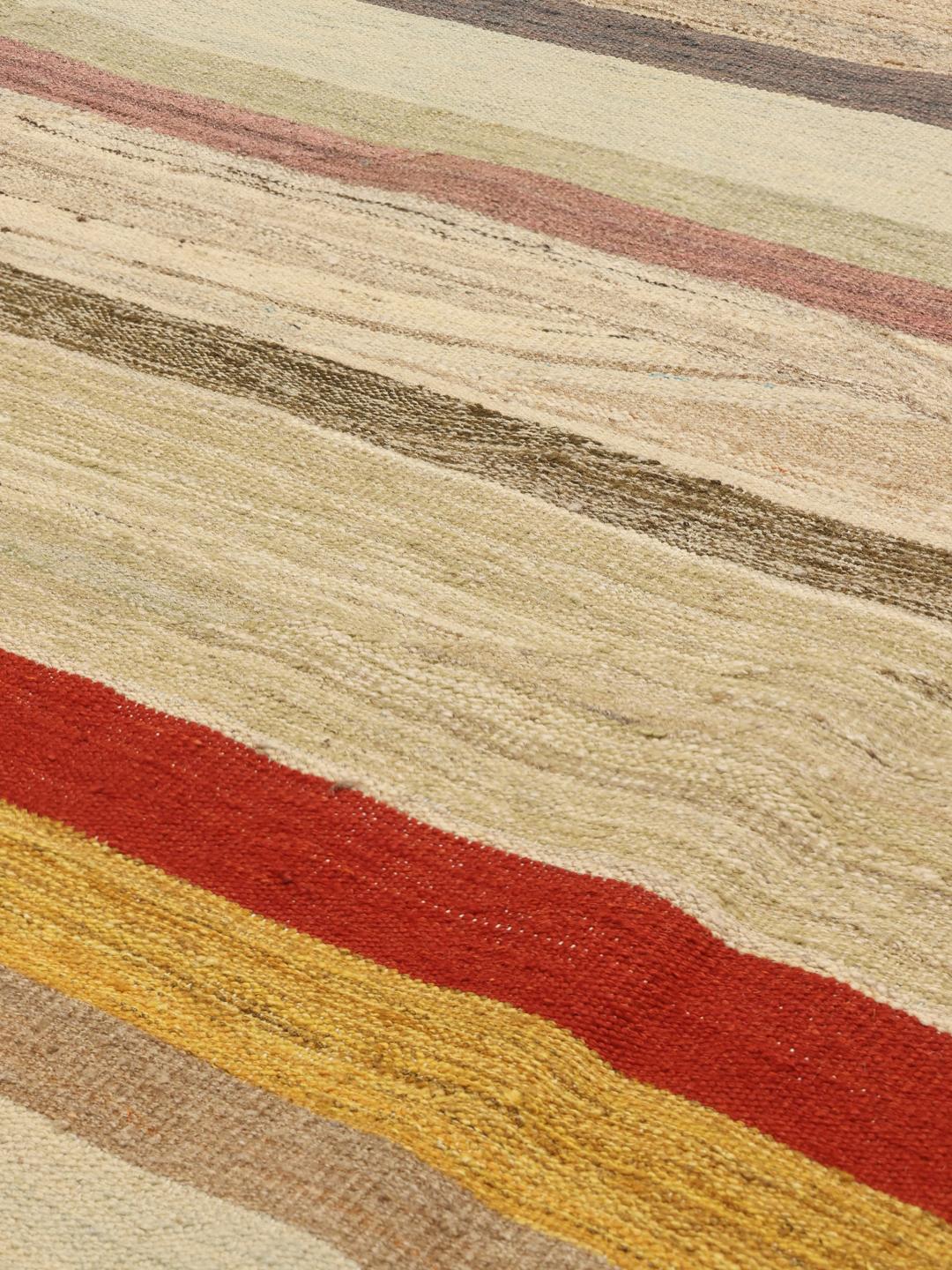
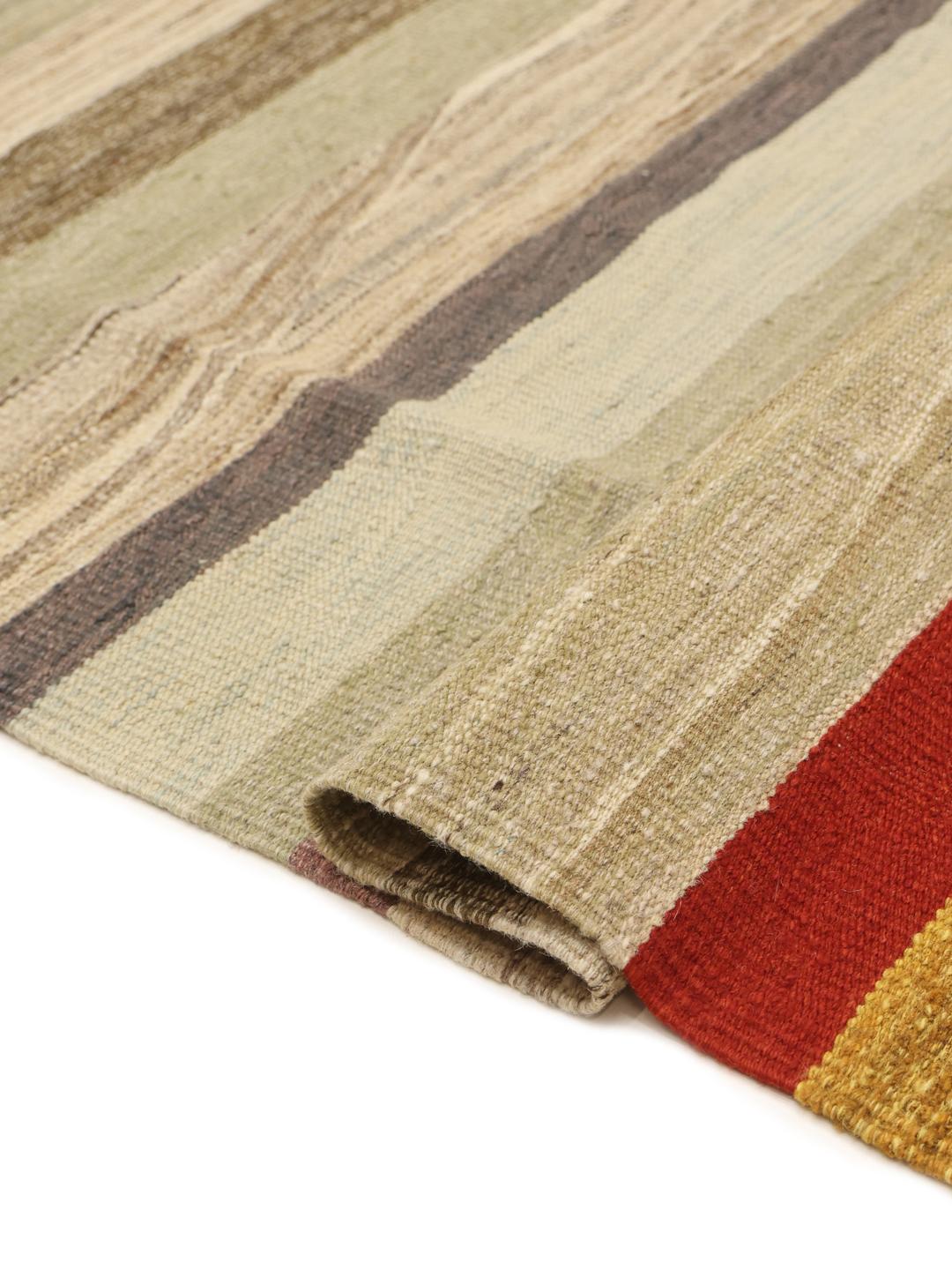
The term kelim specifically refers to this flat-woven tapestry technique, where the coloured weft threads are pulled tightly back and forth over the vertical warp threads. This interlacing method creates a completely flat fabric with identical patterns visible on both sides. Because there are no looped knots to cut, the weaver relies entirely on tension and precise colour changes to form sharp geometric motifs and clean lines, requiring a high degree of spatial awareness and technical mastery.
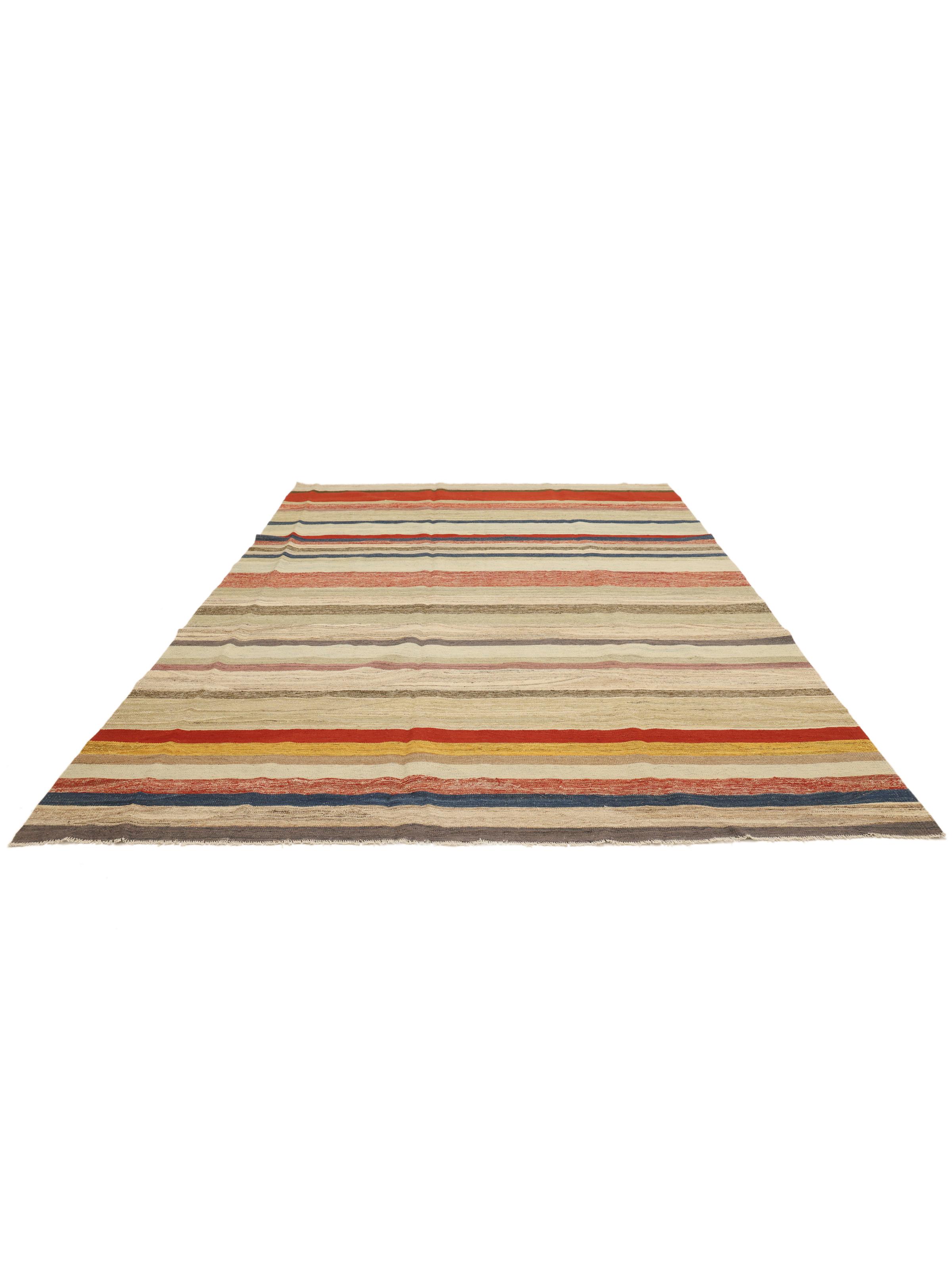
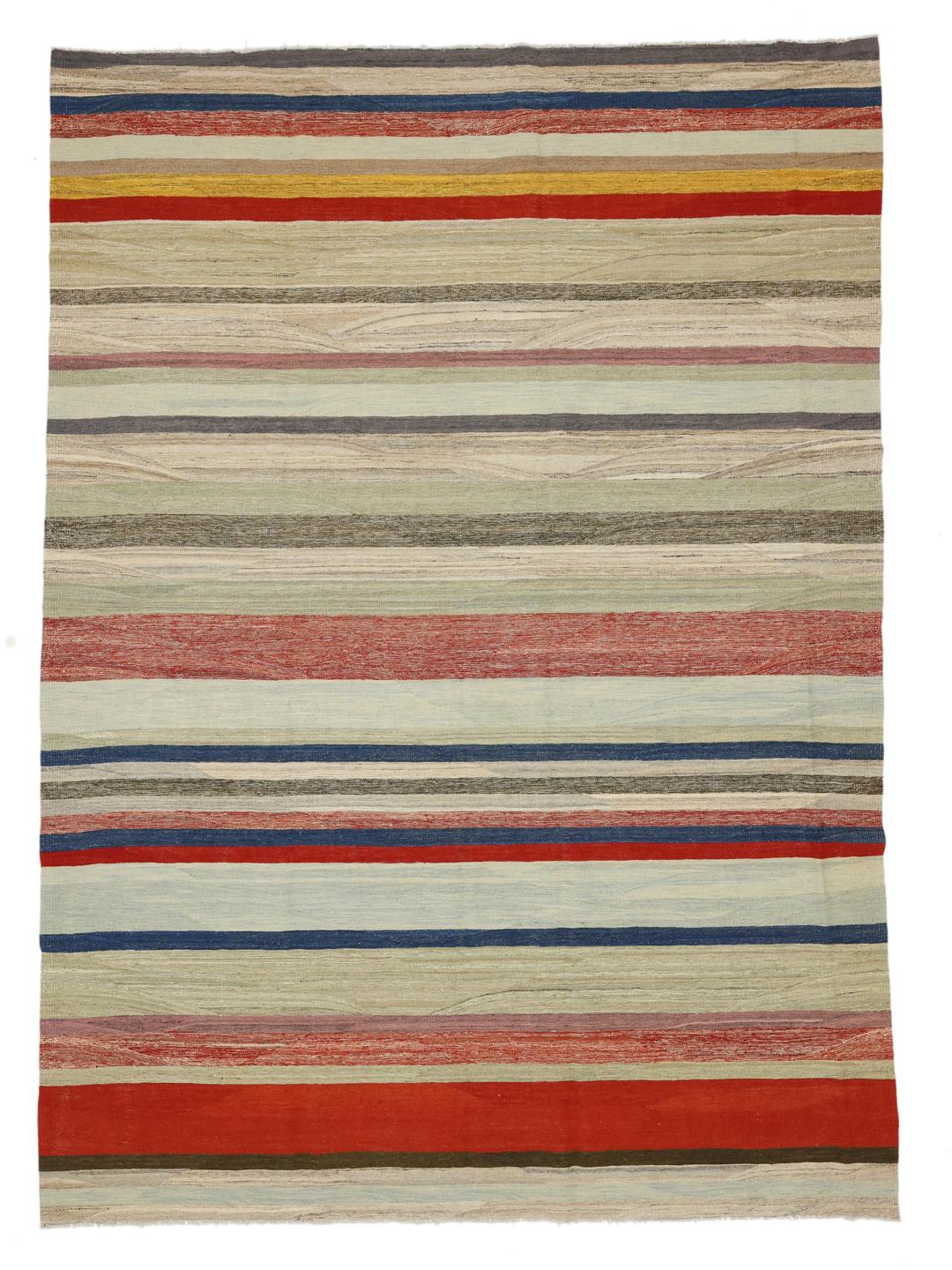
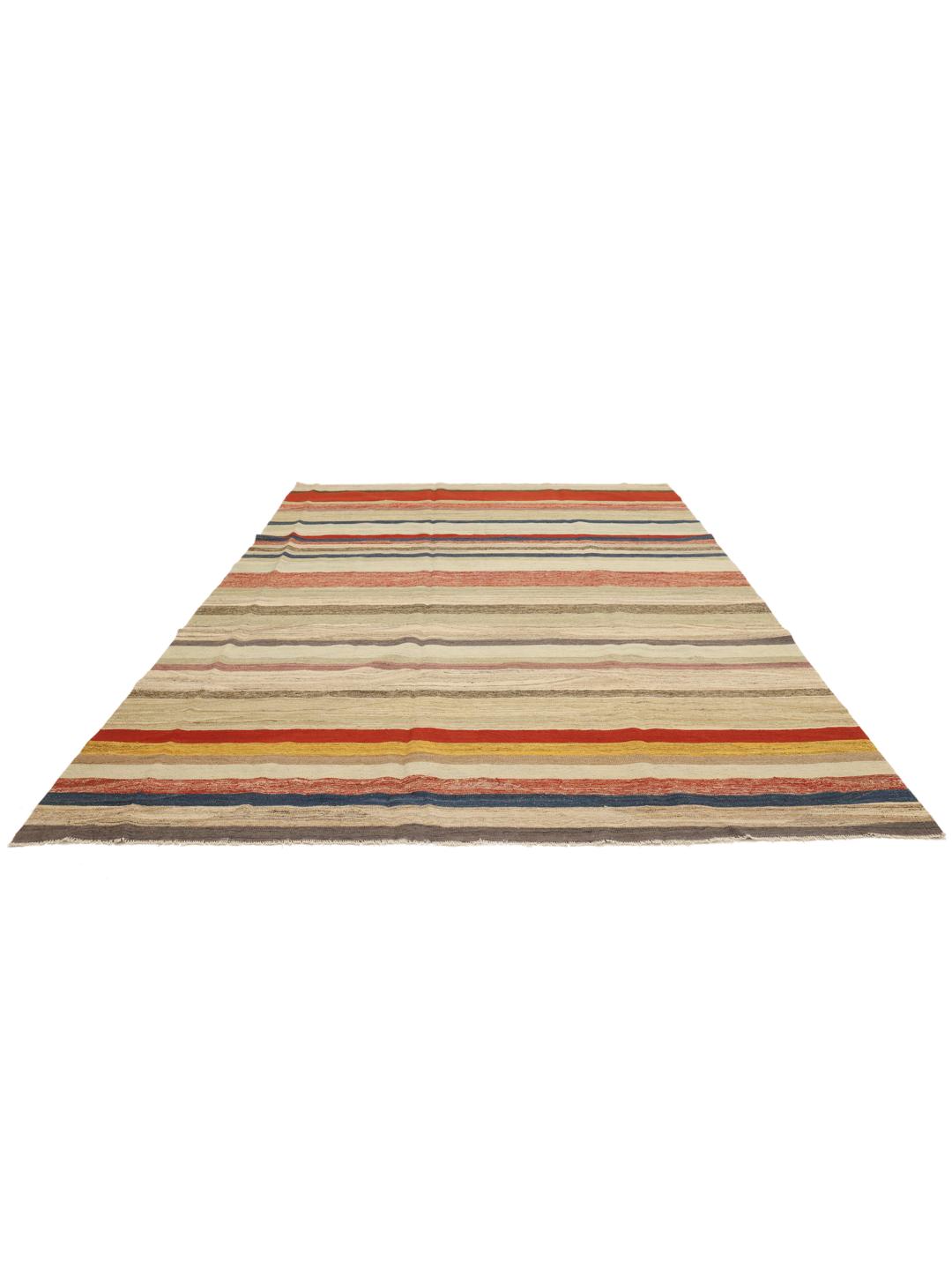
The visual language of modern kelims often draws inspiration from ancient tribal motifs while embracing contemporary colour palettes and minimalist aesthetics. Traditional pieces frequently feature bold stripes, diamonds, and repeating symbols that told stories of the weaver's family, tribe, or local surroundings. In this specific piece, the striking horizontal stripes showcase a harmonious blend of earthy tones and vibrant accents, offering a fresh yet deeply traditional expression that complements contemporary interior spaces.
Collecting vintage and modern kelims has become a way to preserve an endangered craft form that relies entirely on human hands and traditional wooden looms. Unlike machine-made carpets, each handmade kelim carries the distinct signature of the artisan who crafted it, capturing a moment in time through natural dyes and local wool. Owning a piece from this tradition connects your home to a living lineage of makers who have passed their knowledge down through countless generations.