Kelim rugs have a long and storied history rooted in the nomadic and village traditions of the Middle East and Central Asia. Originally created by tribal weavers for practical household use such as floor coverings, blankets, and storage sacks, these flatwoven textiles formed an essential part of daily nomadic life. Over generations, the craft evolved as weavers began incorporating regional motifs and adapting their designs to suit changing aesthetic tastes.
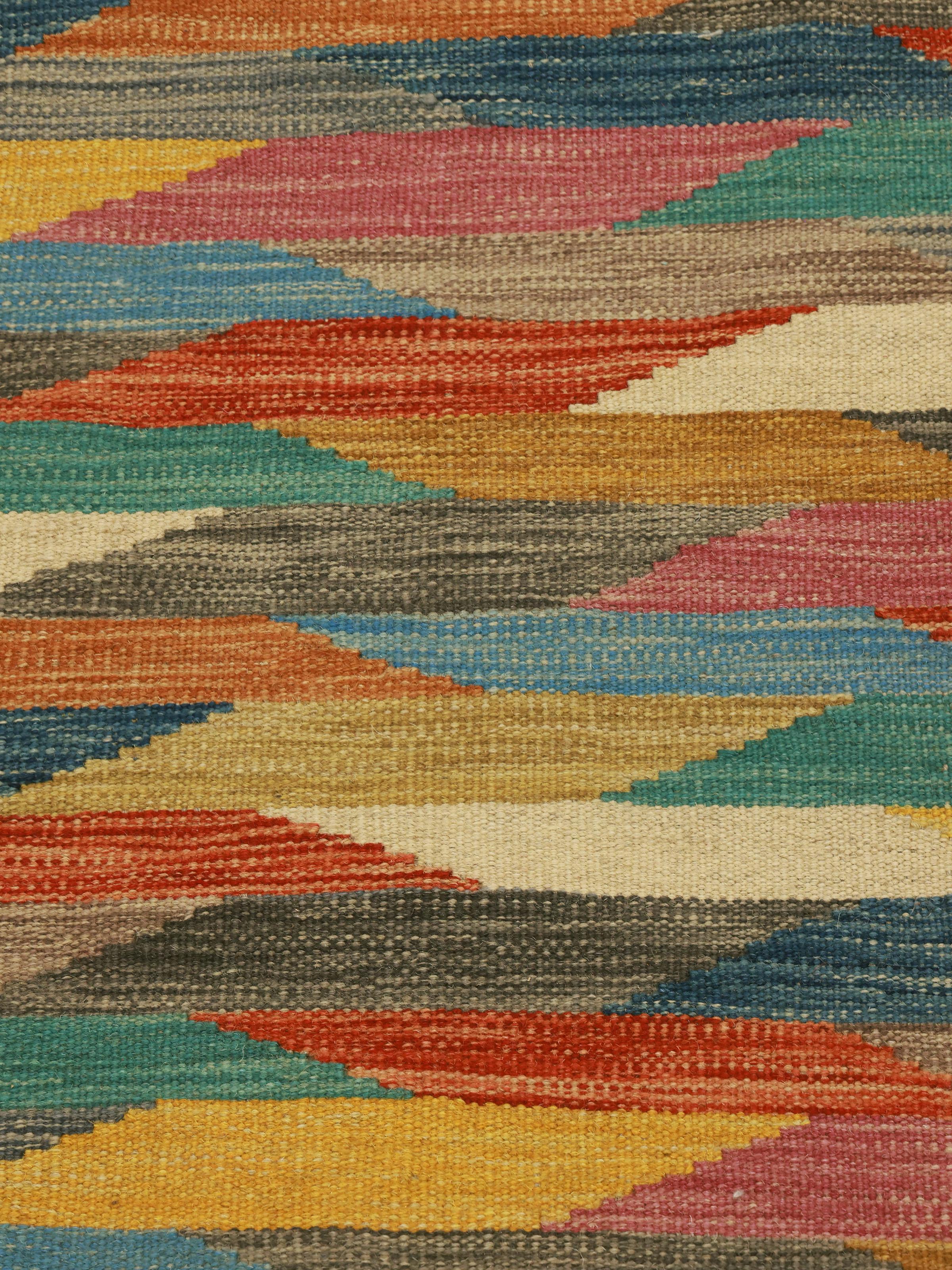
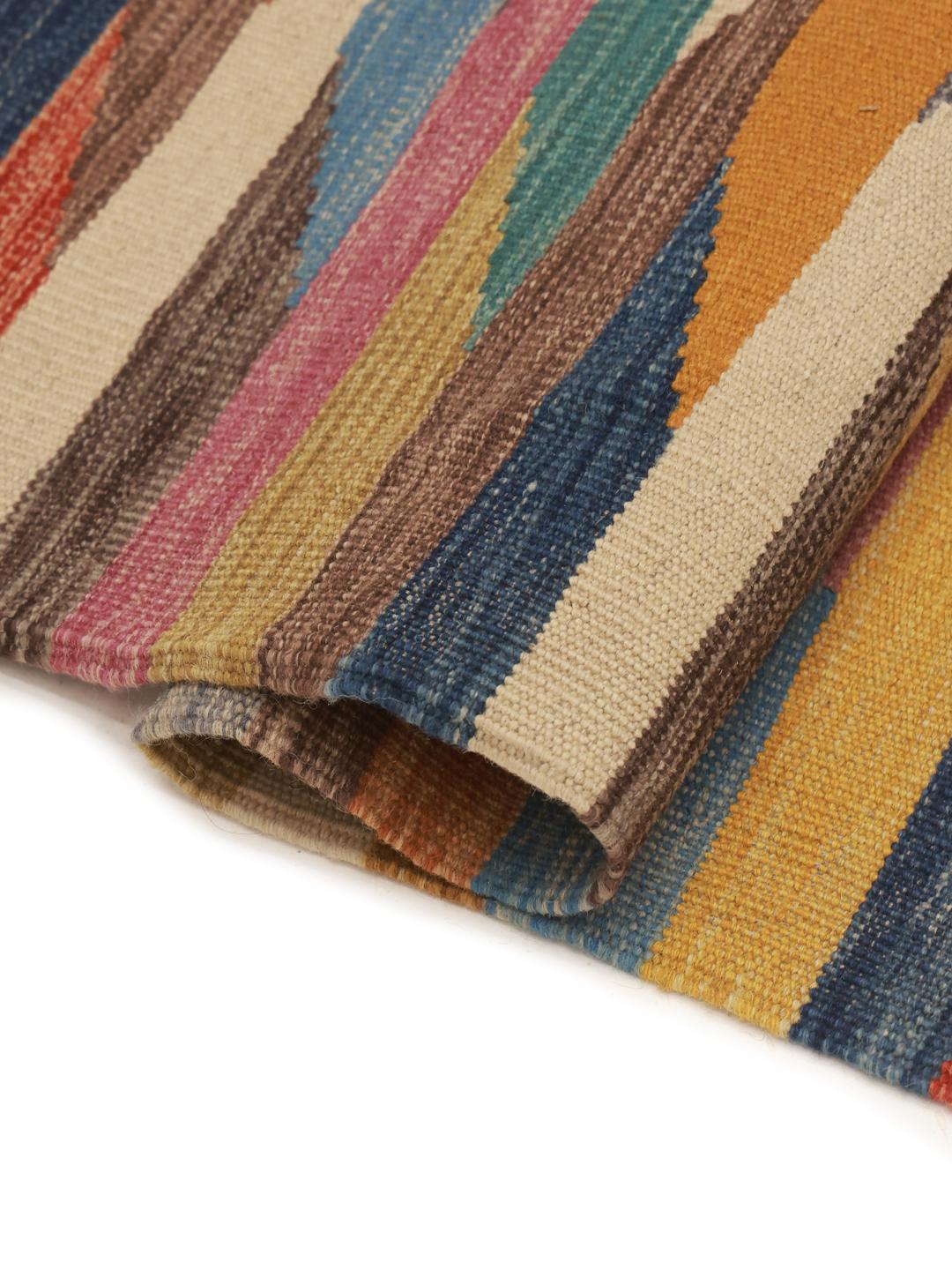
The term kelim refers to a flatweaving technique where no pile is knotted into the foundation. Instead, the warp and weft threads are interlocked tightly to create a smooth, reversible surface with a lightweight yet durable structure. This traditional method requires precise tension control by the weaver, resulting in crisp geometric lines and a remarkably sturdy textile that stands the test of time.
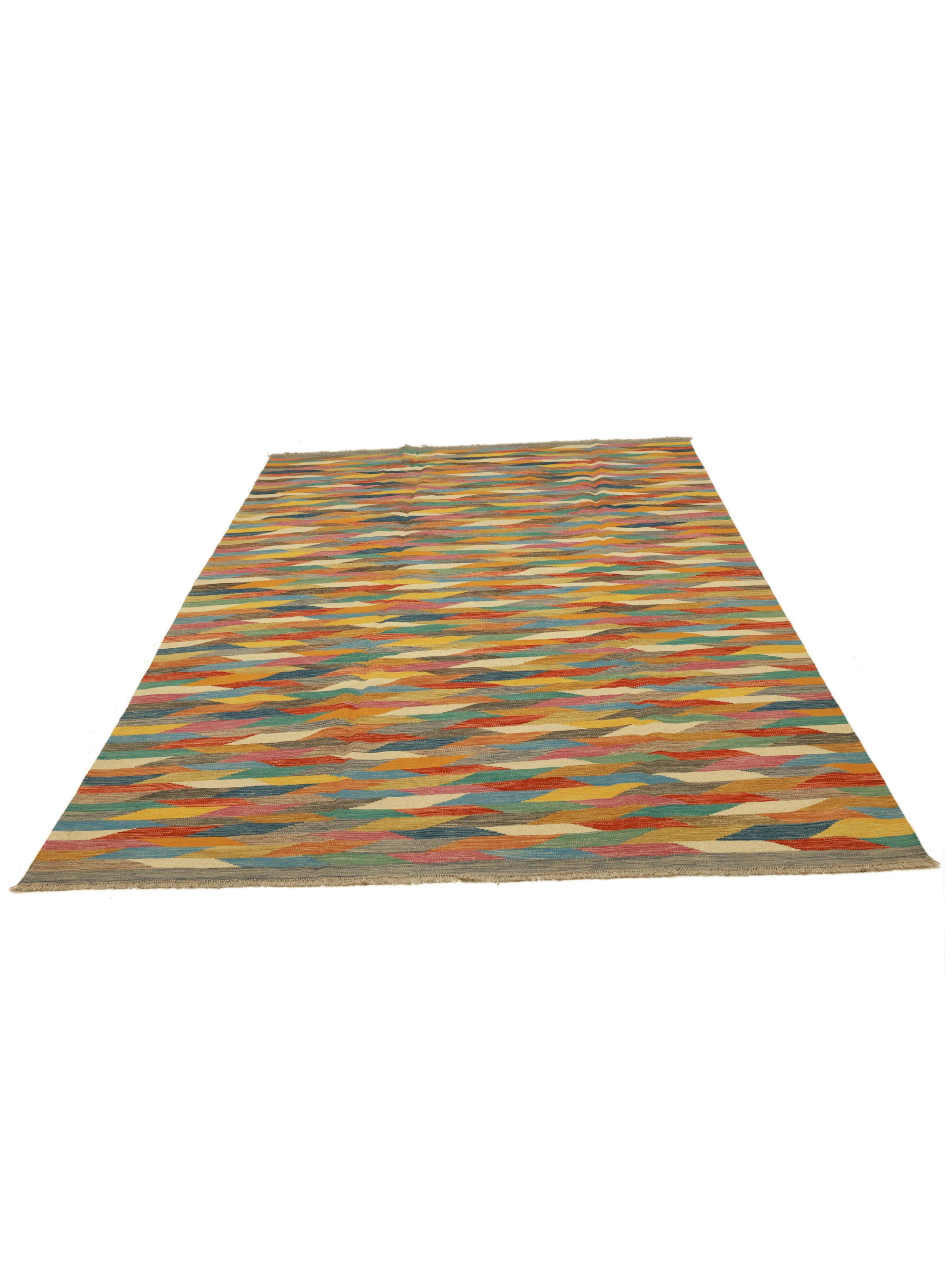
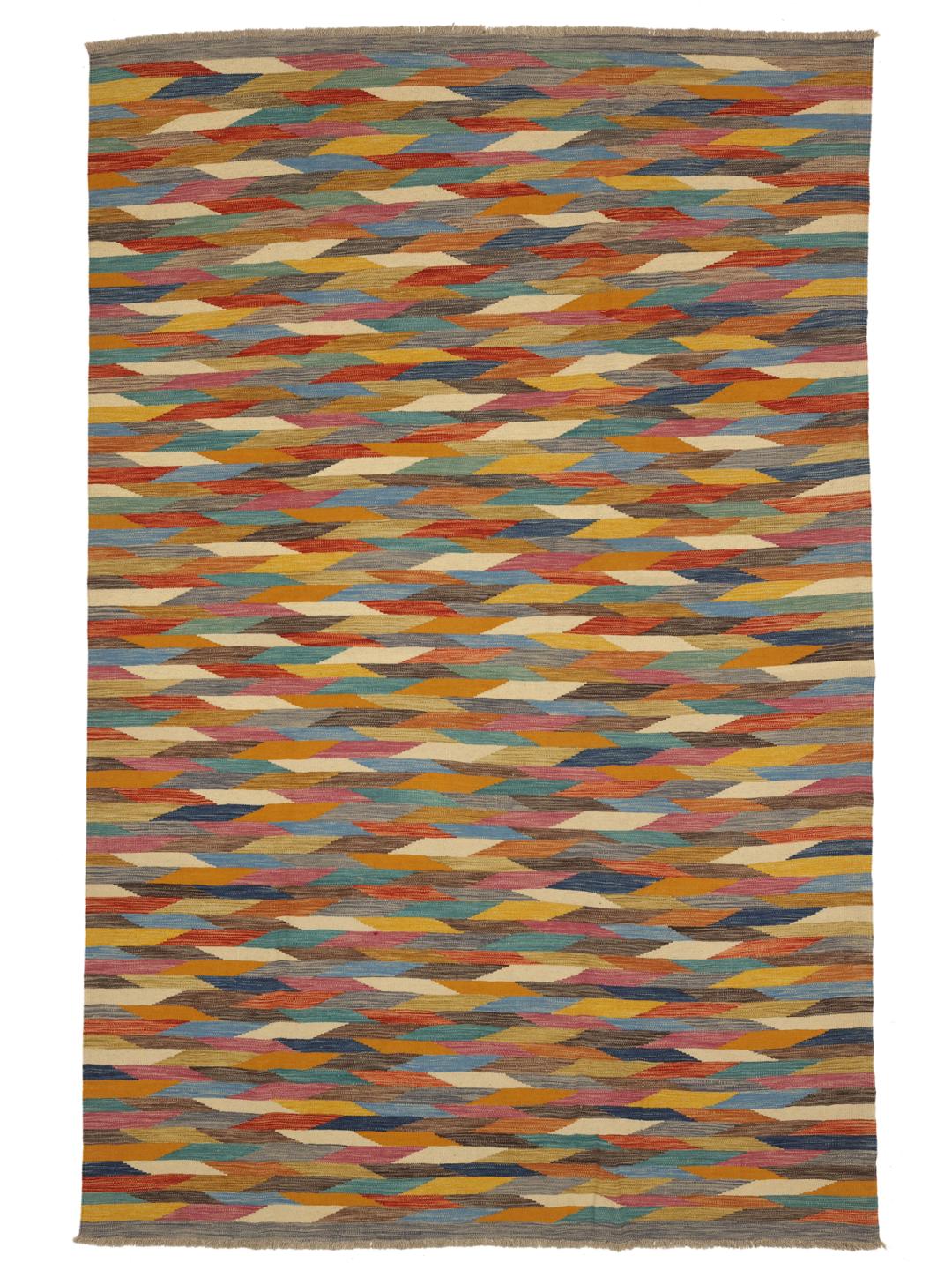
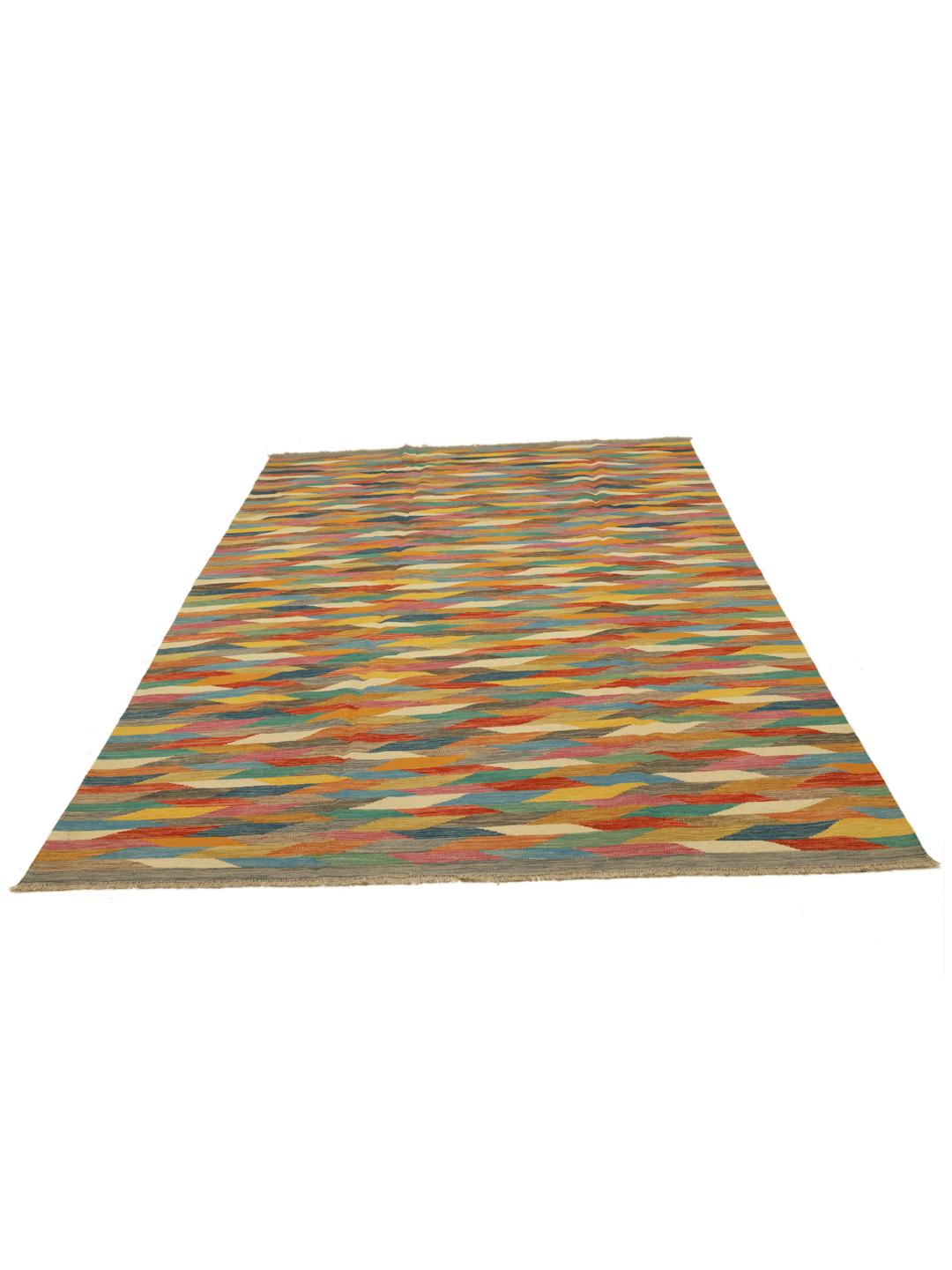
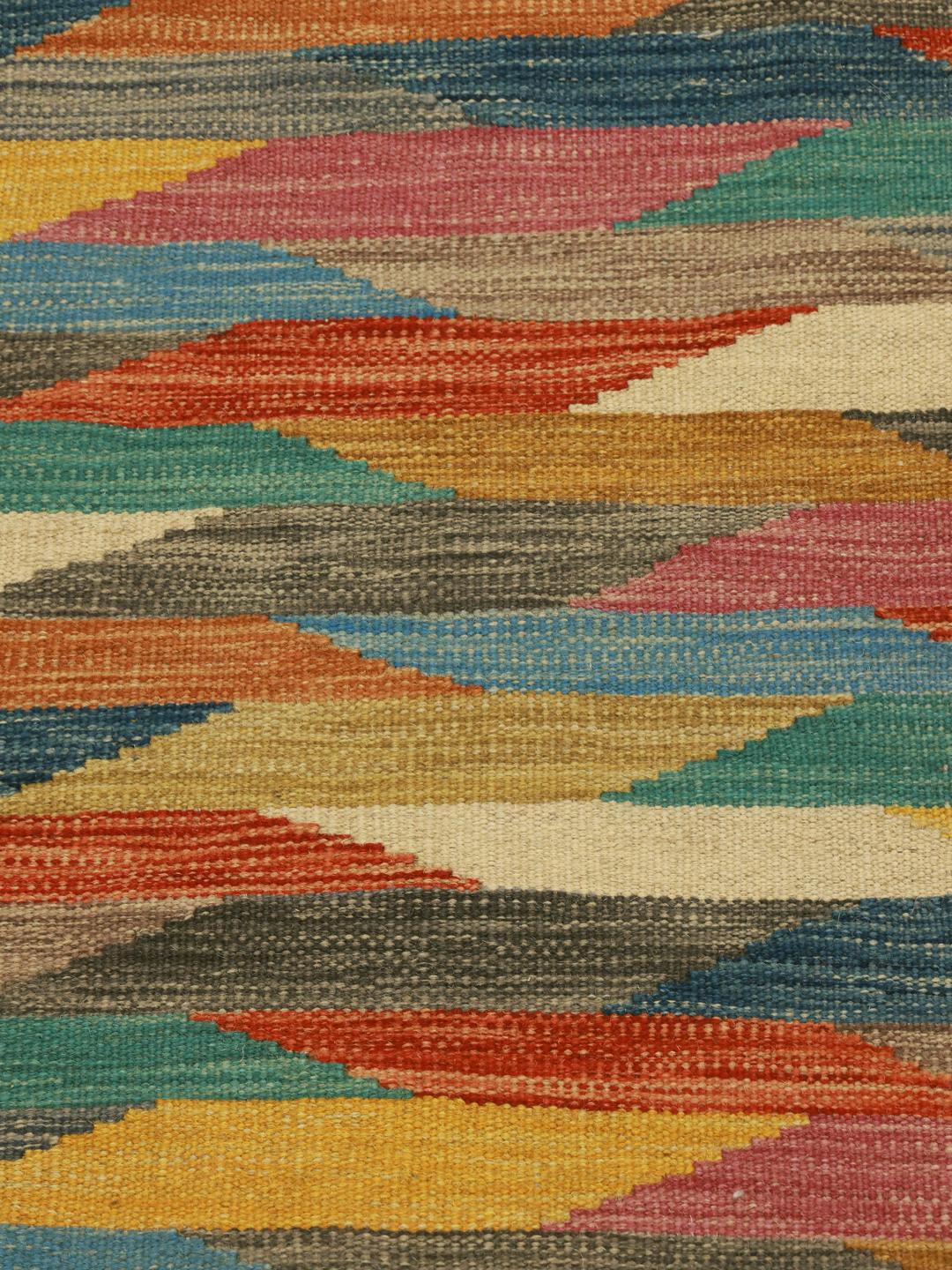
Signature design elements of modern kelims often include geometric repetitions, zig-zags, and diamond motifs that play with colour and contrast. In this particular piece, an energetic arrangement of multi-coloured shapes creates a dynamic visual field across the surface. The interplay of warm and cool tones showcases the weaver's artistic freedom within a deeply traditional framework.
Collecting vintage and modern kelims has become a way to appreciate the enduring skill of traditional hand-weavers. Owning a piece like this connects your modern home to a rich heritage of artisanal craft, celebrating a level of human patience and artistic expression that automated production simply cannot replicate.