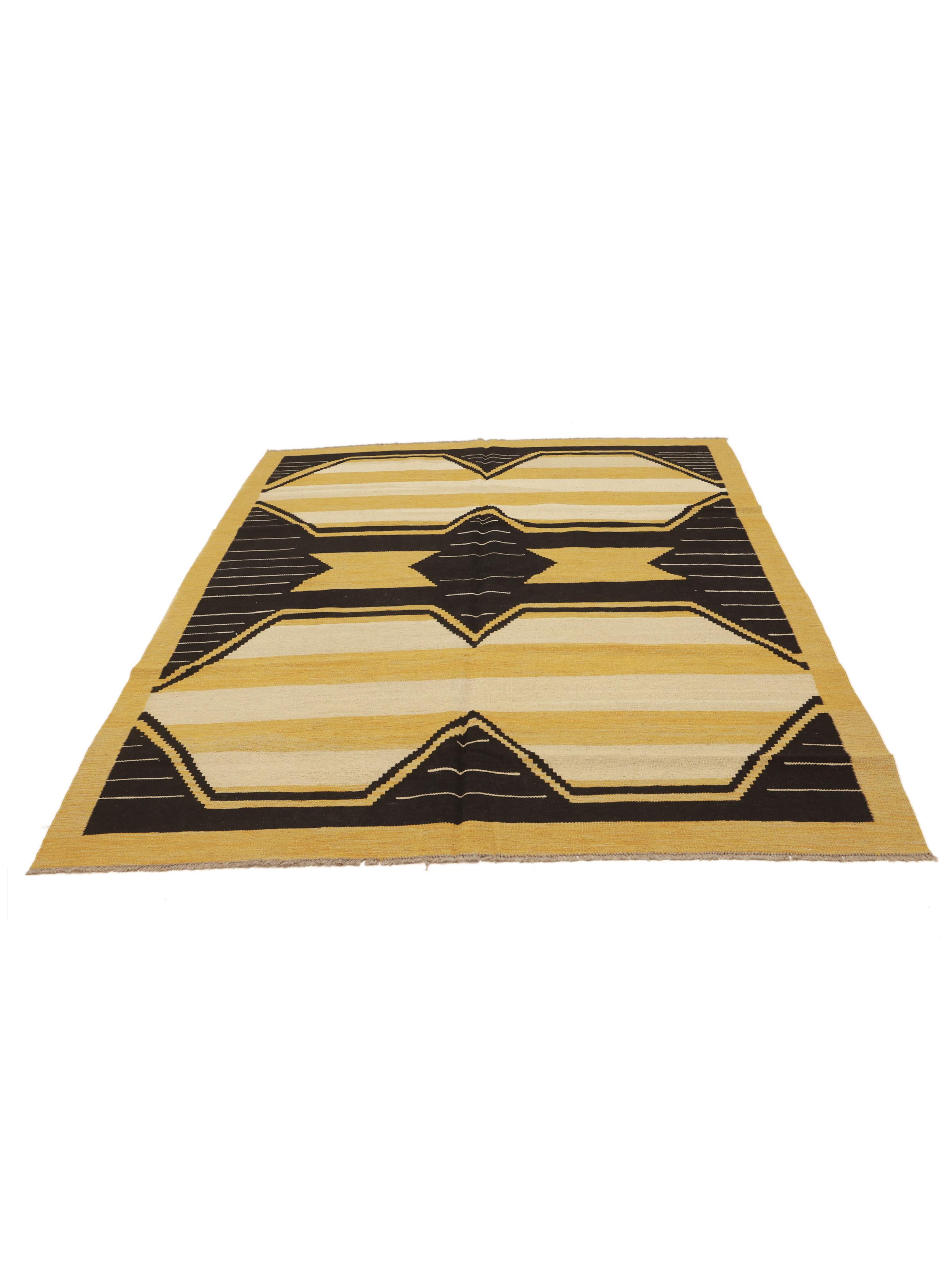
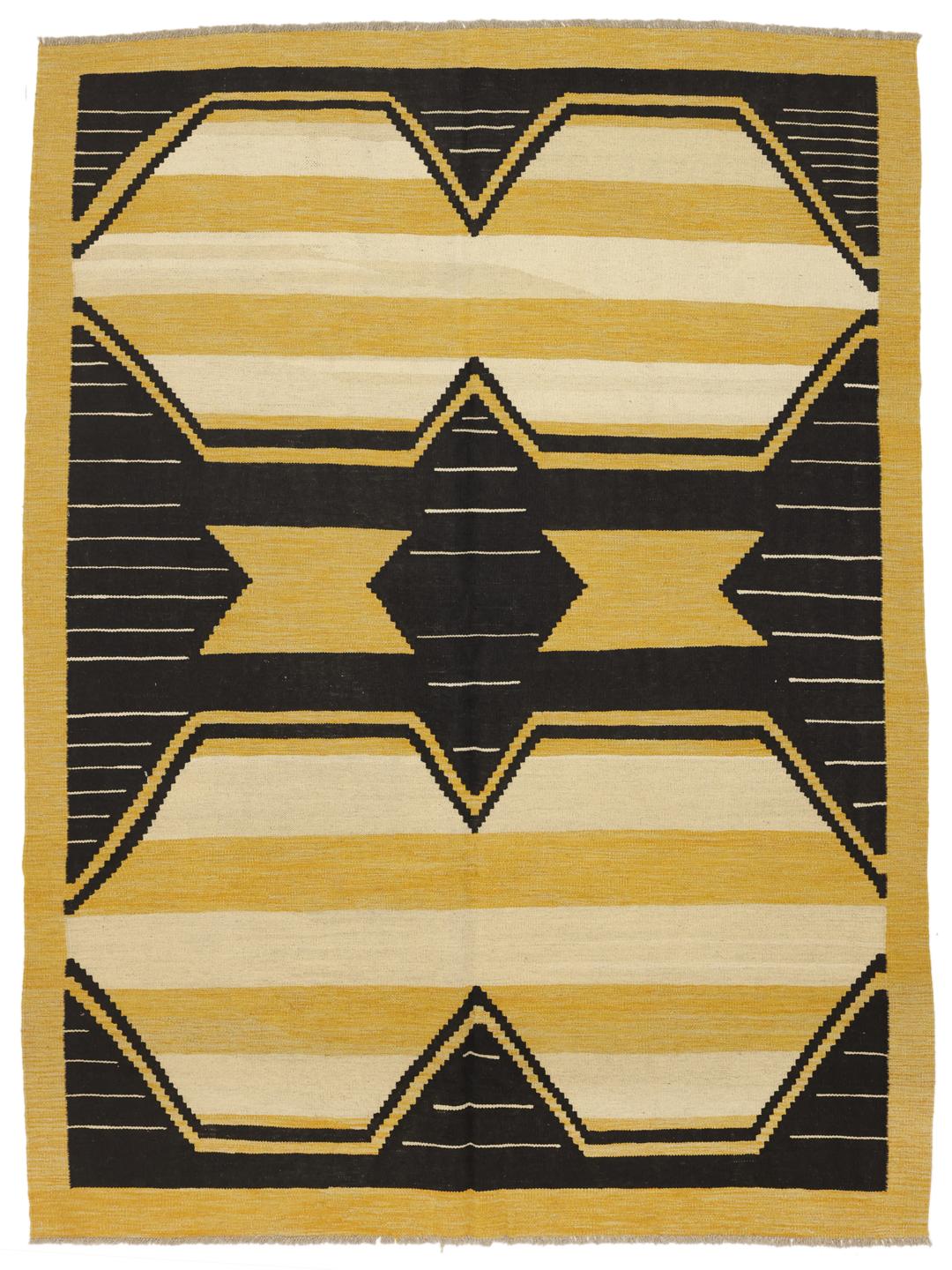
Kilim rugs are a central part of the cultural tapestry across Central Asia and the Middle East. Historically, these flat-woven textiles were created by nomadic tribes for utilitarian purposes, serving as floor coverings, blankets, and storage bags. Over centuries, these functional objects evolved into the highly regarded art form we recognise today.
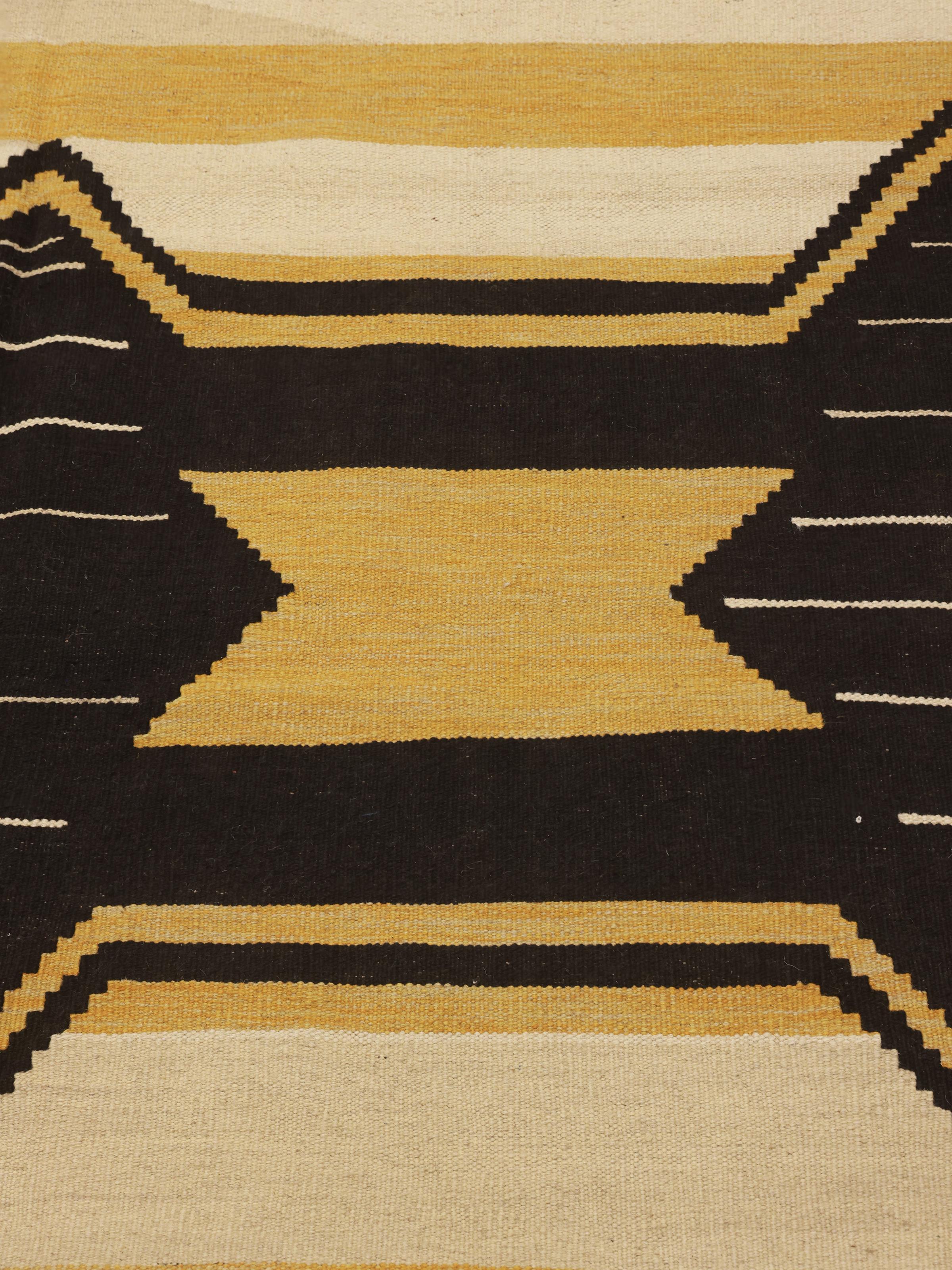
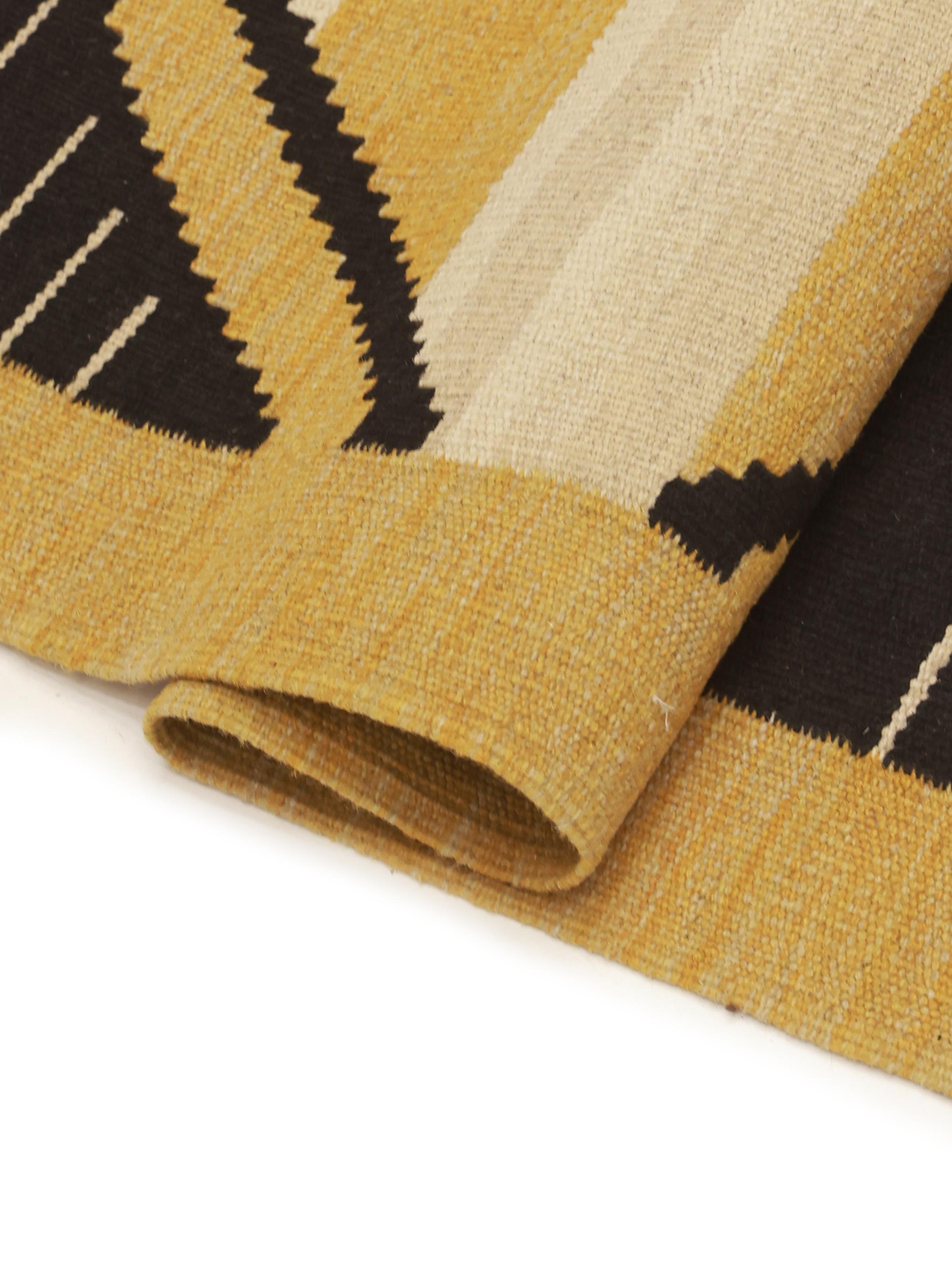
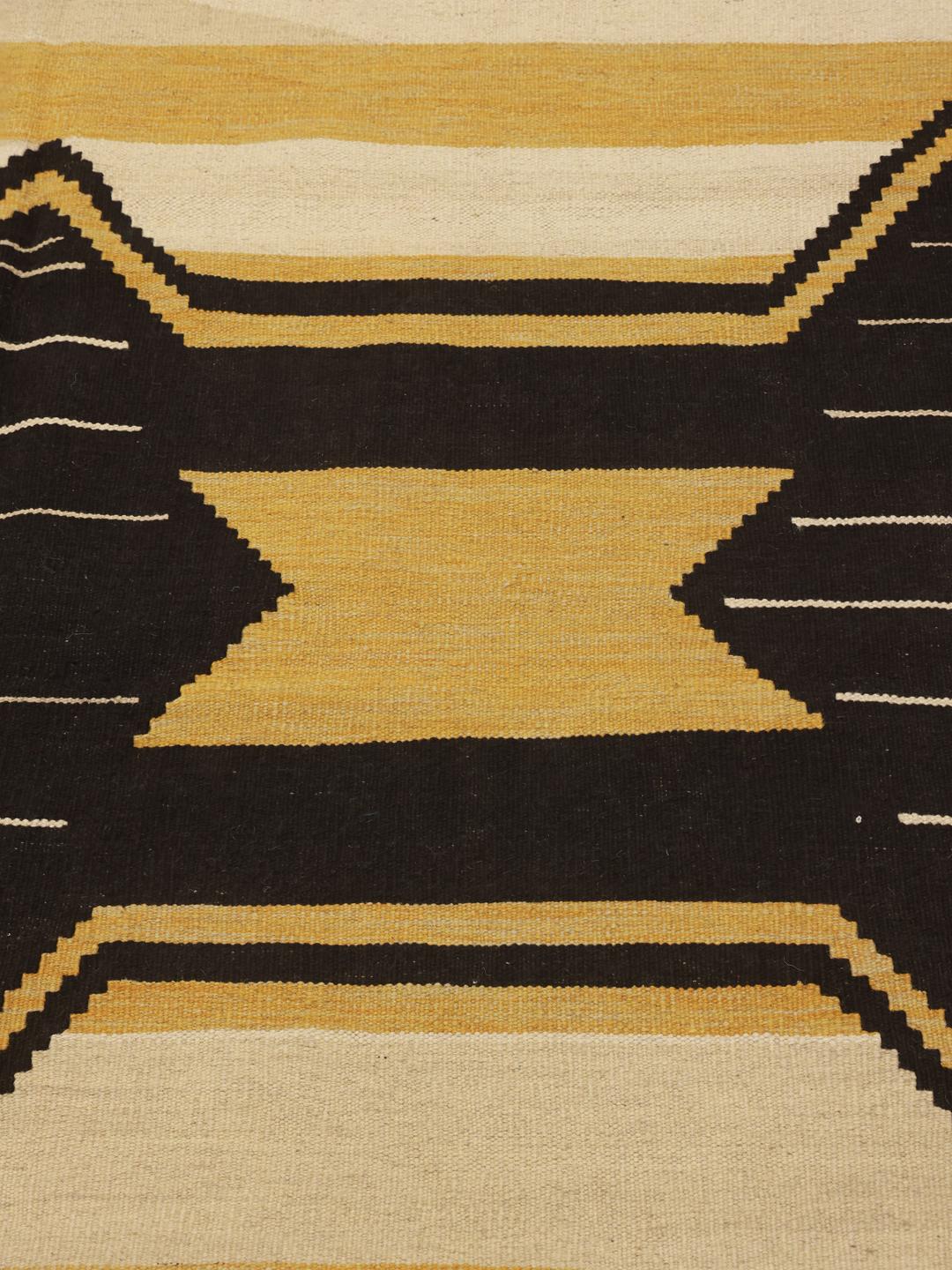
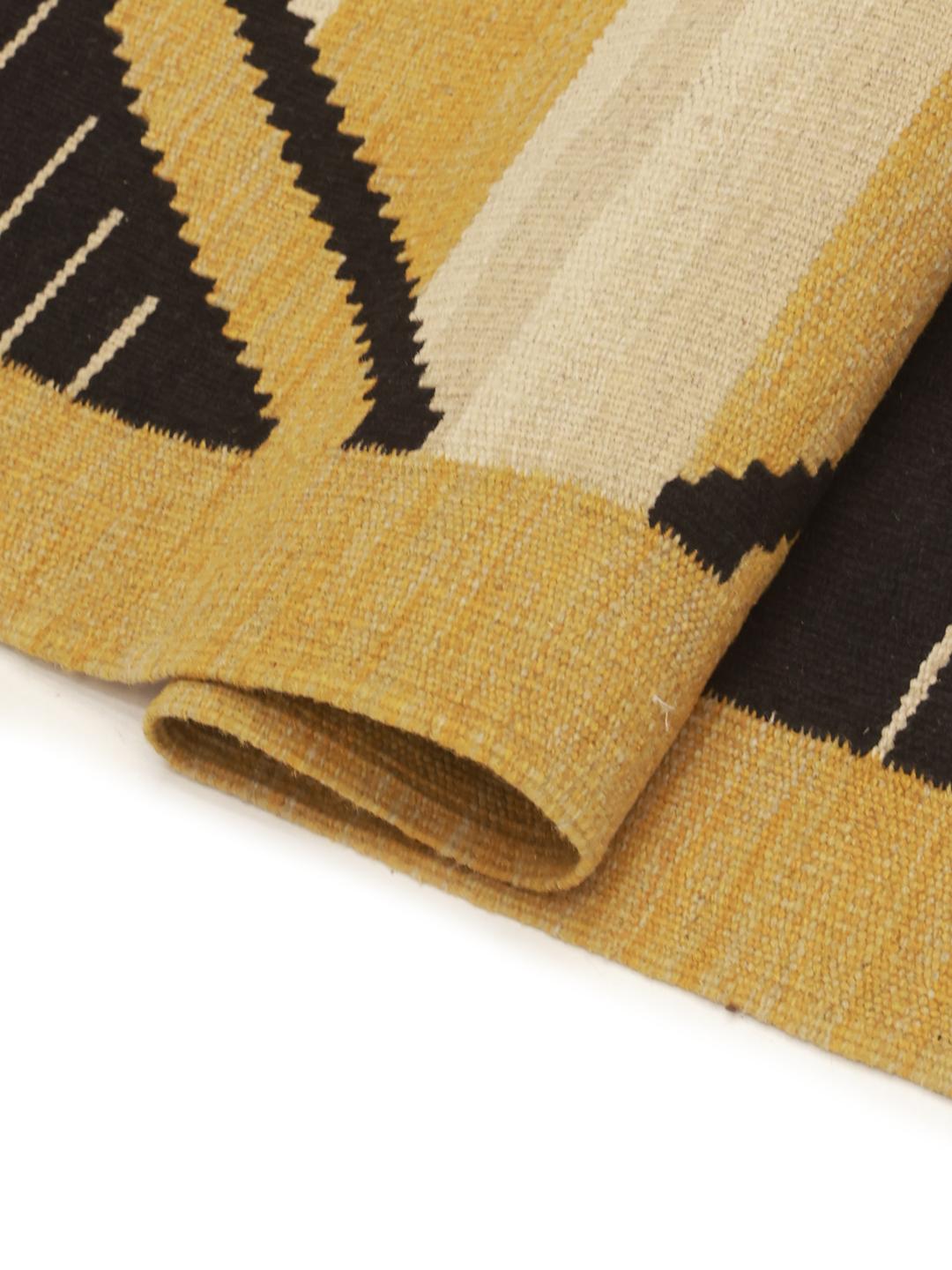
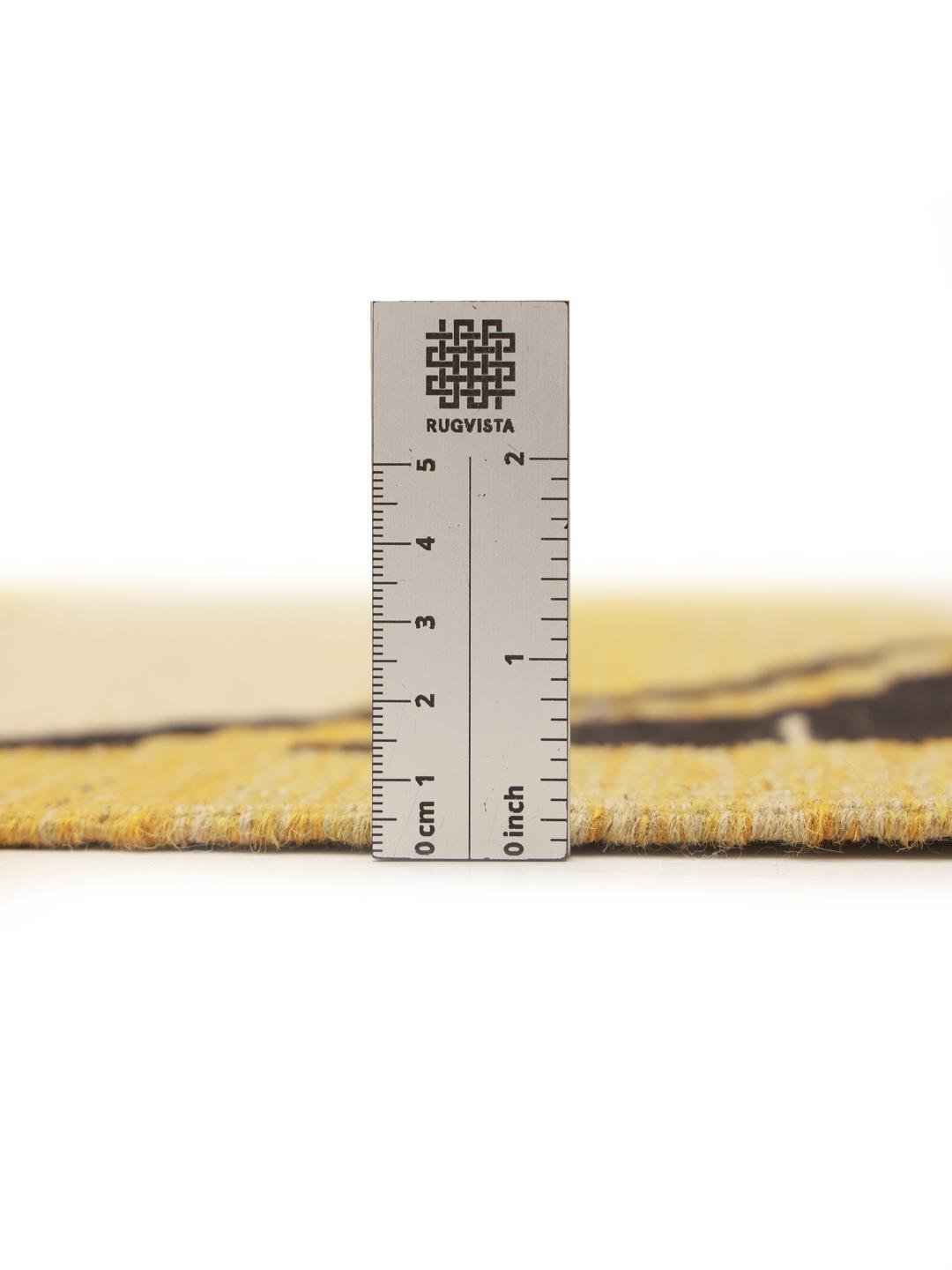
The term Kilim refers to the specific technique of weaving where the pattern is created by interlocking the coloured weft threads with the warp. Unlike pile rugs, there are no knots involved, which results in a lightweight and reversible textile that is famous for its crisp, clean lines and geometric precision.
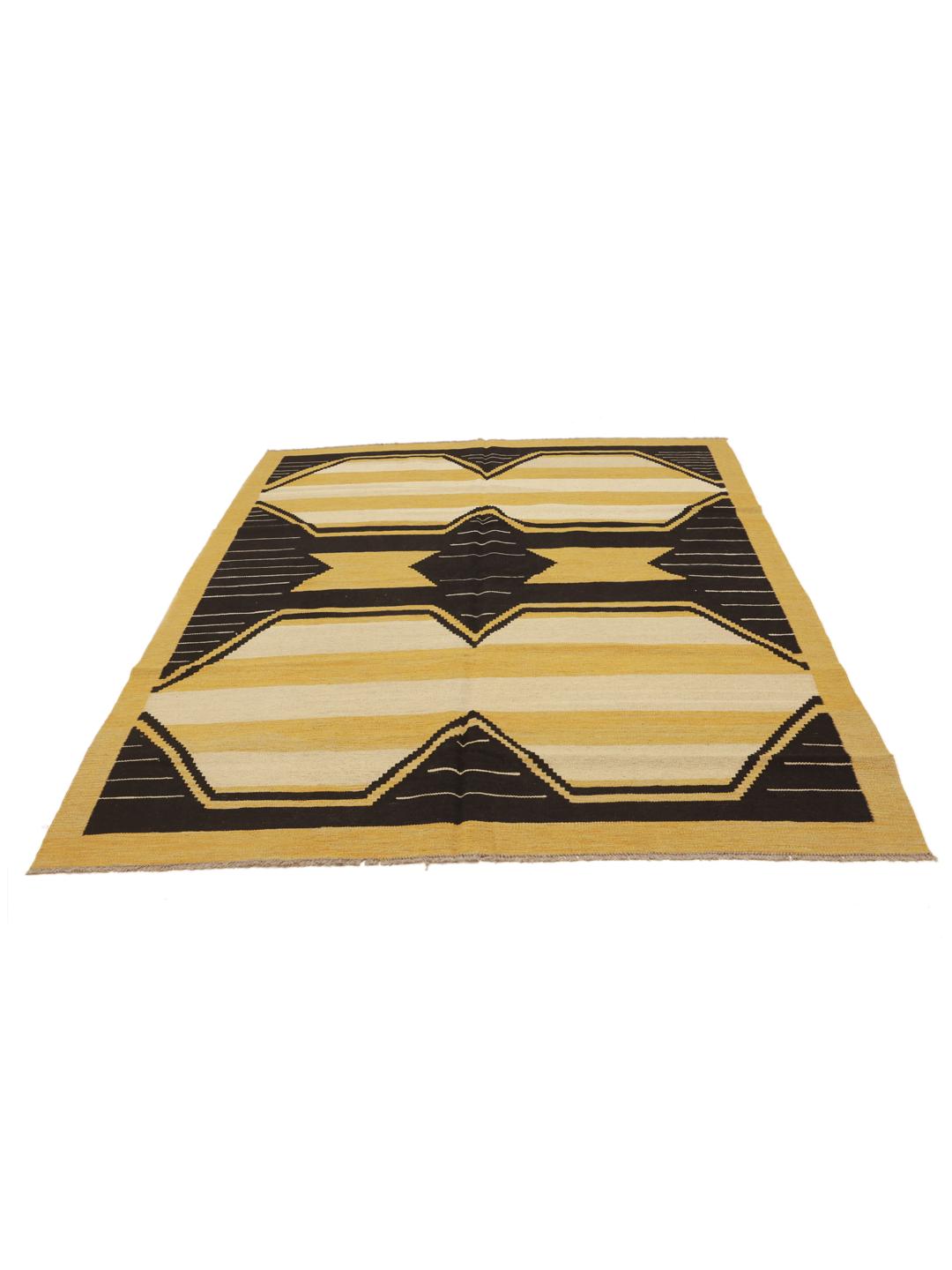
Signature design elements in modern Afghan Kilims often reinterpret ancient tribal motifs. While traditional rugs might feature intricate, repeating patterns, contemporary pieces like this one often embrace a more minimalist approach, using bold shapes and high-contrast colours to bridge the gap between historic craft and modern decor.
Owning a hand-woven Kilim is an investment in human skill and cultural heritage. Because they are crafted without the use of industrial machinery, each rug reflects the personal choices of the weaver, from the tension of the weave to the rhythm of the patterns, making them prized possessions for collectors of authentic craft.