Kilims are a storied form of flat-woven textile originating from the vast regions of the Middle East and Central Asia. Historically, these rugs were woven by nomadic and semi-nomadic tribes, serving essential roles as floor coverings, wall hangings, and functional storage bags. The transition of these designs into the modern era has seen them evolve from strictly utilitarian objects into celebrated pieces of contemporary interior design.
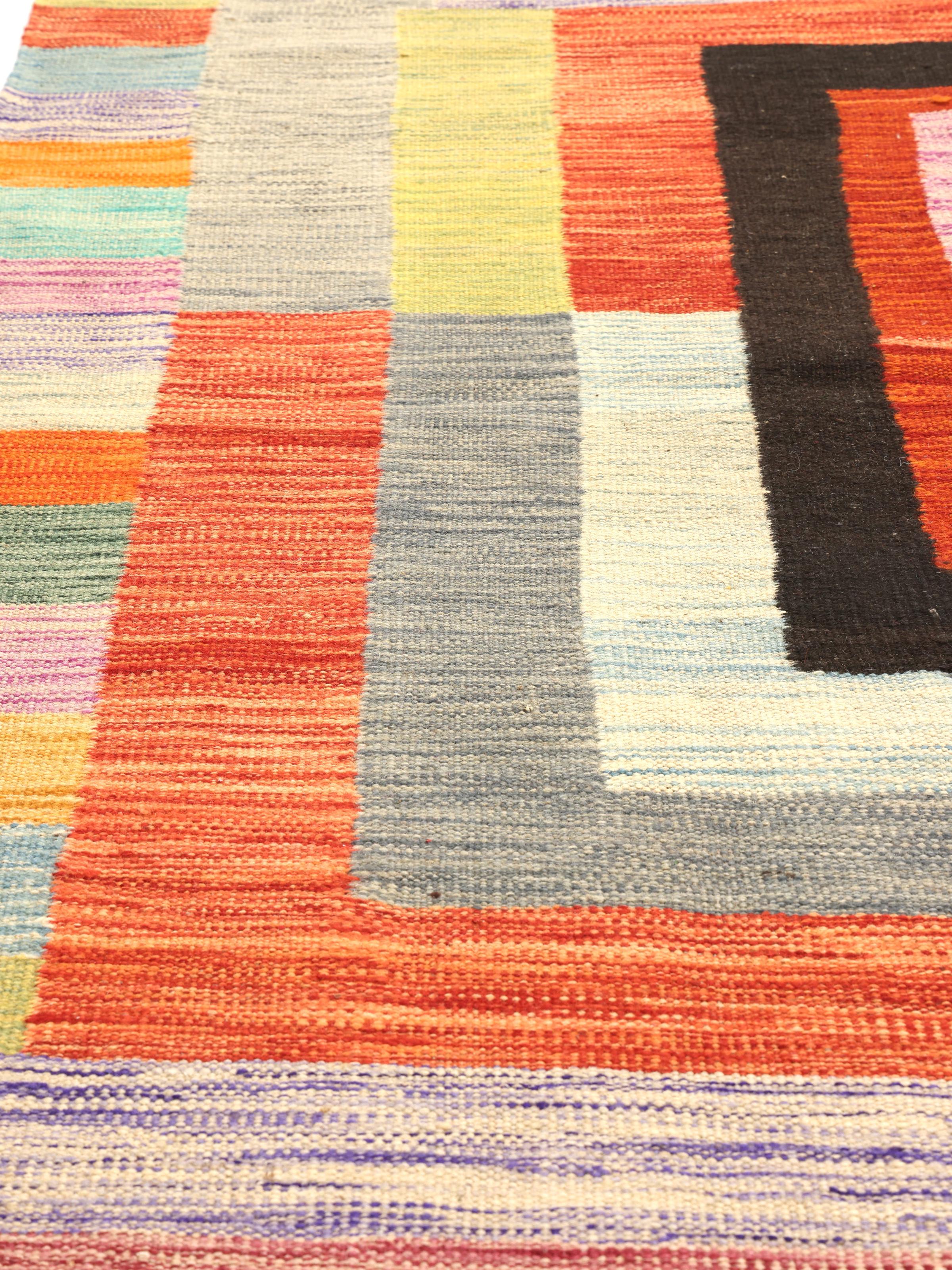
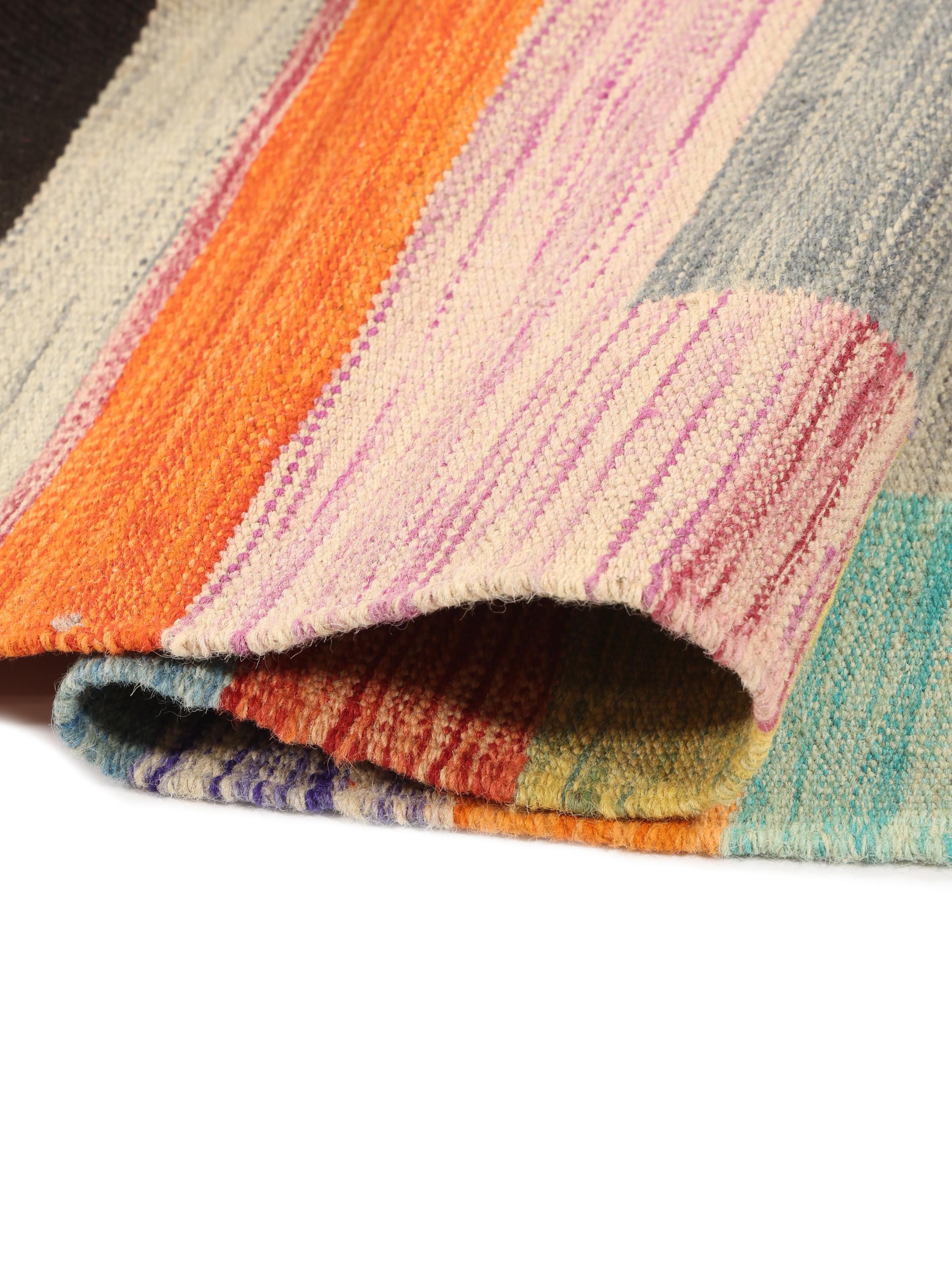
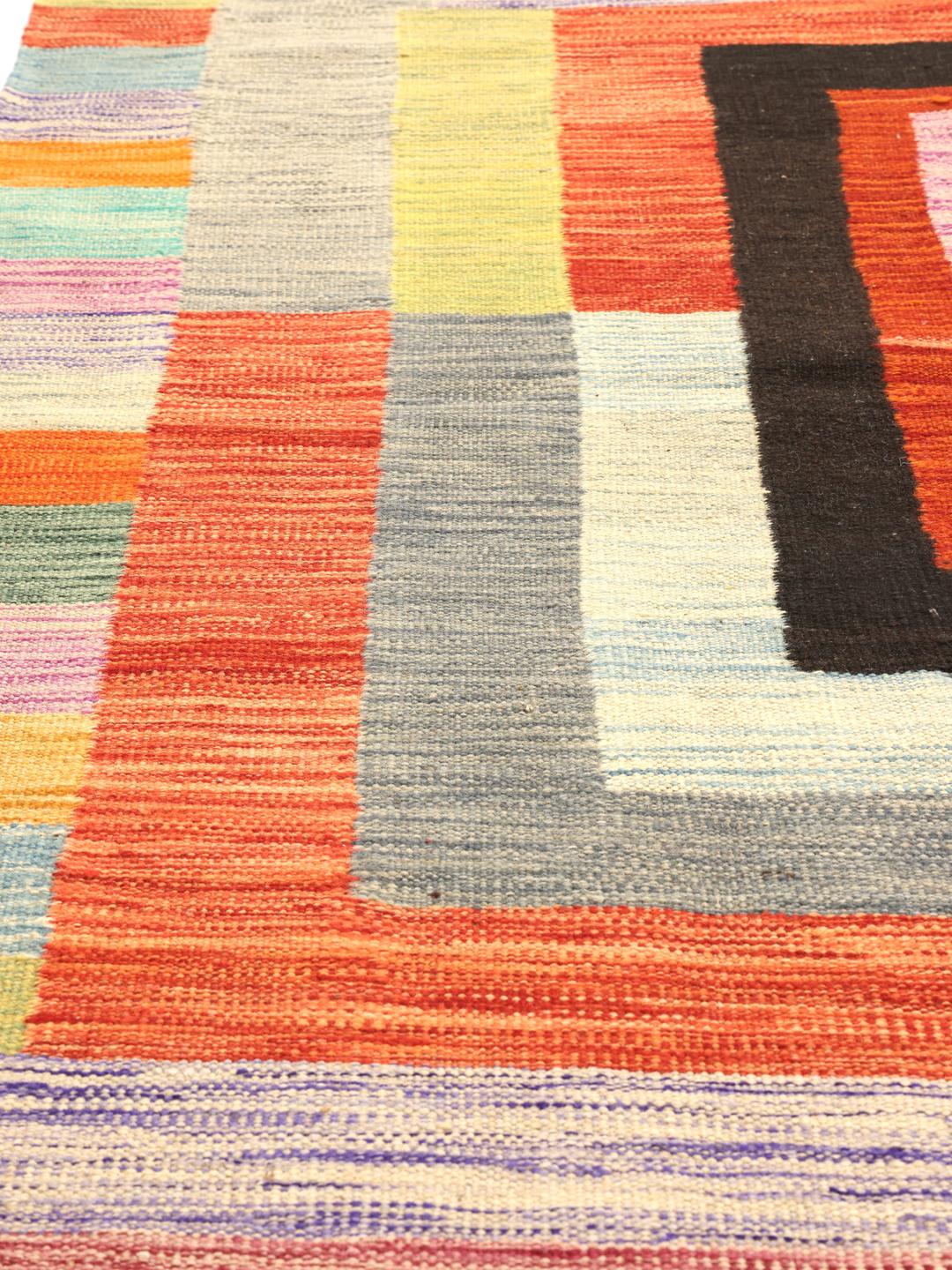
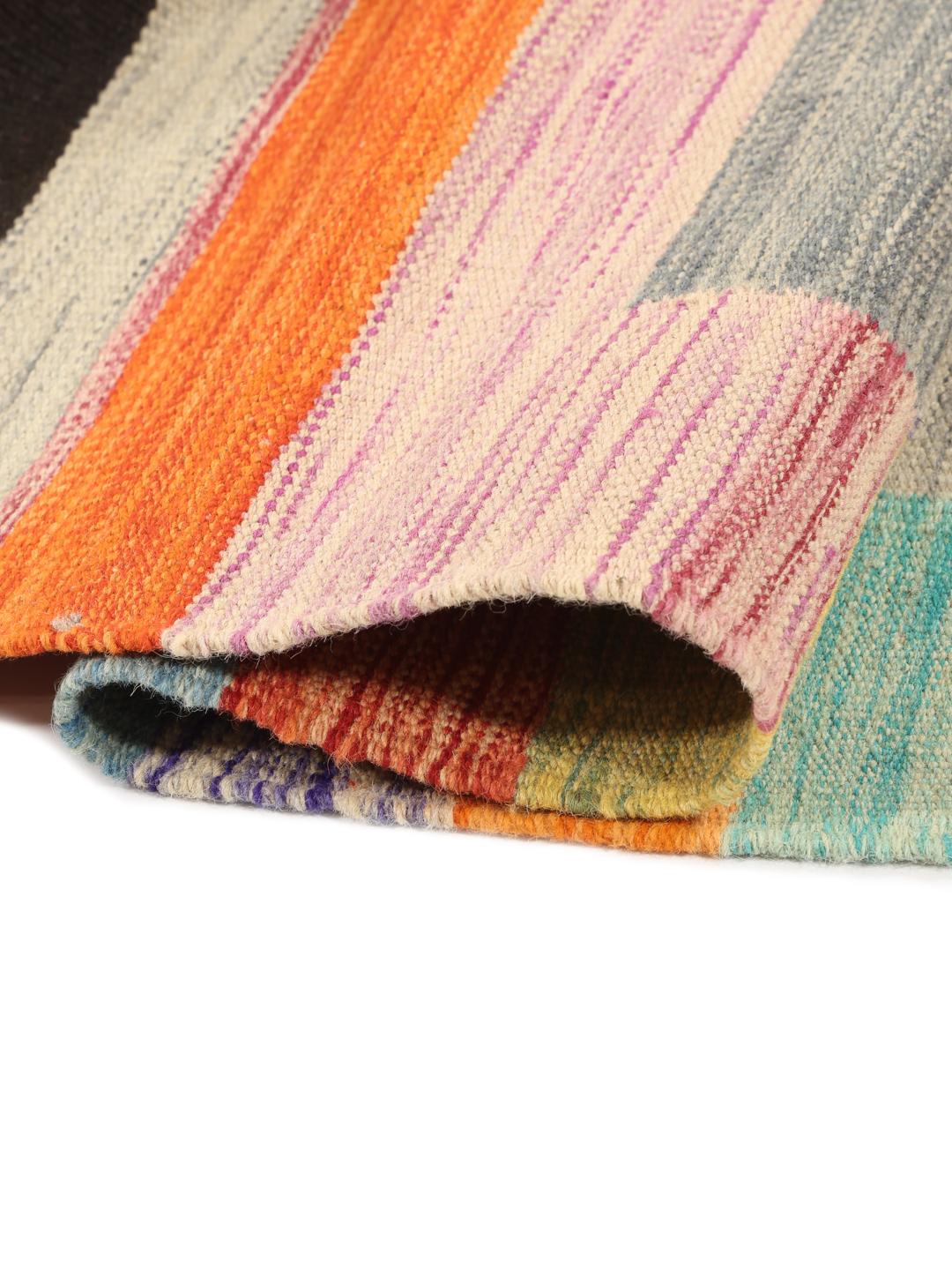
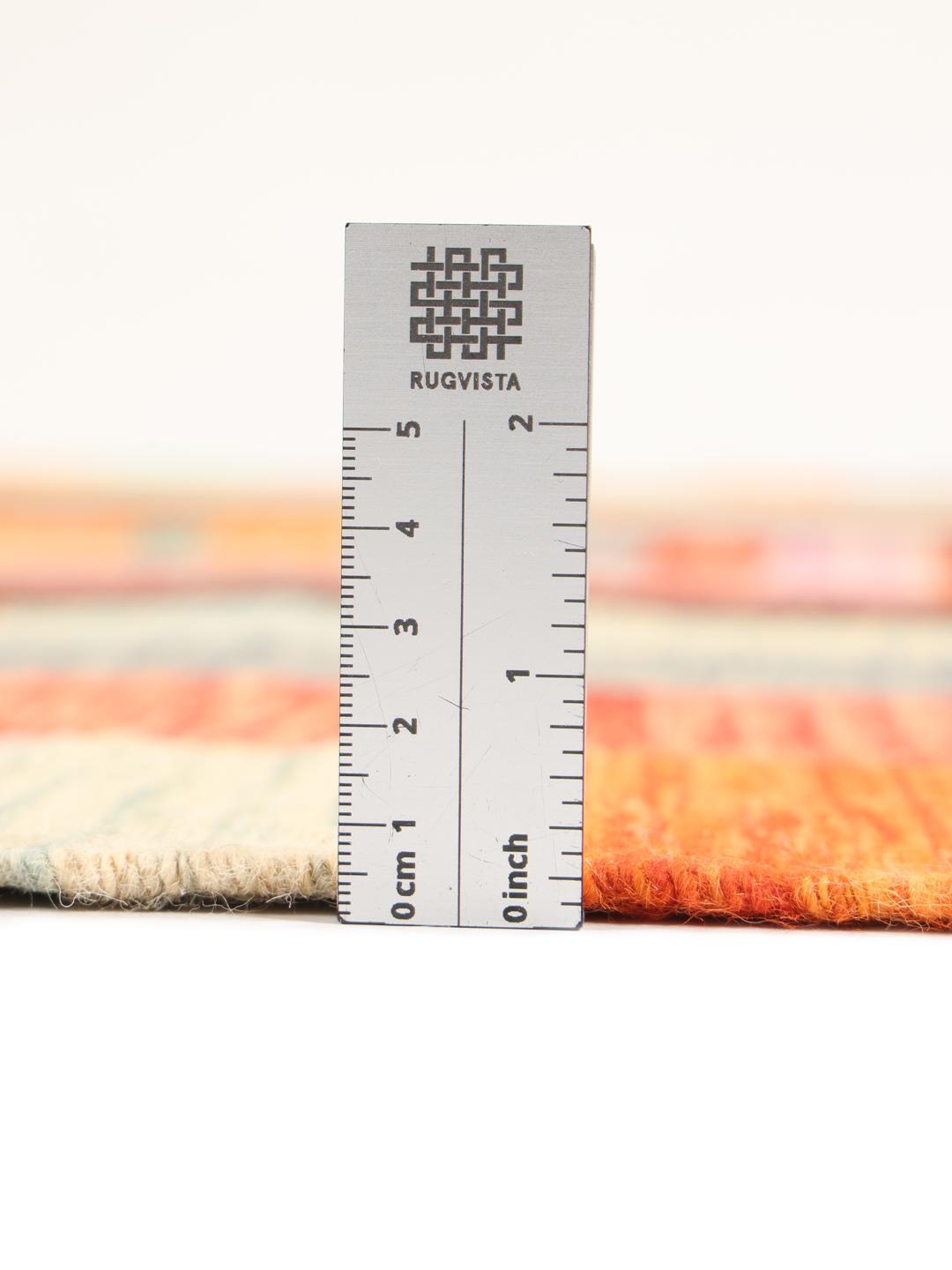
The term kilim refers specifically to the flat-weaving technique where the warp and weft threads are tightly interlaced to form a smooth surface without a pile. This construction method is what gives these rugs their signature slim profile and clean, graphic lines. Because they lack a traditional knotted pile, the weaver must be exceptionally precise with their colour changes, creating motifs that are sharp, distinct, and visually powerful.
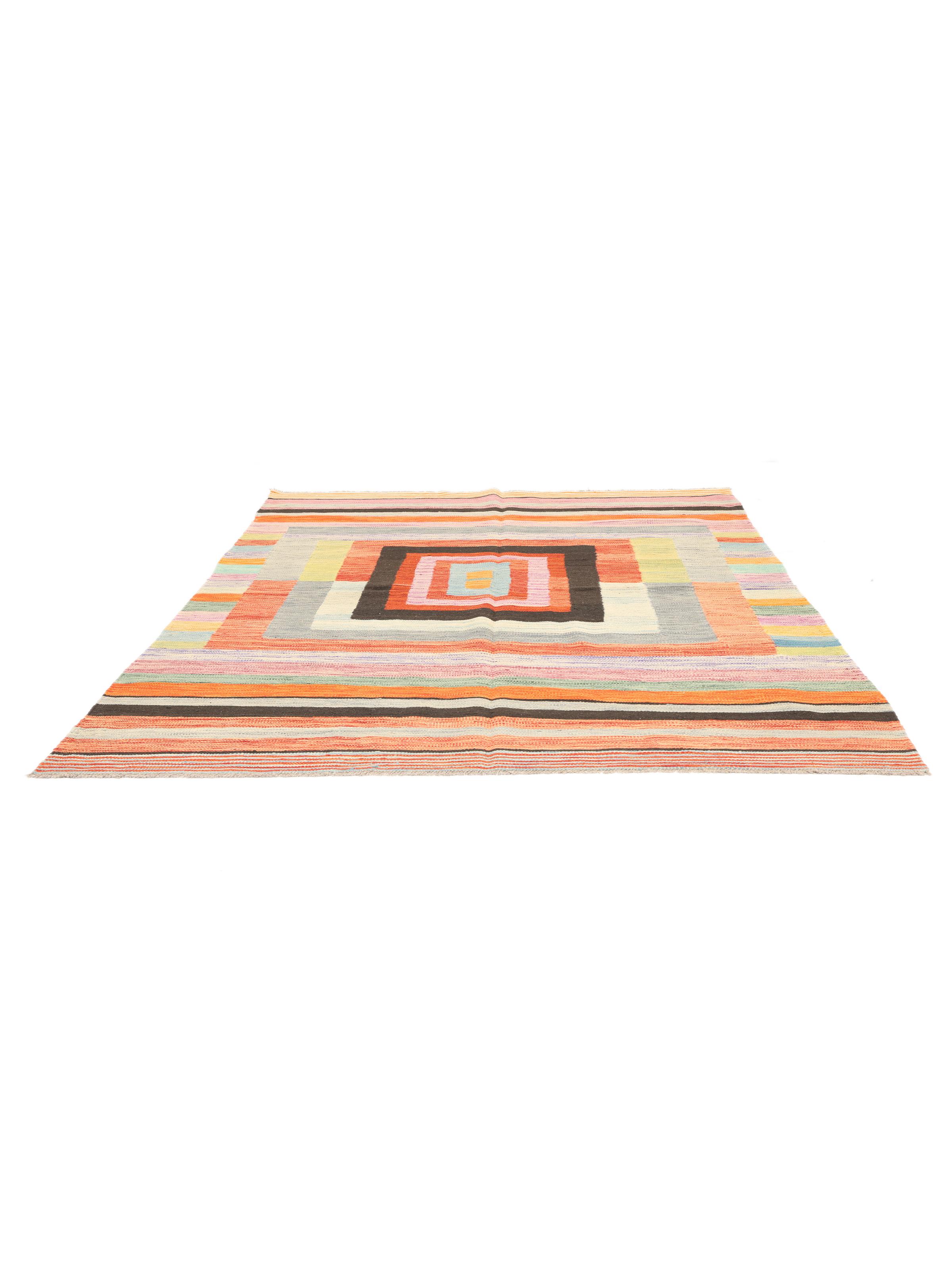
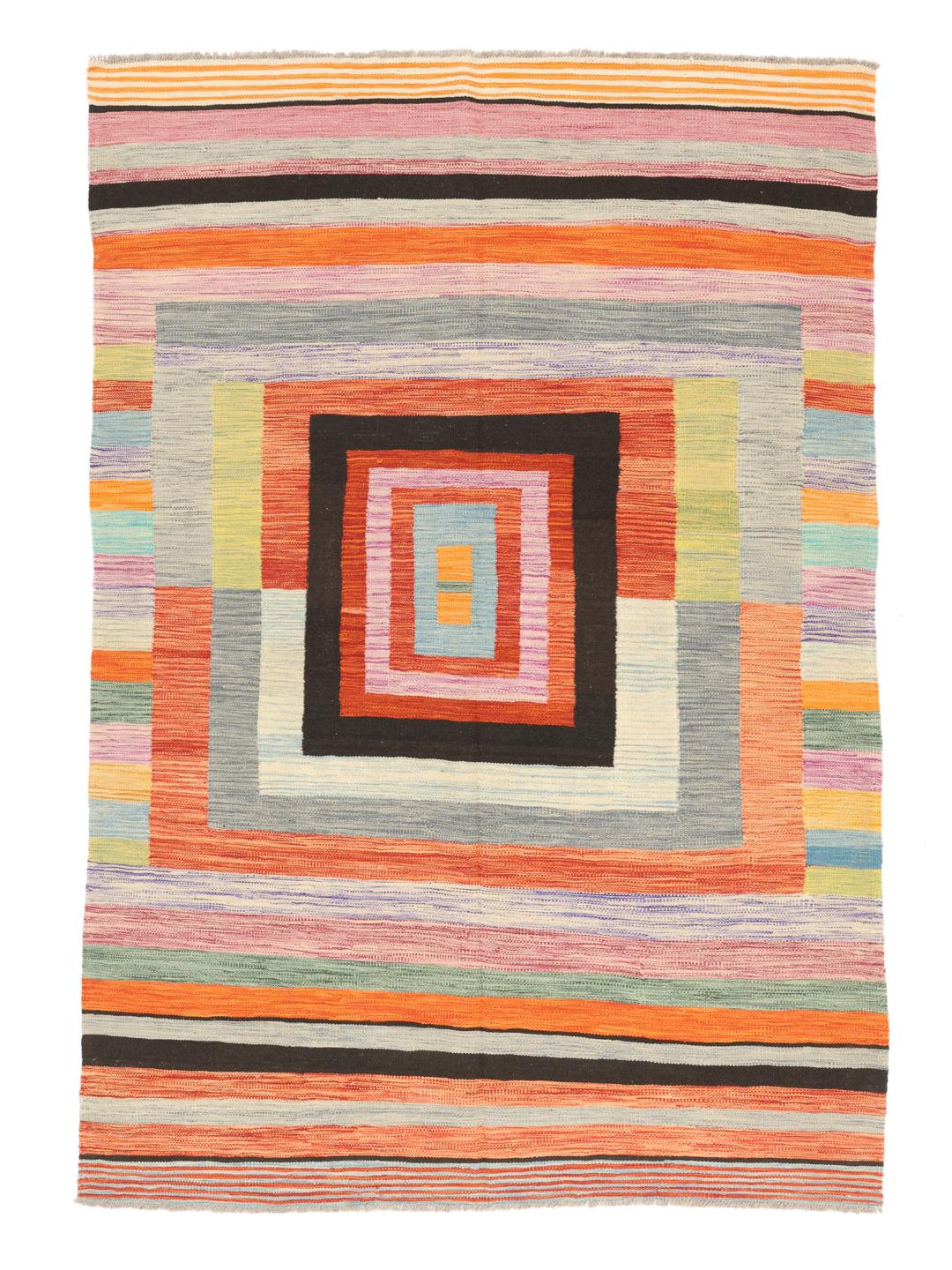
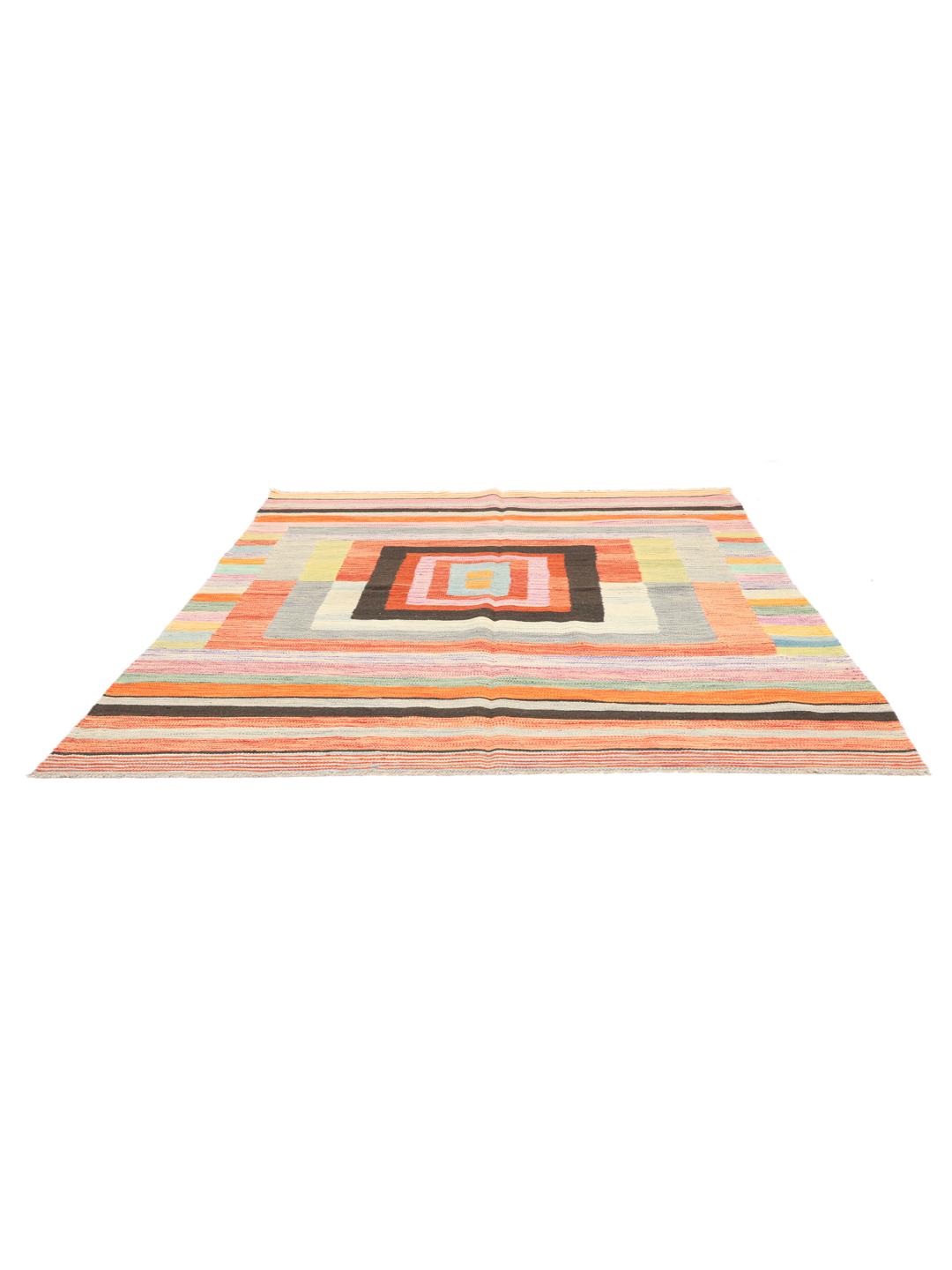
The design language of this rug is defined by its use of bold geometric shapes and a vibrant colour palette. These stripes and nested frames are classic motifs that have been reinterpreted to suit a modern aesthetic, proving the adaptability of the Afghan weaving tradition. The contrast between the deep, dark borders and the lighter, more playful bands of colour creates a rhythmic balance that is a hallmark of high-quality kilim production.
Collecting a piece from this tradition is an investment in cultural heritage and artisanal skill. These rugs are highly valued for their authenticity and the labour-intensive nature of their creation. By bringing a piece like this into your home, you are connecting with a legacy of craftsmanship that has survived for centuries, ensuring that your space is anchored by an object with real history and enduring appeal.