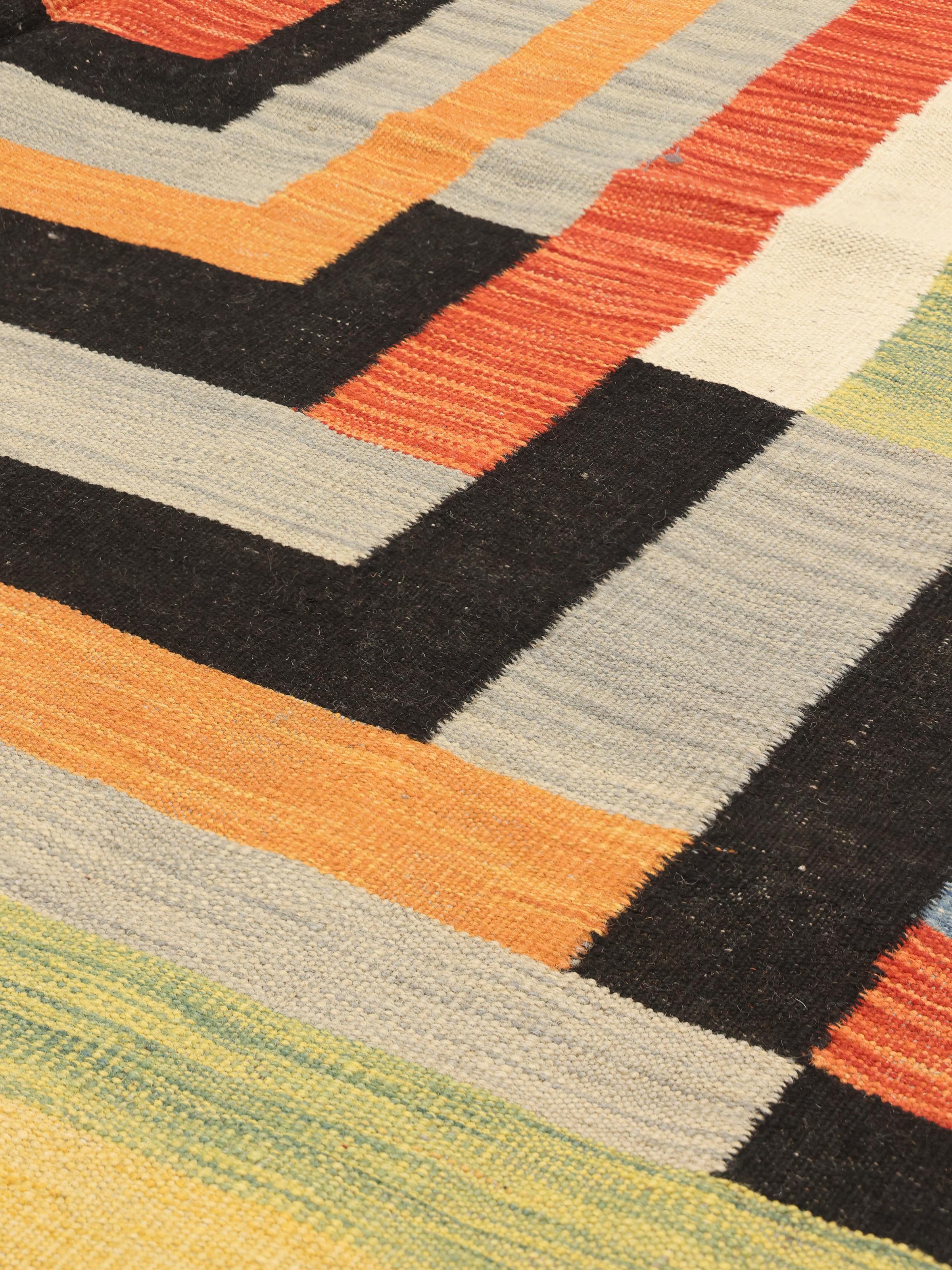
Kelim weaving has deep roots across Central Asia and the Middle East, where flatwoven textiles were traditionally created by nomadic and village communities for everyday utility. Unlike piled carpets, kelims are woven on vertical or horizontal looms by interlocking coloured weft threads tightly over the warp, resulting in a flat, lightweight fabric that was easily transportable and remarkably resilient.
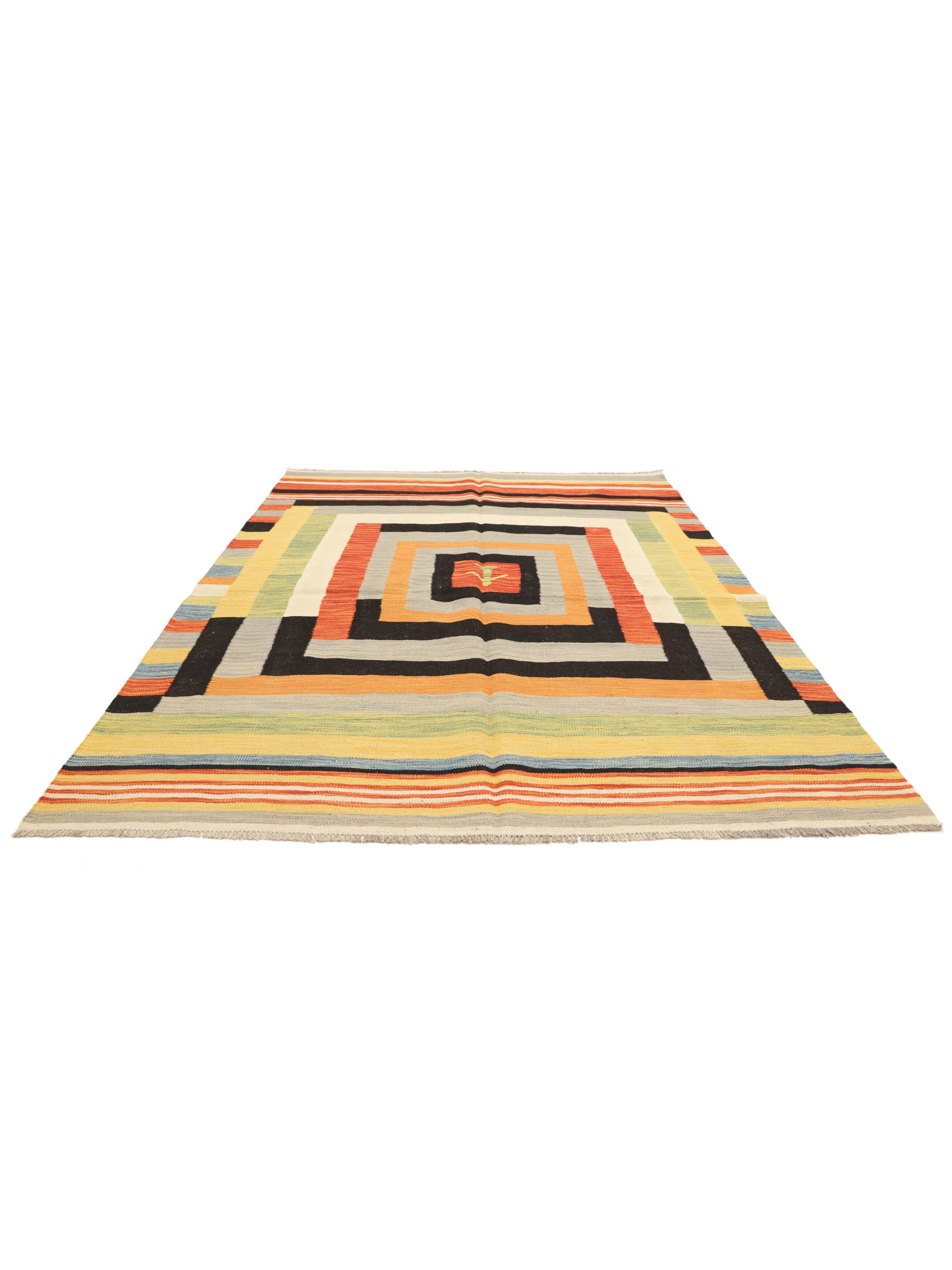
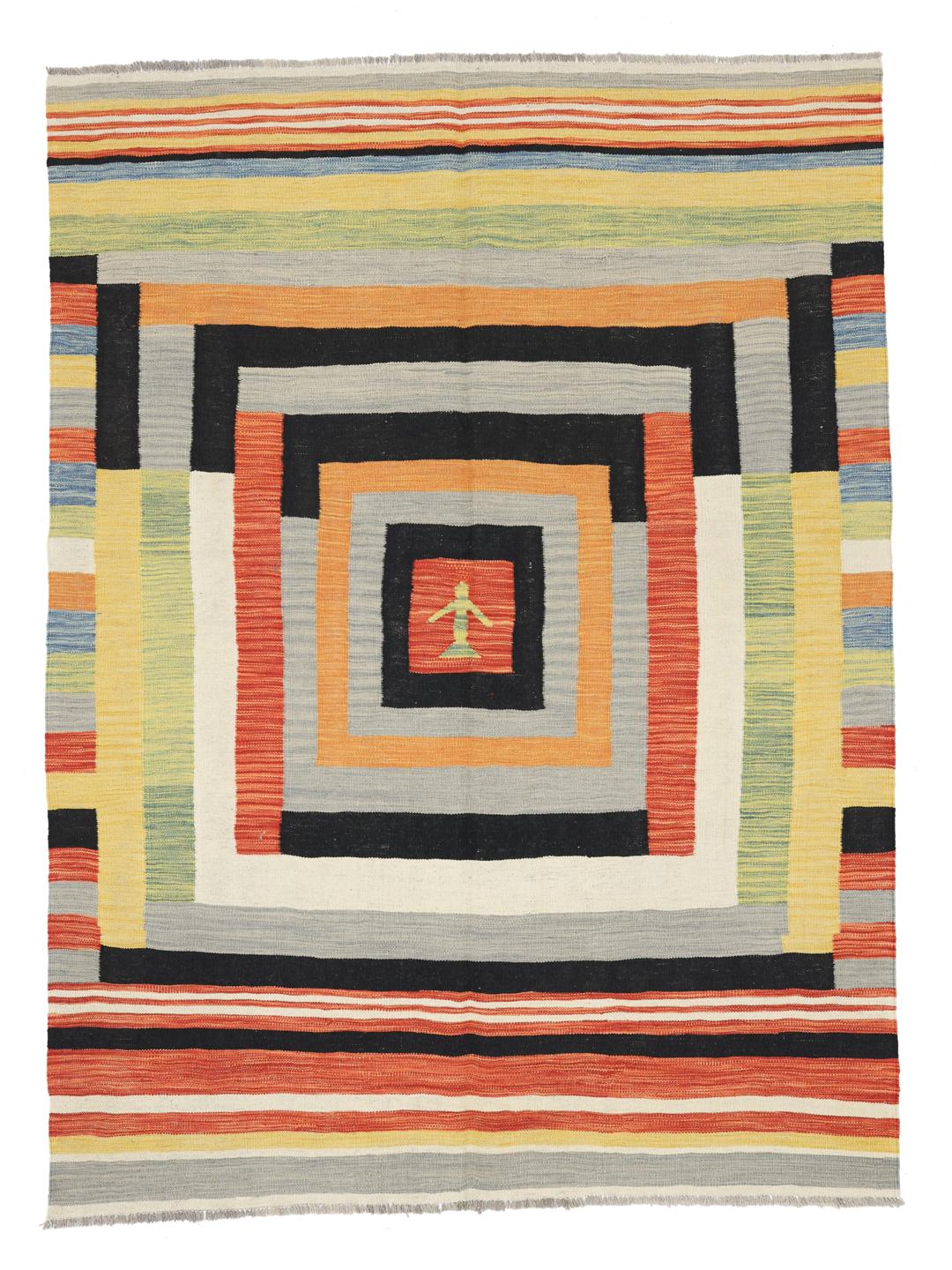
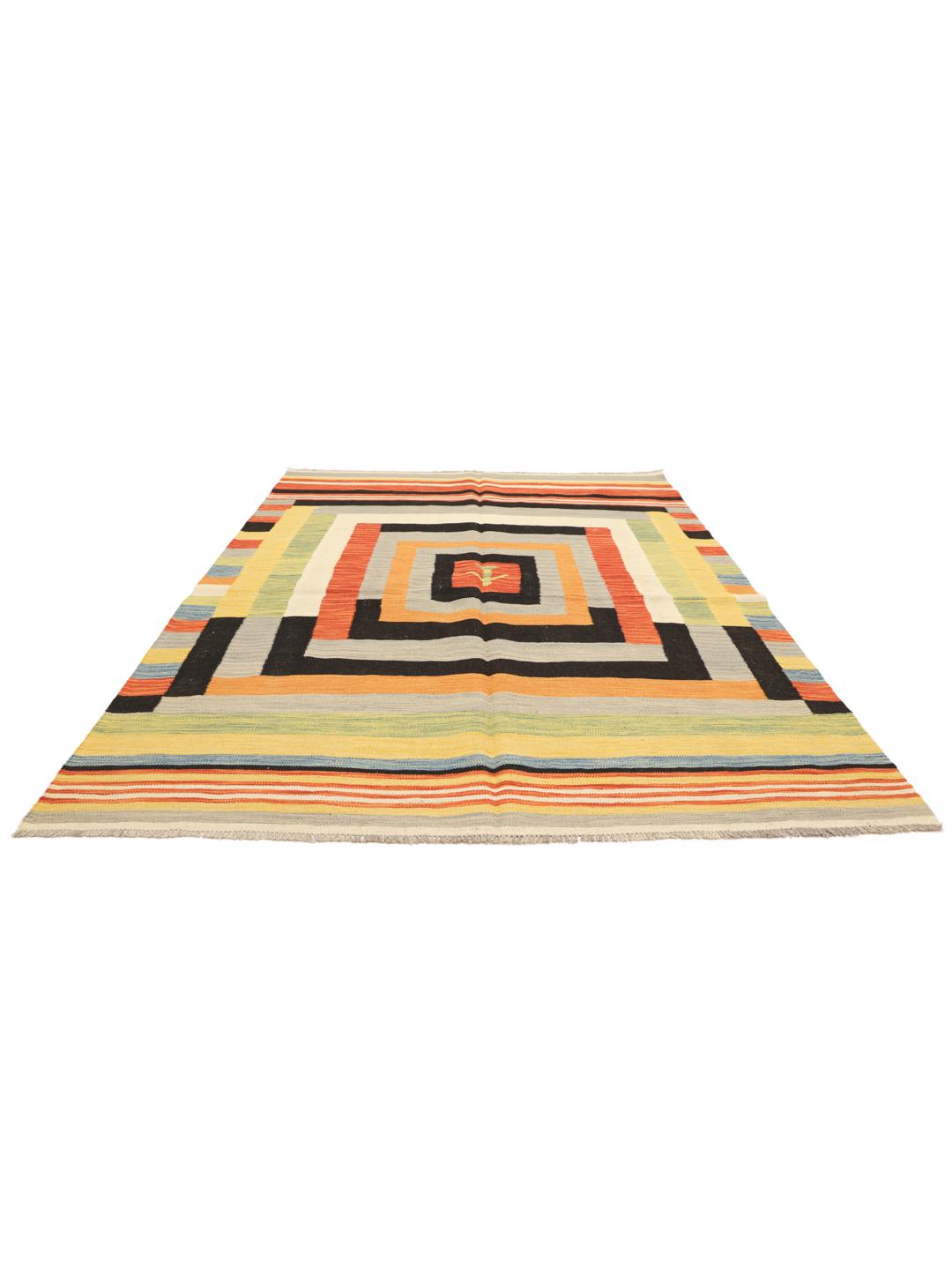
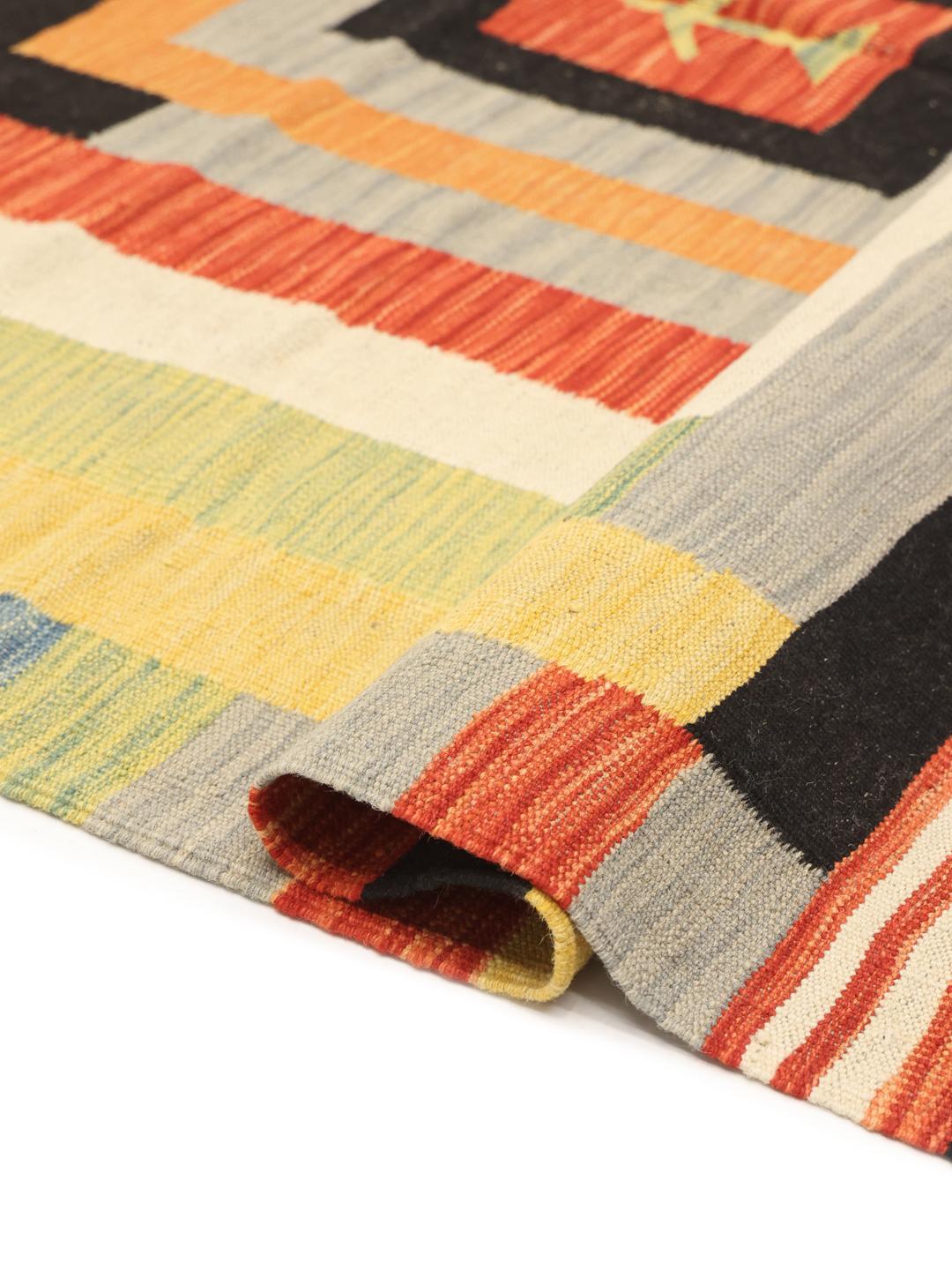
The term kelim refers to this specific flatweave technique rather than a single region, allowing artisans to experiment with bold geometric layouts and striking colour contrasts. While traditional kelims often relied on repeating tribal motifs, modern interpretations like this piece incorporate playful elements such as the central aeroplane design, blending ancient craft techniques with contemporary visual storytelling.
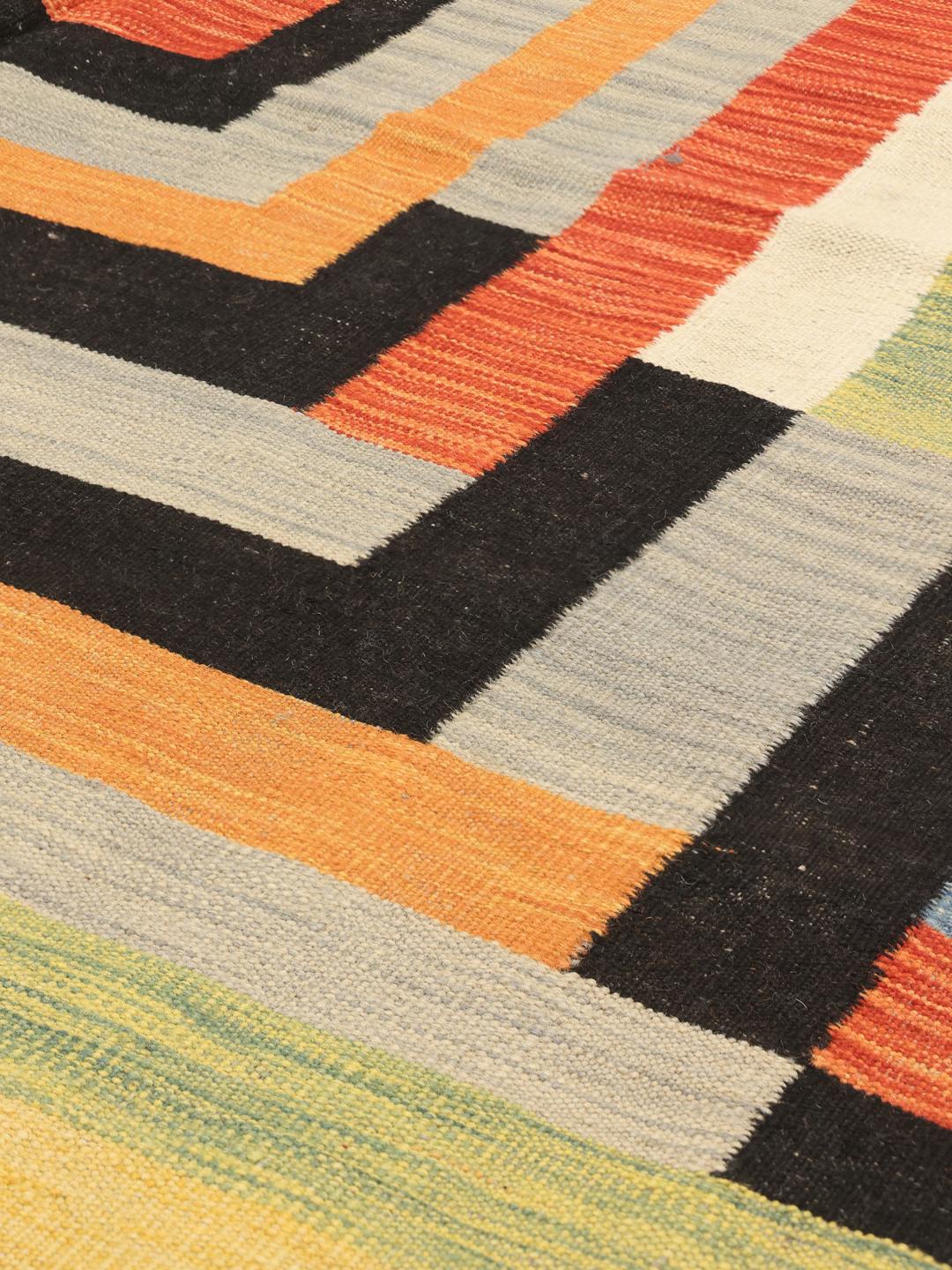
The distinctive geometric framing in this rug draws on classic border traditions, scaling concentric squares outward to create a sense of depth and focus. The vibrant interplay of red, orange, yellow, blue, and grey showcases the dyer's skill in balancing warm and cool tones within a single composition.
Collecting vintage and modern kelims allows you to connect with centuries of textile heritage. Each piece represents the individual choices and cultural memory of the artisan who made it, ensuring that traditional craft continues to thrive in contemporary homes.