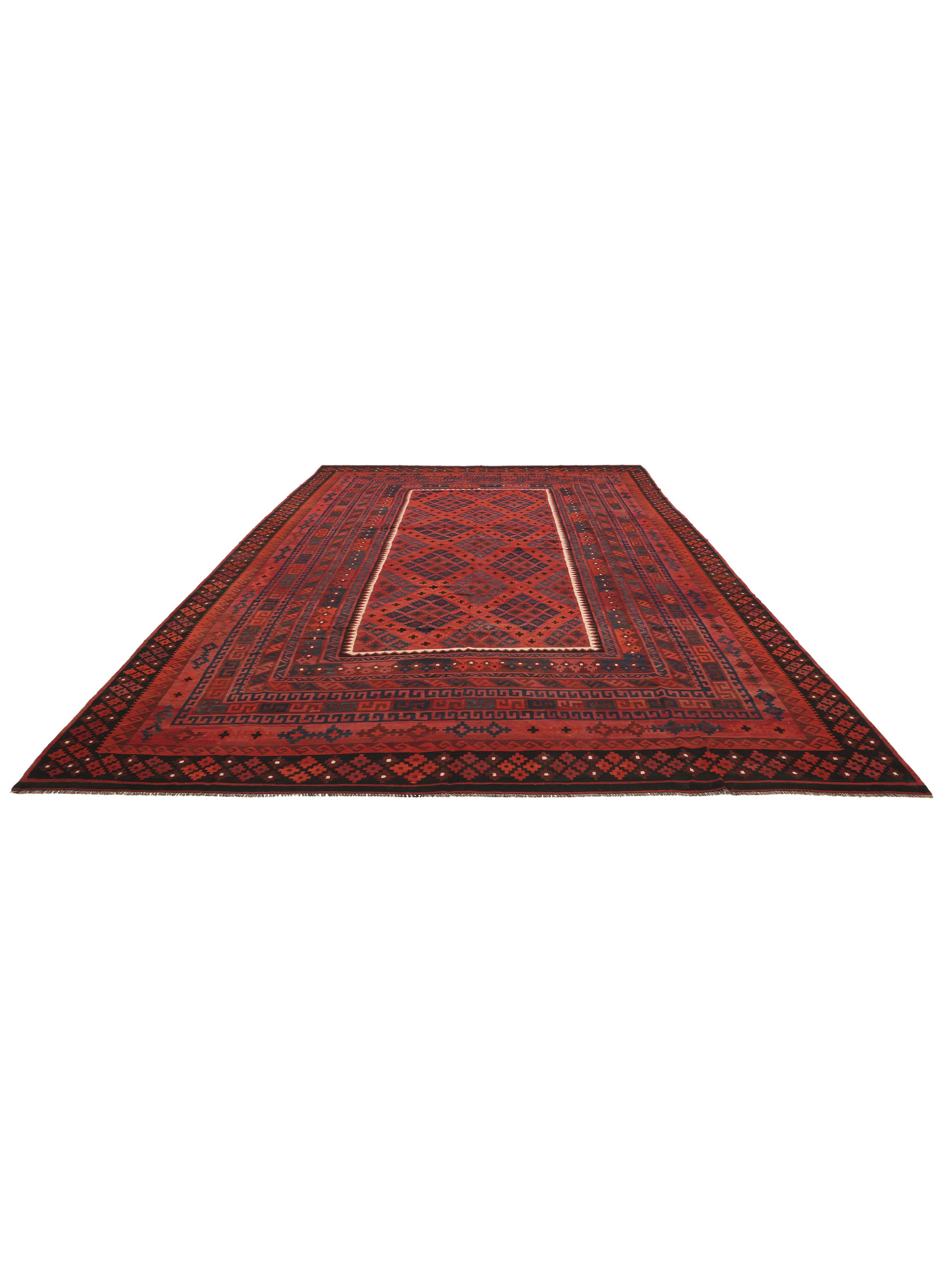
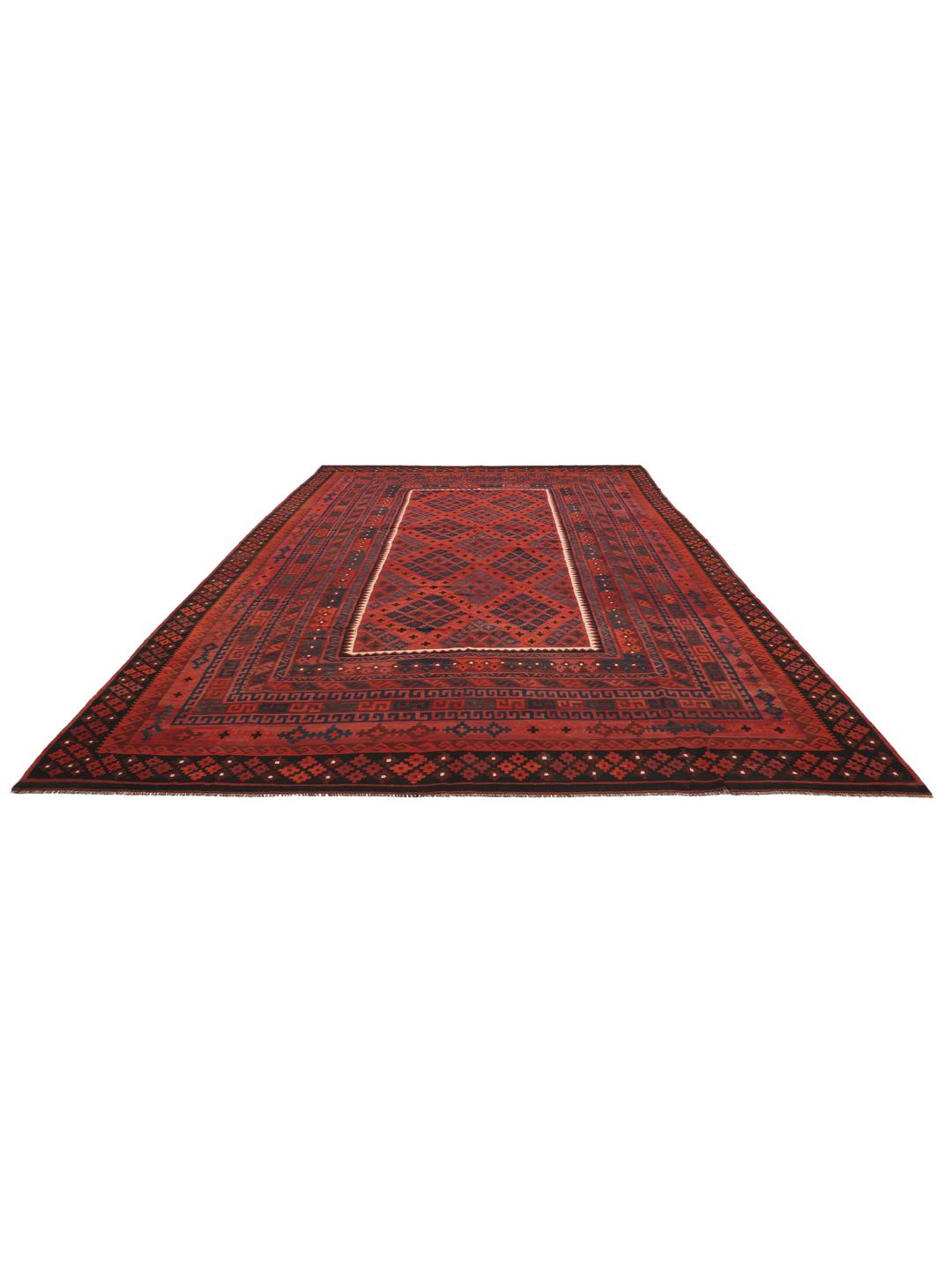
The Kelim Maimane takes its name from the city of Maimane in the northern Middle East, a region with a long-standing tradition of producing high-quality flat-woven textiles. These rugs have evolved through centuries of tribal migration and local craft refinement, serving as essential items for nomadic and village life, where functionality and portability were as important as aesthetic expression.
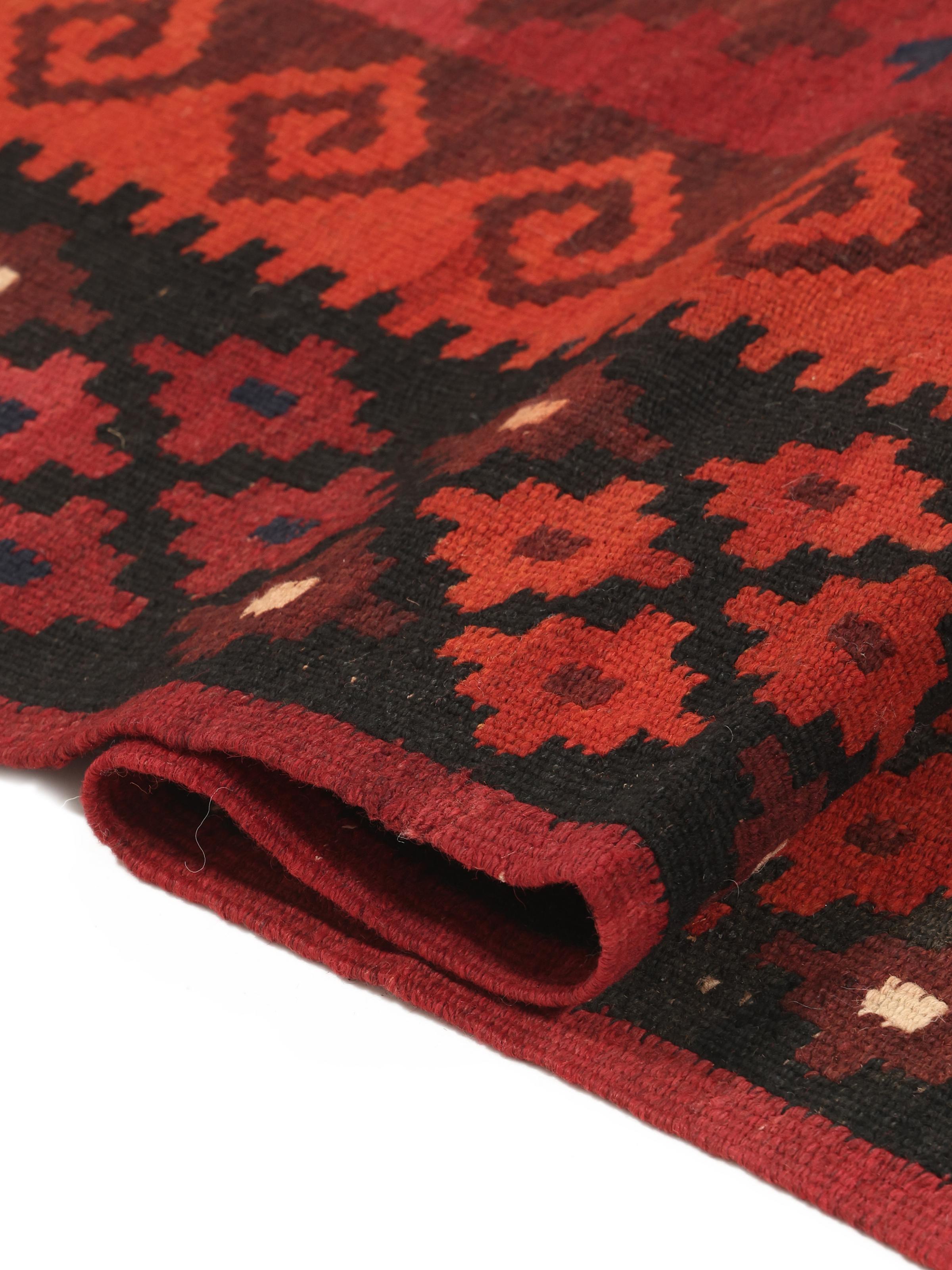
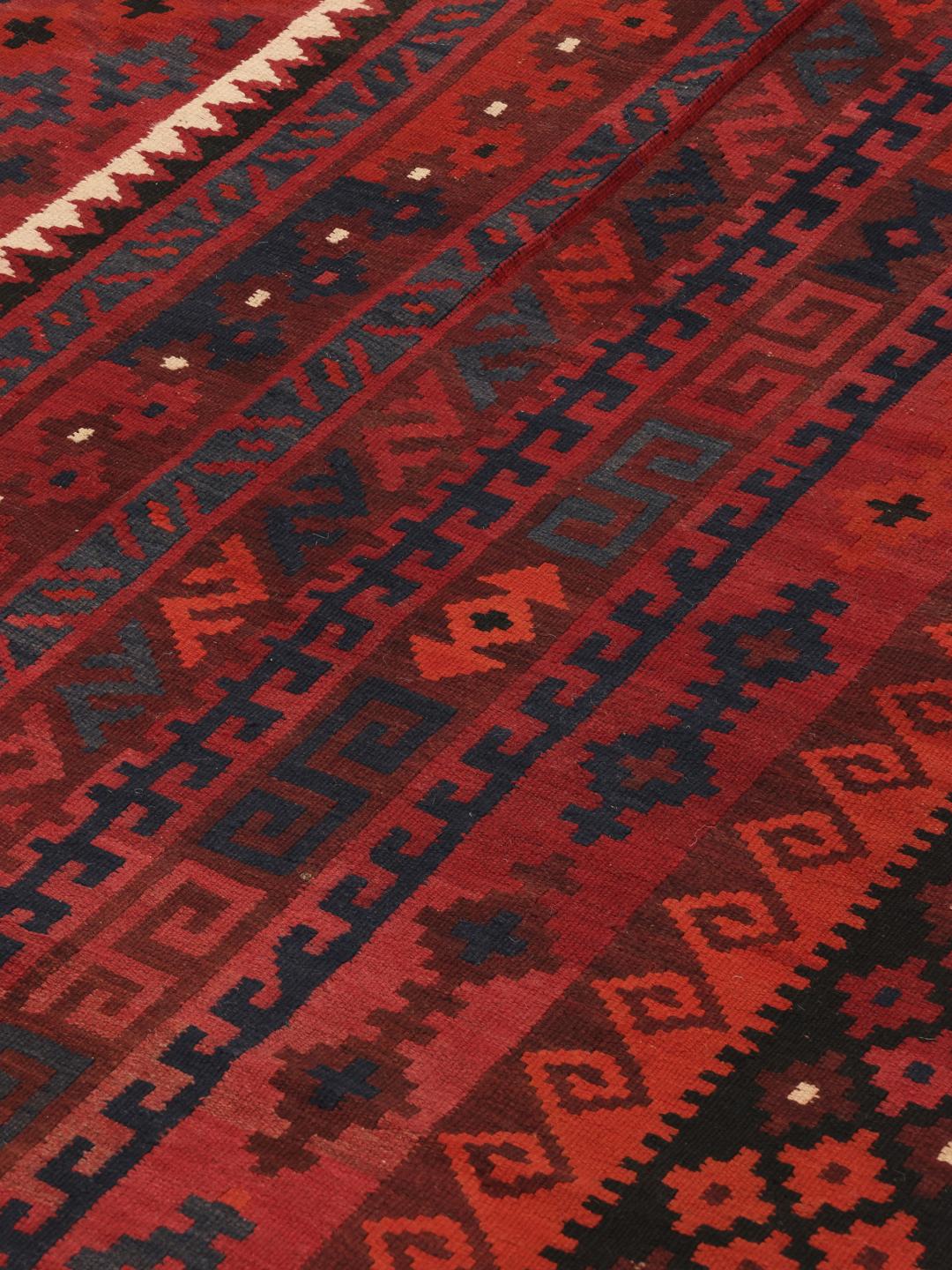
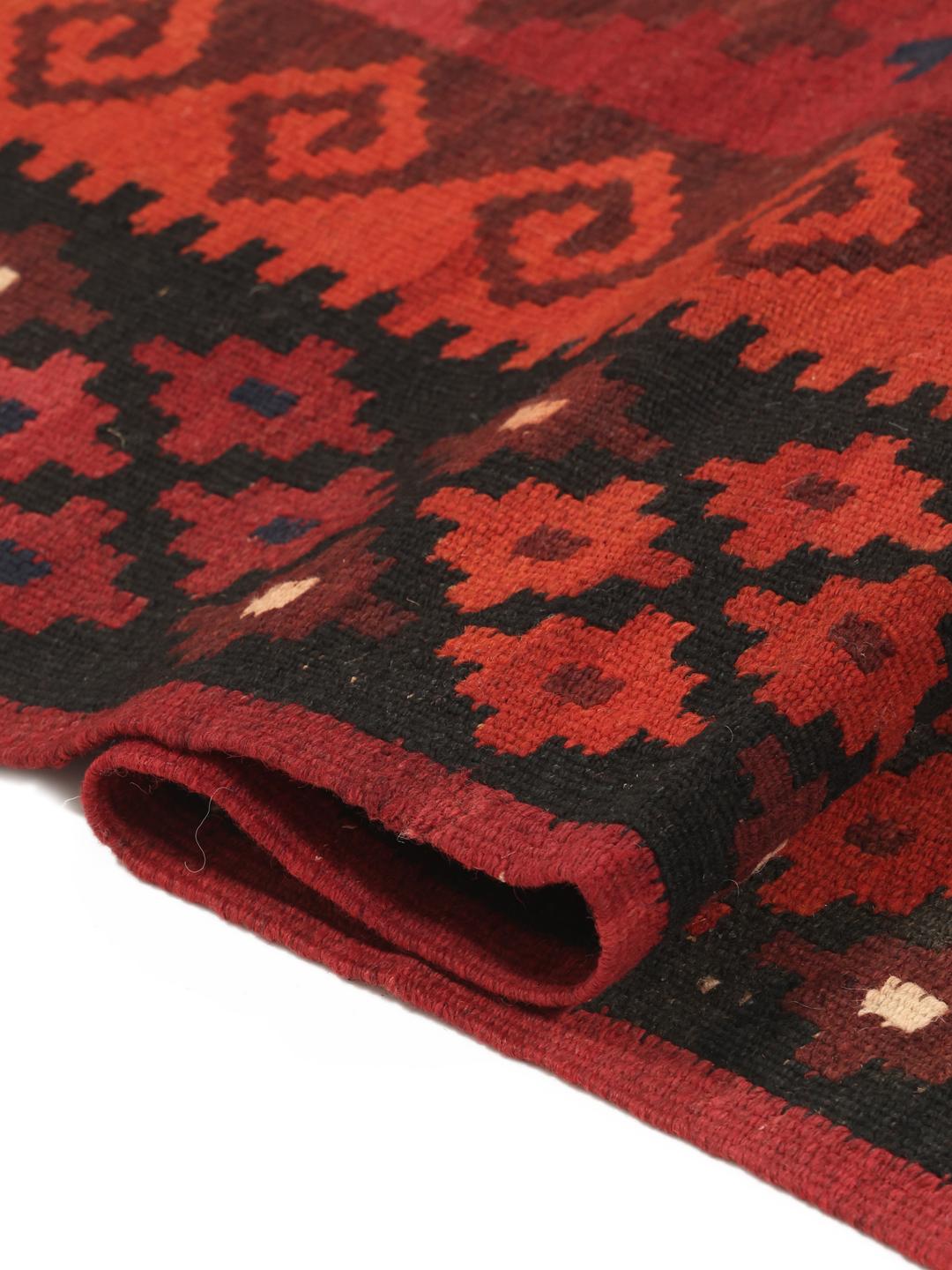
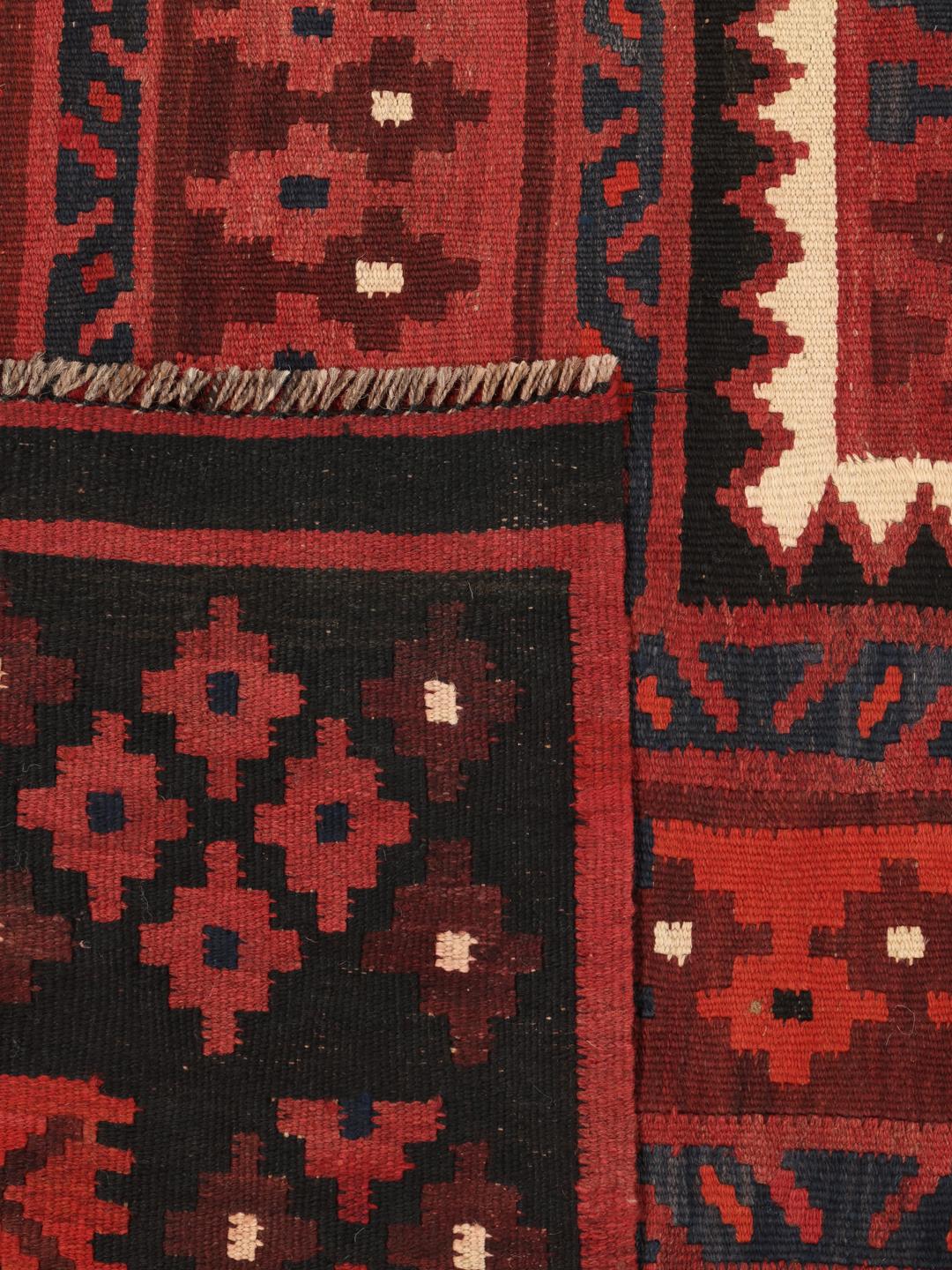
The term 'kilim' refers to a specific flat-weaving technique where the warp and weft threads are interlocked to create a design. Unlike pile rugs, kilims do not have a raised surface, which results in a lighter, more versatile fabric. This technique is highly valued for its ability to produce crisp, clear geometric patterns, as the structure of the weave naturally lends itself to linear and angular motifs.
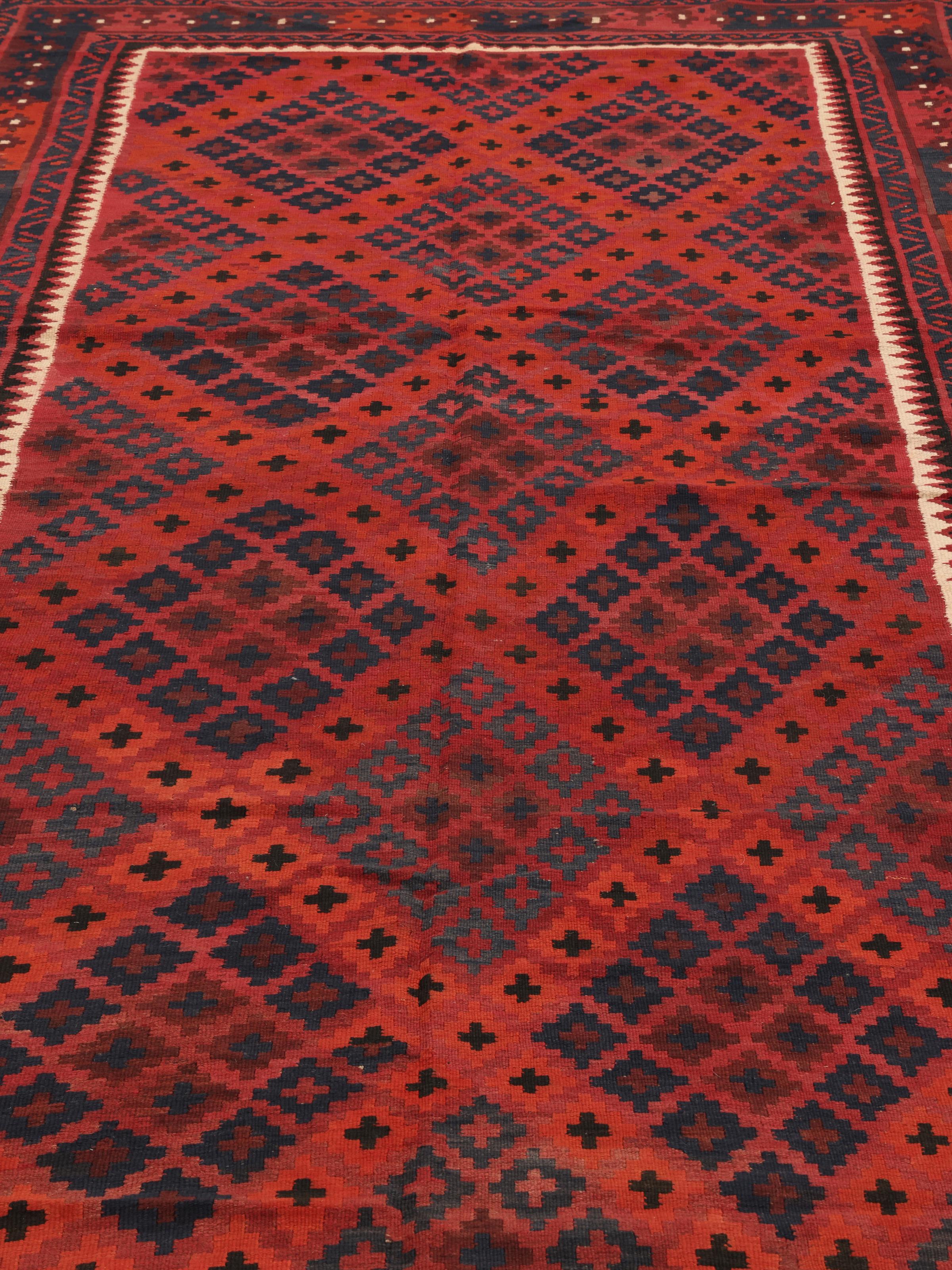
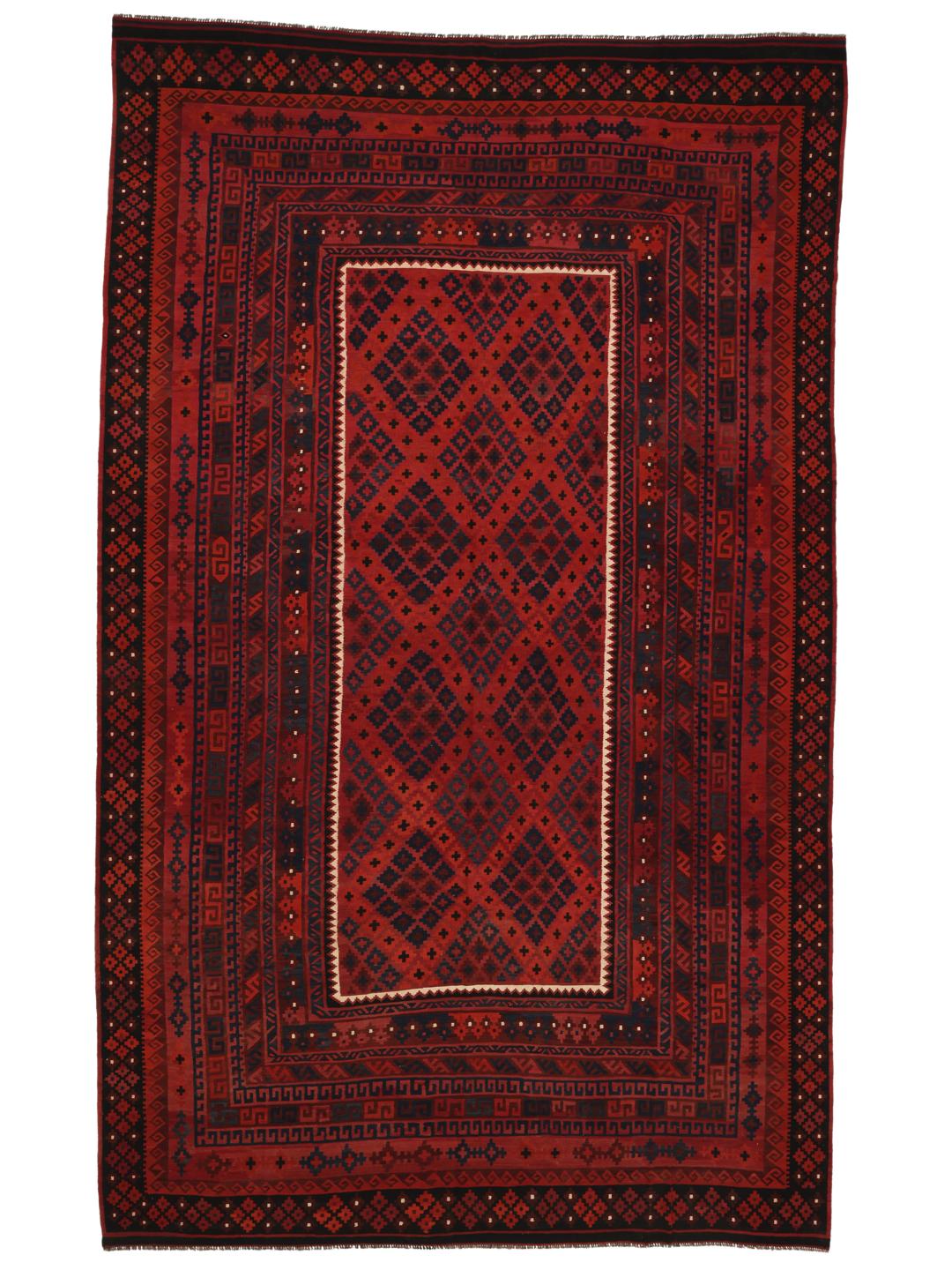
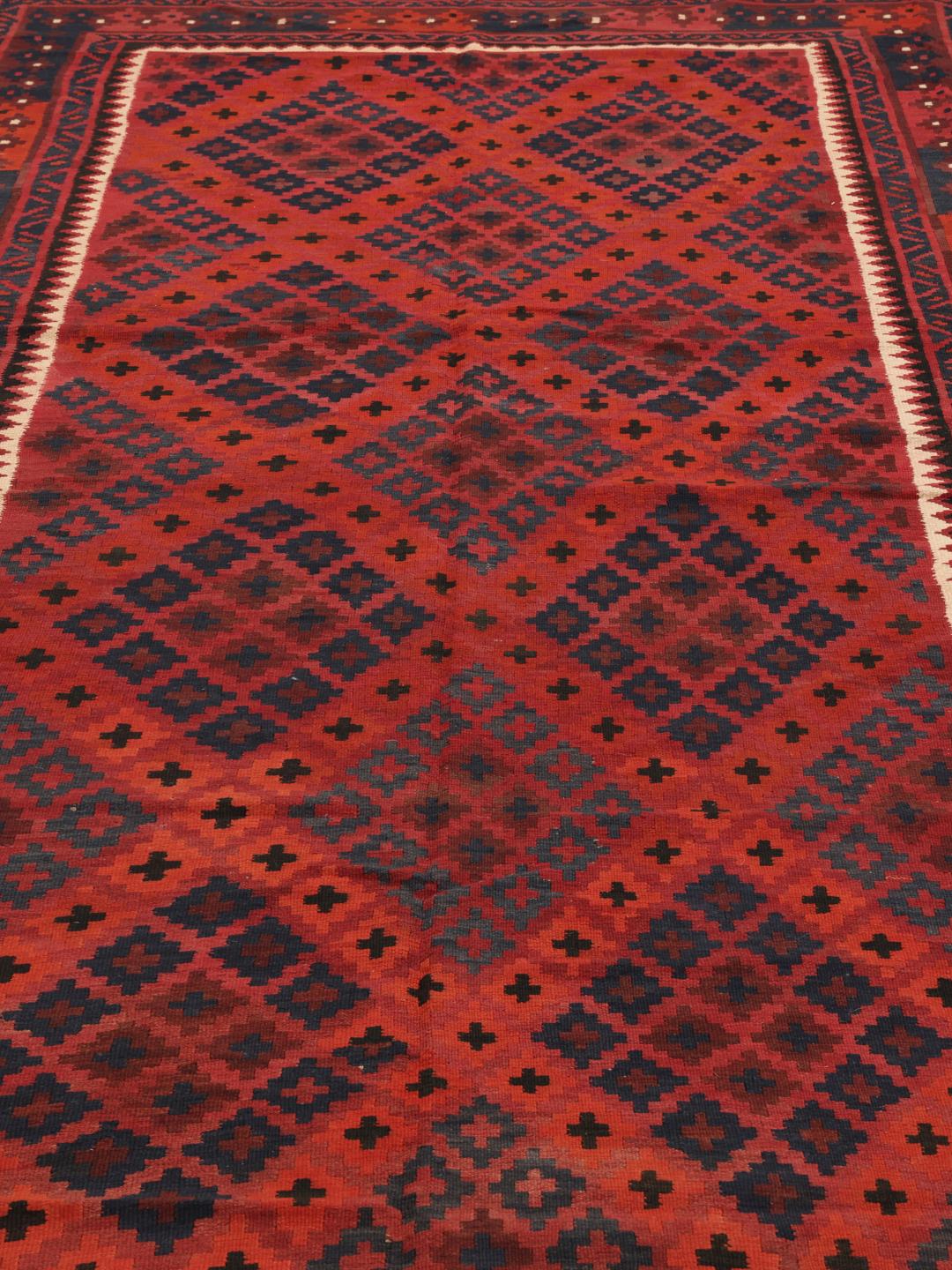
Signature design elements of the Maimane tradition often include repeating geometric shapes, such as diamonds and stylised symbols, arranged in structured, rhythmic compositions. The colour palette typically leans toward deep, organic reds and dark, contrasting tones, which are derived from traditional natural dyes. These patterns are not merely decorative but often carry cultural significance, reflecting the identity and heritage of the weavers.
Collecting a Kelim Maimane is an investment in cultural history and skilled craftsmanship. These rugs are highly valued for their authenticity and the labour-intensive process behind each piece. By choosing one, you are preserving a centuries-old tradition and bringing a piece of Middle Eastern history into your home that reflects both human ingenuity and enduring design.