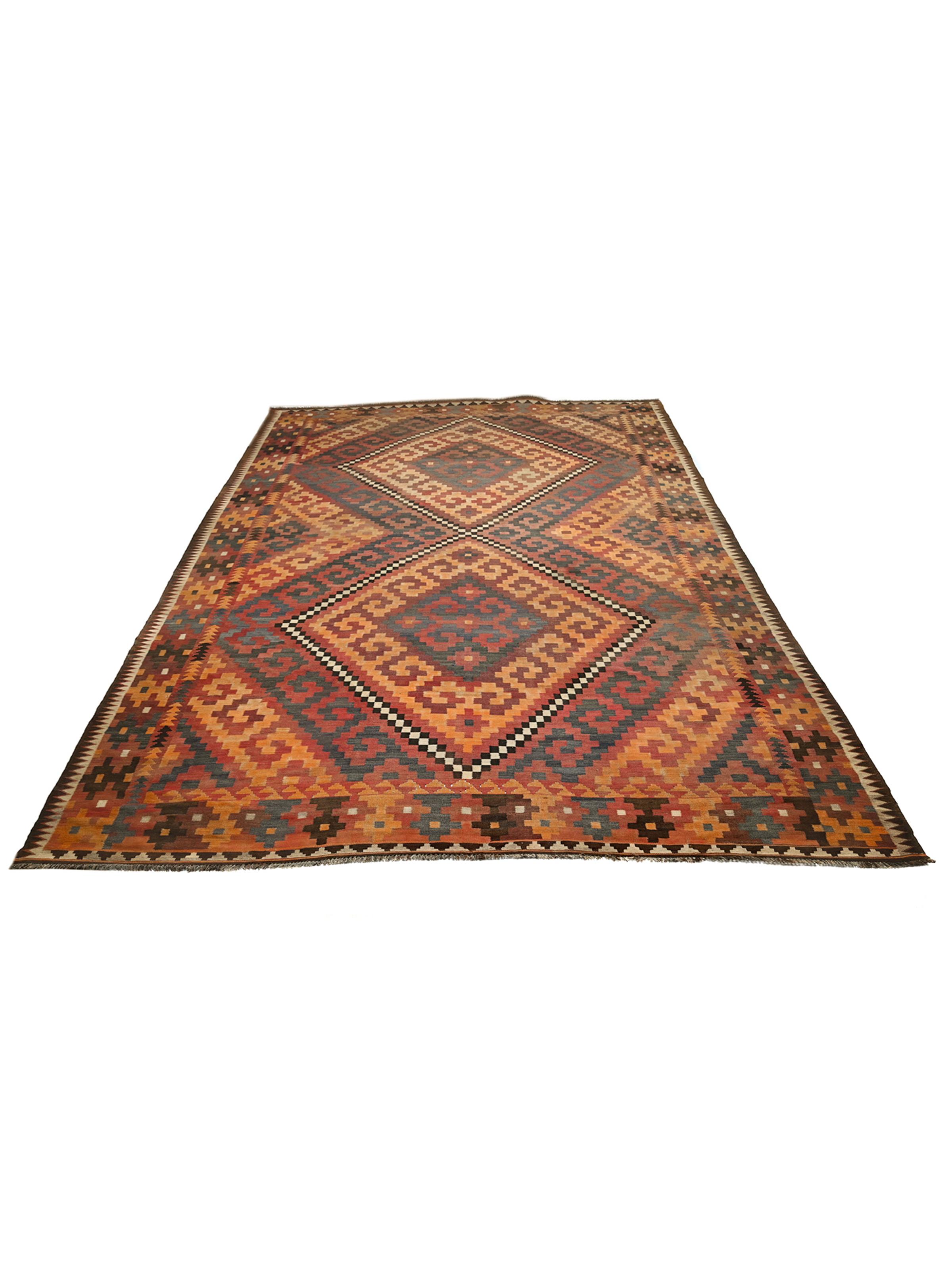
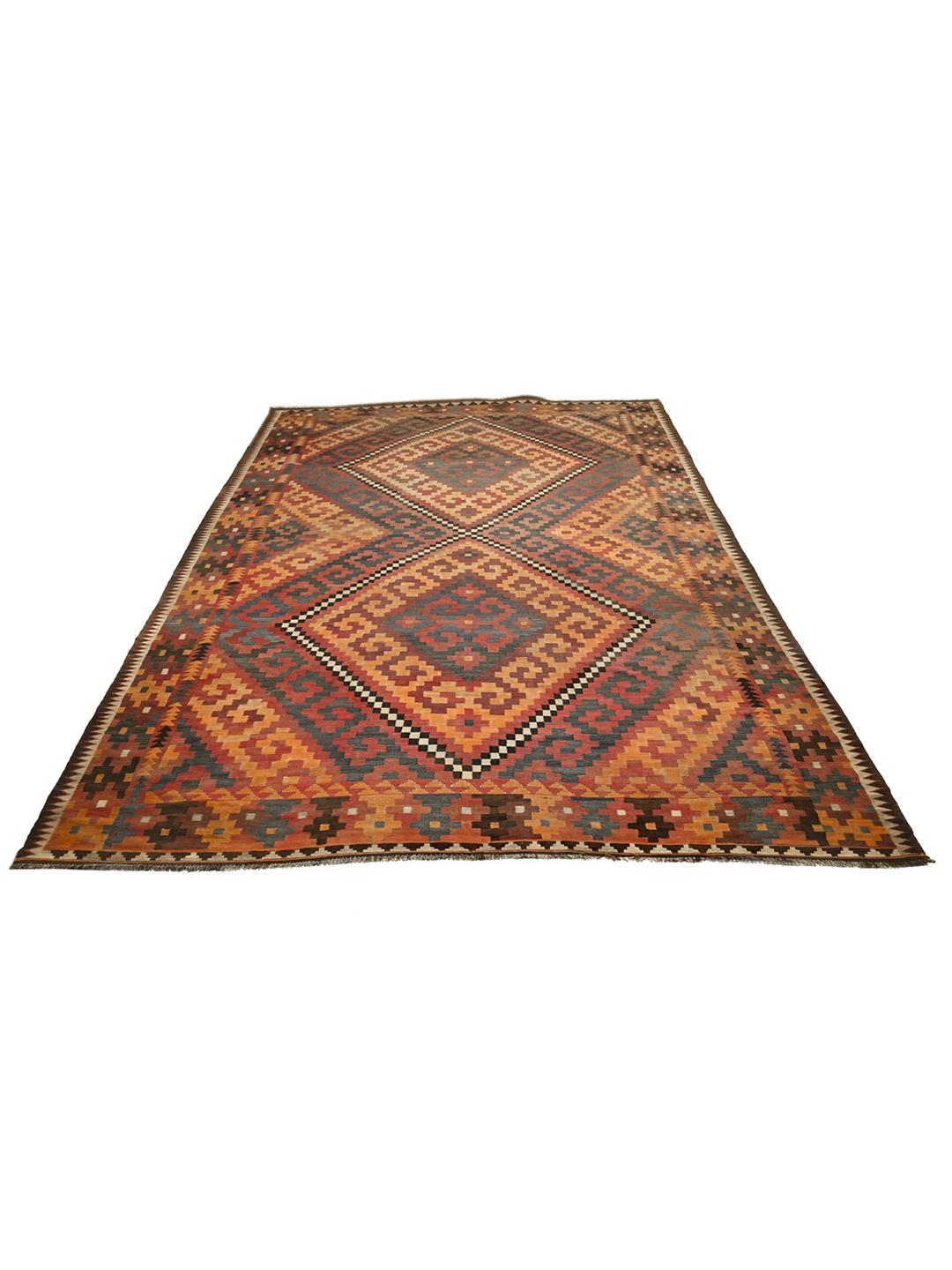
The Kelim Maimane rugs originate from the Maimana region of northern Afghanistan, a territory with a deep-rooted history in textile production. These rugs are deeply connected to the nomadic and semi-nomadic lifestyles of the local tribes, who have utilised flat-weaving techniques for generations to create functional, portable, and visually stunning floor coverings for their homes.
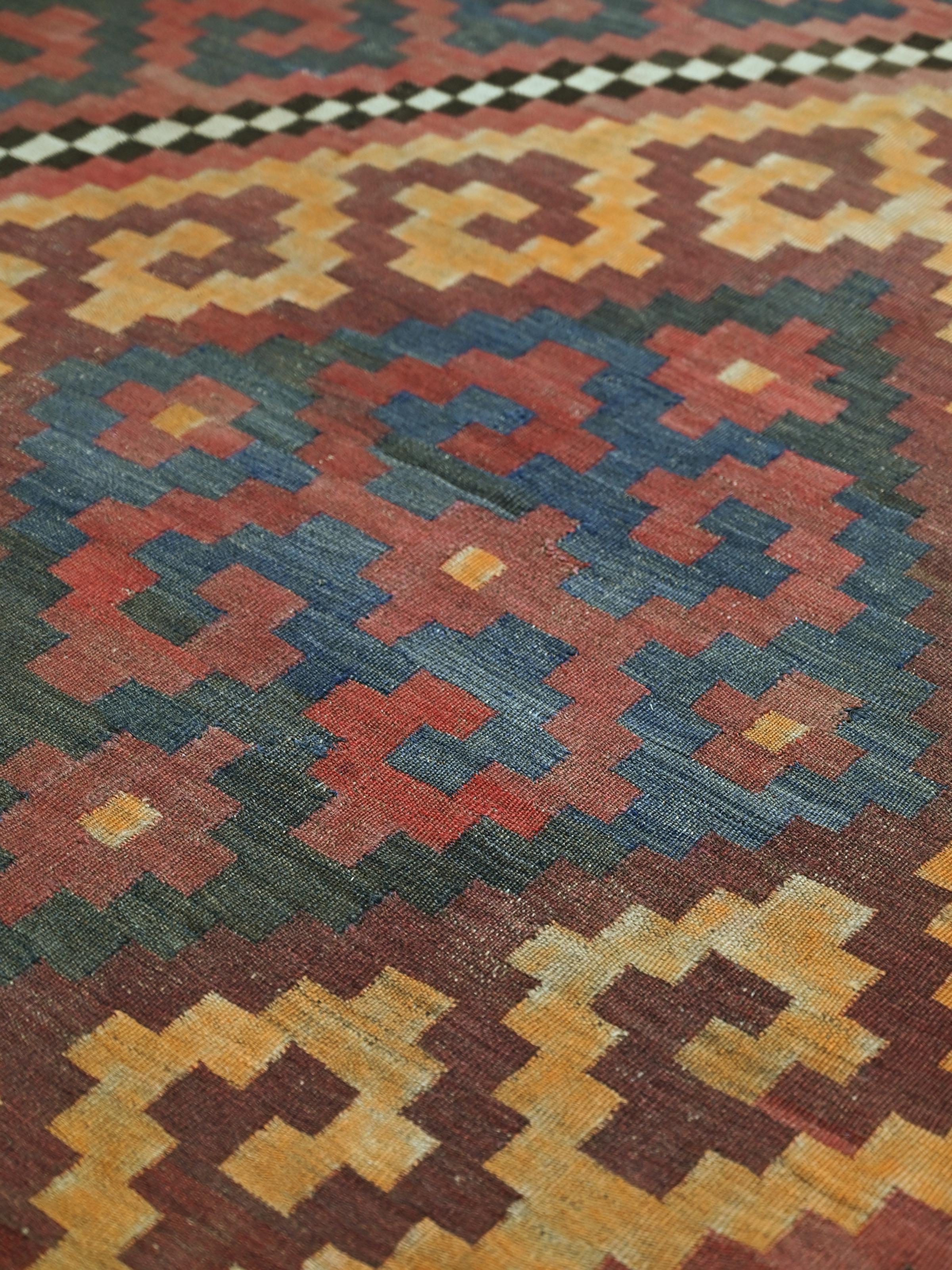
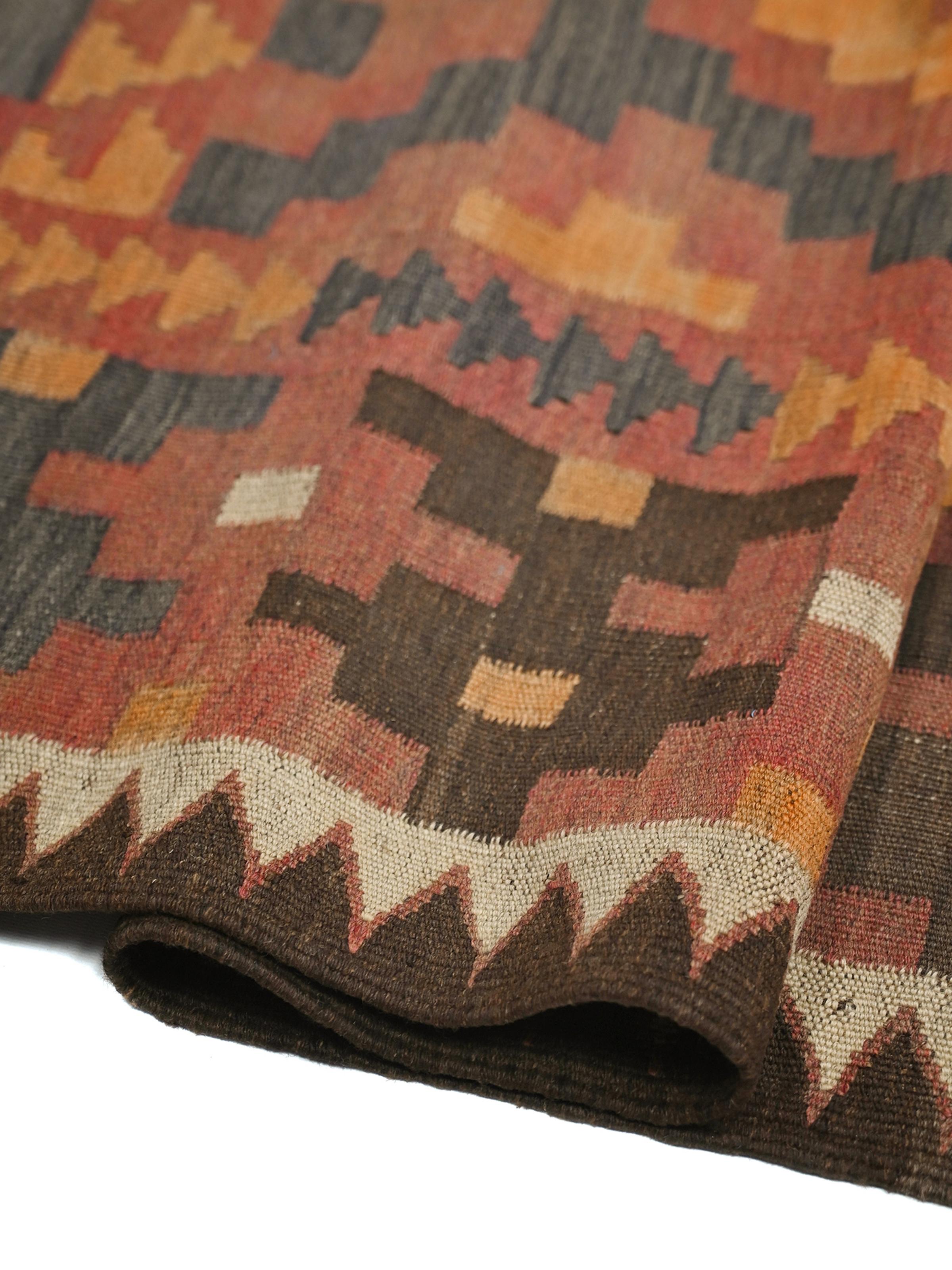
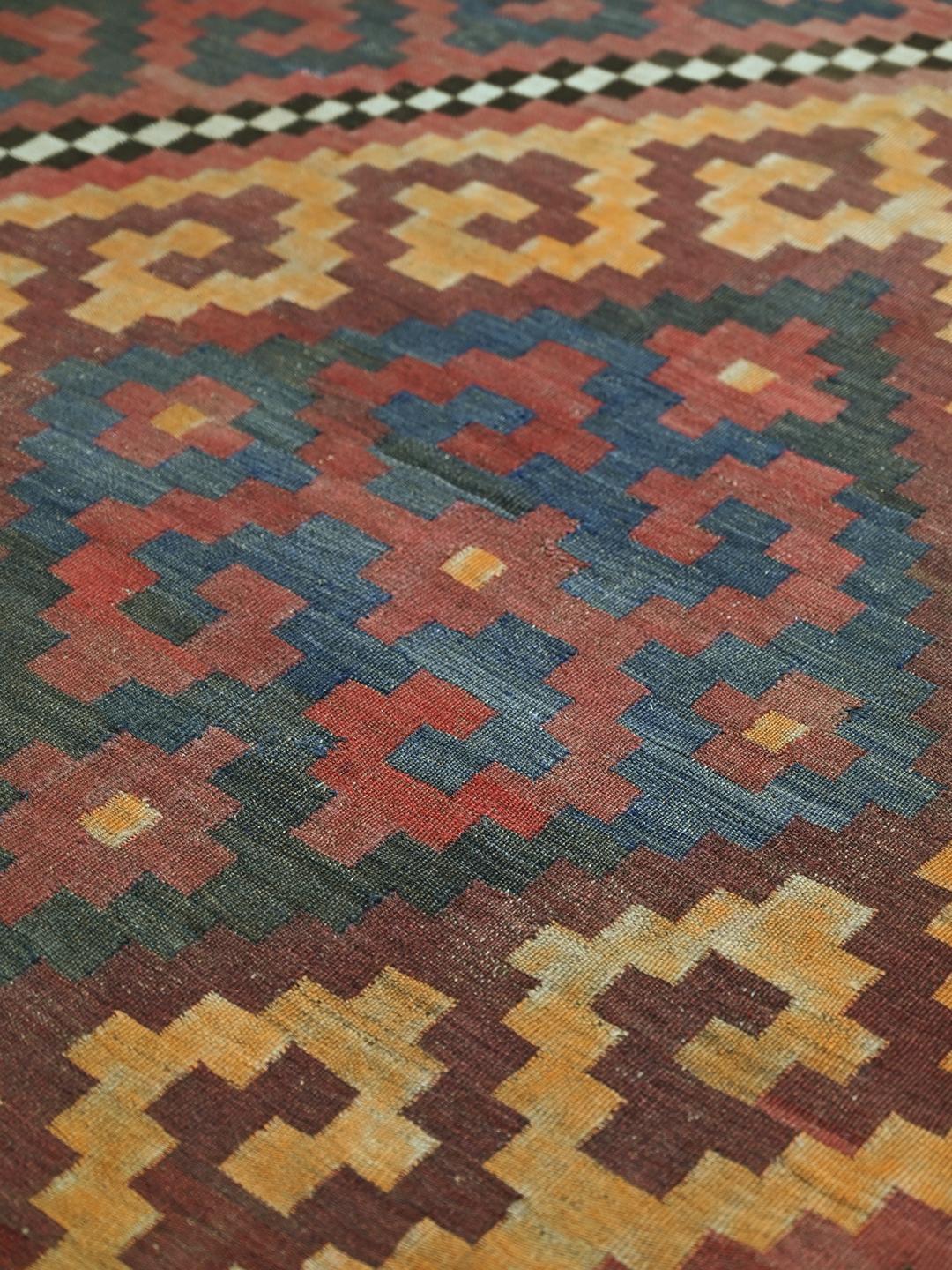
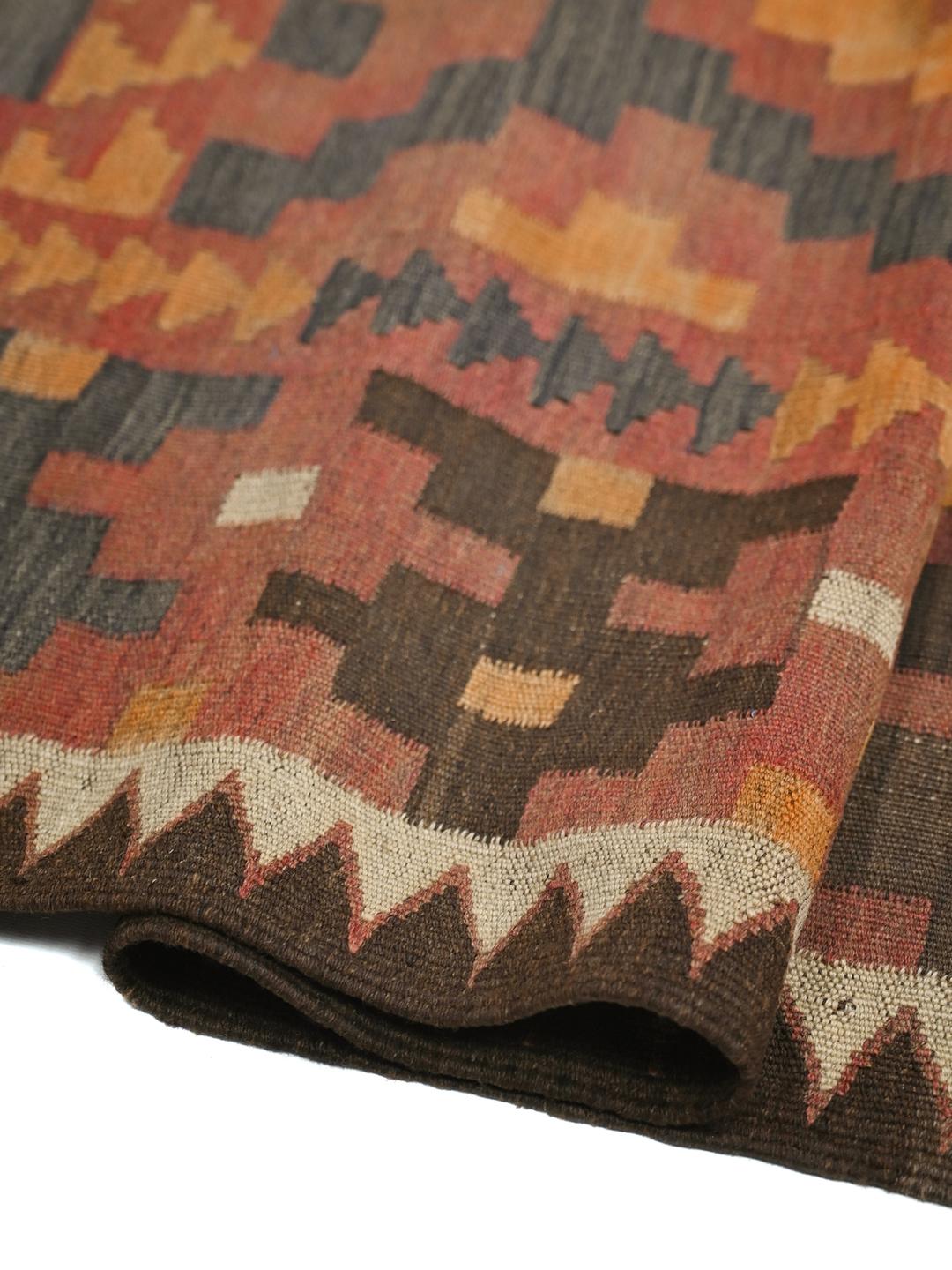
The term 'Kelim' (or Kilim) refers to a specific flat-weaving technique where the weft threads are pulled tightly over the warp threads, resulting in a rug without a pile. This method is highly prized for its clarity of design and durability. Because the pattern is created during the weaving itself rather than through knotting, the resulting motifs are sharp, angular, and often identical on both sides of the rug.
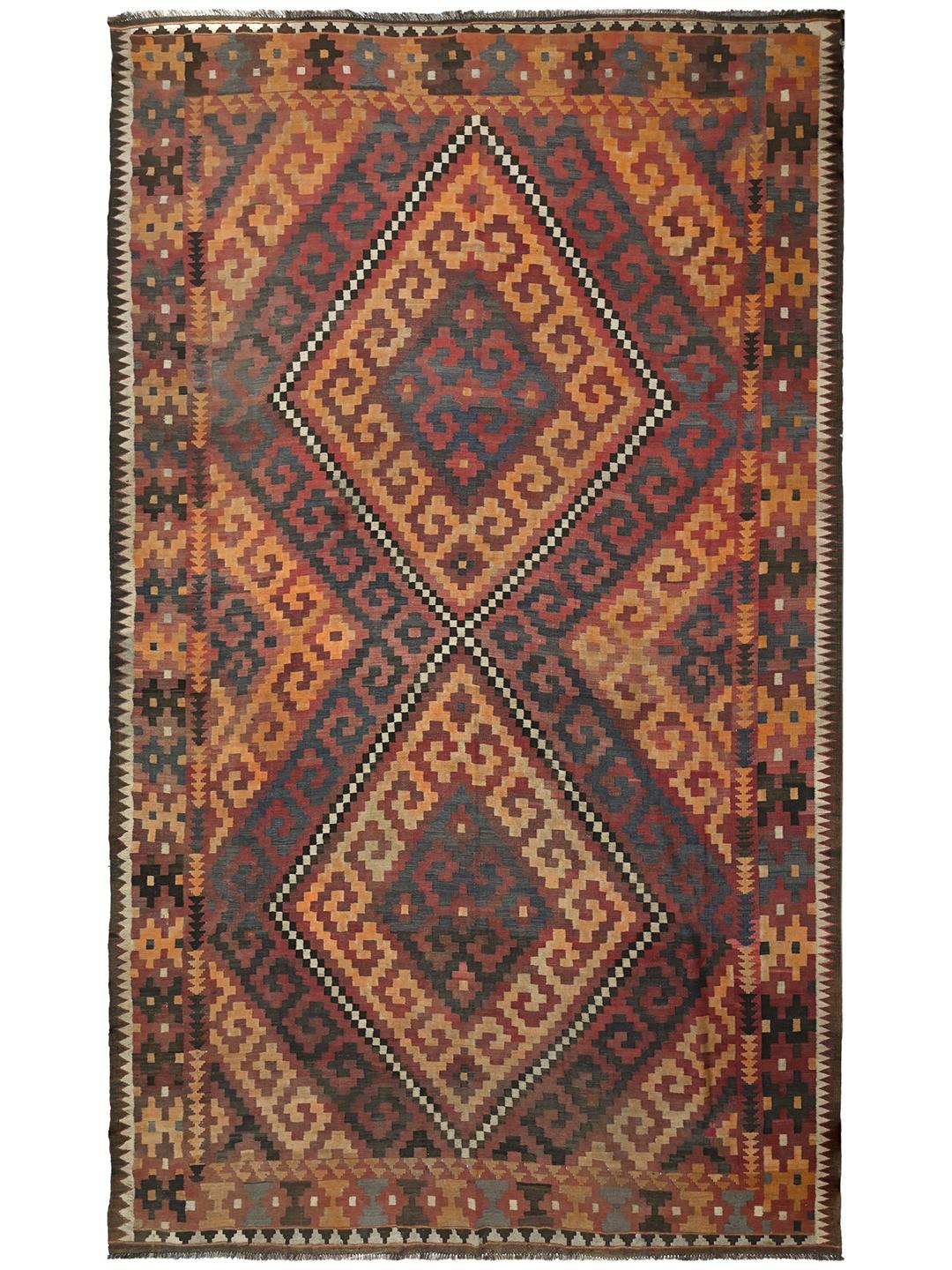
Design-wise, Maimane rugs are known for their strong geometric language. Large, bold diamonds and interlocking tribal motifs are common, often framed by decorative borders that anchor the composition. The colour palette typically draws from natural dyes, favouring deep, earthy reds, oranges, and dark tones that have become synonymous with the rugged, beautiful landscape of the Afghan highlands.
These rugs are highly sought after by collectors who value the intersection of ancestral skill and functional design. Owning a Kelim Maimane is an investment in cultural heritage, representing a level of human dedication that is increasingly rare in the modern world. It is a piece that carries the story of its origin, providing a sense of history and warmth to any space it occupies.