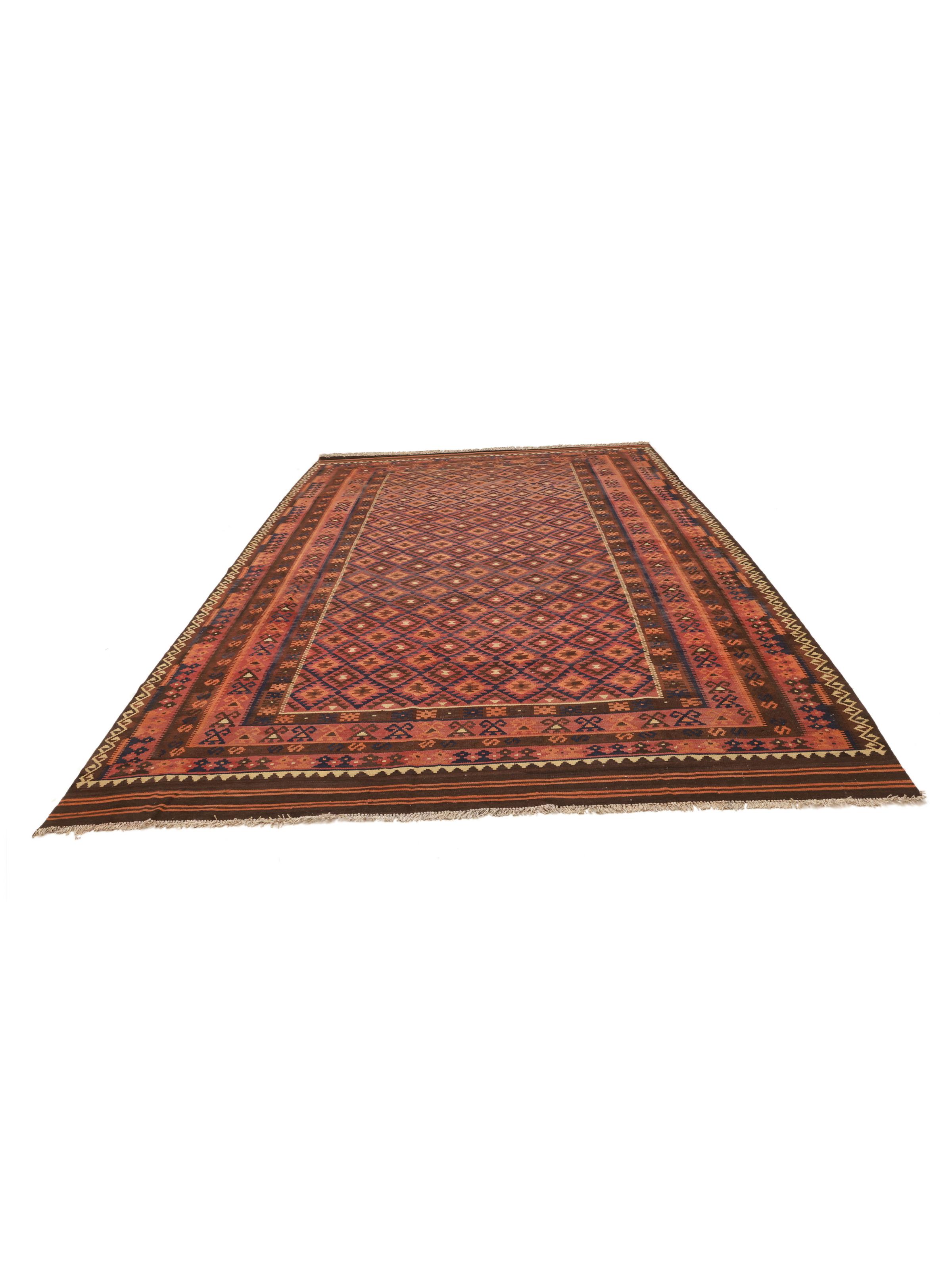
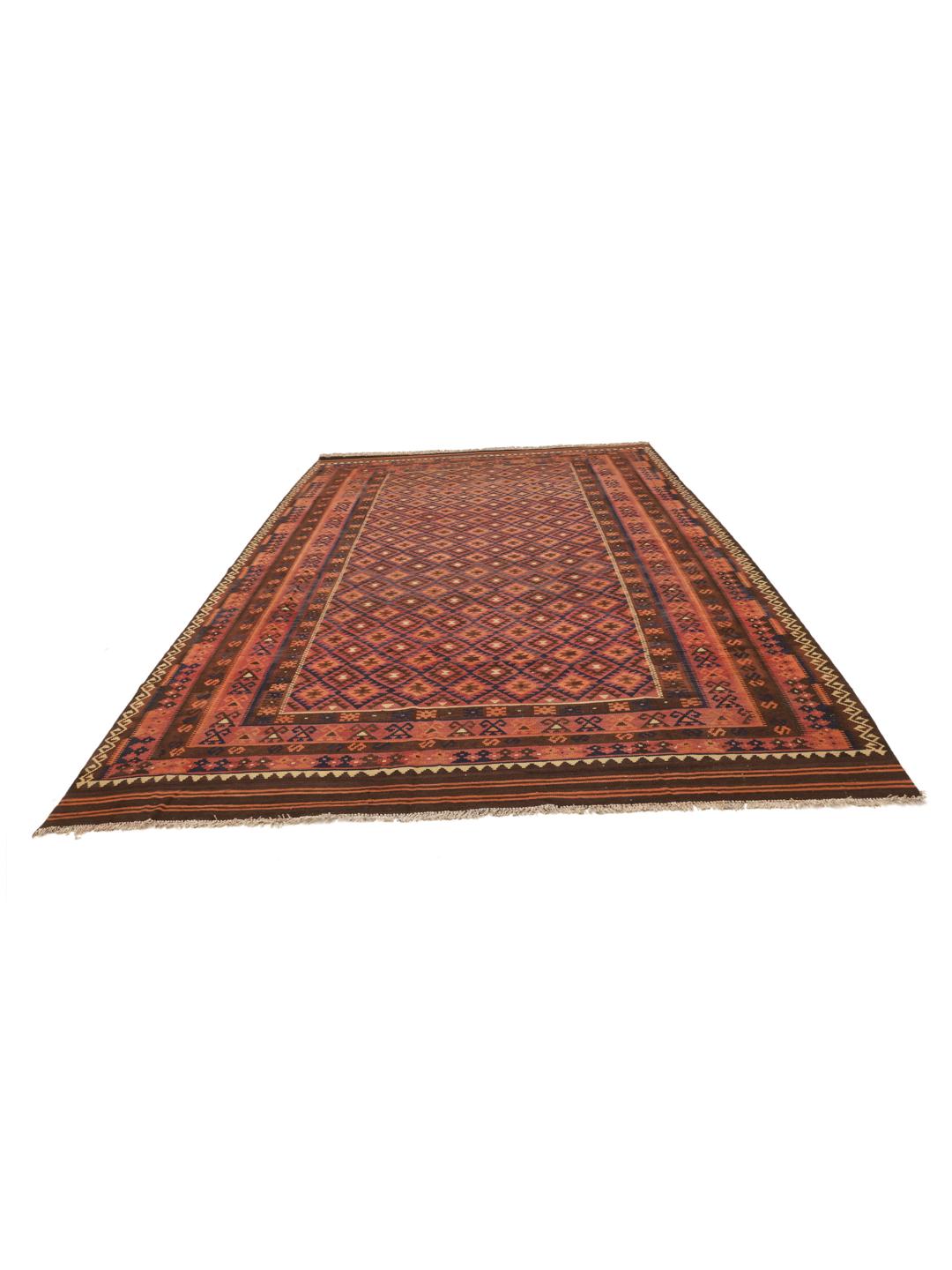
Kelim Maimane rugs take their name from the historic city of Maimana in northern Afghanistan, a region long recognised for its vibrant textile traditions. These rugs are deeply connected to the semi-nomadic lifestyles of the local weavers who have passed down their specialised weaving skills through generations.
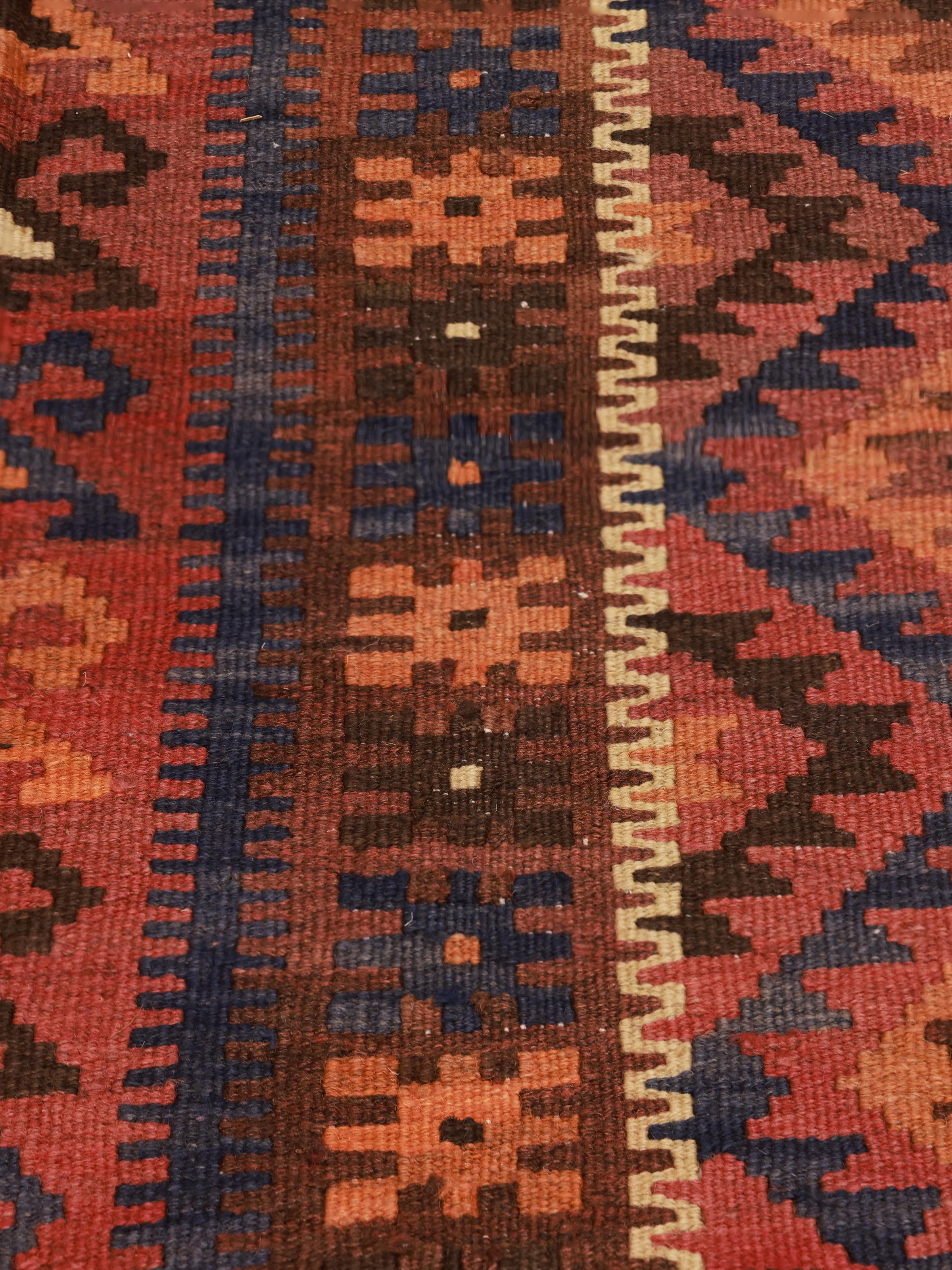
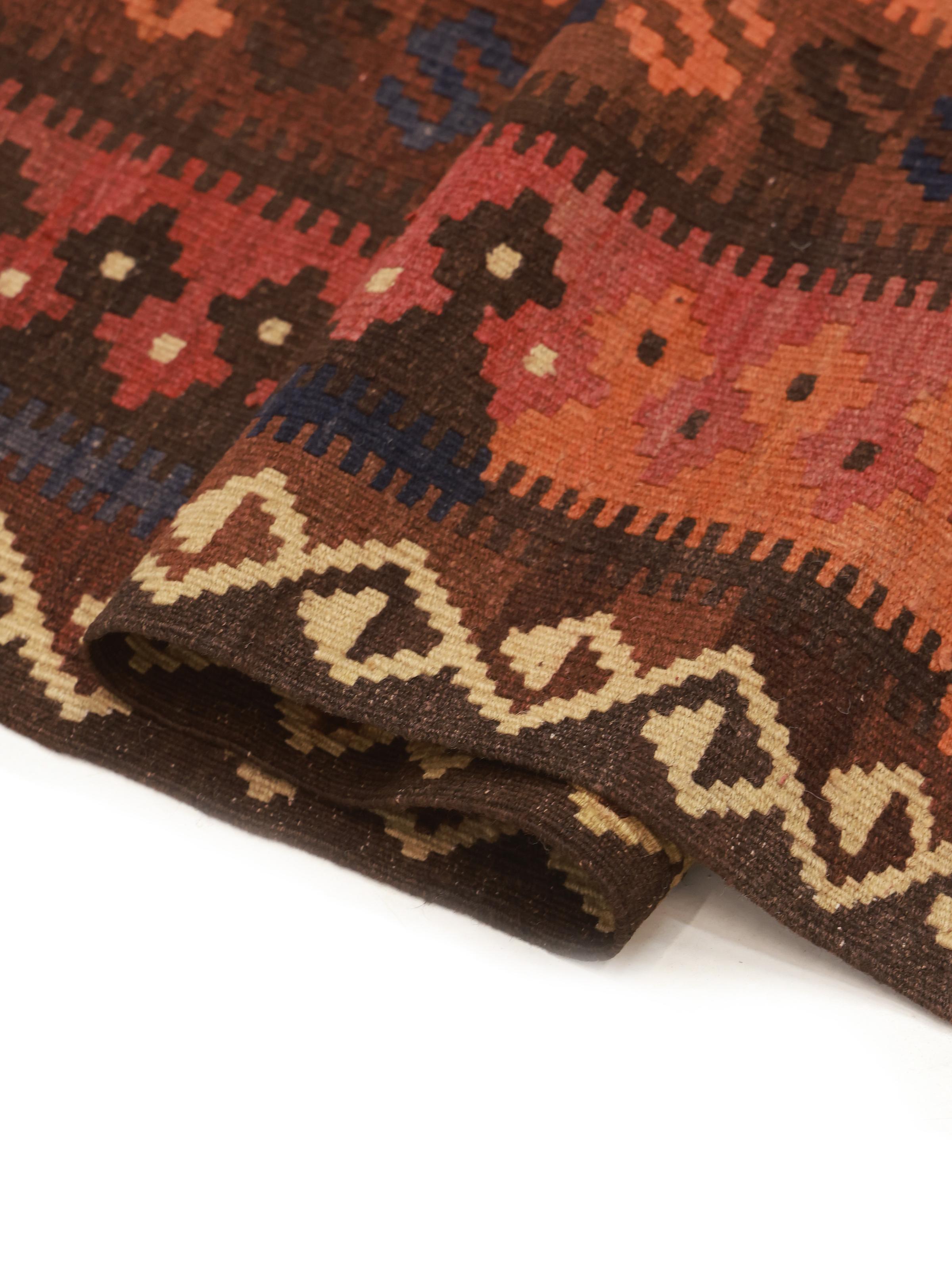
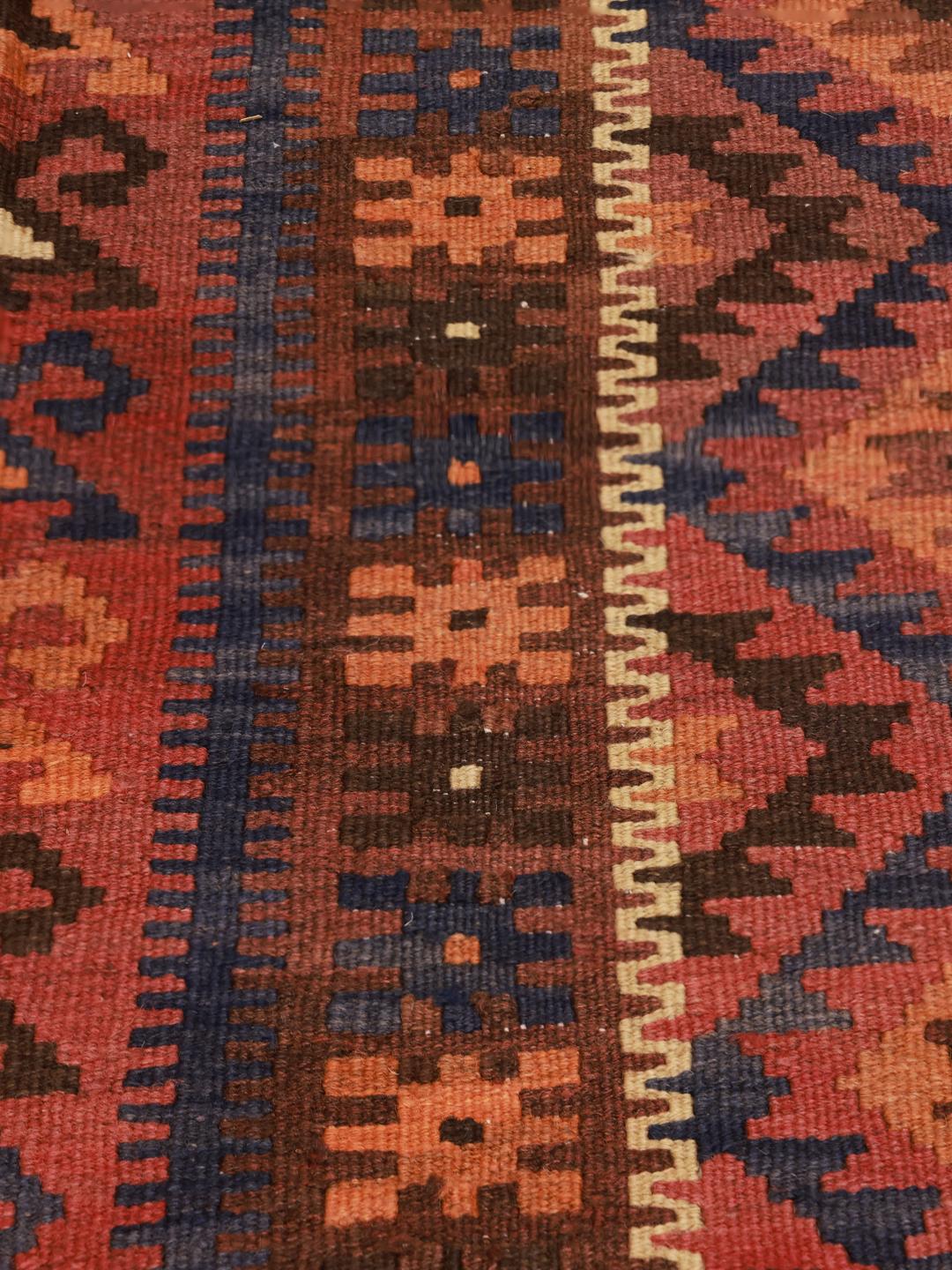
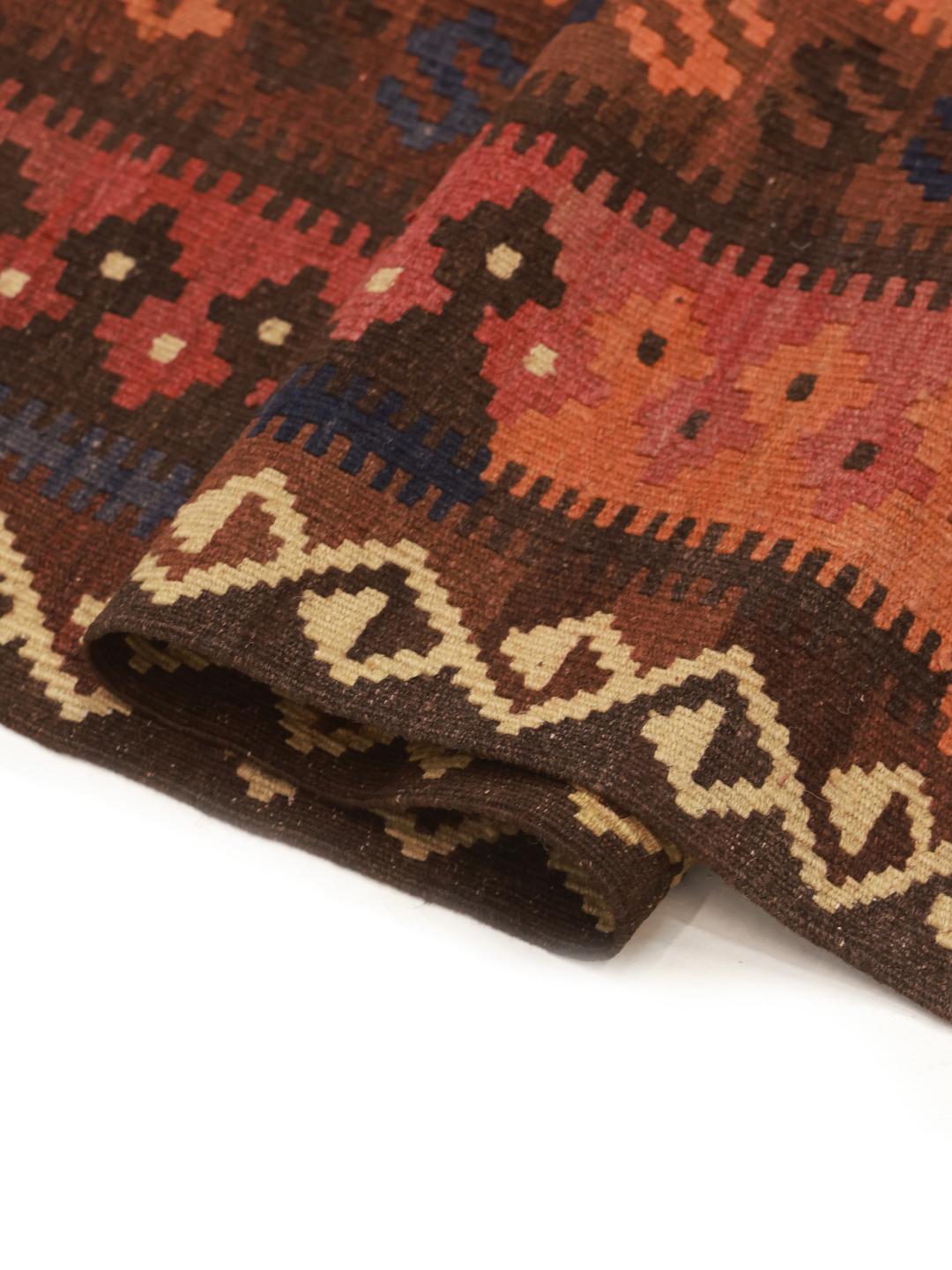
The term 'Kelim' refers to a flat-weave technique where the weft strands are pulled tightly to cover the warp, resulting in a thin, durable, and reversible fabric. This style of construction is prized for its simplicity and strength, as it lacks the knots found in pile rugs but offers a crisp, clean aesthetic that highlights the geometric precision of the motifs.
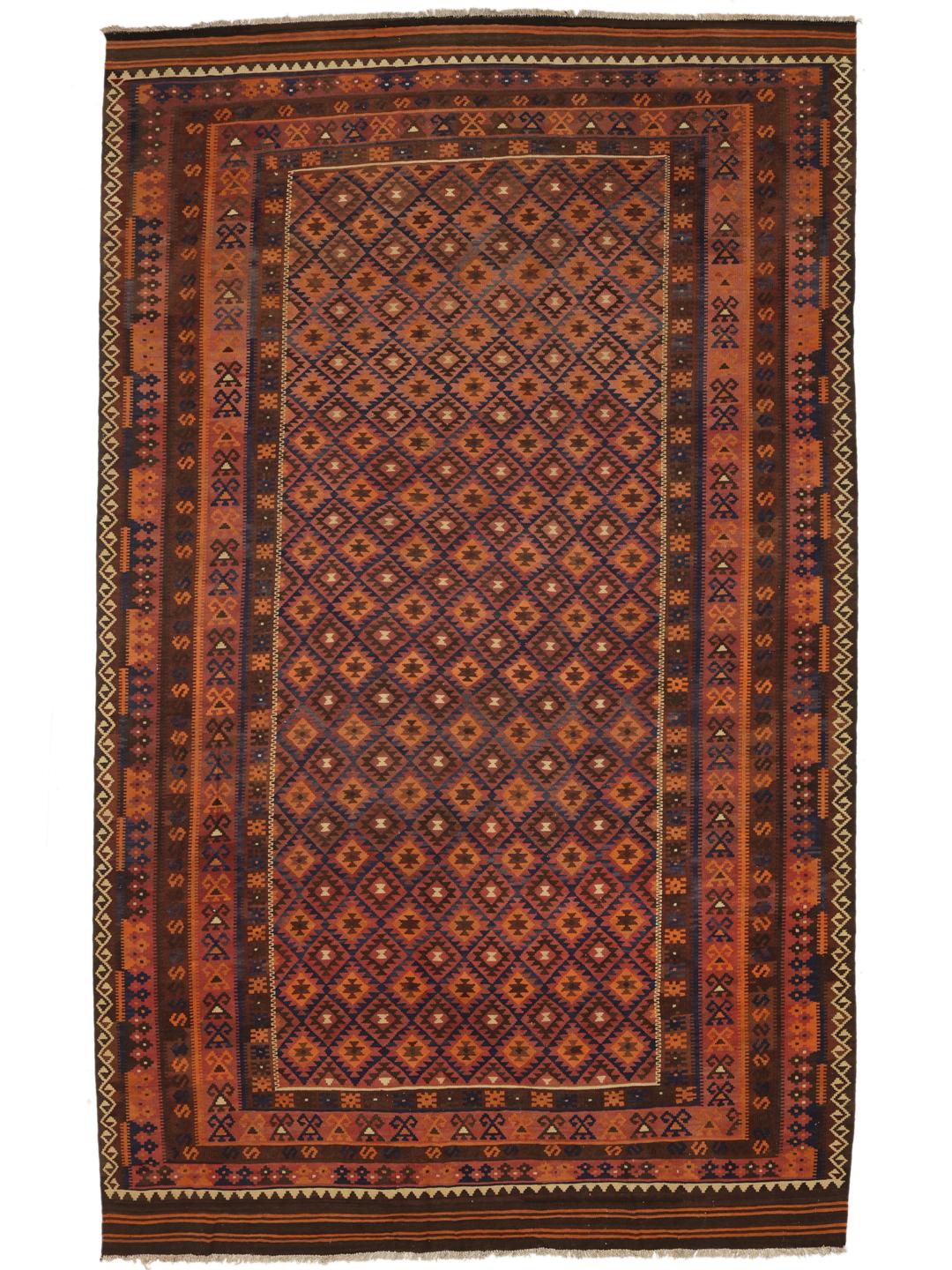
Visually, these rugs are defined by their bold, repeating diamond and geometric patterns, often rendered in earthy, vegetable-dyed colours. The borders are typically filled with intricate, stylised symbols that carry cultural significance, reflecting the environment and history of the Afghan highlands where these designs were first conceived.
Collecting a Kelim Maimane is an opportunity to own a piece of cultural heritage. These rugs are highly valued for their raw, honest beauty and the immense skill required to produce them without the aid of modern machinery. They represent a connection to a slower, more deliberate way of life that remains deeply respected by textile enthusiasts worldwide.