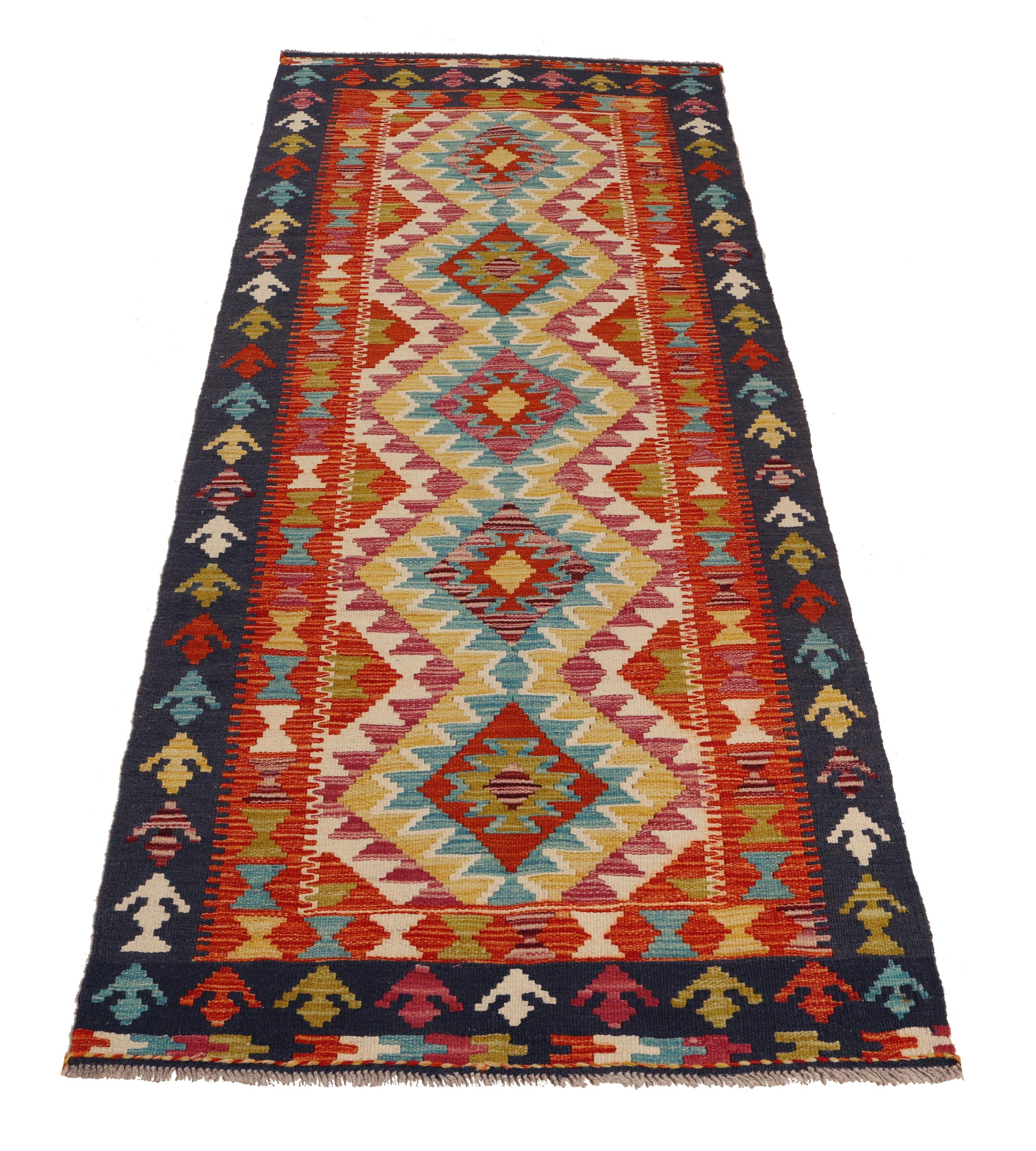
The tradition of weaving flat-weave rugs, known as Kelims, is deeply rooted in the history of the Middle East and Central Asia. These textiles have been essential to nomadic and village life for centuries, serving as floor coverings, wall hangings, and functional storage bags during seasonal migrations.
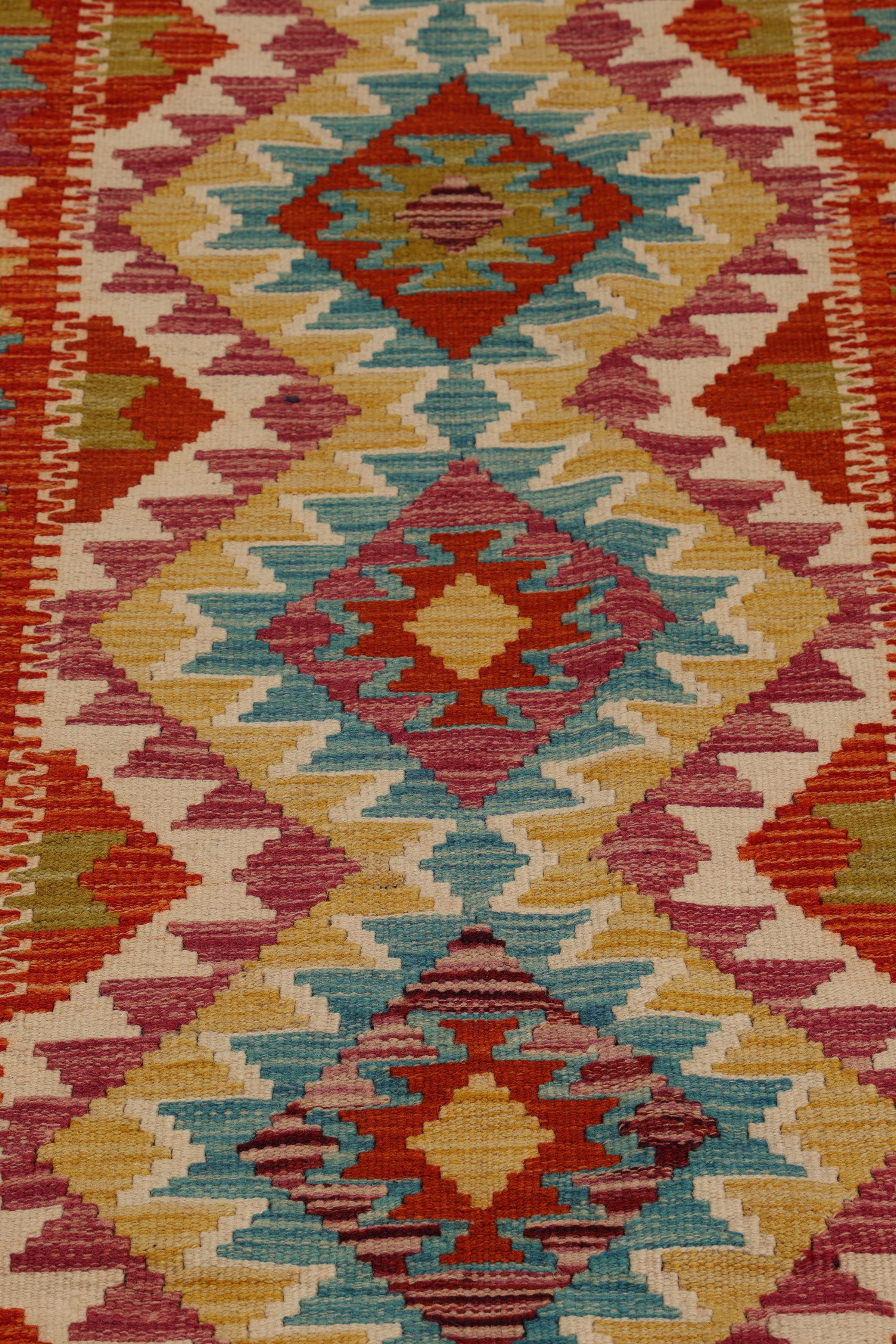
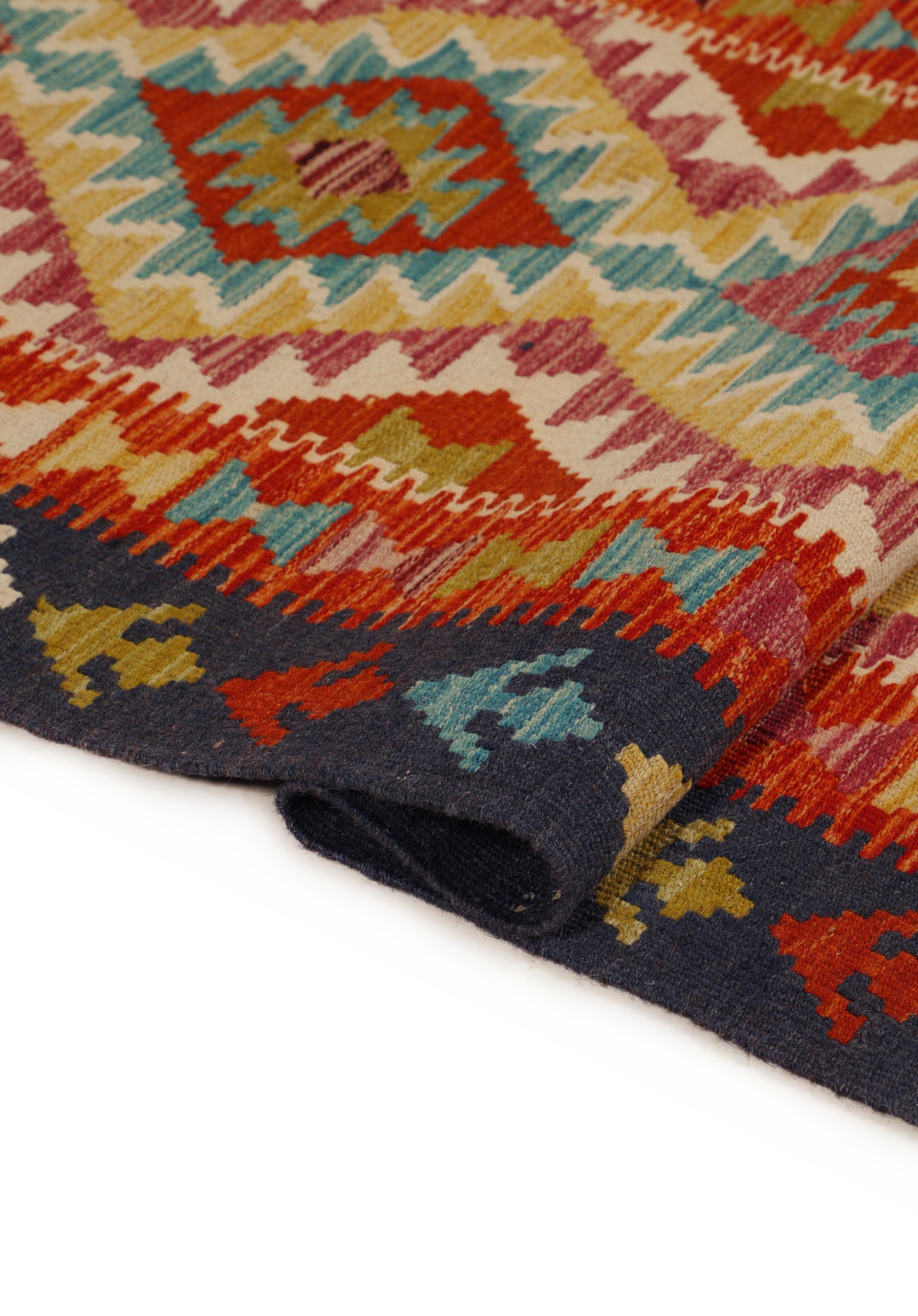
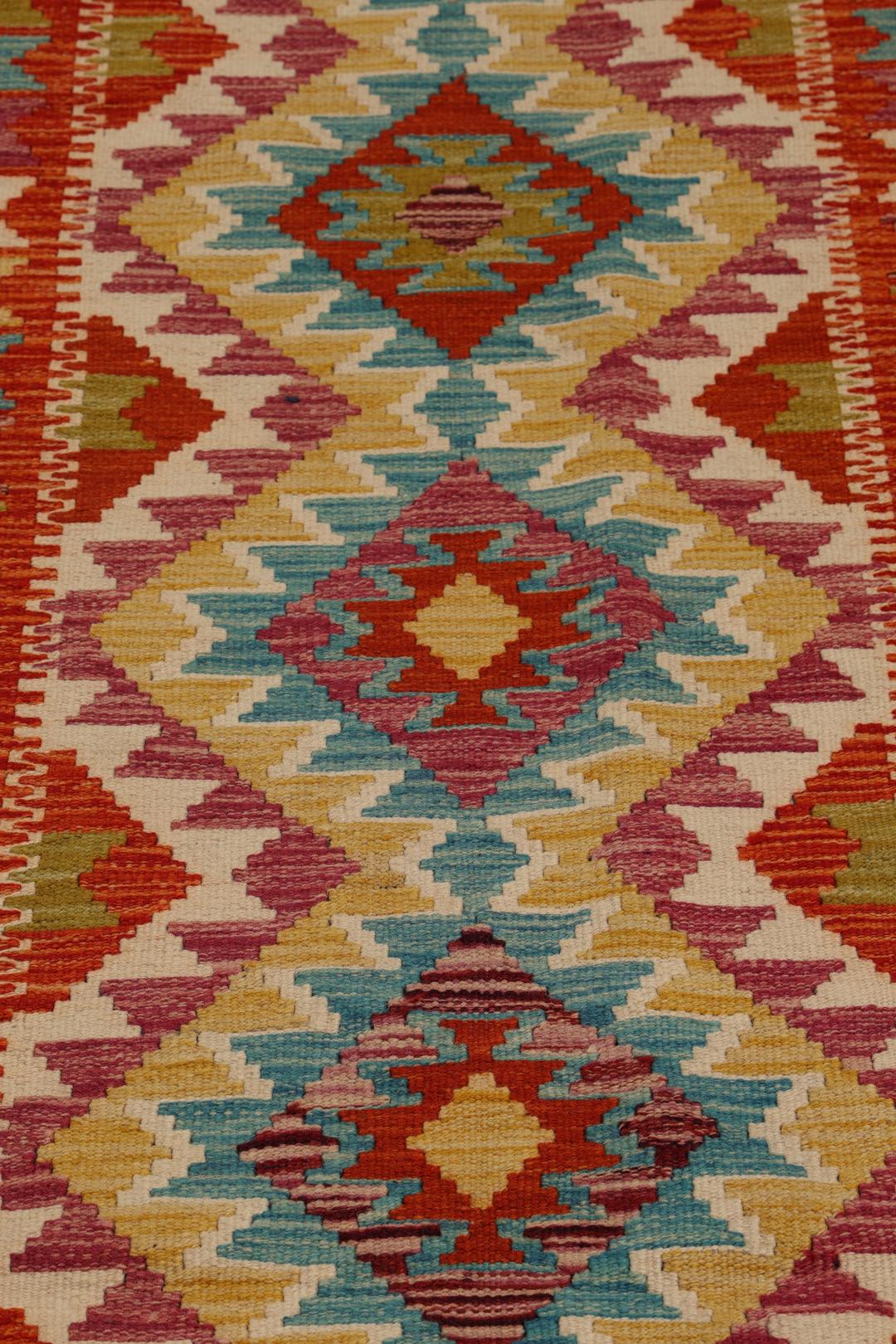
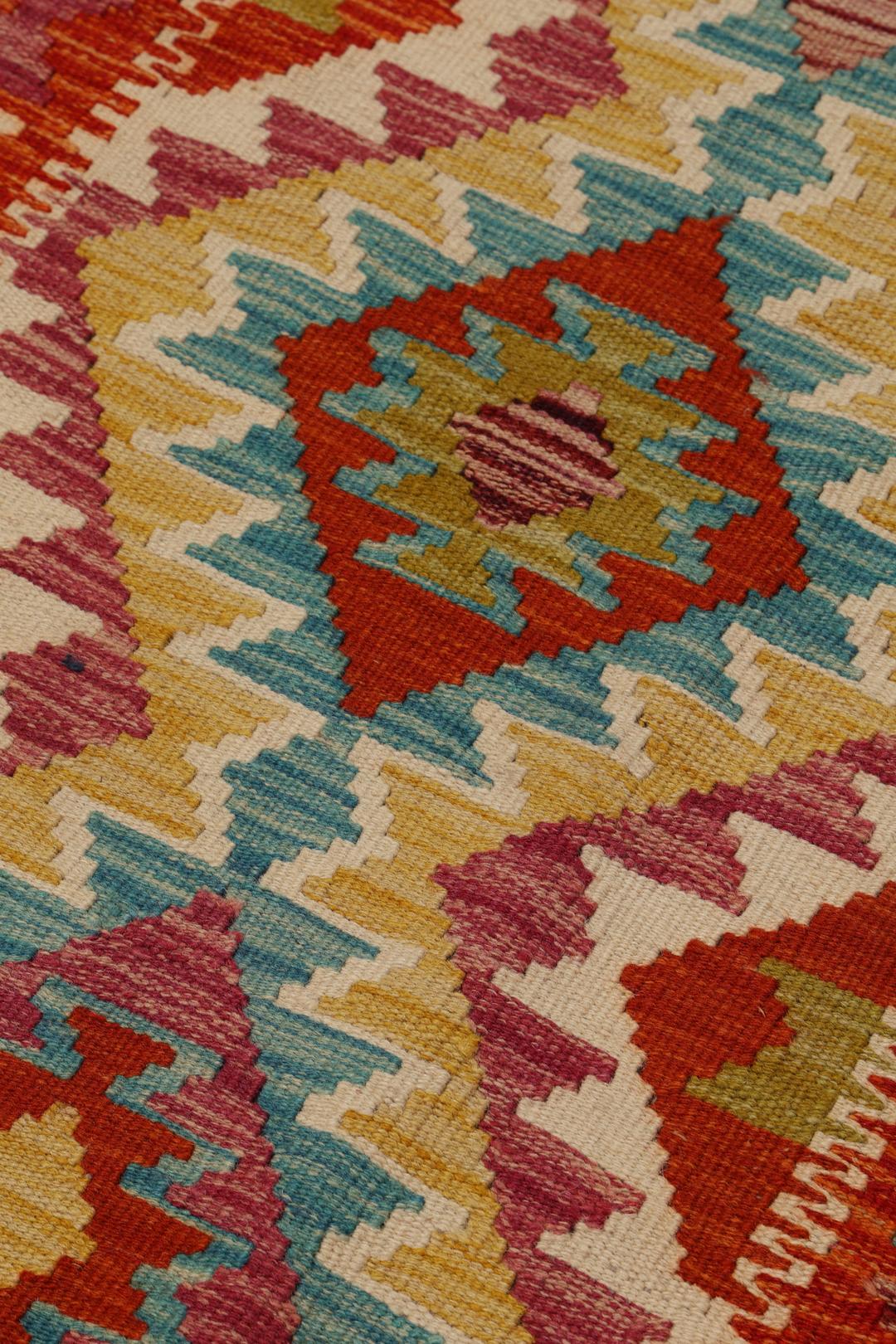
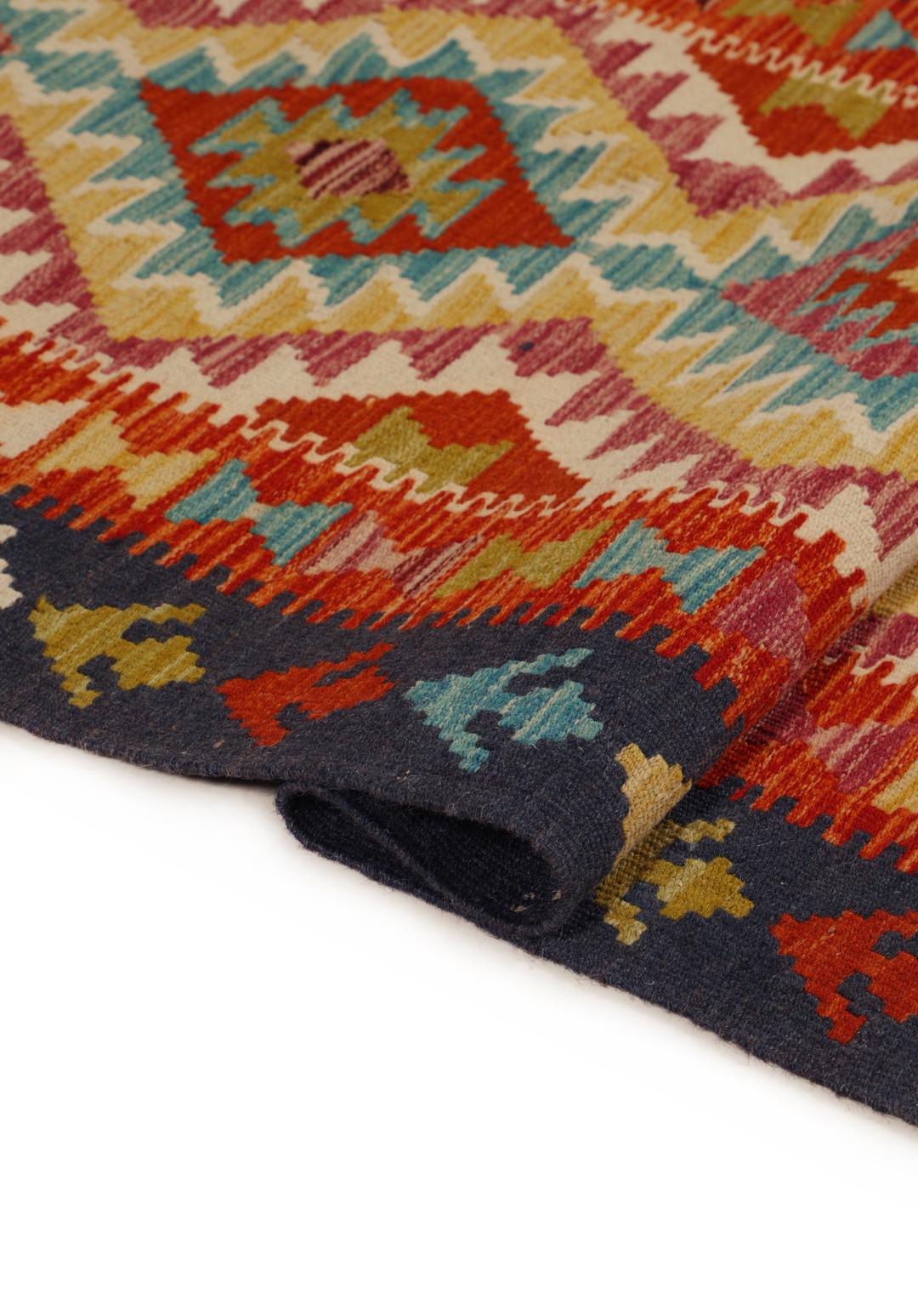
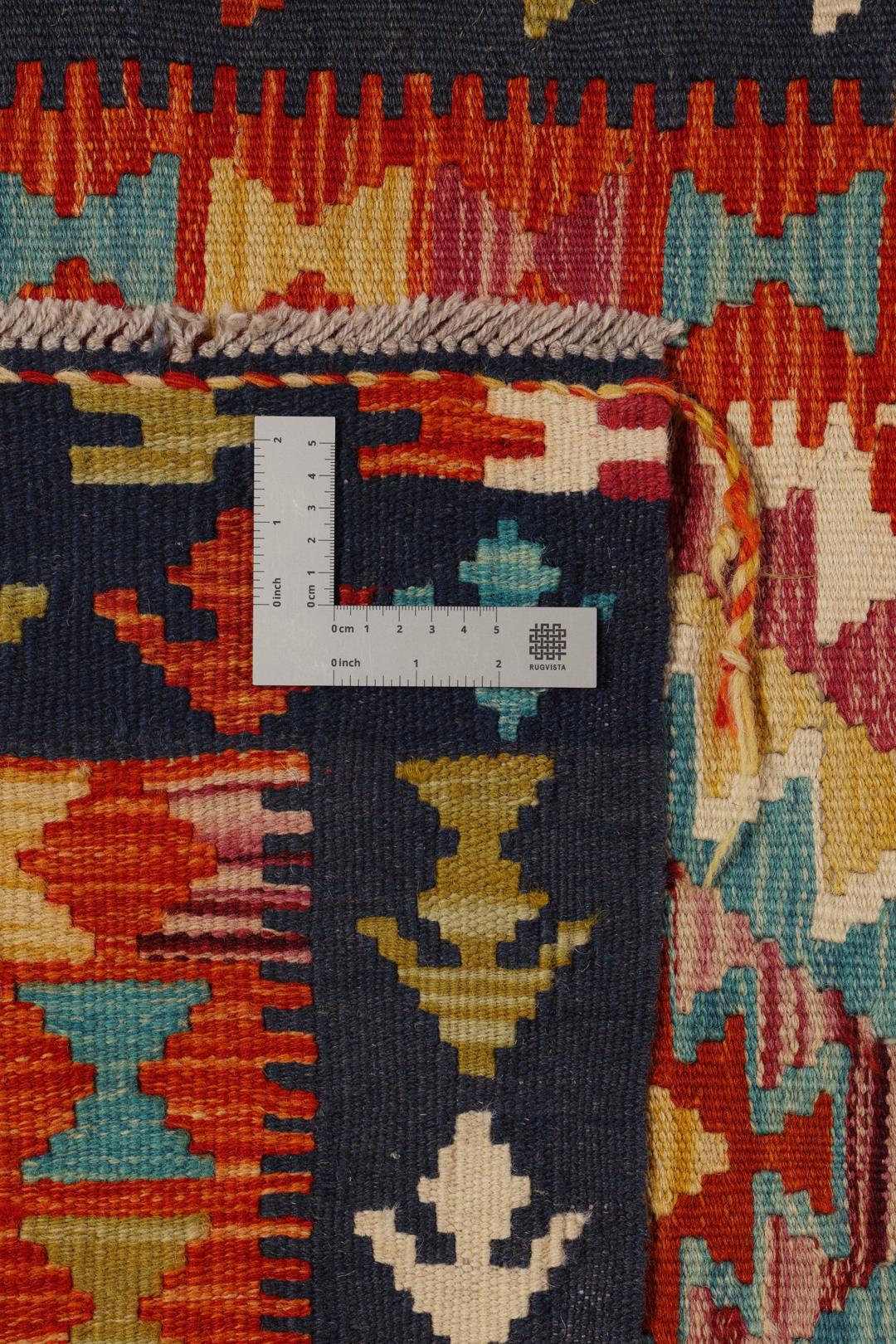
The term 'Kelim' refers to the specific tapestry-weave technique where the weft threads are woven tightly over the warp threads, resulting in a rug without a pile. This method allows for crisp, clean geometric lines and designs that are identical on both sides, a hallmark of skilled weaving traditions that prioritise both form and function.
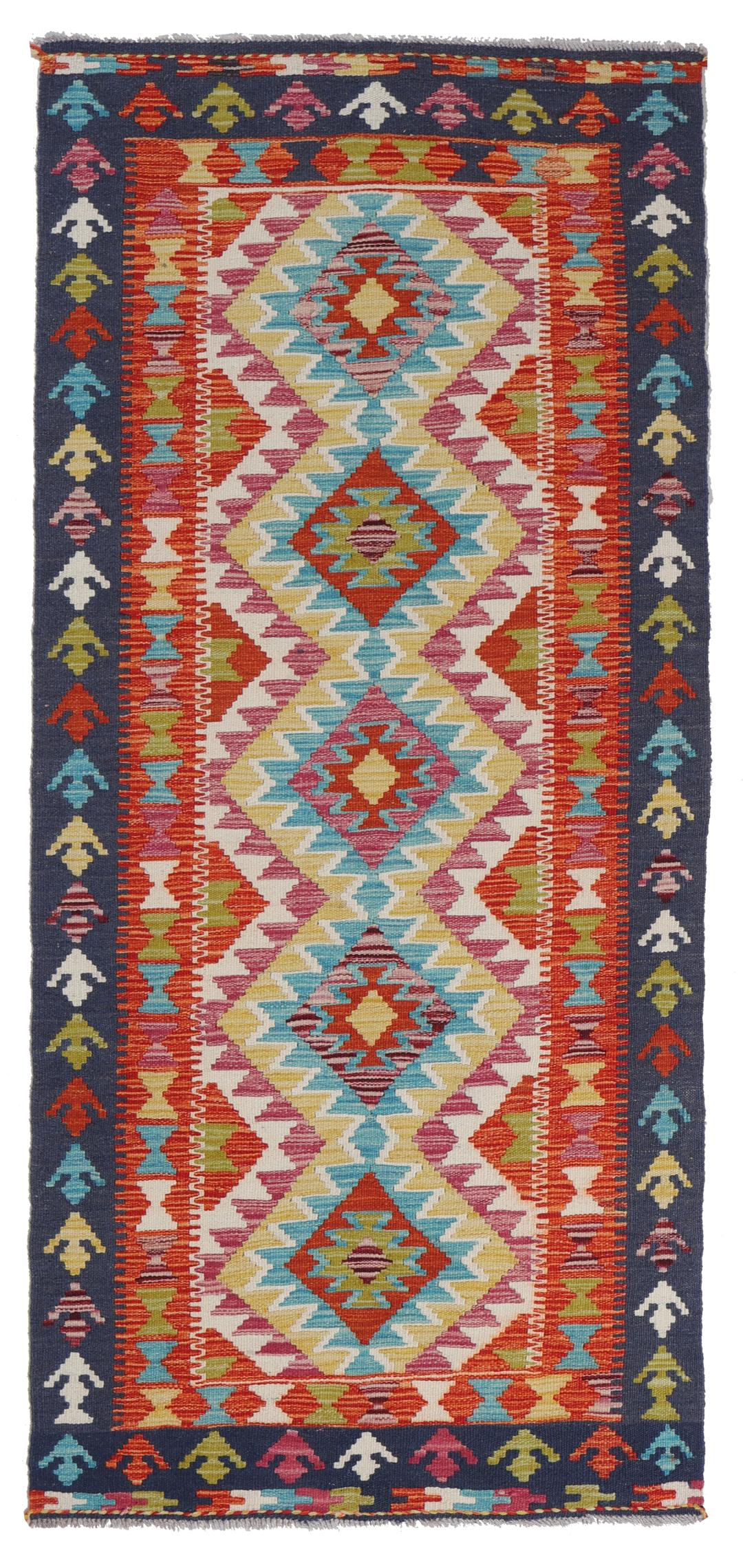
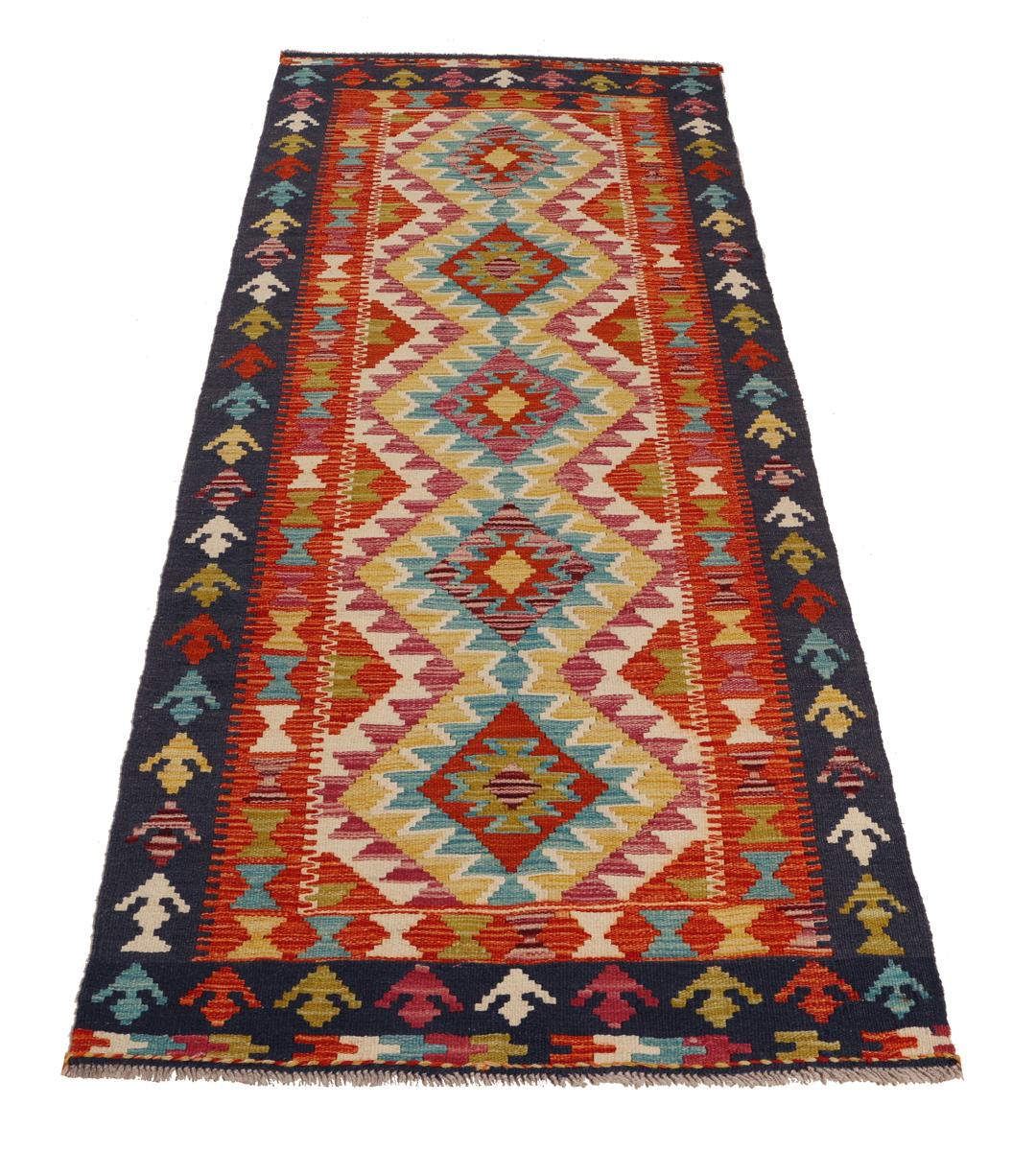
Signature design elements in Afghan Kelims often include bold, repeating diamonds, triangles, and stylised floral motifs that carry symbolic meaning within local cultures. This specific runner utilises a striking colour scheme to highlight its geometric layout, showcasing a style that has been refined over generations of artisans.
Collectors value these rugs for their authenticity and the direct connection they provide to ancient weaving practices. By bringing such a piece into your home, you are not just acquiring a floor covering but a fragment of cultural heritage that honours the skill and creativity of the people who made it.