Kelim rugs have a long and storied history across the Middle East and Central Asia, serving as both essential utility items and expressions of cultural identity. Traditionally, these flat-woven textiles were crafted by nomadic and semi-nomadic tribes for use as floor coverings, wall hangings, and storage bags. The transition from purely functional objects to highly sought-after decorative pieces reflects the global appreciation for the intricate artistry inherent in these nomadic traditions.
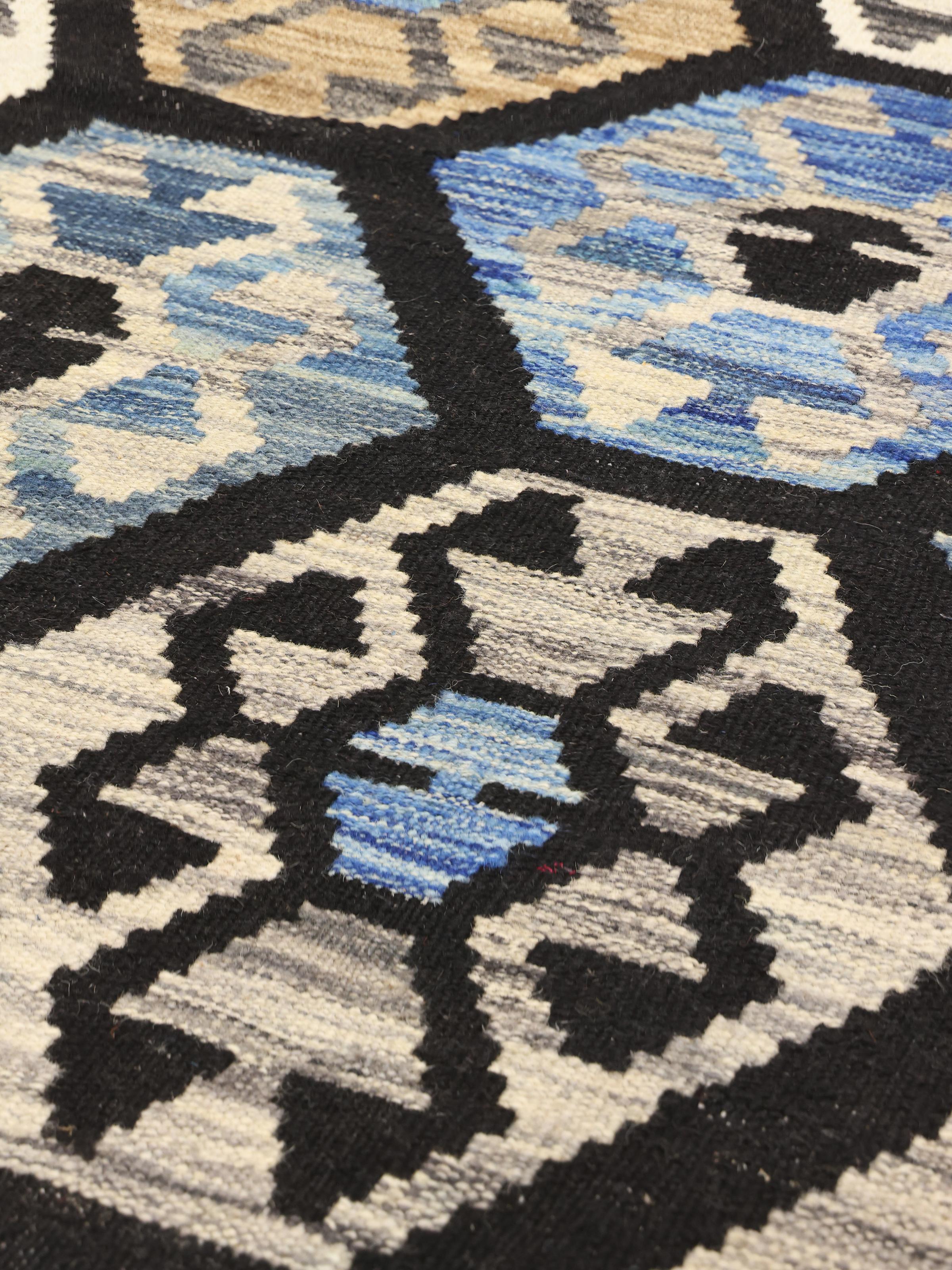
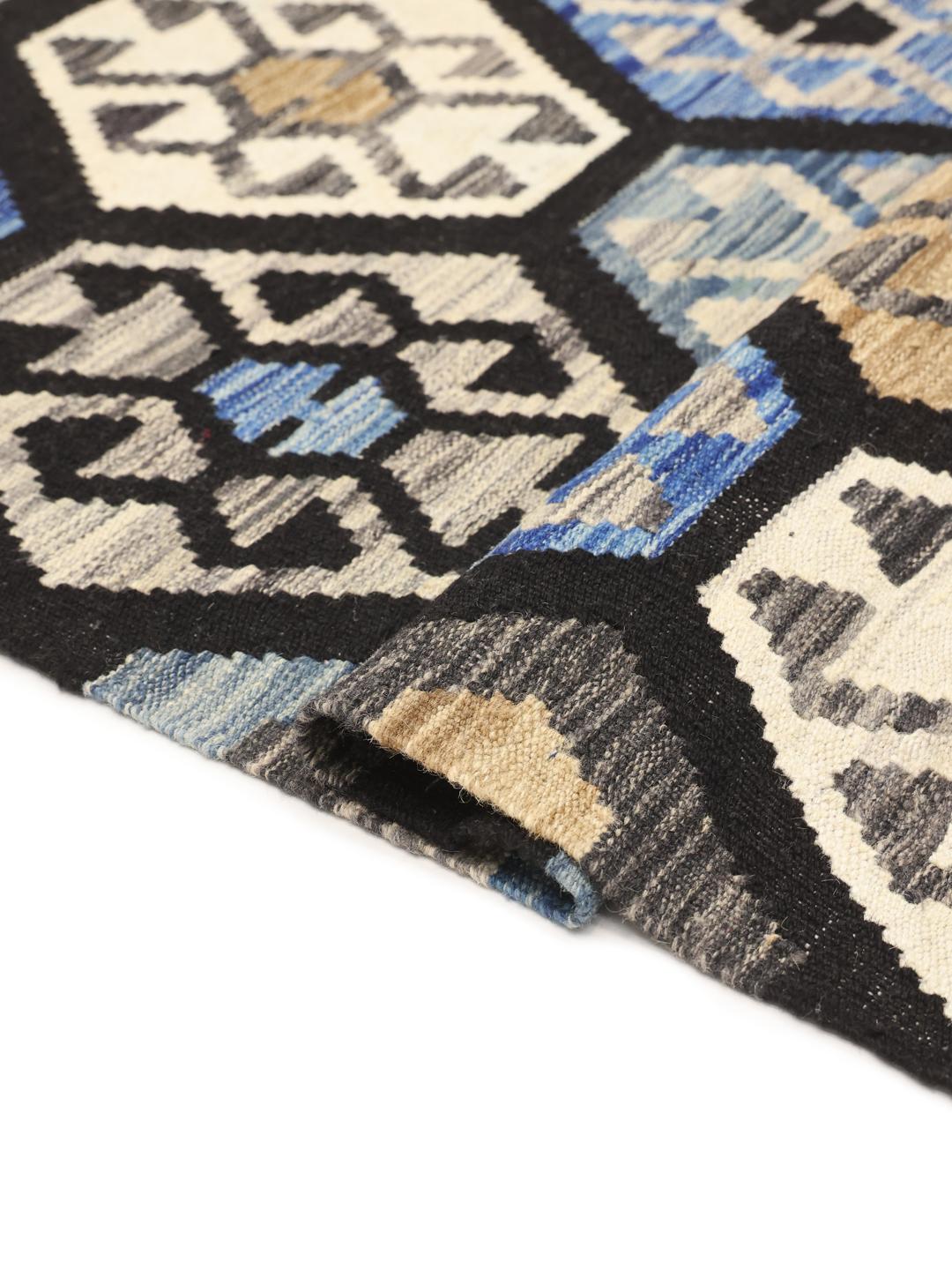
The term 'Kelim' refers specifically to the flat-weaving technique used, where the weft and warp threads are interlaced to create a smooth, pileless surface. This method is distinct from knotted rugs, as it relies on the precision of the weaver to create the patterns directly through the weave. This technique allows for the creation of crisp, graphic designs that are often mirrored or repeated, highlighting the weaver's ability to master complex geometric layouts without the need for a pile.
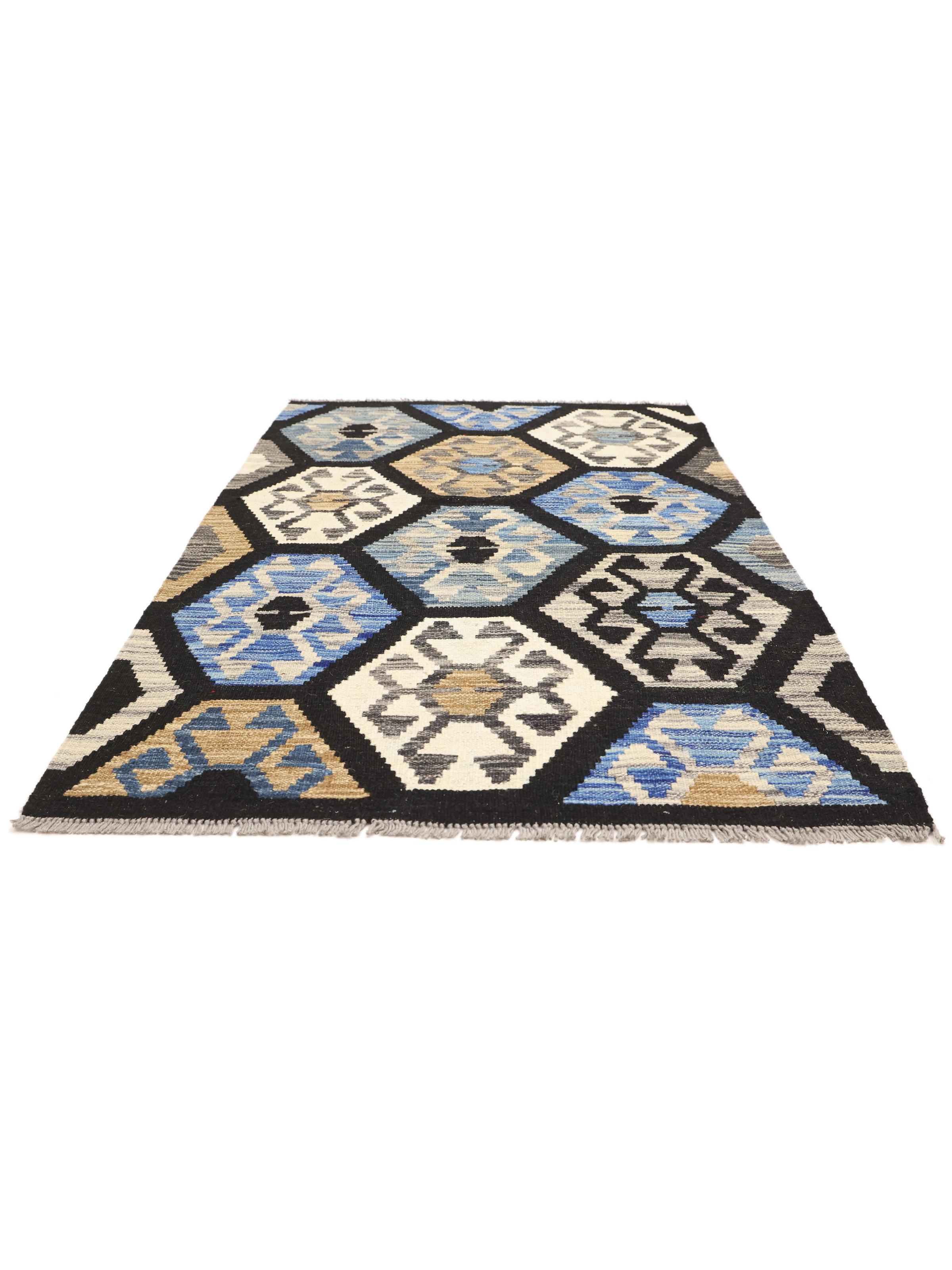
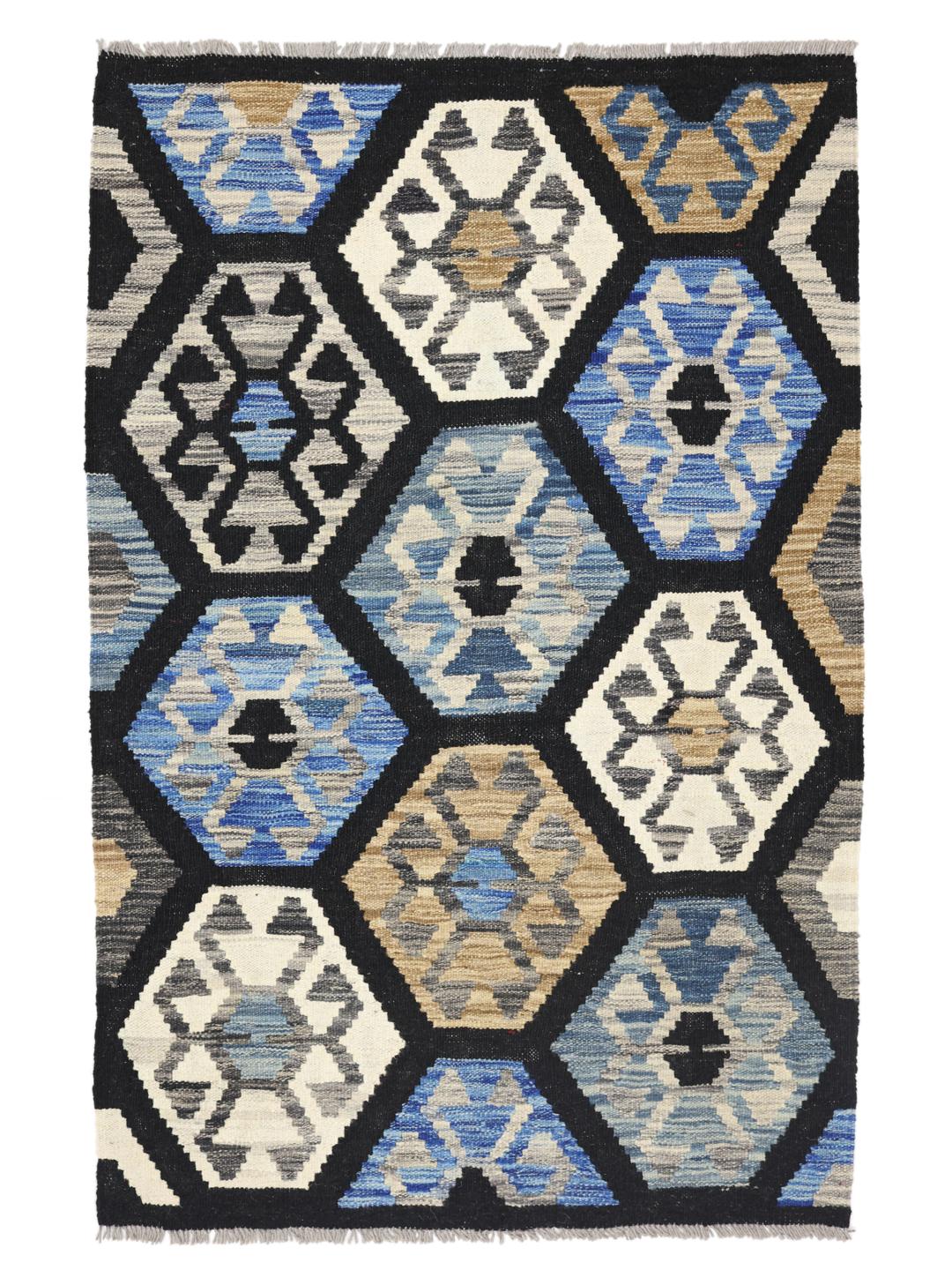
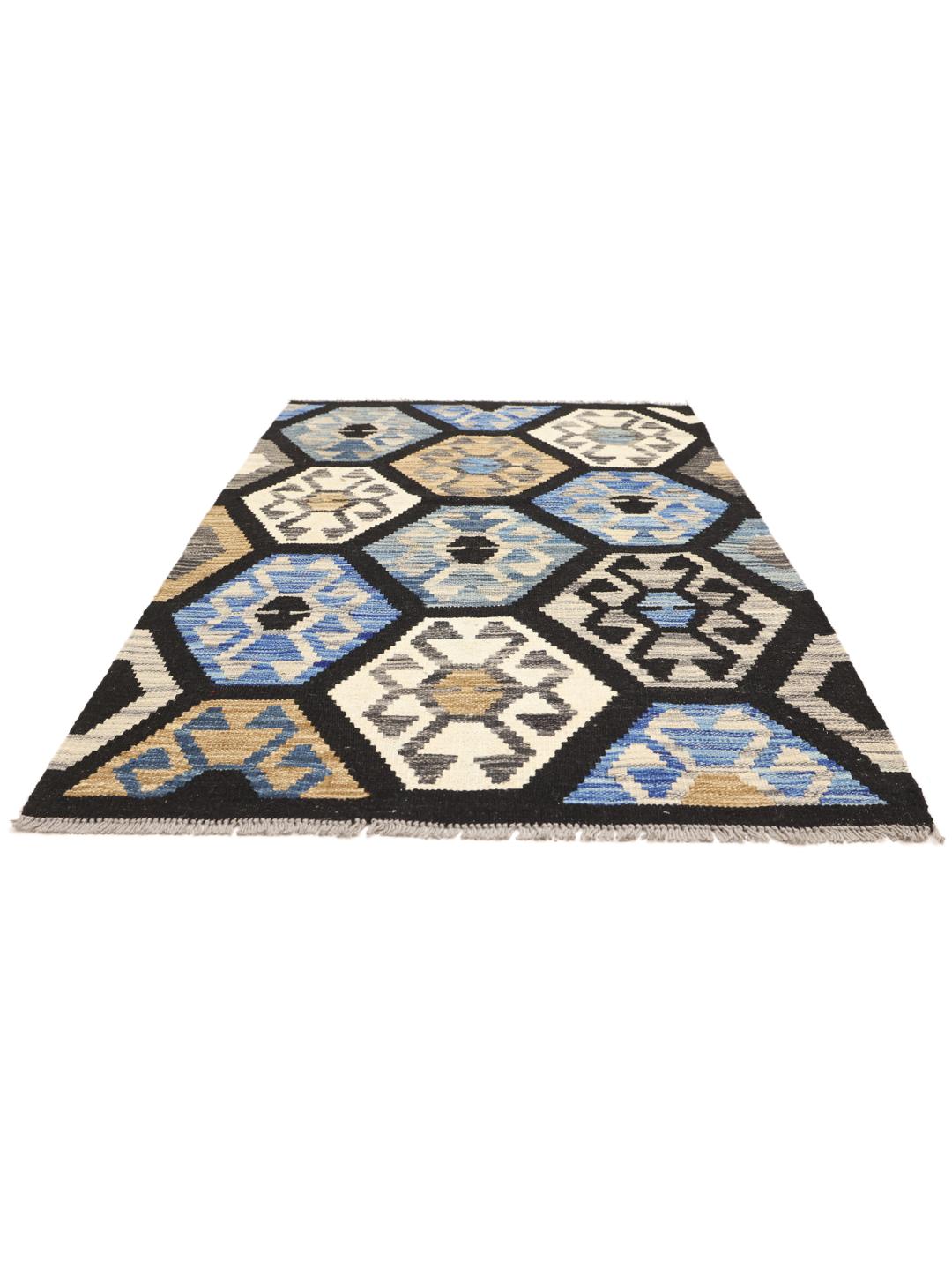
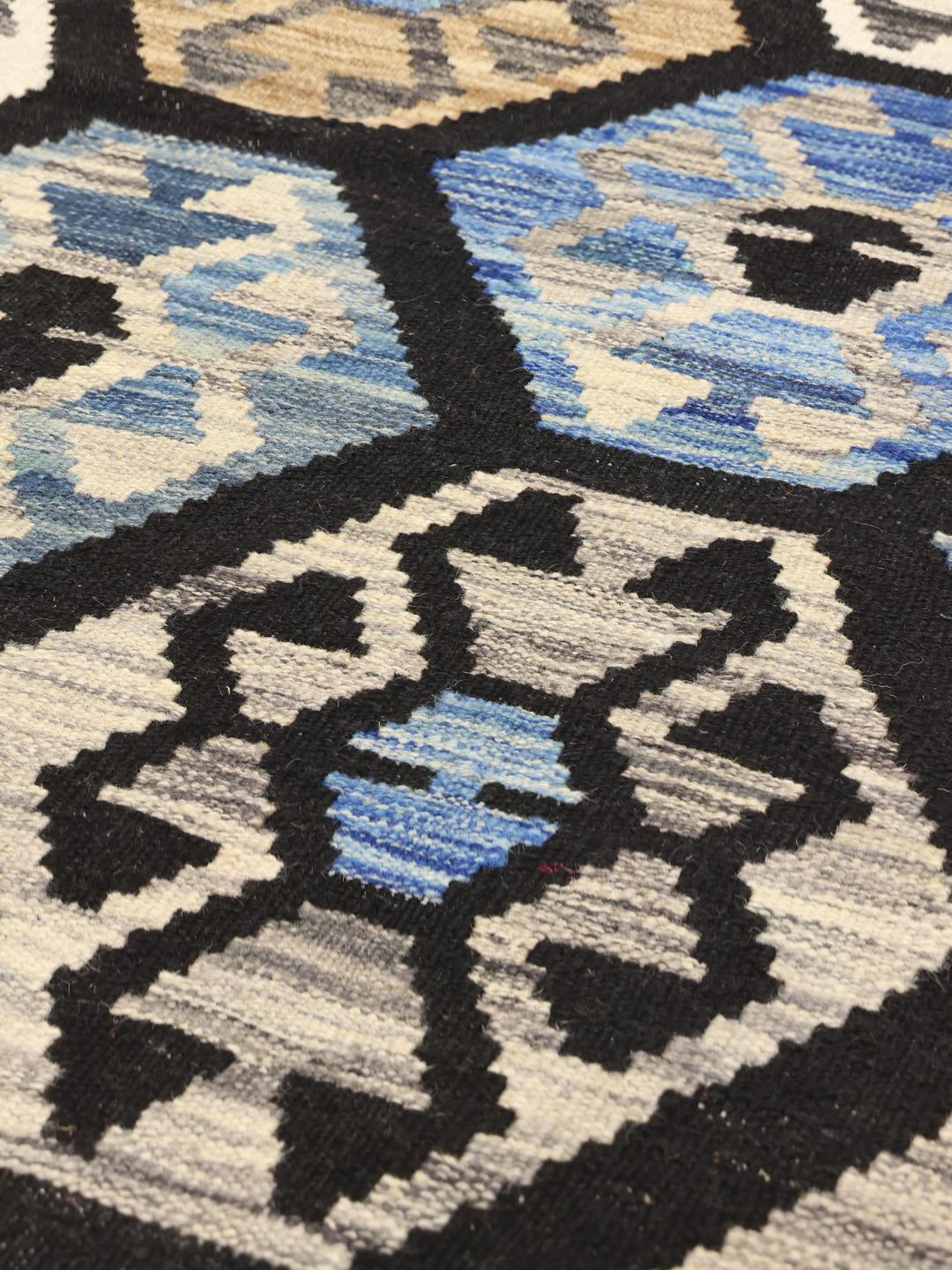
The design language of this Afghan Kelim is defined by its bold, modular motifs. The geometric honeycomb structure is a classic signature, often utilised to symbolise harmony and connection within the tribal community. The use of natural, earthy tones paired with vibrant blues is a hallmark of the regional colour palette, which historically relied on locally sourced dyes to achieve rich, deep hues that age gracefully over time.
Collecting a Kelim is an investment in human skill and regional history. These rugs are valued not just for their aesthetic beauty, but for the cultural narrative they carry. By owning this piece, you are preserving a legacy of craft that prioritises patience, precision, and an eye for balance. It is a testament to the enduring appeal of handmade textiles in a world of standardised goods, offering a layer of authenticity that elevates any home.