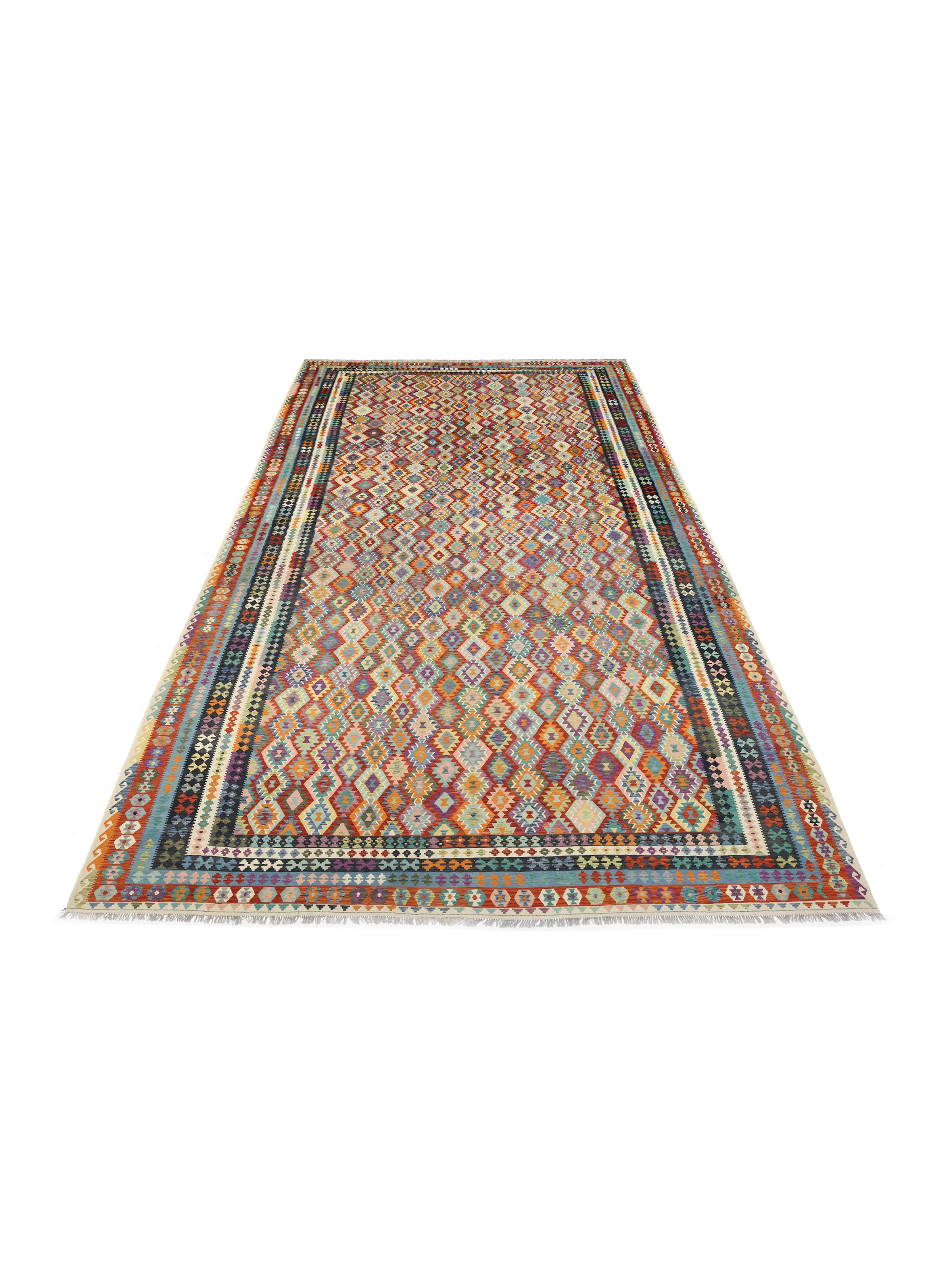
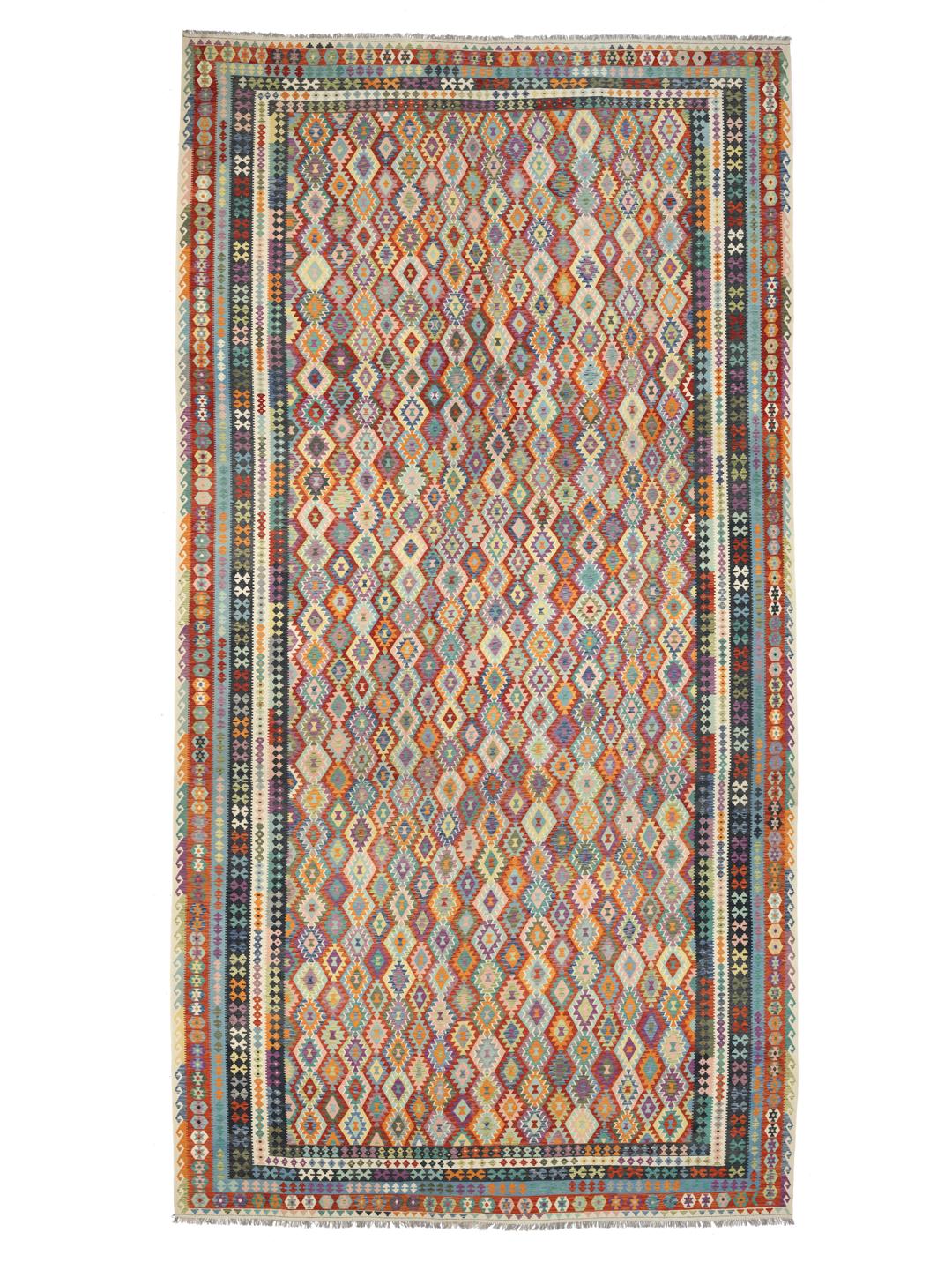
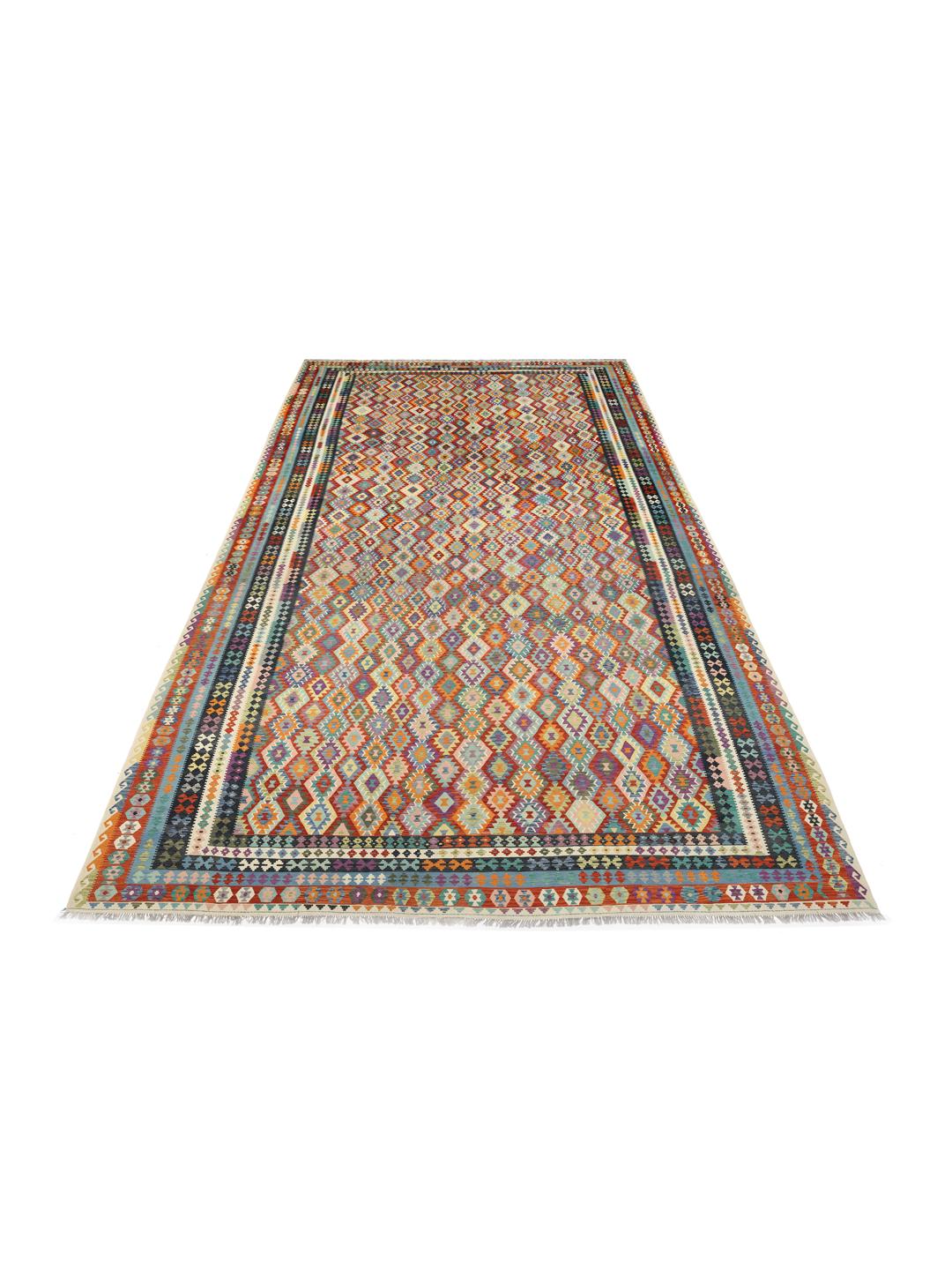
The Kelim tradition in Afghanistan is deeply embedded in the cultural fabric of the region. These rugs are not merely floor coverings but are historical documents that carry the stories, symbols, and artistic expressions of the nomadic and semi-nomadic tribes of the Middle East. For centuries, these weaving communities have used their craft to translate the landscapes and traditions of their heritage into tangible, functional art.
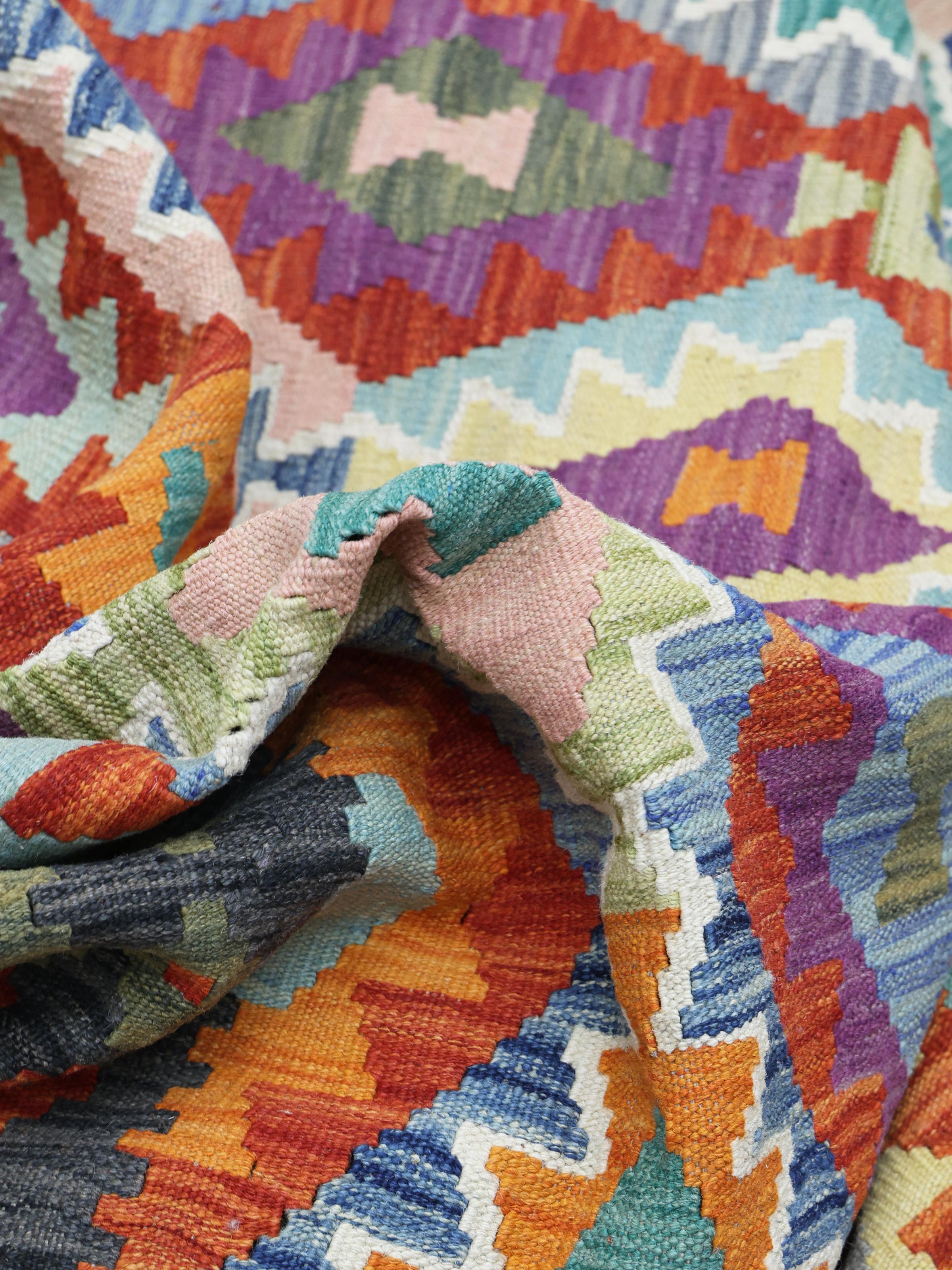
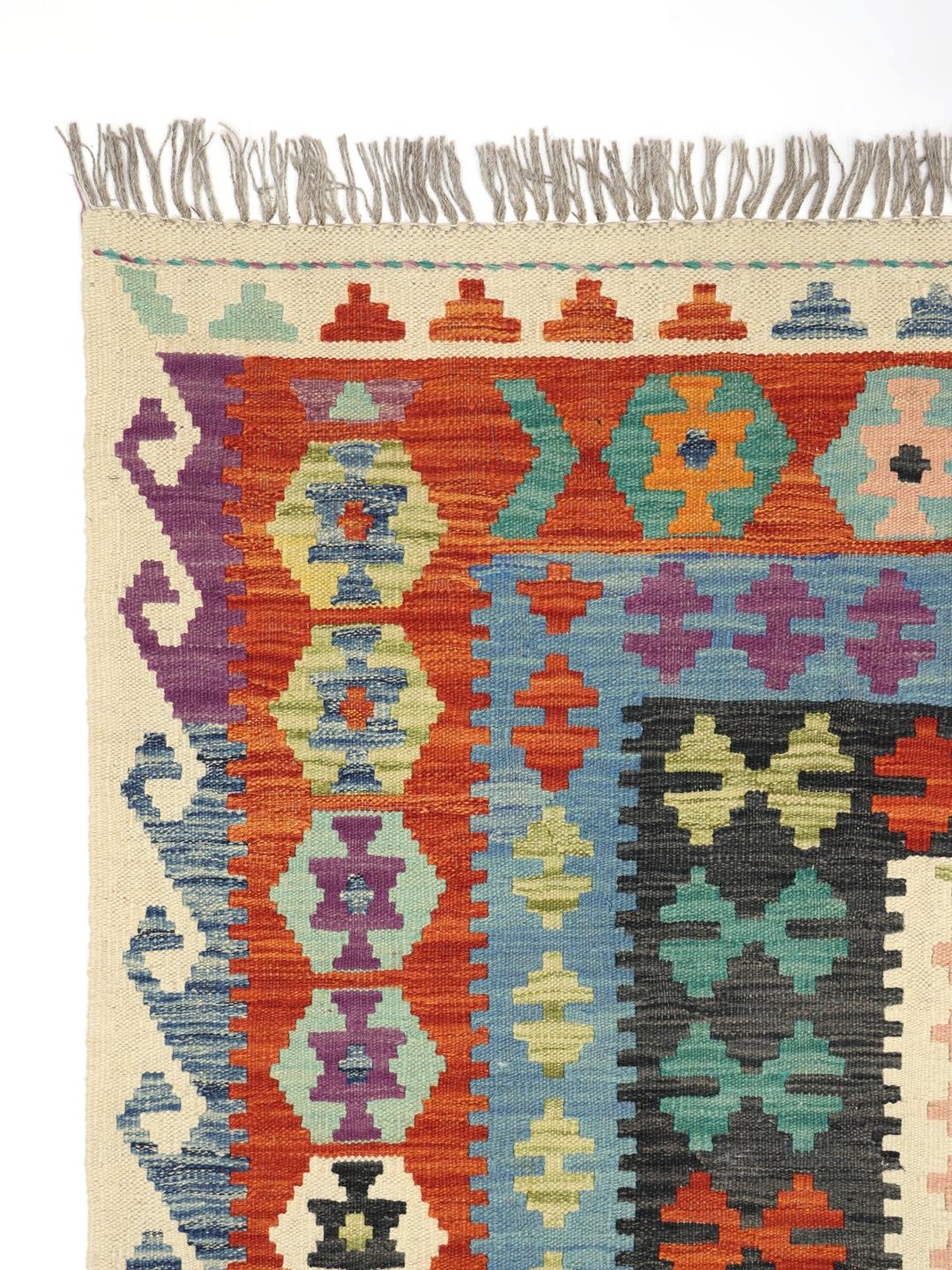
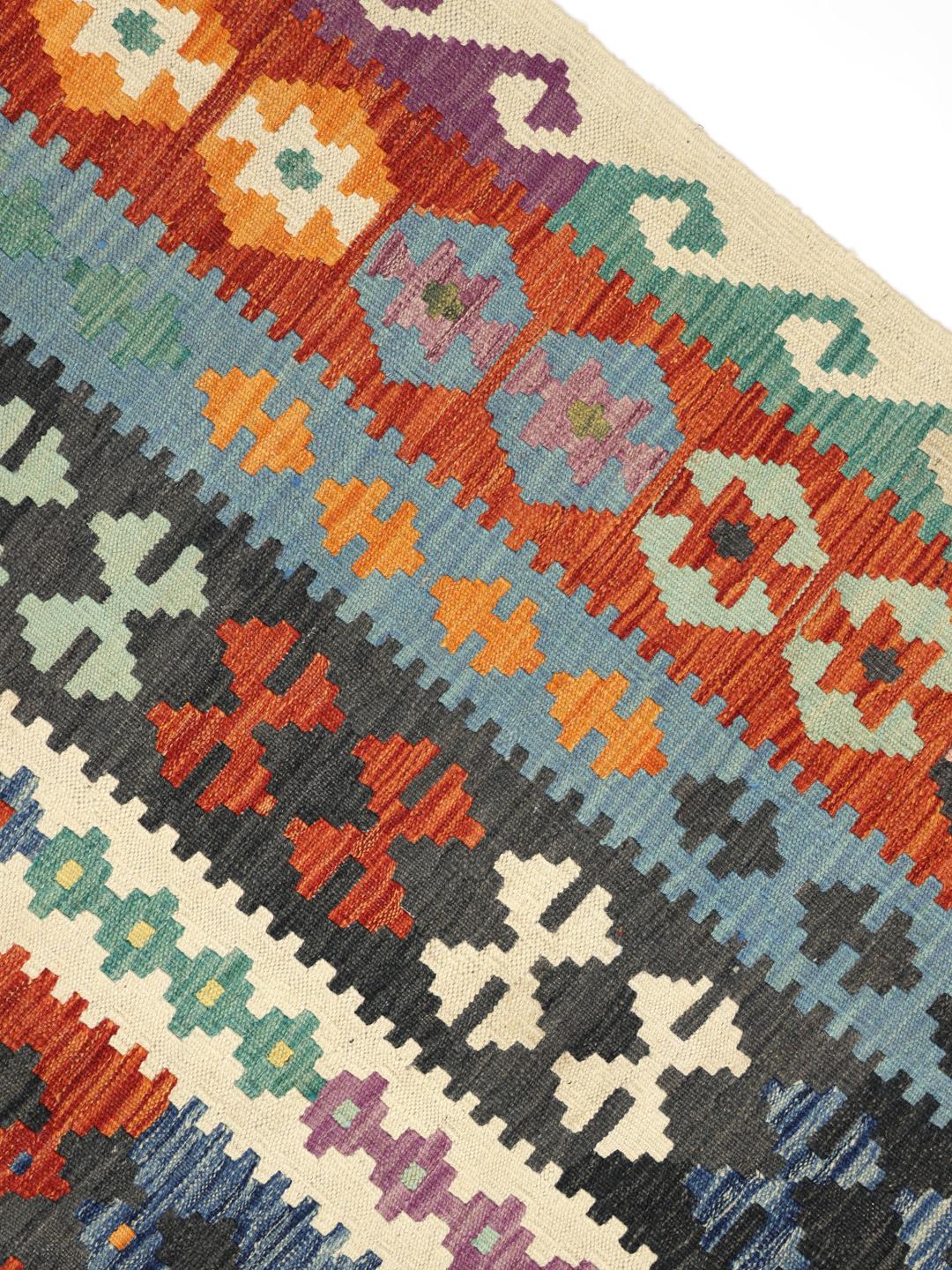
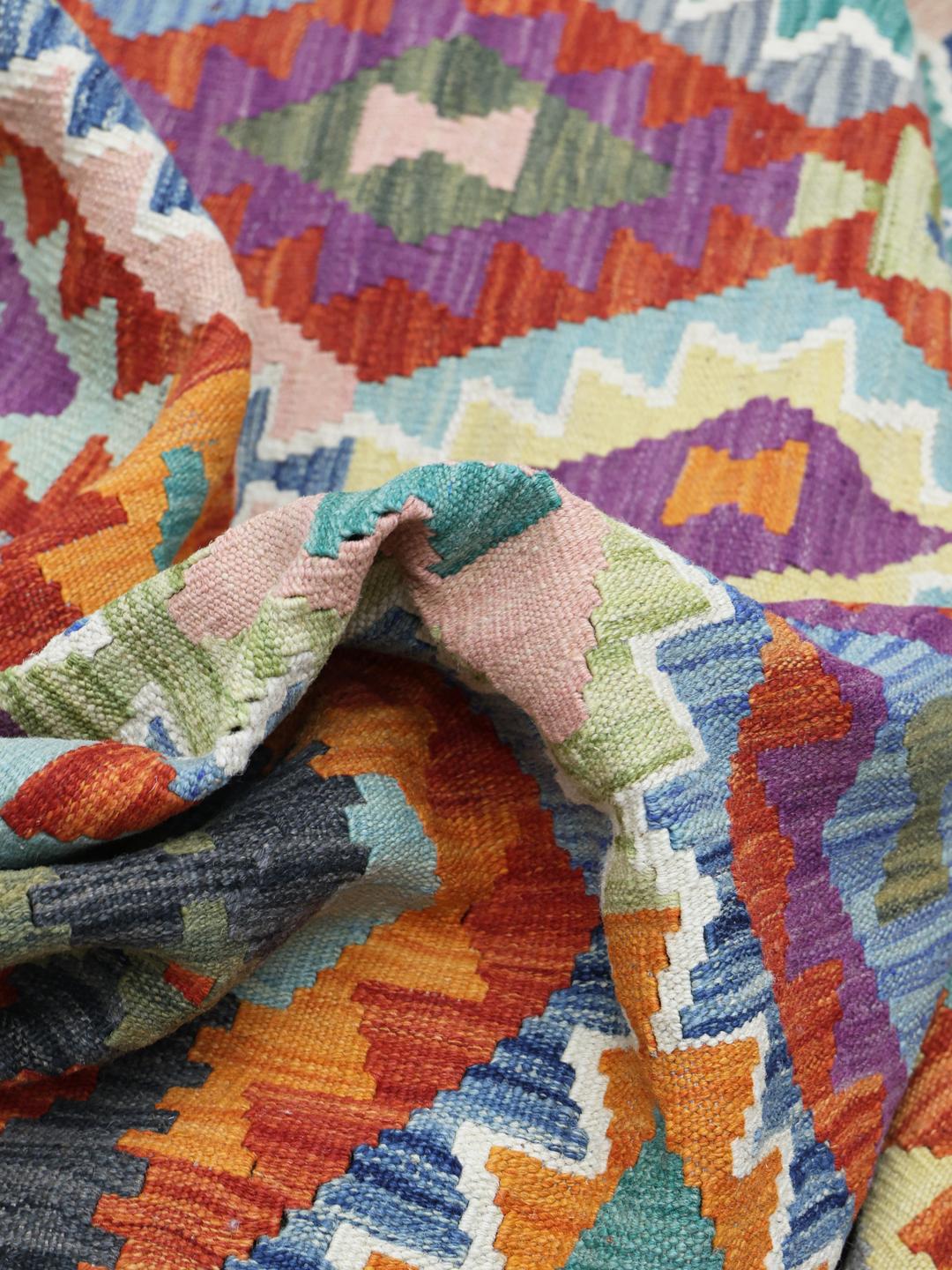
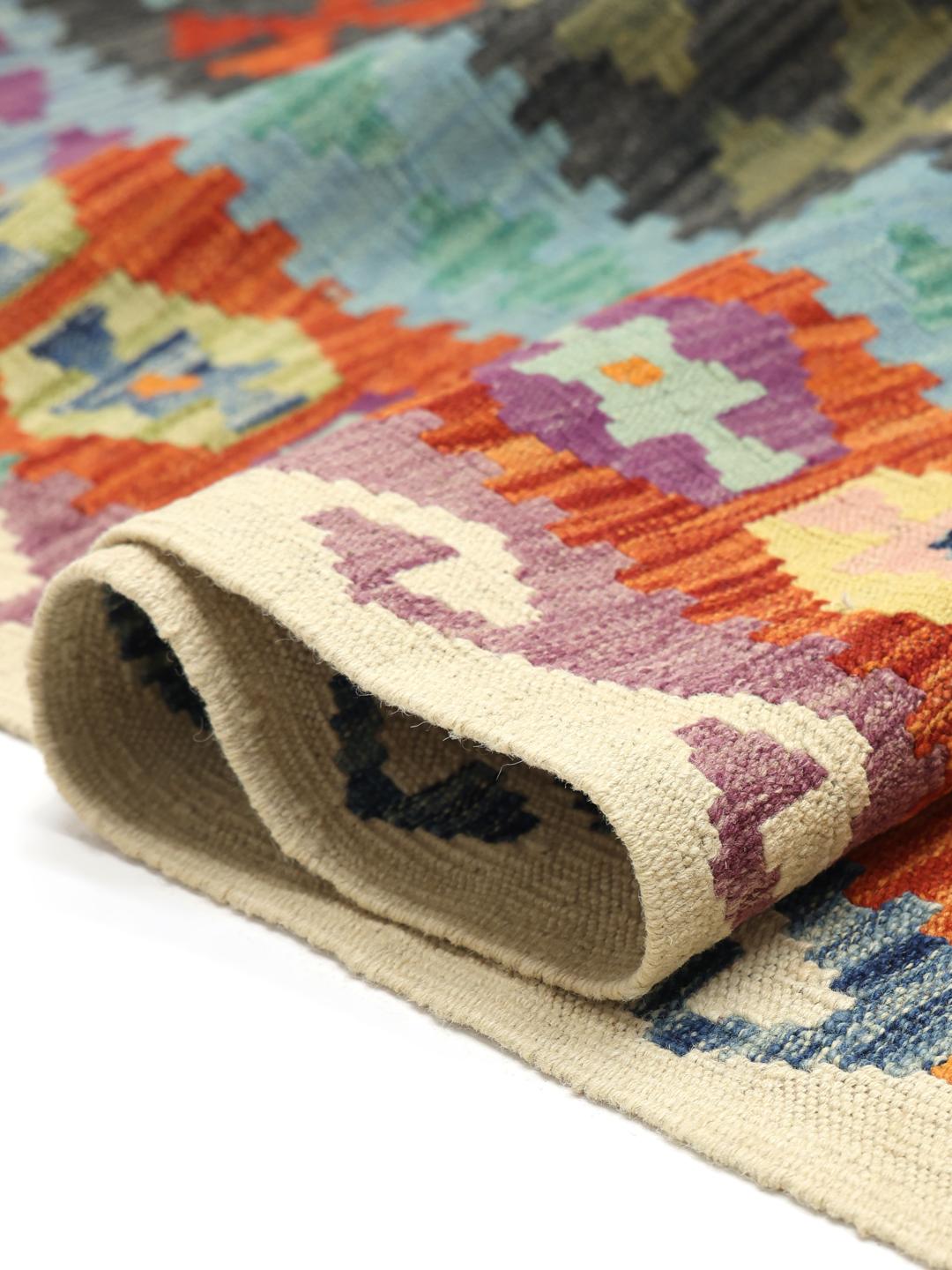
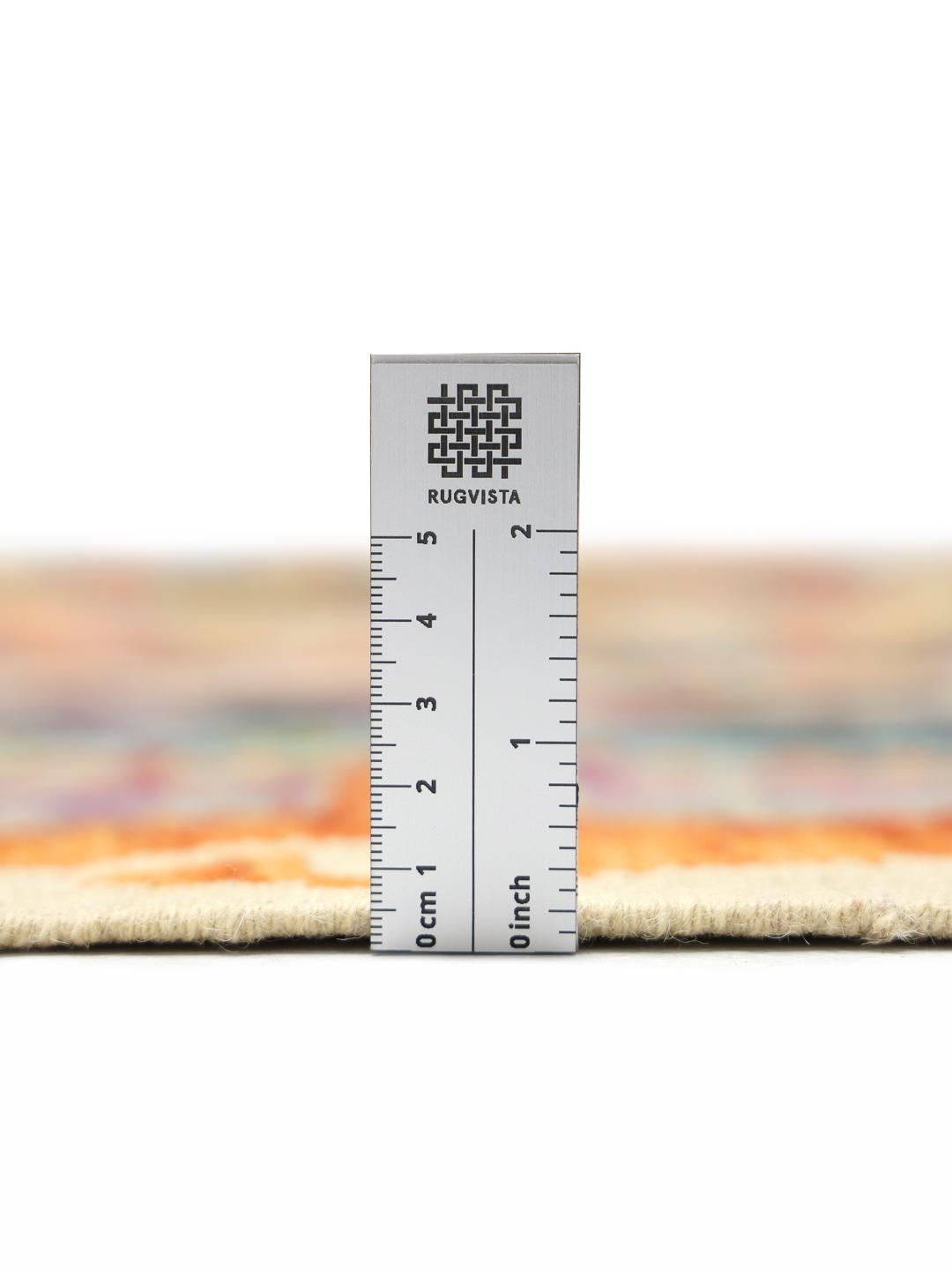
A Kelim is defined by its flat-weave construction, which distinguishes it from pile rugs. This technique involves wrapping the weft threads around the warp threads to create the design, resulting in a rug that is lightweight yet incredibly strong. This method allows for the sharp, clean lines and intricate geometric patterns that are characteristic of the style, making it a versatile choice for a variety of home settings.
The visual language of this tradition is built upon a foundation of geometric motifs, often including diamonds, triangles, and complex border designs. These patterns are not arbitrary; they are often symbolic, representing protection, fertility, or the natural environment. The vibrant palette used here is typical of Afghan weaving, which often features deep, earthy tones contrasted with brighter accent colours that have been refined over generations to achieve a balanced, harmonious look.
Collecting a piece from this tradition is an investment in cultural heritage. These rugs are highly valued for their authenticity and the skill required to maintain the integrity of such complex, large-scale patterns without the aid of modern technology. To own this rug is to become a custodian of a timeless craft, bringing a piece of history and human connection into your living space.