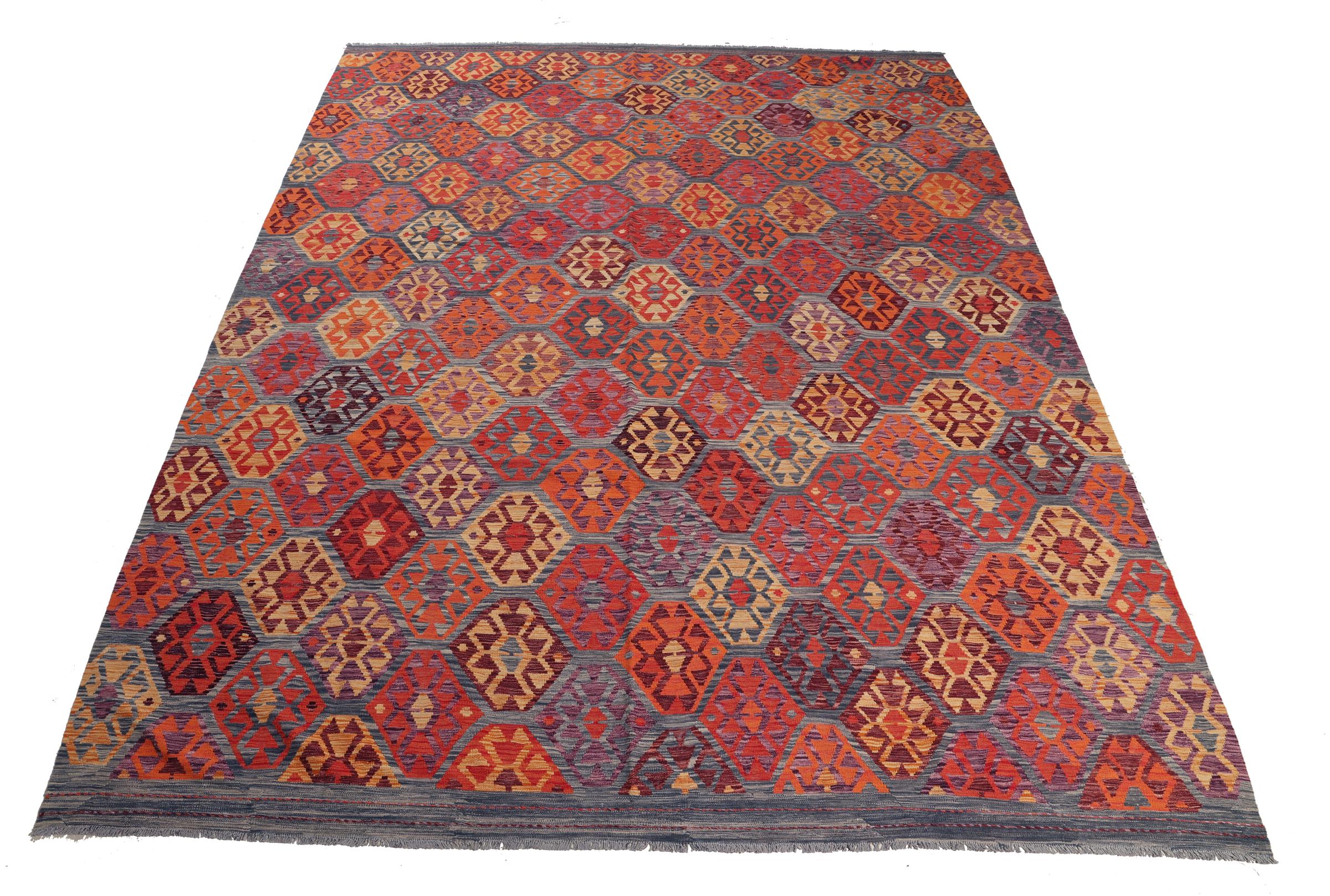
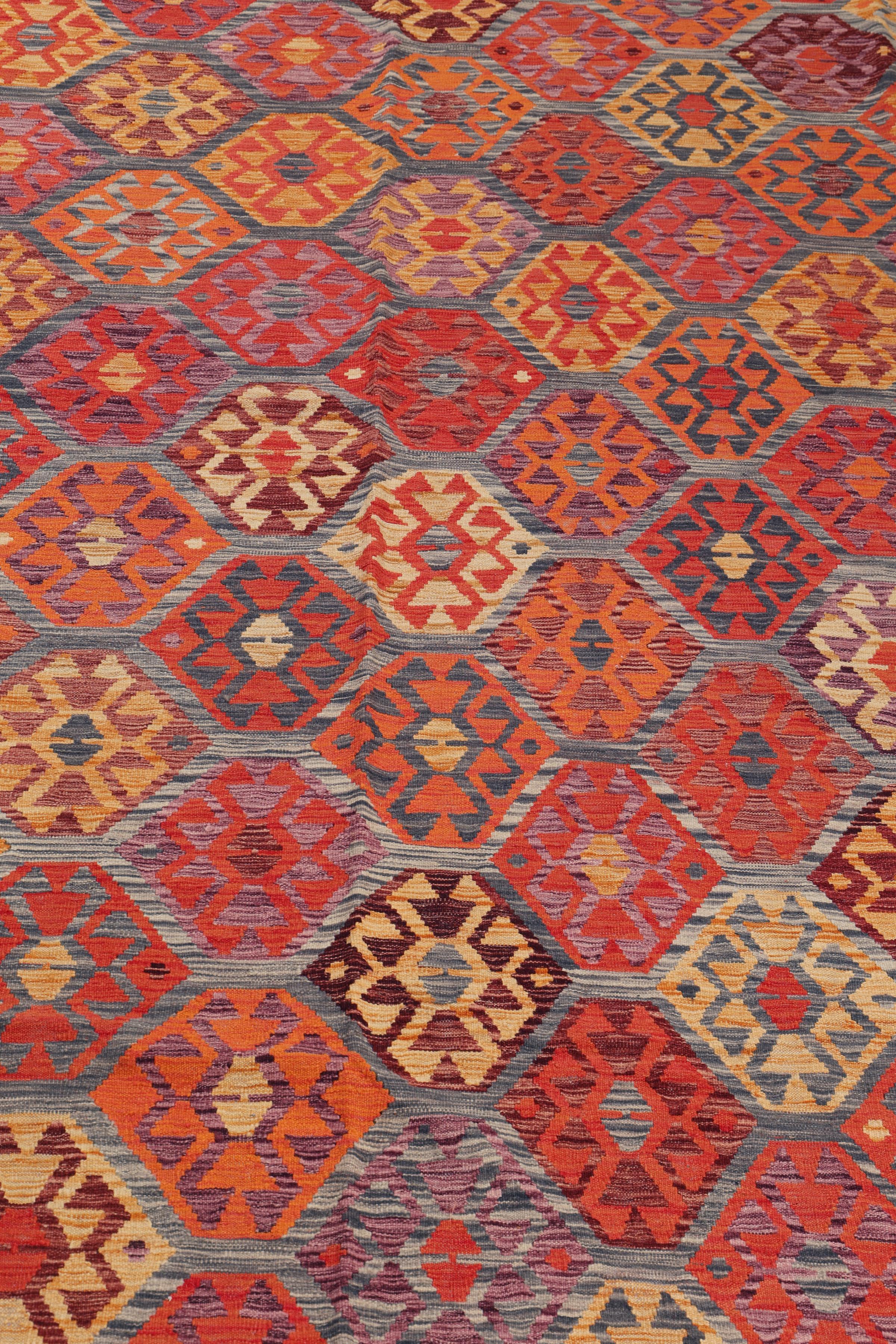
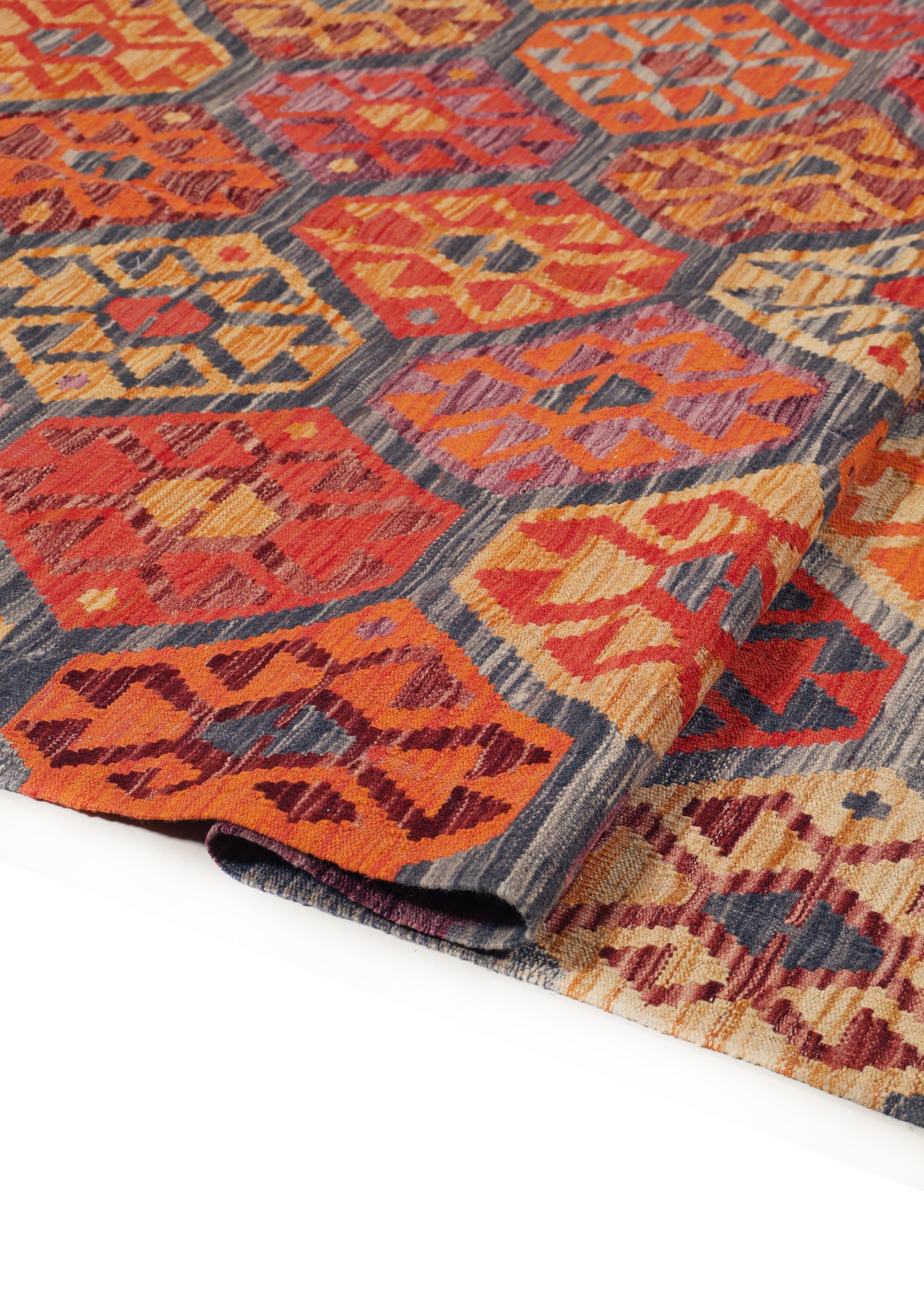
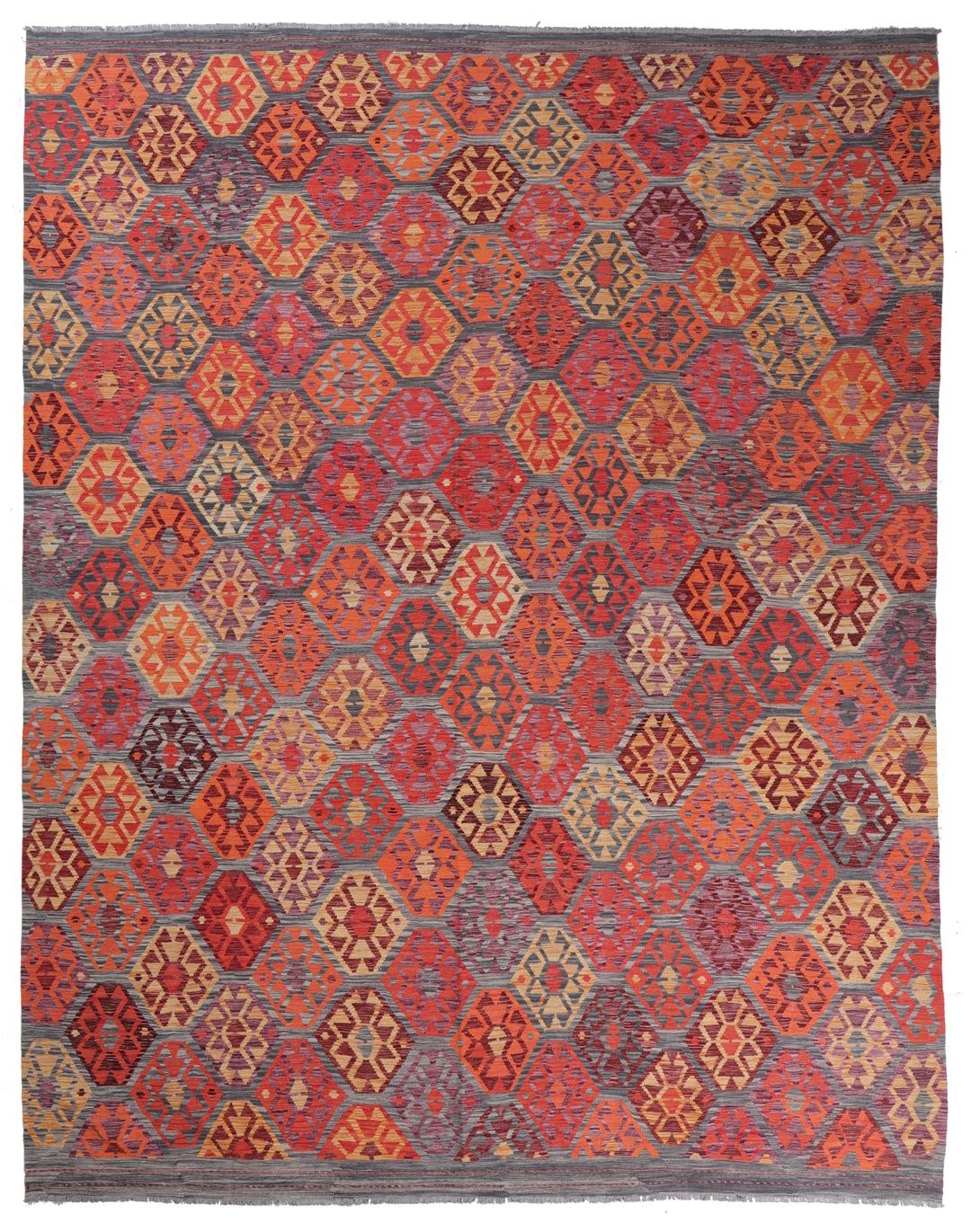
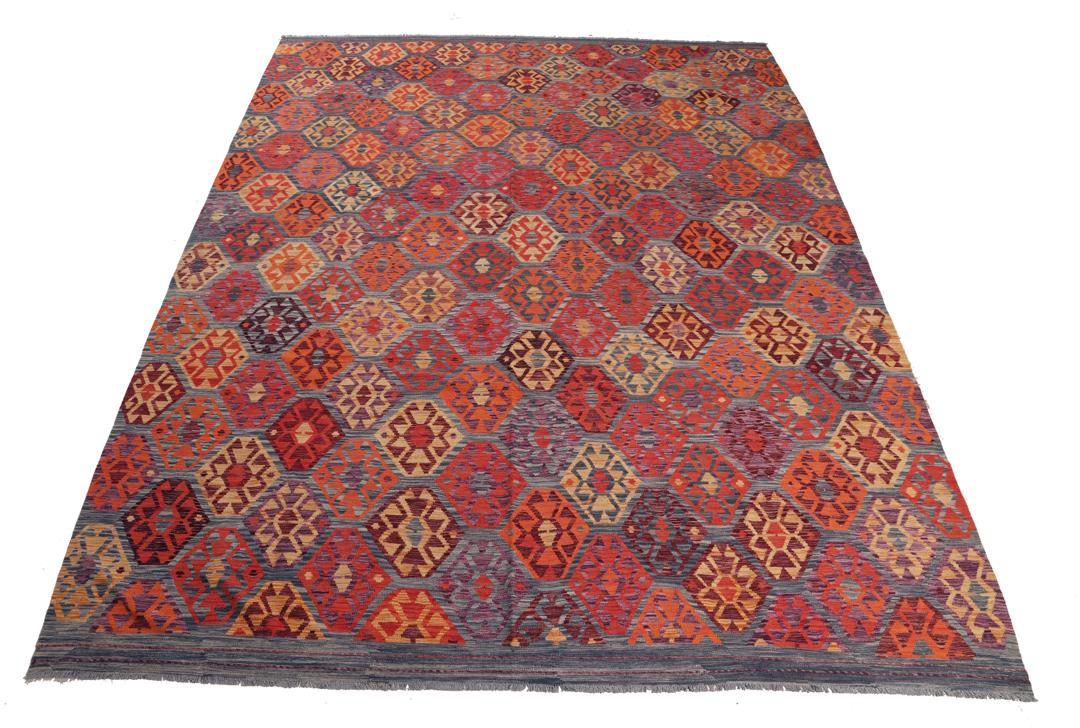
Kelim rugs have long been a fundamental part of life across the Middle East and Central Asia. These flat-woven textiles, originating from nomadic traditions, were historically designed to be portable, durable, and versatile, serving as floor coverings, wall hangings, or storage bags for travelling families.
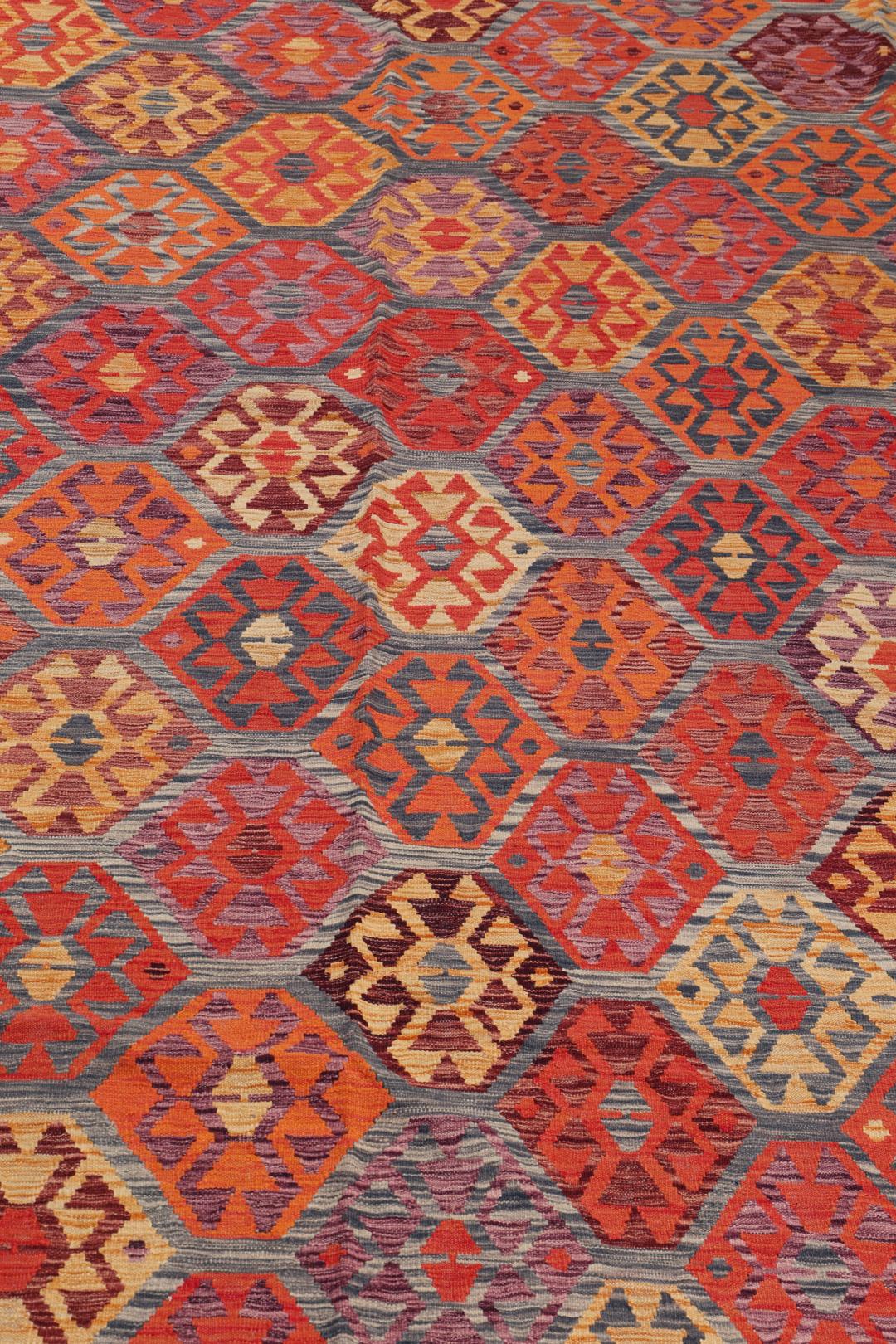
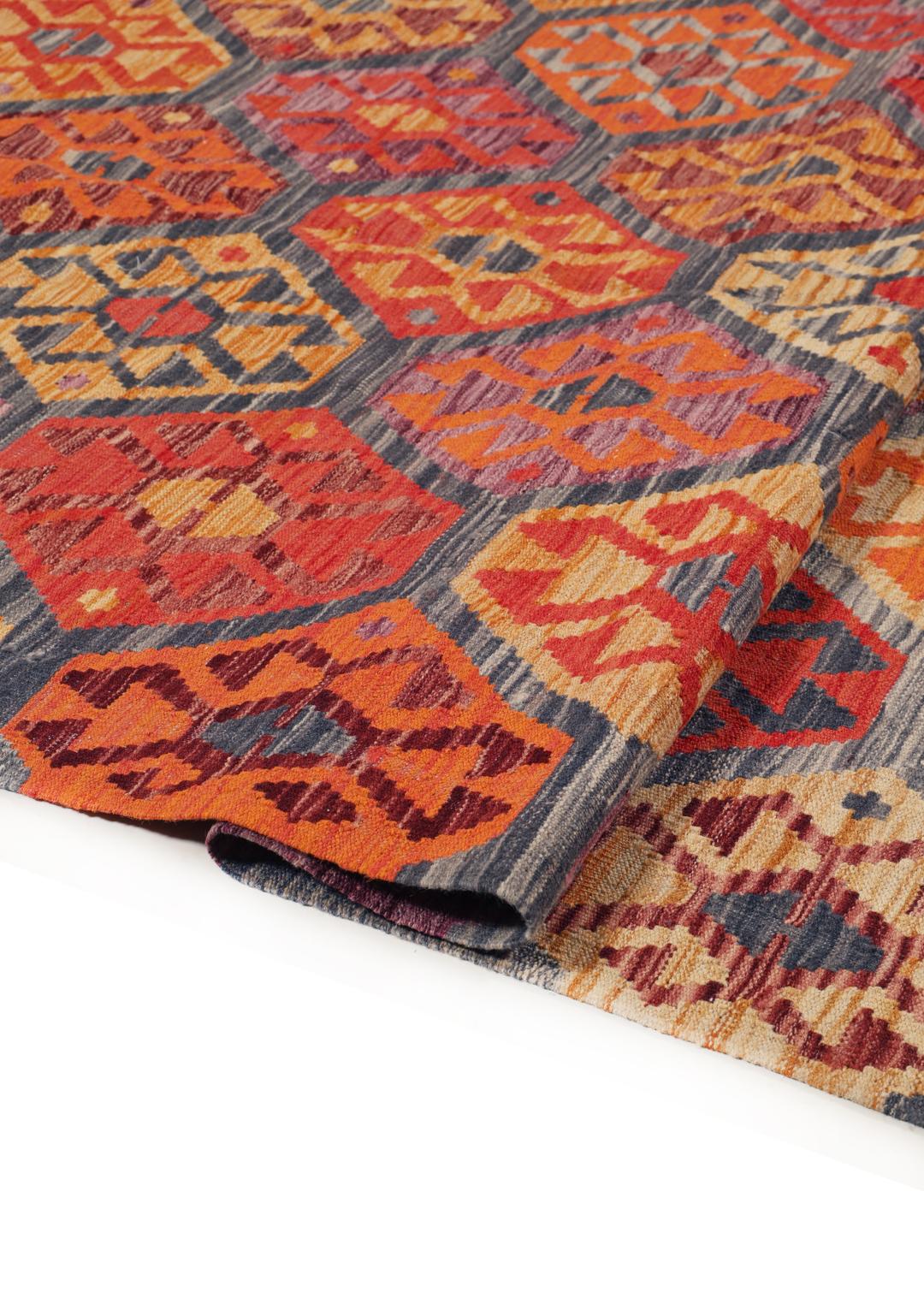
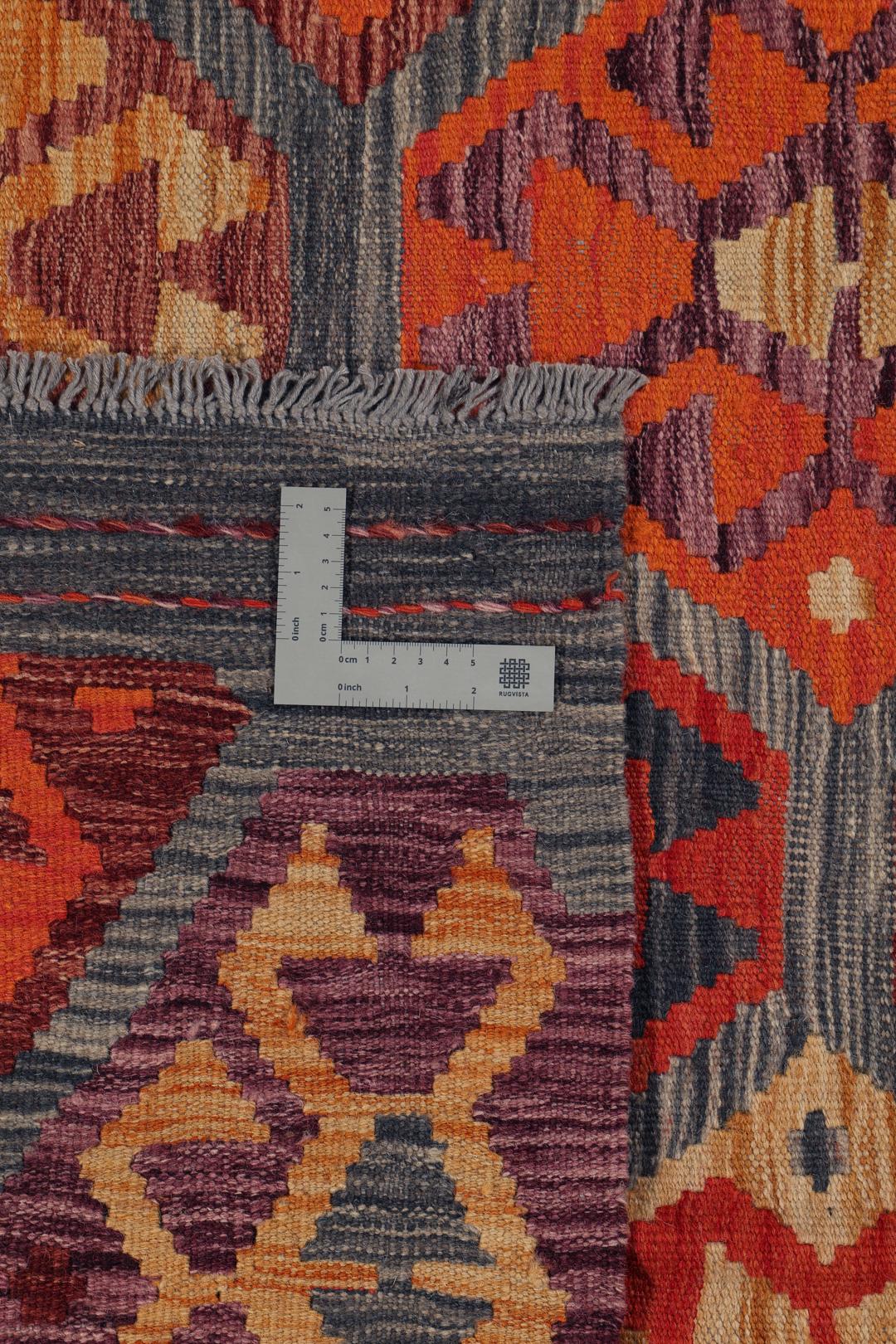
The term 'Kelim' refers specifically to the tapestry-weaving technique where the weft threads are passed through the warp to create the design, resulting in a rug without a pile. This method is highly valued for its ability to produce crisp, clear geometric patterns while maintaining a lightweight yet incredibly robust construction.
Signature design elements in Afghan Kelims often revolve around bold, repeating geometric motifs that hold cultural significance. These patterns are frequently defined by sharp angles and interconnected shapes, often rendered in a palette of warm, earthy tones derived from natural dyes. The border work is typically formal and restrained, acting as a frame that highlights the complexity of the central field.
Owning an Afghan Kelim is more than just selecting a floor covering; it is an act of preserving a heritage of skill and artistic expression. These rugs are collected for their ability to bring a sense of history and human connection into a modern home, representing a level of craftsmanship that remains unmatched by modern industrial methods.