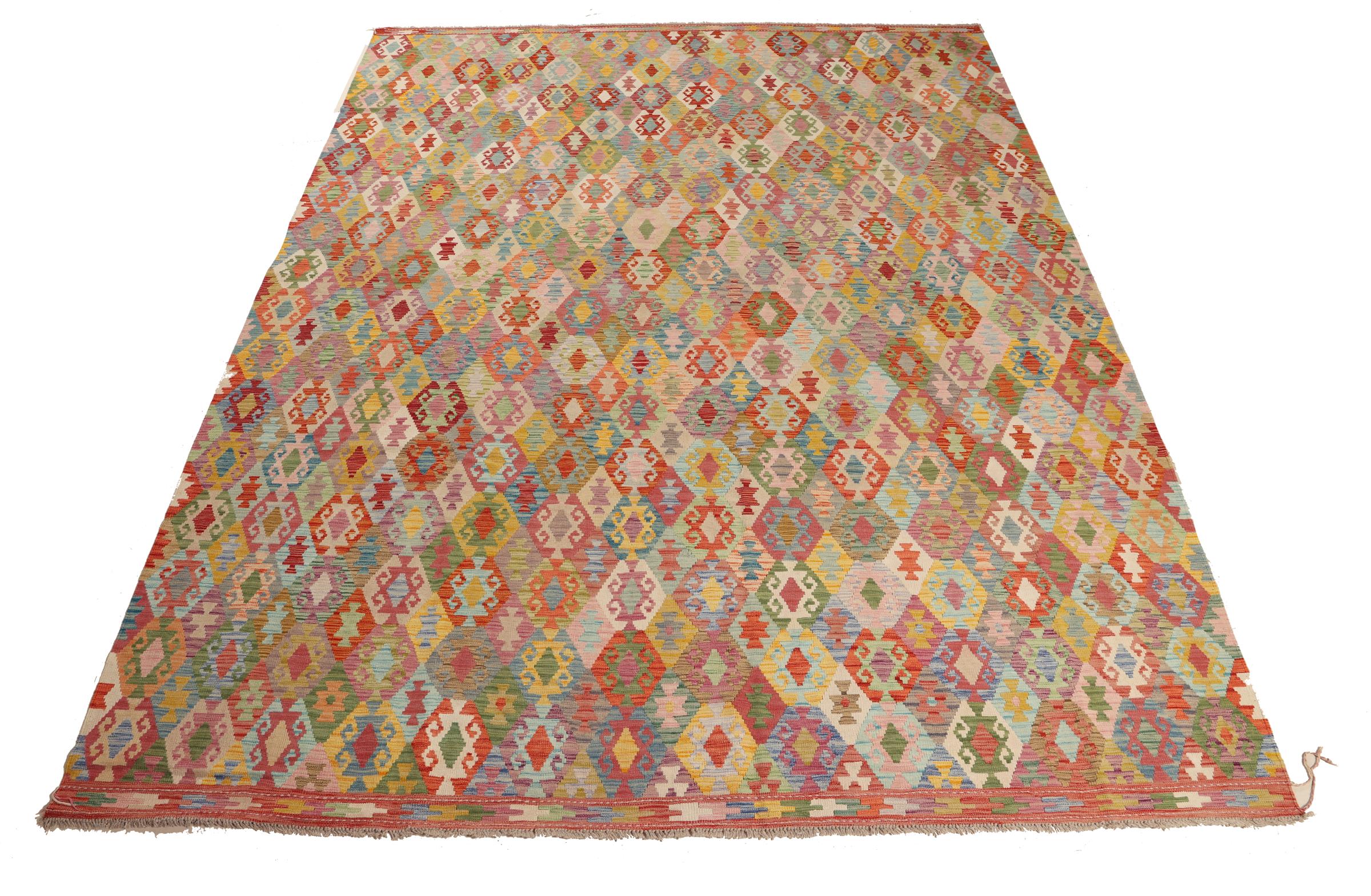
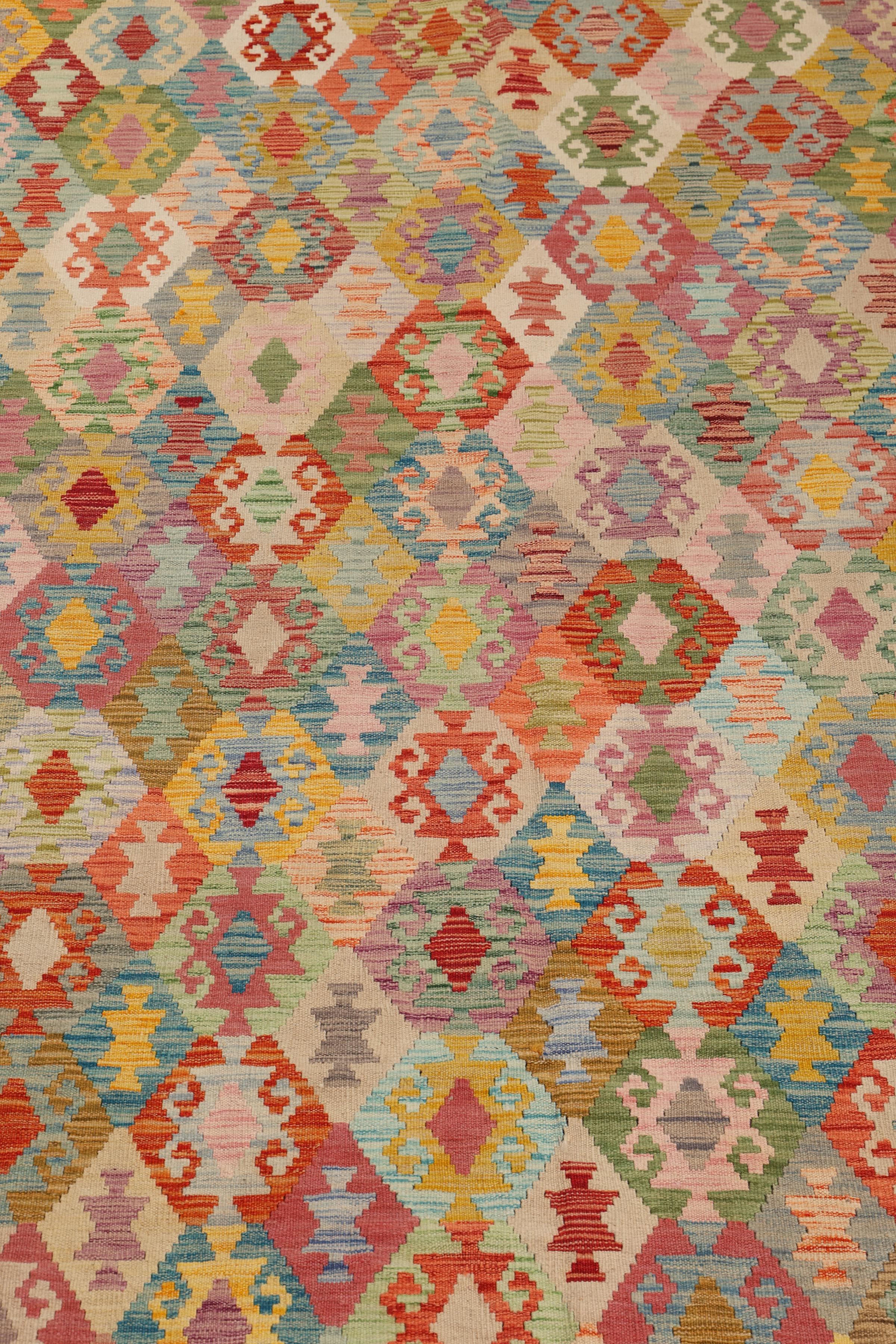
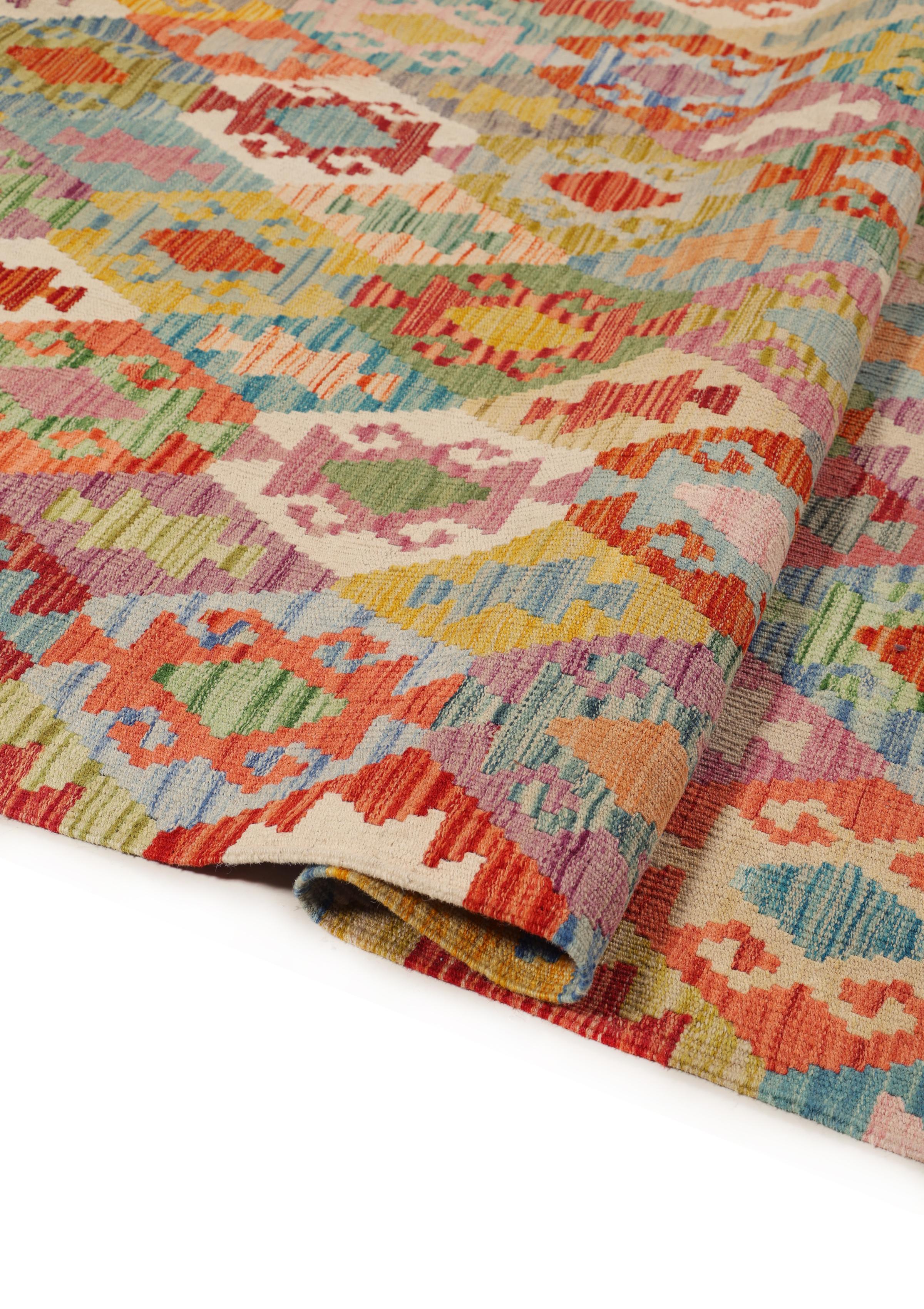
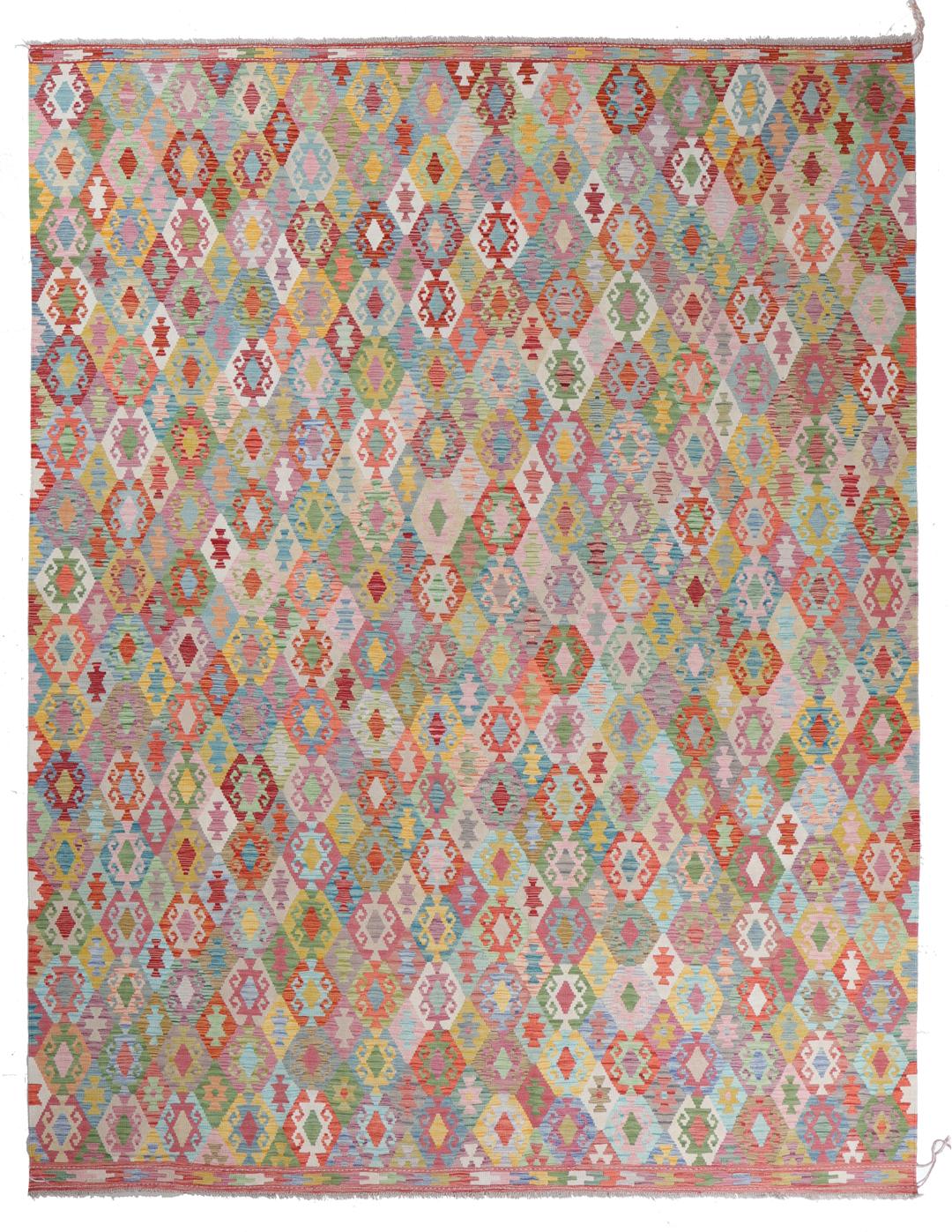
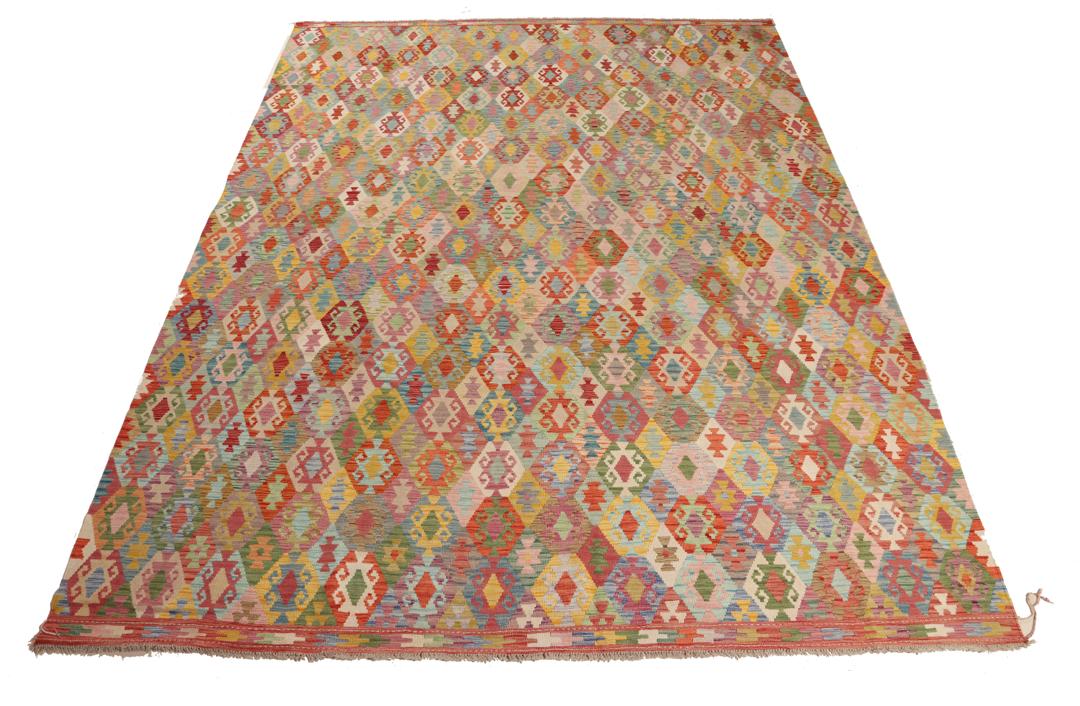
The Kelim tradition is deeply rooted in the nomadic cultures of the Middle East and Central Asia. These rugs were historically created by tribal weavers to serve both practical and decorative purposes, functioning as floor coverings, tent dividers, and storage bags for families on the move.
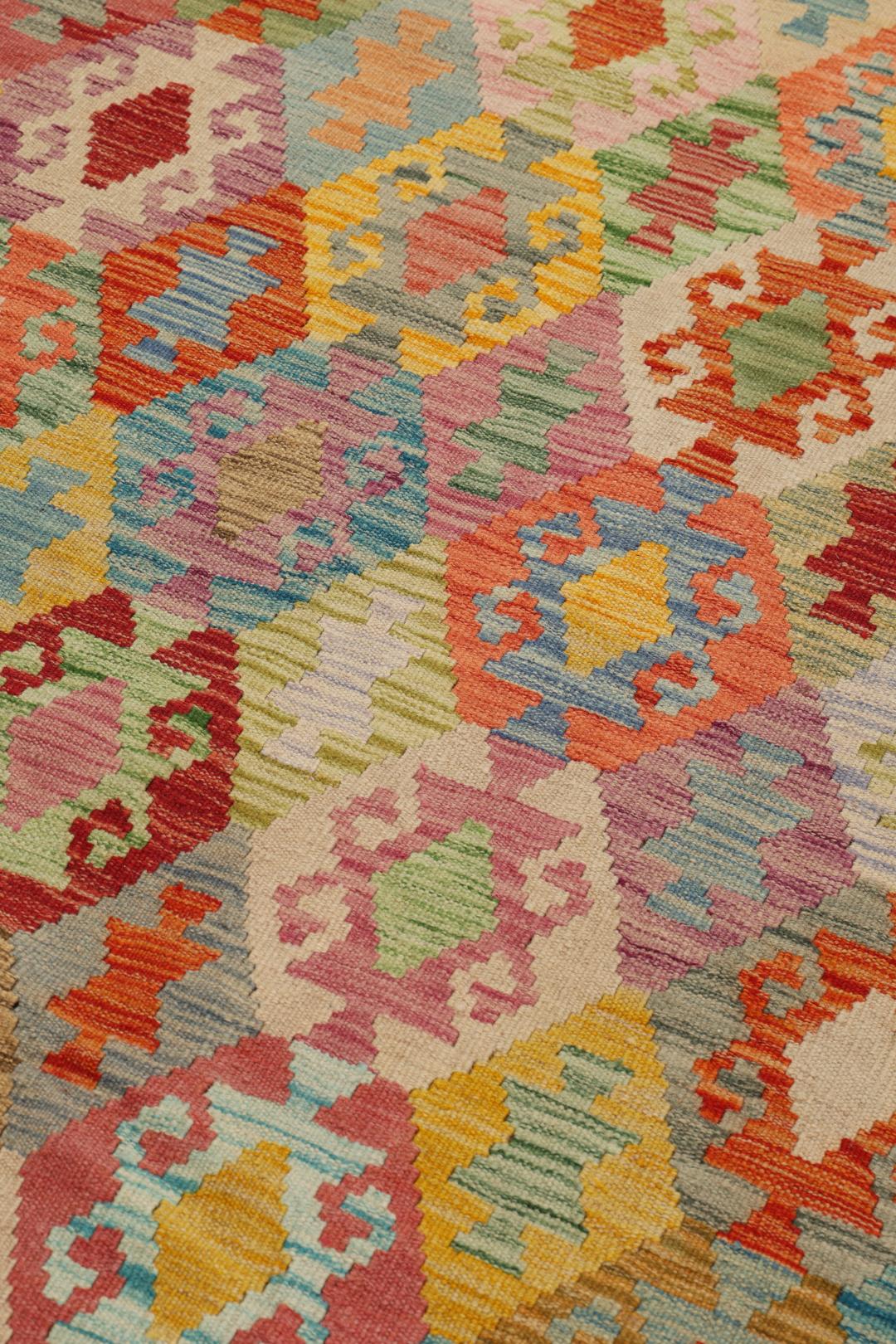
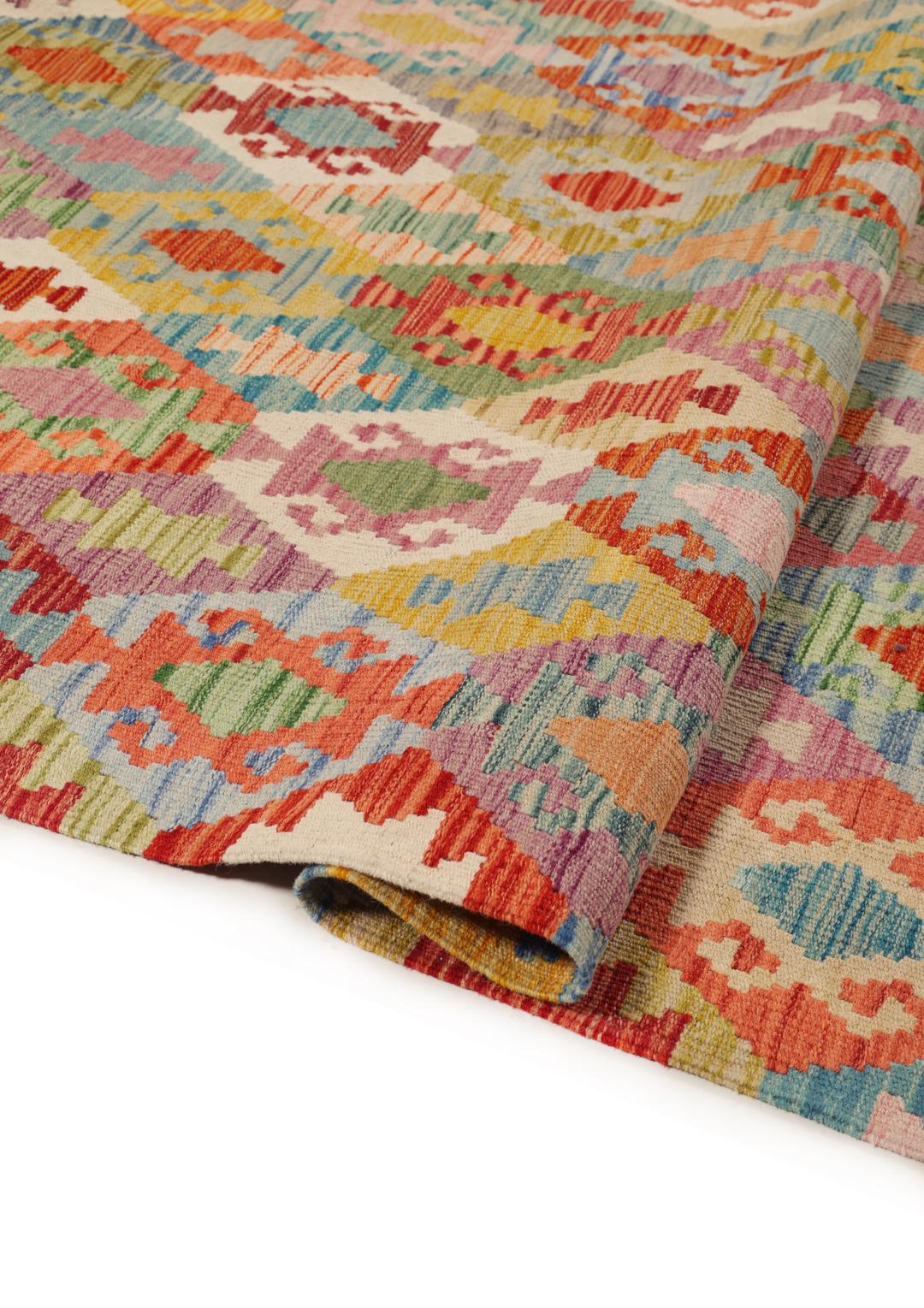
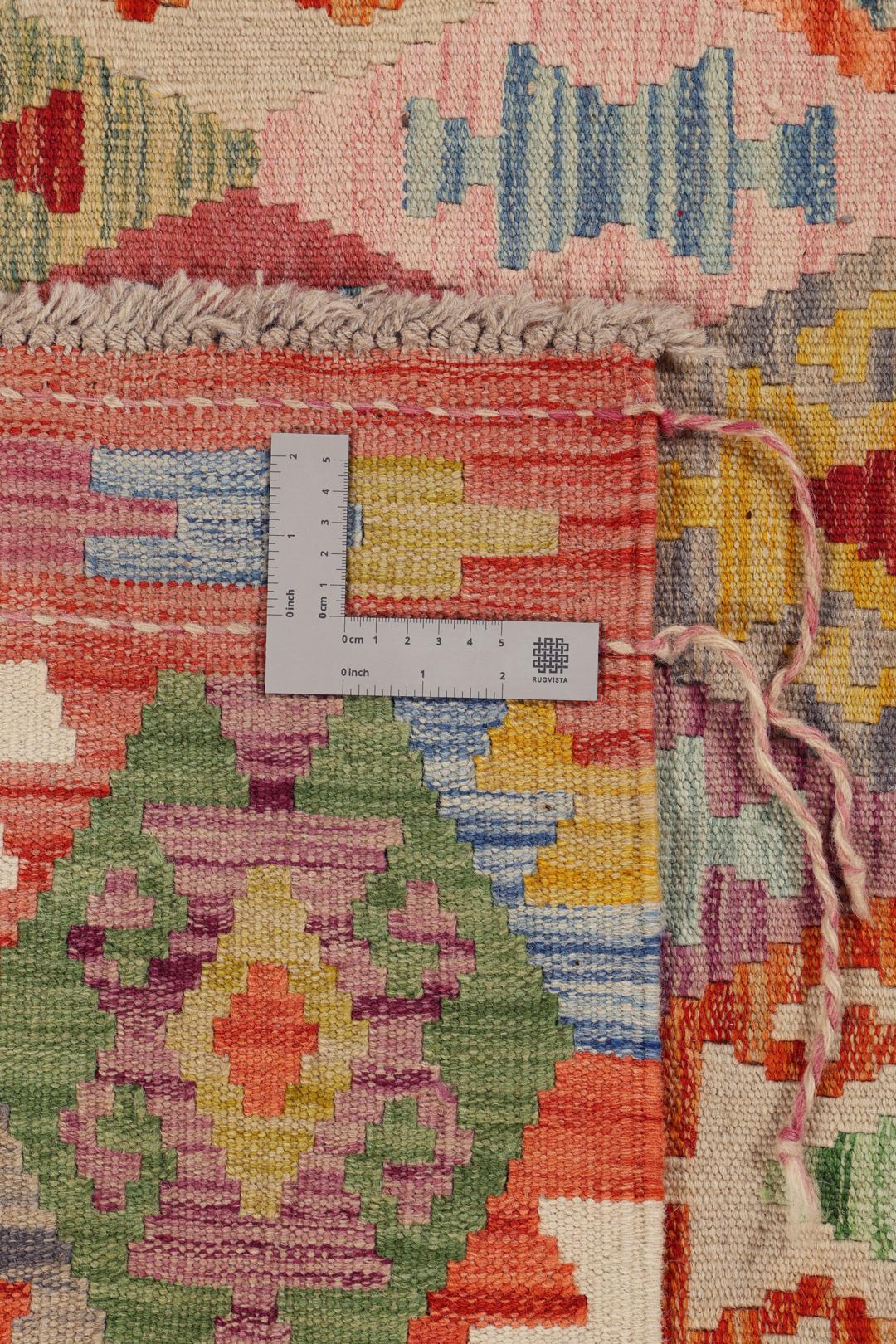
The term 'Kelim' refers to the specific flat-weave technique where the weft threads are passed through the warp threads to create the design. This method results in a durable, reversible fabric that lacks the thick pile found in knotted rugs, making it a distinct and highly functional form of textile art.
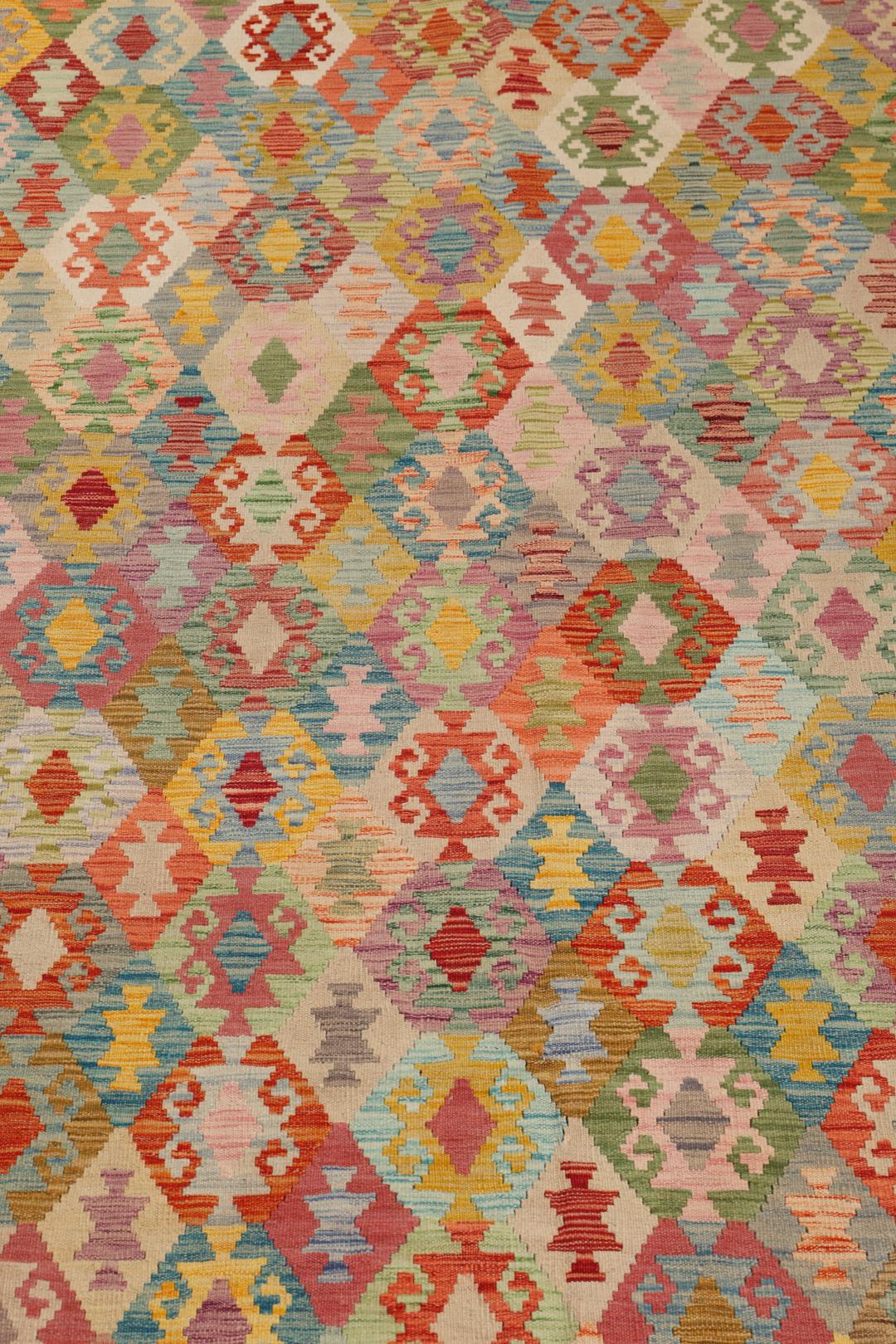
Design-wise, Kelims are defined by their sharp, geometric motifs, with the diamond being one of the most iconic symbols. These patterns are often symbolic, representing tribal identities, protection, or the natural landscape. The use of vibrant, contrasting colours is a hallmark of the Afghan style, showcasing a masterful use of natural dyes to create complex, eye-catching fields.
Today, these rugs are highly sought after by collectors who value their historical authenticity and the human story behind every thread. Owning an Afghan Kelim is an invitation to bring a piece of cultural heritage into your home, celebrating a craft that has survived centuries of change while remaining as relevant and beautiful as ever.