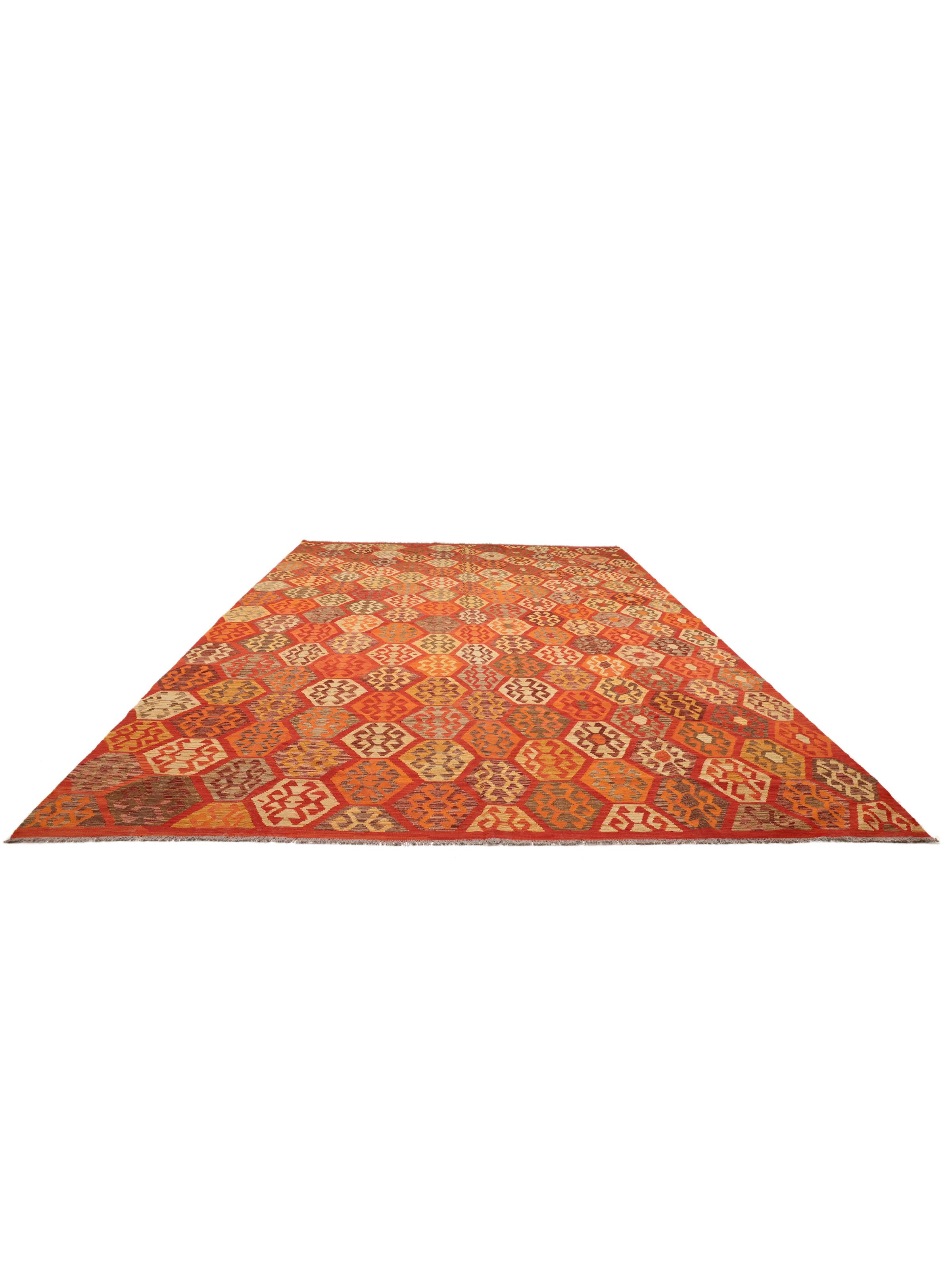
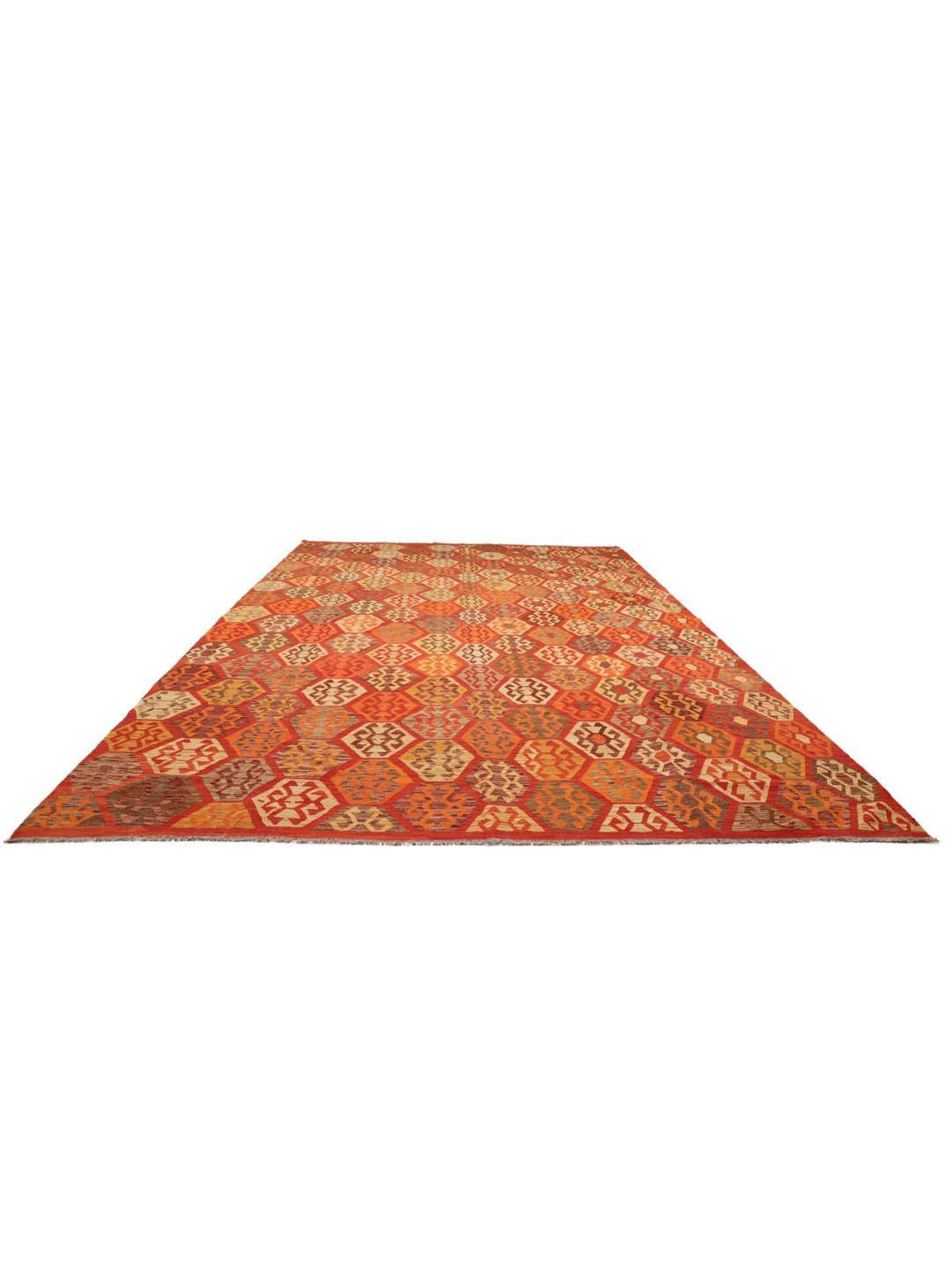
Kelim rugs from Afghanistan are rooted in a deep-seated tradition of nomadic and village weaving that has thrived for centuries across the Middle East. These flat-woven textiles were originally designed for functional purposes, serving as floor coverings, wall hangings, and bags during migration, which necessitated a construction that was both portable and incredibly durable.
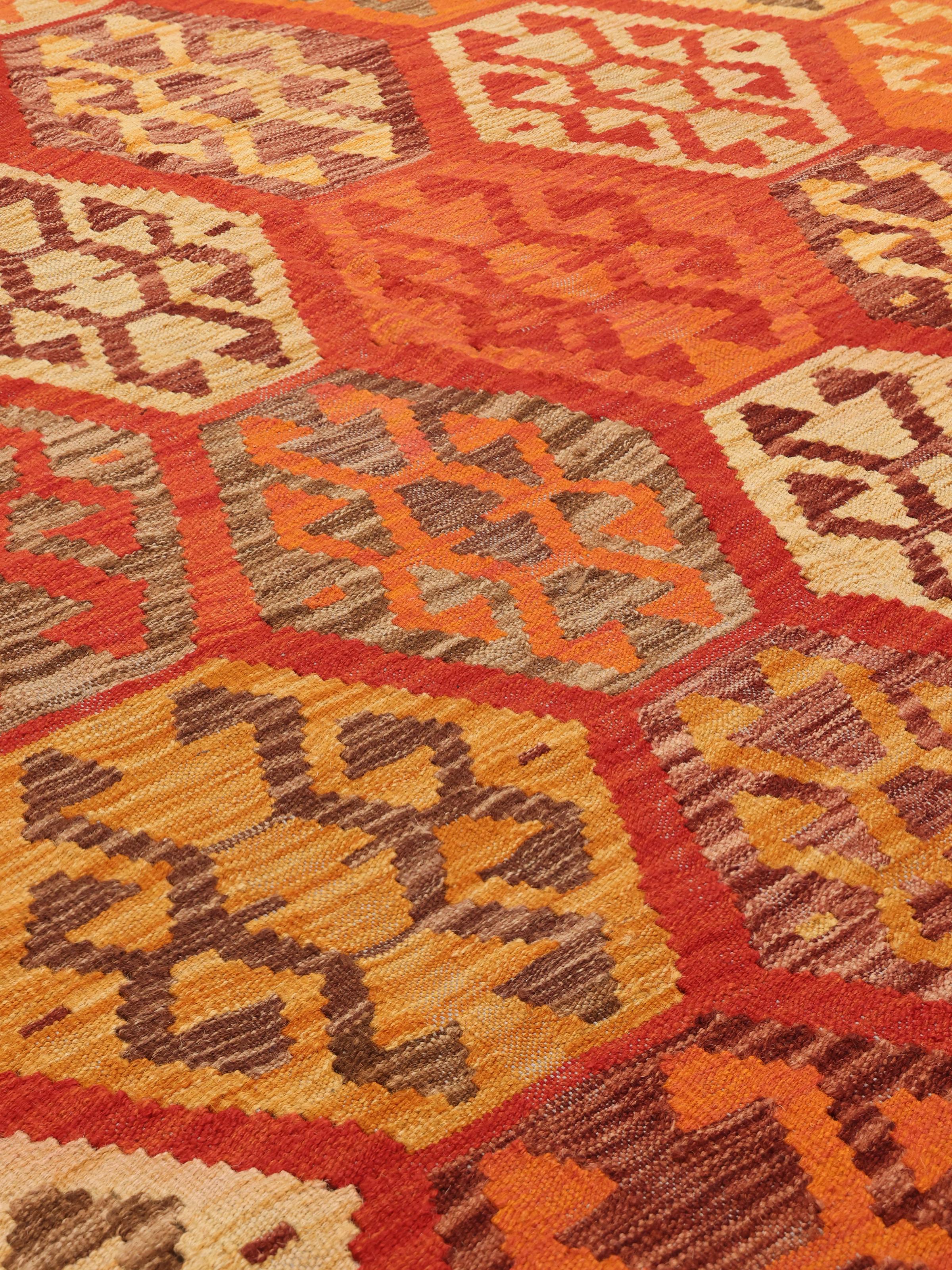
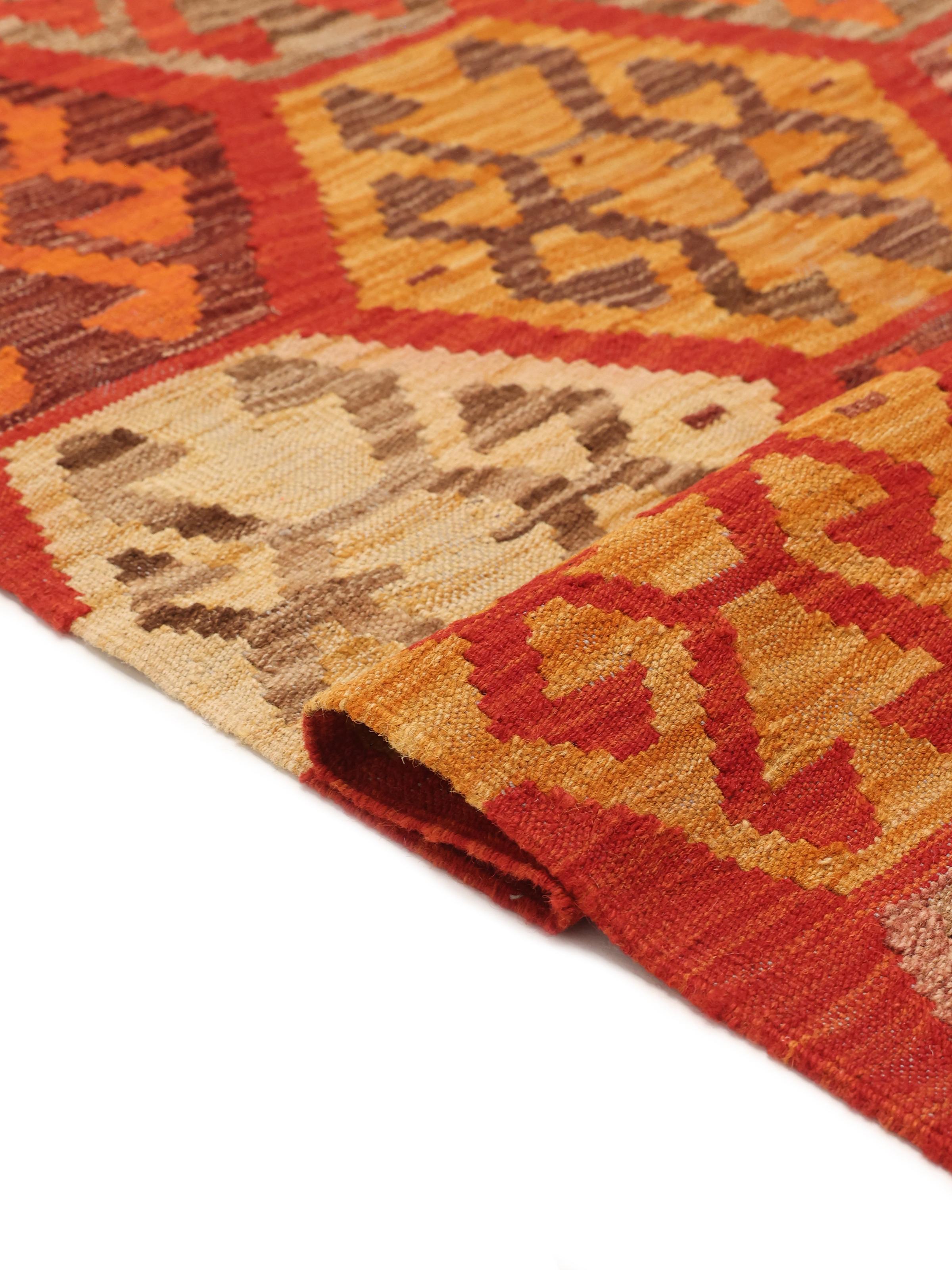
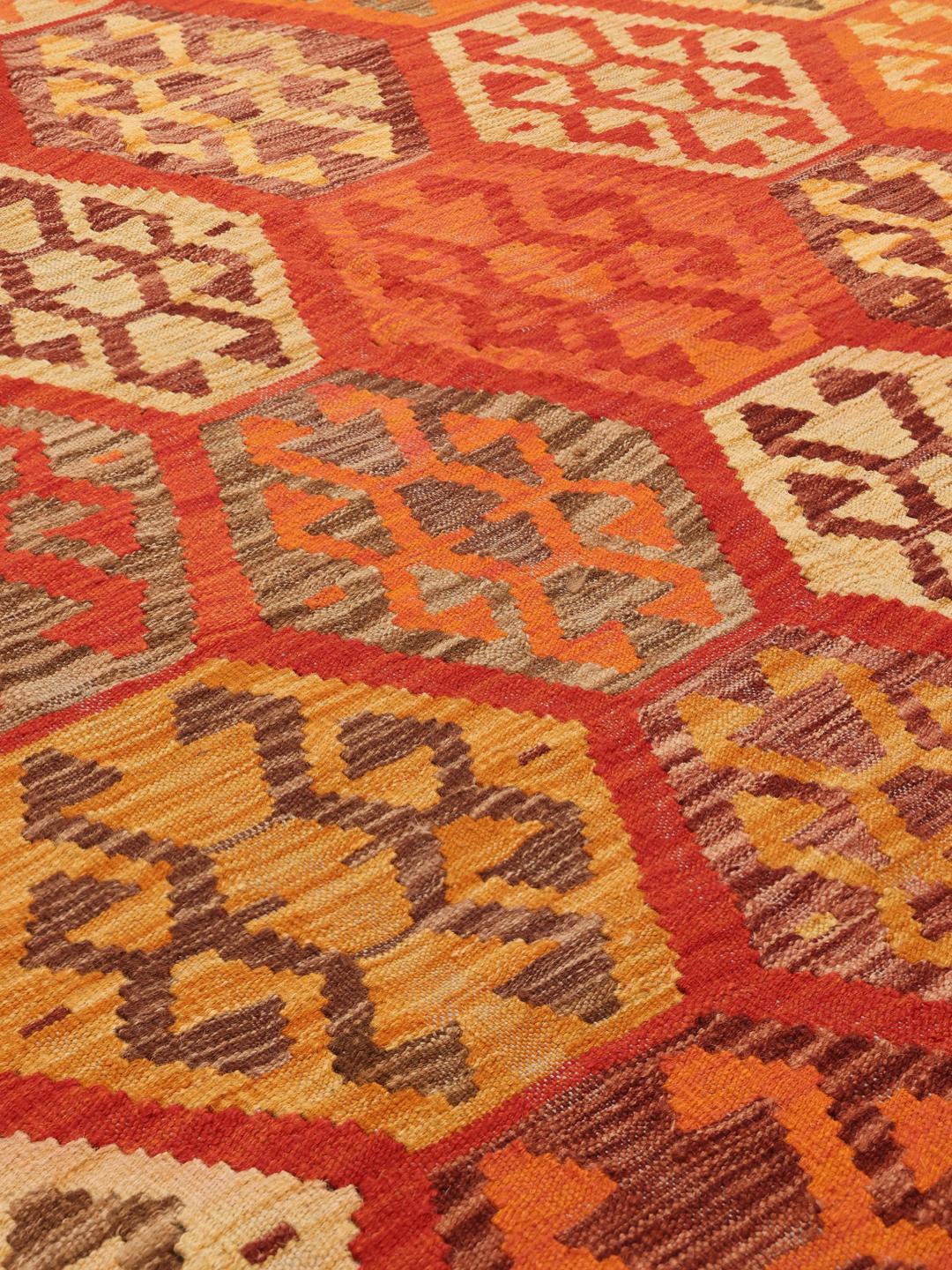
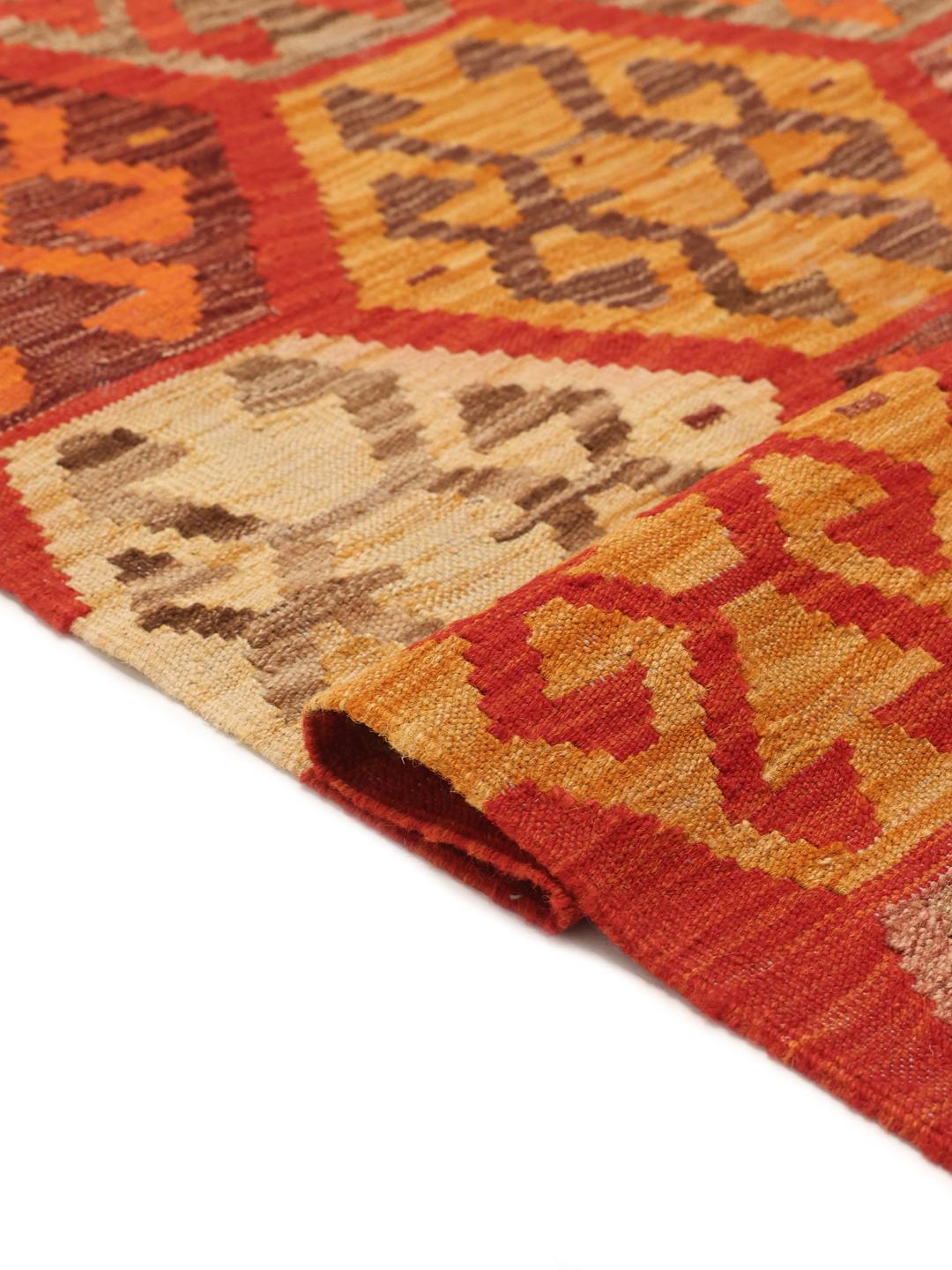
The term Kelim refers to the specific flat-weaving technique where the weft threads are pulled tightly over the warp threads to create a smooth, pileless surface. This method allows for sharp, crisp geometric designs to emerge directly from the weave itself, resulting in a rug that is reversible and remarkably resilient compared to knotted alternatives.
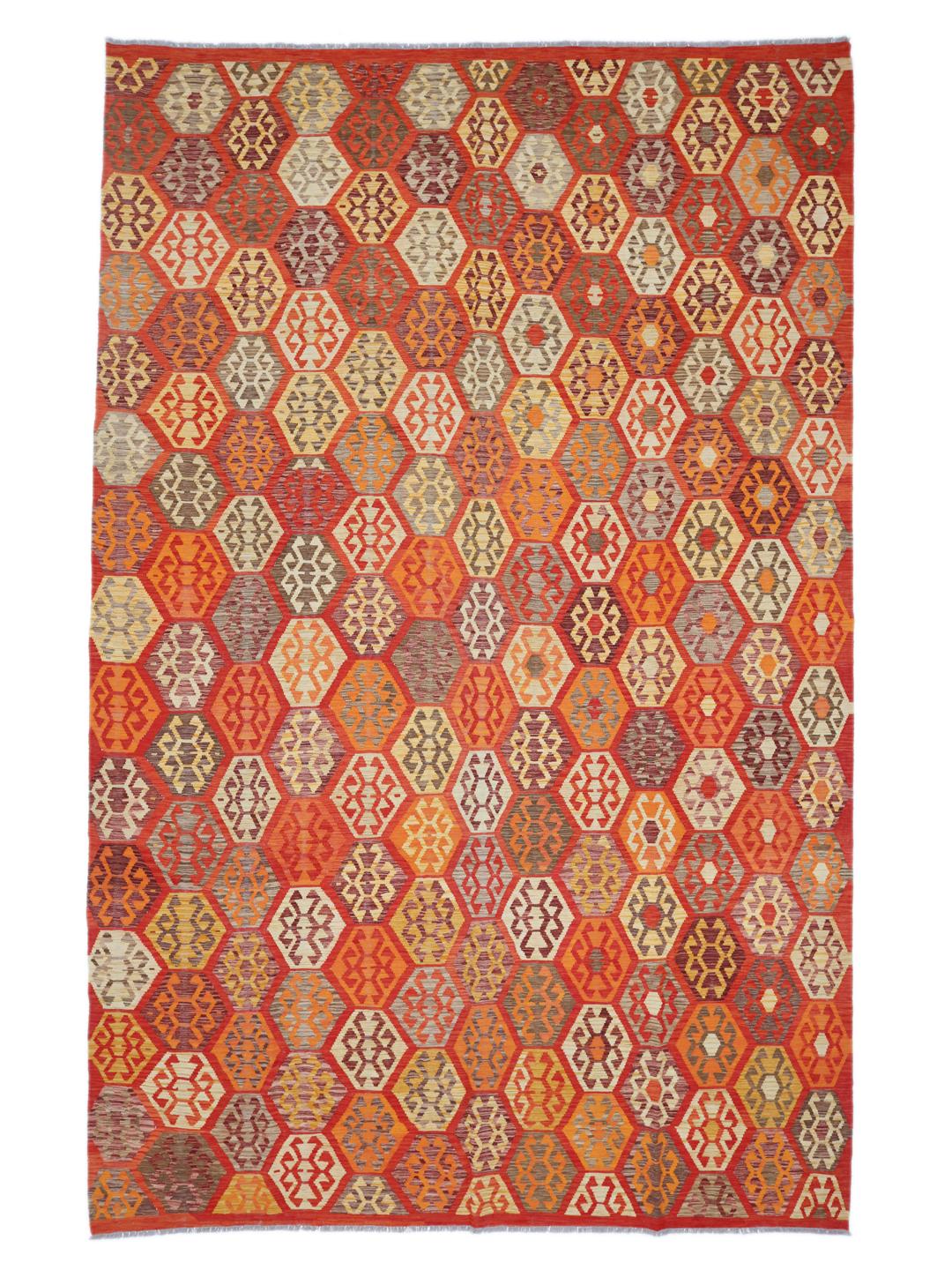
Signature design elements in Afghan Kelims often include bold geometric motifs, such as the repeating hexagons seen here, which are influenced by tribal culture and local surroundings. These patterns are typically arranged in formal, rhythmic sequences and framed by intricate borders, reflecting a visual language that has been passed down through families to preserve their cultural heritage.
Collectors value these rugs for their authenticity and the human story woven into every thread. By choosing a Kelim, you are not just acquiring a floor covering but a piece of cultural history that represents the resilience and artistic spirit of its makers, adding a layer of depth and character to your home that mass-produced items simply cannot provide.