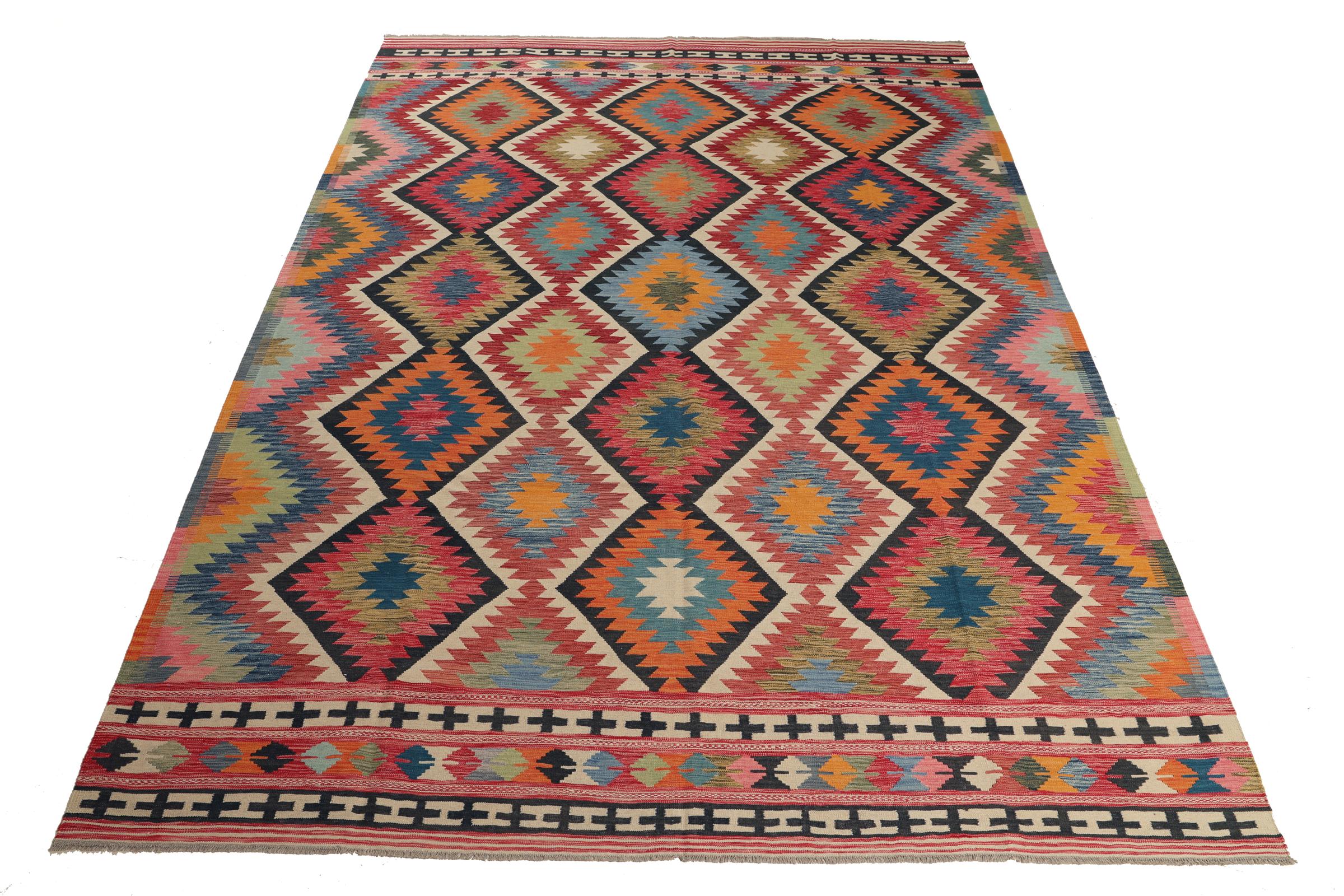
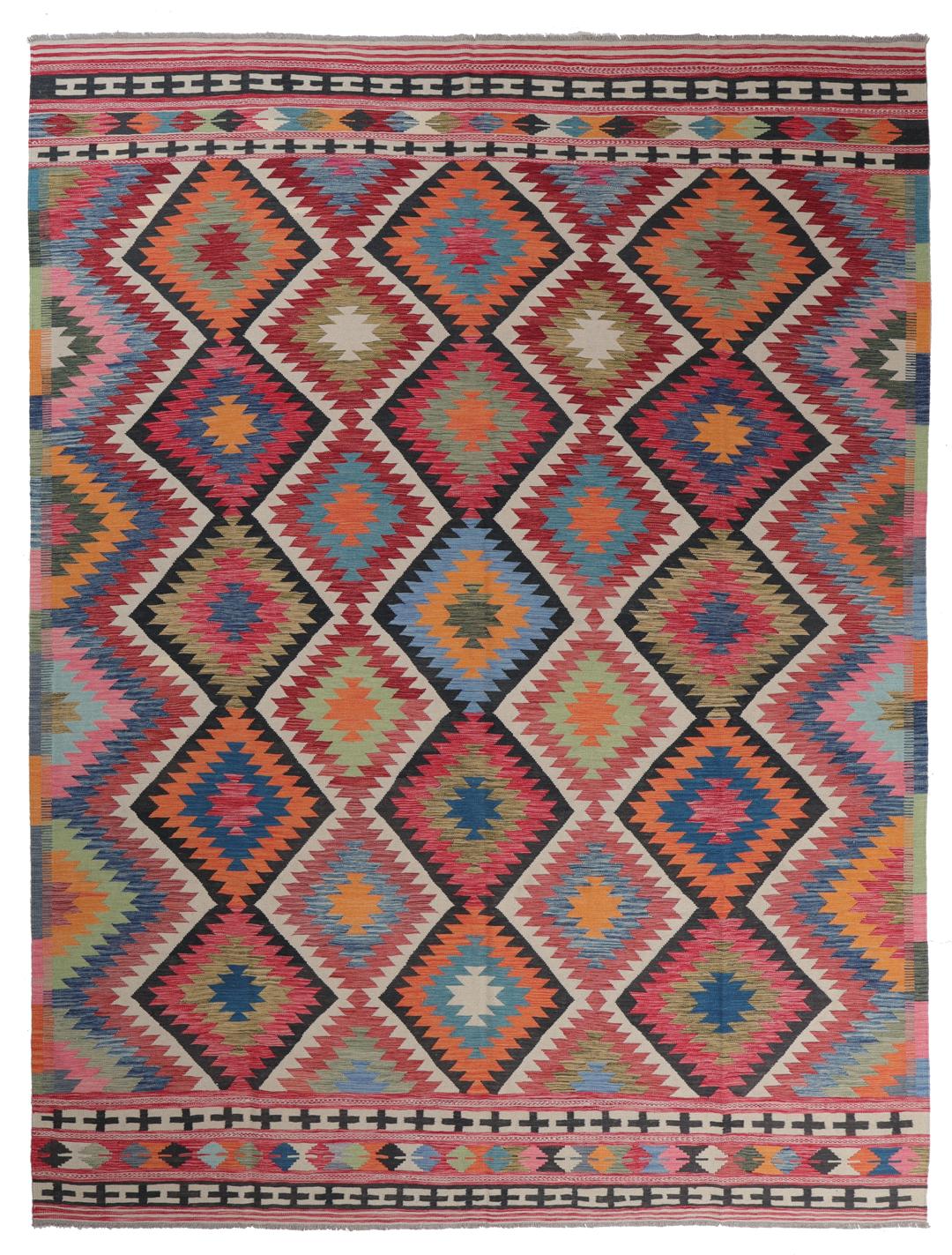
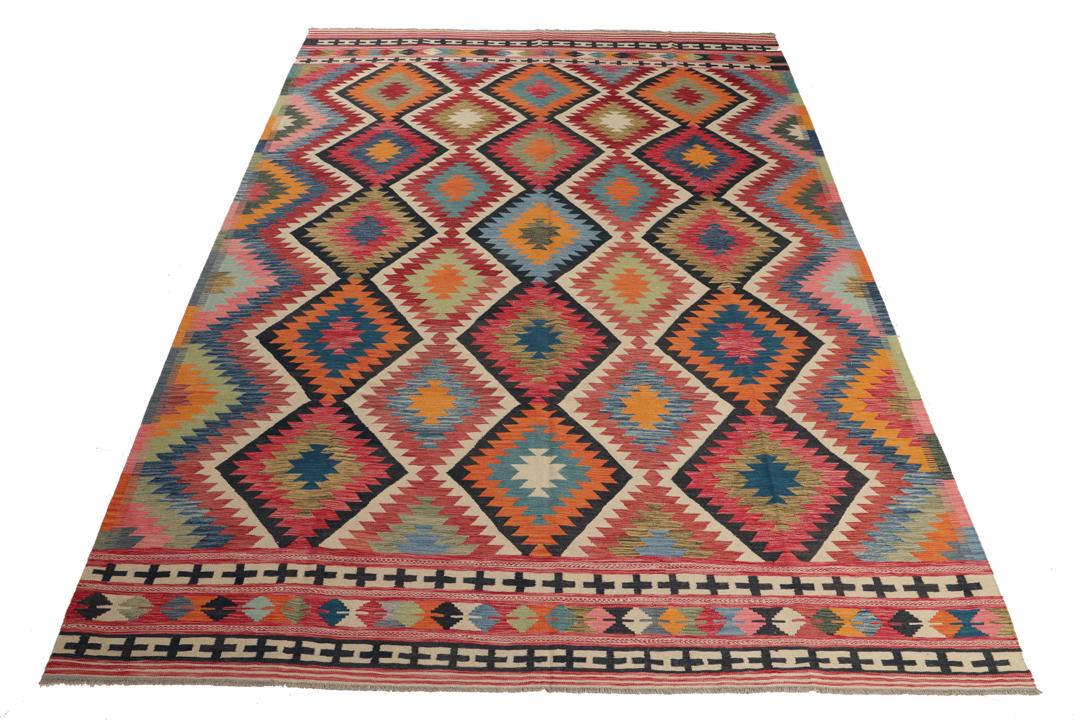
The tradition of weaving Kelims is deeply rooted in the history of the Middle East and Central Asia, serving as both a functional necessity and a form of artistic expression for nomadic and semi-nomadic tribes. These rugs were traditionally used as floor coverings, wall hangings, and storage bags, designed to be easily transported during seasonal migrations. Over centuries, these traditions have evolved, with Afghanistan becoming a central hub for the production of these distinctive, flat-woven textiles.
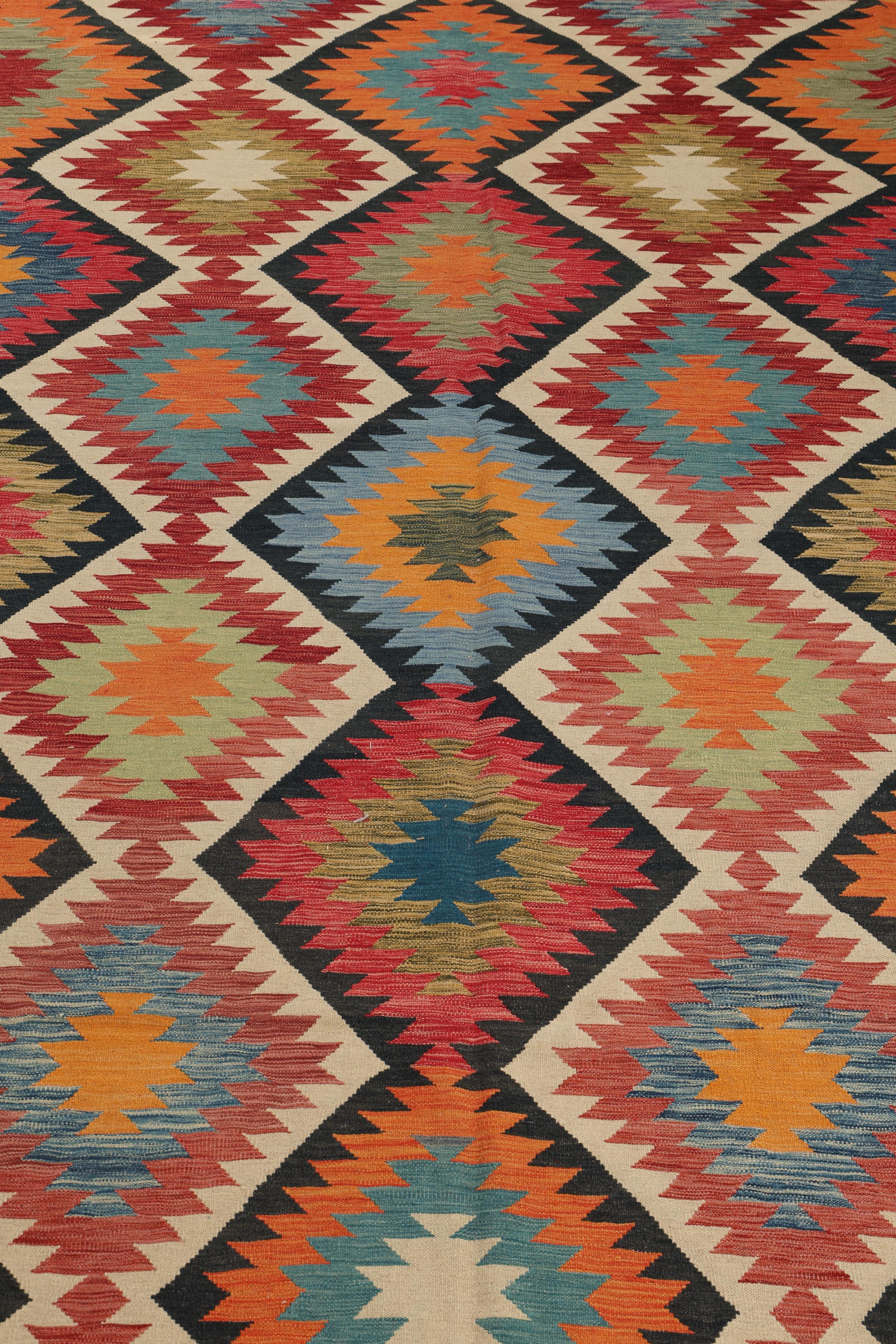
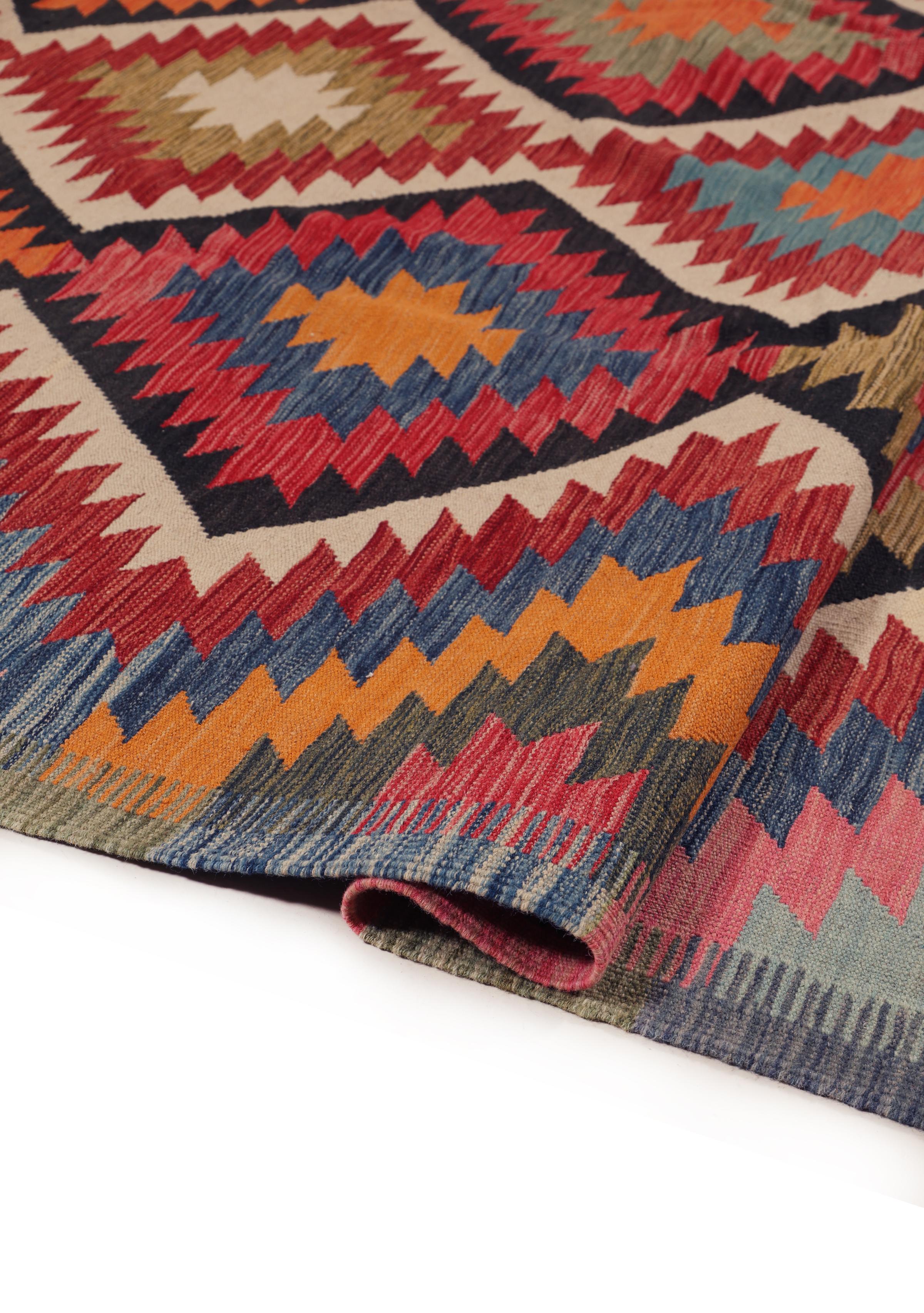
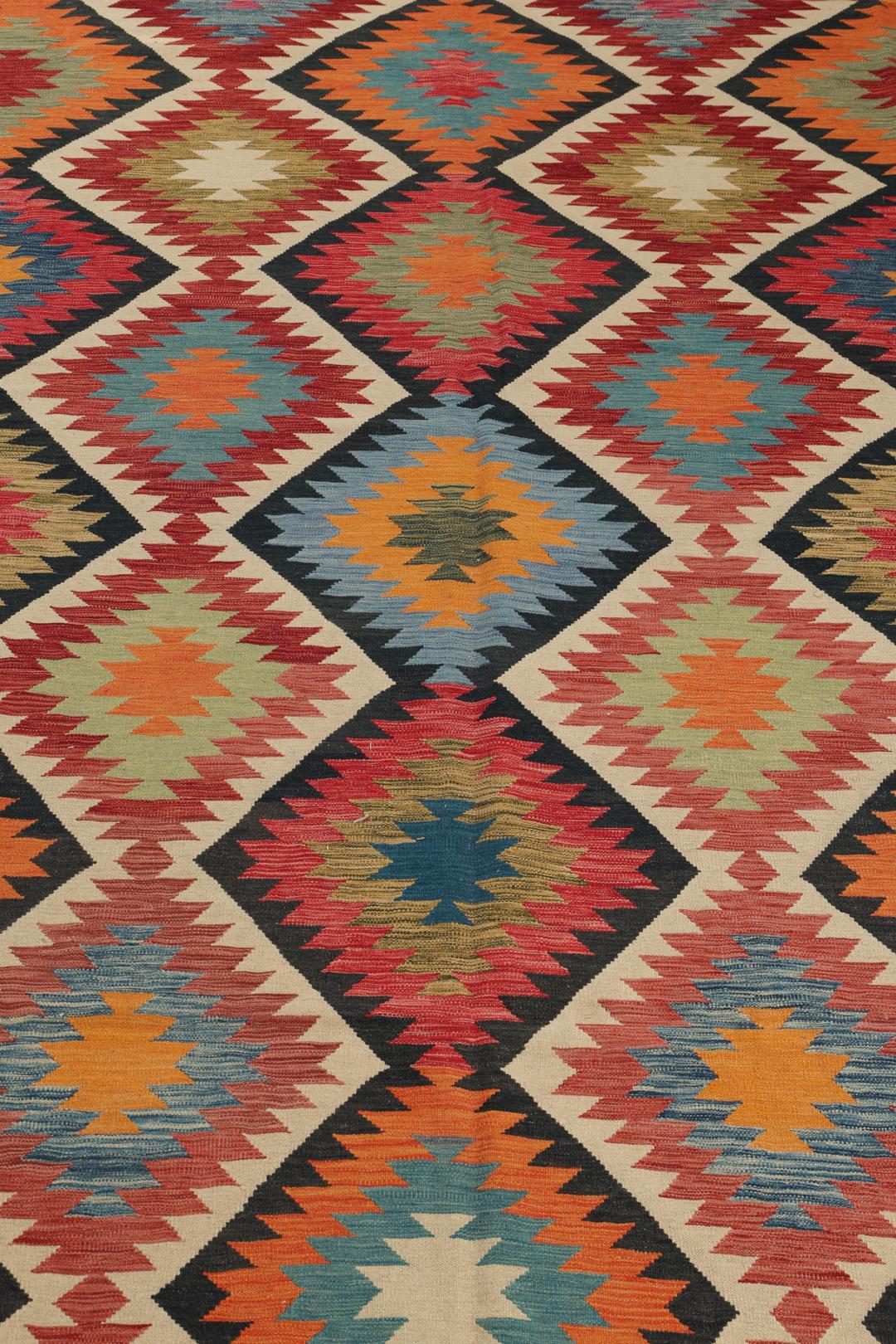
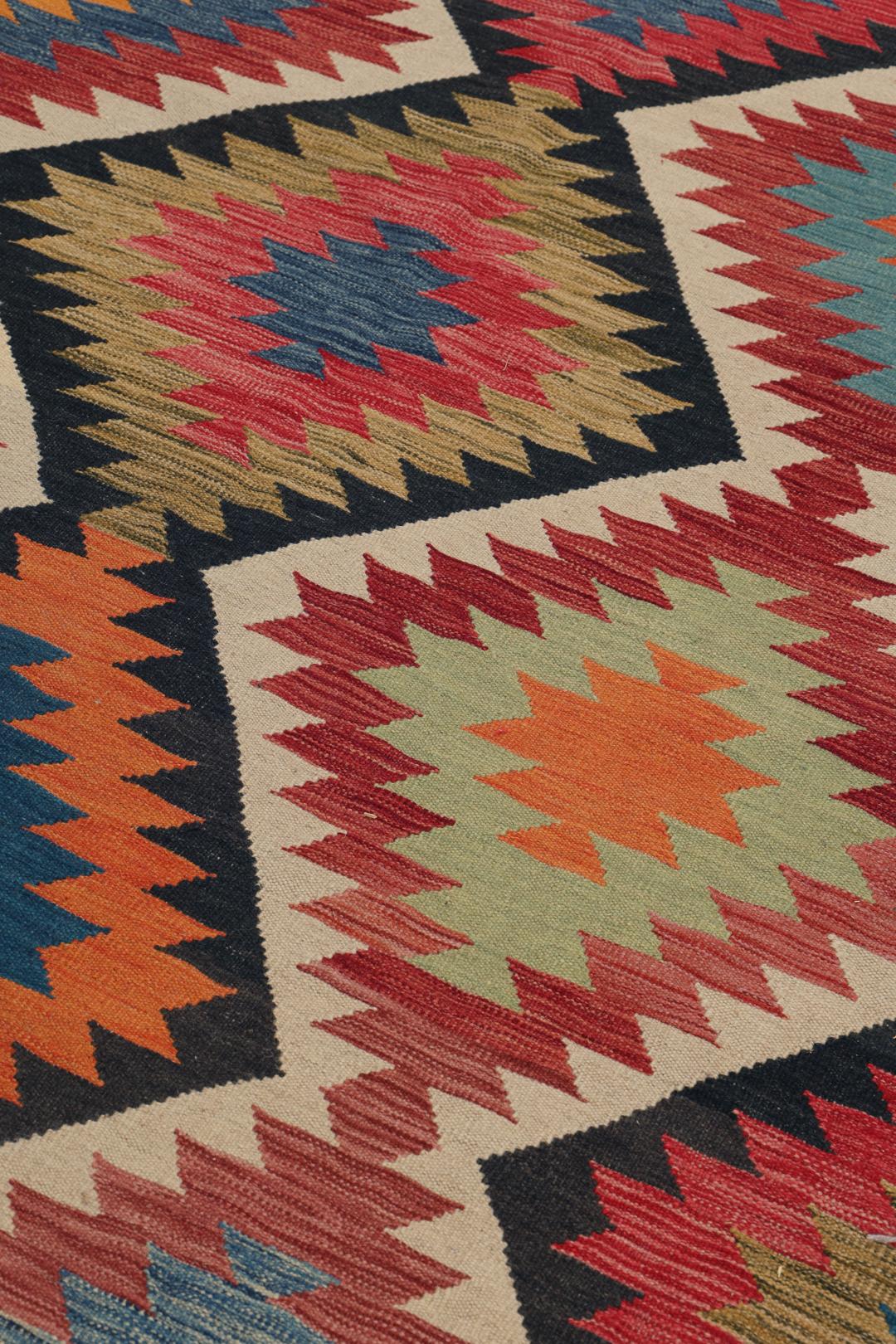
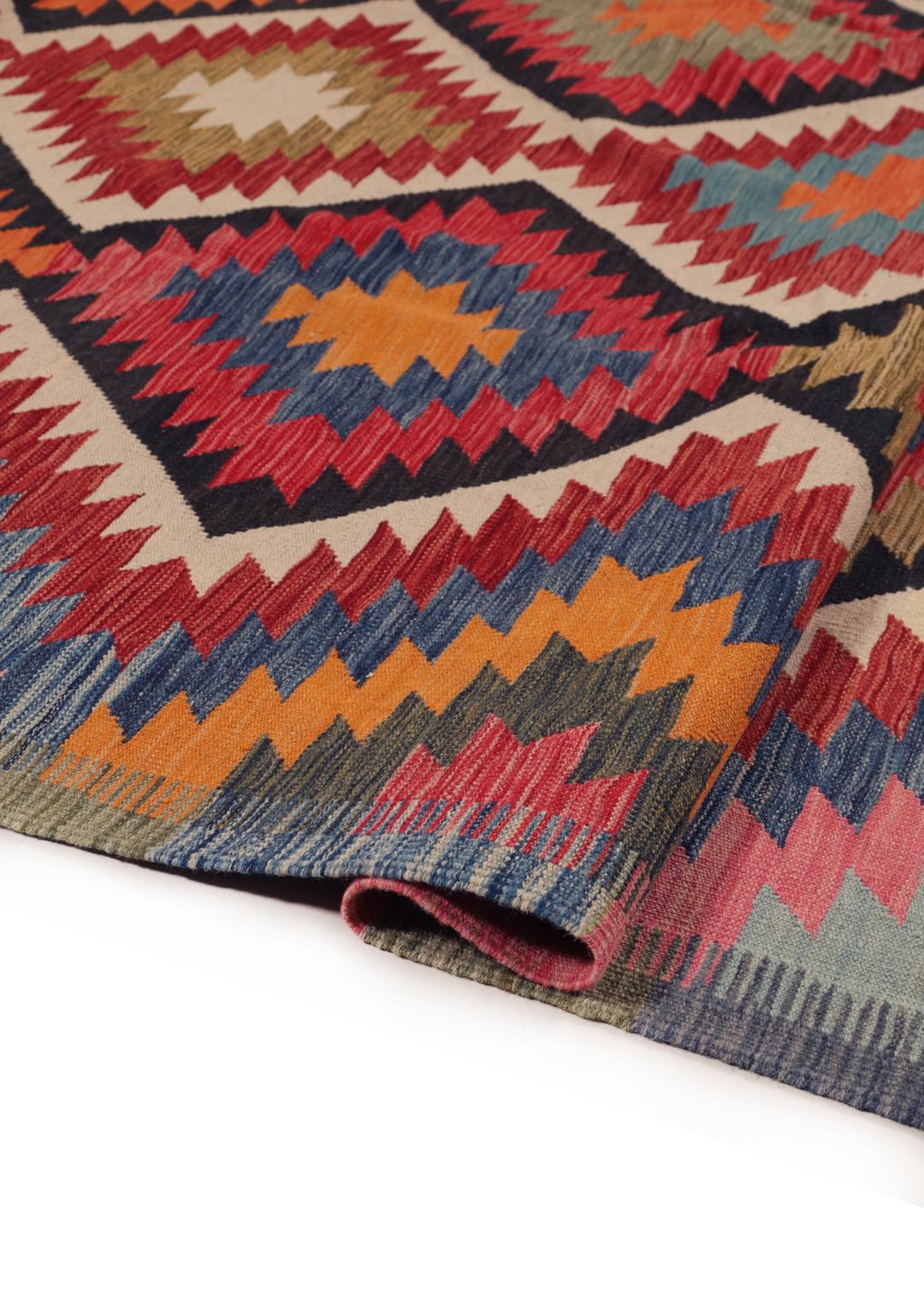
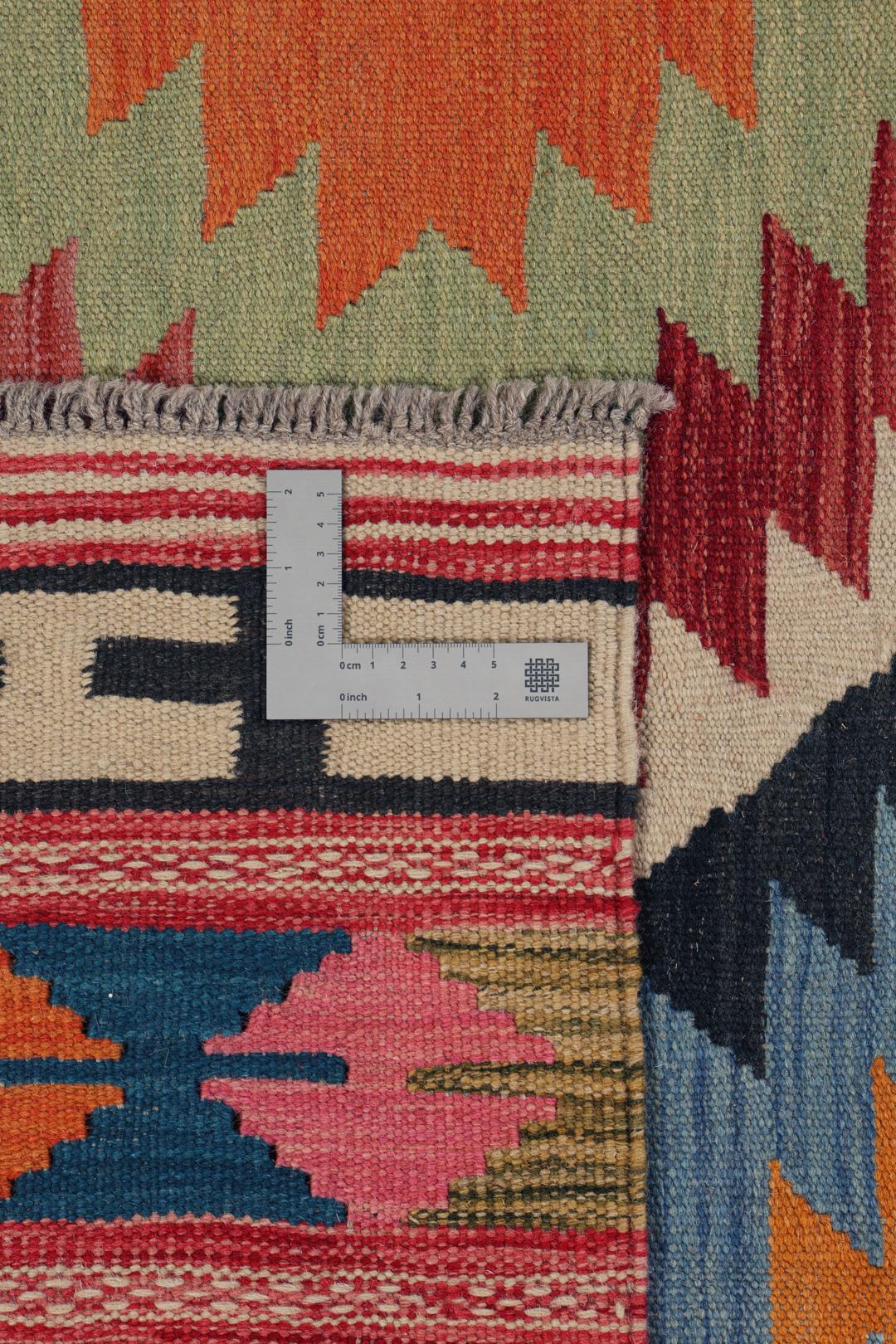
The term 'Kelim' refers to the specific flat-weaving technique where the weft threads are passed through the warp threads to create the pattern, leaving no pile. This method results in a reversible rug, often prized for its durability and intricate geometric designs. The quality of a Kelim is determined by the tightness of the weave and the precision of the pattern, which demands a high level of expertise from the weaver who must manage multiple coloured threads simultaneously.
Signature design elements in Afghan Kelims often include bold, repeating geometric shapes like diamonds, triangles, and stepped medallions. These patterns are typically framed by elaborate, symbolic borders that reflect regional storytelling and tribal identity. The use of vibrant, natural-inspired colours is a hallmark of this tradition, with each hue traditionally derived from local botanical and mineral sources, contributing to the rug's authentic and earthy aesthetic.
Owning an Afghan Kelim is more than just purchasing a floor covering; it is an appreciation of a heritage that has been passed down through generations. These rugs are highly valued by collectors for their cultural weight, reflecting the skill and history of the artisans who create them. By bringing a piece of this tradition into your home, you are celebrating a legacy of craft that remains as relevant and beautiful today as it has been for centuries.