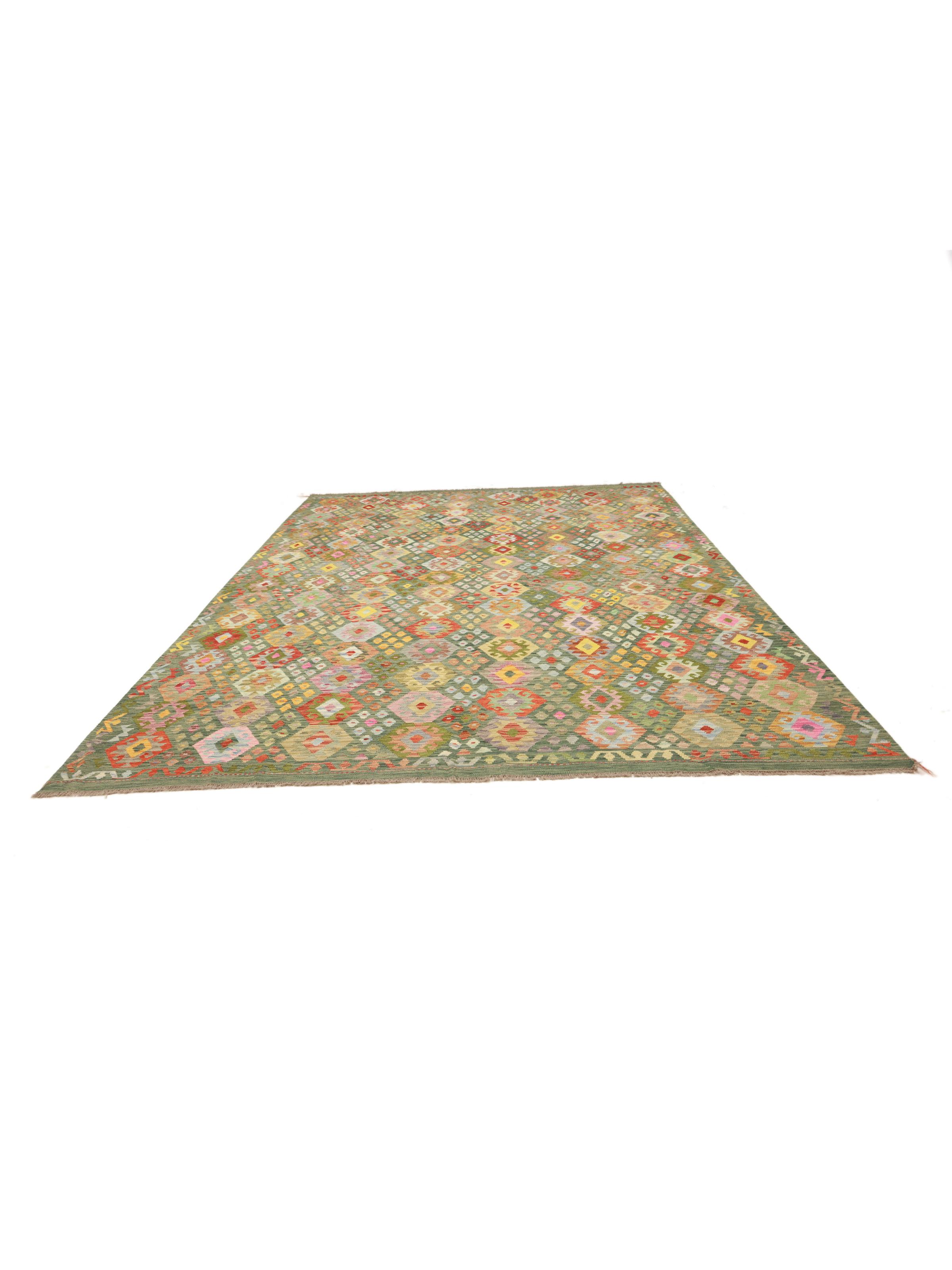
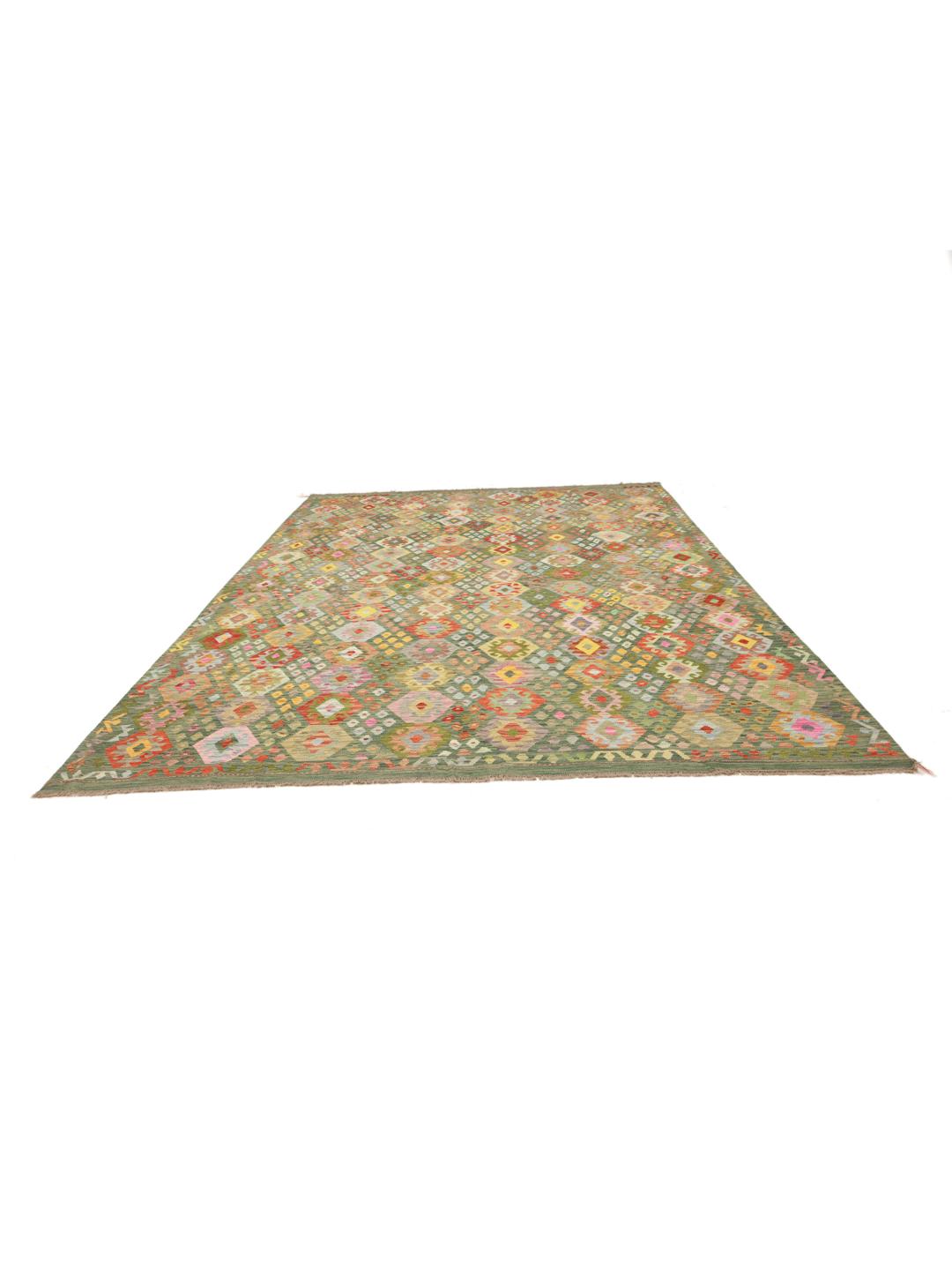
The tradition of weaving Kelims in Afghanistan is deeply rooted in the nomadic lifestyle of the region. These flat-woven textiles were historically created by tribal groups for practical use, serving as floor coverings, wall hangings, and storage bags, reflecting a culture that valued both utility and beauty.
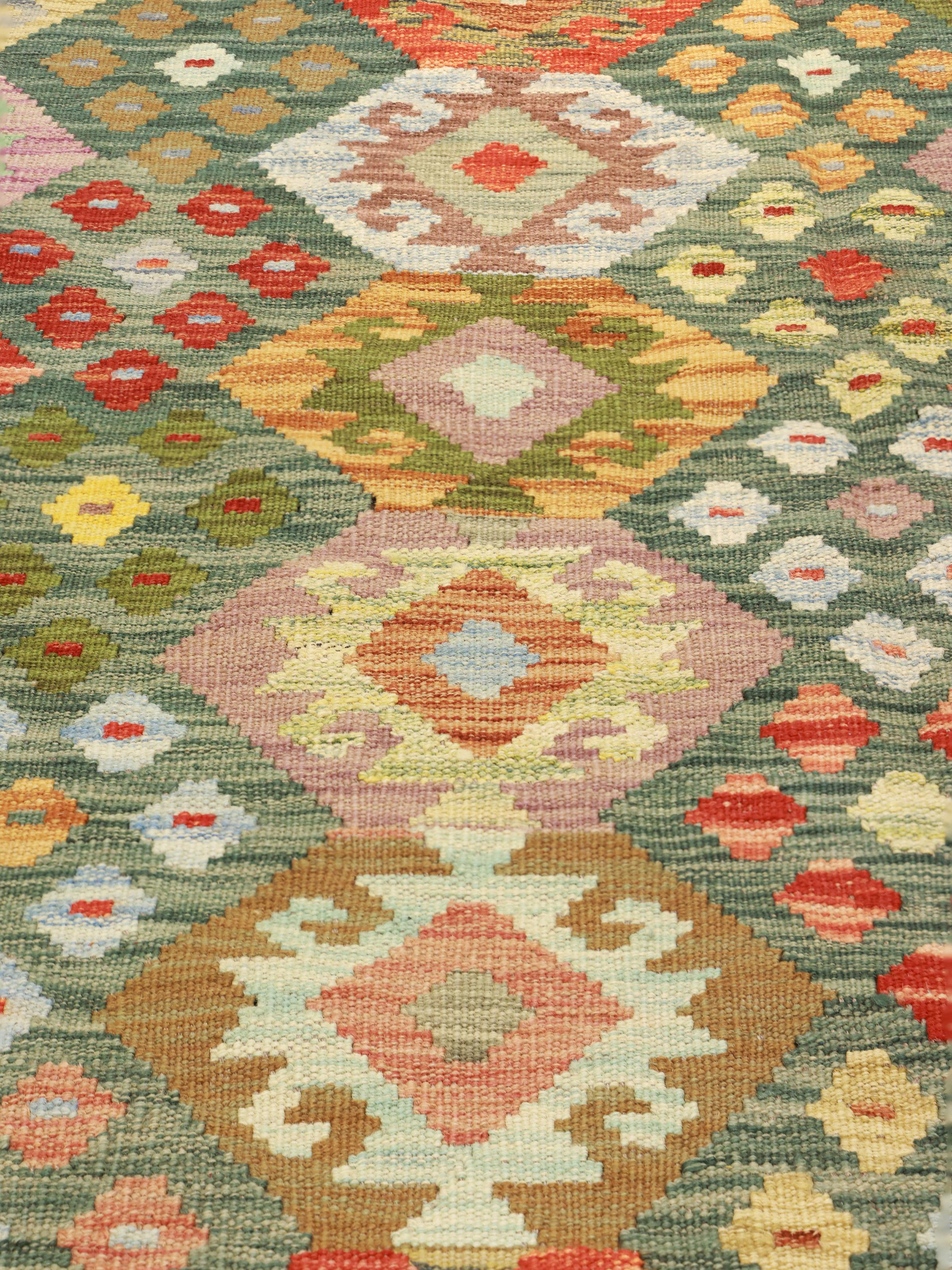
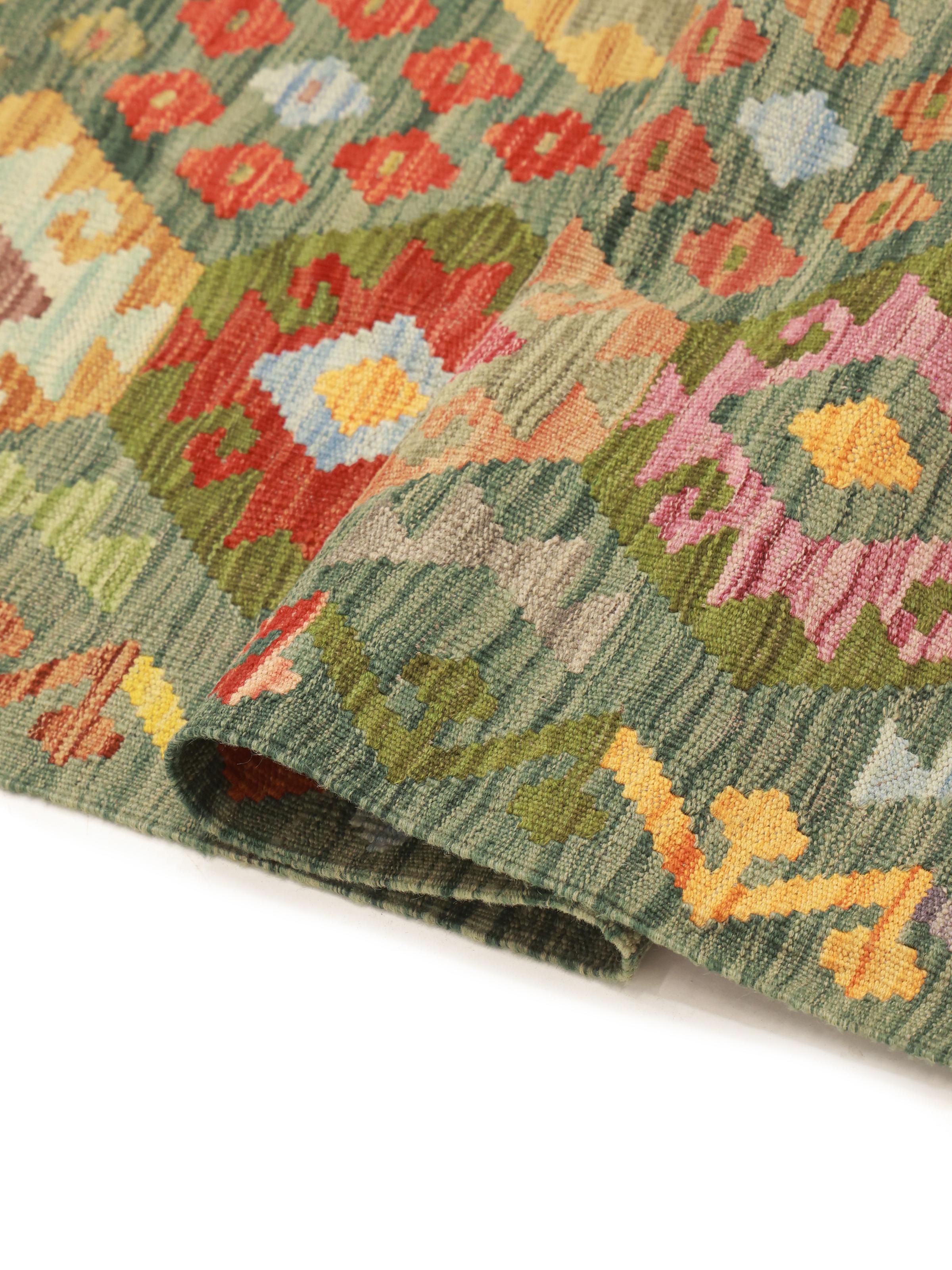
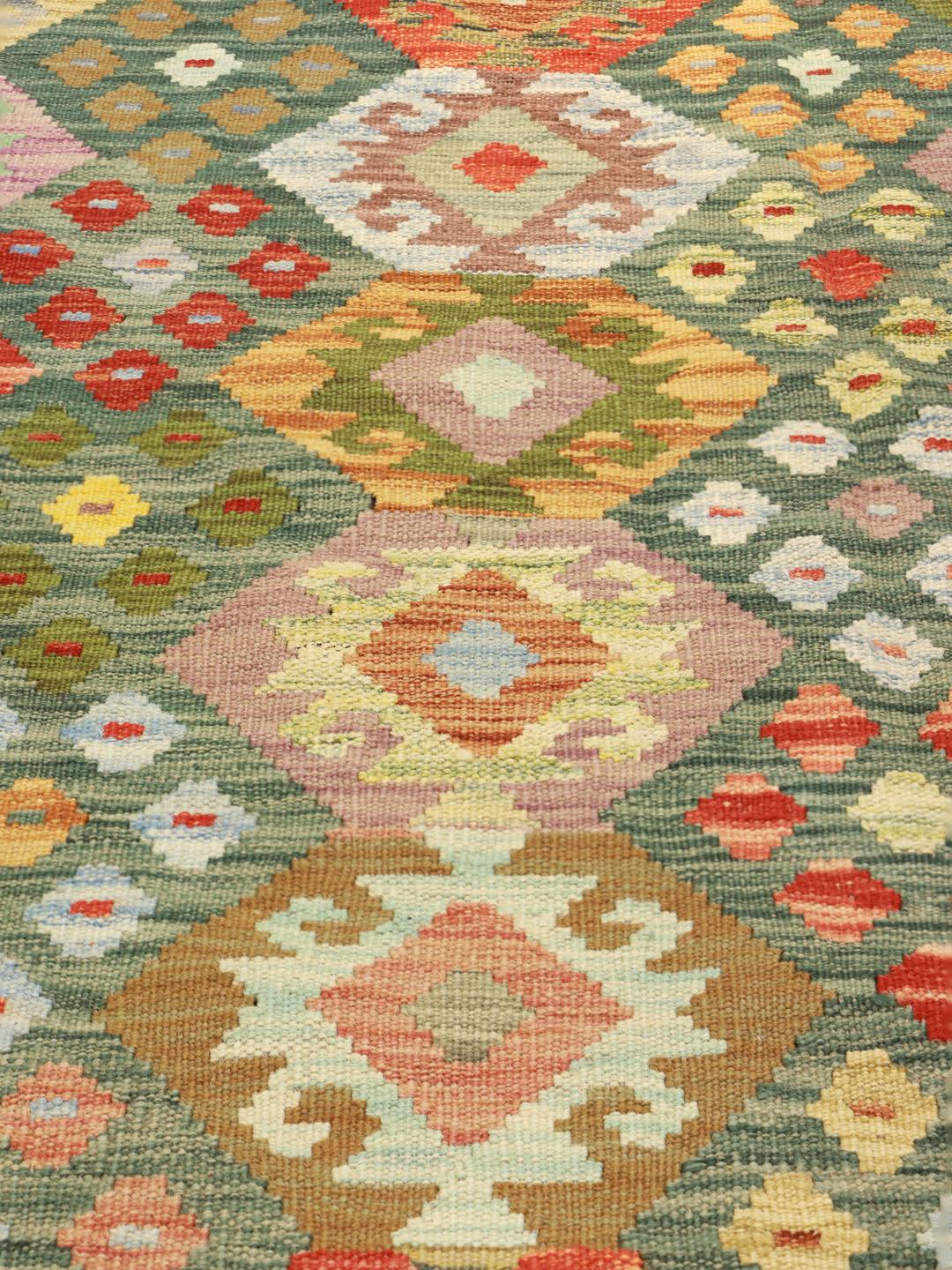
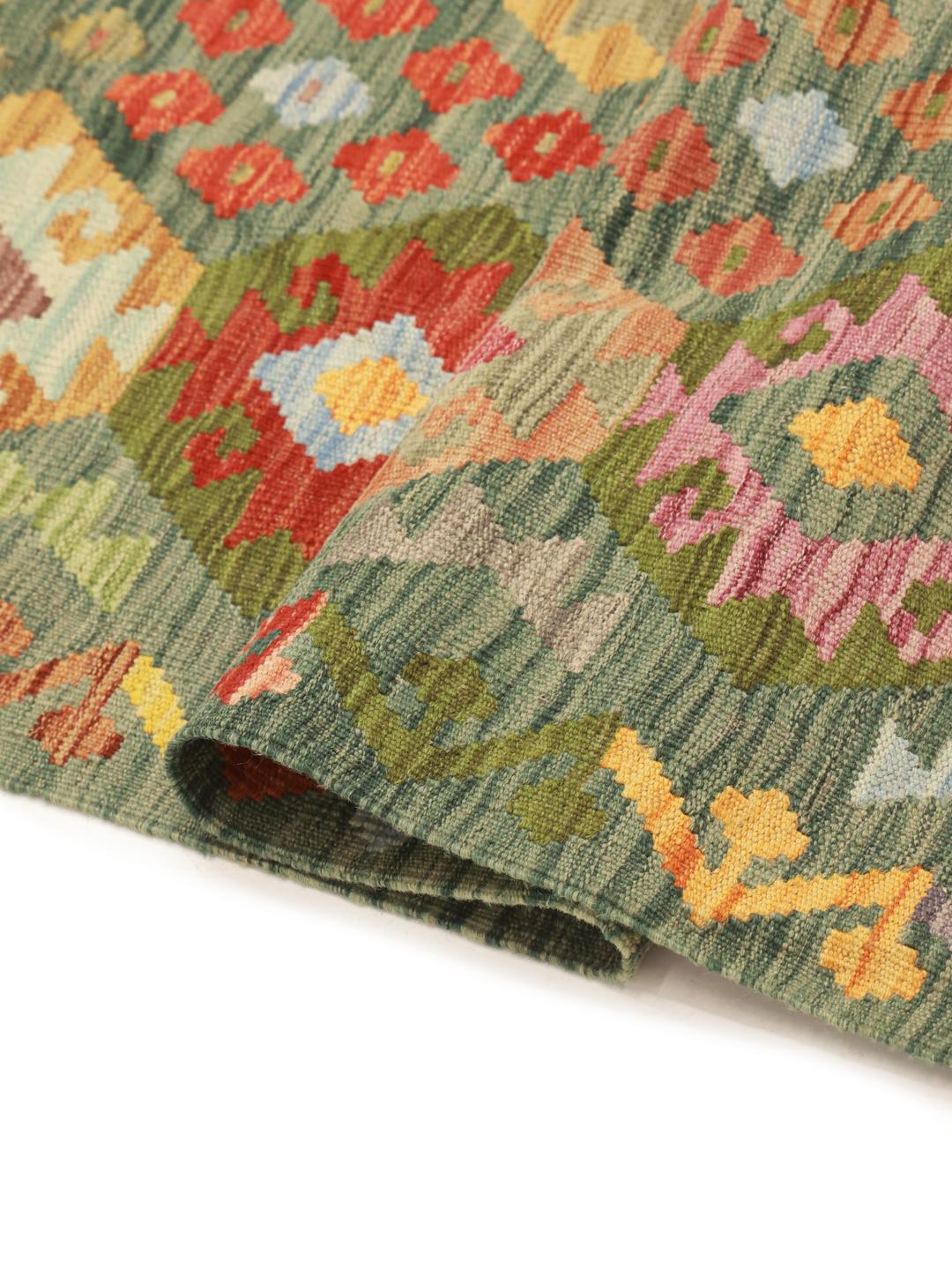
The term Kelim refers to the specific flat-weaving technique where the weft threads are passed through the warp threads to create the pattern, resulting in a rug that is identical on both sides. This method allows for crisp, clean geometric designs and a lightweight structure that has defined Middle Eastern textile art for centuries.
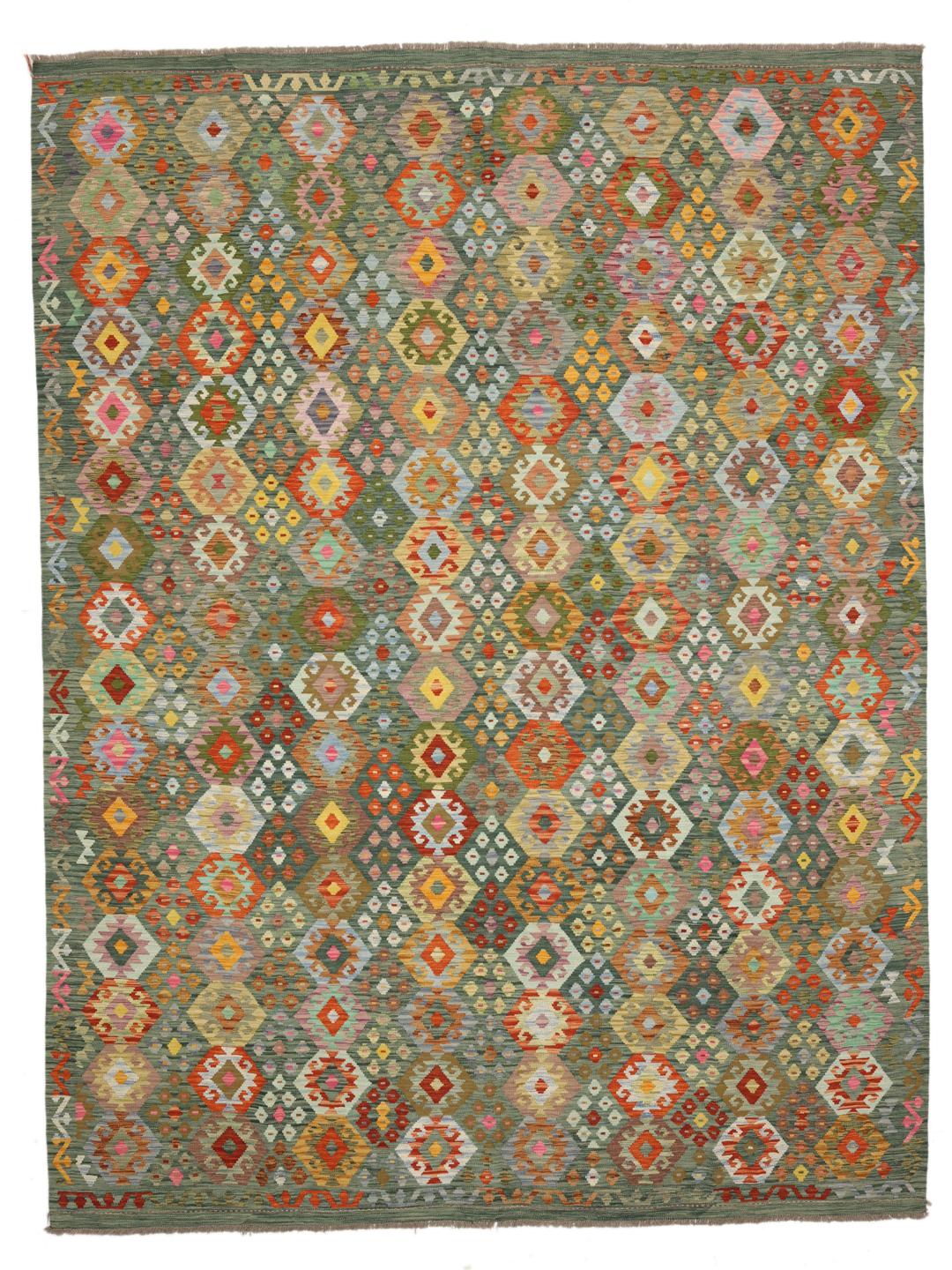
Signature design elements of the Afghan Kelim include repeating diamond and medallion motifs, often framed by decorative borders. The colours are traditionally derived from natural dyes, producing earthy, saturated tones that age gracefully, developing a soft patina that only enhances the rug's character over time.
Today, these rugs are highly sought after by collectors and enthusiasts who appreciate the skill required to produce such intricate work by hand. Owning an Afghan Kelim is a way to honour a long-standing craft tradition, bringing a piece of cultural heritage into your home that is as significant as it is beautiful.