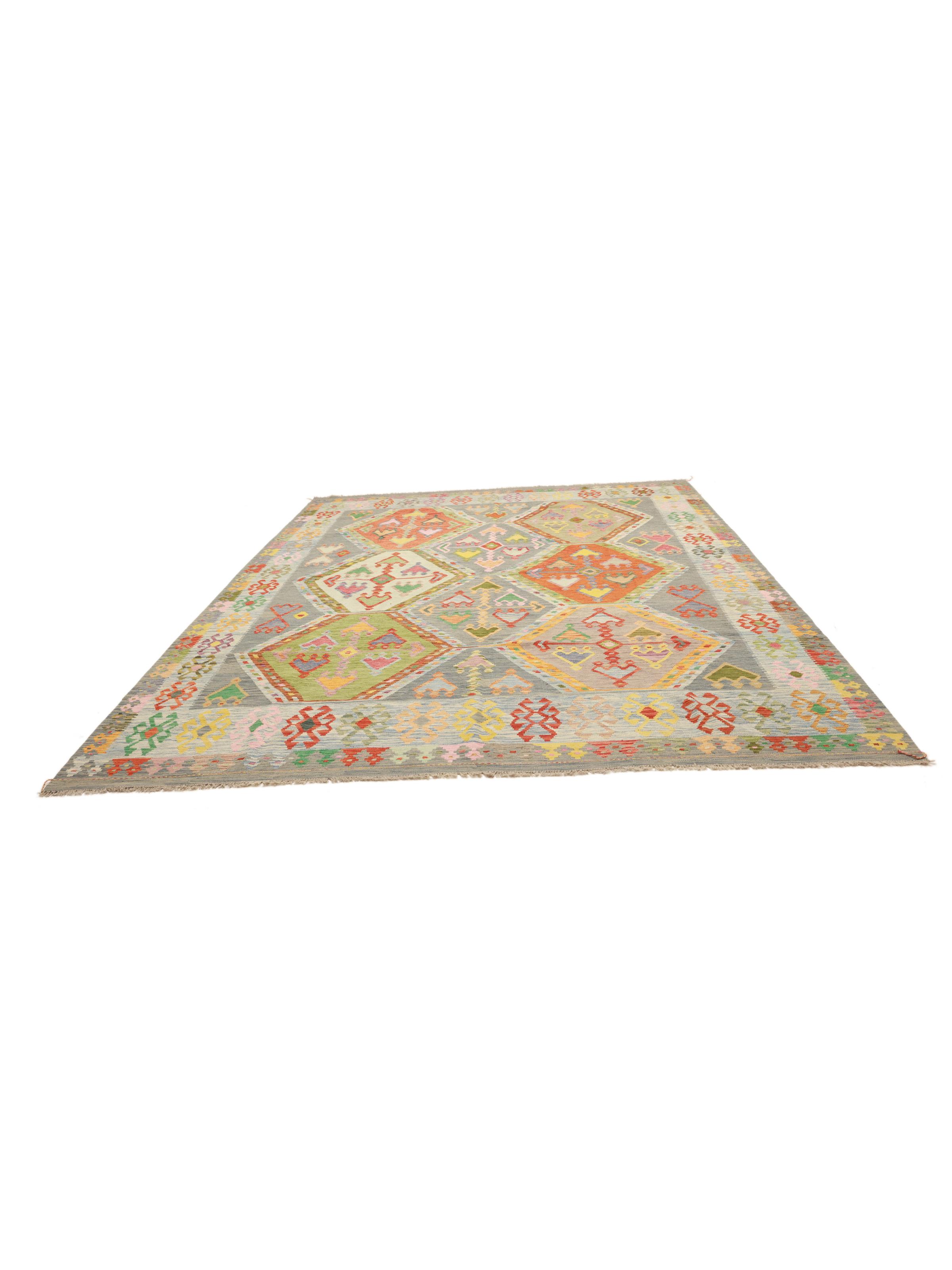
Kelim rugs from Afghanistan are deeply rooted in the nomadic and semi-nomadic traditions of the region. These flat-woven textiles were historically created by tribal groups for practical uses such as floor coverings, tent partitions, and storage bags. As these communities travelled across the rugged landscapes of the Middle East and Central Asia, they developed a design language that was portable, durable, and deeply expressive of their cultural identity.
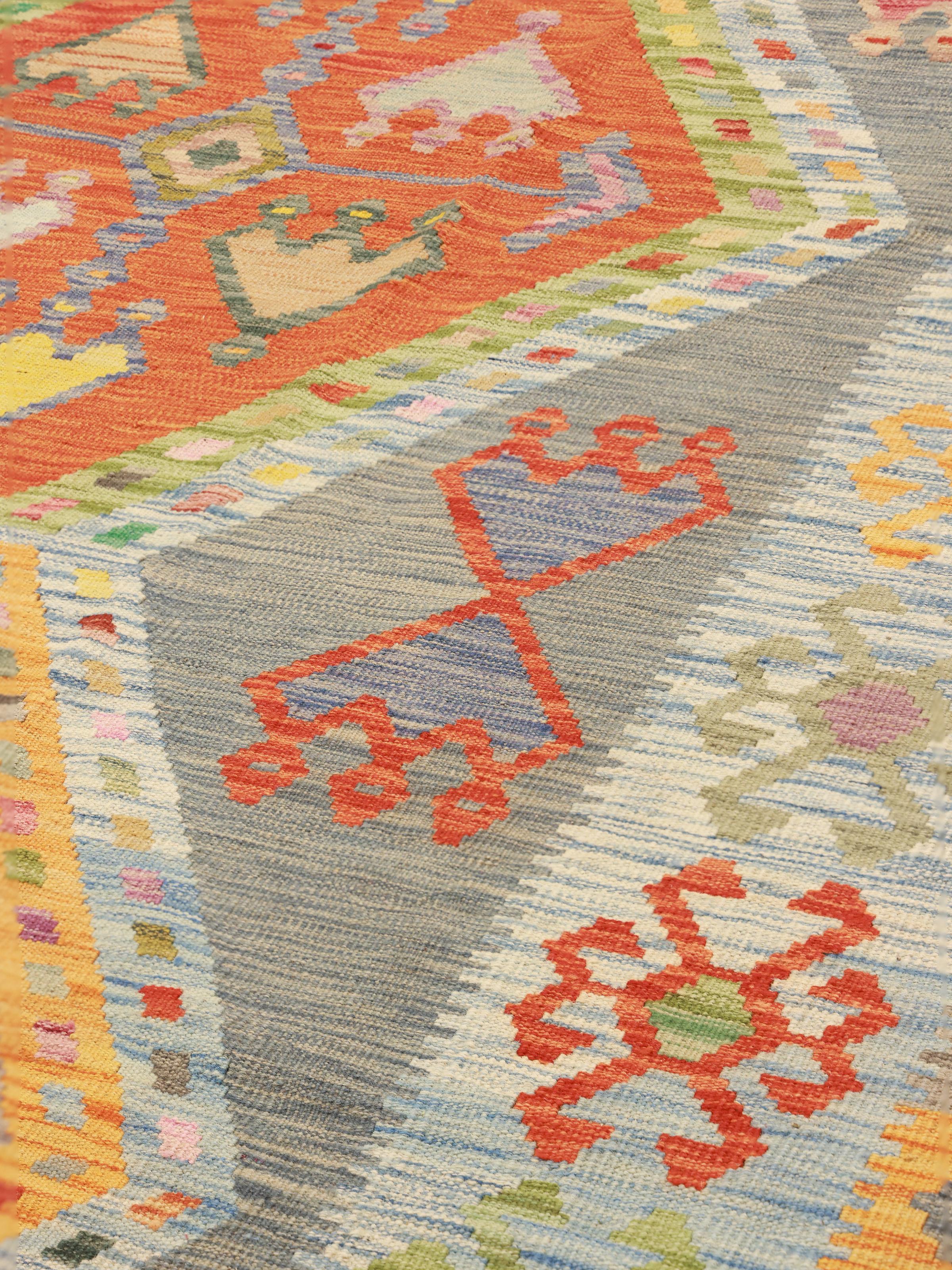
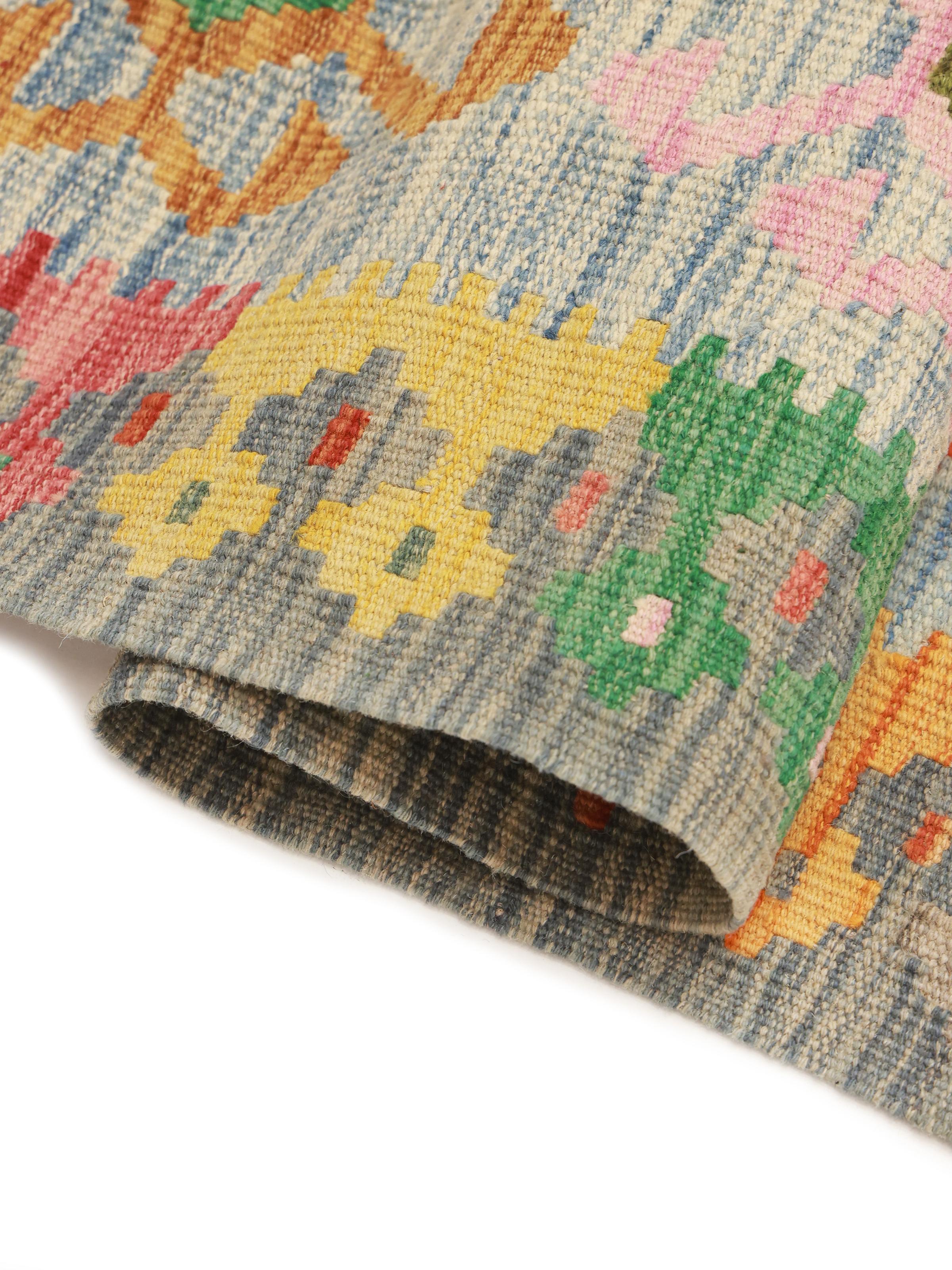
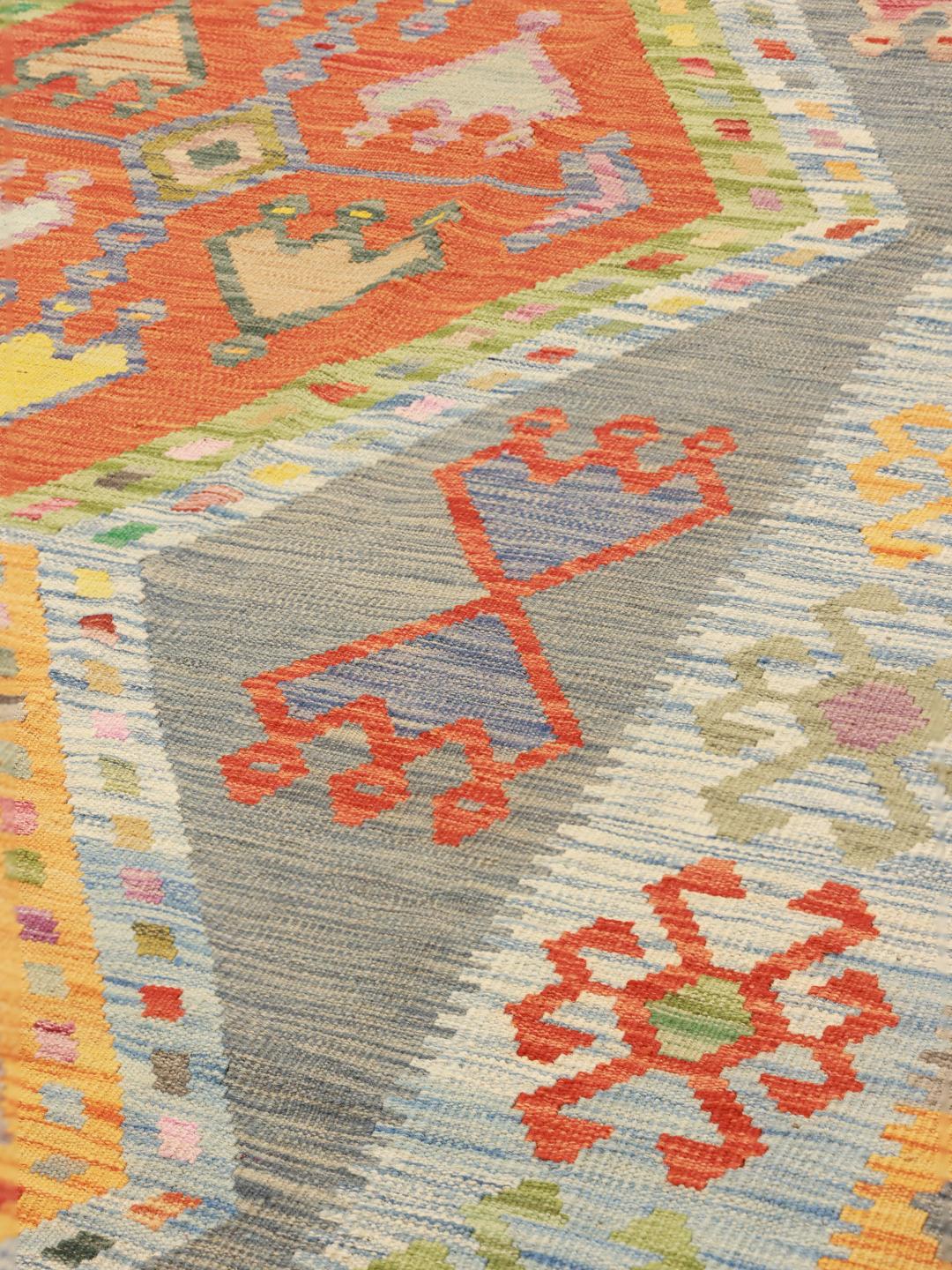
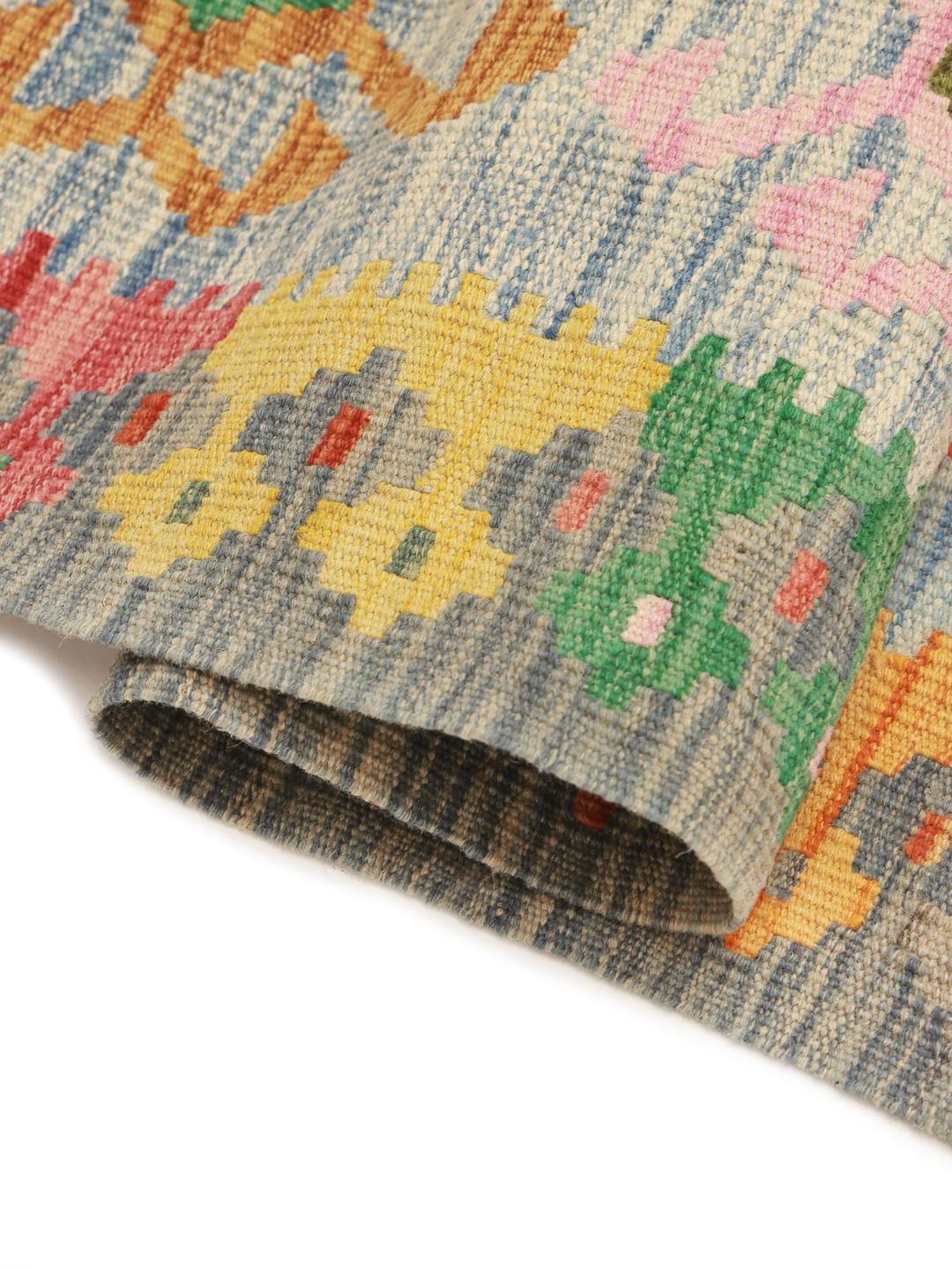
The term Kelim, or Kilim, refers specifically to the tapestry-weave technique where the weft threads are woven tightly over the warp threads to create a flat, pileless surface. This method is highly valued for its ability to produce sharp, clean lines and intricate geometric patterns. Because there is no pile, the rug's beauty relies entirely on the precision of the weave and the quality of the wool, making it a true test of the artisan's skill.
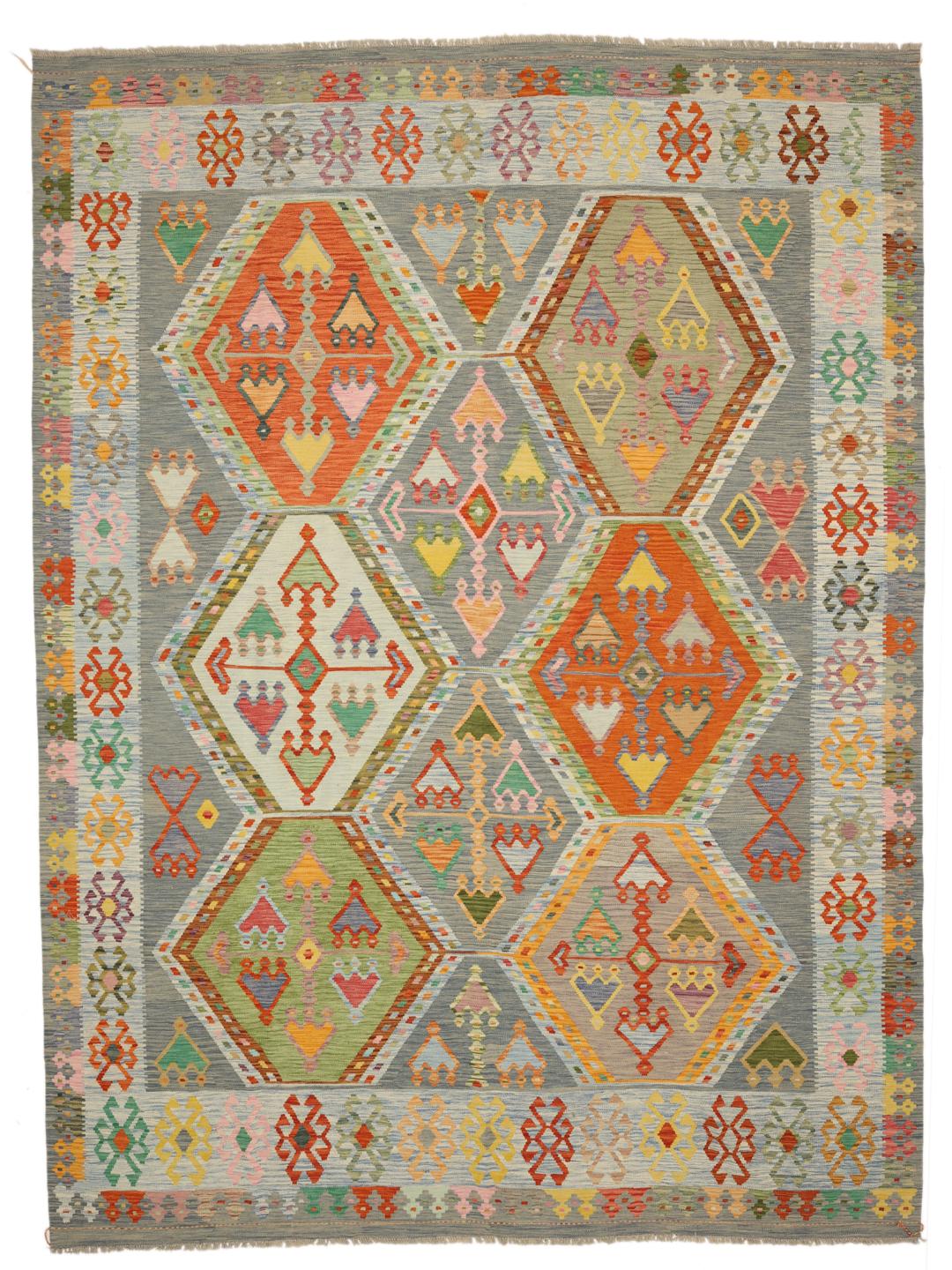
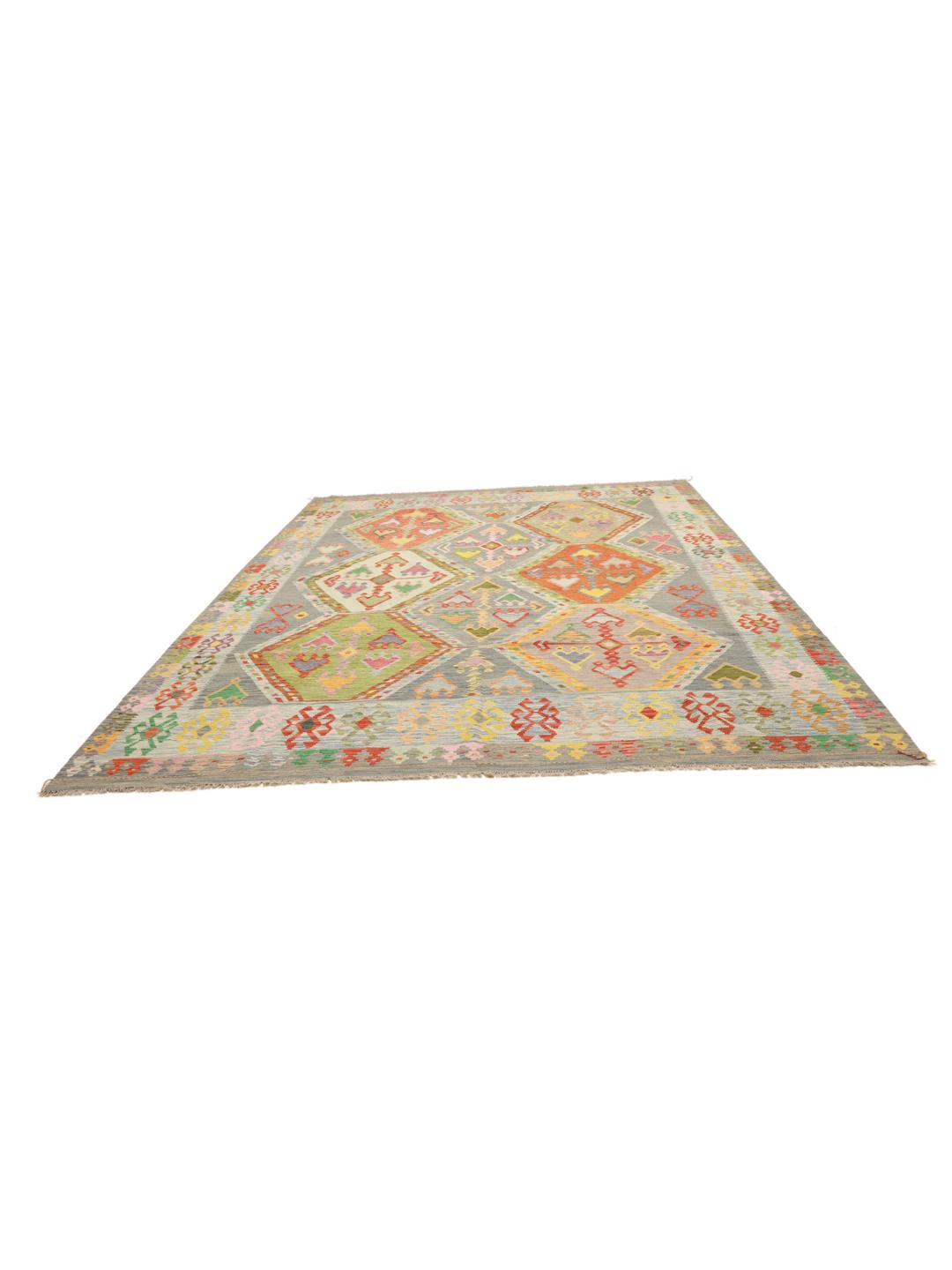
Signature design elements of these rugs include bold geometric motifs such as diamonds, triangles, and stylized medallions. In this particular piece, the repeating diamond pattern creates a rhythmic, balanced layout that is characteristic of the Afghan tradition. The use of vibrant, contrasting colours within these shapes is intended to catch the light and add warmth to a room, reflecting the natural dyes and traditional palettes that have been passed down through generations.
Collecting a Kelim is an investment in cultural heritage. Each rug serves as a historical record of the weaver's community, with designs often passed down through families as a form of visual storytelling. By choosing a piece like this, you are preserving the legacy of these traditional craft techniques and supporting the continuation of an art form that has defined homes for centuries.