Kelim rugs have been woven for centuries across the Middle East, Central Asia, and the Caucasus, serving as essential components of nomadic life. These flat-woven textiles were originally created by tribal communities for practical purposes, such as floor coverings, tent partitions, and storage bags. The tradition of Afghan weaving is particularly celebrated for its resilience and its use of bold, earthy tones that reflect the landscape of the region.
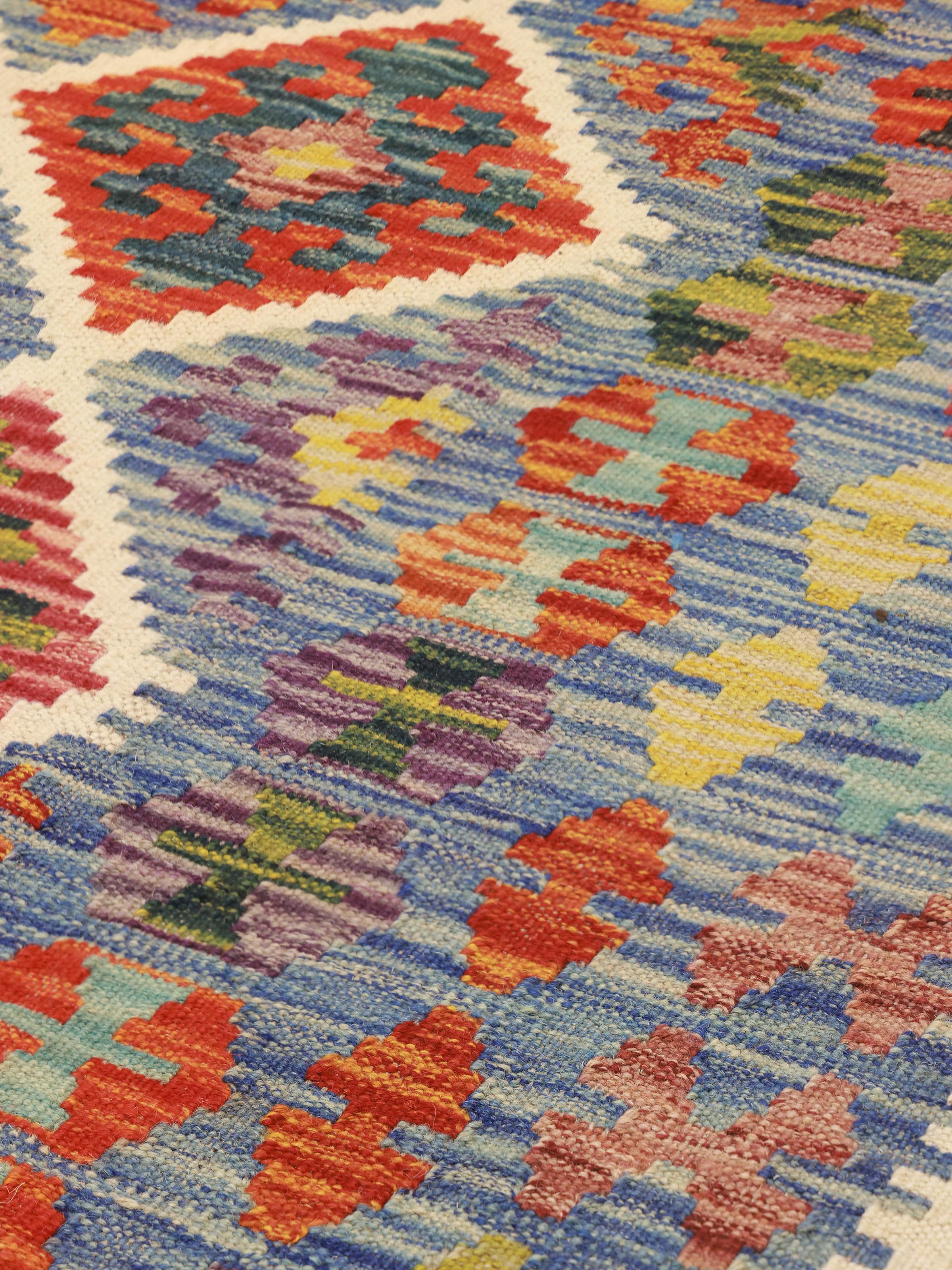
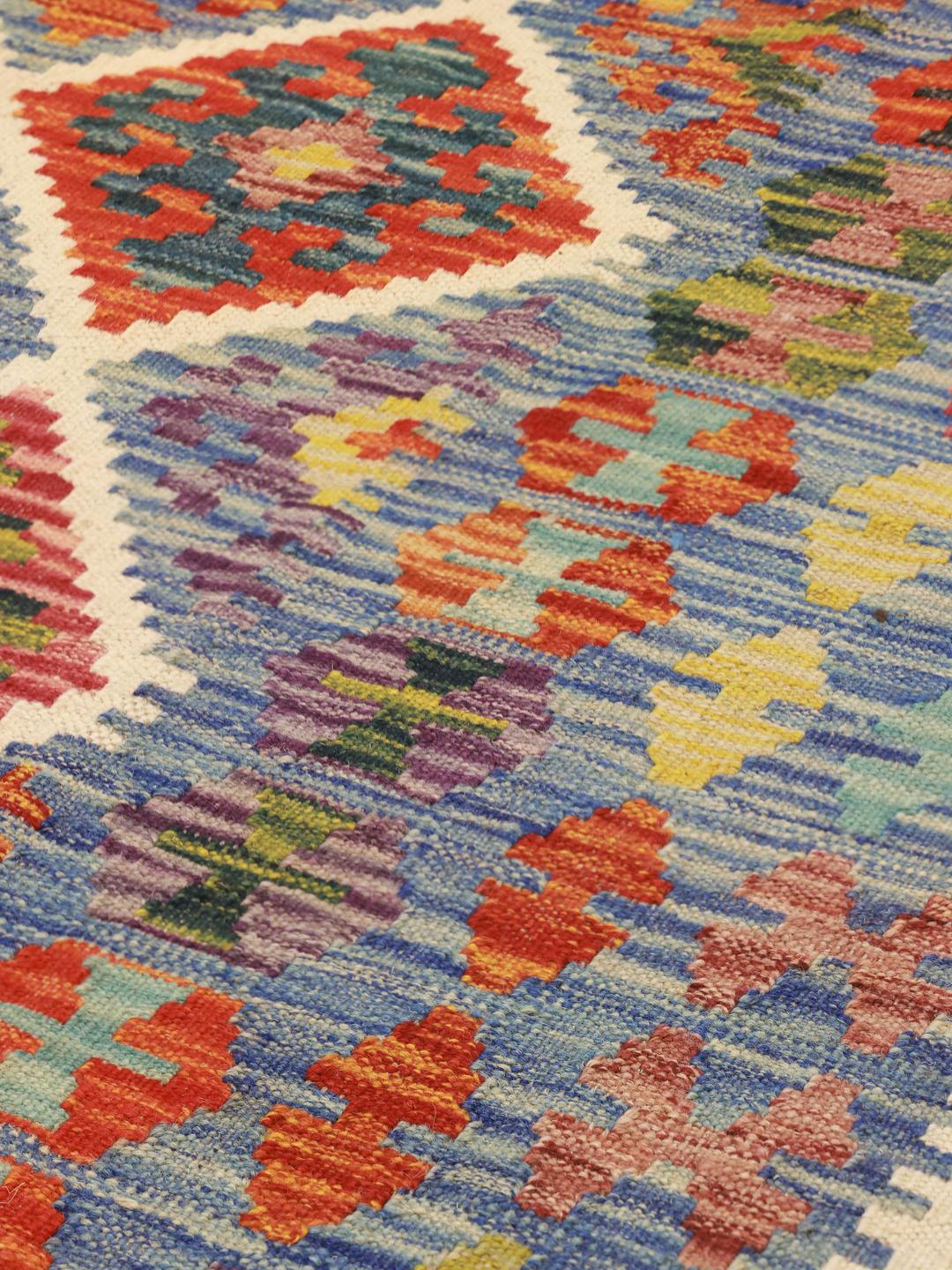
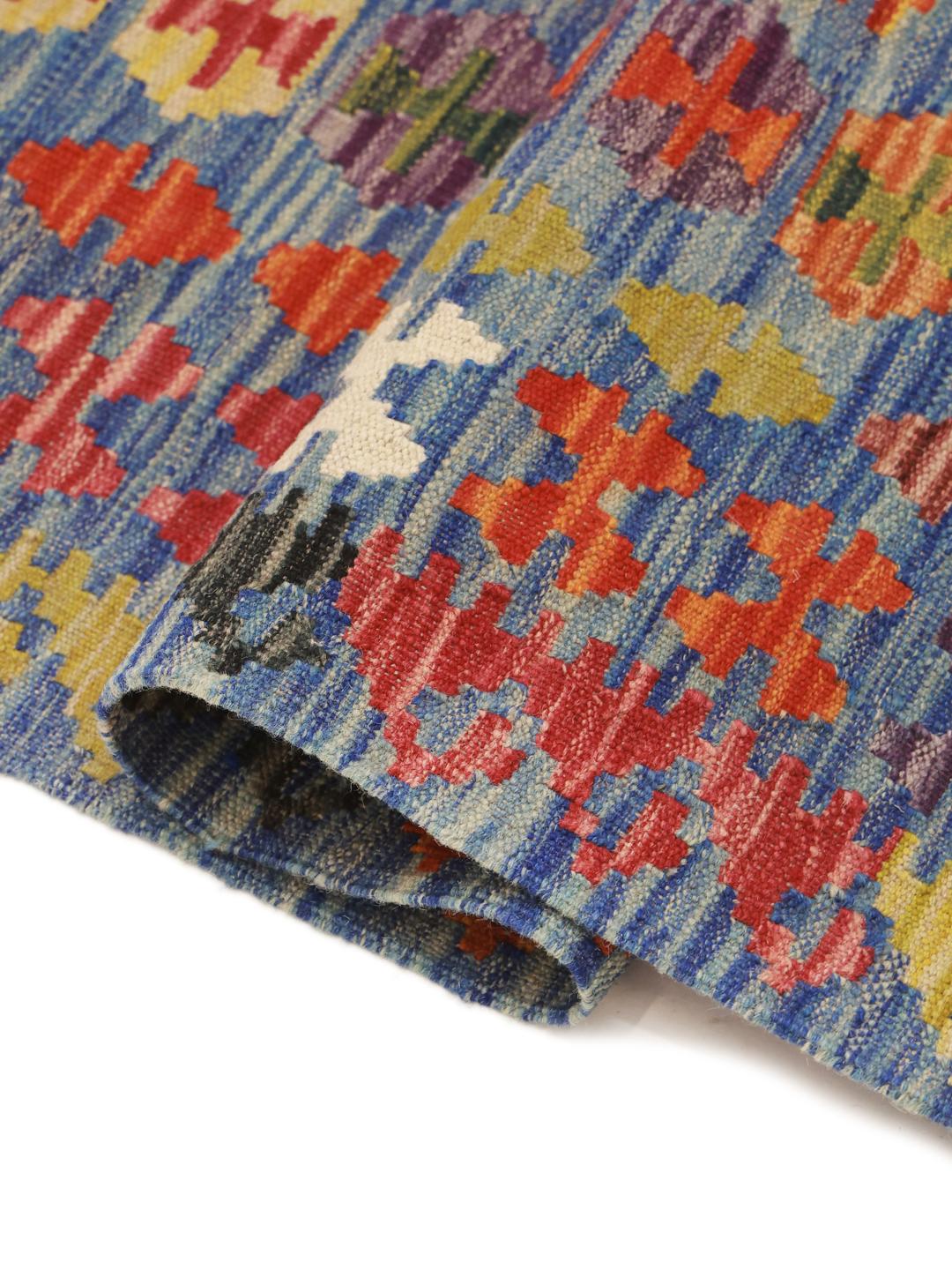
The term Kelim refers to the specific flat-weave technique where the weft threads are woven tightly through the warp threads. Unlike pile rugs, which use individual knots to create a fuzzy surface, this method relies on the interlacing of threads to produce a smooth, durable finish. This technique allows for exceptionally sharp geometric patterns, as the design is built directly into the structure of the fabric during the weaving process.
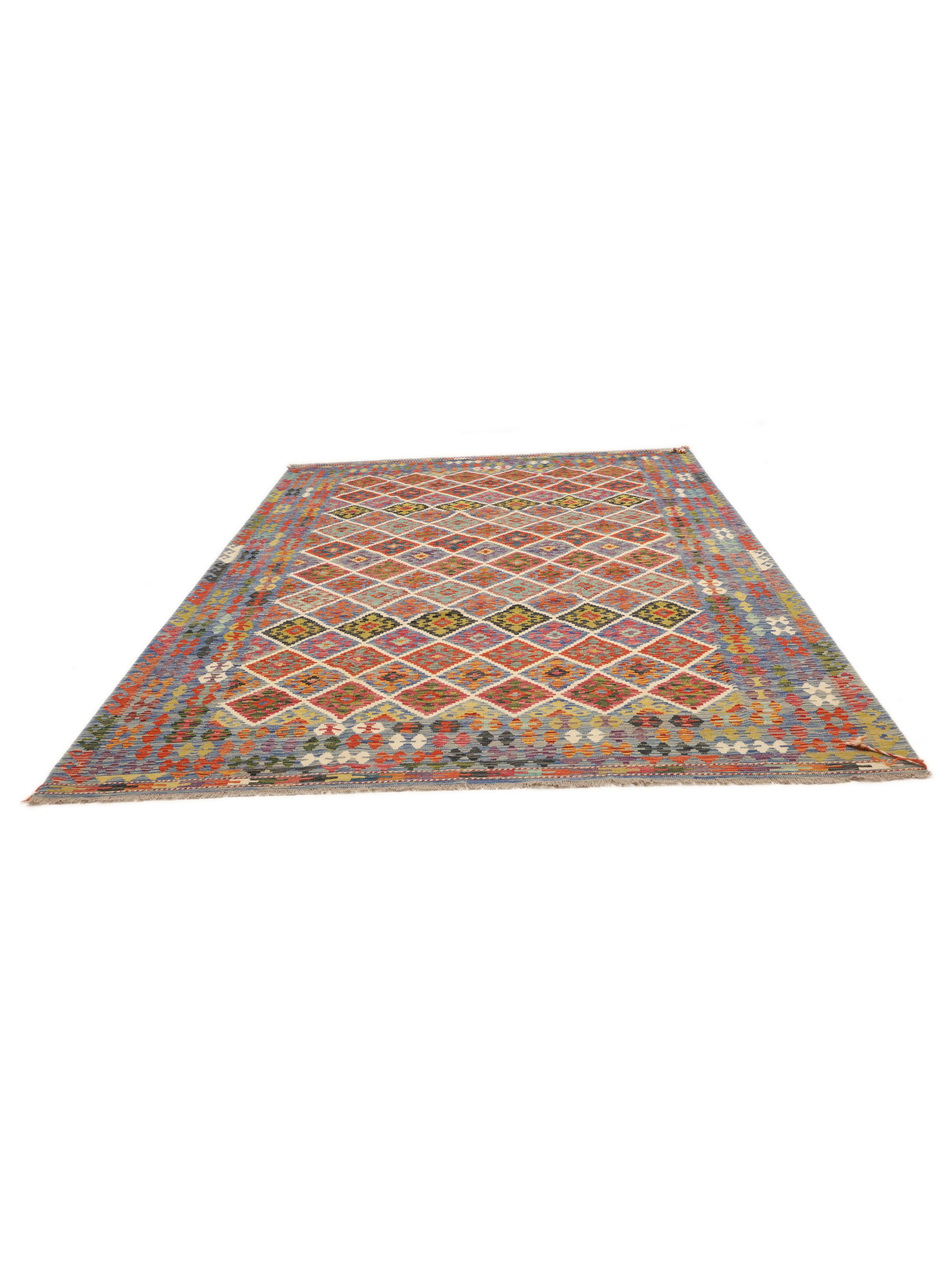
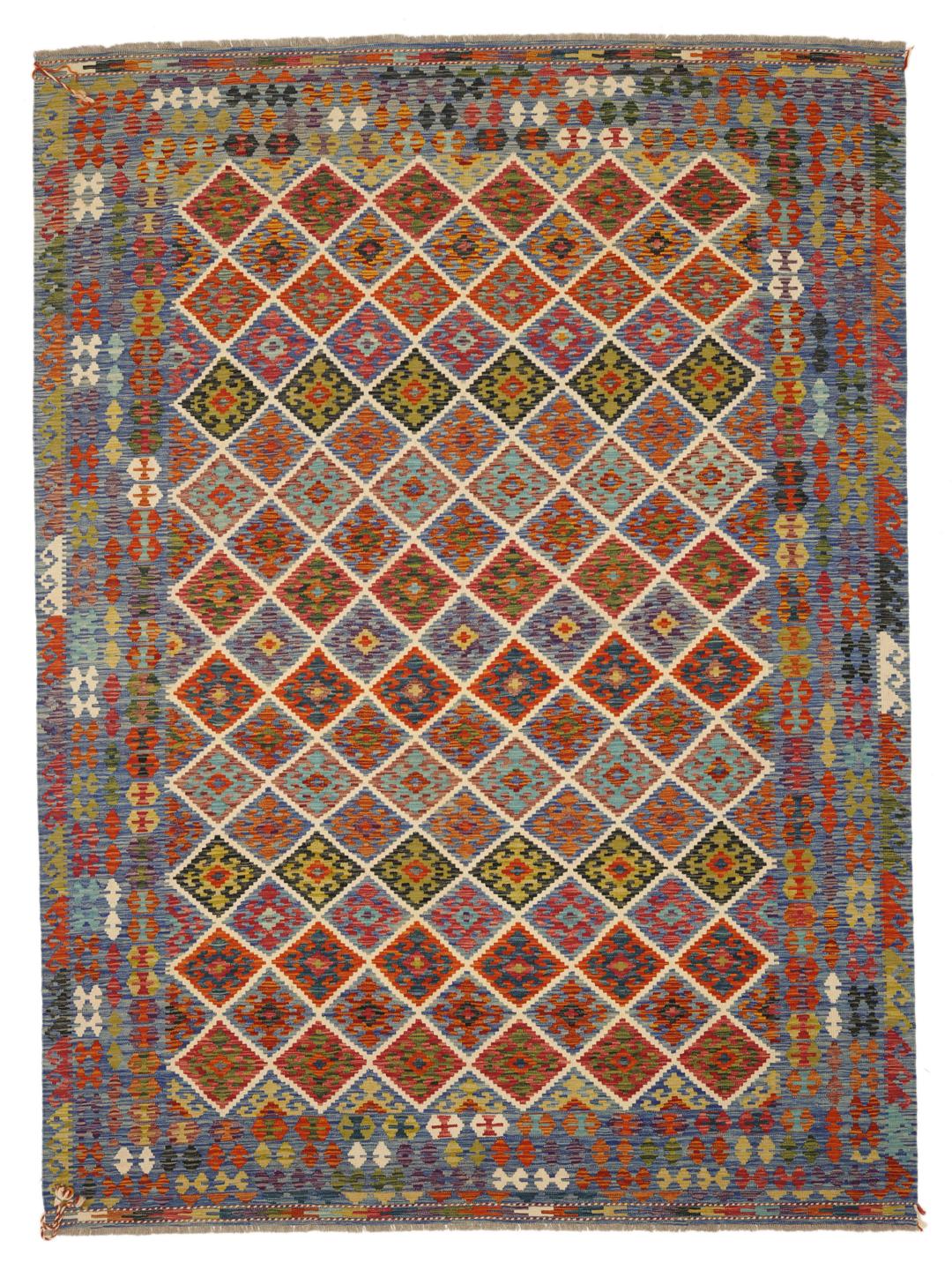
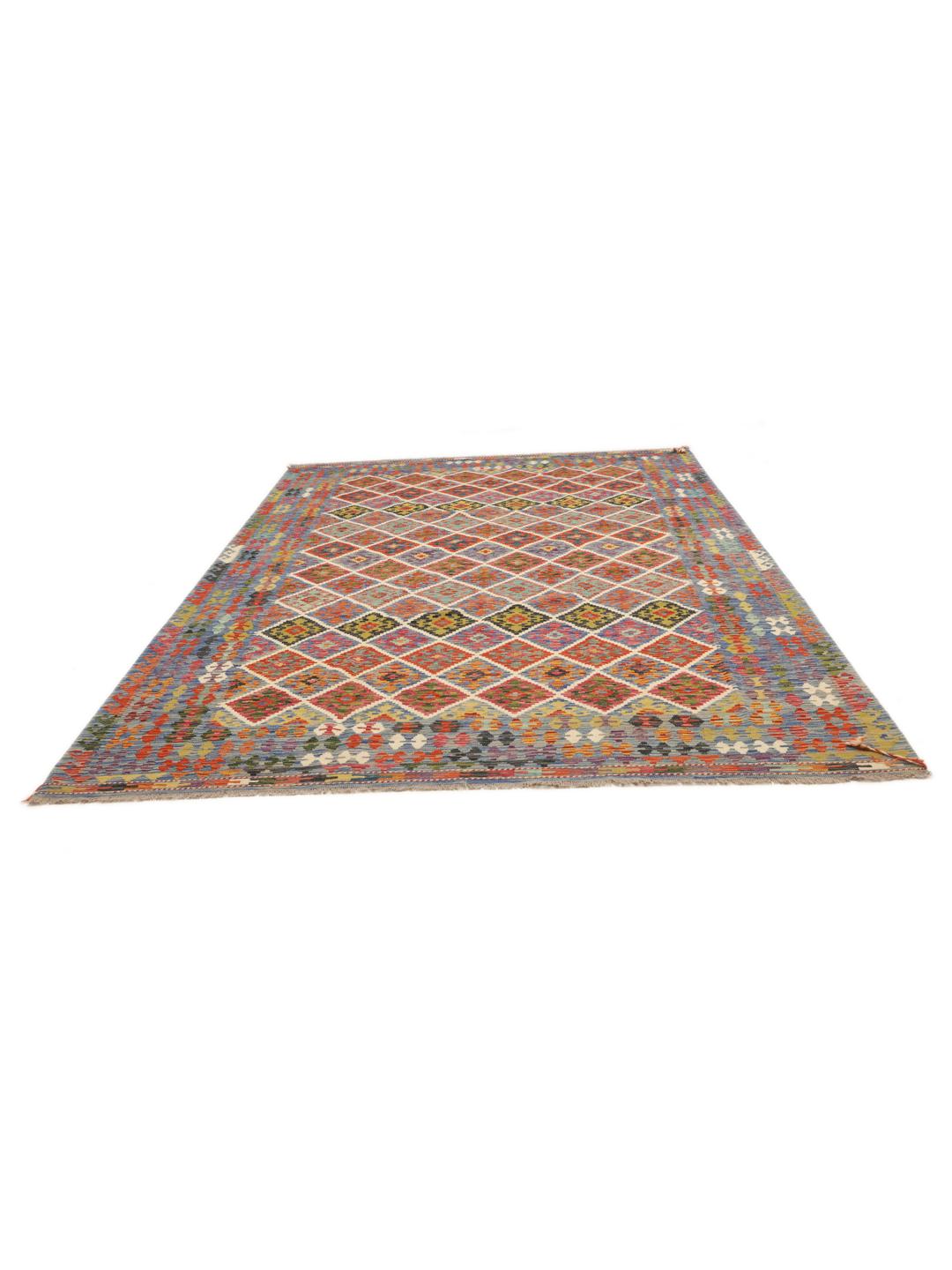
The signature design elements of these rugs are rooted in tribal symbolism and geometric abstraction. The diamond motifs seen here are classic examples of the visual language used to represent protection, fertility, and prosperity within traditional weaving communities. The borders often feature intricate, smaller motifs that frame the central field, demonstrating the weaver's ability to balance complex patterns with a harmonious sense of symmetry.
Today, these rugs are highly sought after by collectors and interior enthusiasts alike for their historical significance and artistic integrity. Owning an authentic Afghan Kelim is an investment in human skill and cultural continuity. These pieces are valued not only for their durability but for the way they tell the story of their origin, bringing a sense of depth and timelessness to any modern or classic home.