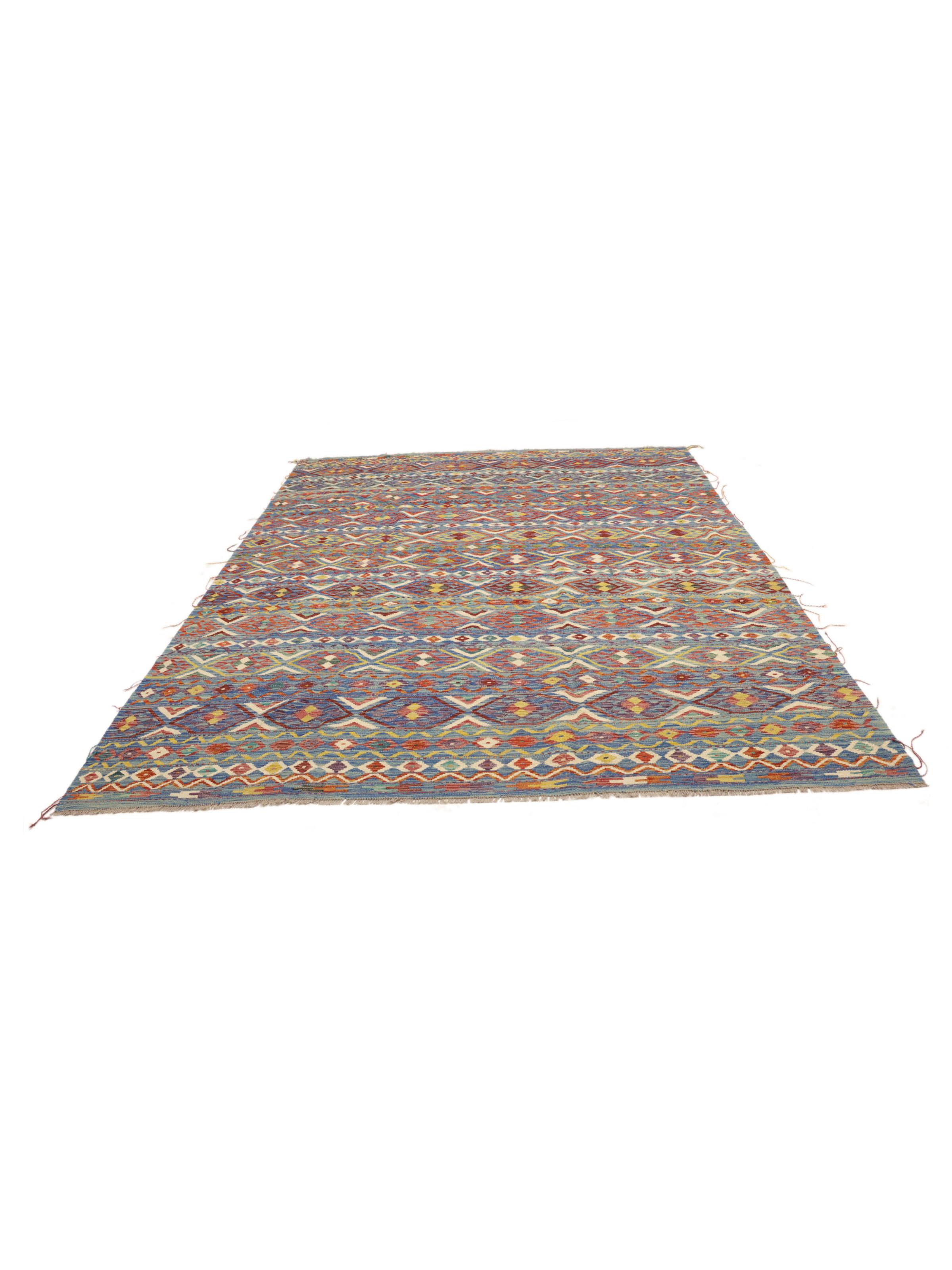
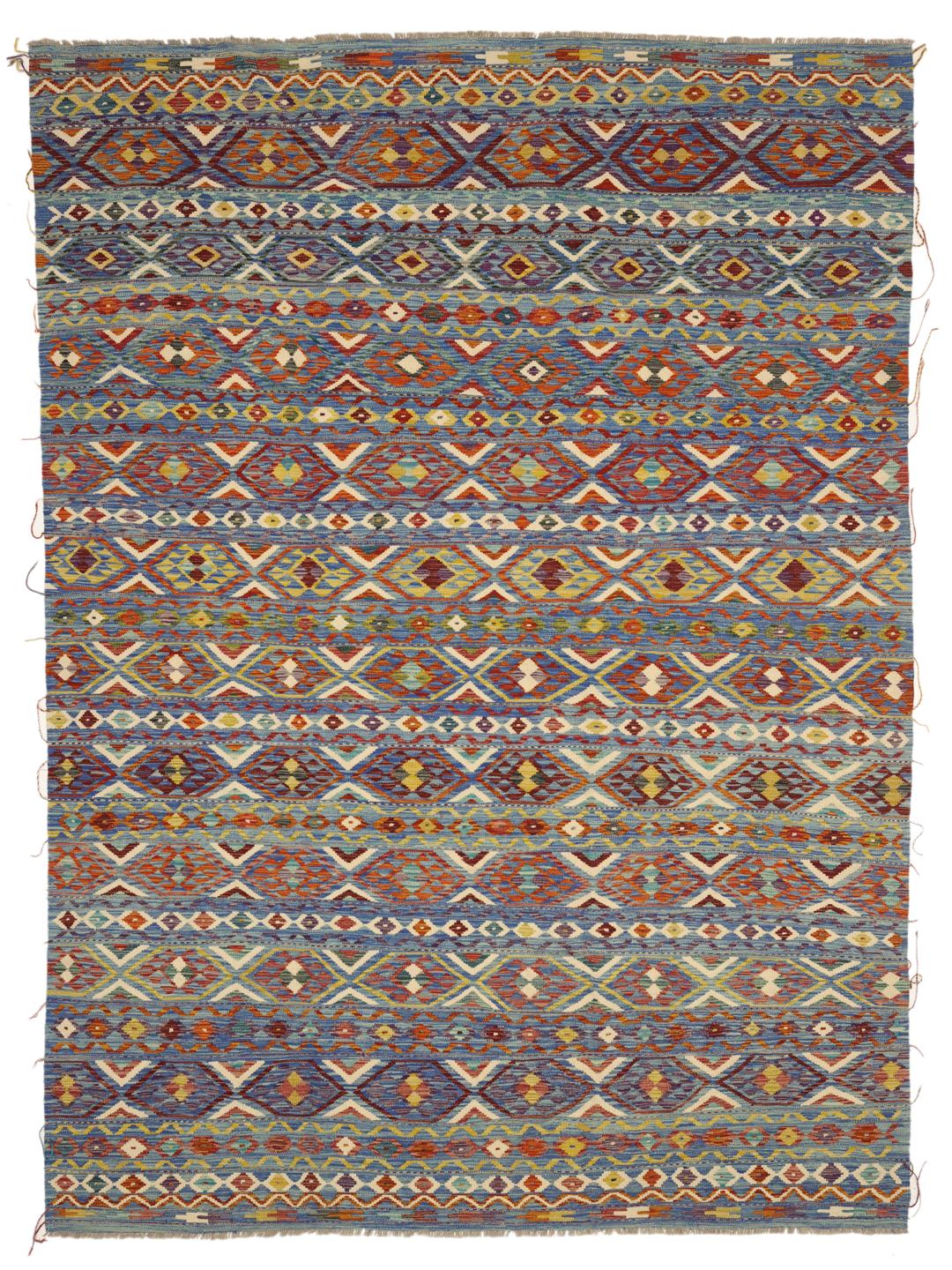
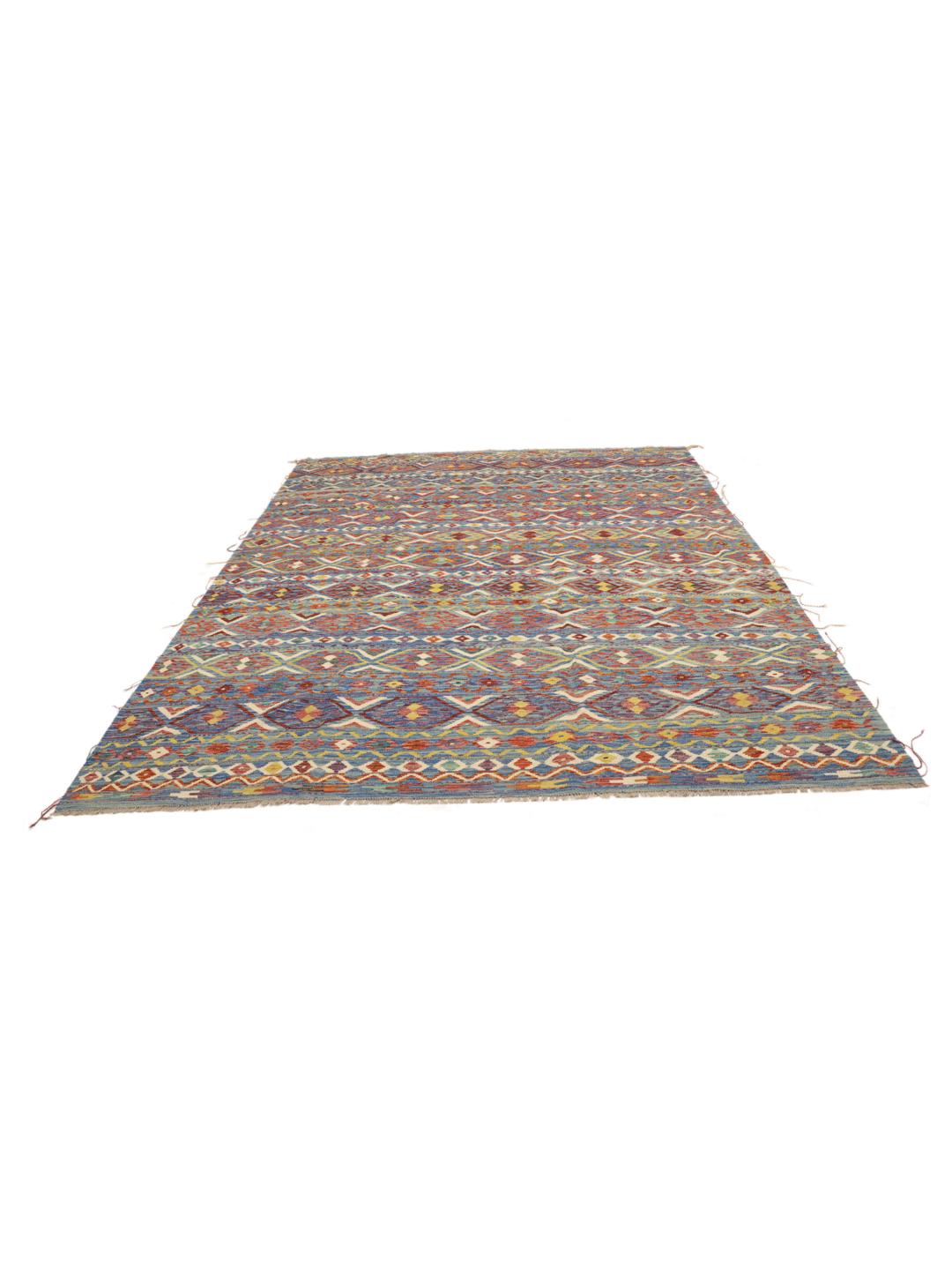
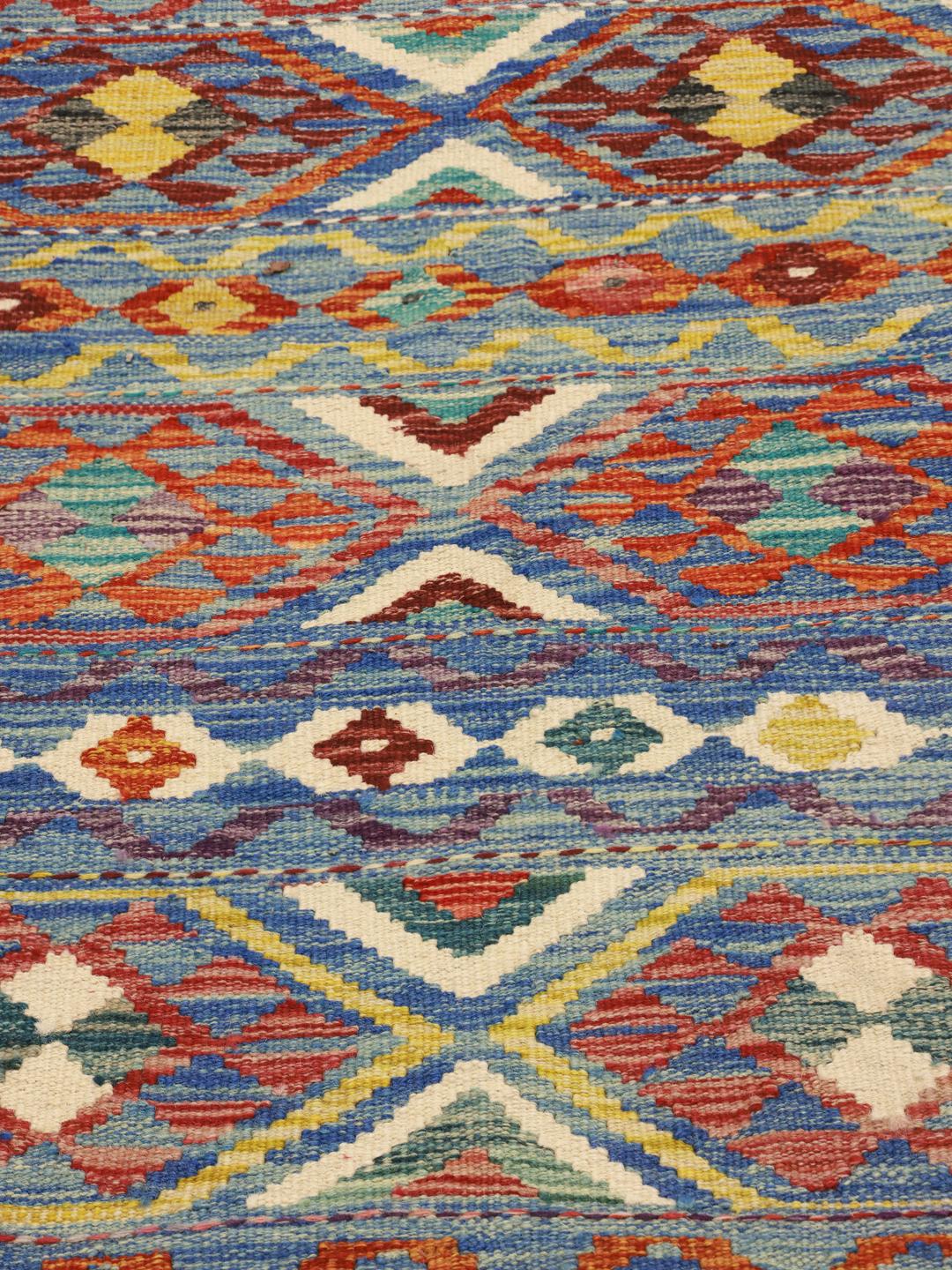
The Afghan kelim tradition is deeply rooted in the nomadic history of the region, where flat-woven textiles were crafted for their portability and multifaceted utility. These rugs served as floor coverings, blankets, and storage bags, evolving over generations into the sophisticated decorative pieces we see today.
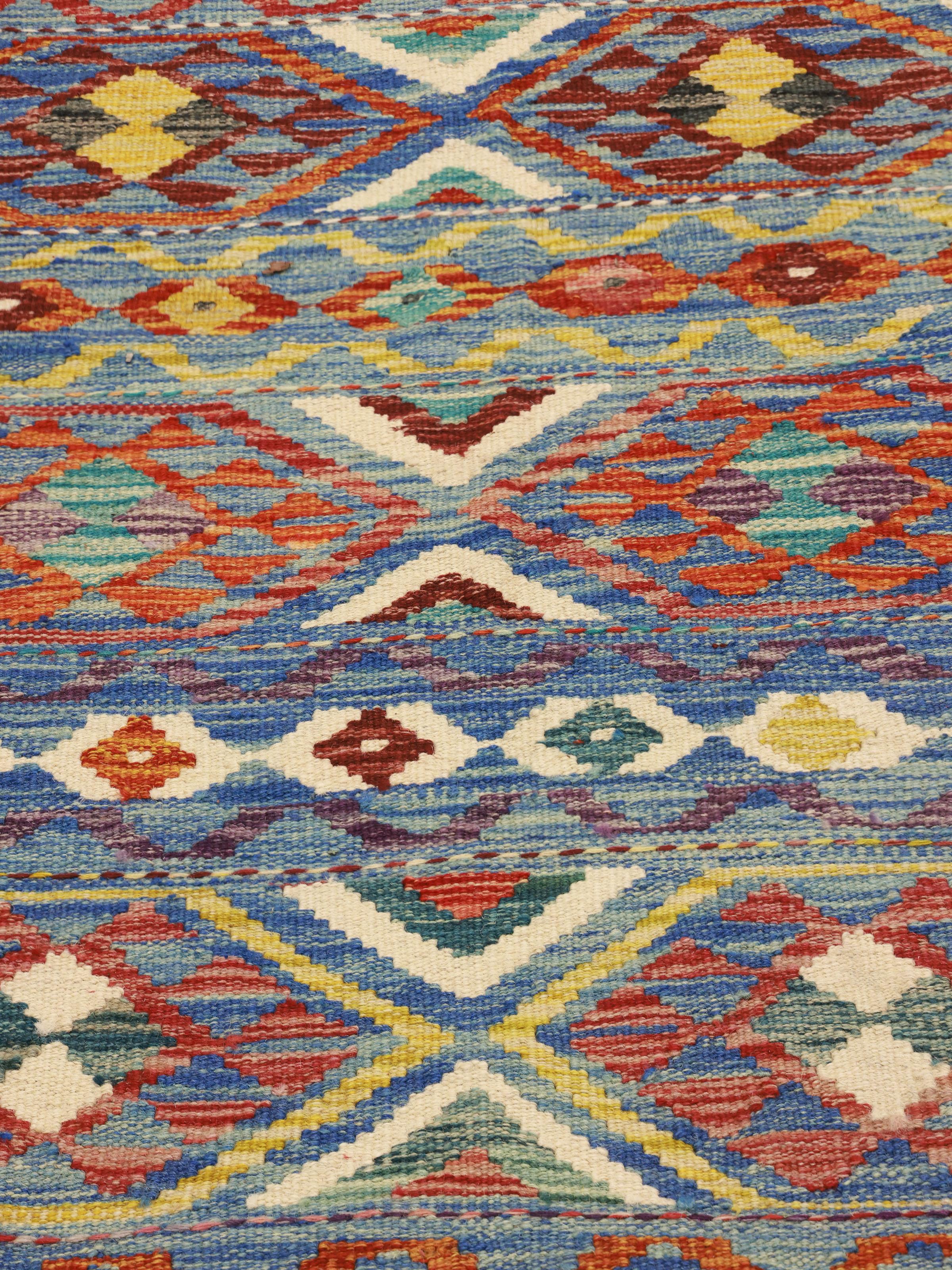
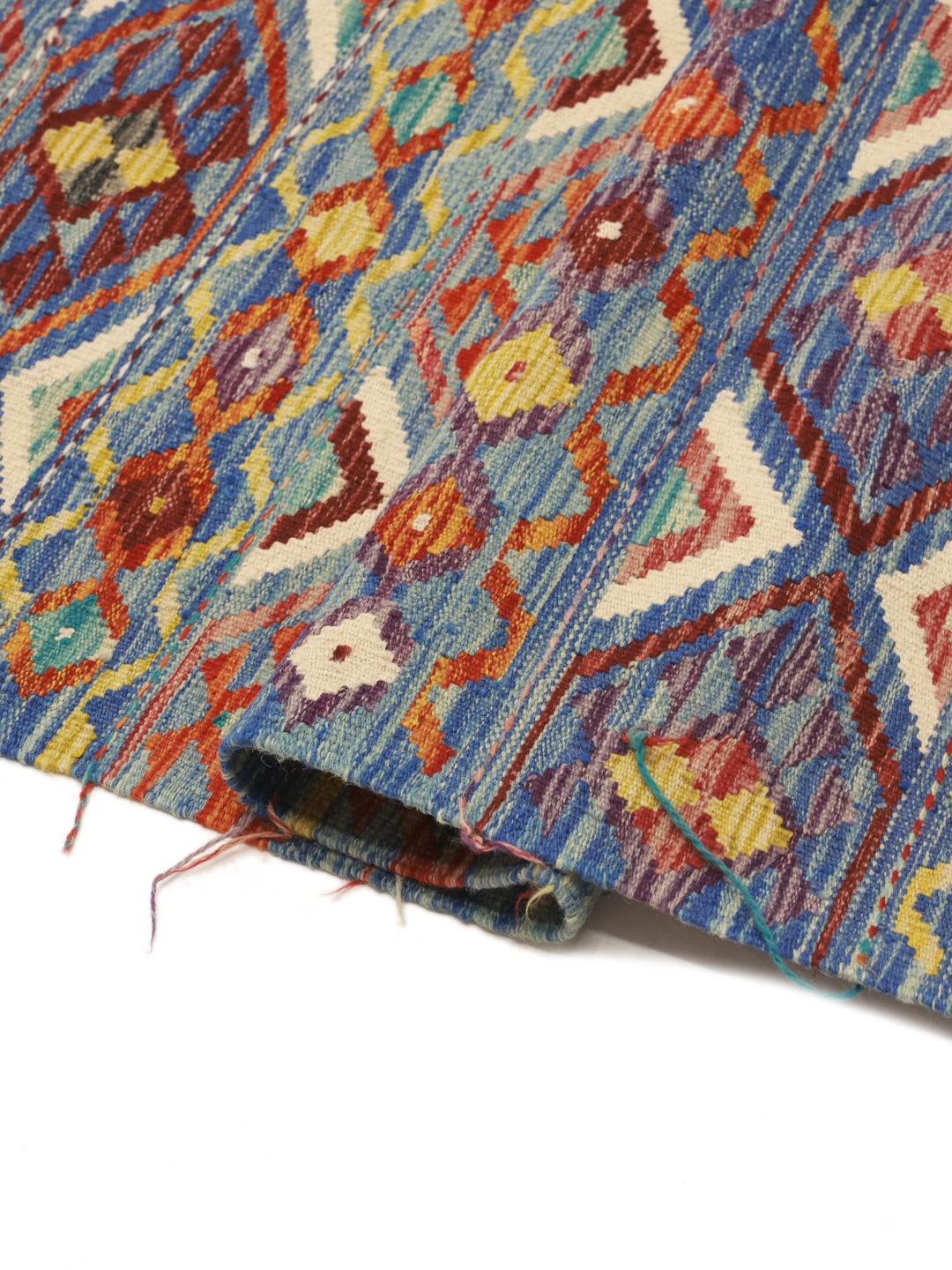
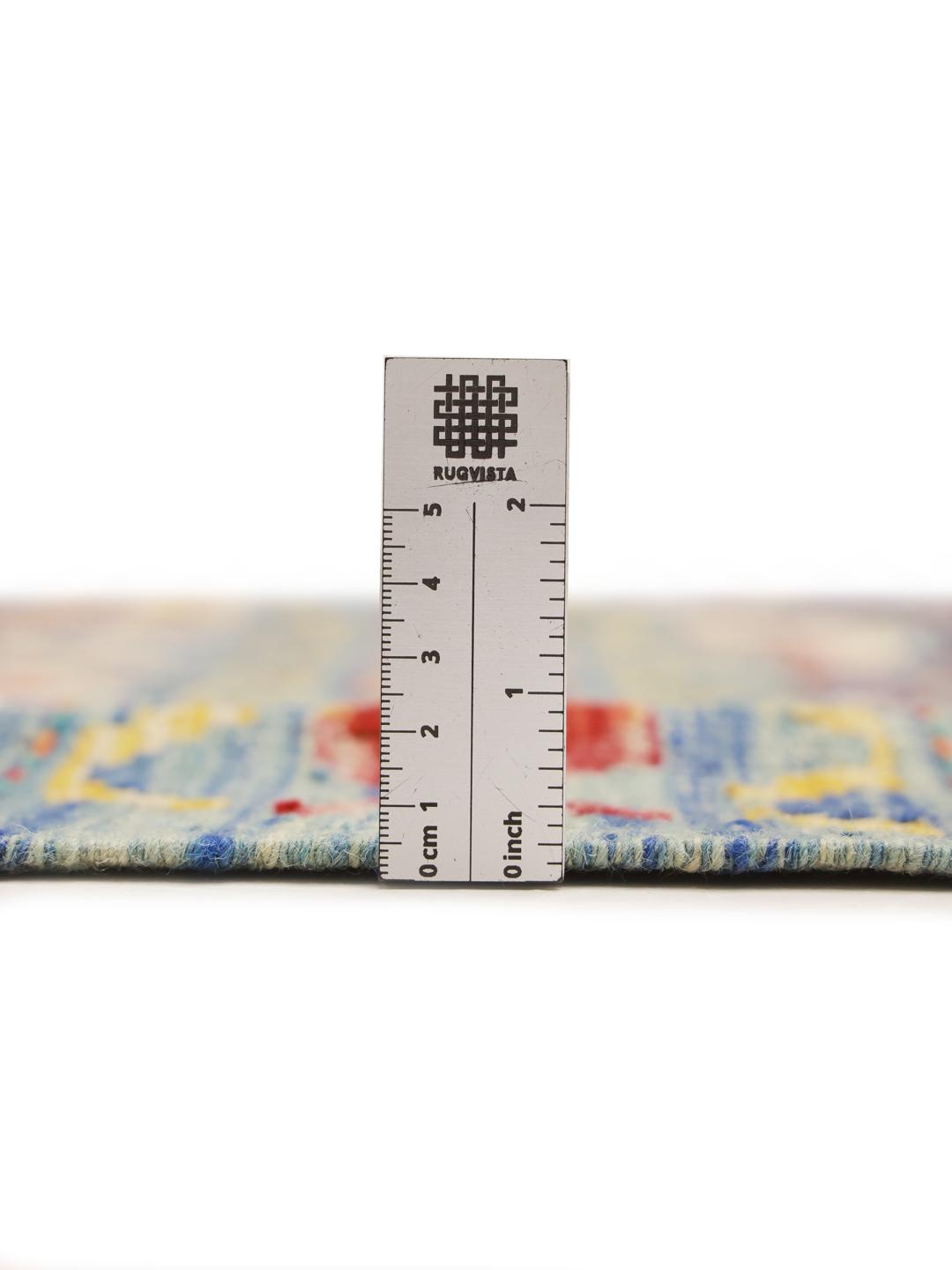
The term 'kelim' specifically refers to the slit-weave technique used to create these flat-woven rugs. By interlocking the coloured threads, weavers are able to produce sharp, clean-edged geometric motifs without the need for a pile. This technical approach results in a lightweight yet exceptionally sturdy textile that is prized for its longevity.
Visually, these rugs are defined by their bold, geometric language and earthy, saturated colour palettes. The recurring diamond and zigzag patterns are not merely decorative but are symbols often passed down through families, representing the landscape and values of the weaving communities in Afghanistan.
Collecting these rugs is an opportunity to preserve a legacy of skill that has survived through centuries of change. Owning a piece like this is a testament to the weaver’s dedication and the endurance of Middle Eastern textile traditions, providing your home with a sense of history and authentic craftsmanship.