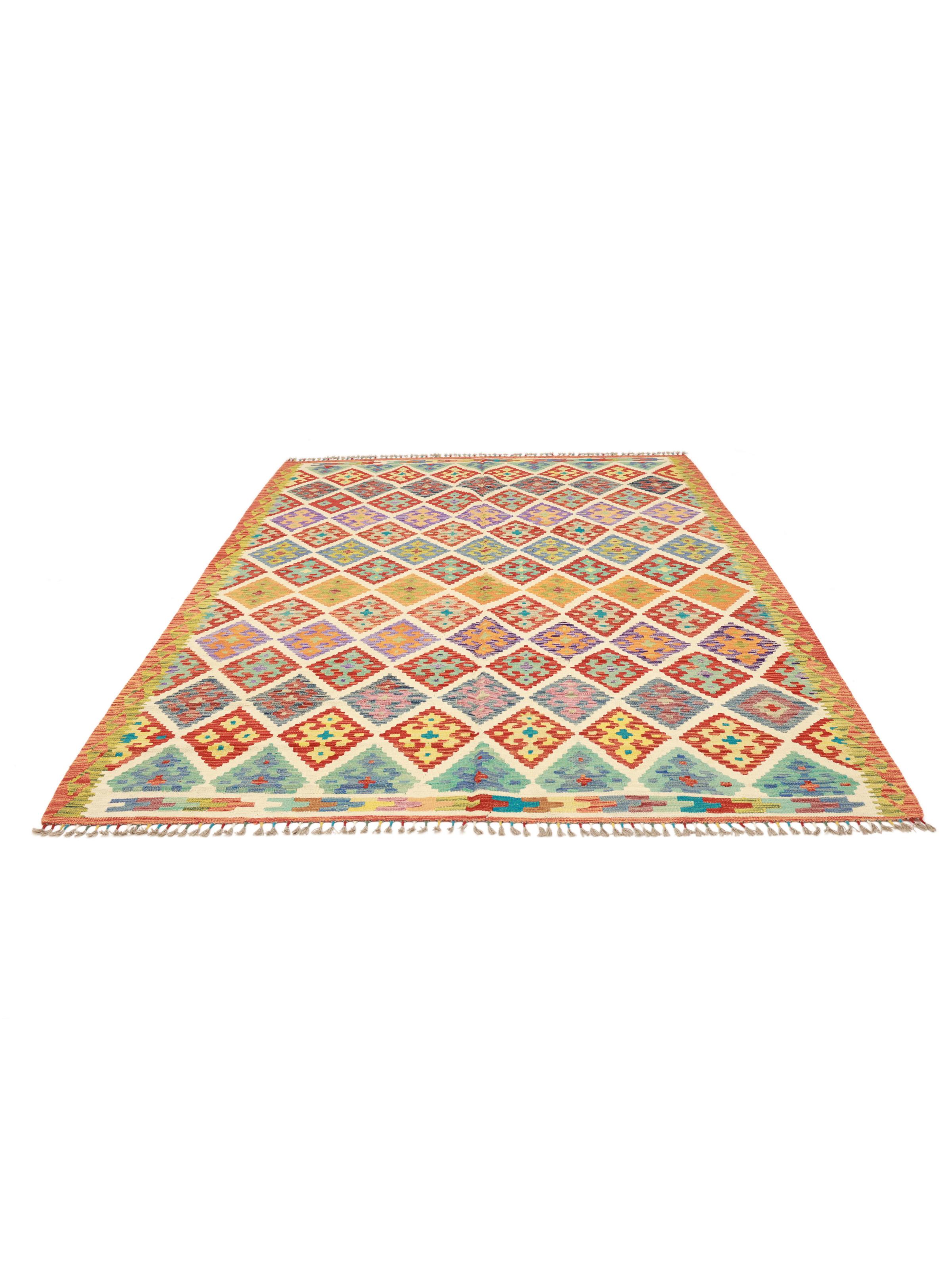
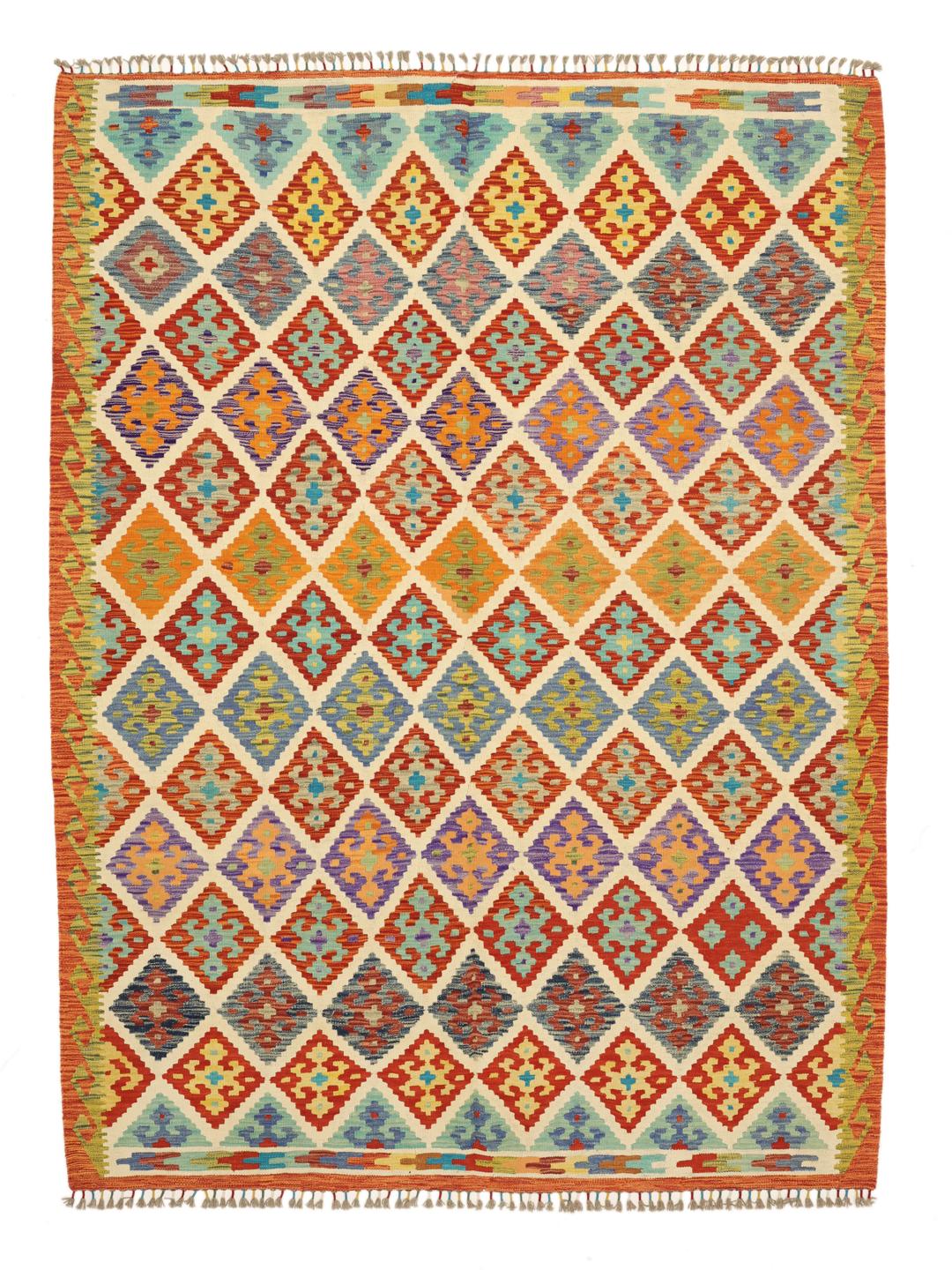
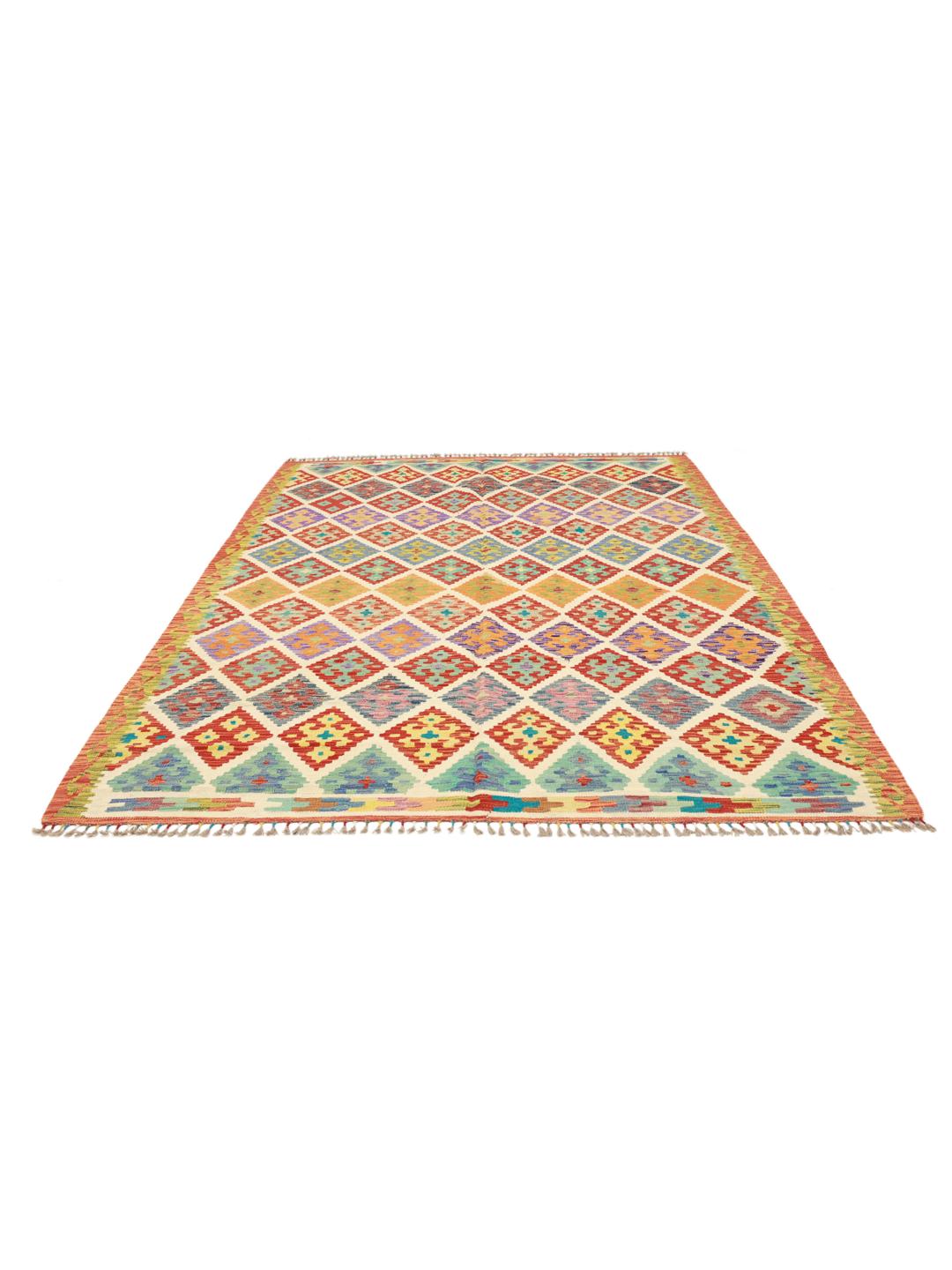
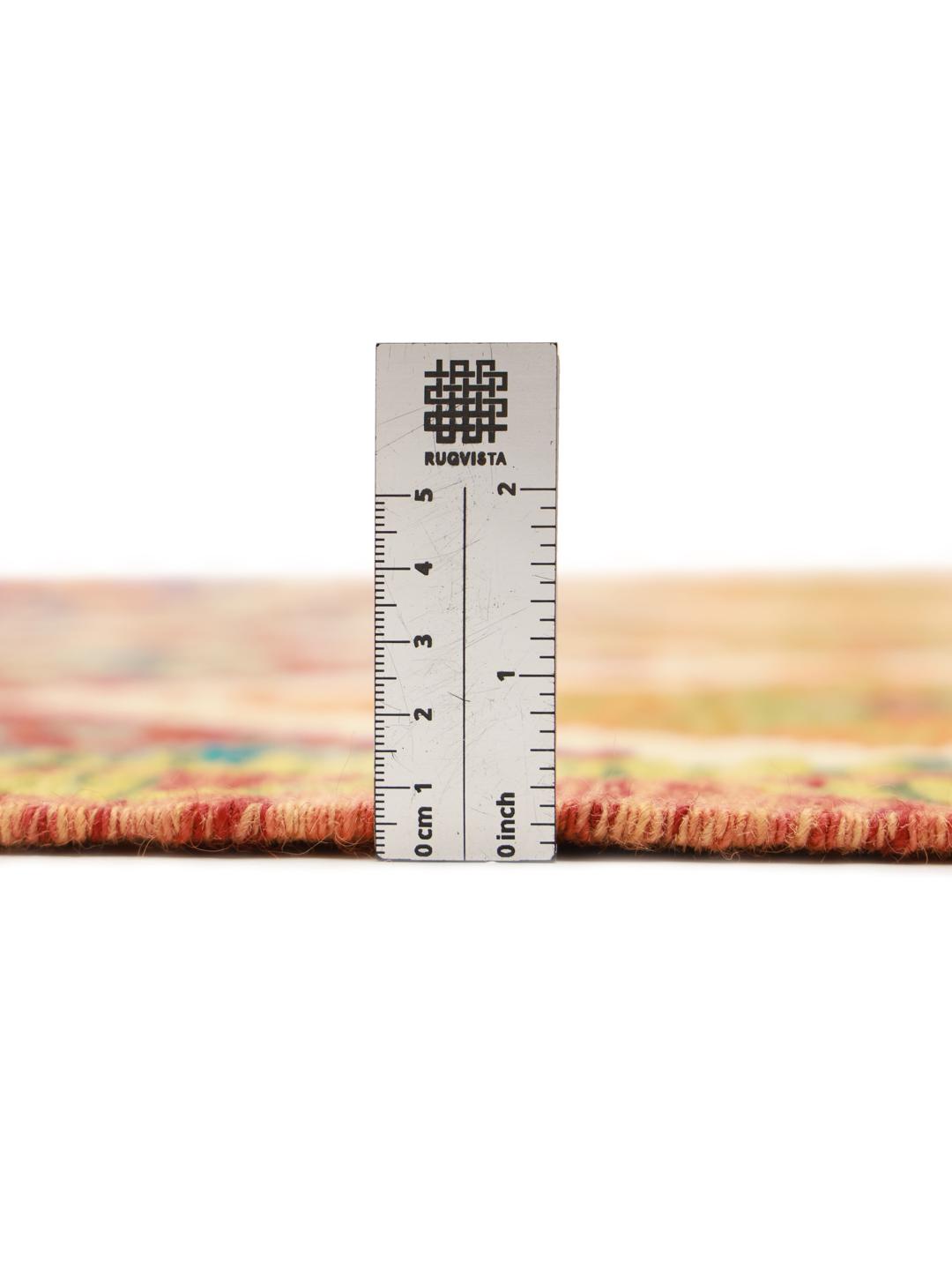
Kelim rugs from Afghanistan are deeply rooted in the nomadic and village traditions of the region, where weaving has served as both a practical necessity and a form of cultural expression for centuries. These flat-woven textiles are traditionally crafted without a pile, making them versatile and highly portable, which was essential for the mobile lifestyles of the weavers who created them.
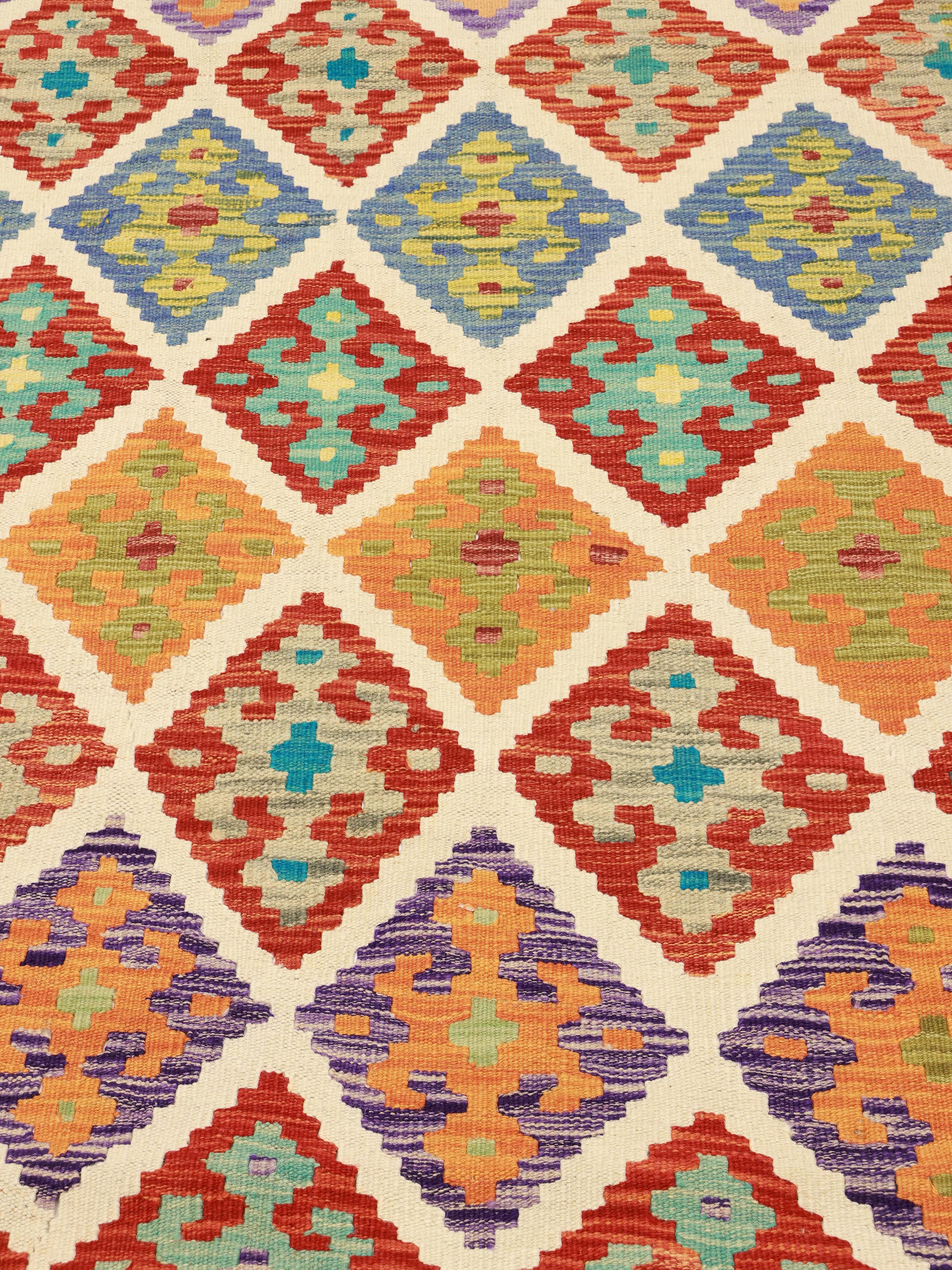
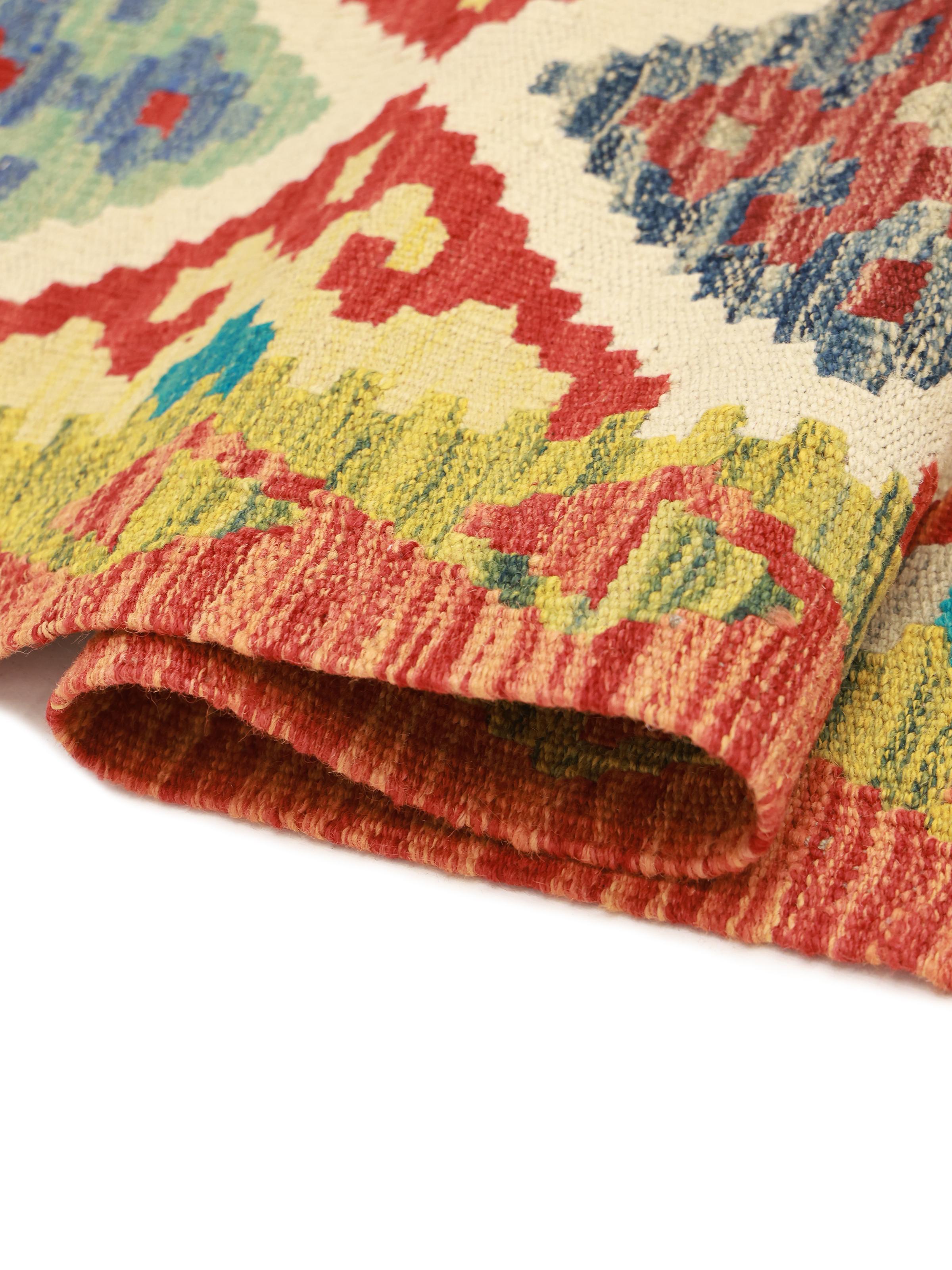
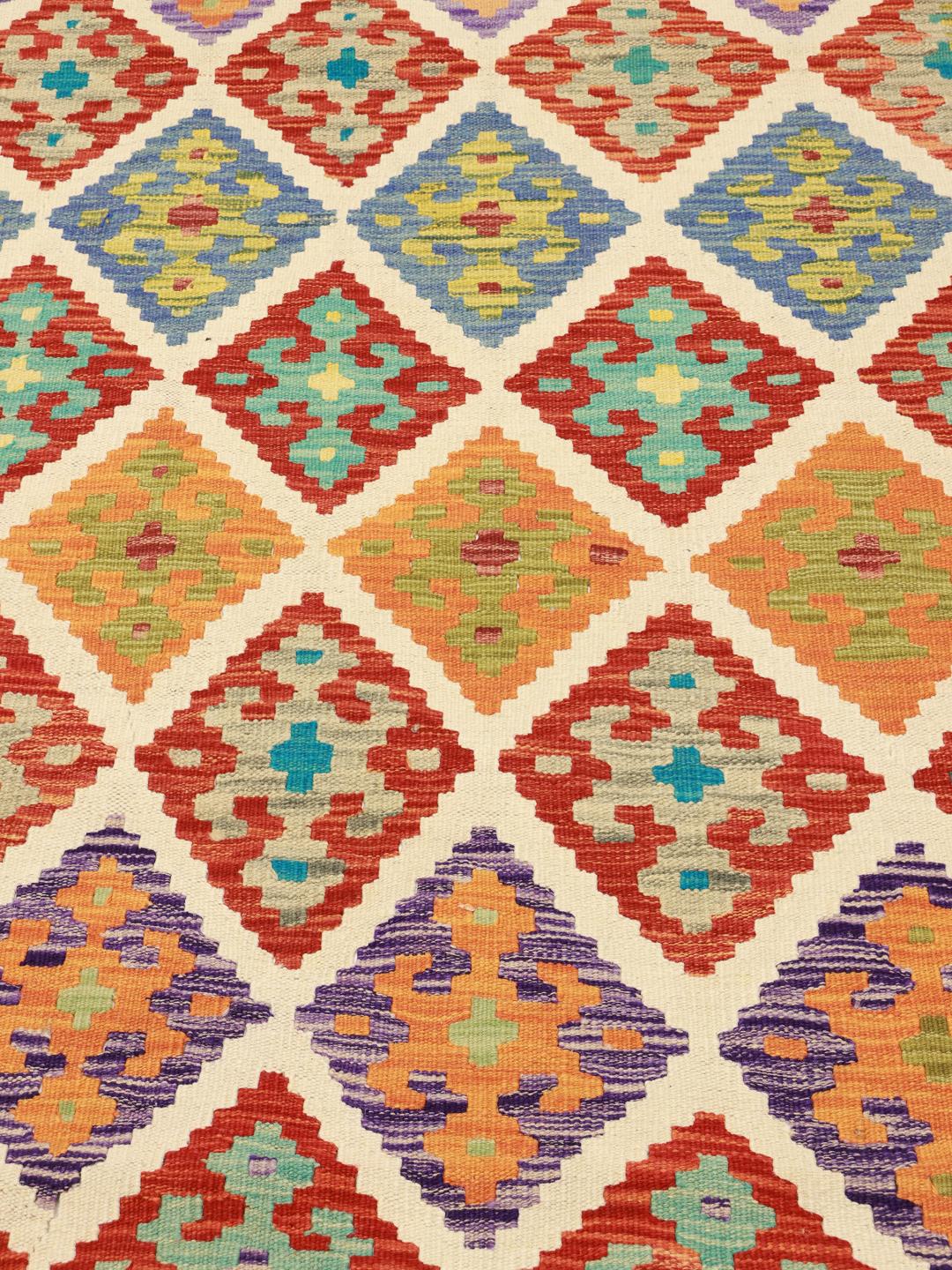
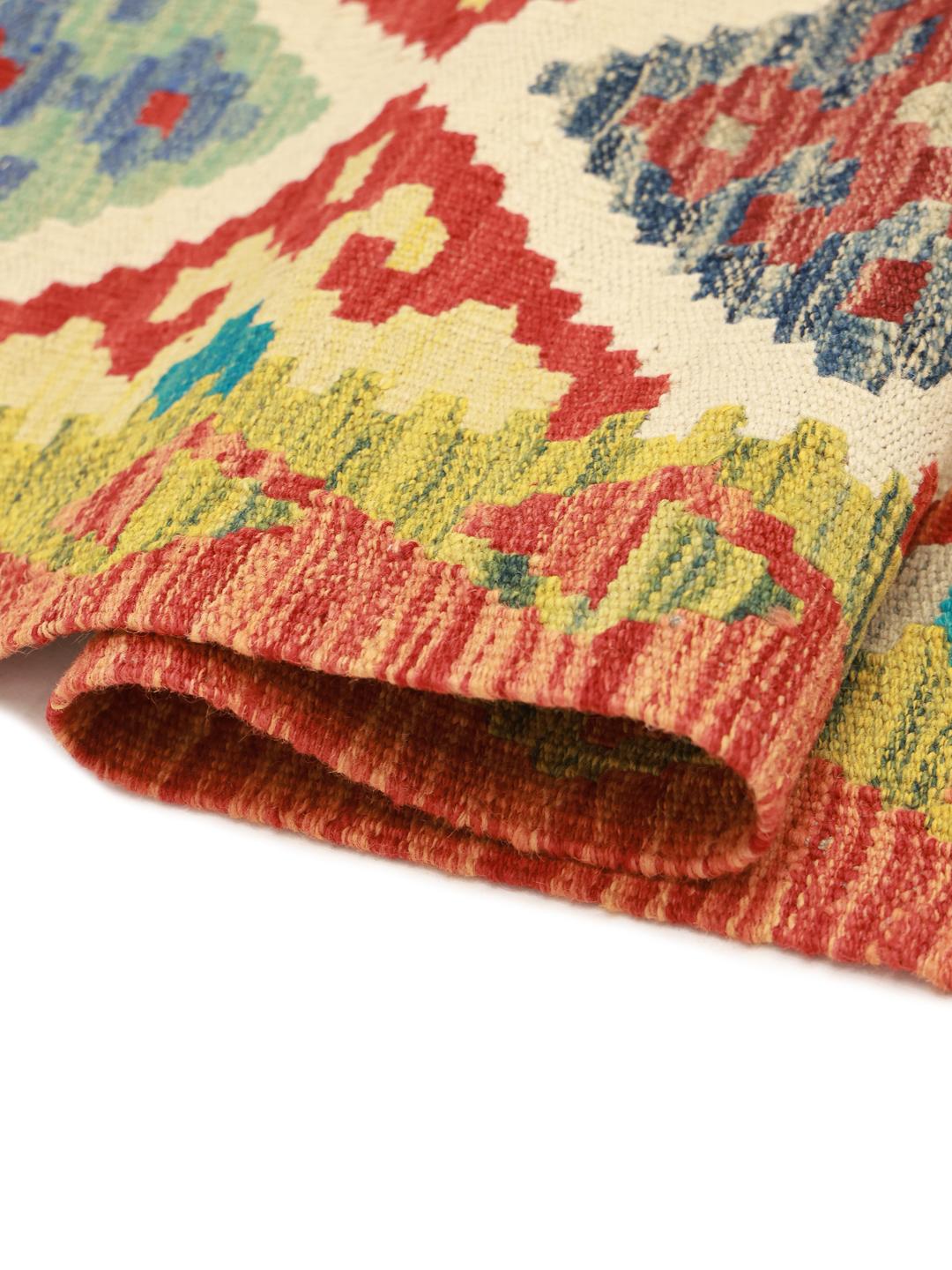
The term 'Kelim' refers to the specific slit-weave technique used to create the pattern, where the weft threads are looped back at the edges of each colour block. This creates a clean, crisp transition between colours that gives the rug its sharp, geometric look. This technique allows for complex designs that are reversible, effectively doubling the lifespan of the textile by allowing it to be flipped.
Design-wise, these rugs are characterised by bold, repeating geometric motifs that often hold symbolic meaning, representing elements of the natural world, tribal identity, or protective charms. The use of vibrant, saturated colours is a hallmark of this tradition, reflecting the dyes and materials traditionally available in the region, which provide a rich visual contrast to the simplified geometric forms.
Collecting a Kelim from this tradition is an investment in cultural heritage and human skill. Each piece tells the story of the weaver who crafted it and the region from which it hails, preserving ancient techniques in a modern context. Owning one is a way to bridge the gap between traditional craft and contemporary home design, bringing a piece of history into your daily life.