Kelim rugs have long been a cornerstone of nomadic life across the Middle East and Central Asia. Historically, these flat-woven textiles were crafted by tribal groups as versatile, portable floor coverings, room dividers, and bags. The tradition of weaving in Afghanistan is deeply rooted in this nomadic past, where patterns were passed down through generations, serving as a visual language that reflects the weaver's environment and cultural identity.
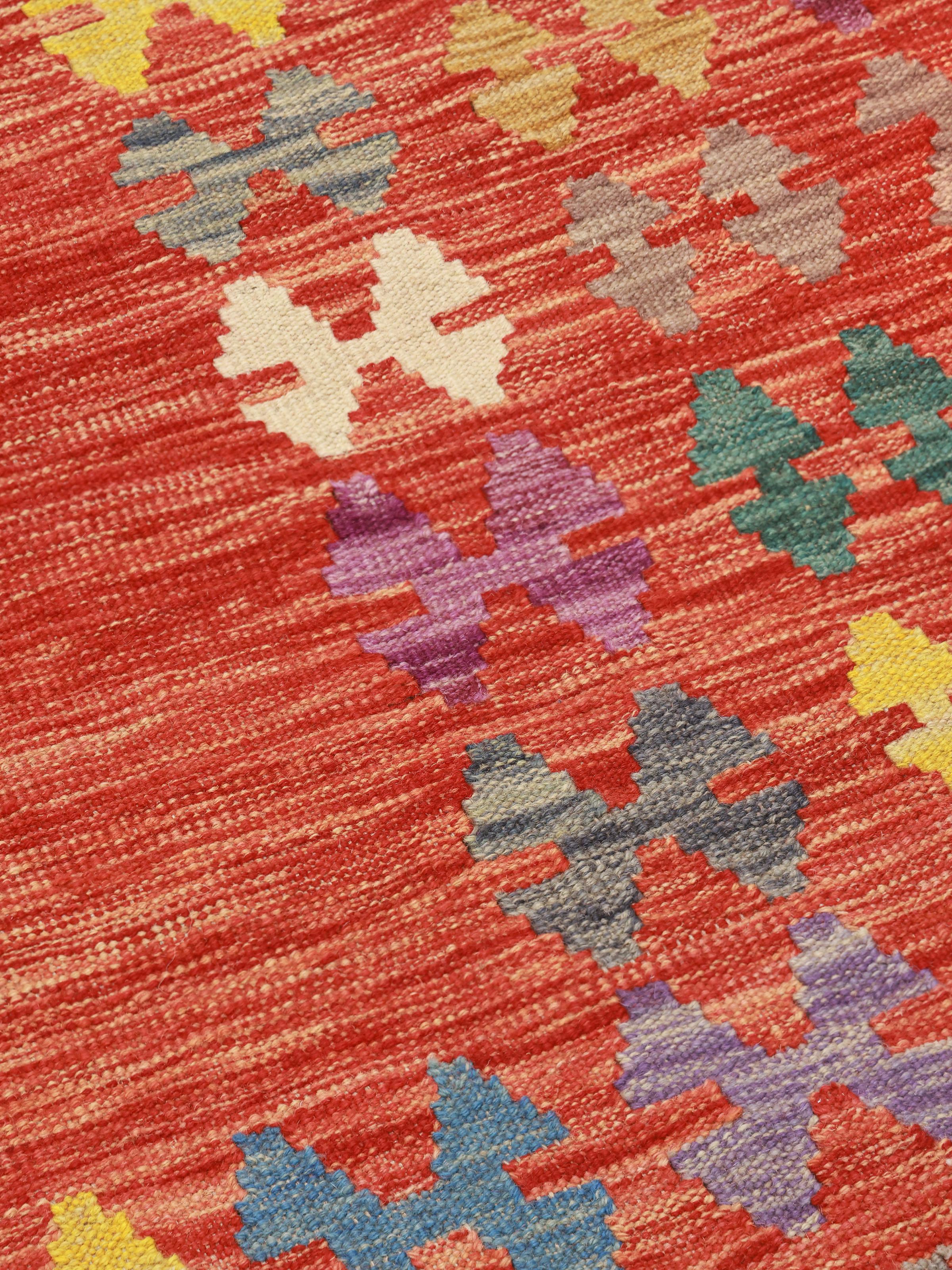
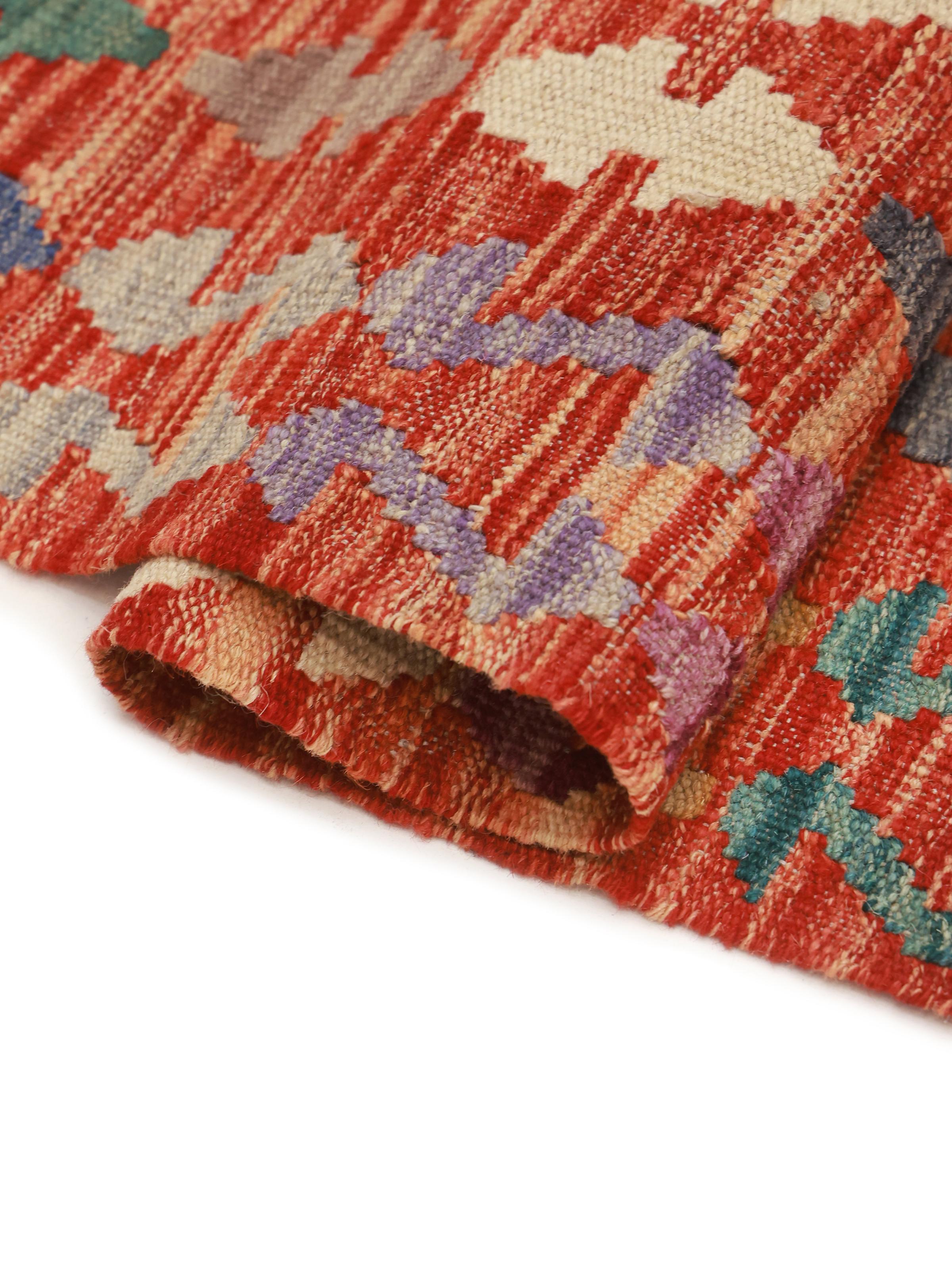
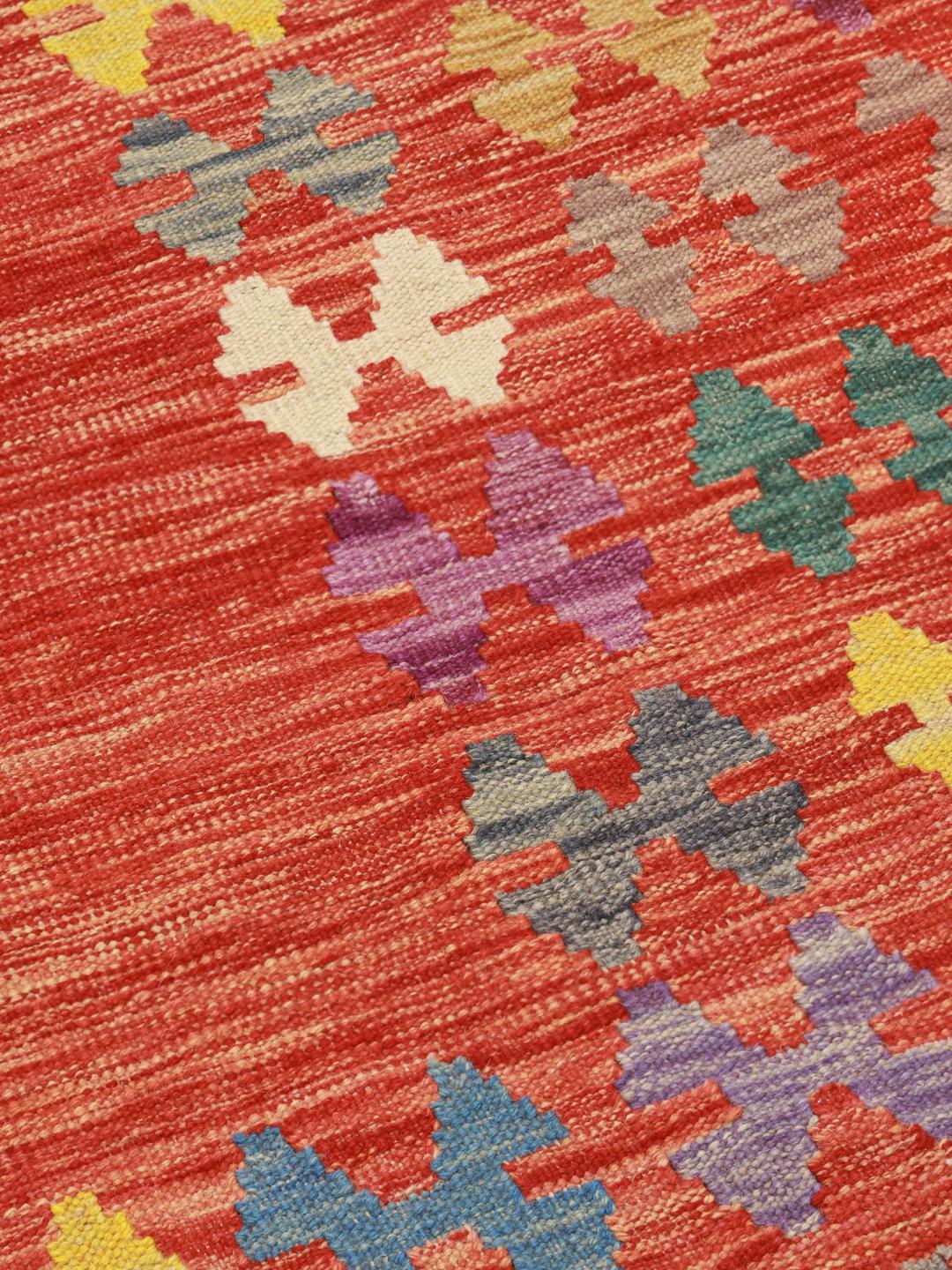
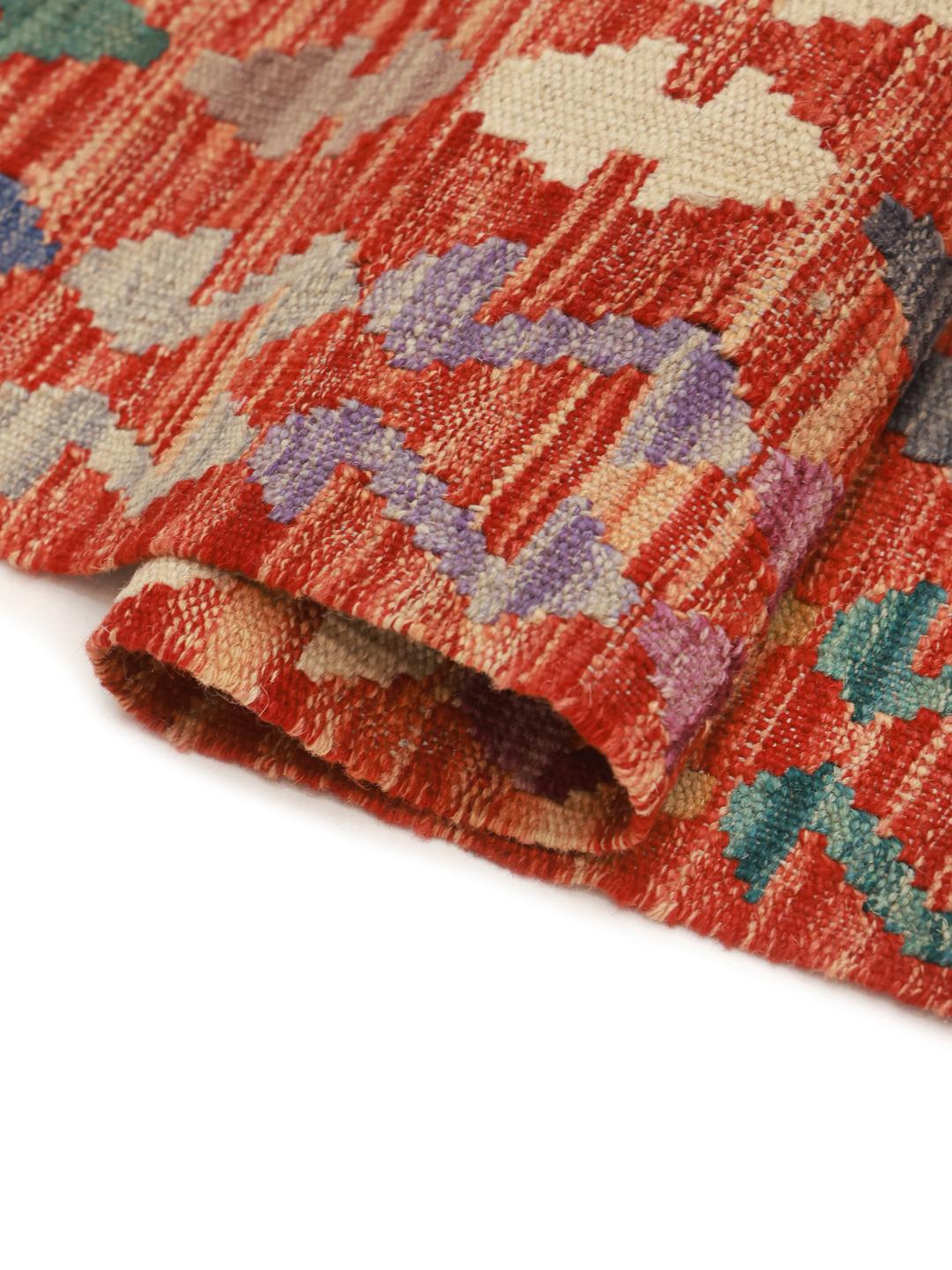
The term 'Kelim' refers specifically to the flat-weave technique, where the weft and warp threads are interlaced to create a smooth surface without a pile. This construction method is what gives these rugs their characteristic lightweight feel and durability. Because there is no pile to wear down, a well-made Kelim can last for decades, becoming more supple and beautiful with time as the Wool settles.
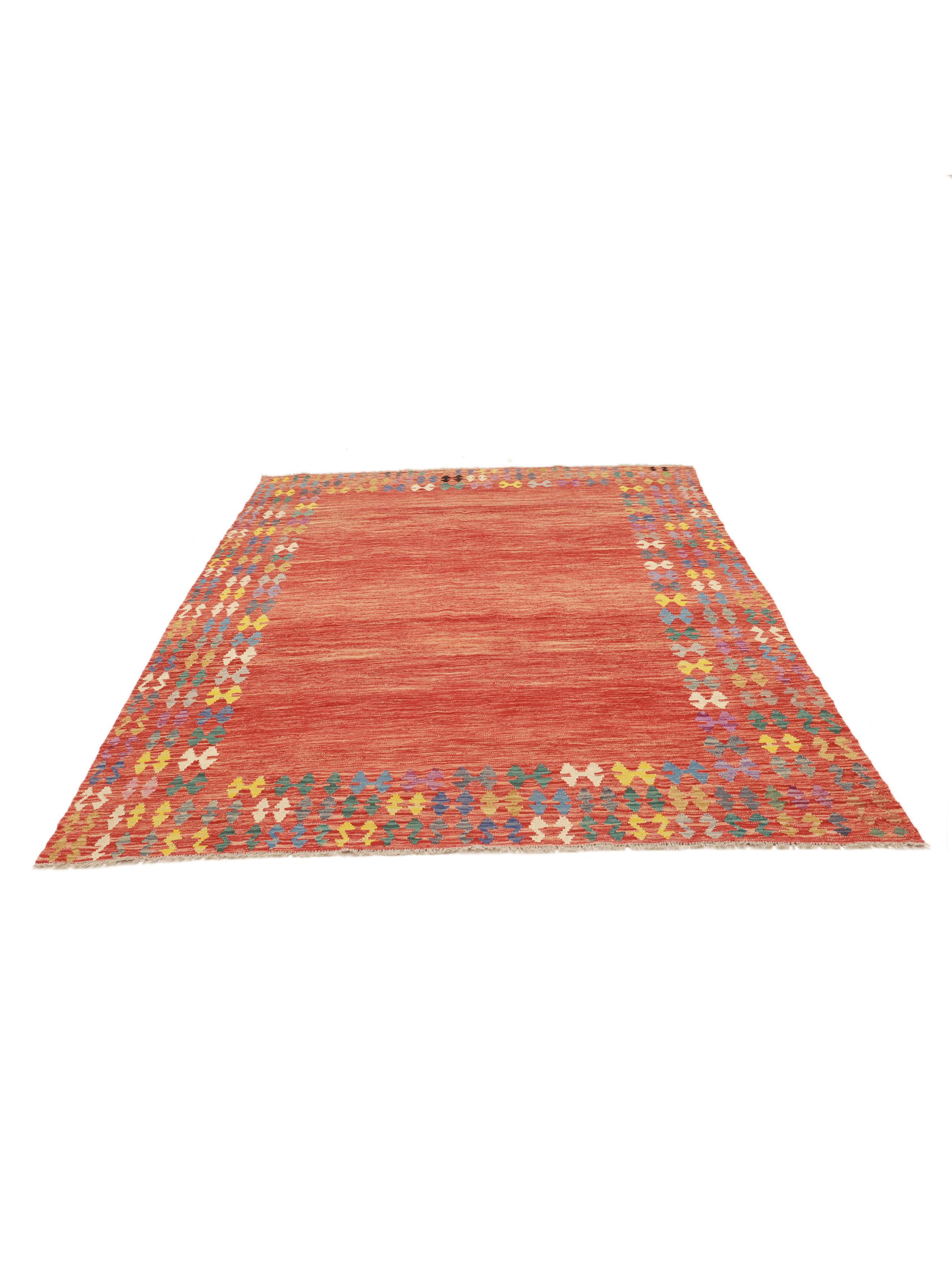
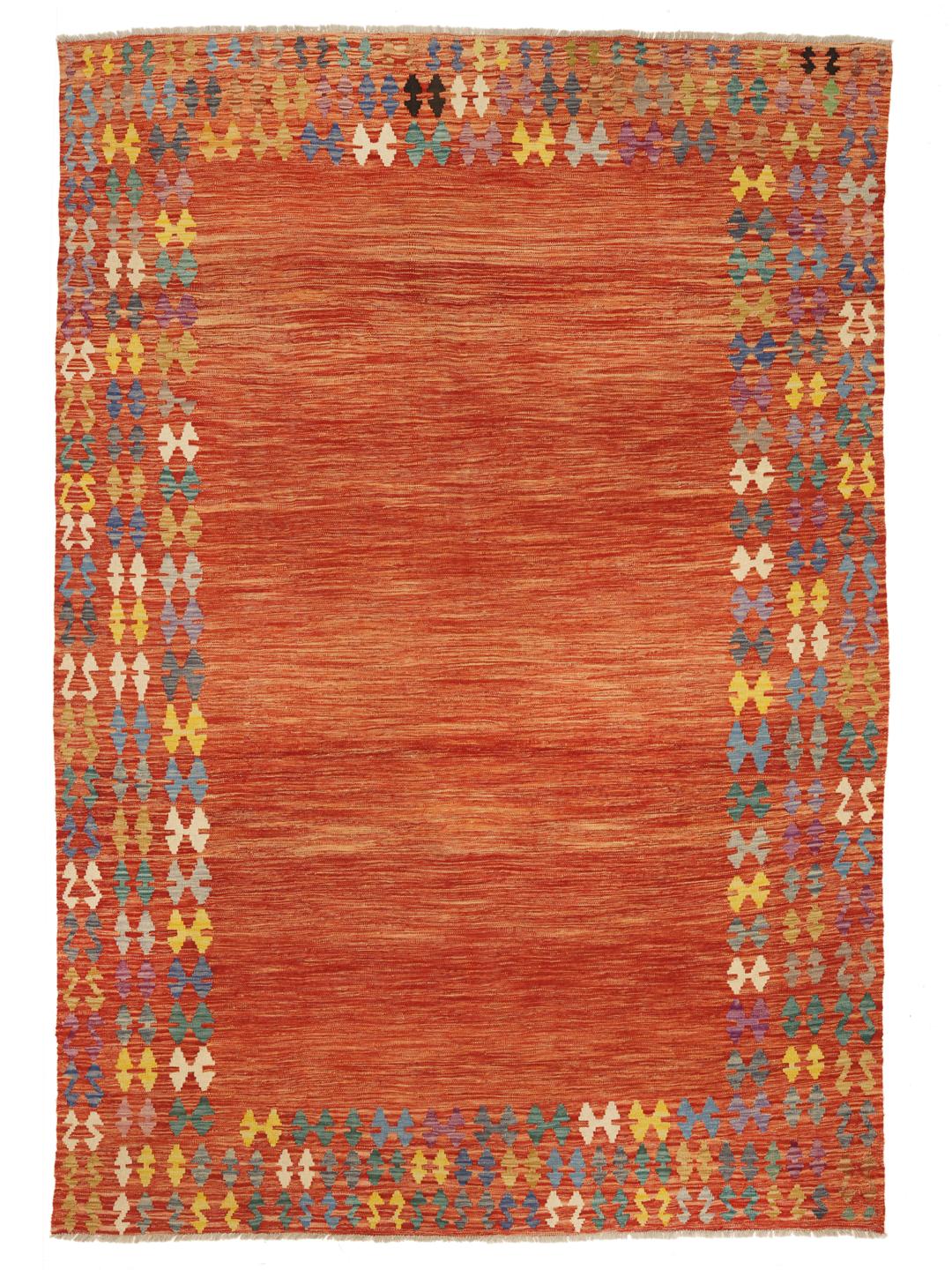
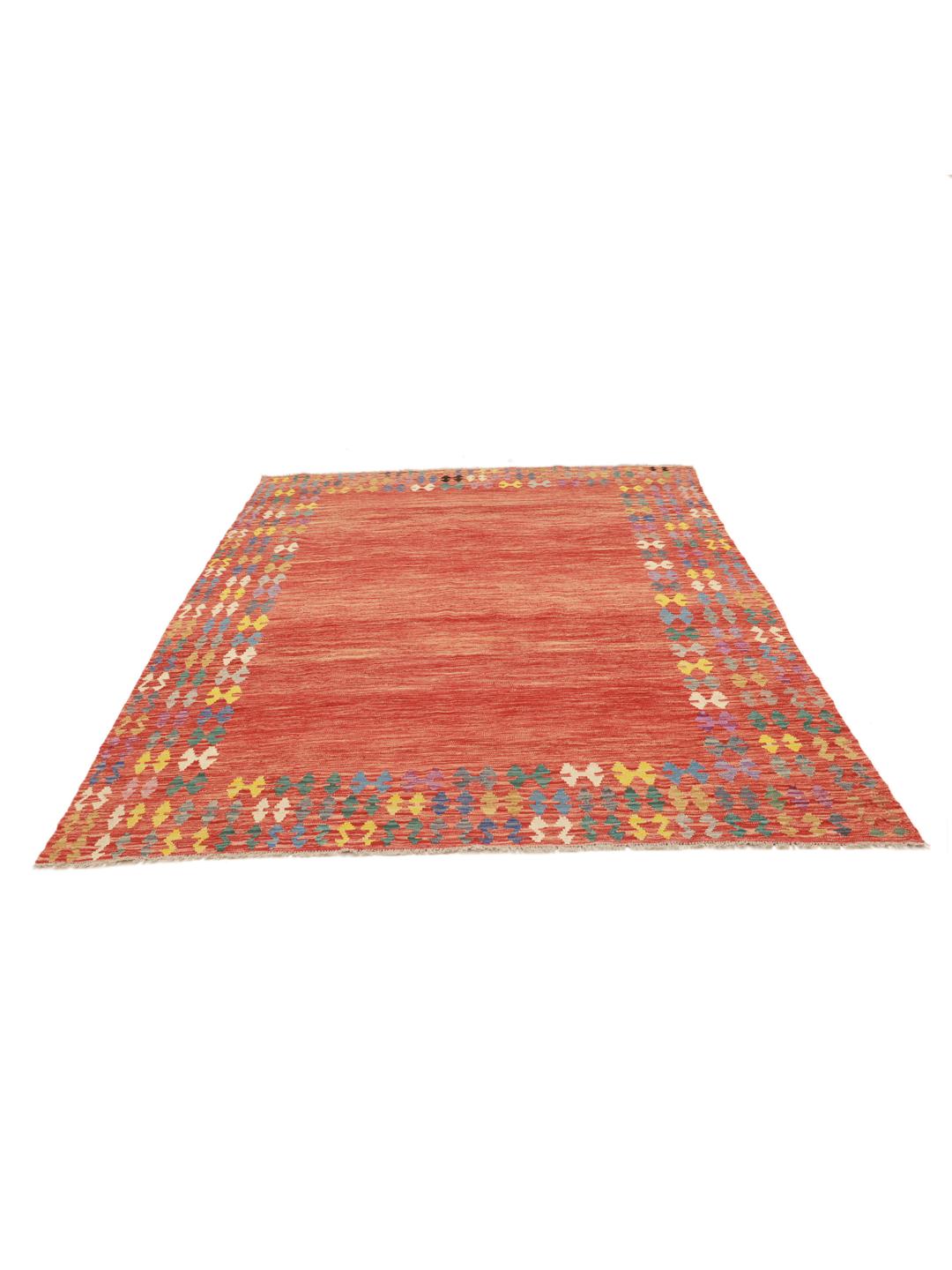
The design of this particular piece features a striking solid field framed by a geometric border of repeating motifs. These patterns are not merely decorative but often hold symbolic significance, representing protection, fertility, or the natural landscape. The use of vibrant, contrasting colours within the border is a hallmark of the Afghan style, showcasing the weaver's ability to balance intricate geometric detail against a bold, open field.
Collecting a Kelim from this tradition is a way to preserve a tangible piece of human heritage. These rugs are highly valued for their authenticity and the skill required to maintain the symmetry and tension of the weave. By choosing a hand-woven Afghan Kelim, you are supporting a craft that has survived for centuries, ensuring that these artistic traditions continue to thrive in the modern home.