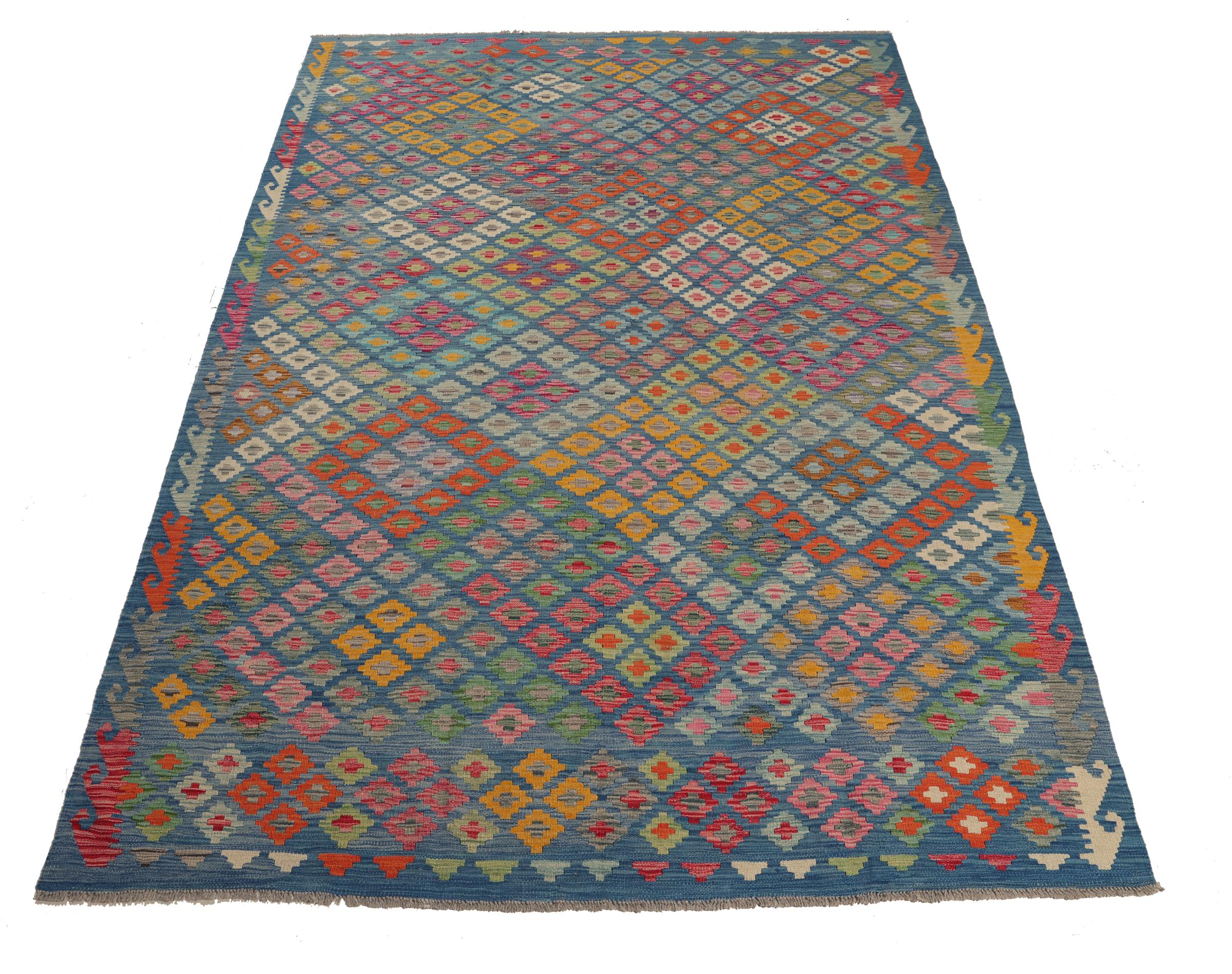
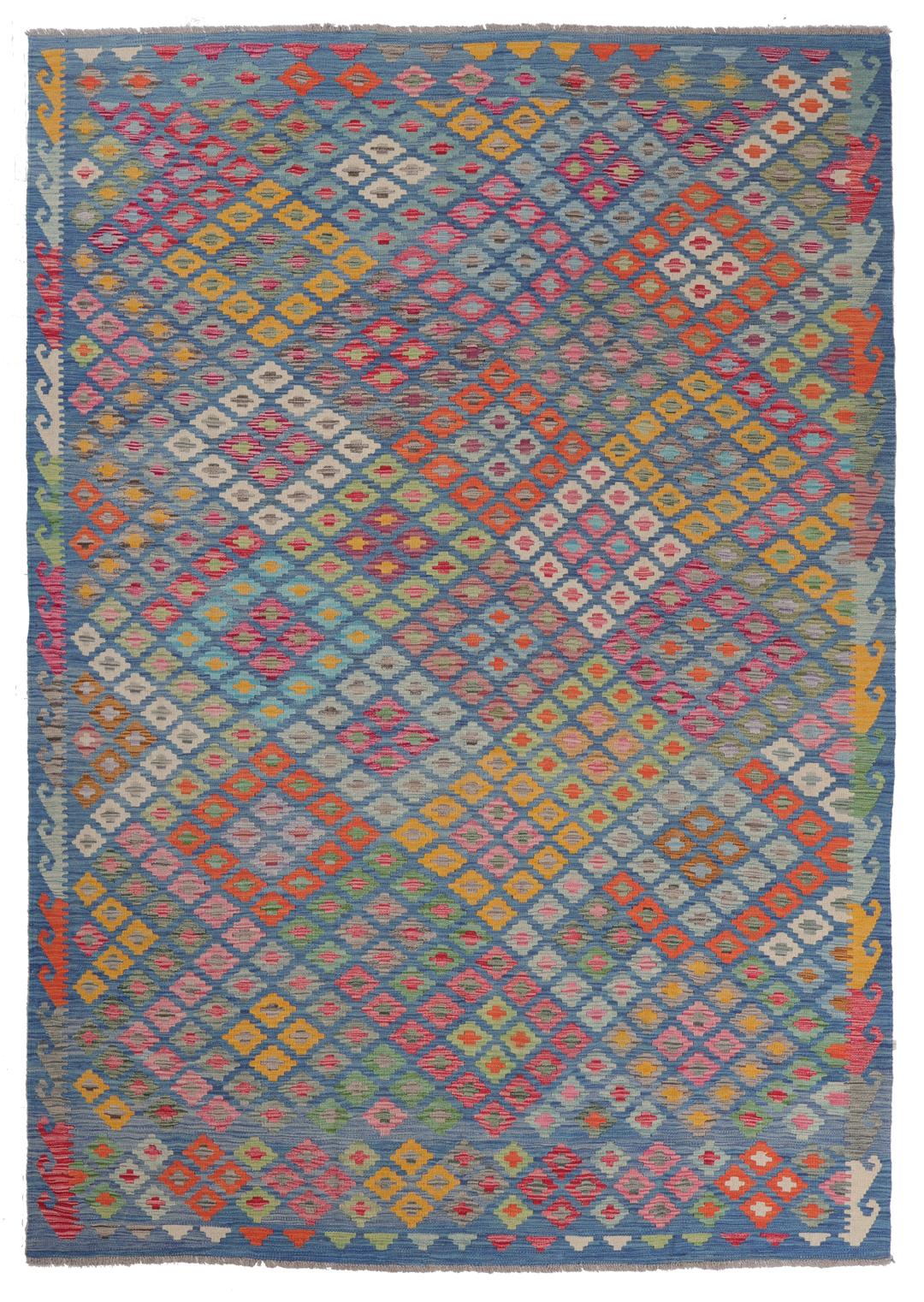
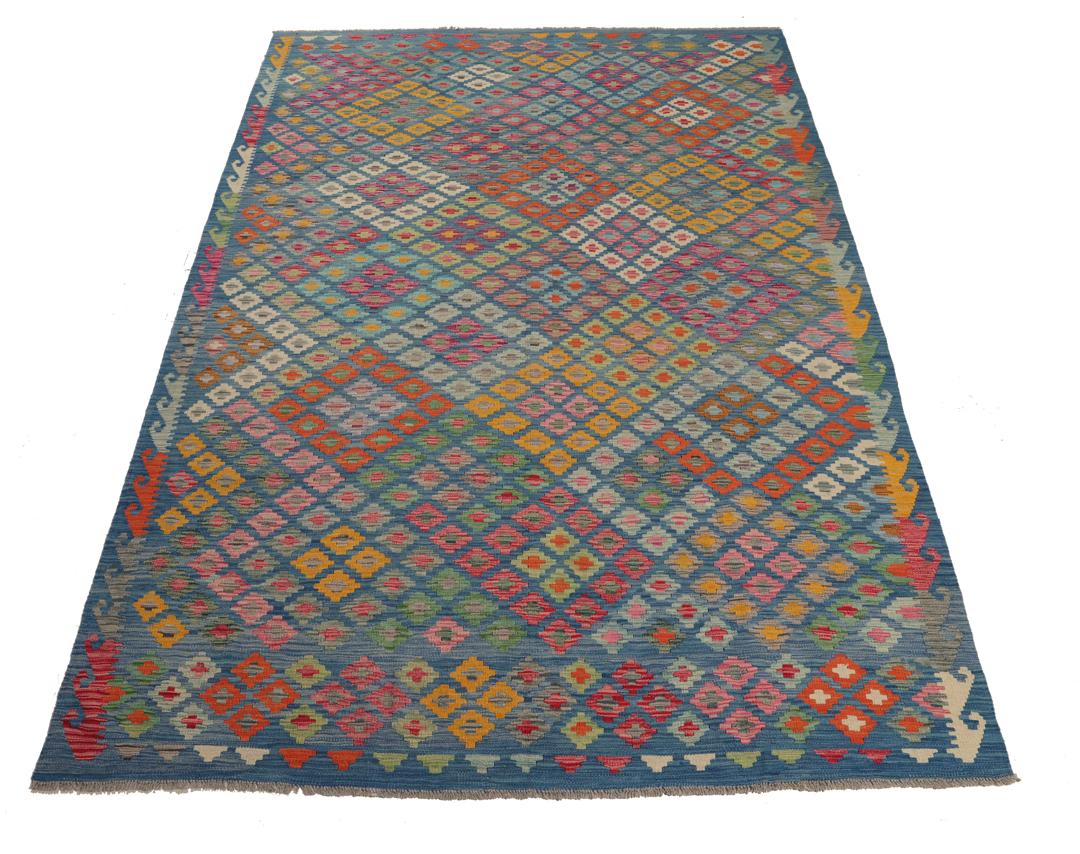
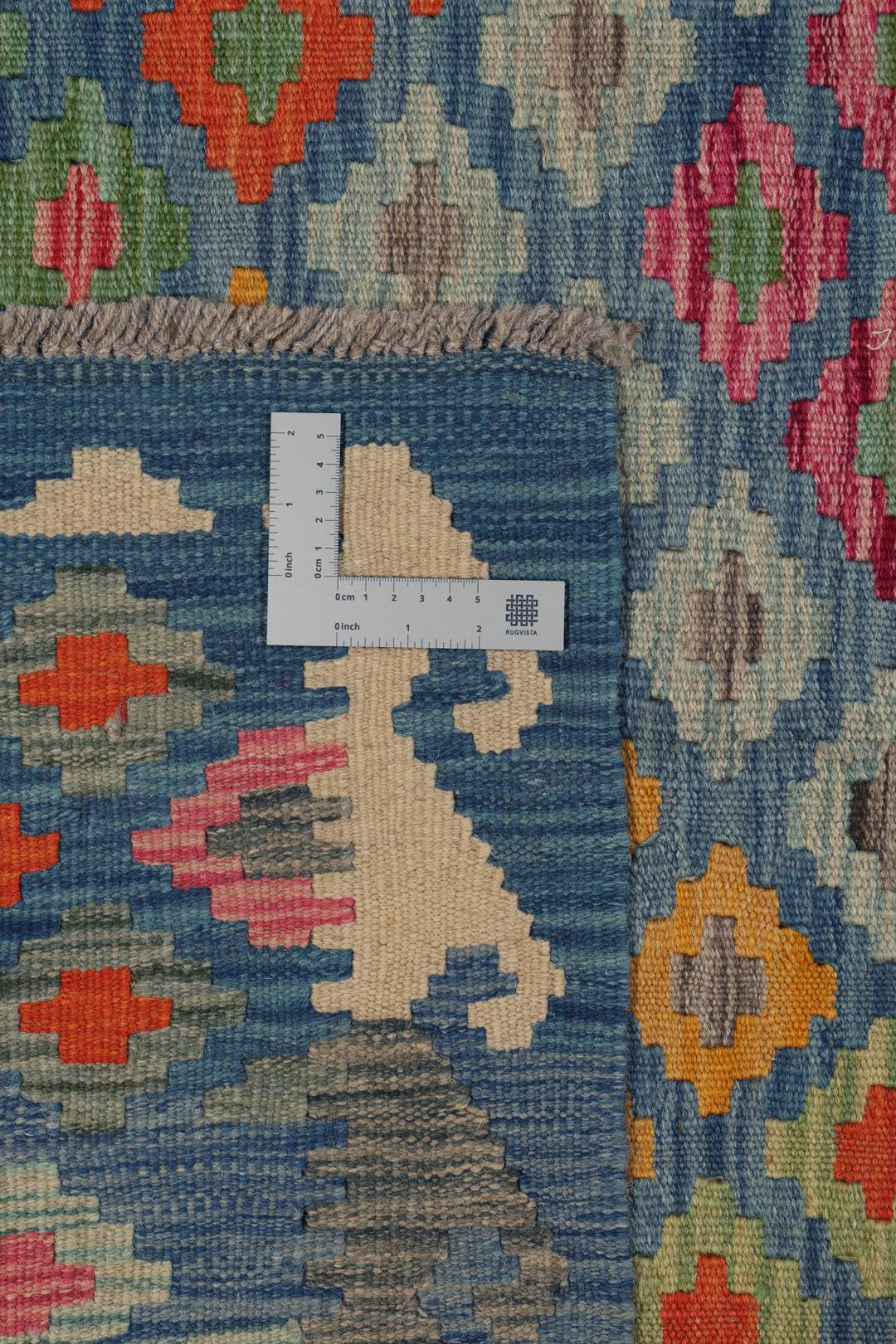
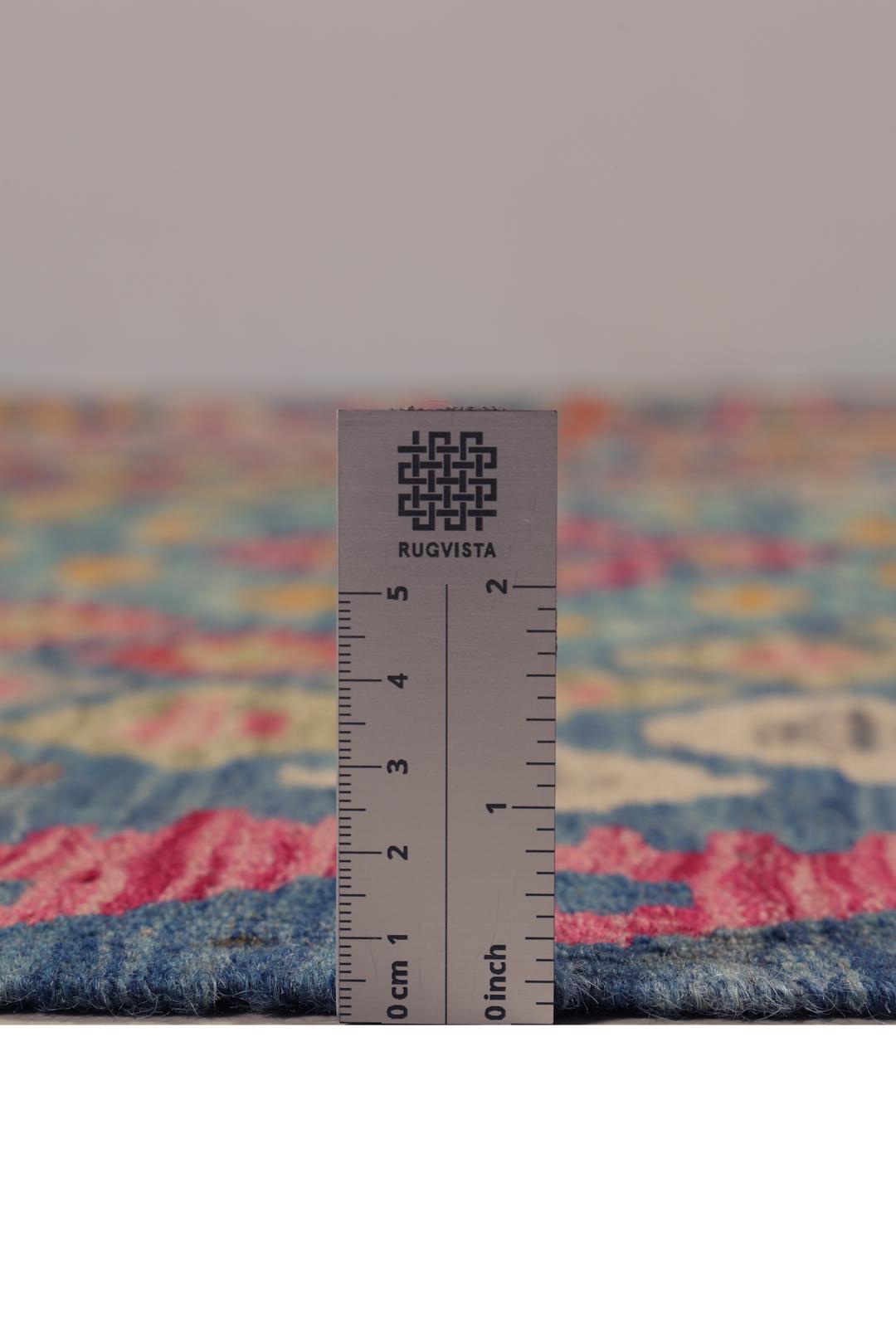
Kelim rugs from Afghanistan are deeply rooted in the nomadic traditions of the region, where the art of weaving has been passed down through generations. These rugs were historically created by tribal communities for practical use in tents and homes, serving as floor coverings, blankets, and storage bags, reflecting a way of life that values both utility and aesthetic expression.
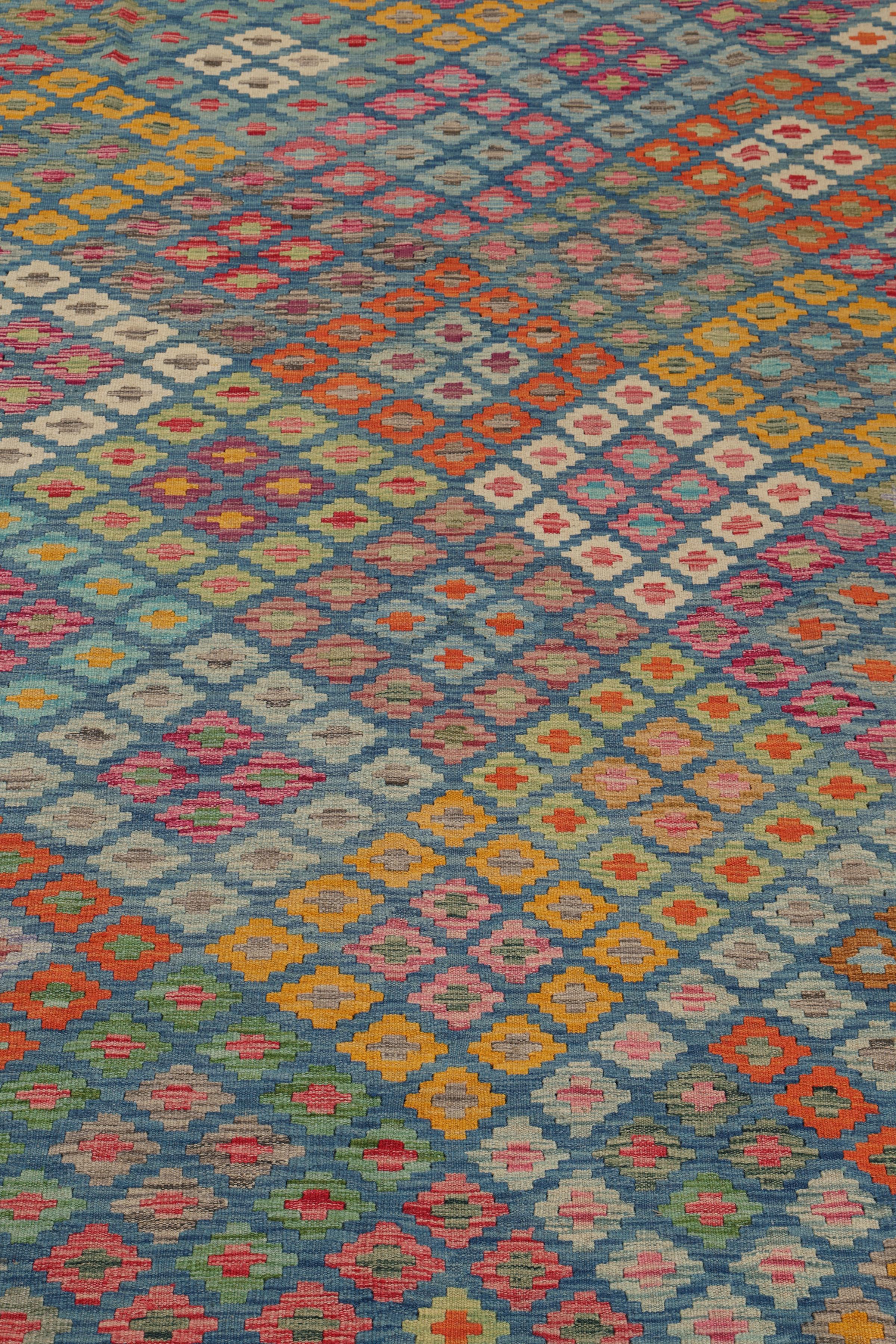
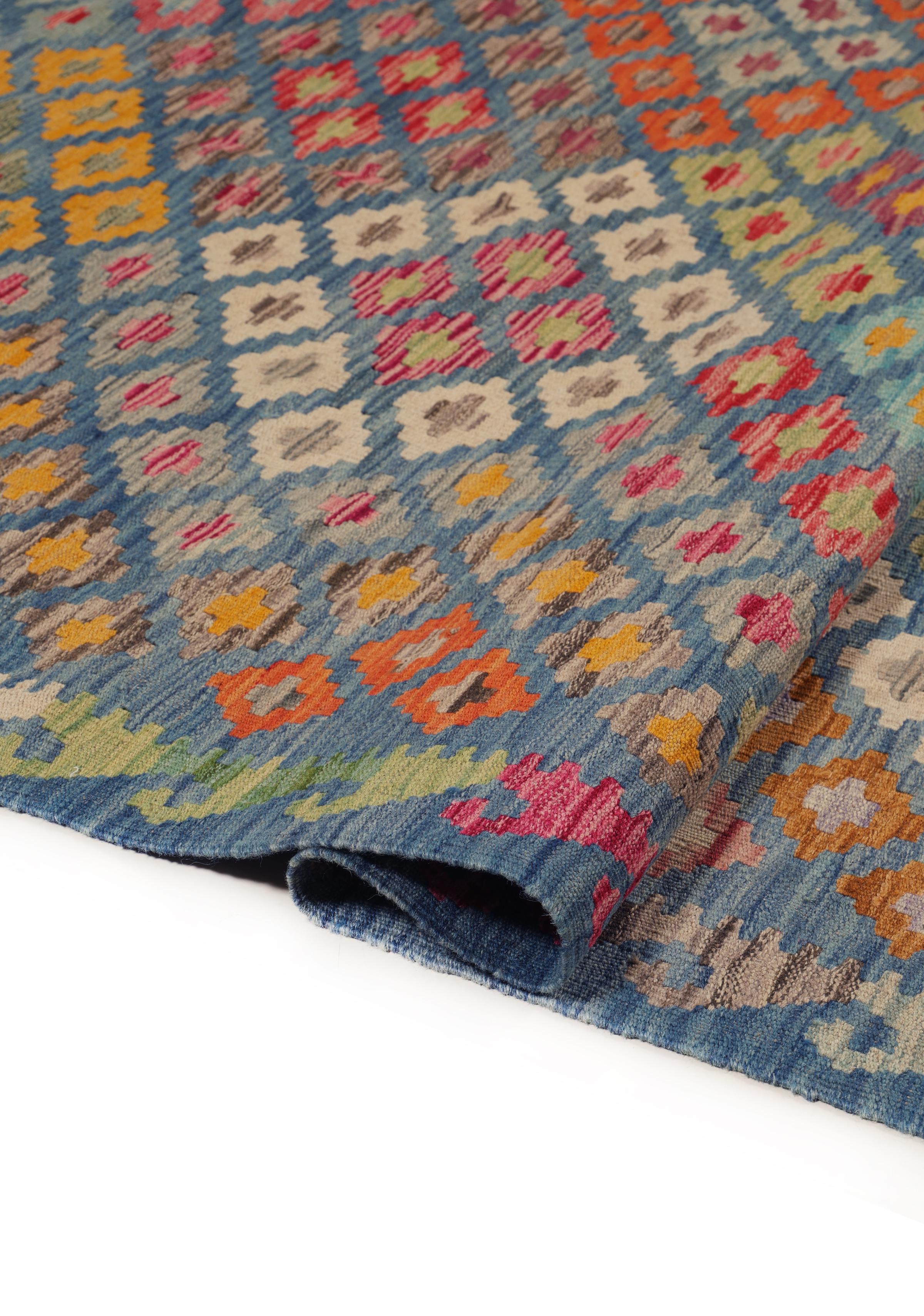
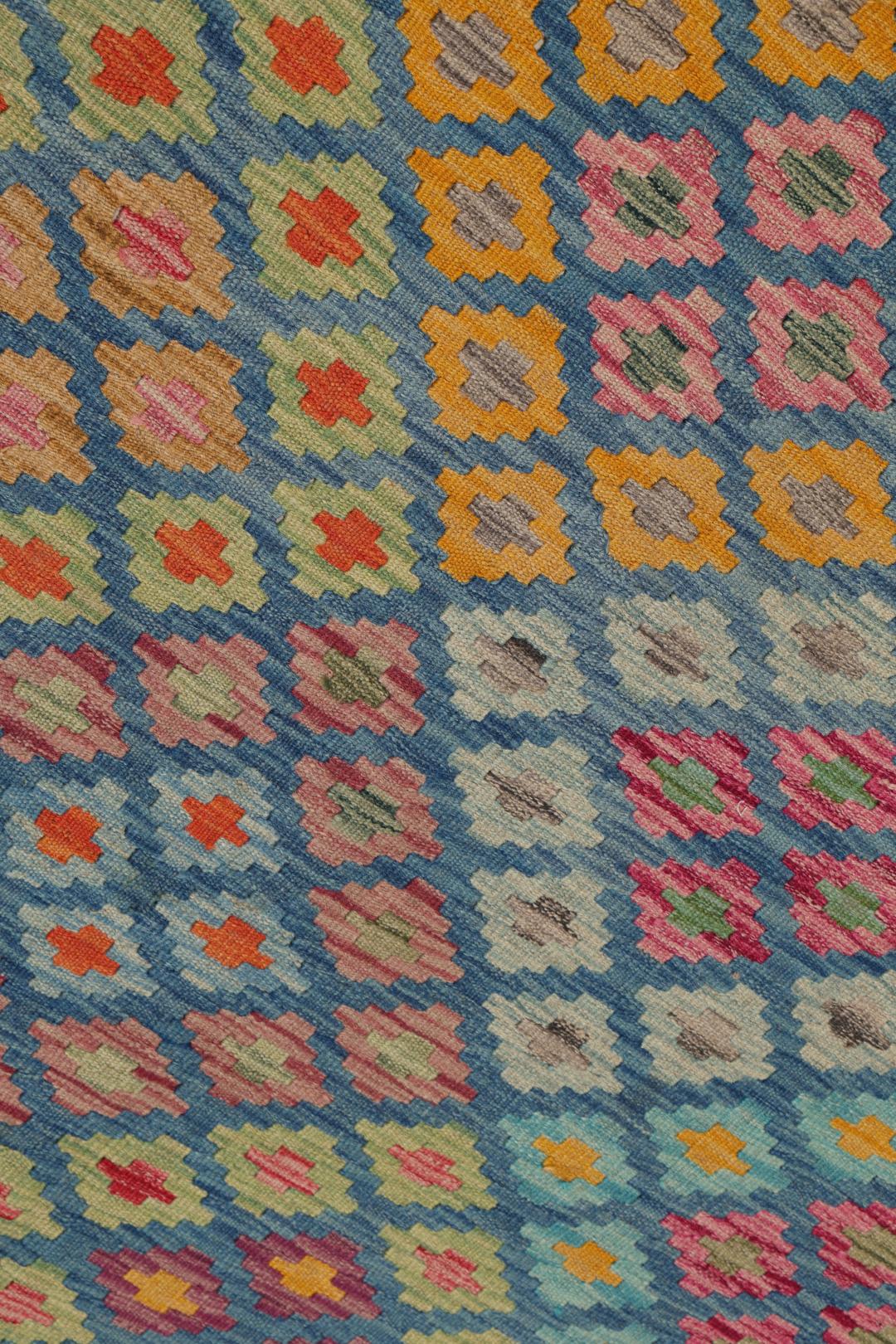
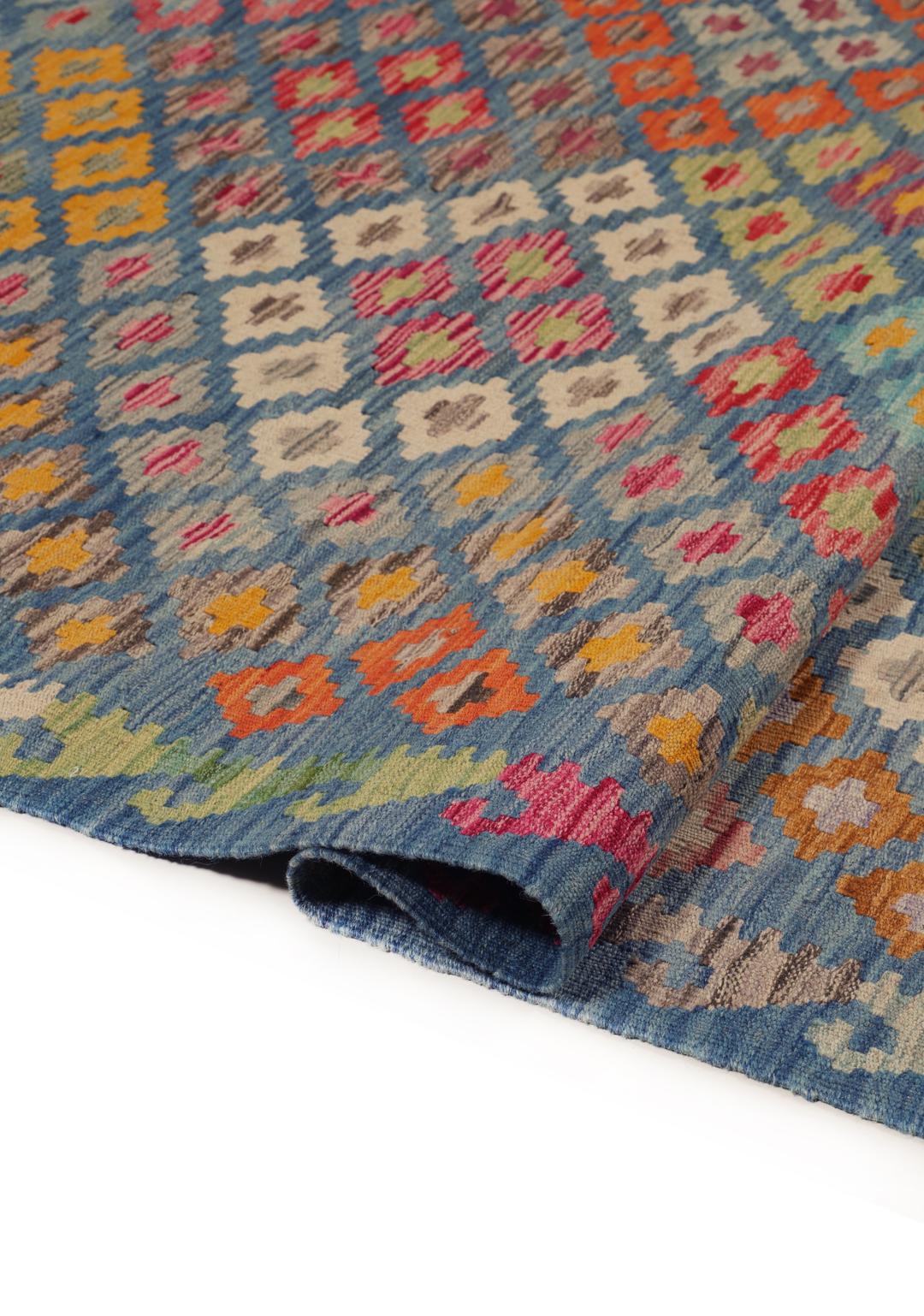
The term 'kelim' refers to a flat-woven textile, meaning the rug is crafted without a knotted pile. This technique produces a reversible, durable fabric that is lightweight yet remarkably strong. The process involves interweaving the weft threads through the warp to create the pattern, a method that demands high technical skill to keep the edges straight and the motifs symmetrical.
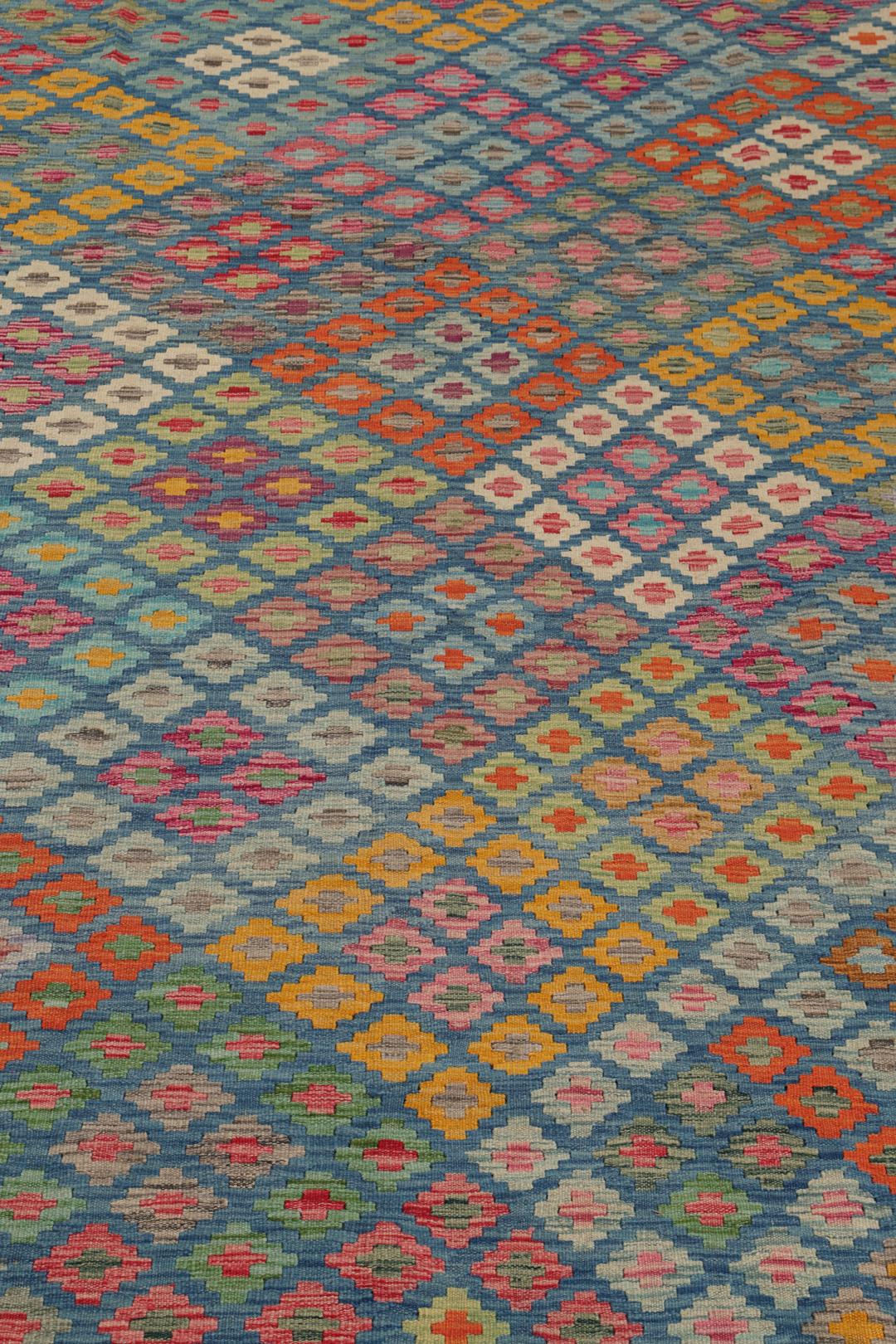
Signature design elements in Afghan kelims often feature bold, geometric shapes and diamond motifs, reflecting the cultural heritage of the weavers. These patterns are frequently arranged in repeating, rhythmic rows that tell a story of regional identity. The colour palettes are typically derived from natural dyes, resulting in rich, earthy tones that age gracefully over time.
Collecting an authentic Afghan kelim is an investment in human history and traditional craft. These rugs are highly valued for their individuality, as no two pieces are exactly alike. Owning one is a way to connect with the enduring spirit of the nomadic artisans and to bring a piece of cultural artistry into your own home.