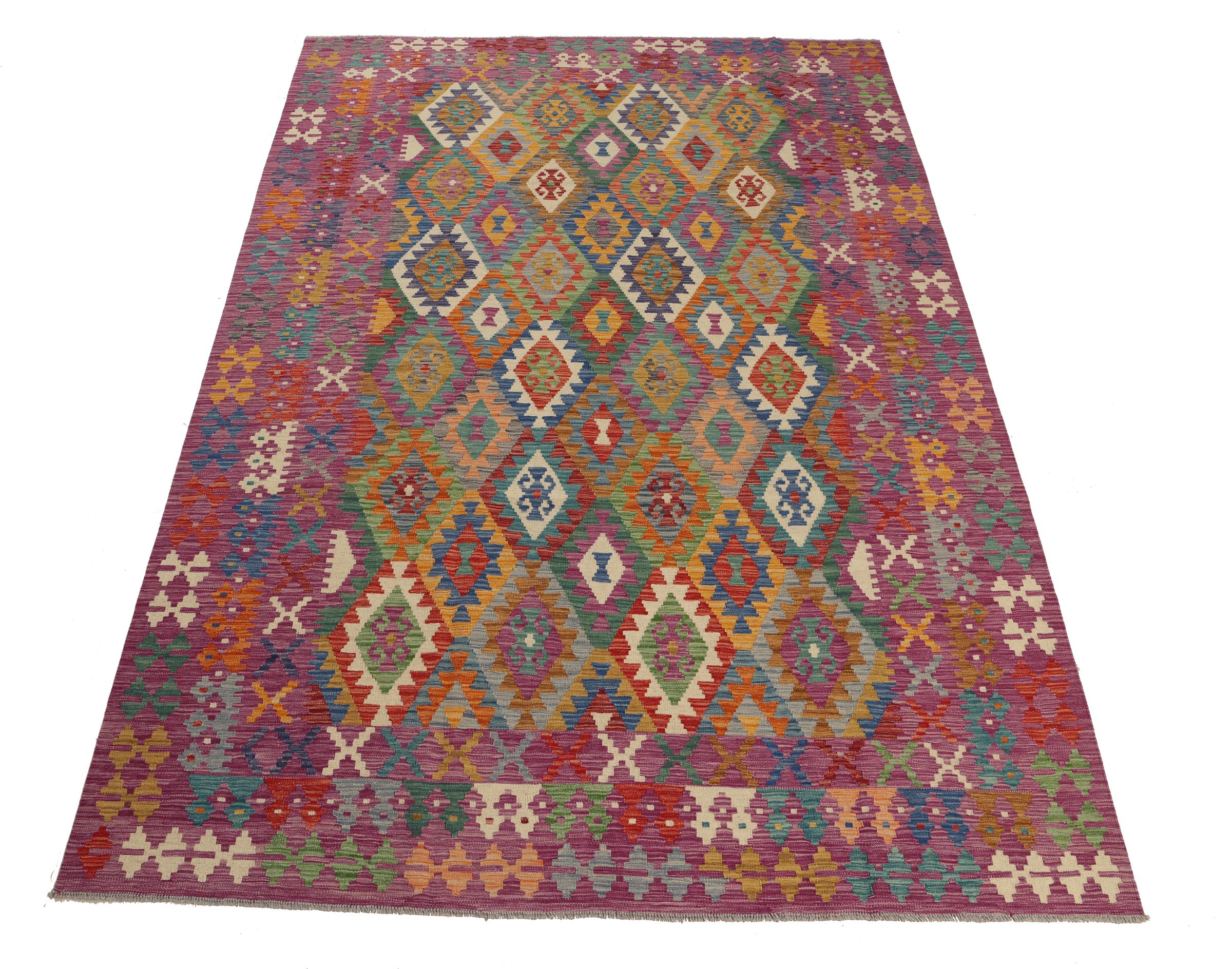
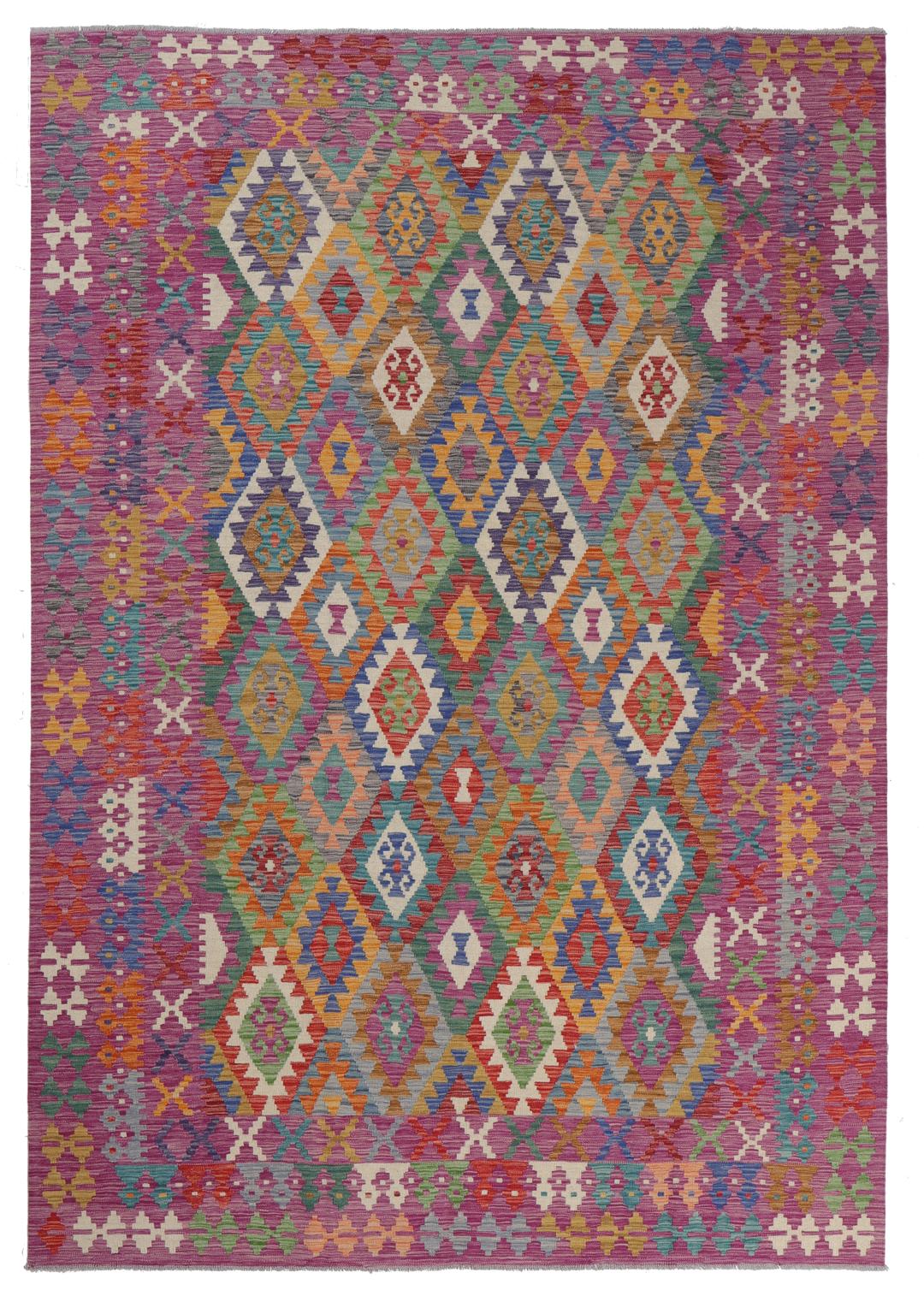
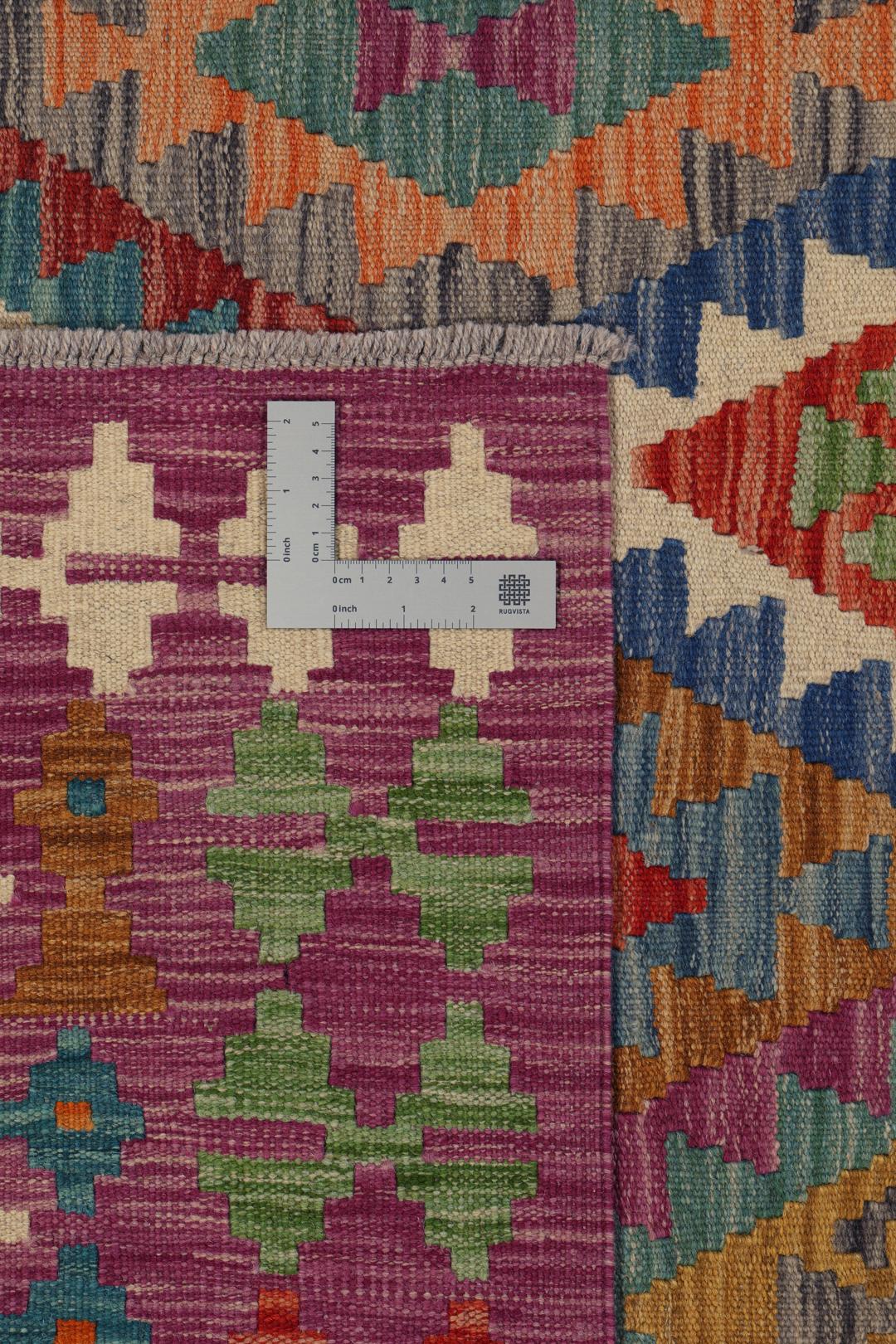
Kelim rugs have a storied history rooted in the nomadic and semi-nomadic traditions of the Middle East and Central Asia. Historically, these flat-woven textiles were essential to daily life, serving as floor coverings, wall hangings, and functional storage bags for travelling families. The Afghan tradition, in particular, is celebrated for its robust Wool and earthy yet vibrant colour palettes, reflecting the rugged beauty of the landscape from which they emerge.
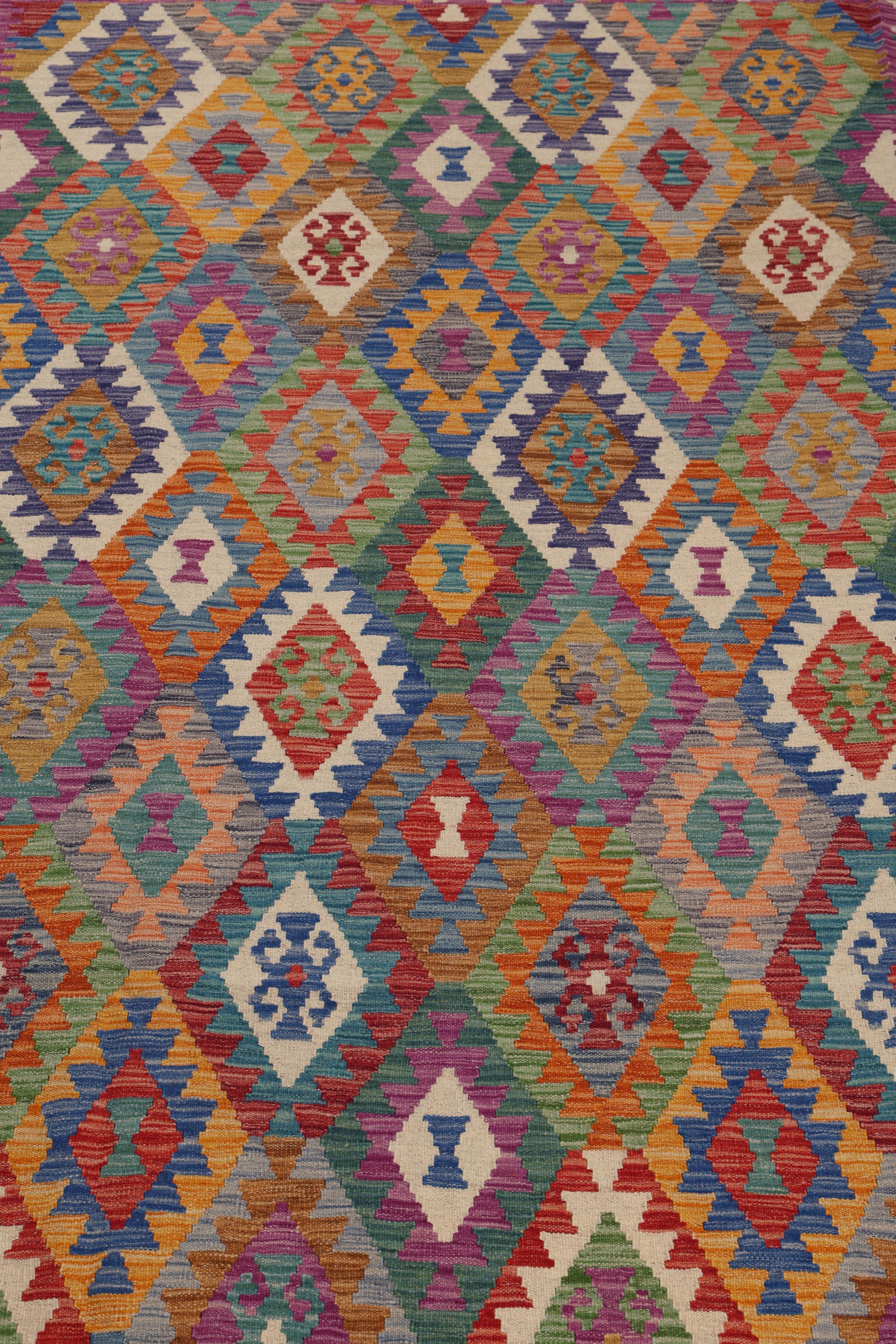
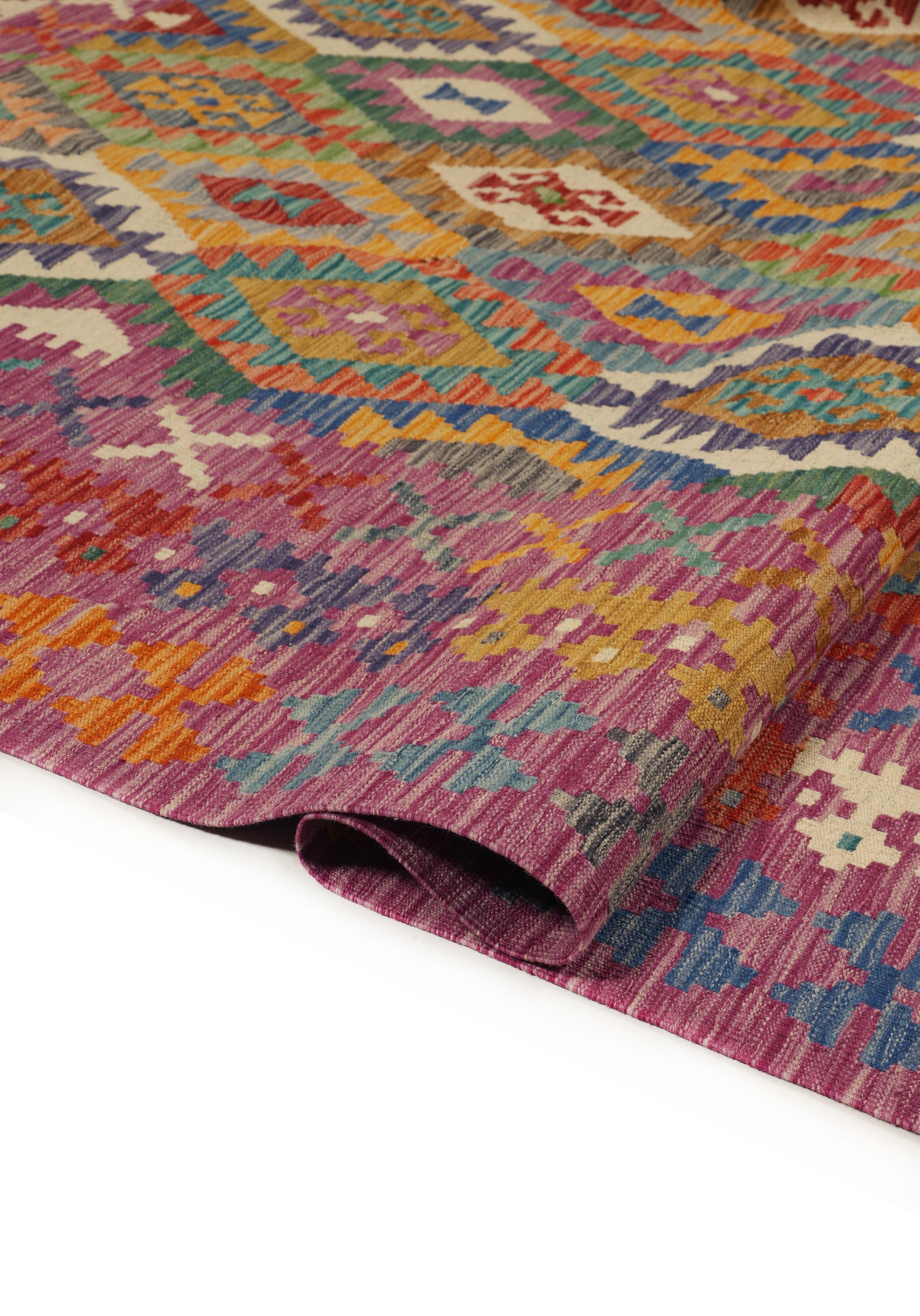
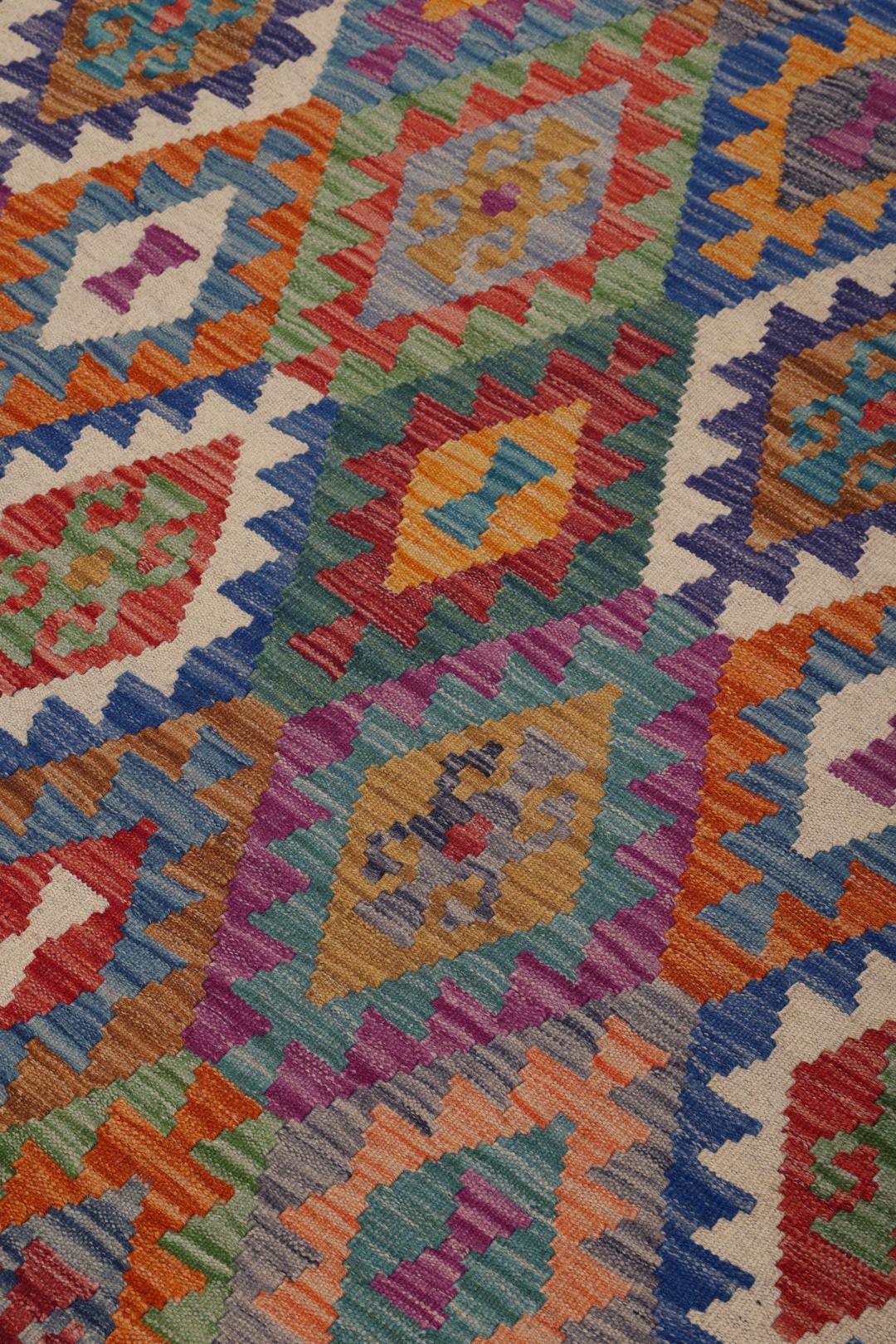
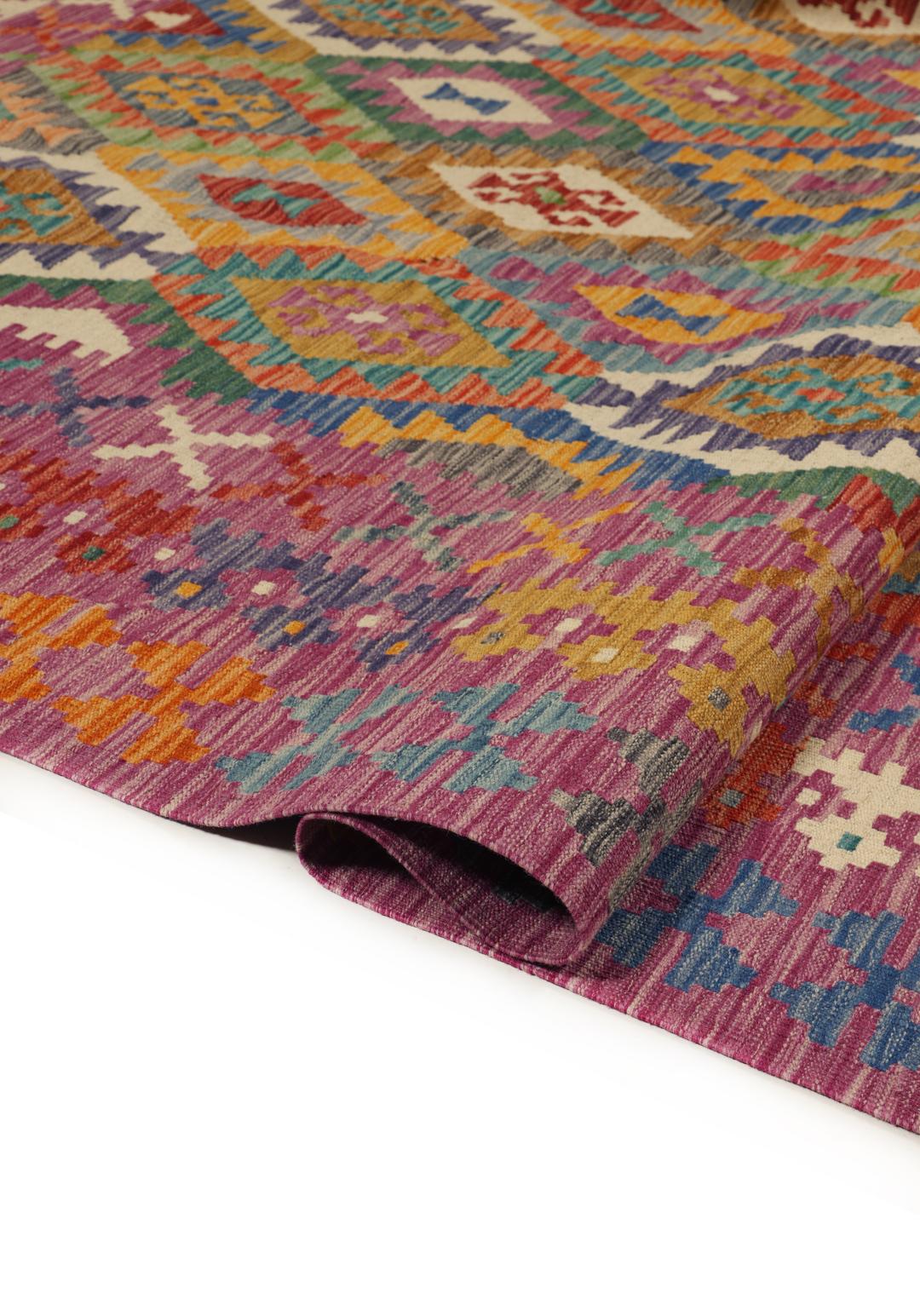
The term 'kelim' refers specifically to the slit-weave technique used to create these rugs. By wrapping the horizontal weft threads completely around the vertical warp threads, the weaver creates a smooth, pile-less surface with clean edges between colour blocks. This technique is prized not only for its durability but also for the clarity of the geometric patterns it allows, which remain sharp and defined even after years of use.
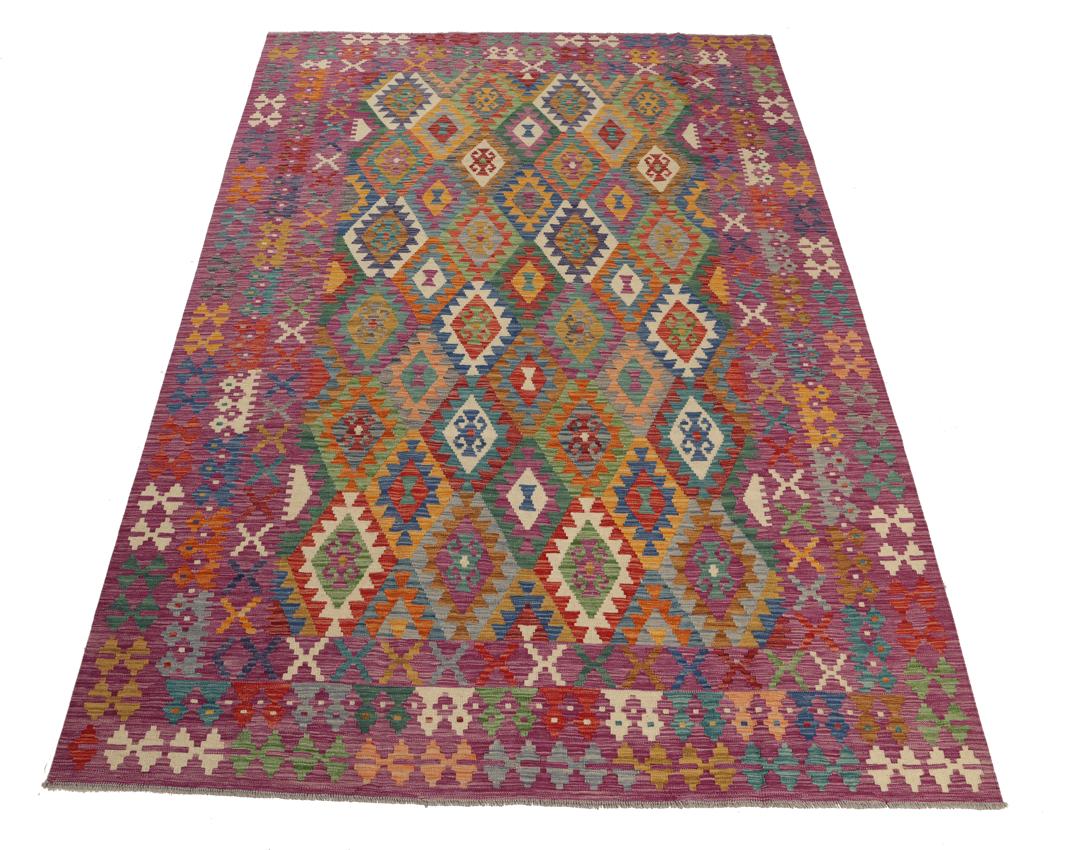
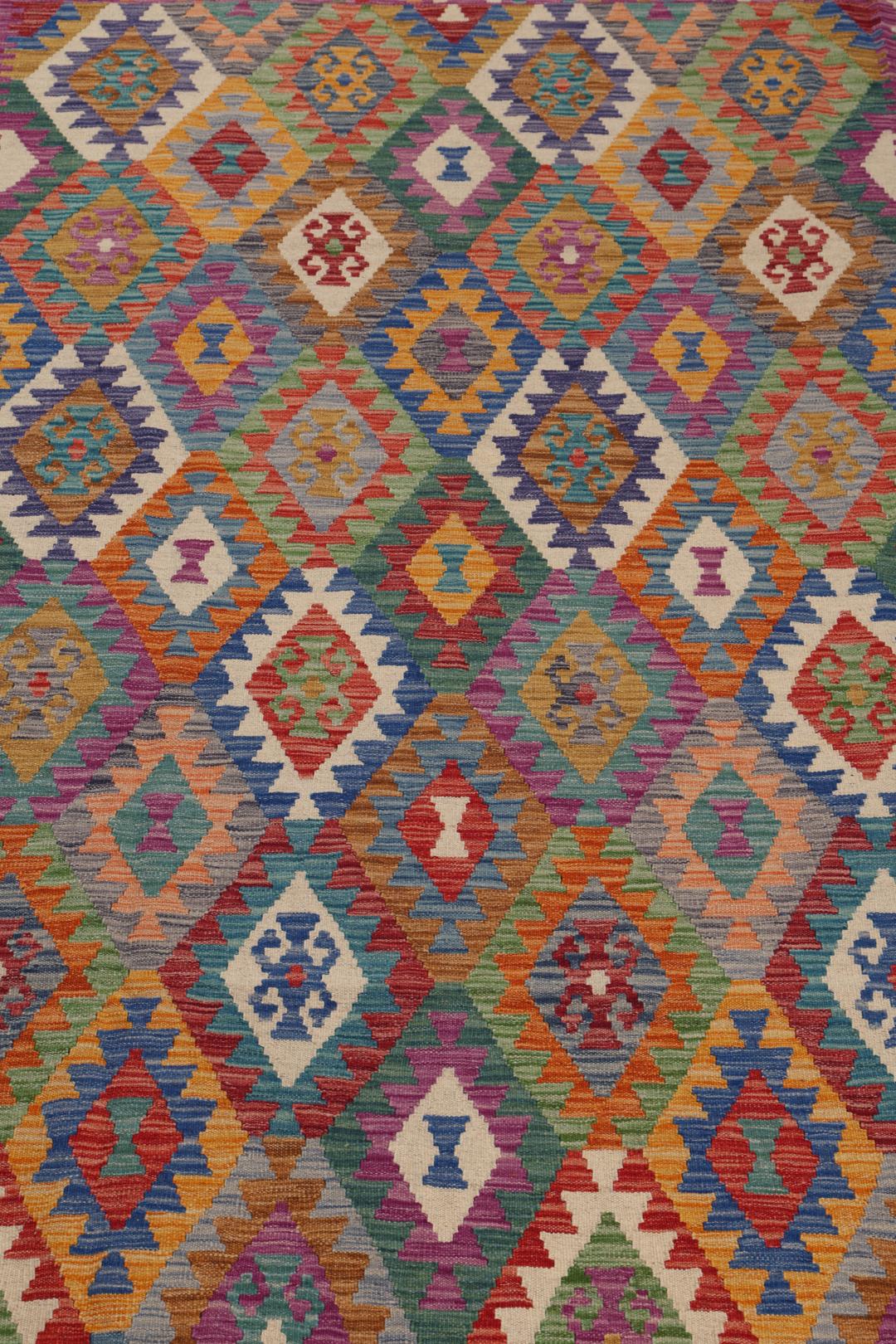
Signature design elements in Afghan kelims often include bold geometric motifs such as diamonds, triangles, and stylised floral or tribal symbols. These patterns are not merely decorative but are deeply symbolic, often representing protection, prosperity, or the weaver's personal story. The use of vibrant, contrasting colours in this particular rug is a hallmark of the 'Old Style' tradition, which aims to preserve the aesthetic language of ancestral designs.
Today, these rugs are highly sought after by collectors and interior enthusiasts for their authenticity and connection to ancient craftsmanship. Owning an Afghan kelim is an investment in a living tradition, a way to connect your modern home with a rich cultural lineage. Each piece serves as a bridge between the past and the present, offering a timeless quality that transcends changing interior trends.