The Afghan Kelim tradition is rooted in the nomadic and semi-nomadic lifestyles of Central Asia and Afghanistan. Historically, these flatwoven textiles were created not just as floor coverings, but as essential household items, tent hangings, and protective bags. Each piece reflects the heritage of the weavers, who passed down their patterns and techniques through generations, adapting their craft to the materials and dyes available in their local environments.
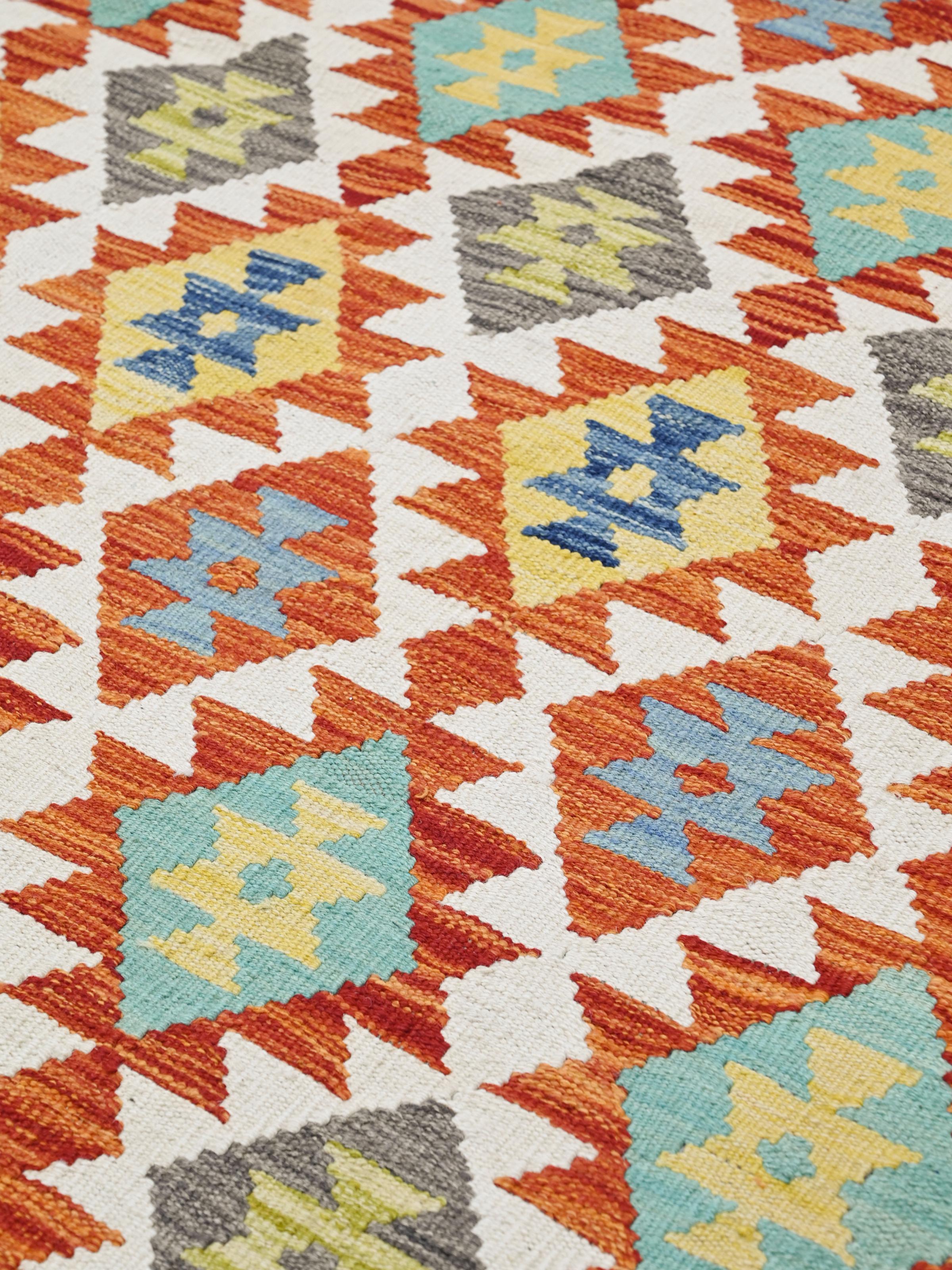
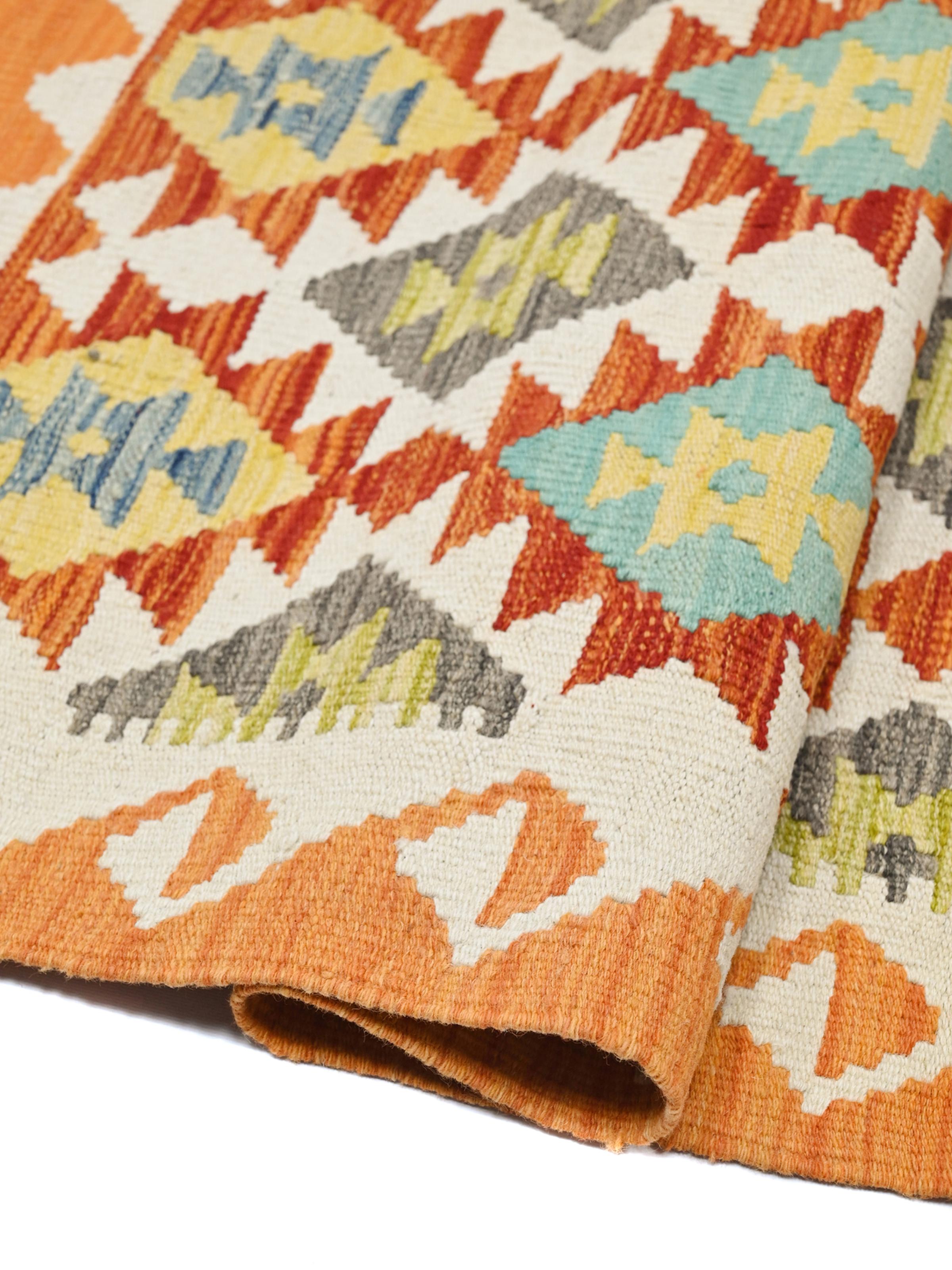
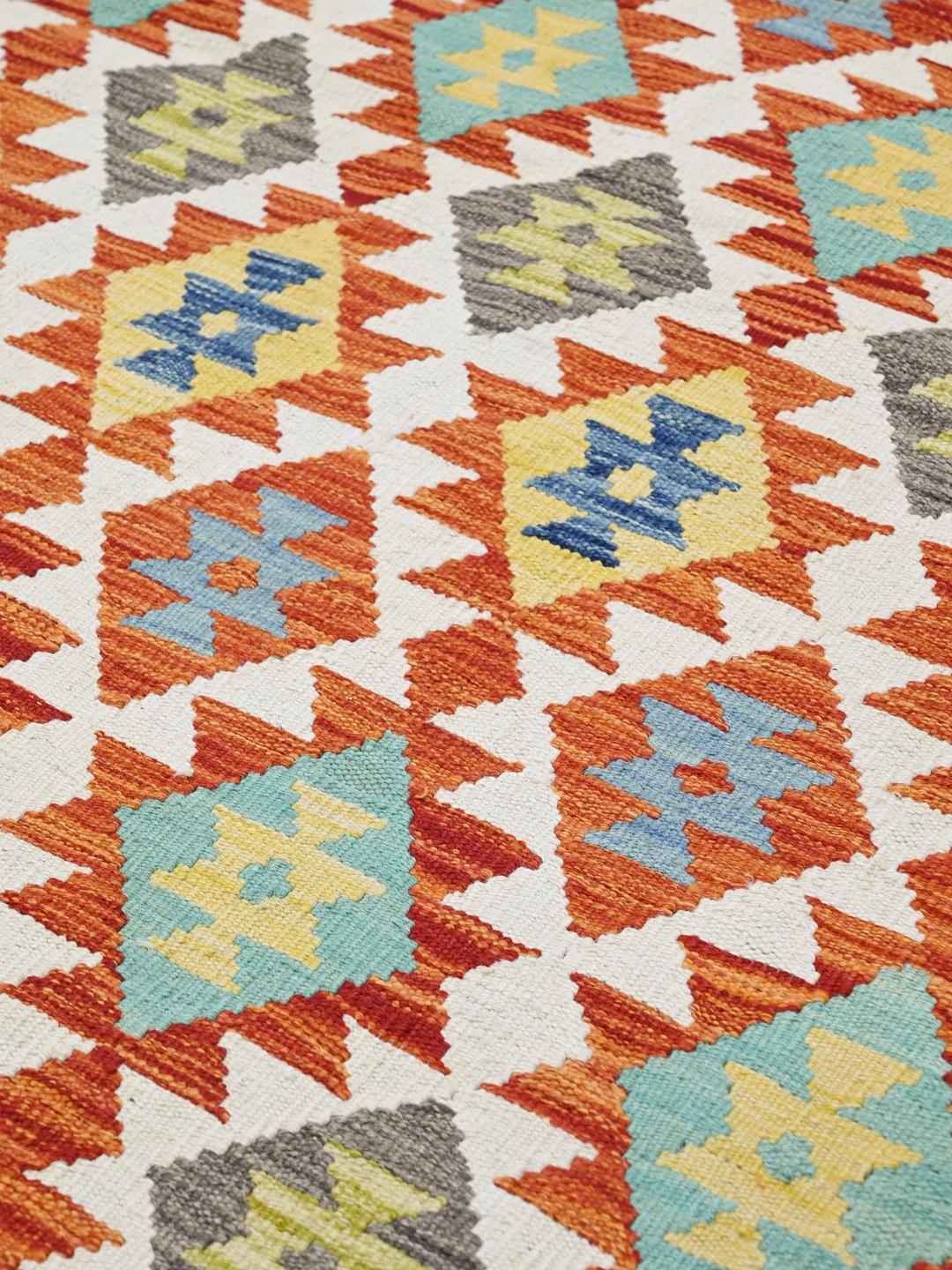
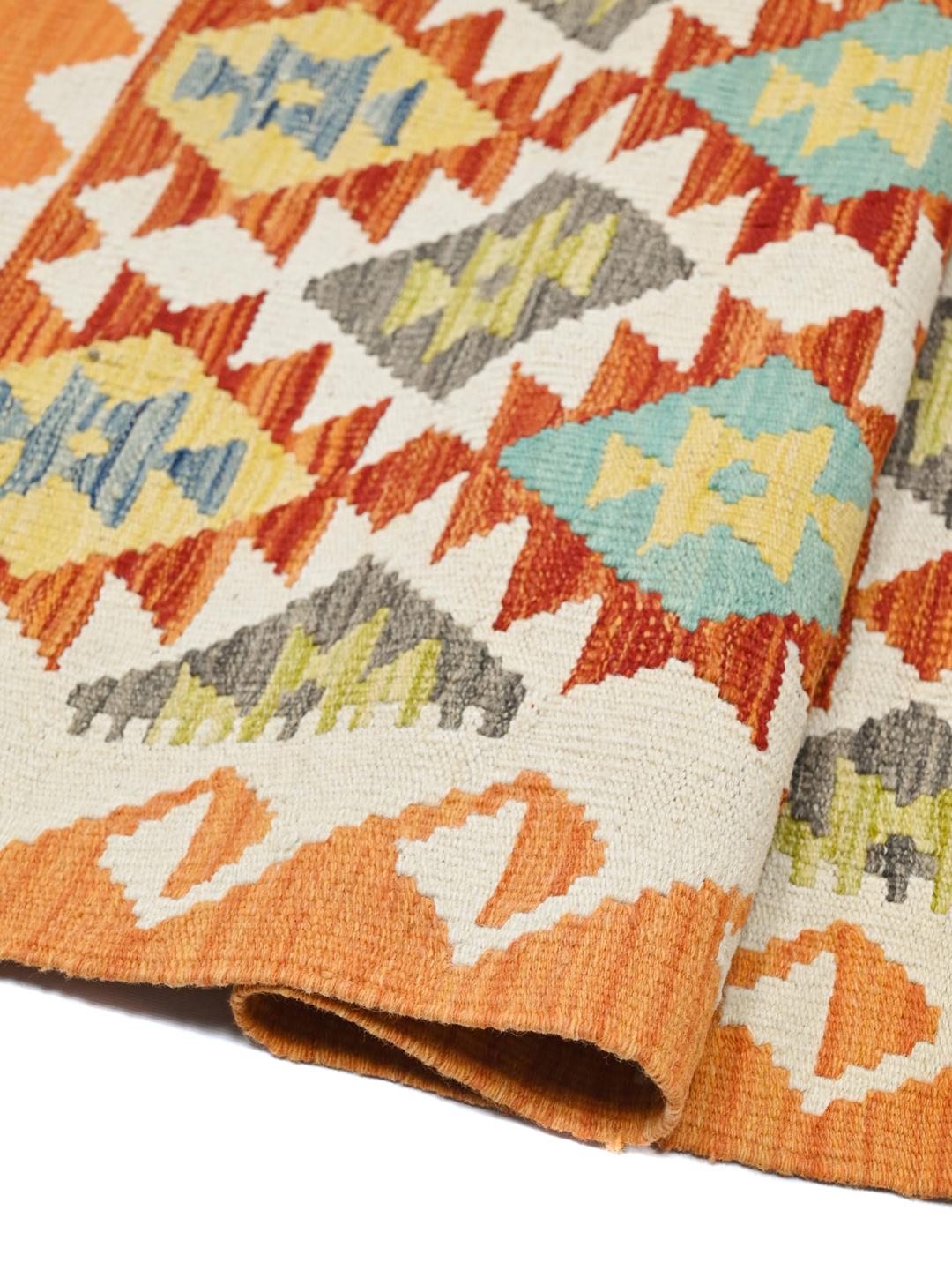
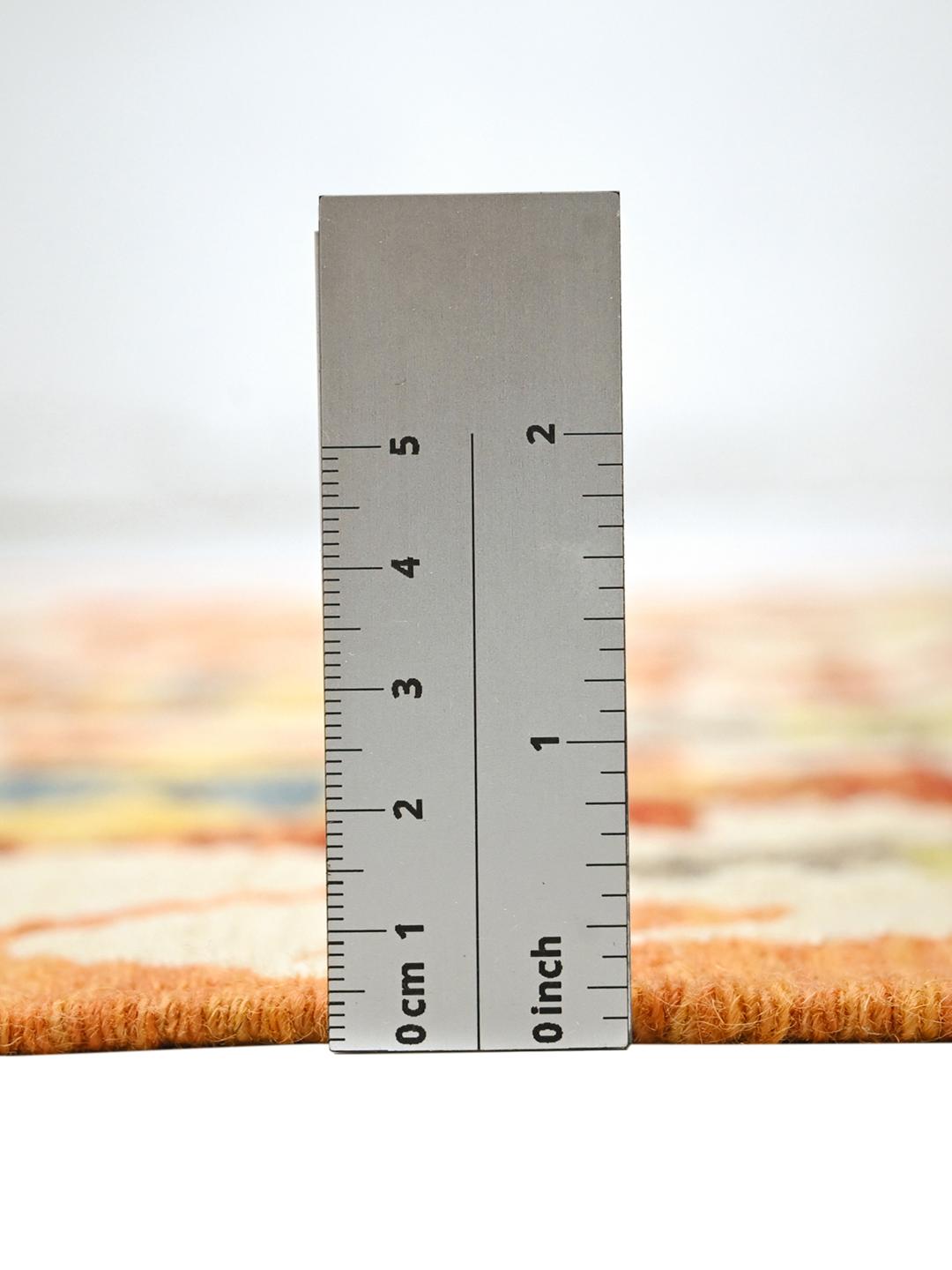
Unlike piled rugs, a Kelim is constructed using a flatweaving technique where the threads are tightly interlaced to form the design. This method creates a lightweight yet incredibly strong textile with a smooth, pileless surface. The distinctive gaps or slits sometimes visible along the edges of the geometric patterns are a natural characteristic of this traditional weave, showcasing the authentic hand-crafted nature of the piece.
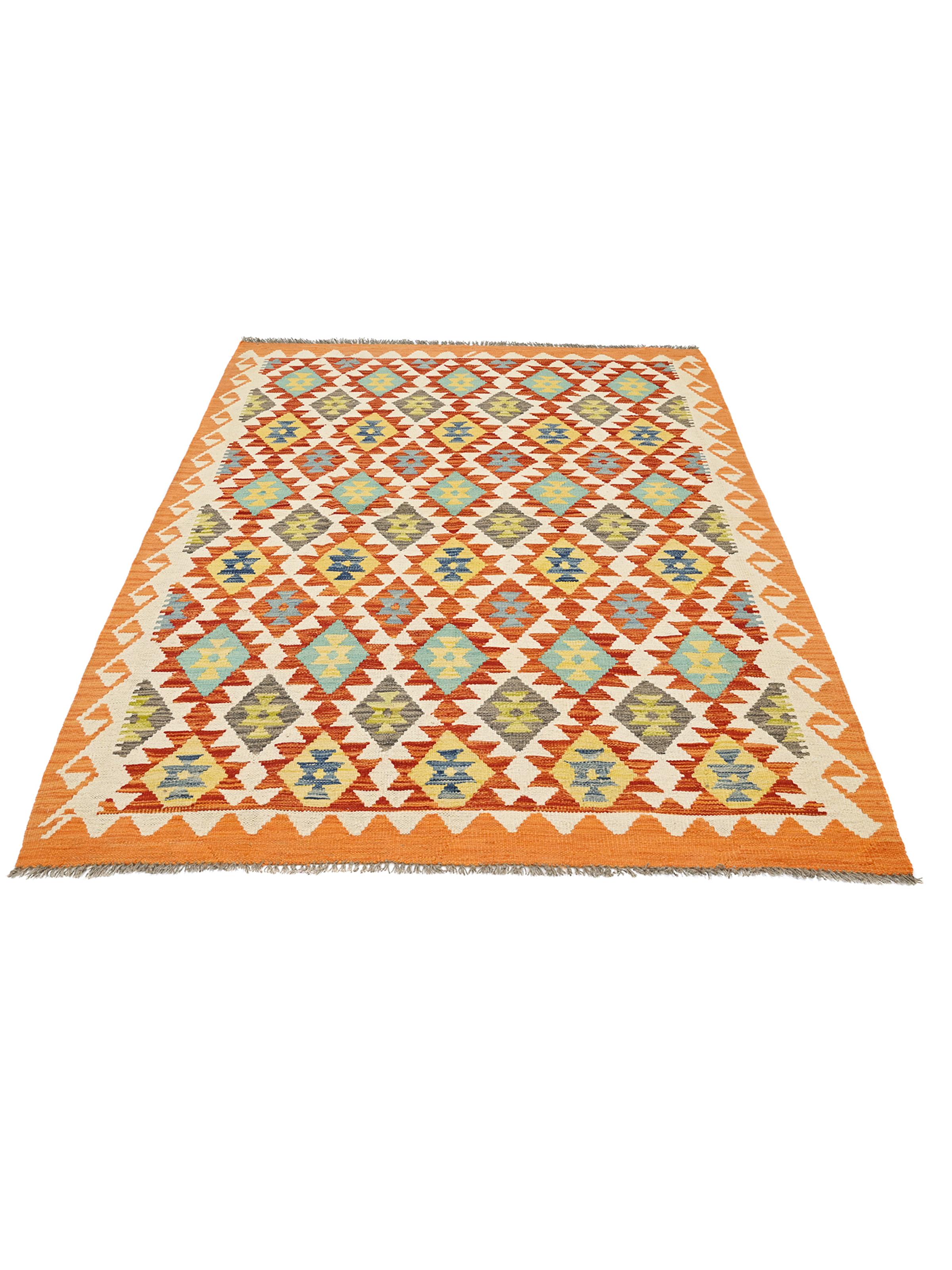
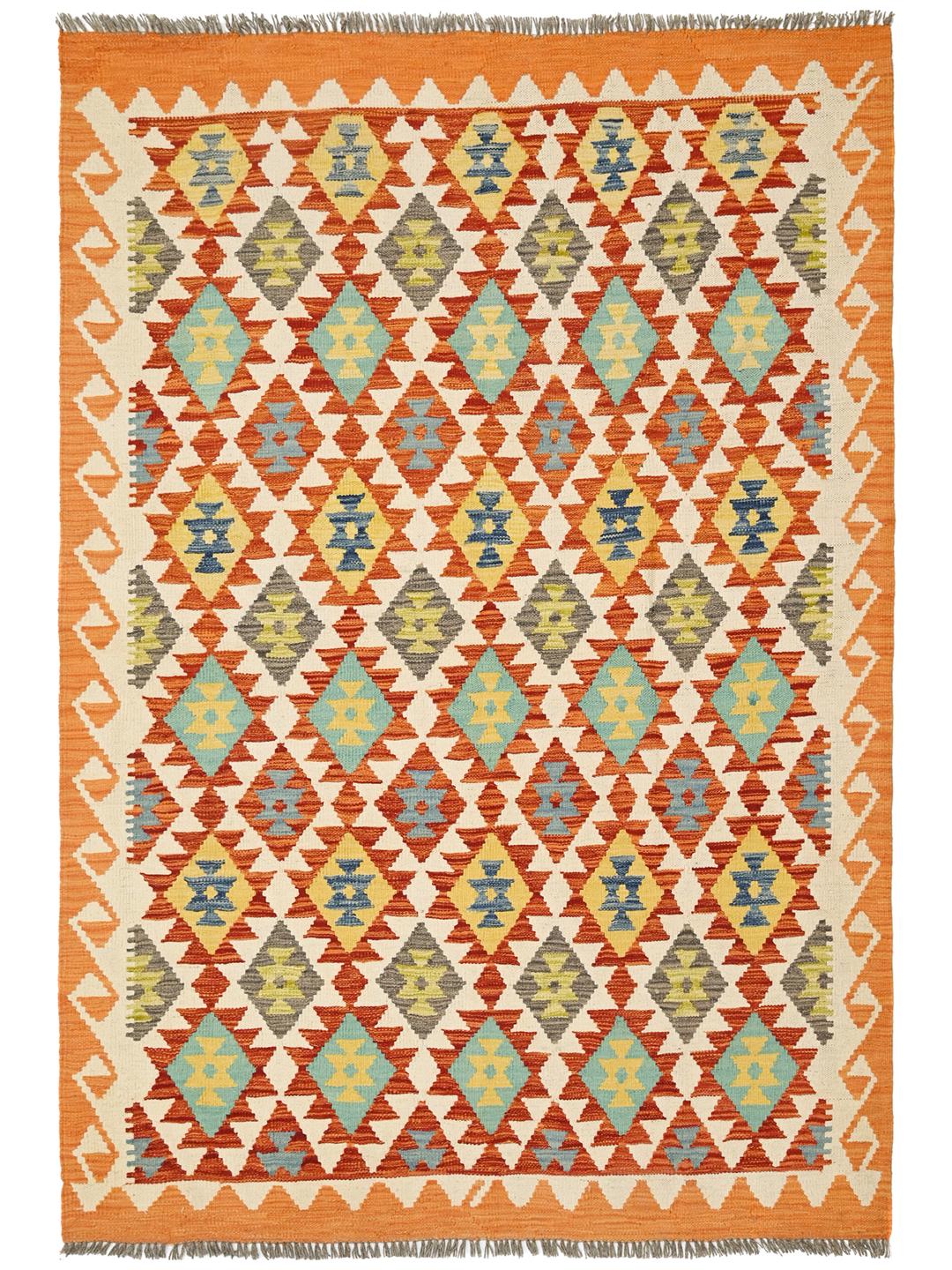
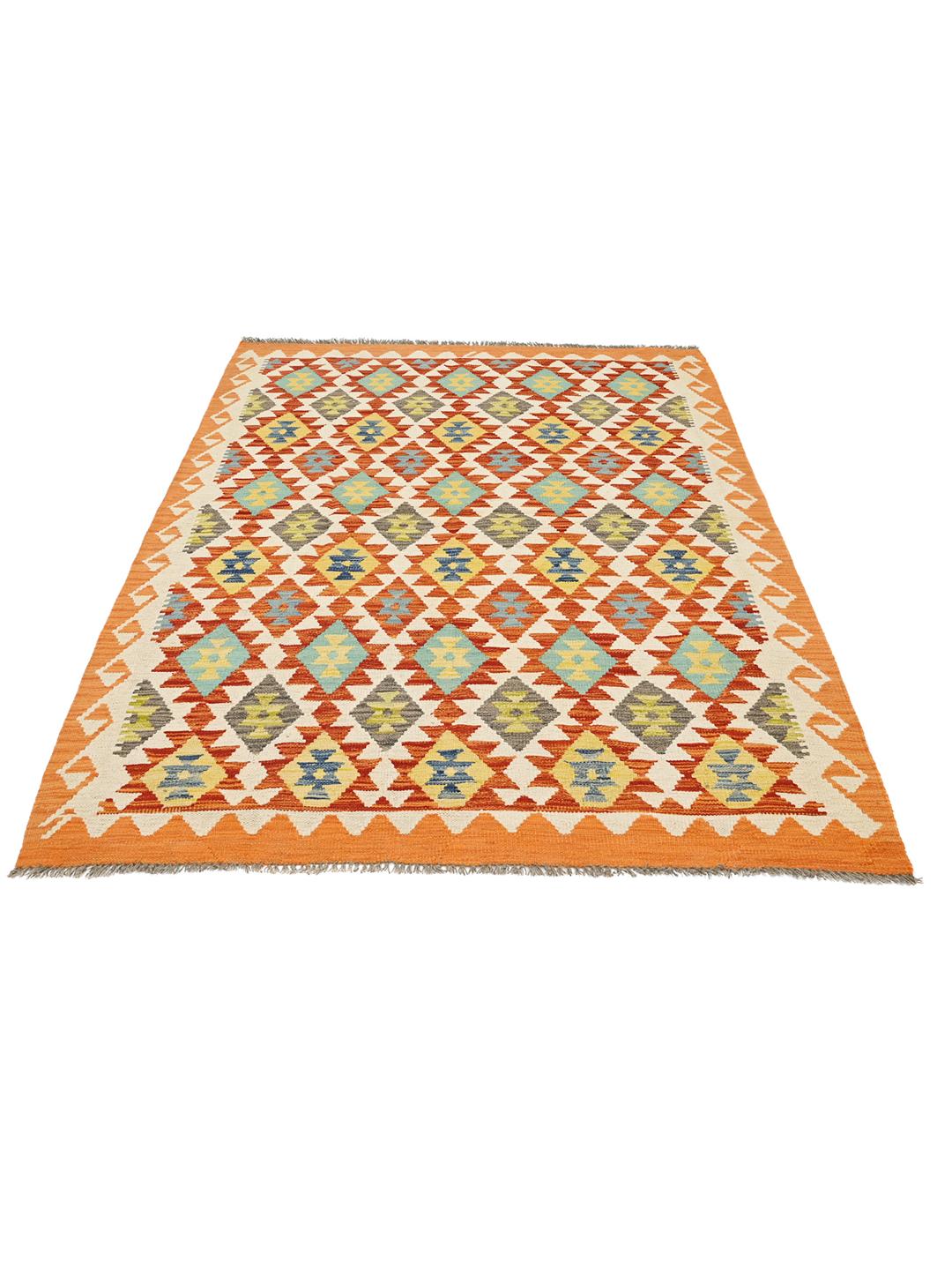
The visual language of this Kelim Afghan Old Style rug is defined by its bold geometric patterns, featuring repeating diamond motifs and stepped borders. Traditional Afghan Kelims often utilise rich, warm earth tones, and this contemporary interpretation beautifully incorporates vibrant orange, teal, and yellow hues. These geometric symbols often carry traditional meanings, representing protection, fertility, or the natural landscape of the weaver's homeland.
Today, these flatweaves are highly valued by collectors and homeowners alike for their graphic appeal and historical depth. Acquiring an Afghan Kelim is more than purchasing a home accessory, it is an investment in a living craft tradition. The combination of ancient design principles with contemporary weaving ensures that each piece remains a relevant and cherished part of a modern home.