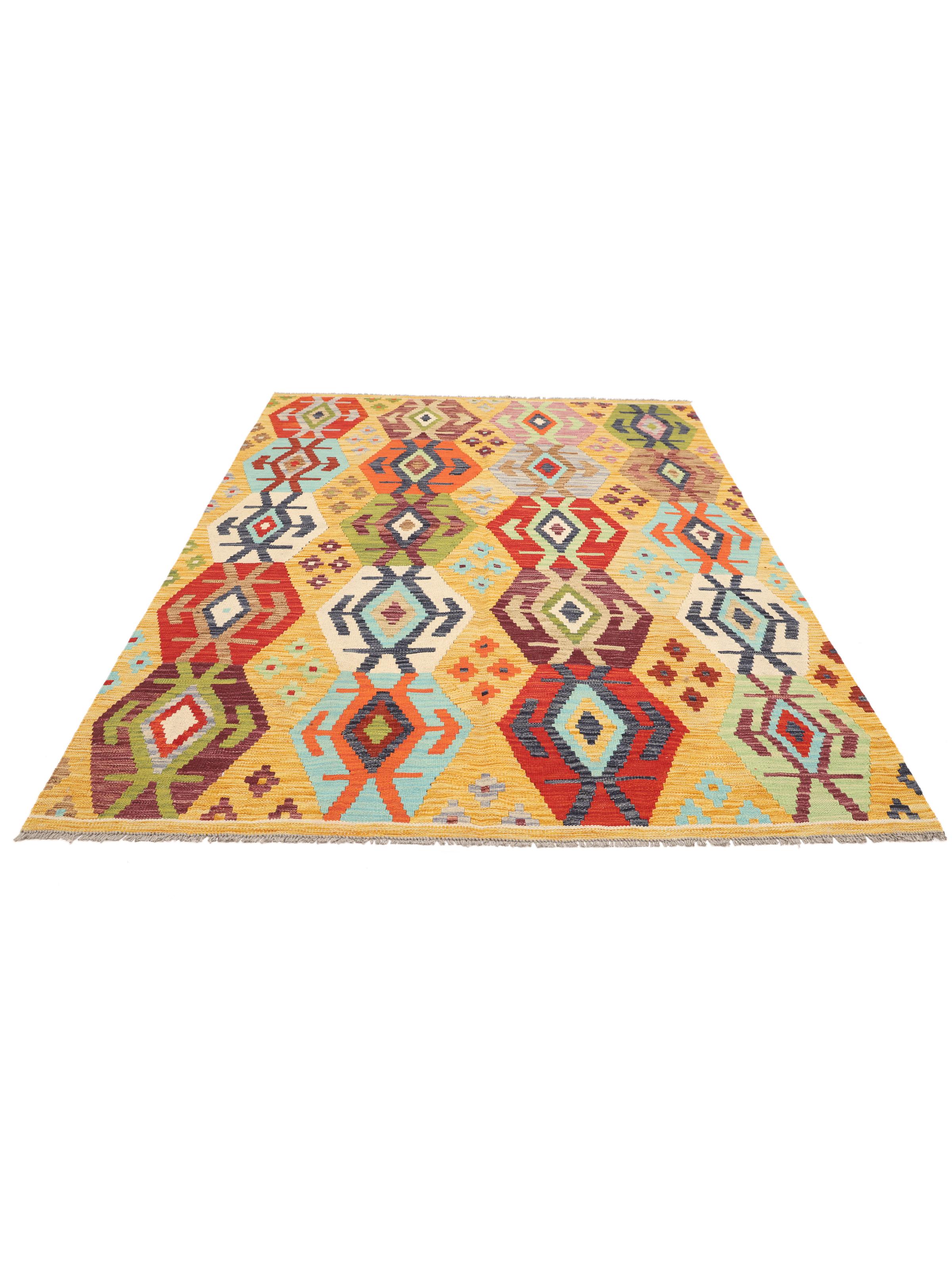
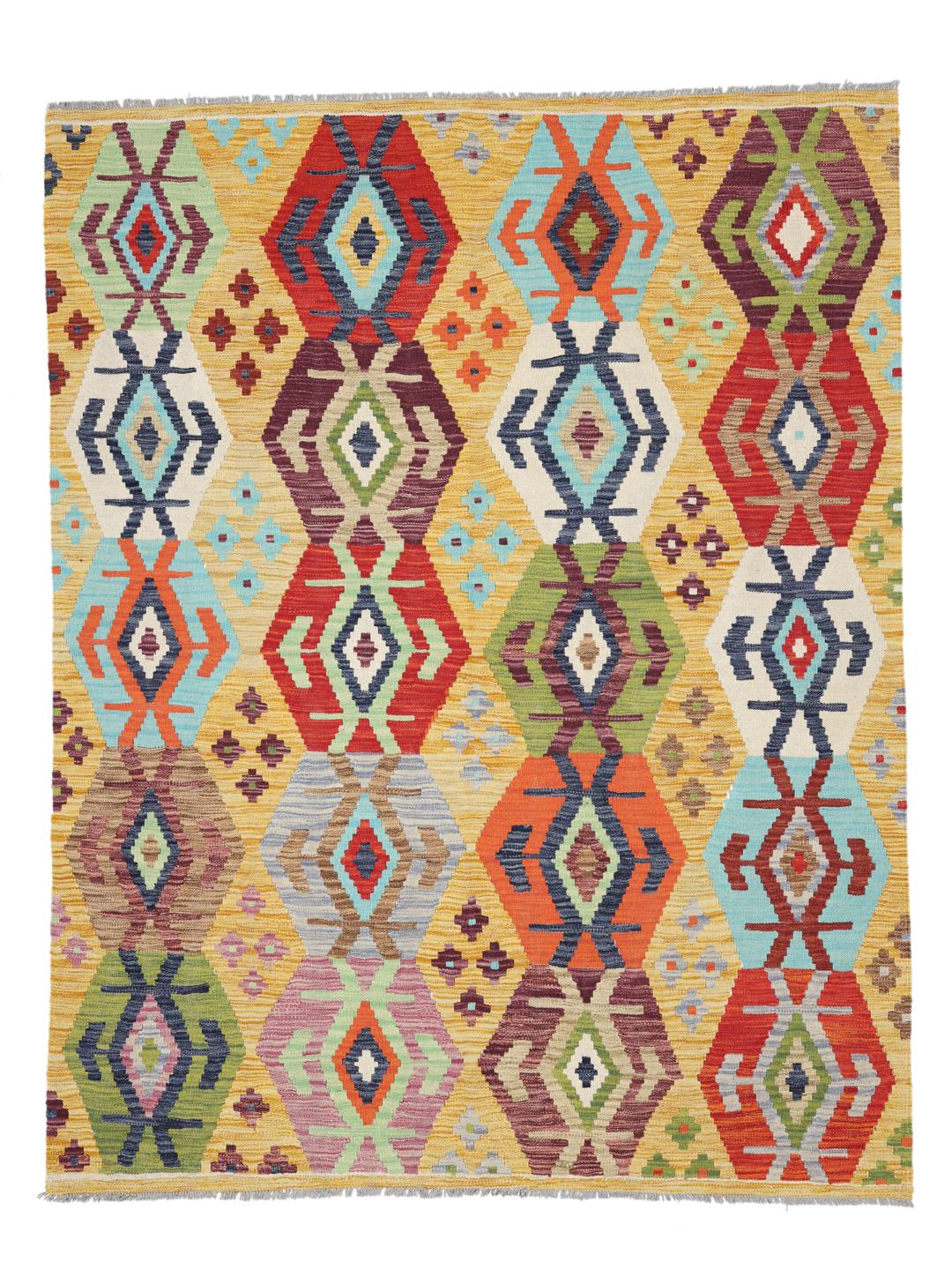
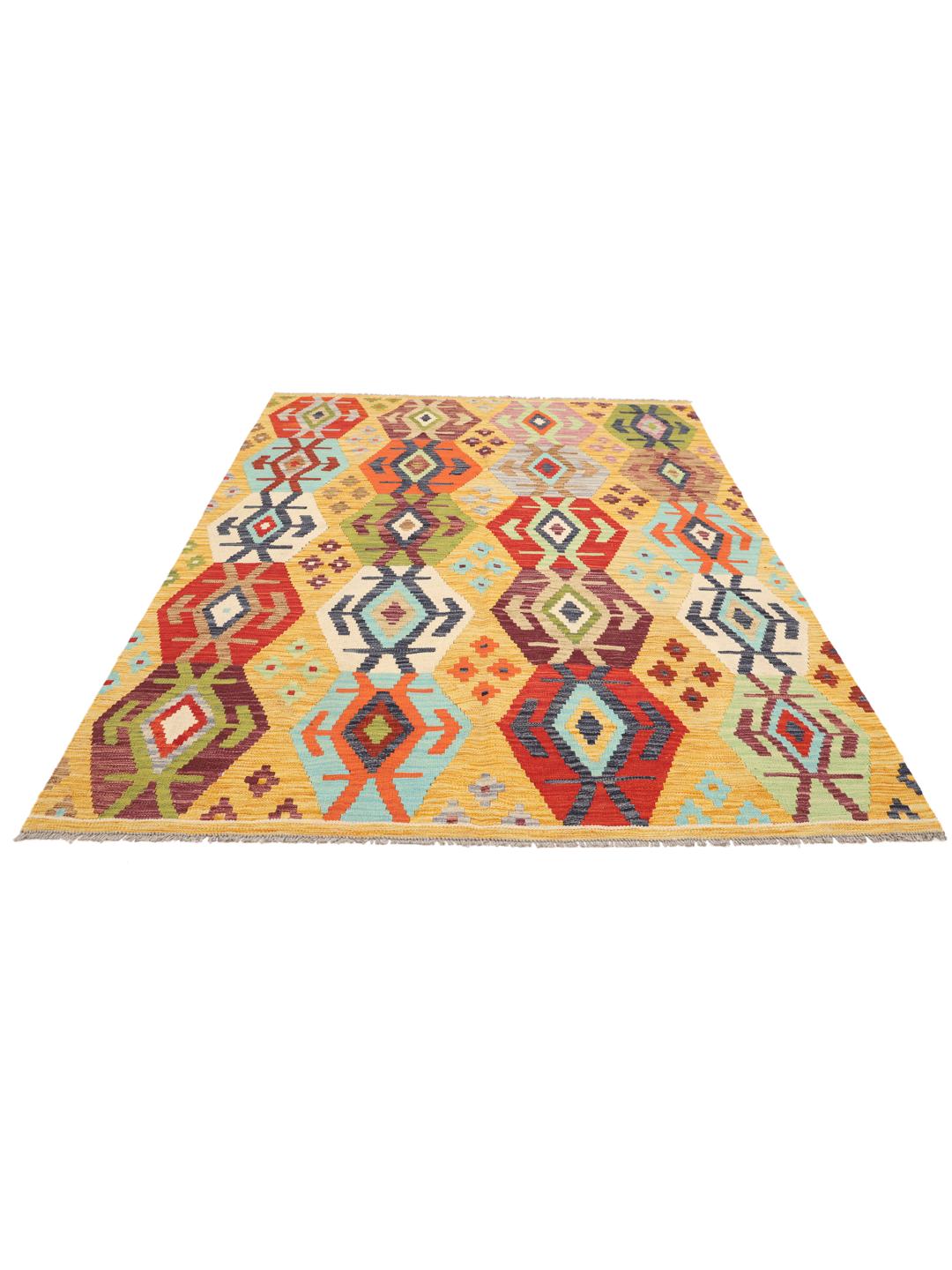
Kelim rugs have a storied history rooted in the nomadic traditions of the Middle East and Central Asia. They were originally crafted as functional, portable items for daily life, serving as floor coverings, wall hangings, and storage bags for travelling tribes. Over centuries, these rugs have evolved from utilitarian necessities into highly sought-after decorative pieces.
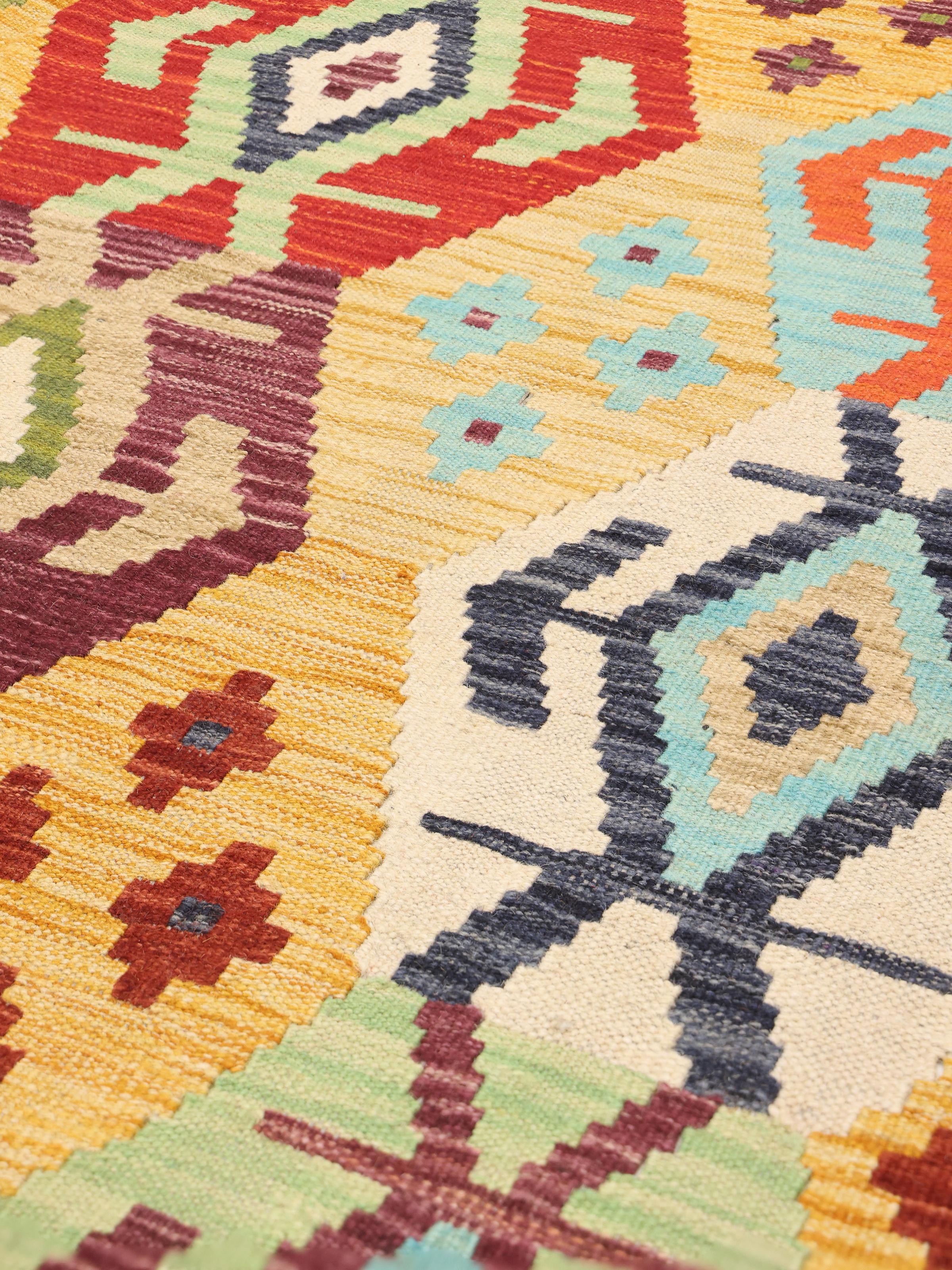
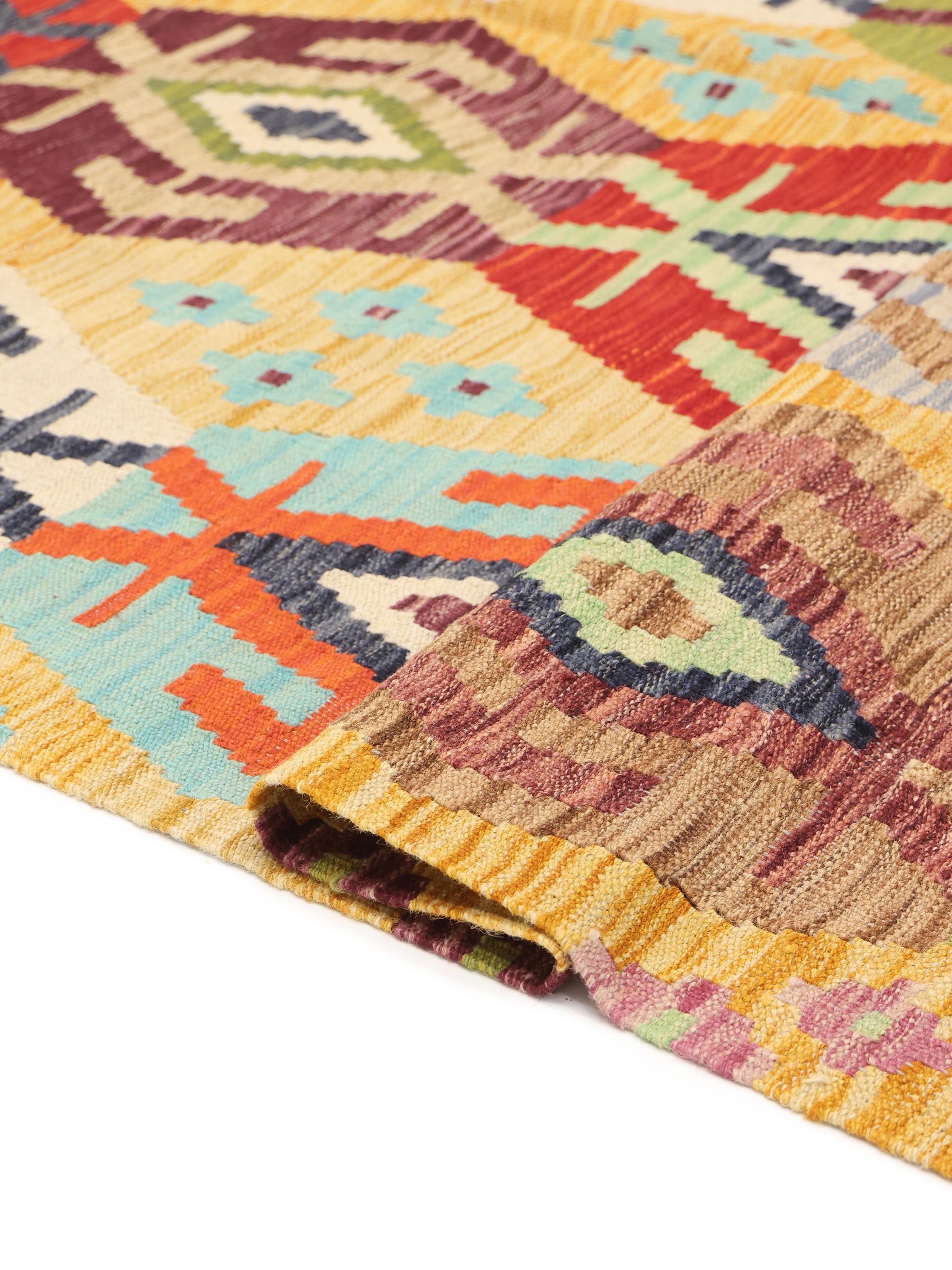
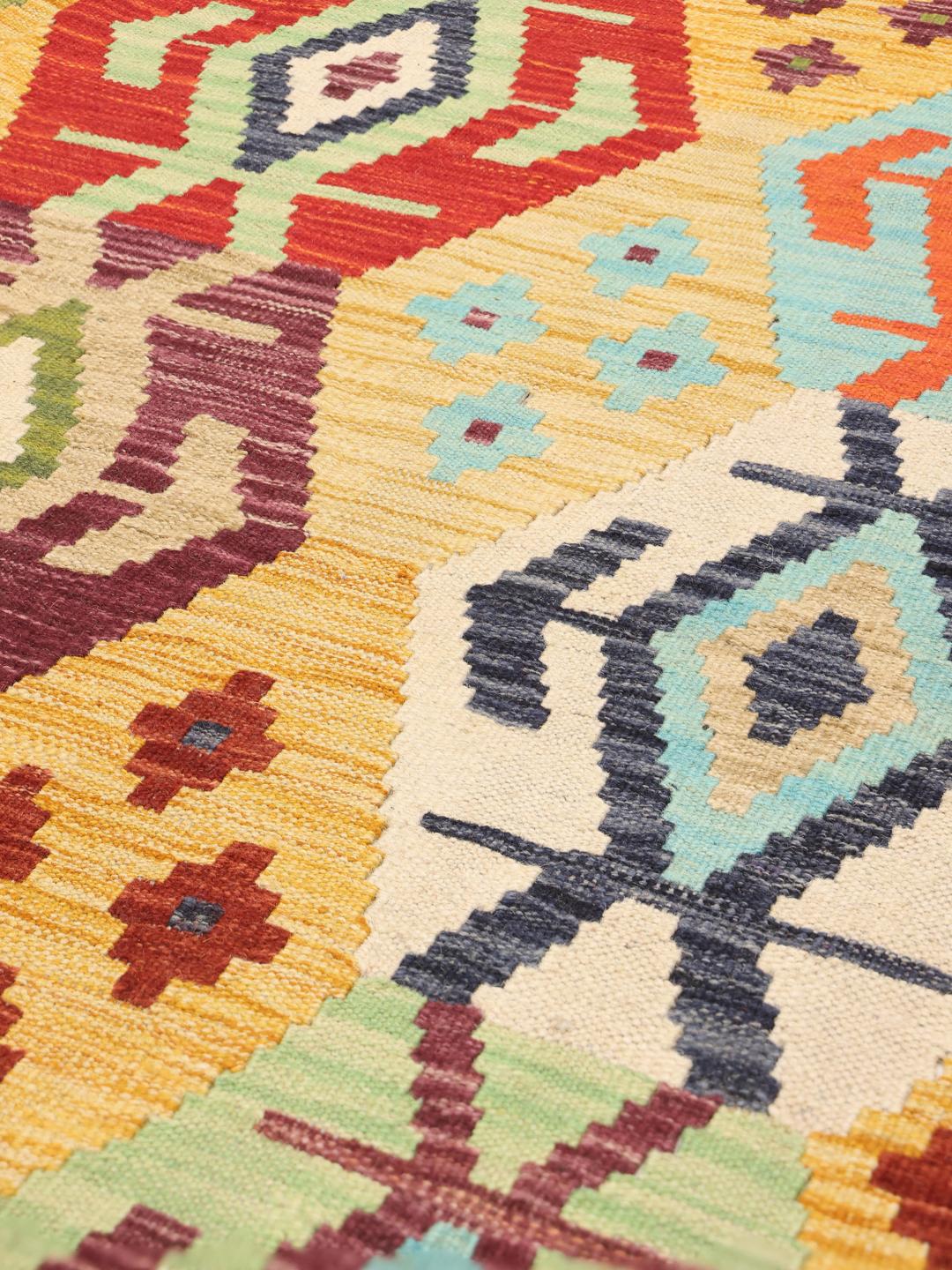
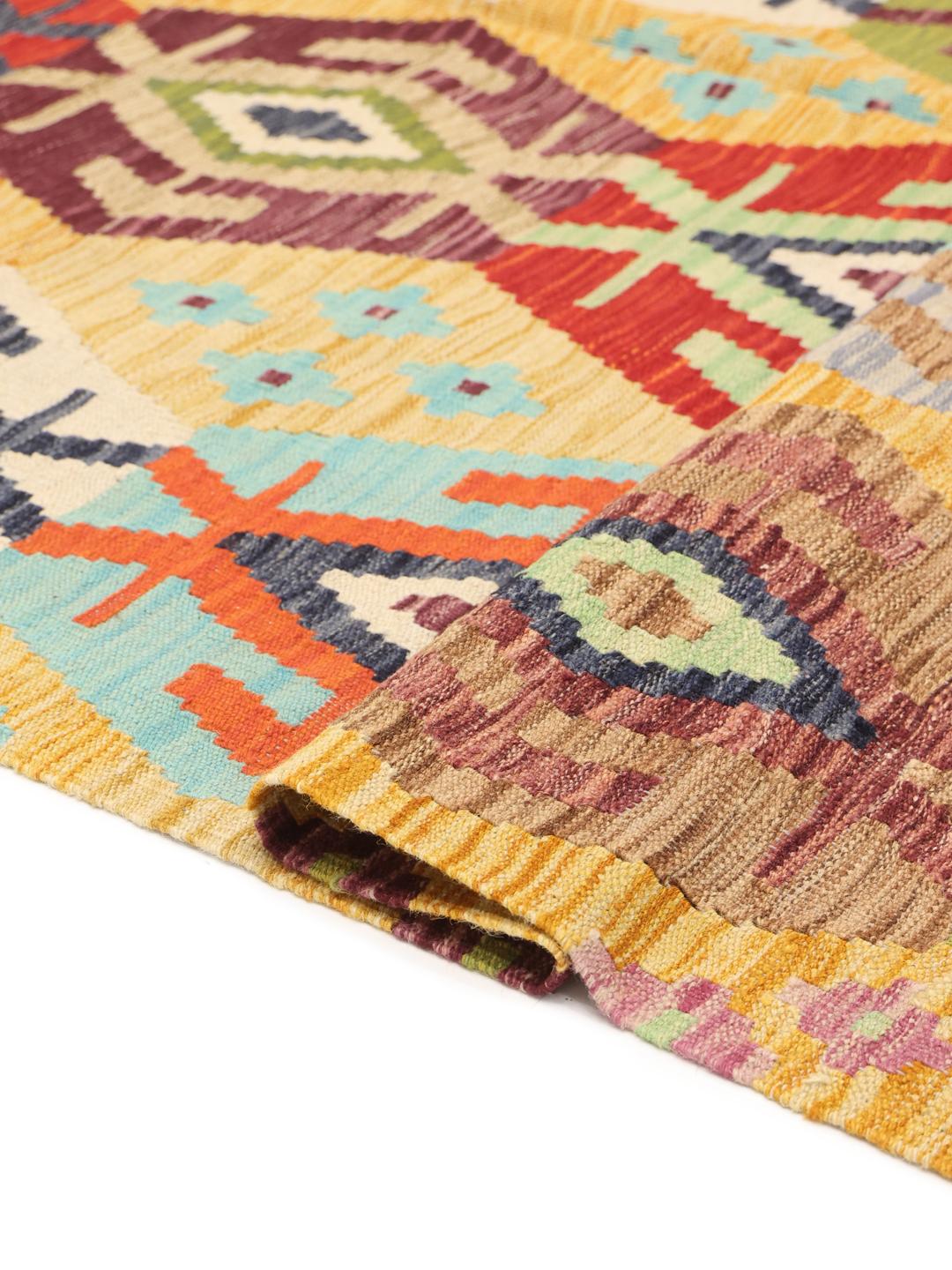
The term Kelim refers to the specific flat-weaving technique used, where the horizontal and vertical yarns are tightly interlaced without the use of a knotted pile. This method results in a durable, reversible rug with a clean, sharp pattern definition. The beauty of this technique lies in its ability to produce intricate geometric motifs that appear almost identical on both sides.
Design-wise, these rugs are characterised by their bold, geometric language. Traditional motifs often include diamonds, triangles, and stylised floral elements, each carrying symbolic meaning within the weaving community. The vibrant colours are derived from natural dyes, giving them a rich, authentic appearance that complements both traditional and modern settings.
Collectors value these pieces for their cultural significance and the stories woven into their threads. Owning an authentic Afghan Kelim is an investment in a craft tradition that has been passed down through generations. It is a testament to the skill of the artisan and the enduring appeal of traditional, hand-crafted textiles in a modern world.