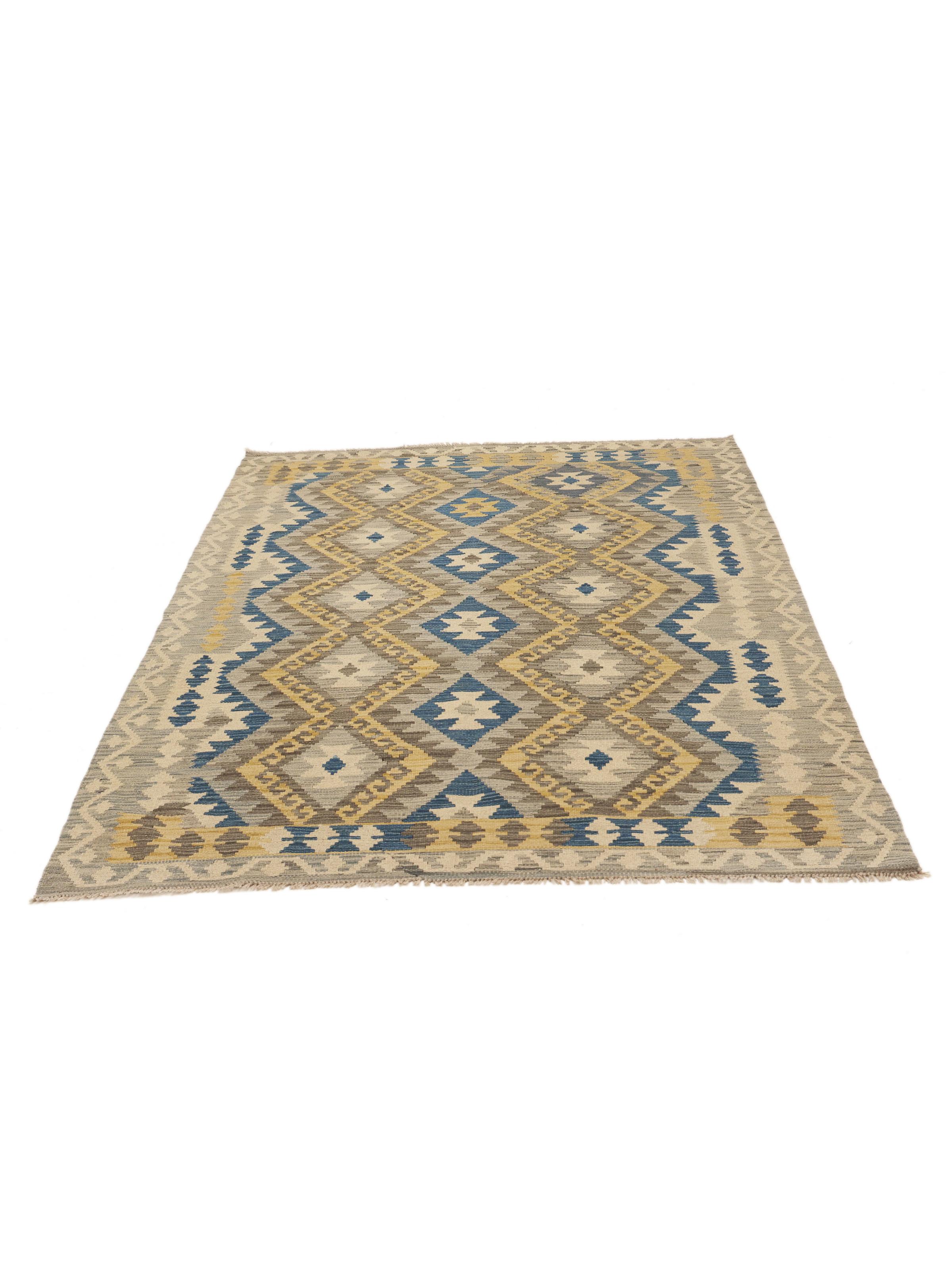
The Kelim tradition in Afghanistan is deeply embedded in the nomadic and village cultures of the region, where flat-woven textiles have served as essential, portable furnishings for centuries. These rugs are not merely decorative but are integral to the daily lives of the communities that produce them, reflecting the geography and cultural identity of the Afghan landscape.
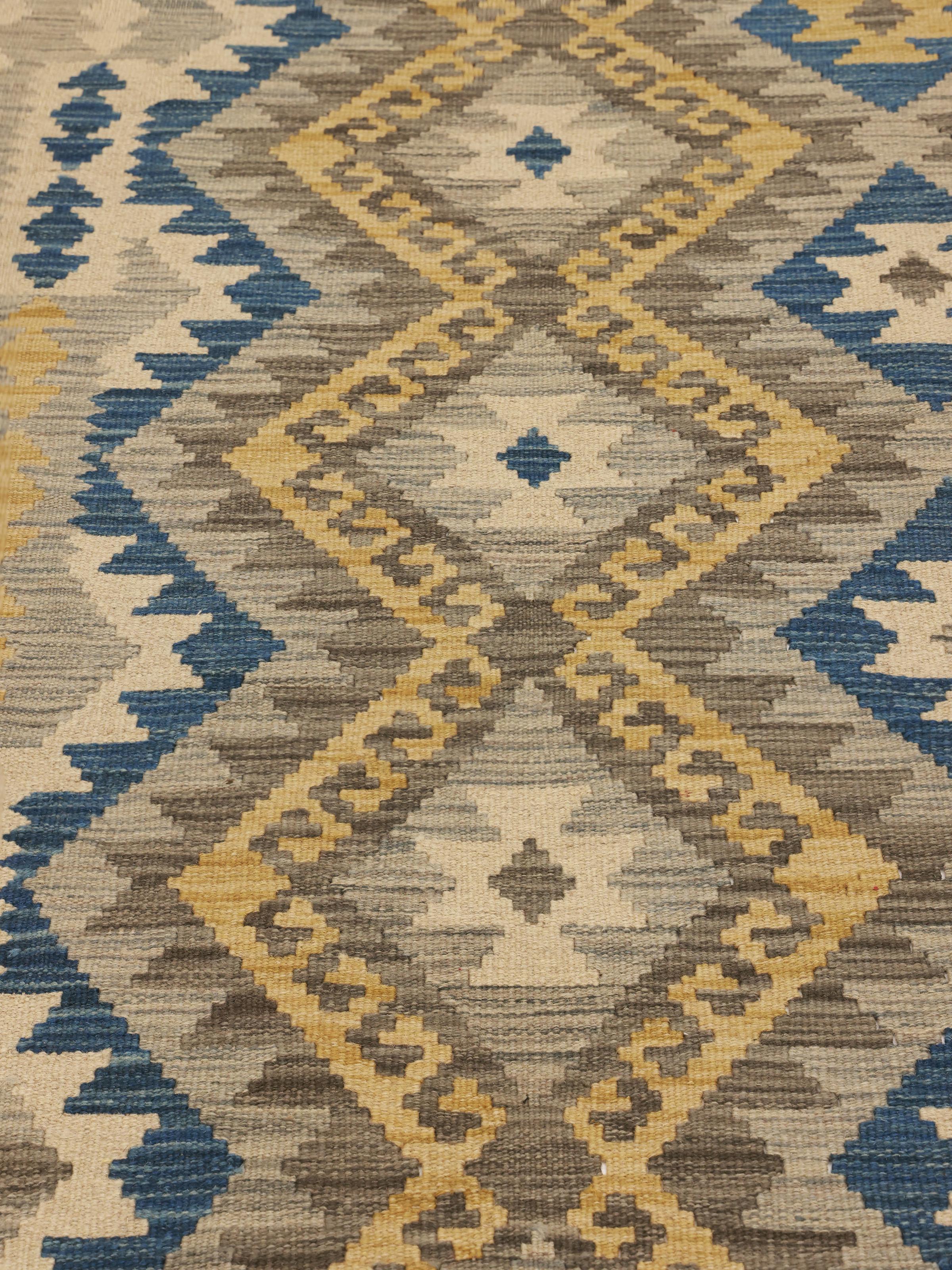
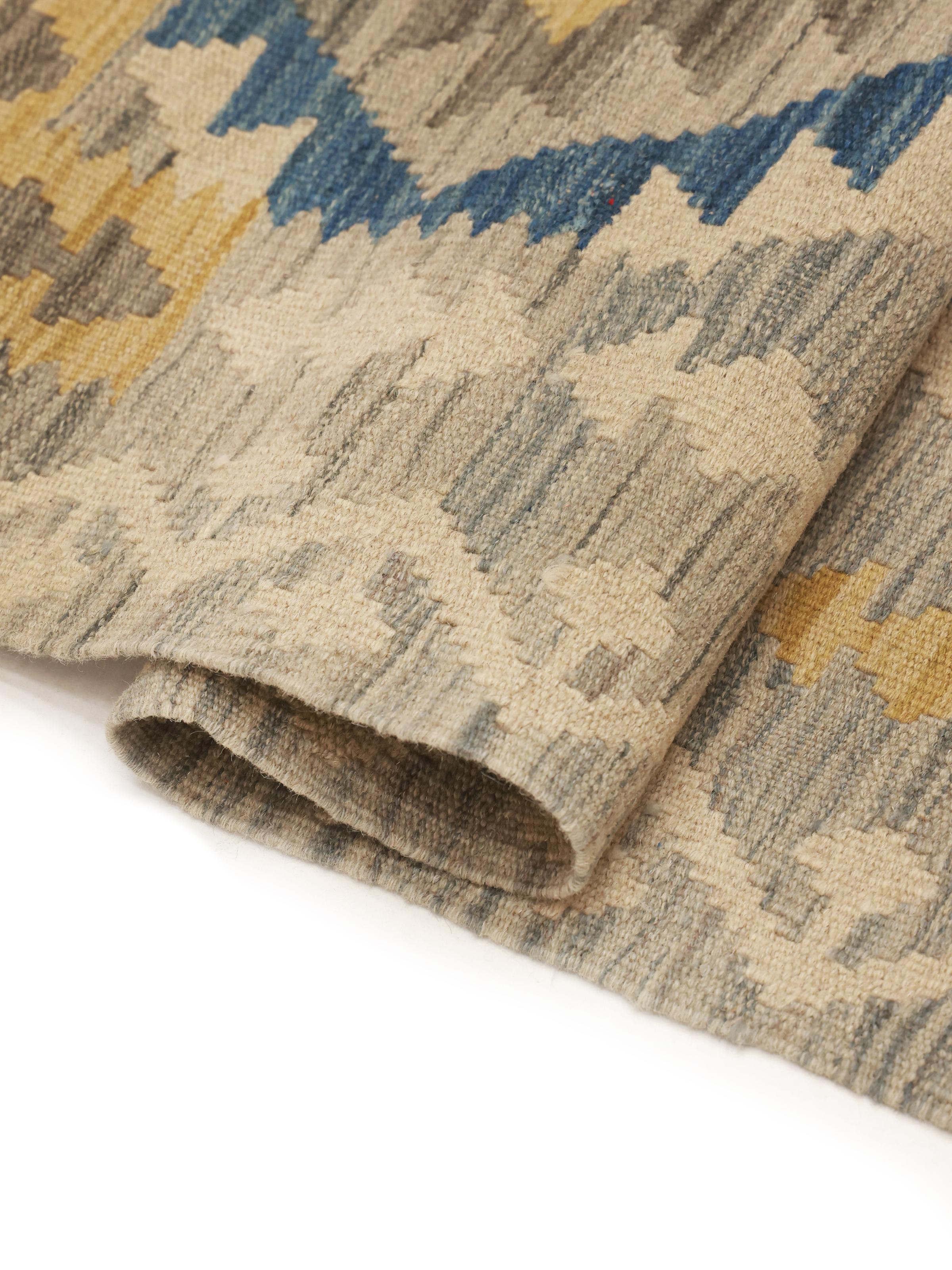
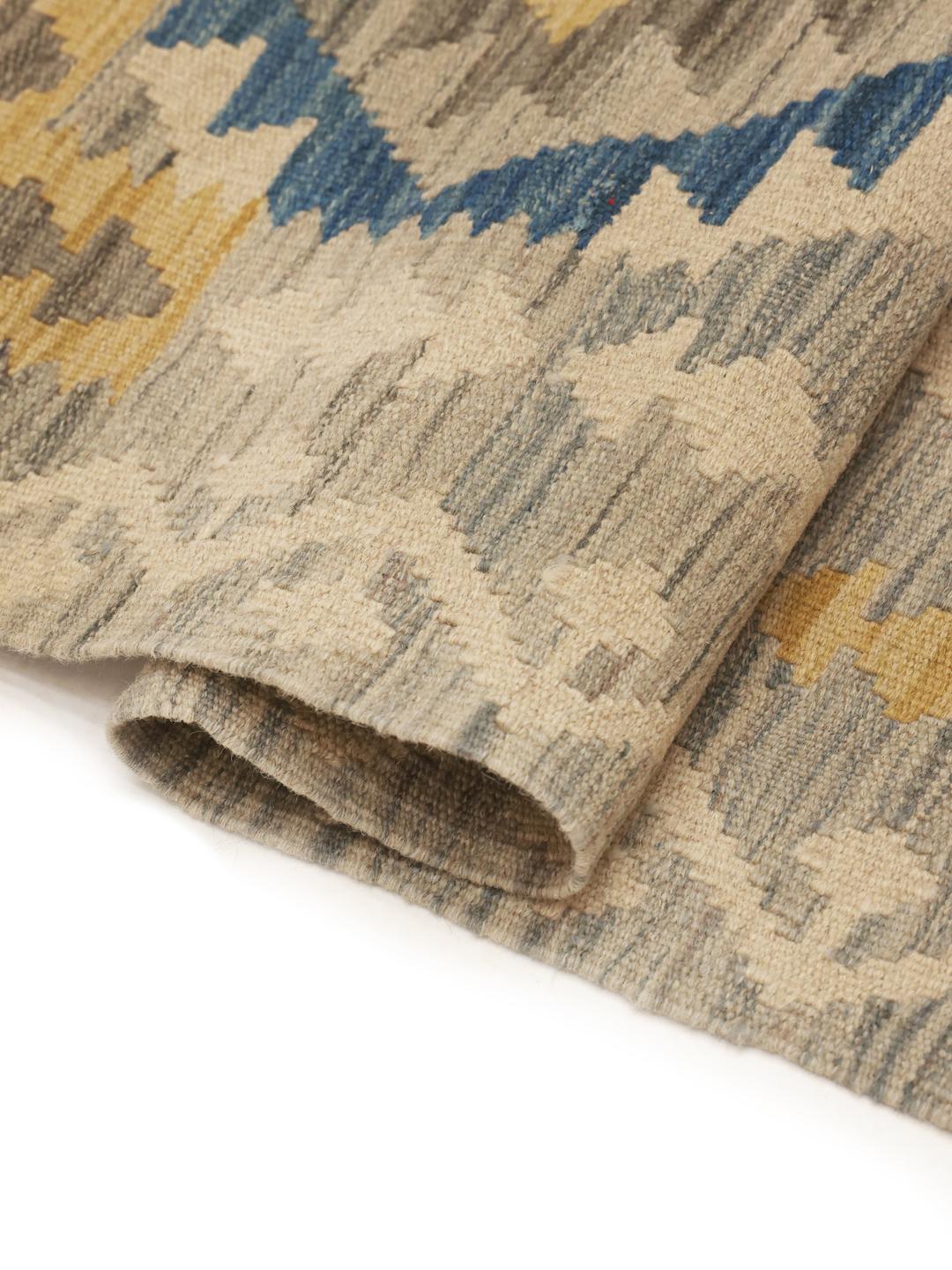
The term 'Kelim' refers specifically to the tapestry-weave technique where the warp and weft are interlaced to produce a flat, pileless surface. This method is highly prized for its versatility and the clarity it brings to graphic patterns, as the absence of a pile allows the intricate geometric motifs to stand out with remarkable precision.
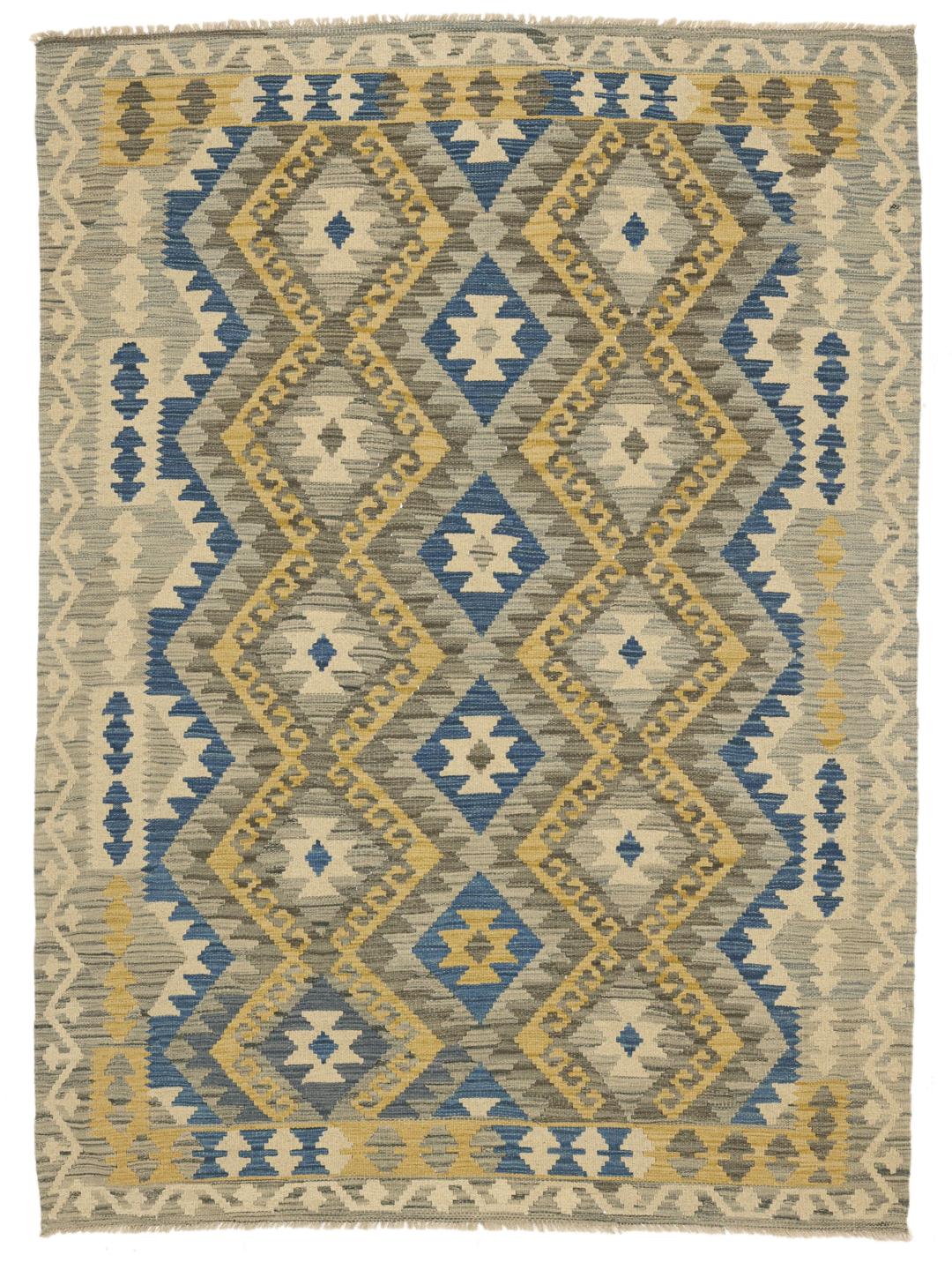
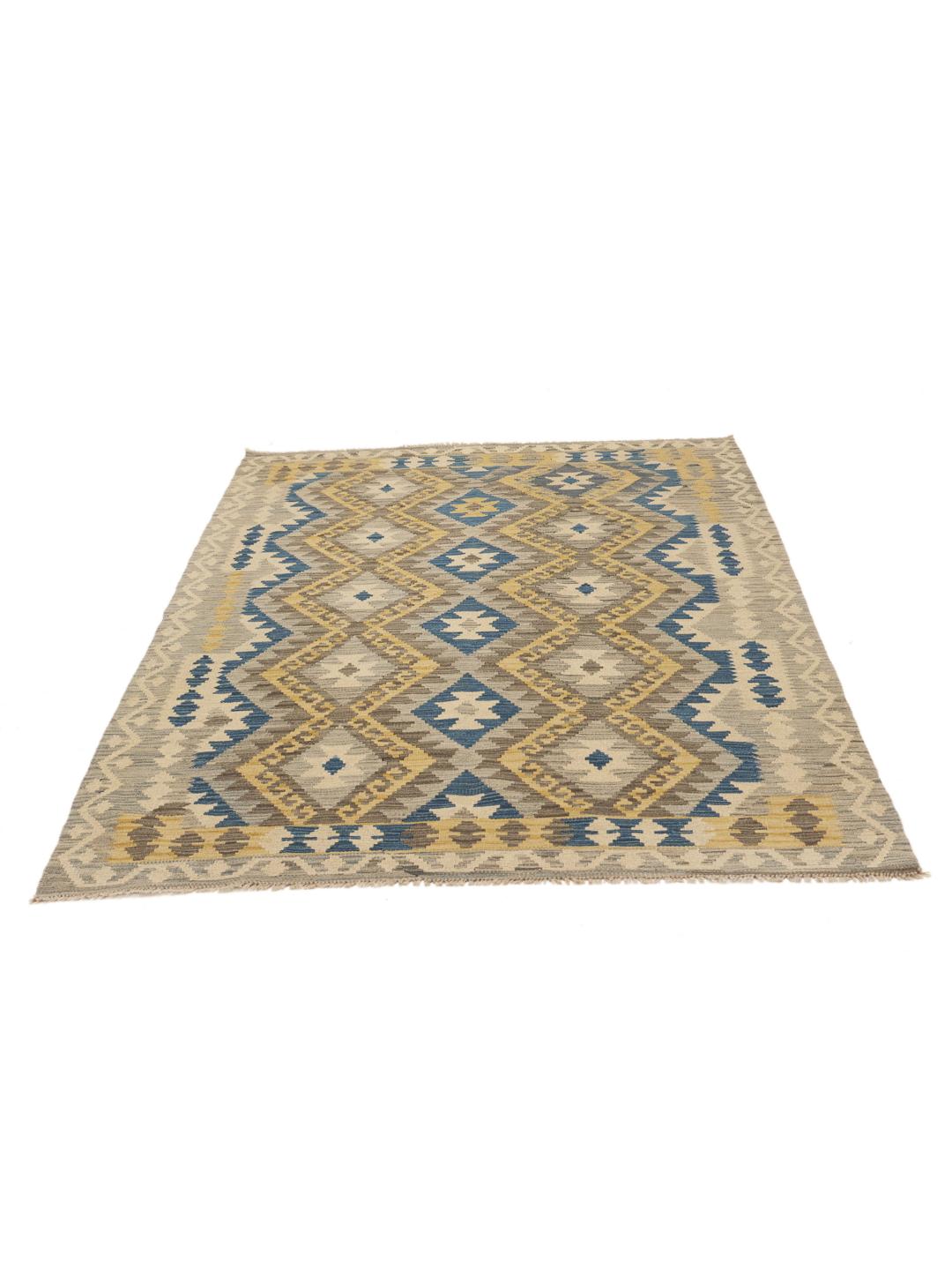
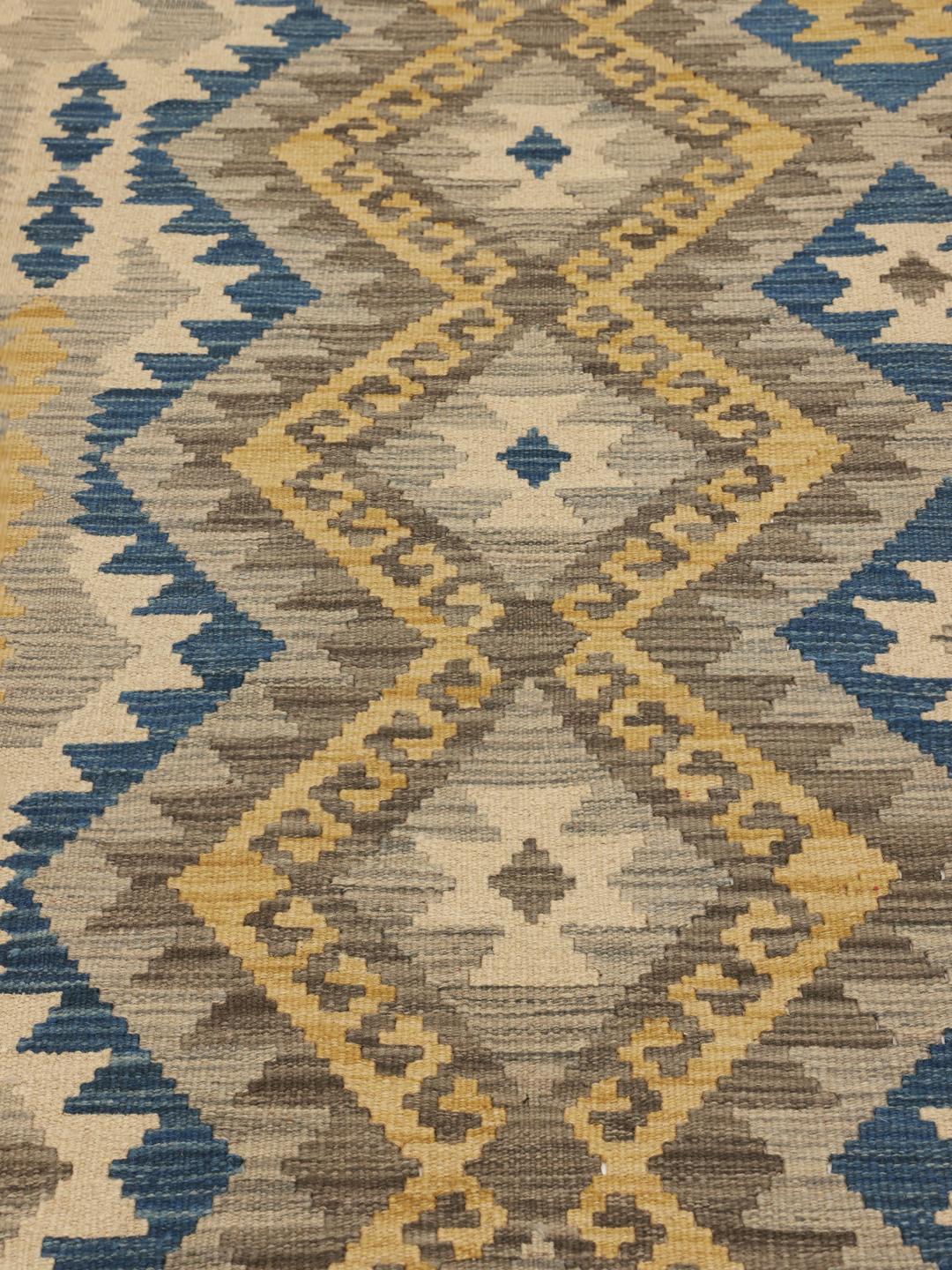
Visually, these rugs are defined by their bold geometric language, often featuring repeating diamonds, triangles, and stylized motifs that have been handed down through generations. This particular piece showcases a rhythmic arrangement of shapes, enclosed by a decorative border that frames the central field, demonstrating the balanced aesthetic typical of this region.
Collecting Afghan Kelims is an investment in human skill and cultural continuity. Each piece serves as a testament to the weaver's ability to interpret ancient visual languages in a contemporary context, making them highly valued by those who appreciate the weight of history and the enduring beauty of traditional handmade arts.