Kelim rugs have a long and storied history across the Middle East and Central Asia, serving as both functional floor coverings and artistic expressions for nomadic and village communities. These flat-woven textiles are traditionally crafted without a pile, a technique that has allowed generations of weavers to transport their looms and create beautiful works of art while on the move.
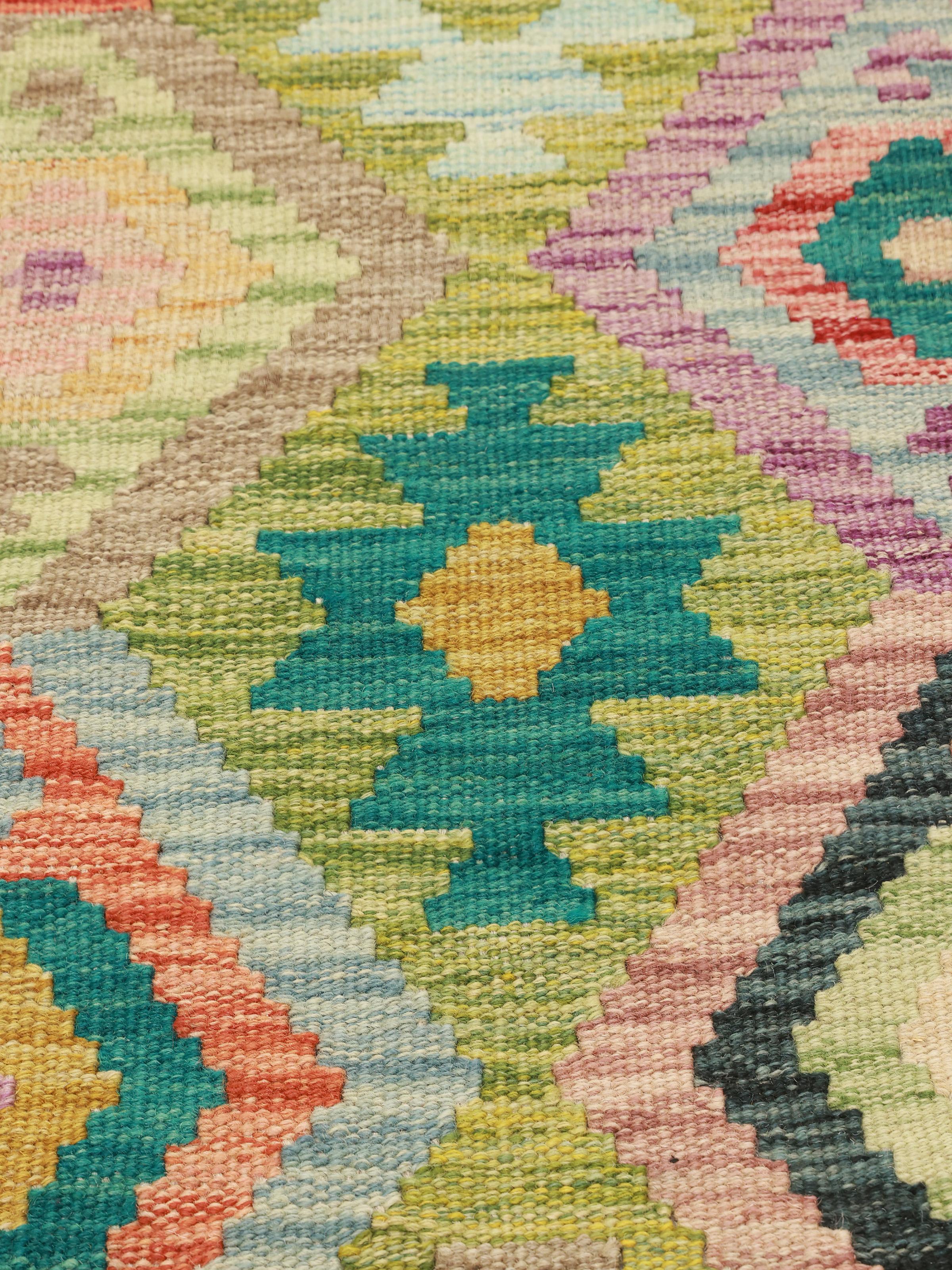
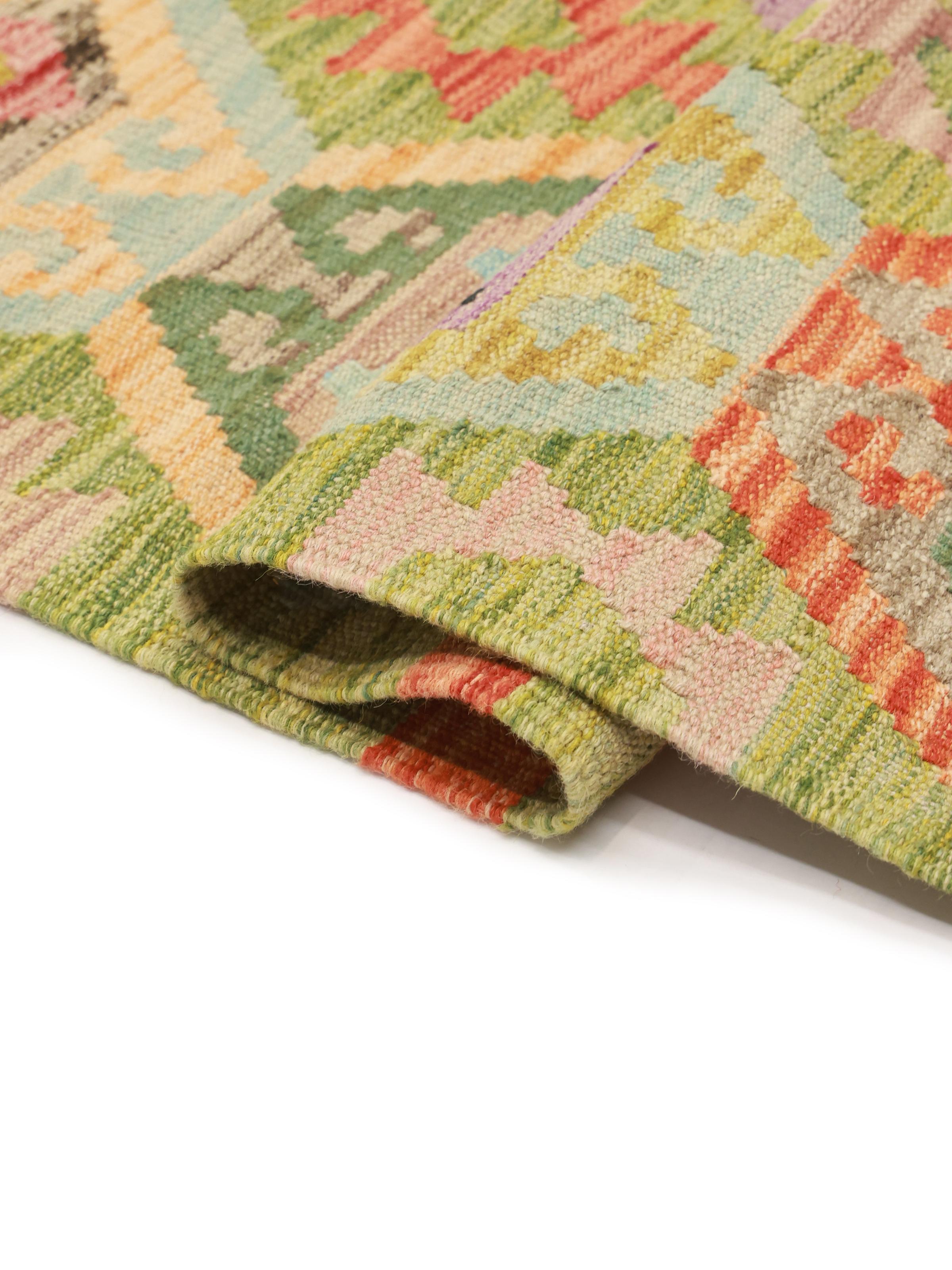
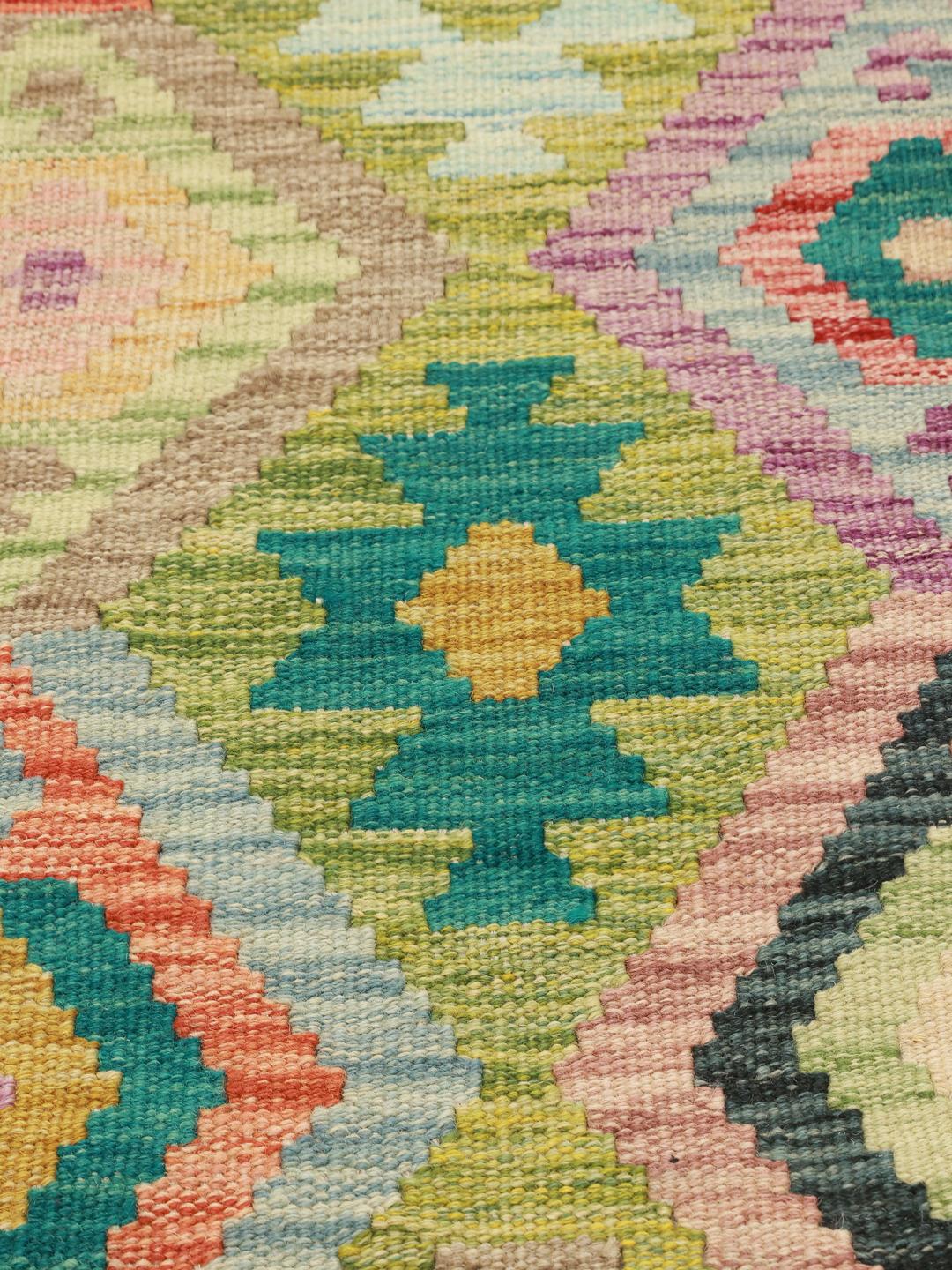
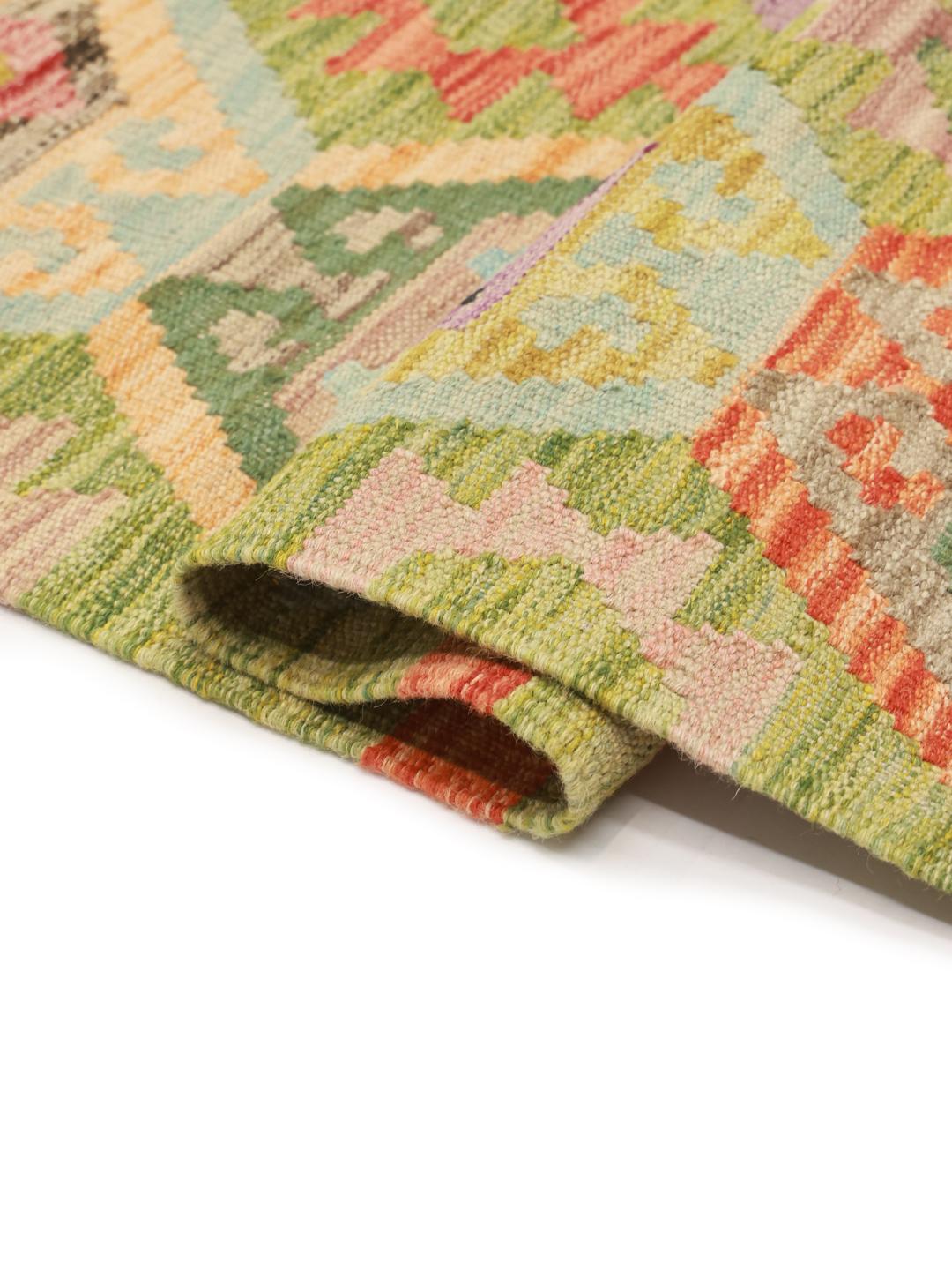
The terminology of the Kelim refers specifically to the slit-weave technique, where the weft threads are woven back and forth through the warp threads. This method is essential for creating the sharp, clean edges of the geometric shapes often found in these designs. Because there is no pile to hide the structure, the quality of the wool and the precision of the weave are immediately apparent to the touch.
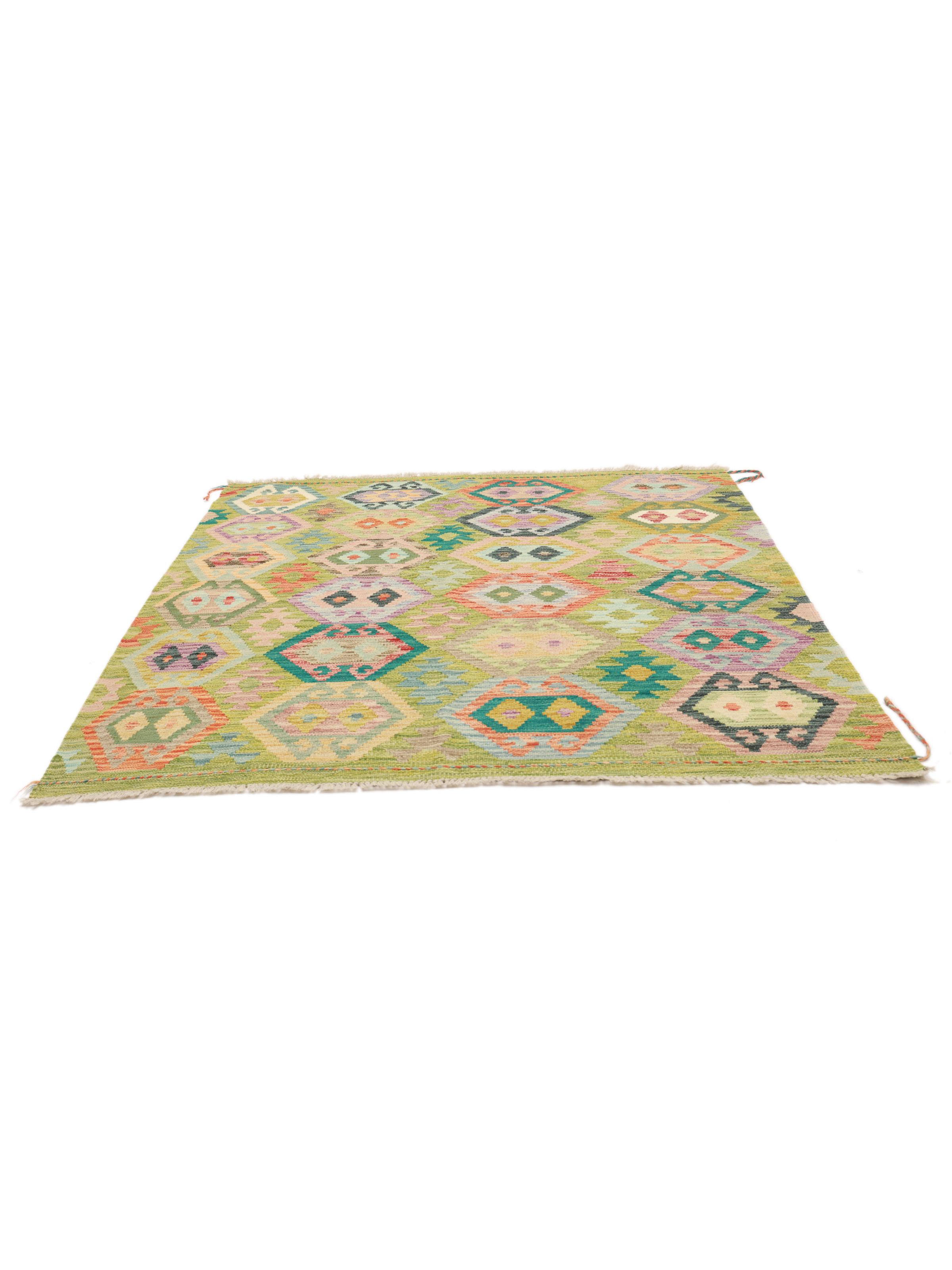
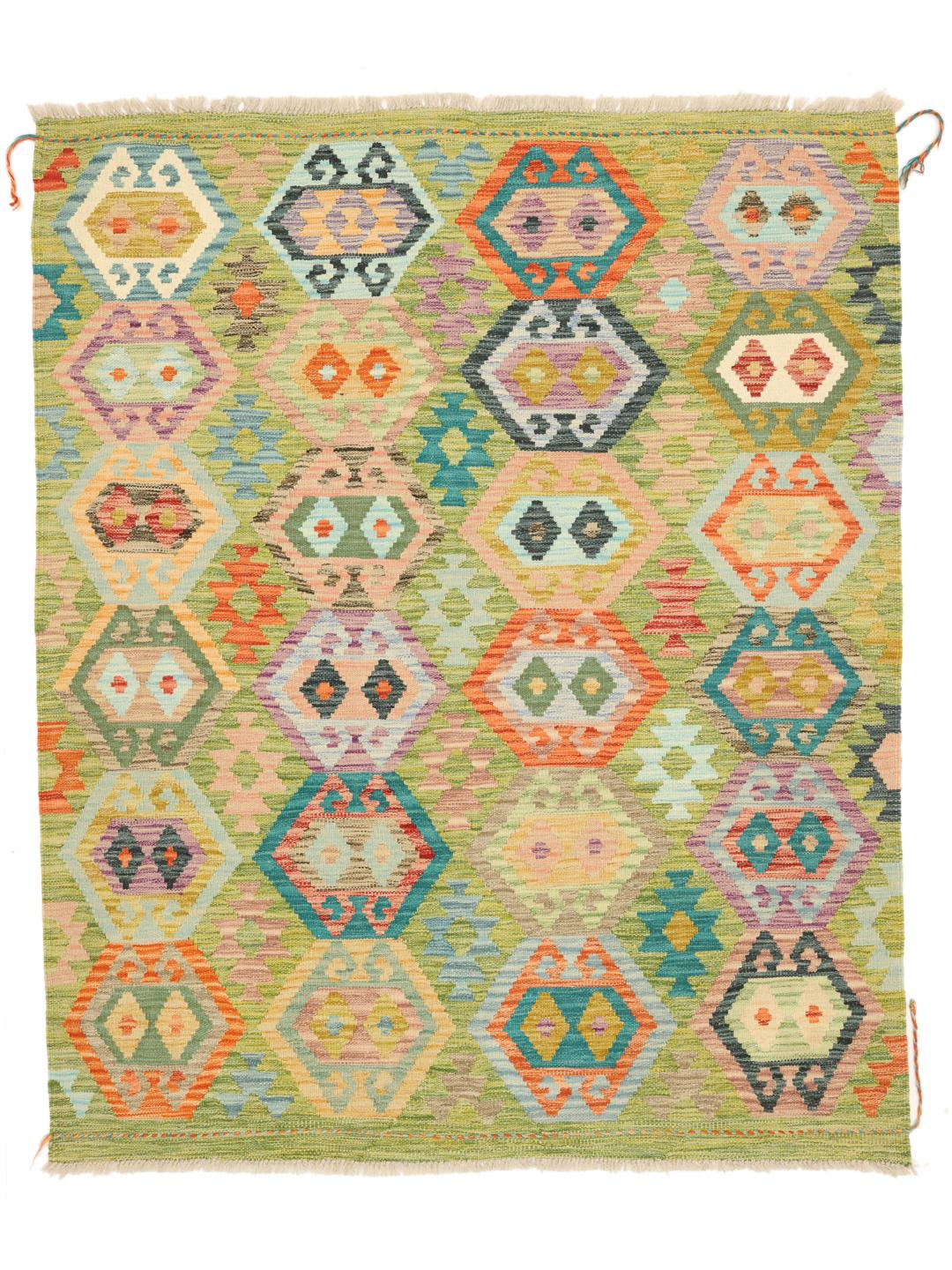
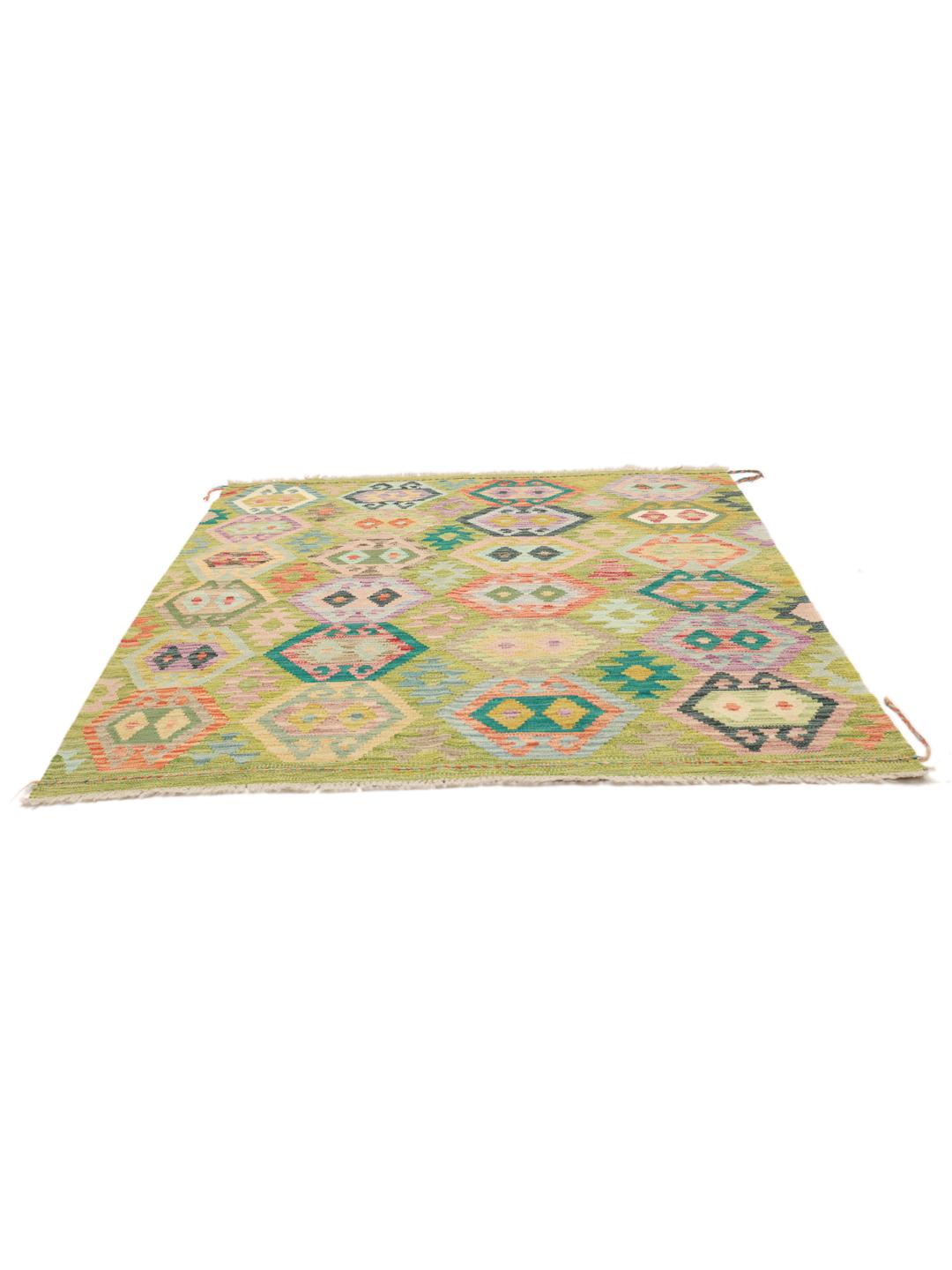
The visual language of Afghan Kelims is deeply rooted in tribal symbolism, with geometric motifs often representing protection, prosperity, or natural elements. The use of bold, saturated colours is a hallmark of this tradition, often derived from natural dyes that age beautifully over time. This particular piece displays a harmony of hues that highlights the complexity of the design, making it a standout example of regional artistry.
Collecting a Kelim is an investment in cultural continuity. These rugs are highly valued for their ability to bridge the gap between ancient tradition and modern interior design. Owning one is a way to preserve the skill and stories of the artisans who created it, ensuring that this ancestral craft continues to be appreciated for its beauty and durability.