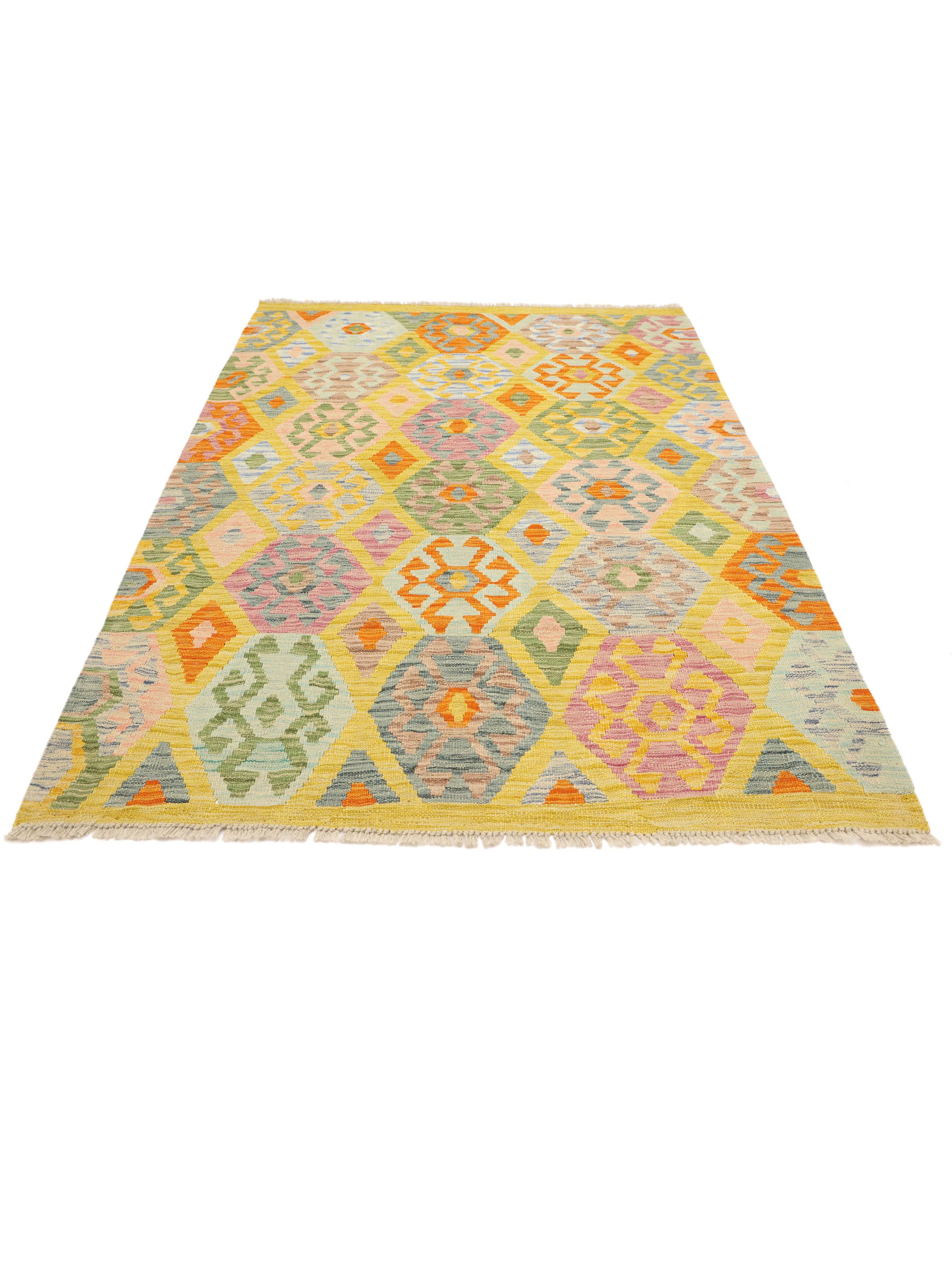
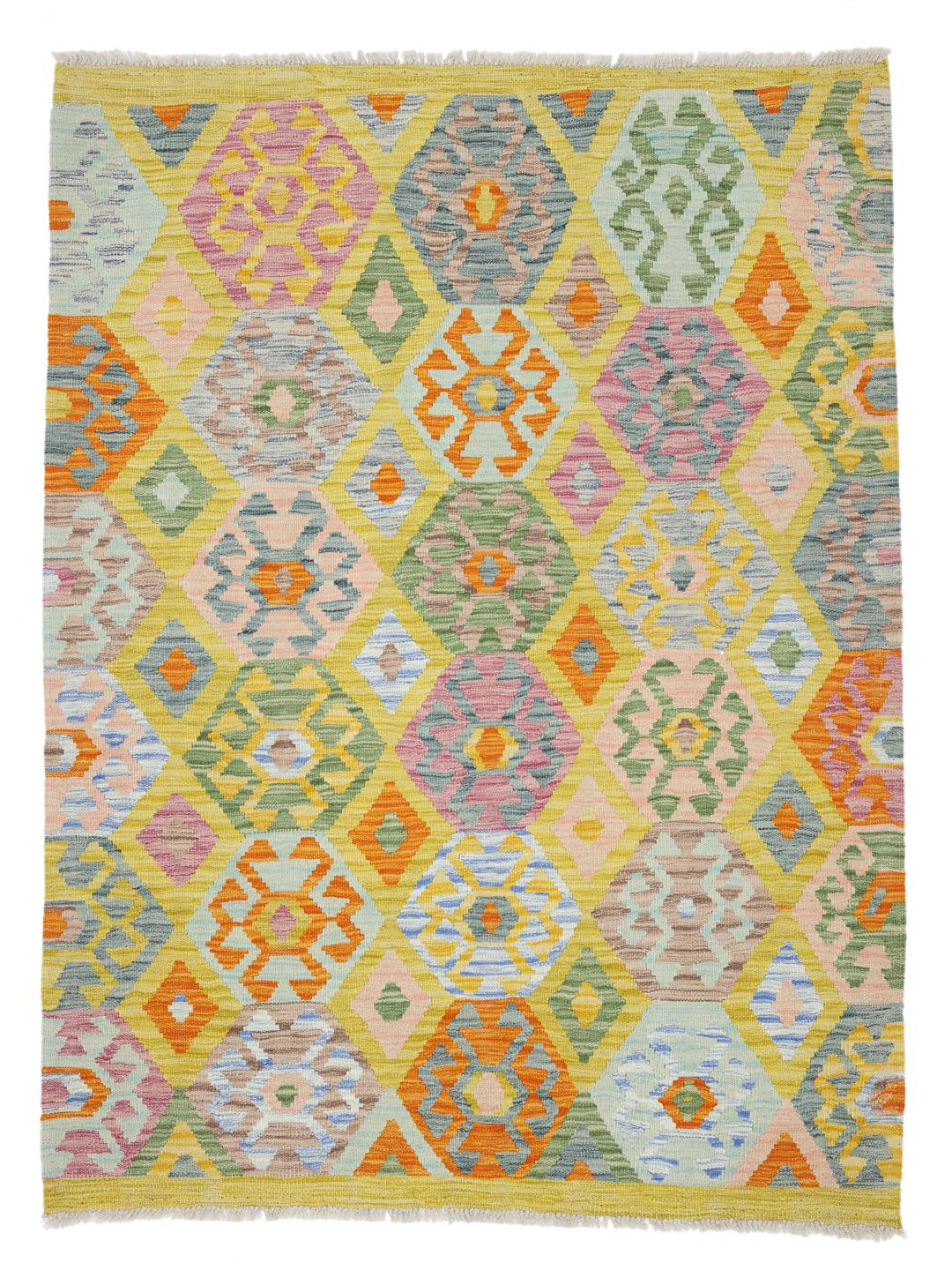
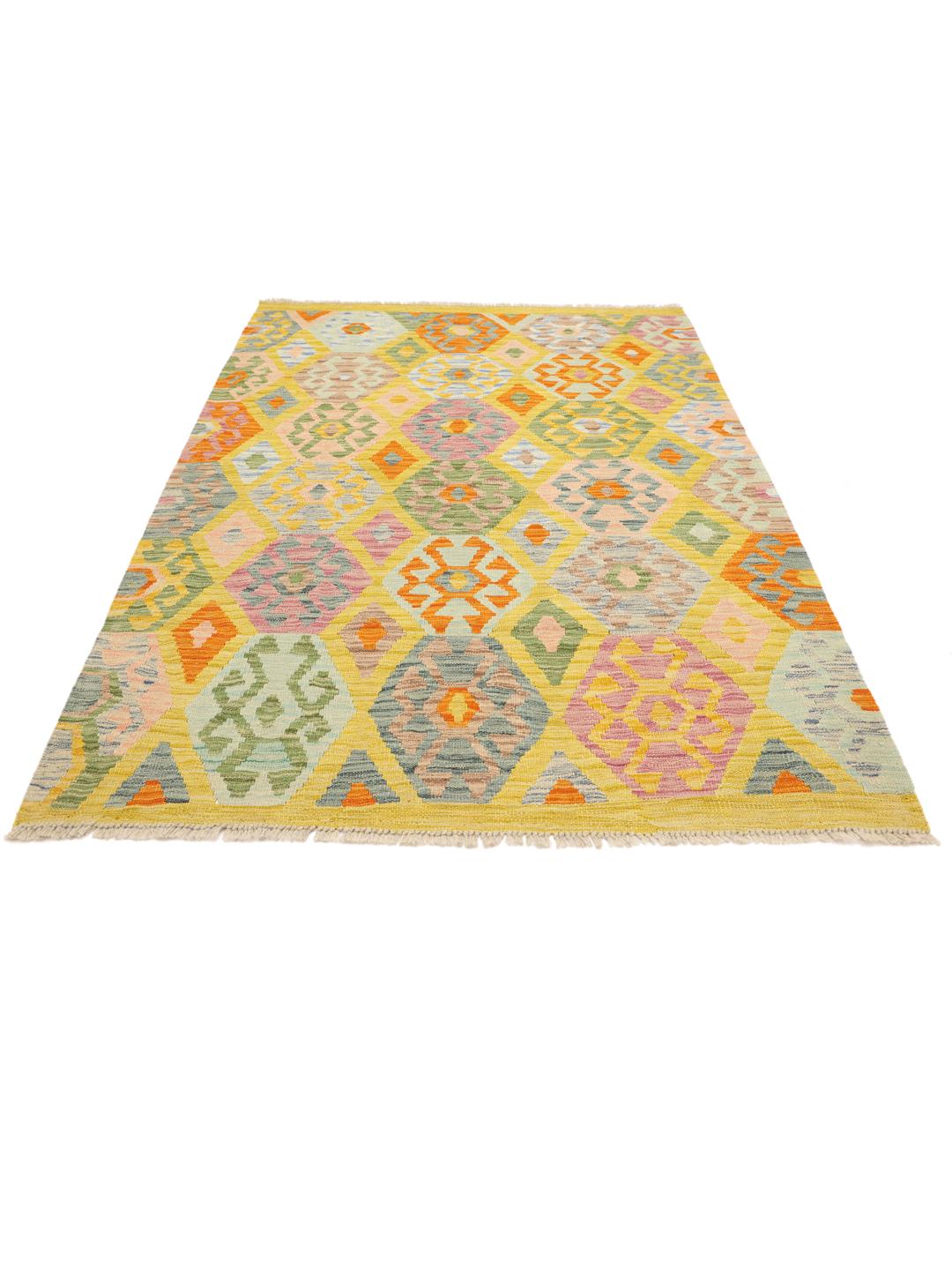
Kelim rugs from Afghanistan are deeply rooted in the nomadic and village traditions of the Middle East, where weaving has served as a central pillar of cultural identity for centuries. These flat-woven textiles were historically created by tribal groups to serve as functional, portable items for daily life, including floor coverings, wall hangings, and storage bags. The evolution of these rugs reflects the movement of people and the sharing of artistic techniques across the region, resulting in a distinct visual language that remains highly sought after today.
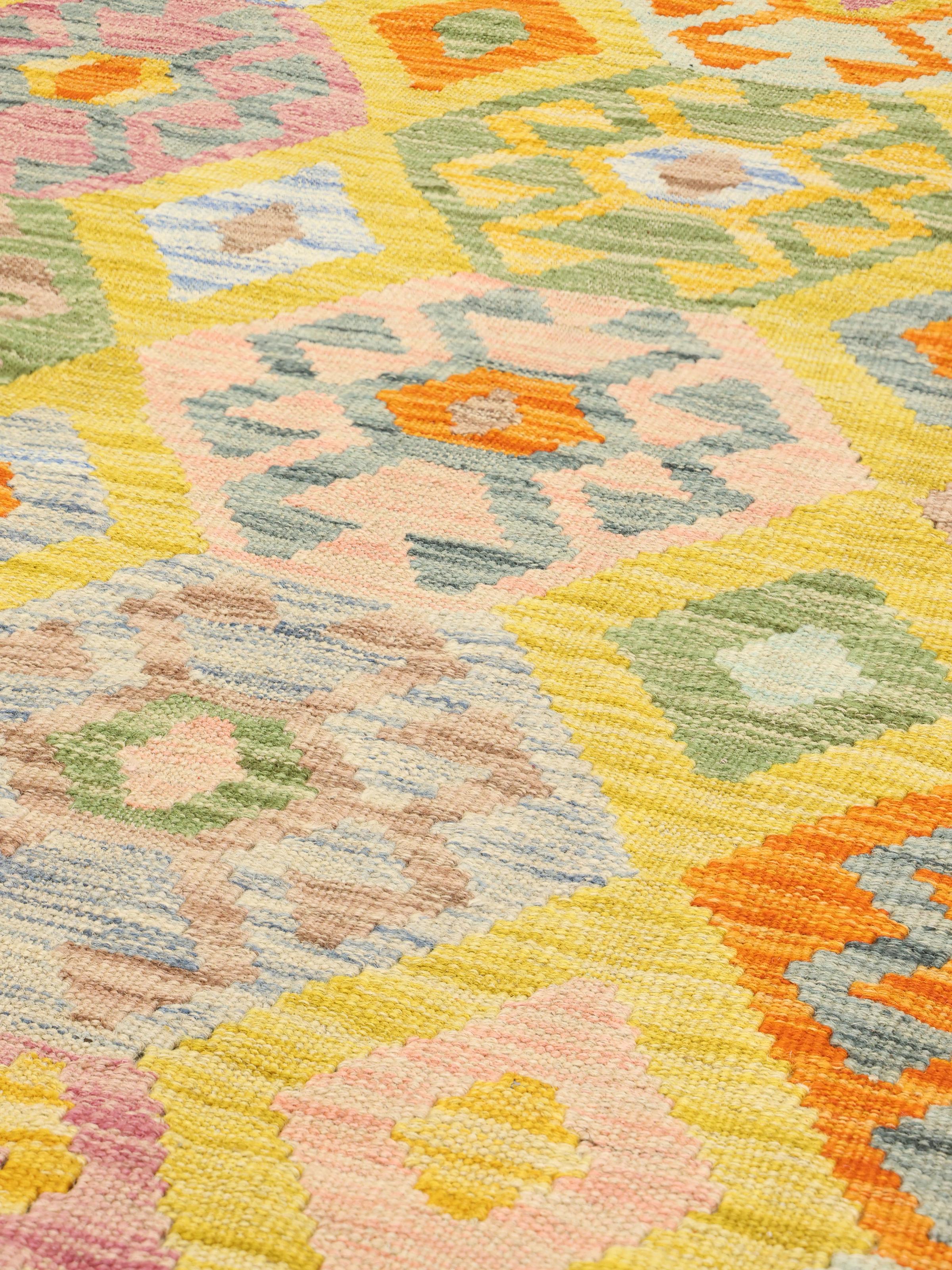
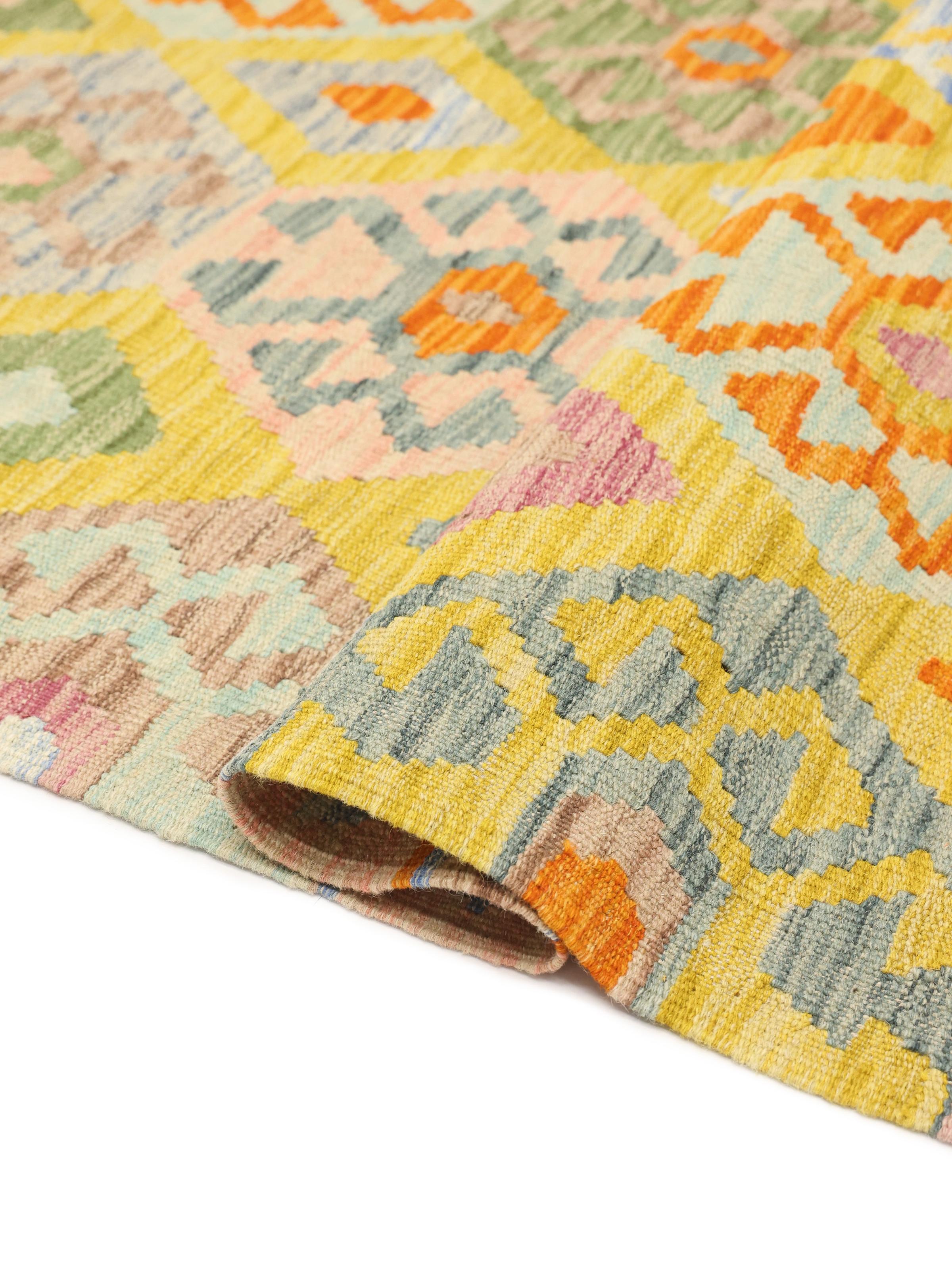
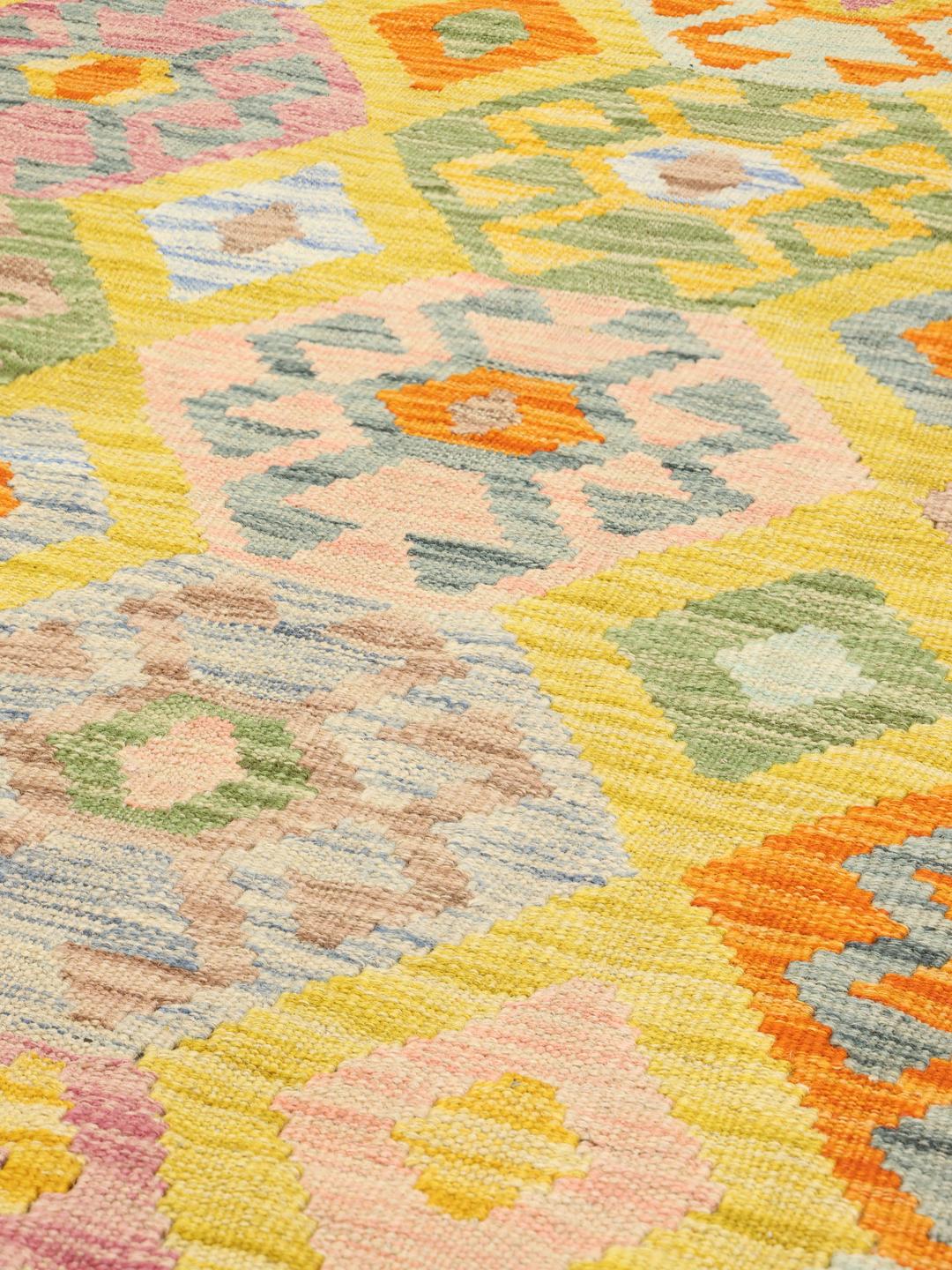
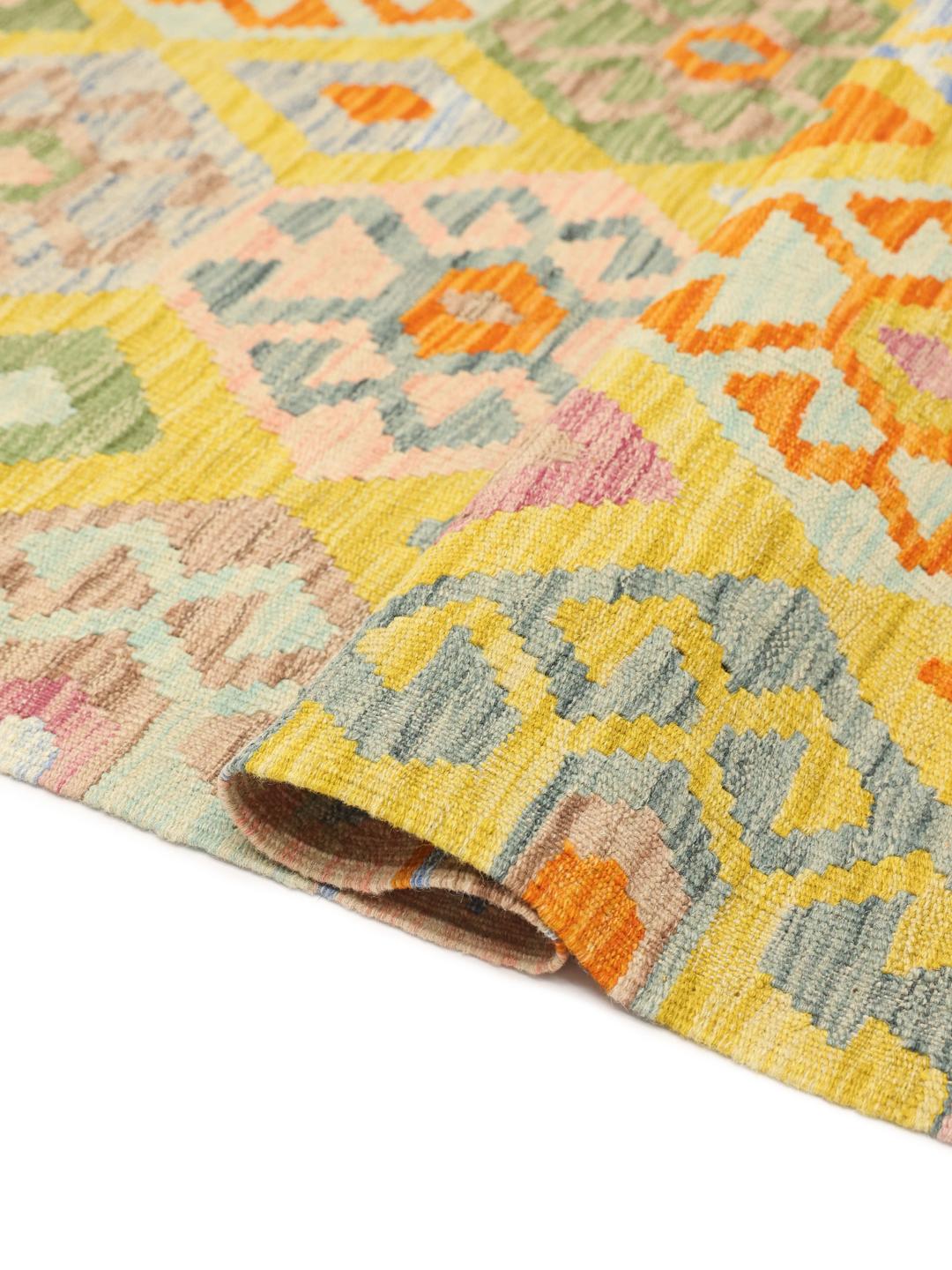
The term 'Kelim' refers to a specific technique of tapestry weaving where the weft threads are pulled tightly to conceal the warp, creating a smooth, flat surface without a pile. This style is significant because it highlights the clarity of the design and the purity of the Wool. Because there is no pile to hide the structure, the weaver must be exceptionally precise, as any variation in tension would immediately be visible in the pattern. This technical demand ensures that only the most skilled artisans can produce a high-quality Kelim.
Signature design elements in these rugs often include bold geometric shapes, such as the diamonds and medallions seen here, which are frequently arranged in repeating, symmetrical layouts. These motifs are not merely decorative; they often carry symbolic meanings related to protection, fertility, or the natural world, passed down through generations of weavers. The use of vibrant, contrasting colours is a hallmark of the Afghan style, designed to bring life to the interiors of traditional dwellings.
Today, these rugs are prized by collectors and homeowners alike for their authenticity and the sheer skill required to create them. Owning a traditional Afghan Kelim is an opportunity to connect with a rich history of craftsmanship that has survived the pressures of the modern world. They are valued not just for their aesthetic appeal, but for their ability to bring a sense of history and human connection into a home, standing as a testament to the enduring power of manual art.