Kelim rugs have long been a cornerstone of nomadic life across the Middle East and Central Asia. Historically, these flat-woven textiles were crafted by tribal groups for practical use as floor coverings, wall hangings, and storage bags, serving as essential, portable elements of a mobile household.
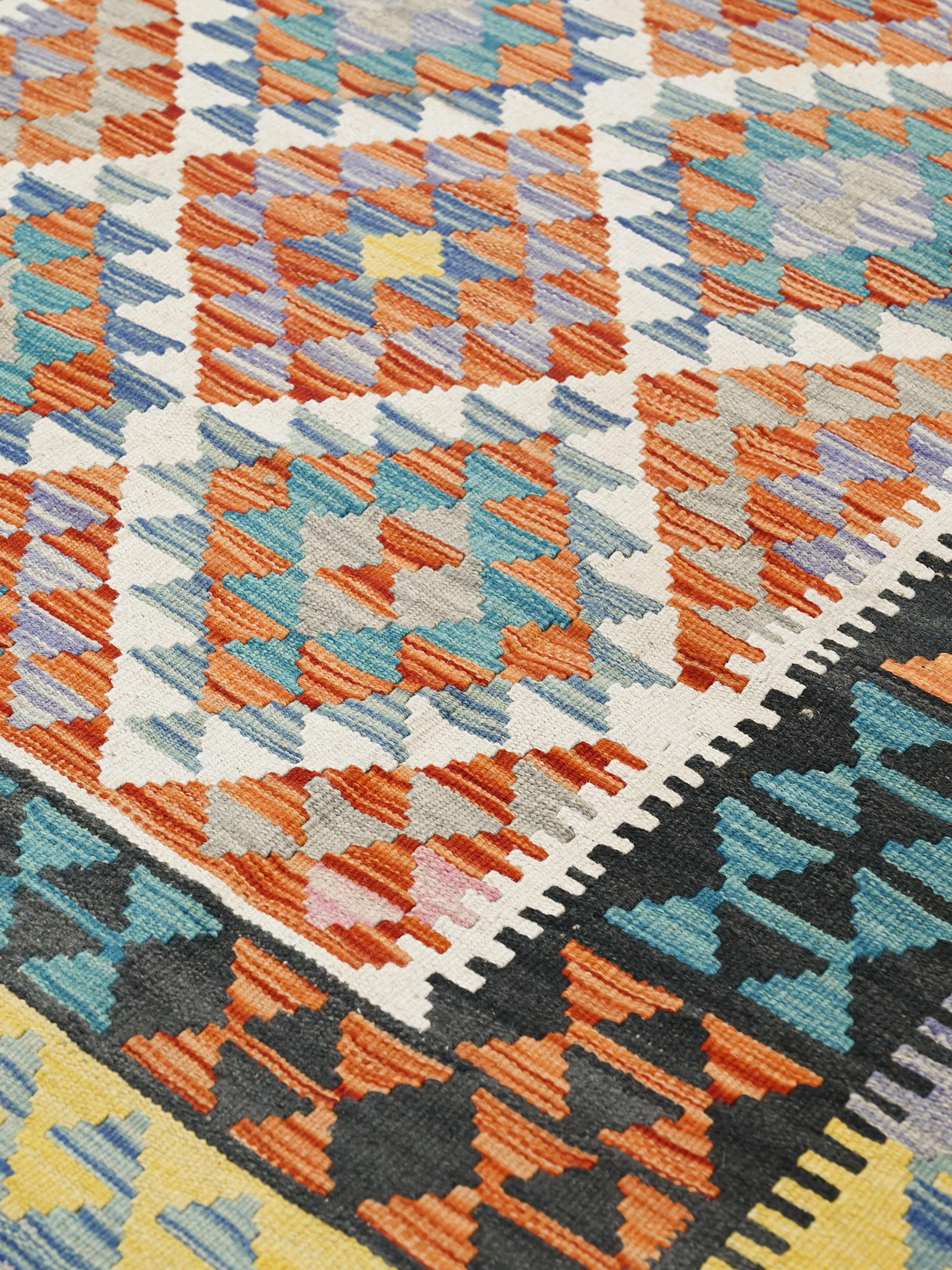
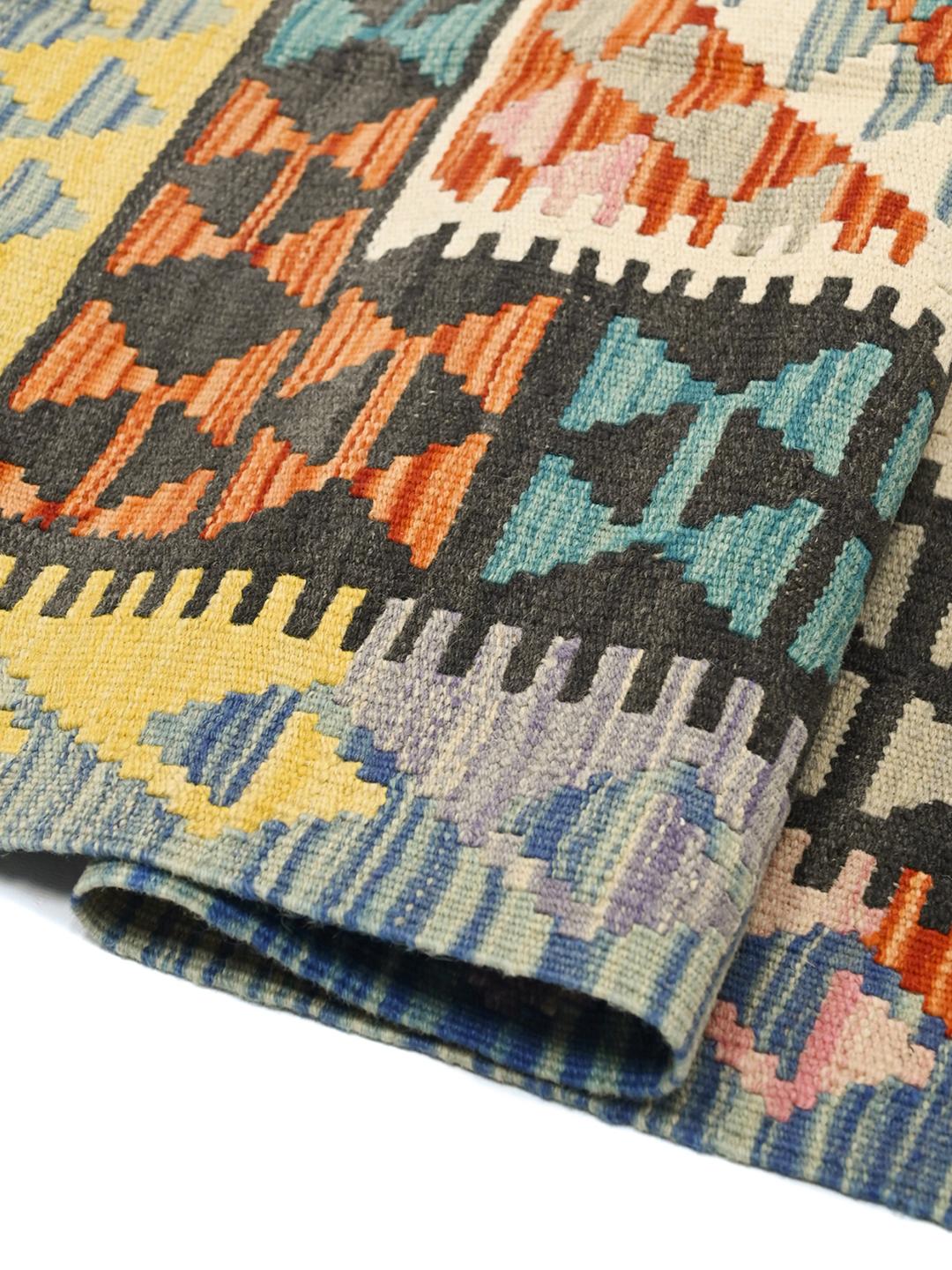
The term 'Kelim' refers specifically to the slit-weave technique, where the weft threads are woven tightly back and forth around the warp to create a smooth, pileless surface. This method is highly valued for its ability to produce intricate, geometric patterns that remain sharp and clear on both sides of the fabric.
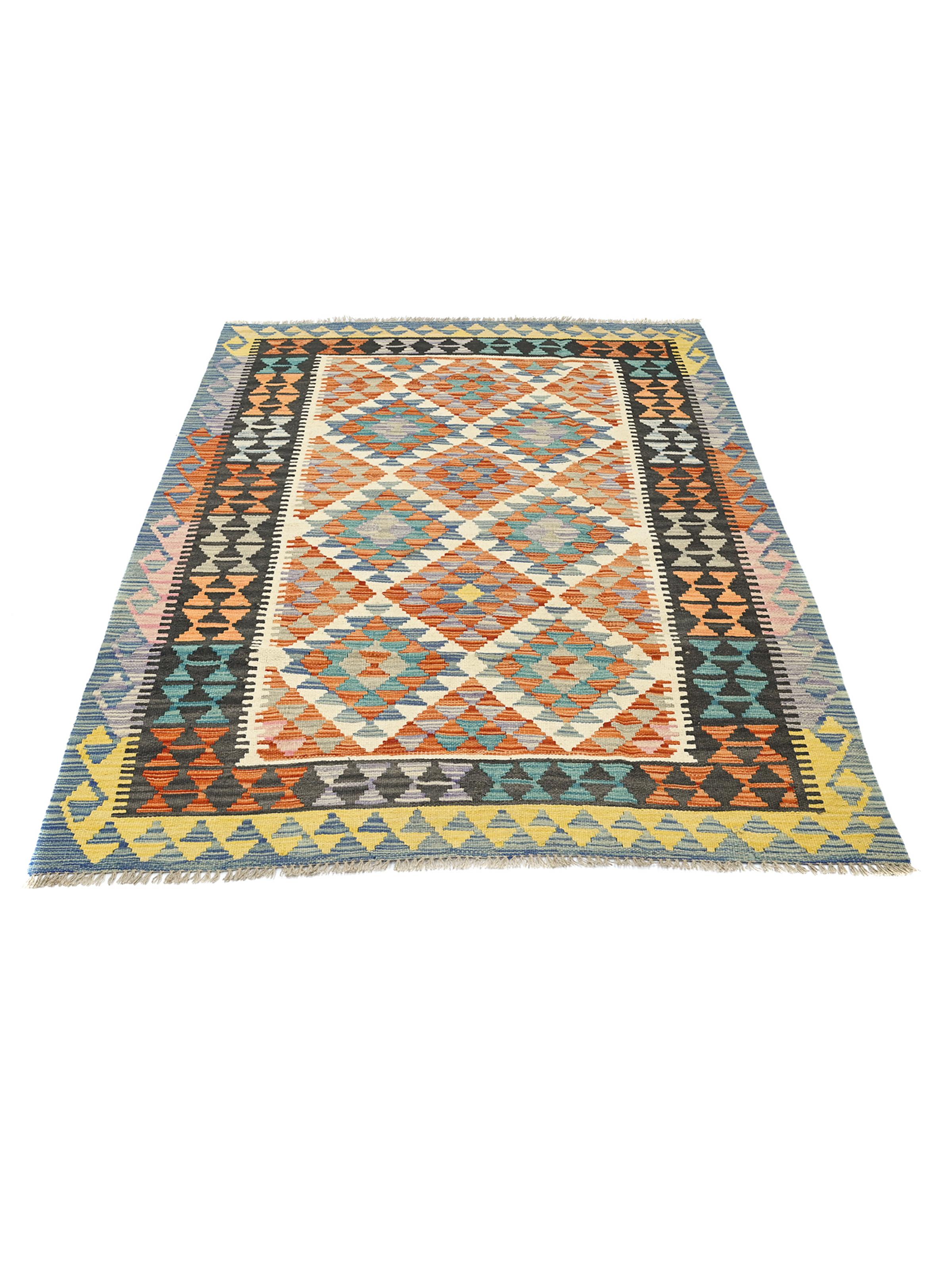
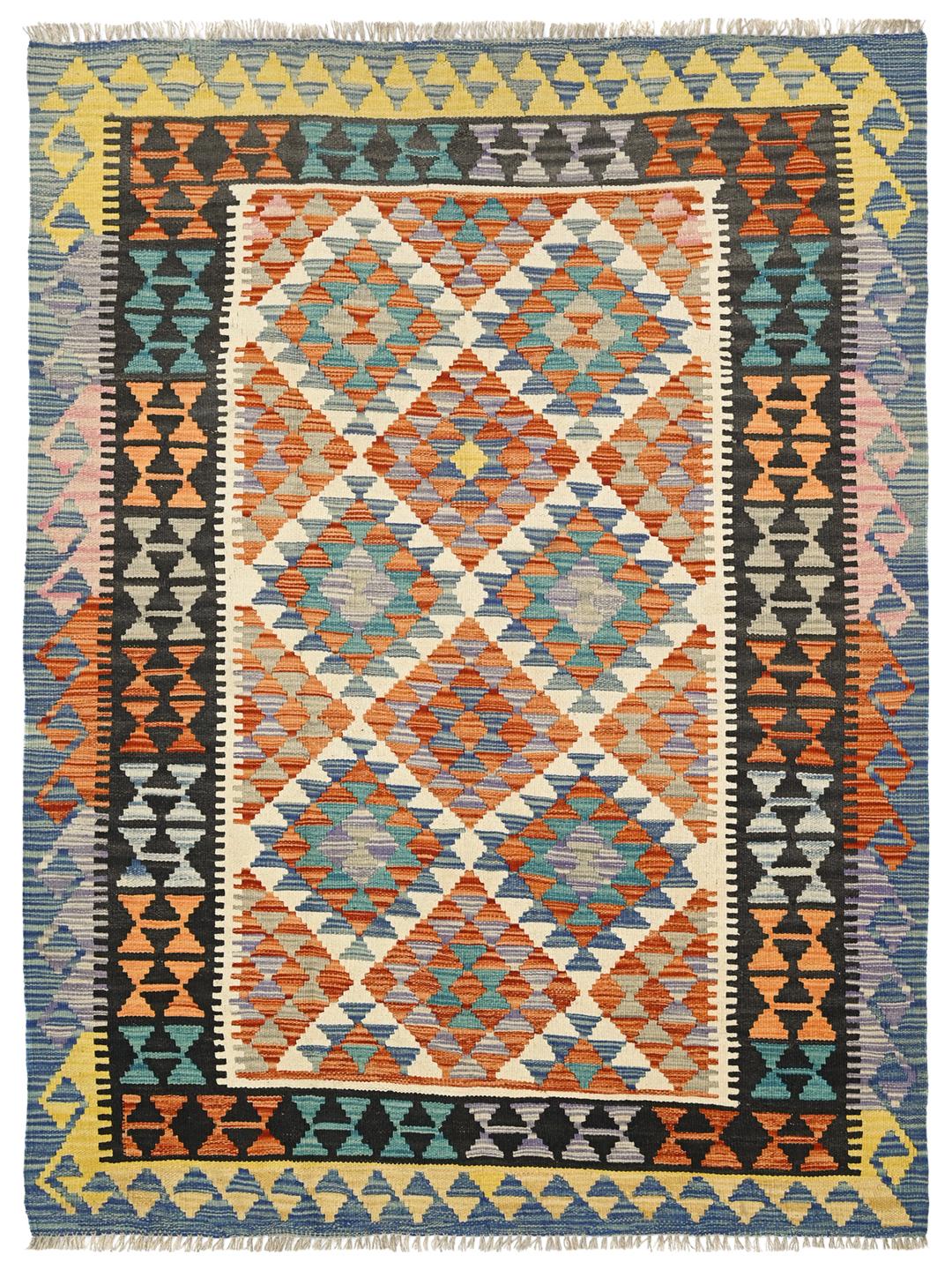
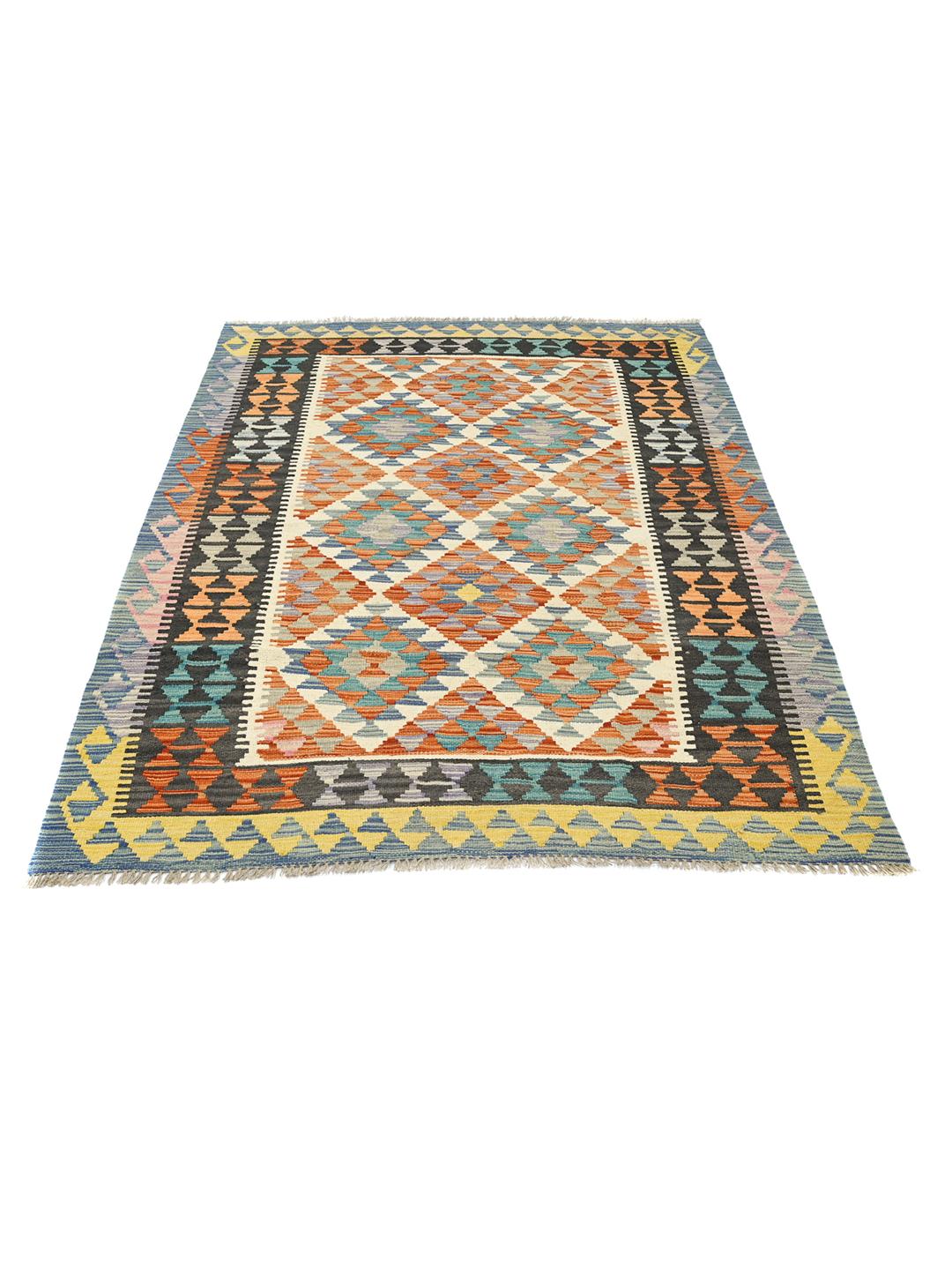
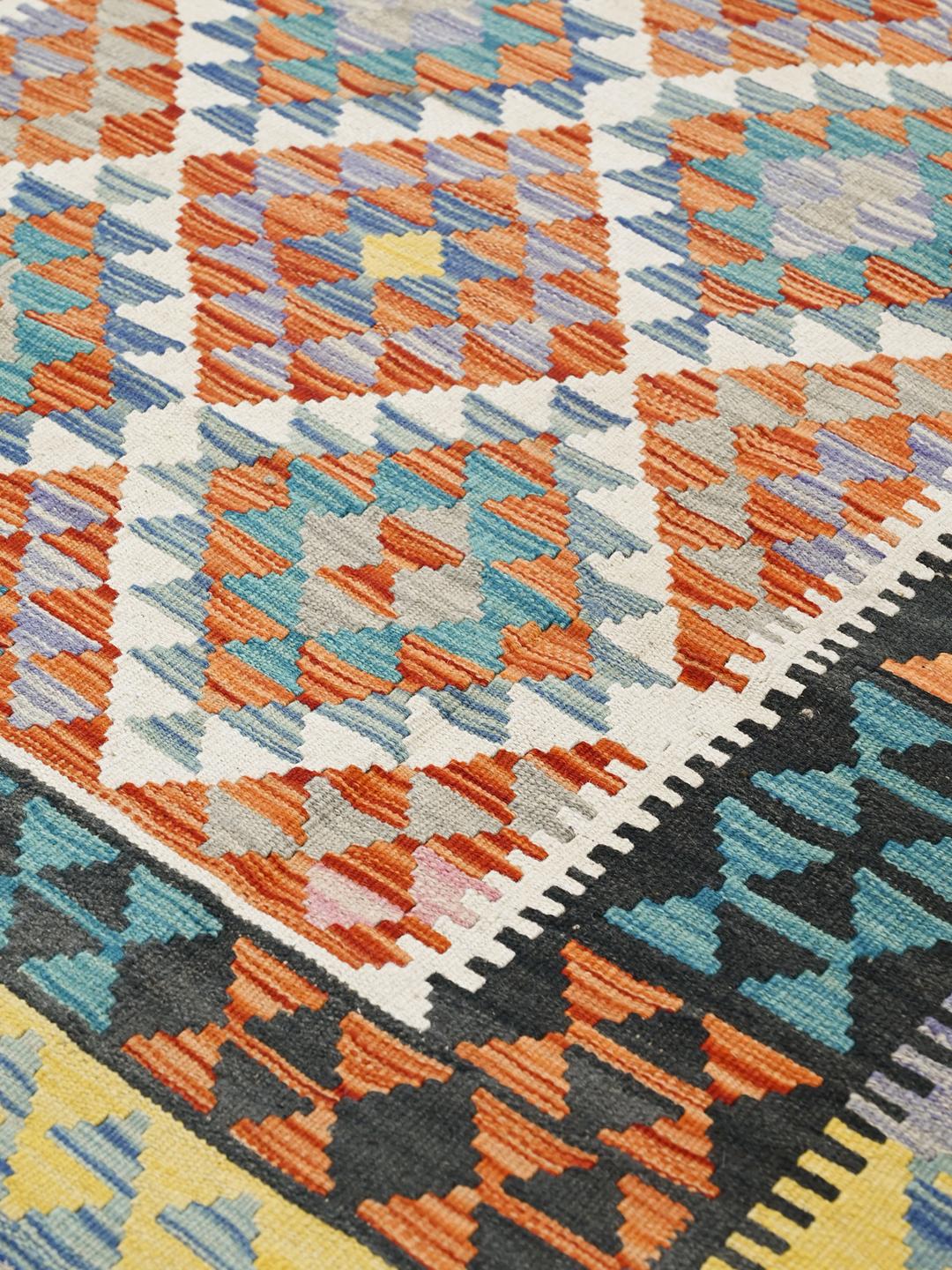
The design of this Afghan Kelim features a series of repeating diamond motifs, a hallmark of the region's tribal visual language. These shapes are often interpreted as symbols of protection or fertility, and the vibrant colour palette used here is typical of the bold, expressive style found in traditional Afghan weaving centres.
Owning an Afghan Kelim is more than just a decor choice; it is an appreciation of a heritage that has been passed down through generations. These rugs are highly sought after by collectors for their cultural significance and the unmatched level of individual skill required to produce such complex patterns without the aid of modern machinery.