The Kelim tradition is one of the most storied forms of textile art in the Middle East and Central Asia. Historically, these flat-woven rugs were created by nomadic and semi-nomadic tribes for practical use, serving as floor coverings, tent decorations, and storage sacks. The Afghan Kelim, in particular, has evolved from these functional origins into a highly sought-after art form that preserves the aesthetic legacy of the region.
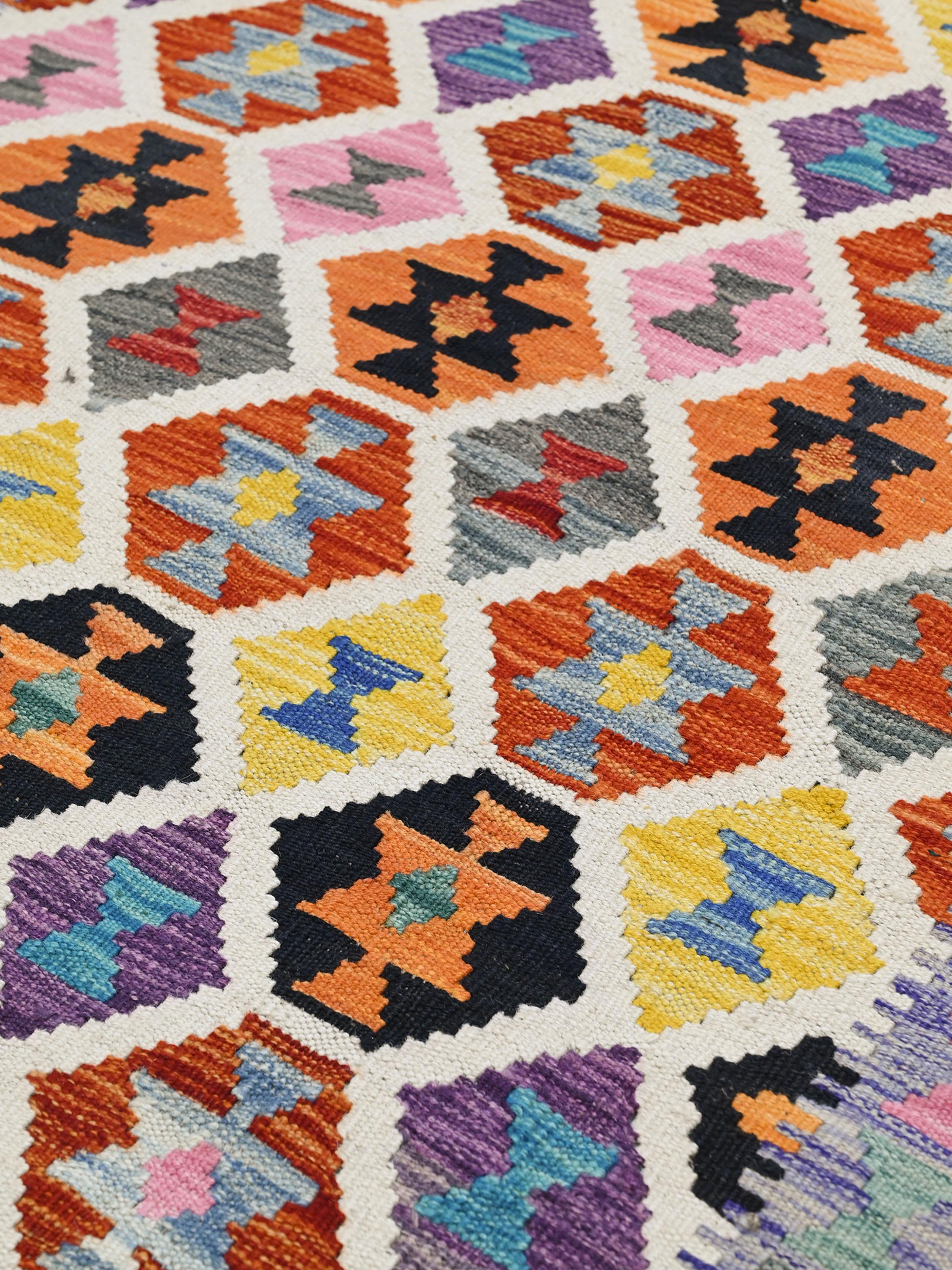
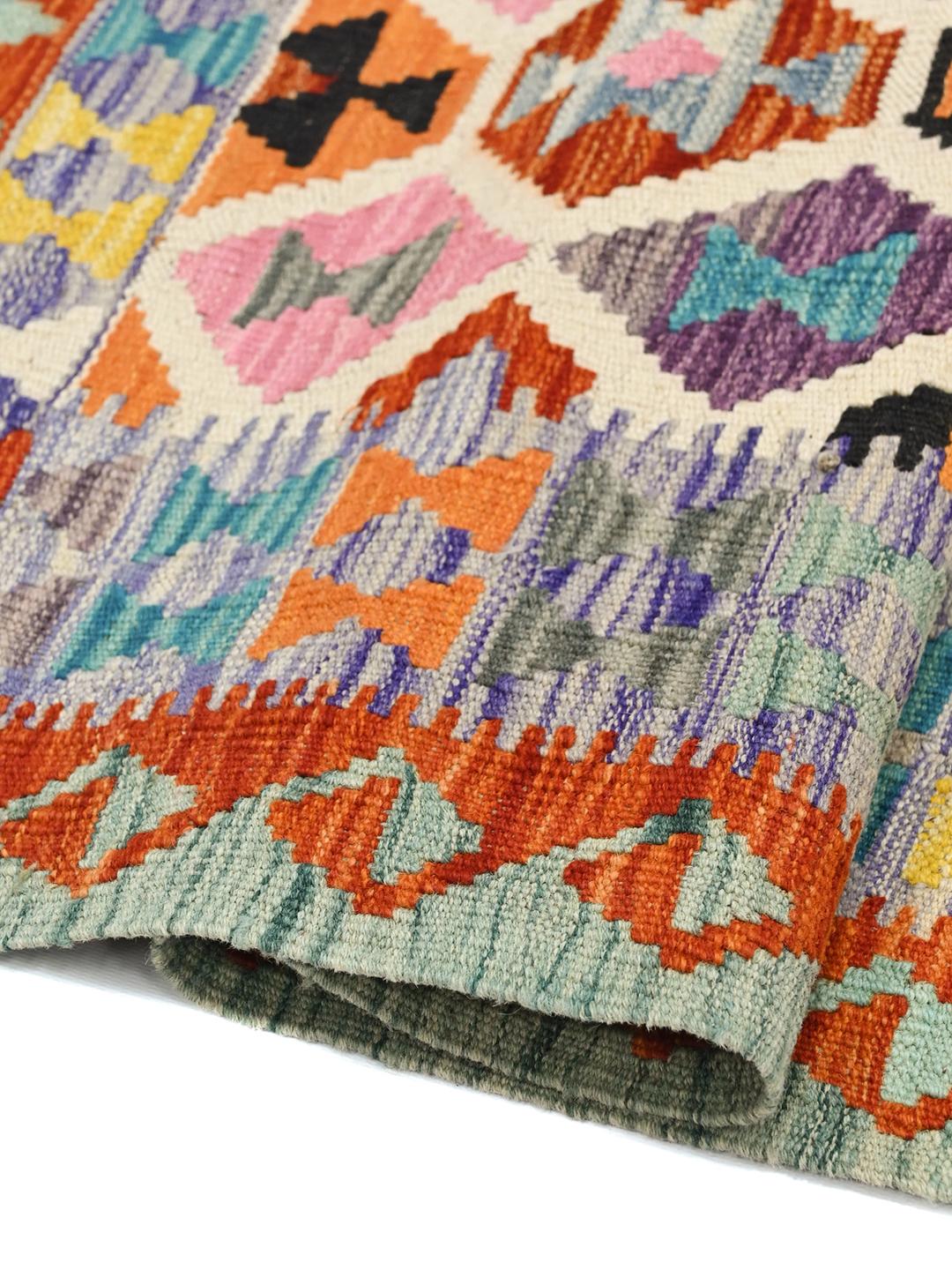
The term 'Kelim' refers to the specific slit-weave technique used to create these rugs, where the weft threads are woven tightly over the warp to produce a durable, reversible fabric without a pile. This technical approach allows for the creation of sharp, clean-edged geometric motifs. Because the design is created during the weaving process rather than knotted into a foundation, the weaver must be exceptionally precise to maintain the symmetry and clarity of the patterns.
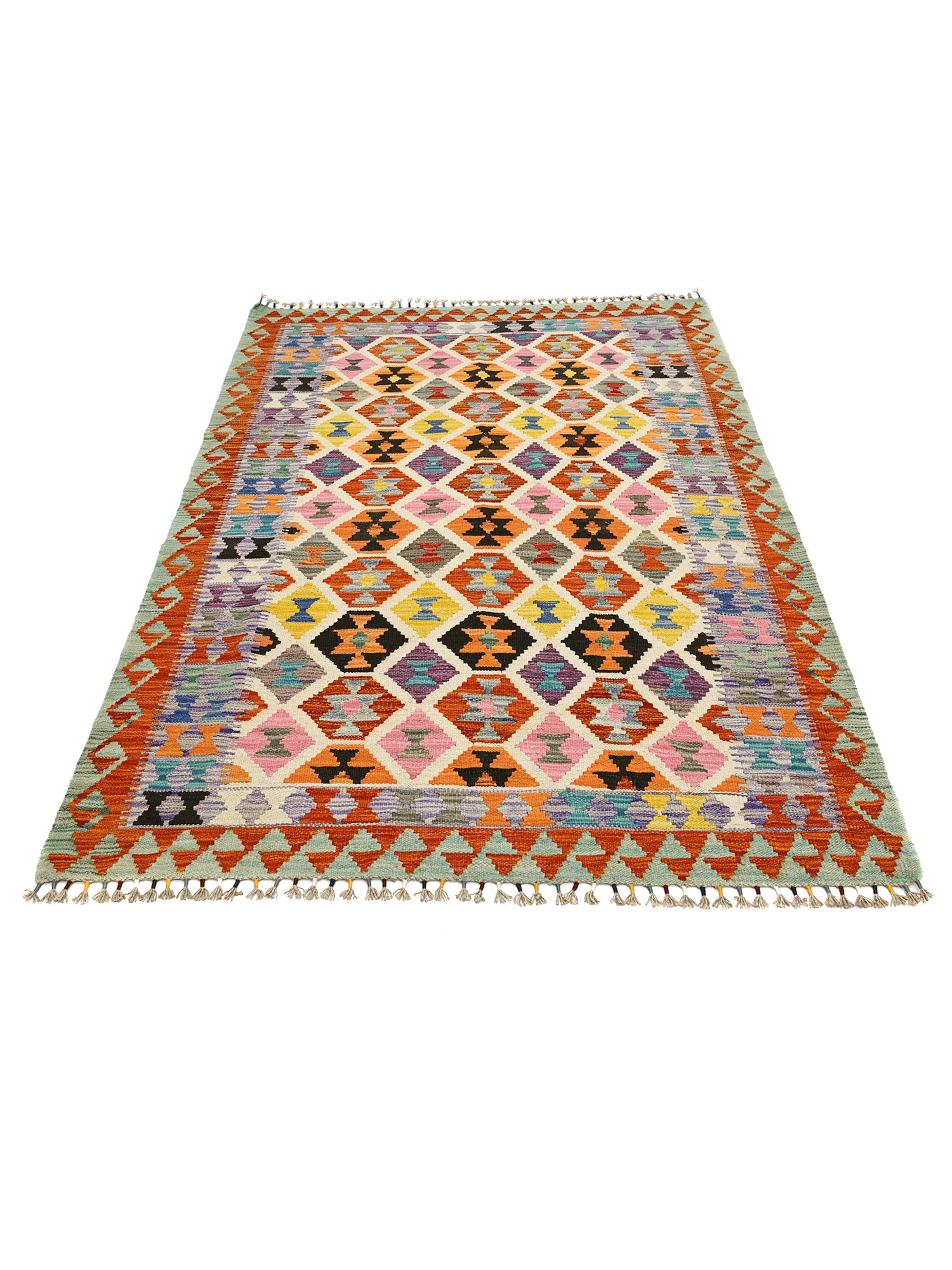
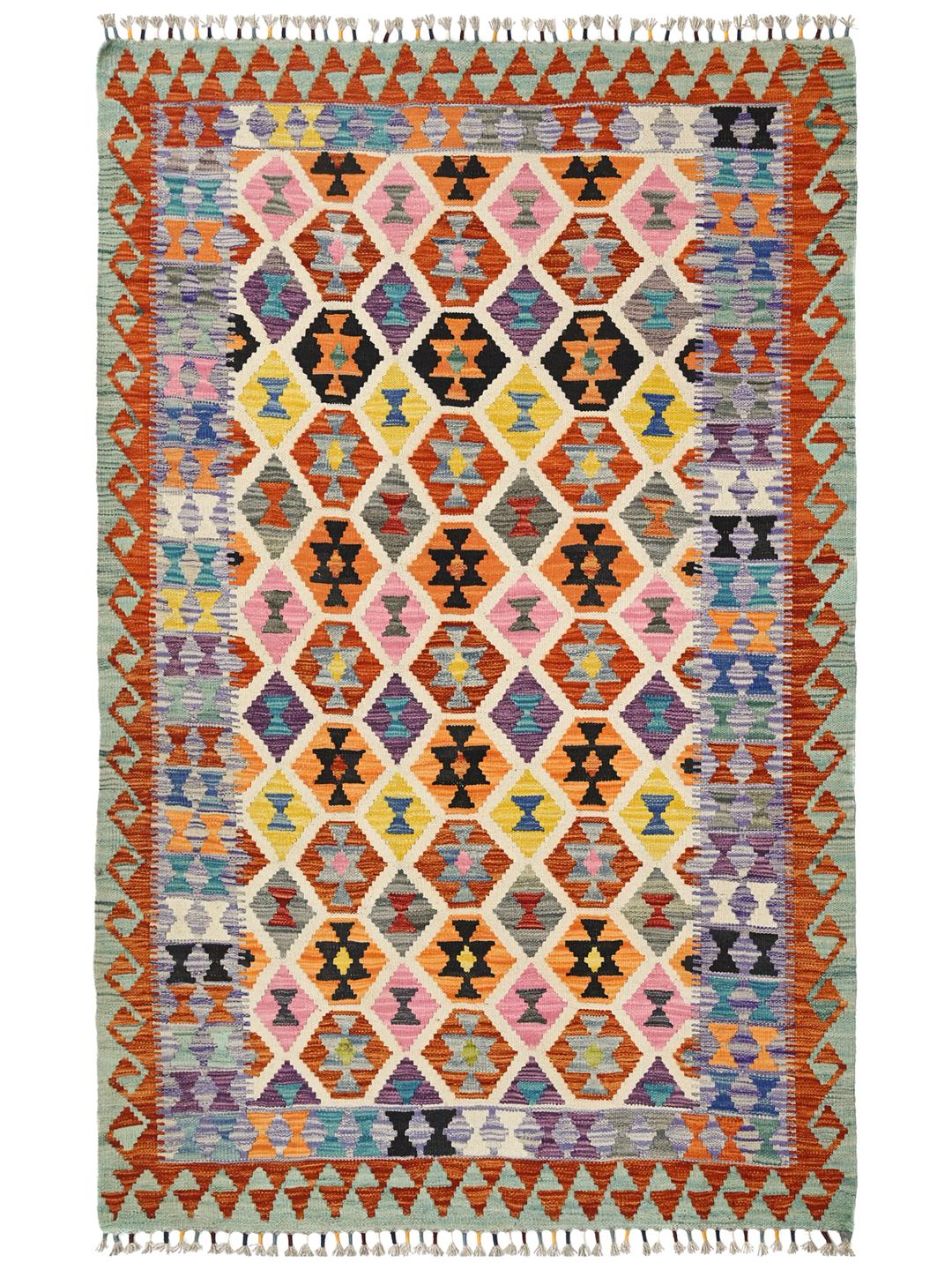
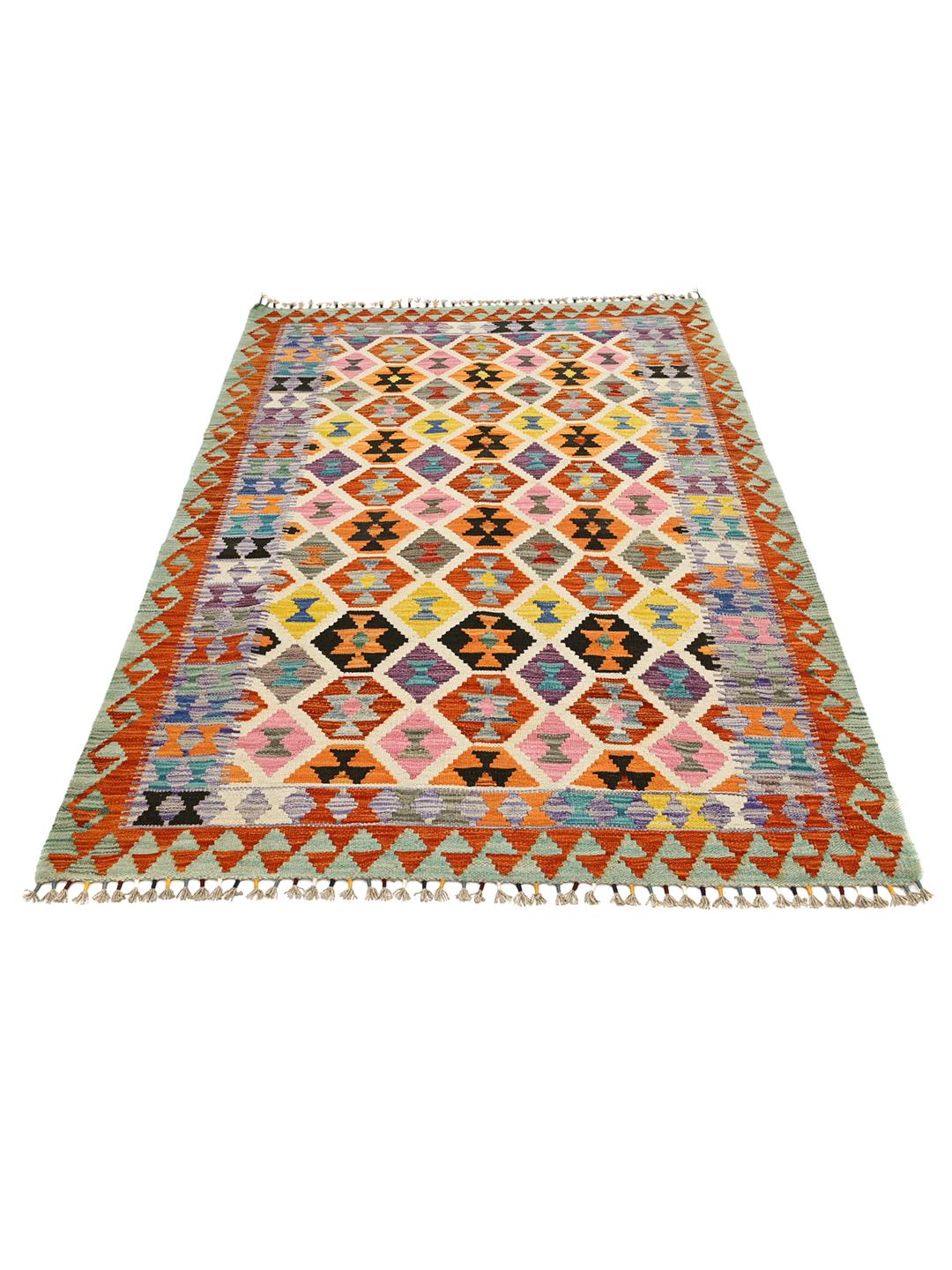
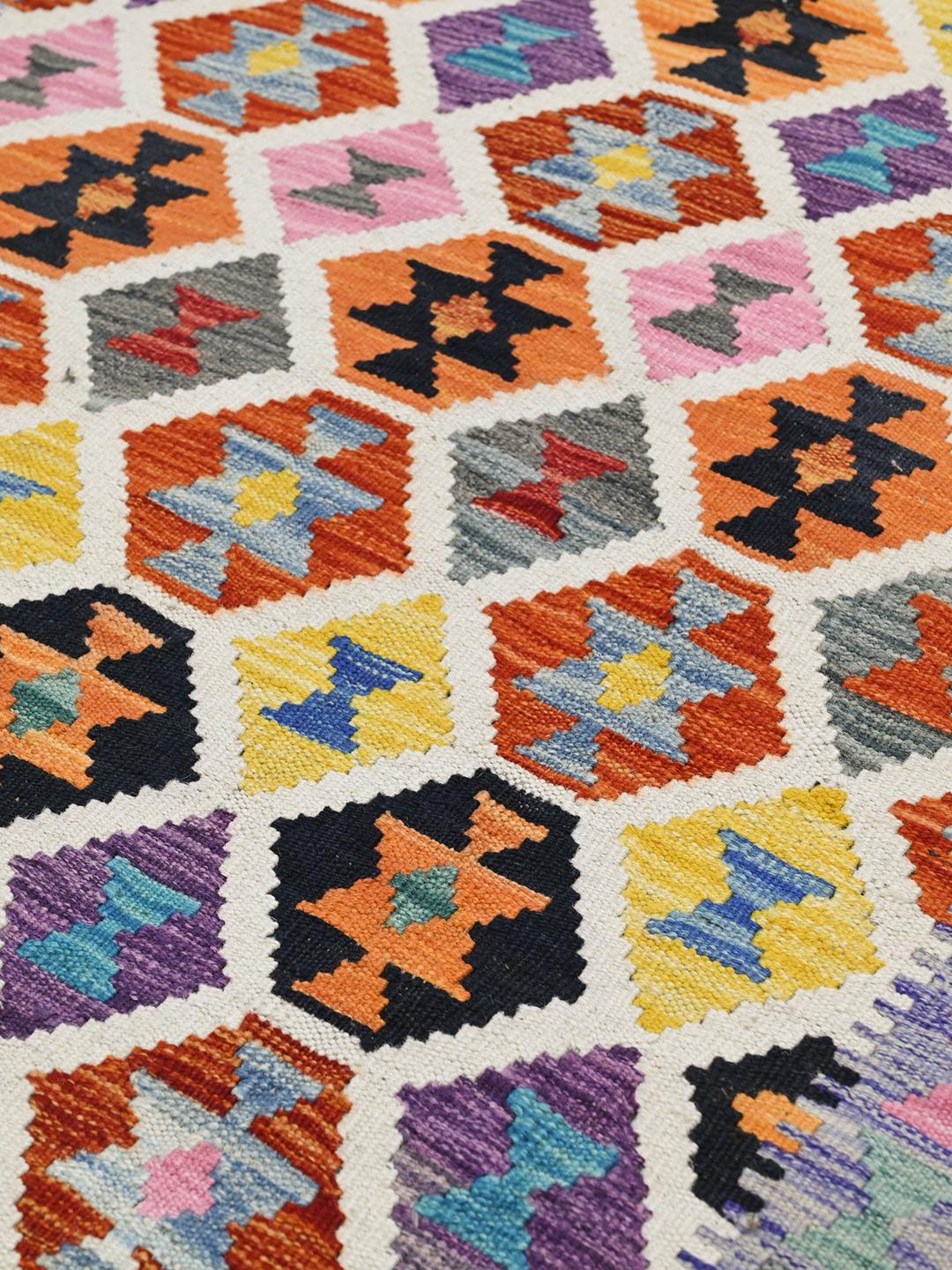
Signature design elements of the Afghan Kelim tradition include bold geometric shapes, such as diamonds, triangles, and stylized medallions, often arranged in repeating patterns that tell a visual story. The borders are frequently decorated with intricate, symbolic motifs that have been passed down through generations of weavers. This specific piece displays a vibrant array of colours, showcasing the traditional dyeing methods that bring depth and character to the wool.
Owning an Afghan Kelim is more than just a decorative choice; it is an act of preserving a rich cultural heritage. These rugs are highly valued by collectors for their authenticity and the incredible skill required to execute such complex designs by hand. By bringing a piece like this into your home, you are connecting your personal space to a legacy of craftsmanship that has survived for centuries, ensuring that this tradition continues to be celebrated in modern living.