Kelim rugs have a long history deeply rooted in the nomadic and village traditions of Central Asia and the Middle East. Originally crafted by tribal weavers as functional items for migration, such as storage bags, floor coverings, and animal trappings, these flat-weaves were made using readily available natural materials like sheep's wool. Over generations, the craft evolved into a recognised art form, with distinct regional patterns passed down through families.
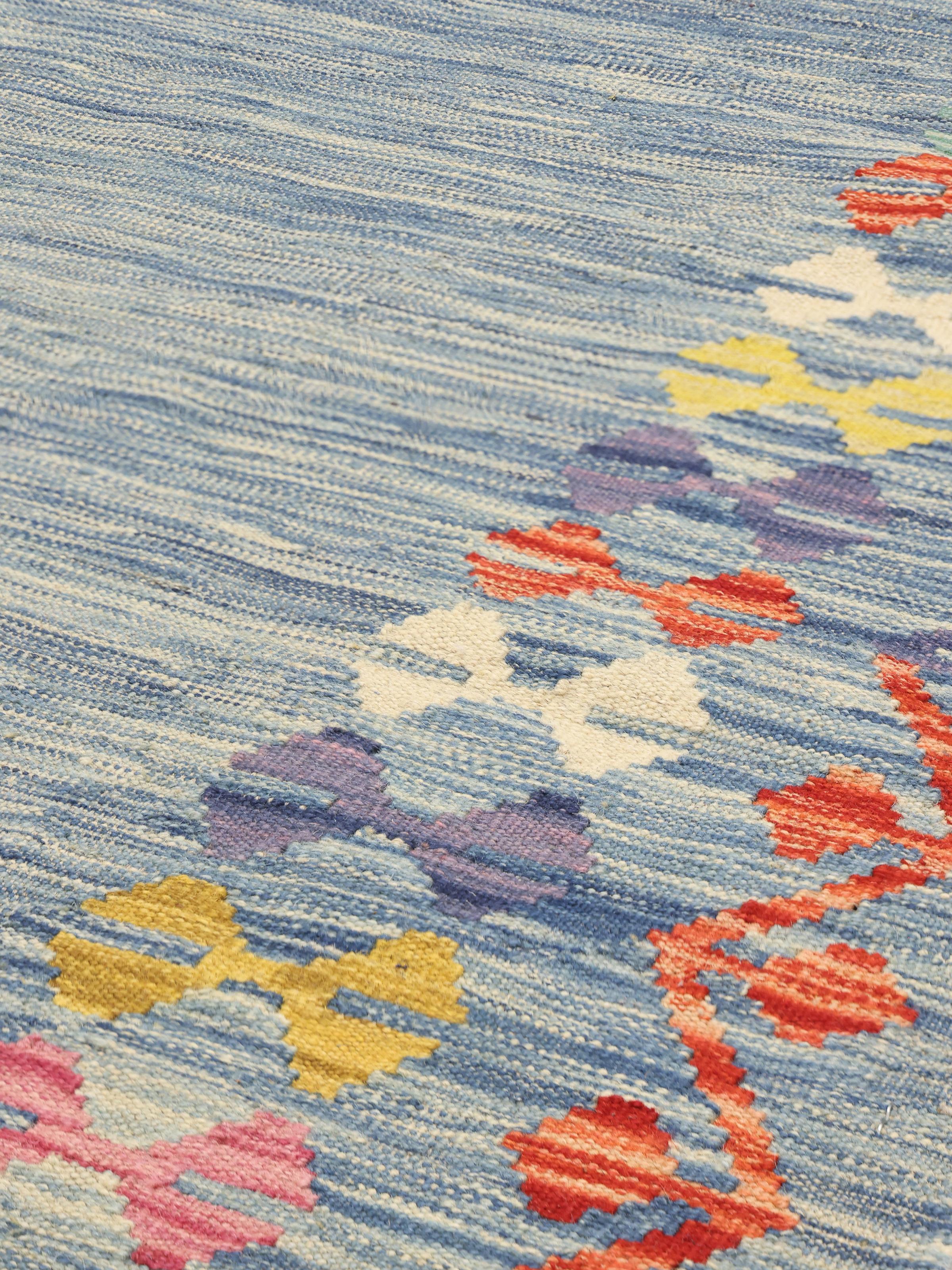
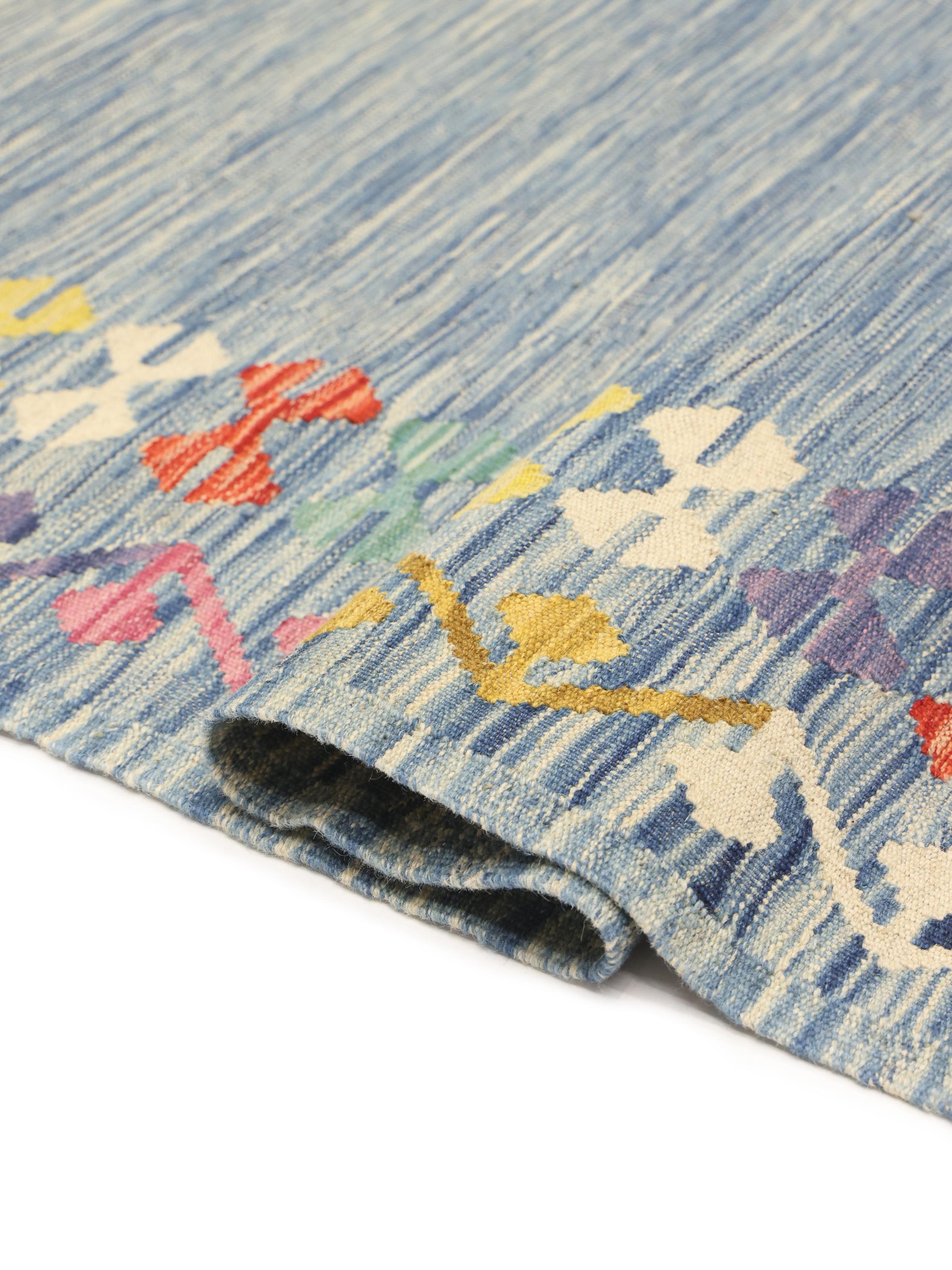
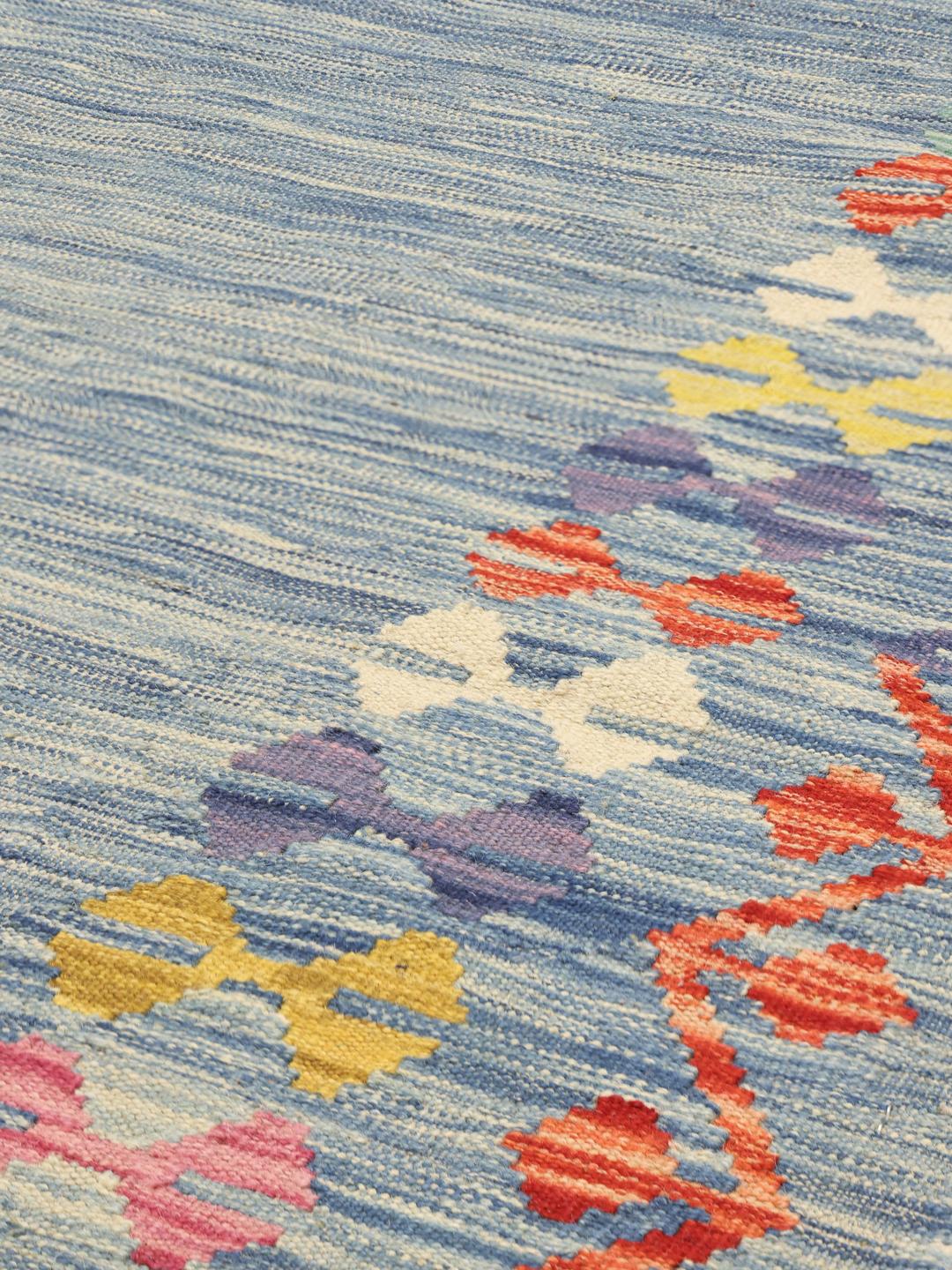
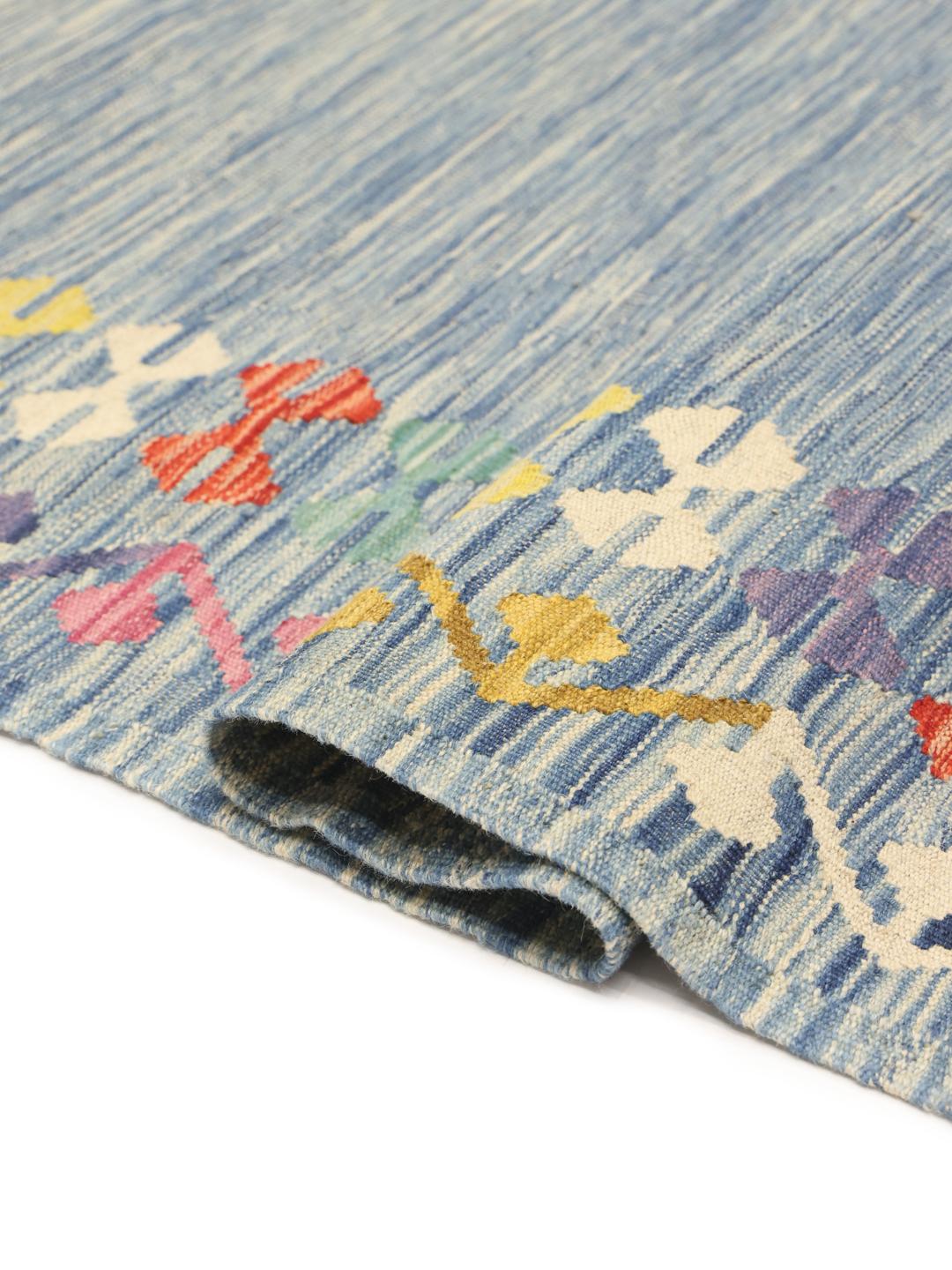
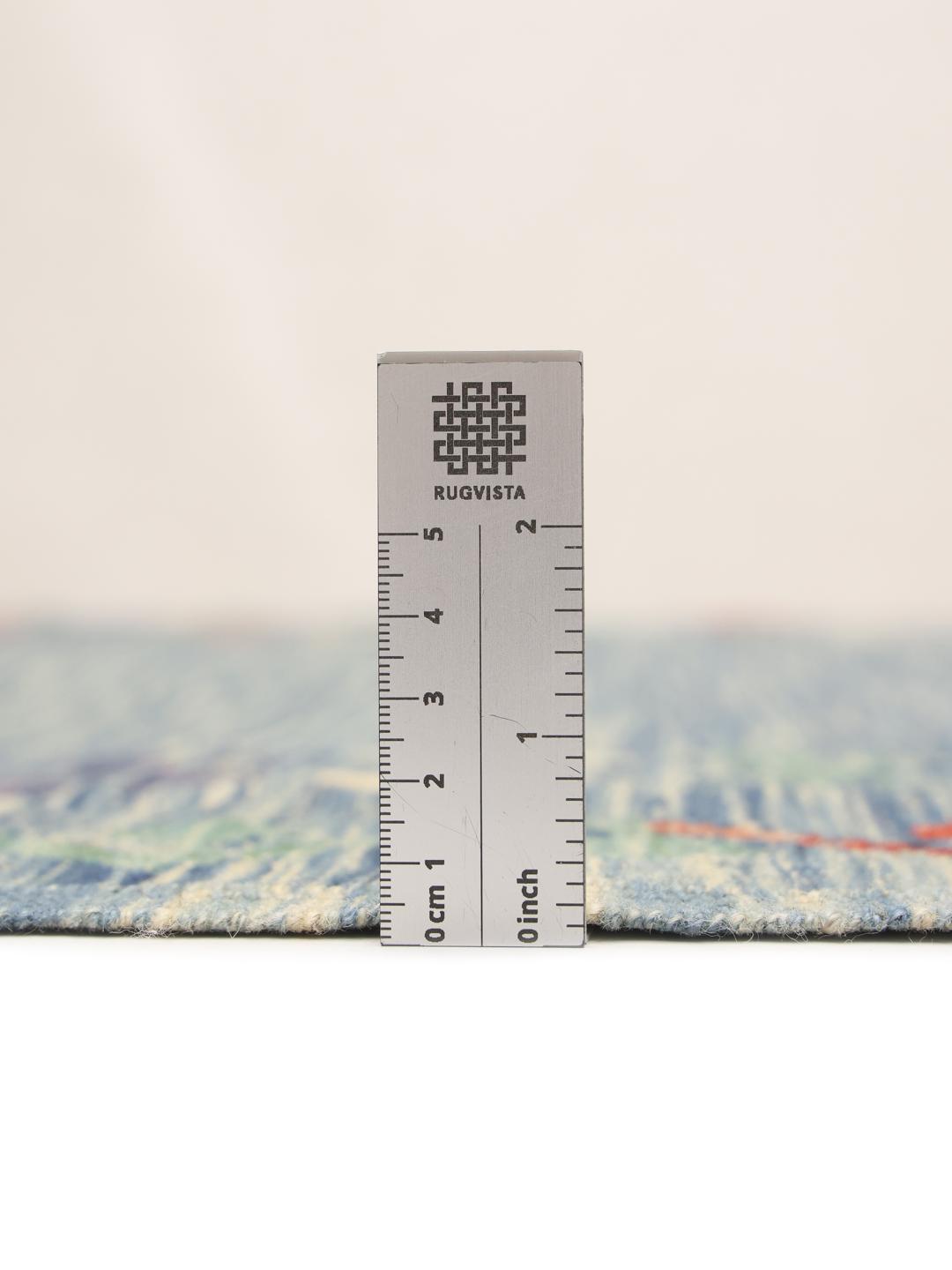
The term kelim refers to a flat-weaving technique where the design is created by tightly interweaving the coloured weft threads through the warp threads. This technique produces a reversible textile with no pile, making it lighter and easier to transport than knotted rugs. Afghan kelims are particularly celebrated for their durable structure and the earthy resilience of their construction.
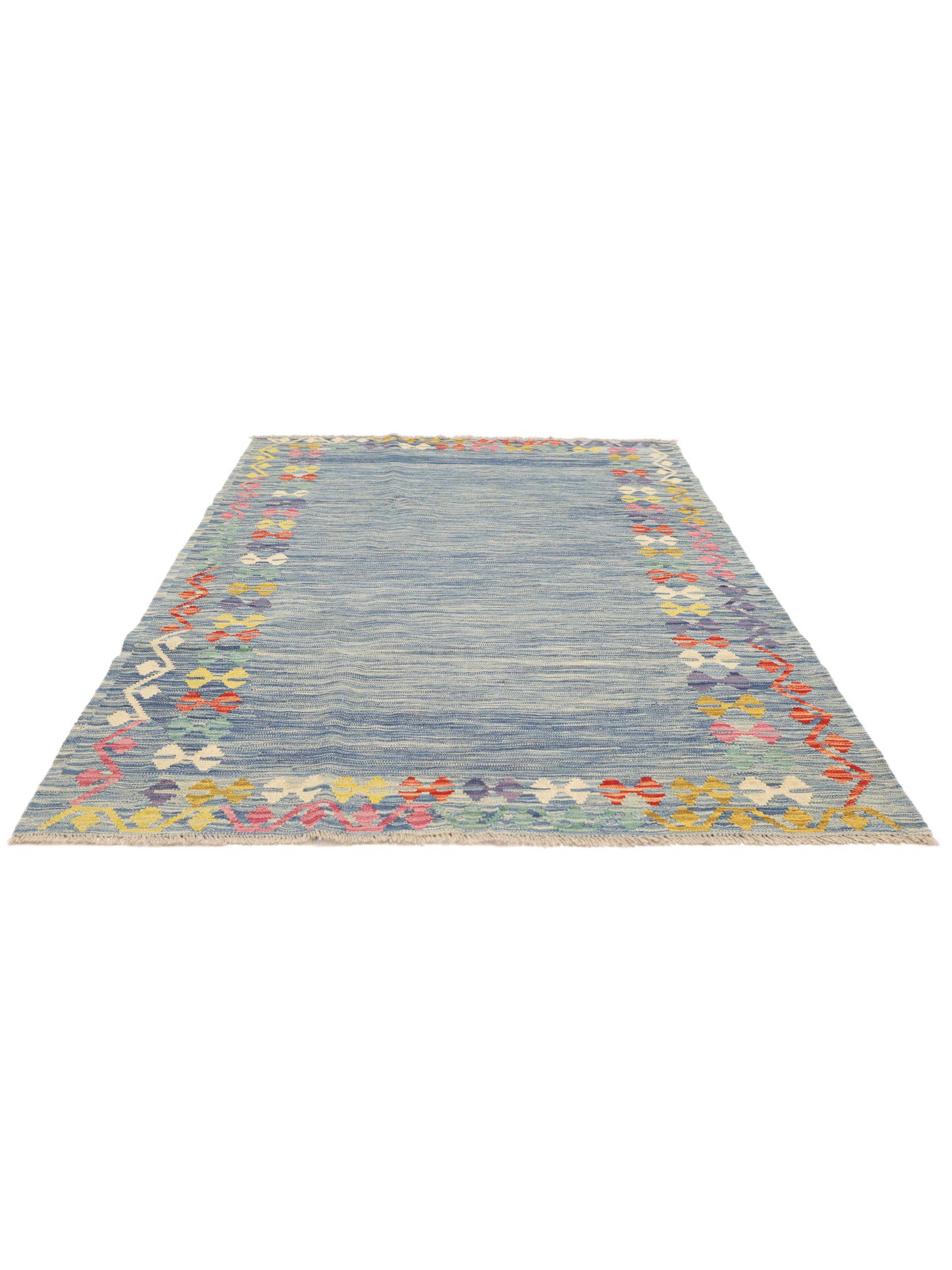
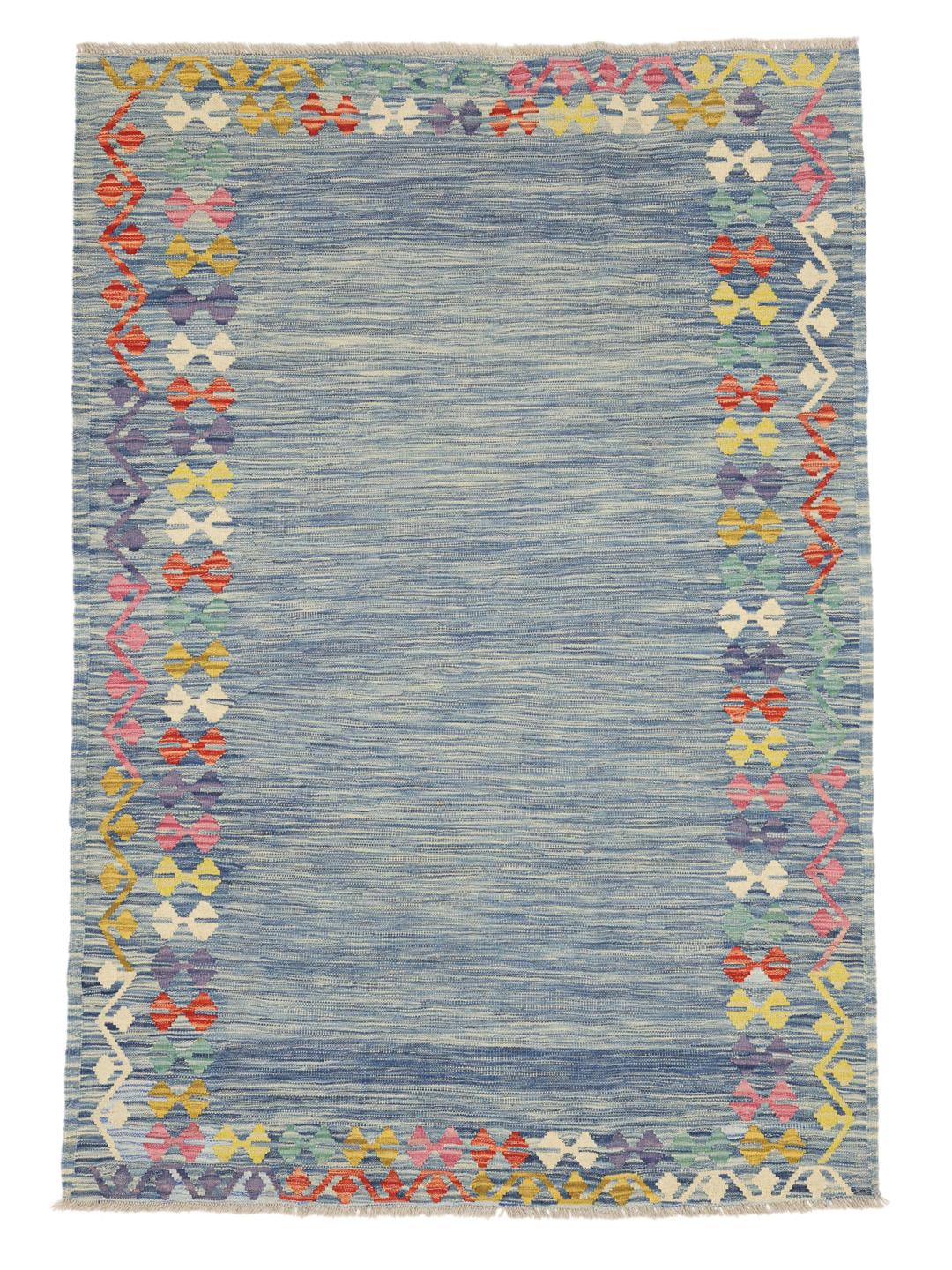
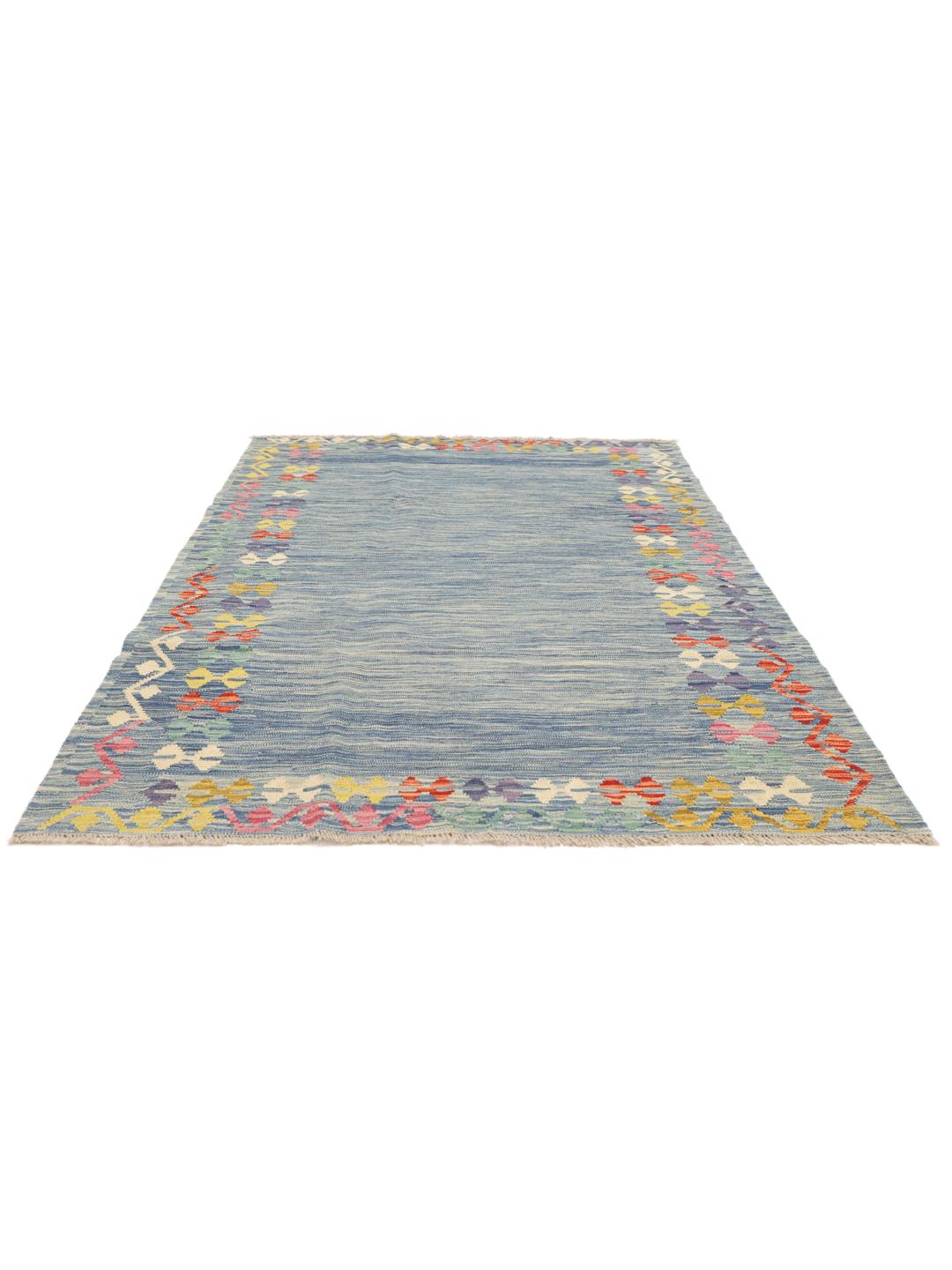
Traditionally, the visual language of Afghan kelims relies on geometric motifs, repeating symbols, and symbolic borders that often reflect the daily life, beliefs, and surrounding nature of the weavers. In this particular piece, the blue background is contrasted by a lively arrangement of colourful geometric shapes along the borders, creating a balanced composition that honours classic tribal aesthetics while remaining fresh and versatile.
Today, collecting authentic kelim rugs is a way to preserve centuries-old craft traditions and bring genuine cultural heritage into modern interiors. Each piece represents months of human effort and a deep connection to the artisan communities of Afghanistan. Owning such a rug is not just about decorating a floor, but about valuing a timeless tradition of handmade textiles.