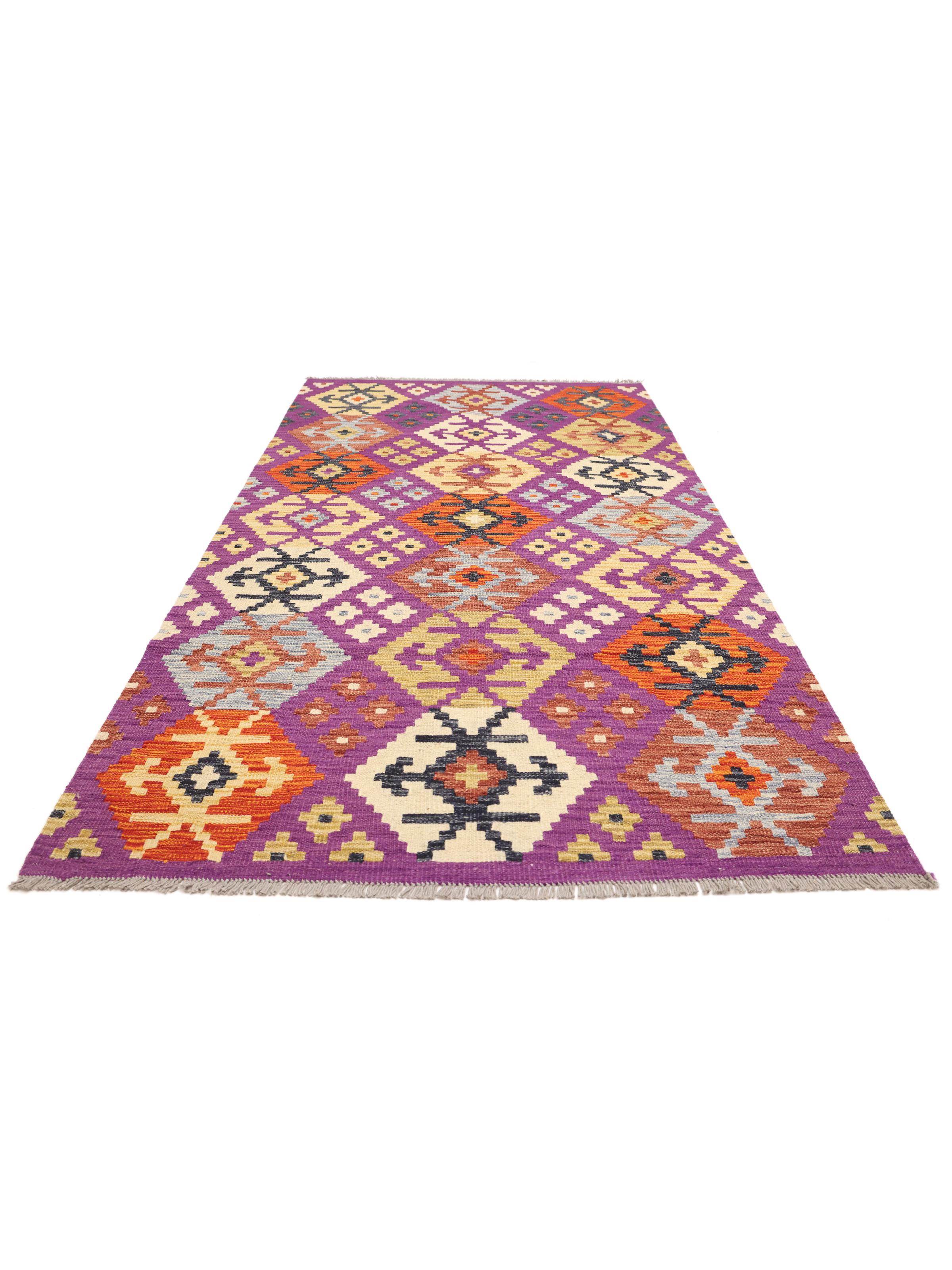
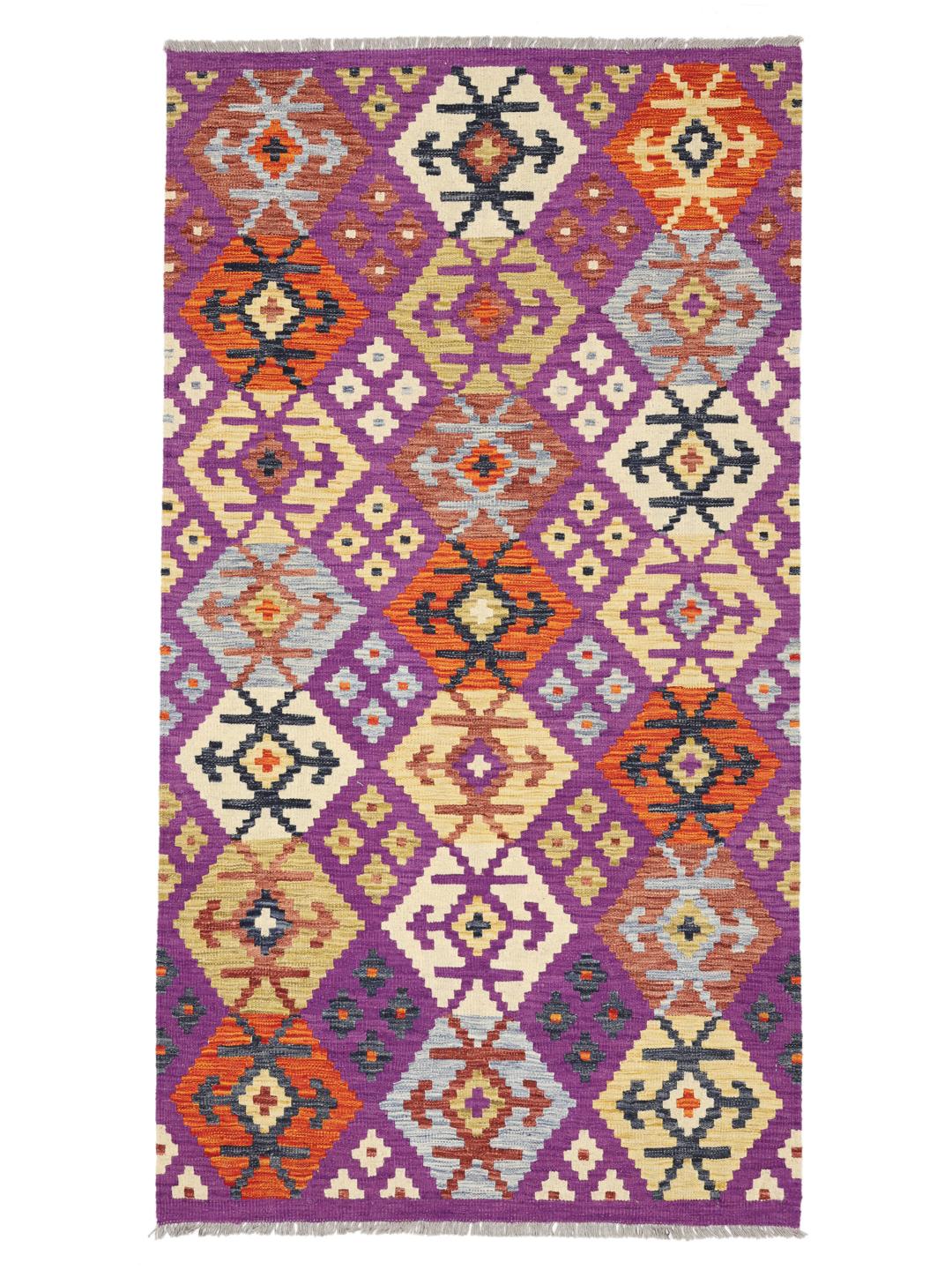
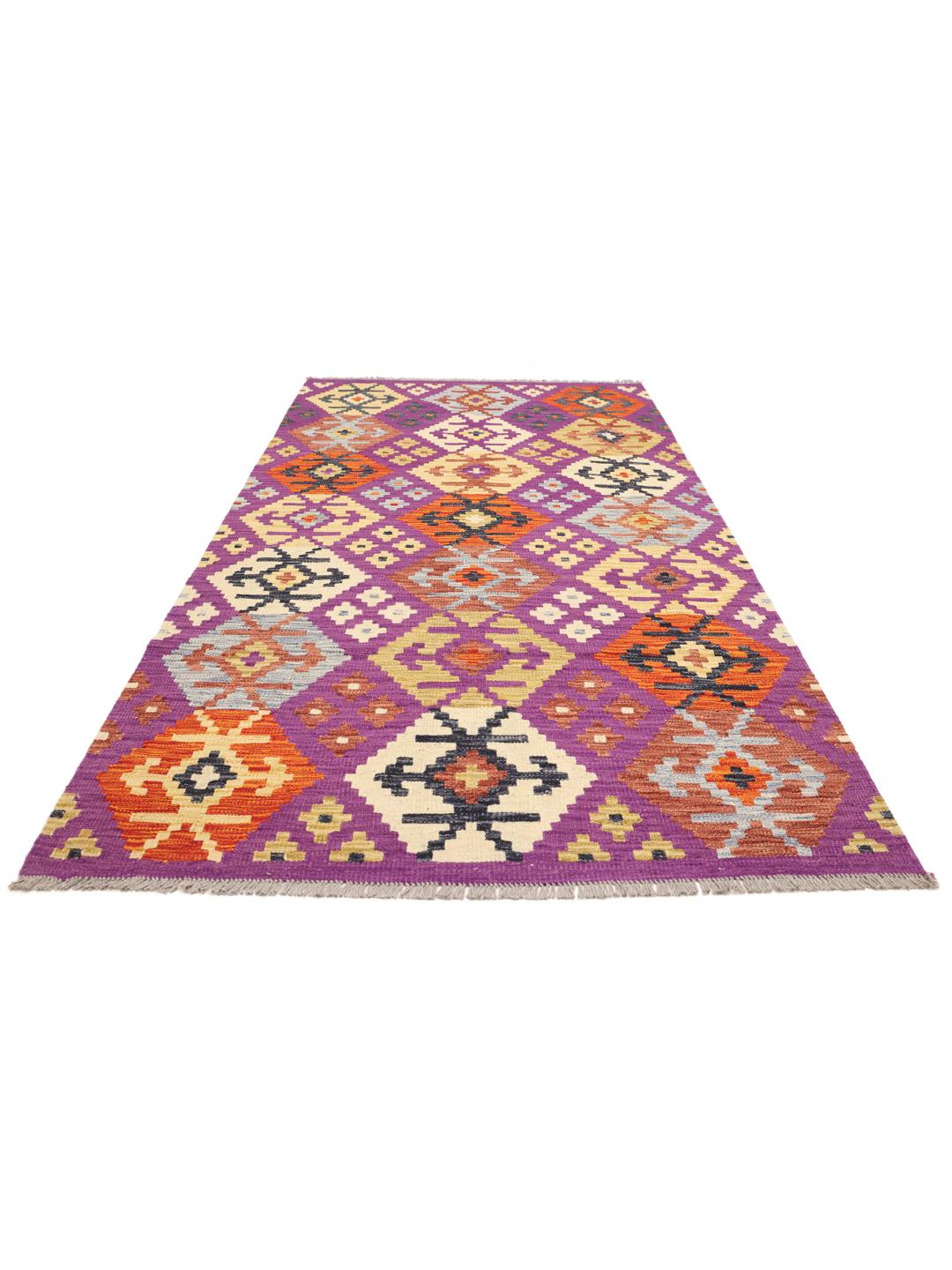
The Kelim tradition in Afghanistan is deeply embedded in the nomadic and semi-nomadic cultures of the region, where weaving is a vital form of self-expression. These rugs have evolved over centuries, drawing influence from the diverse cultural tapestry of the Middle East and Central Asia, resulting in a distinct visual language that is both ancient and enduring.
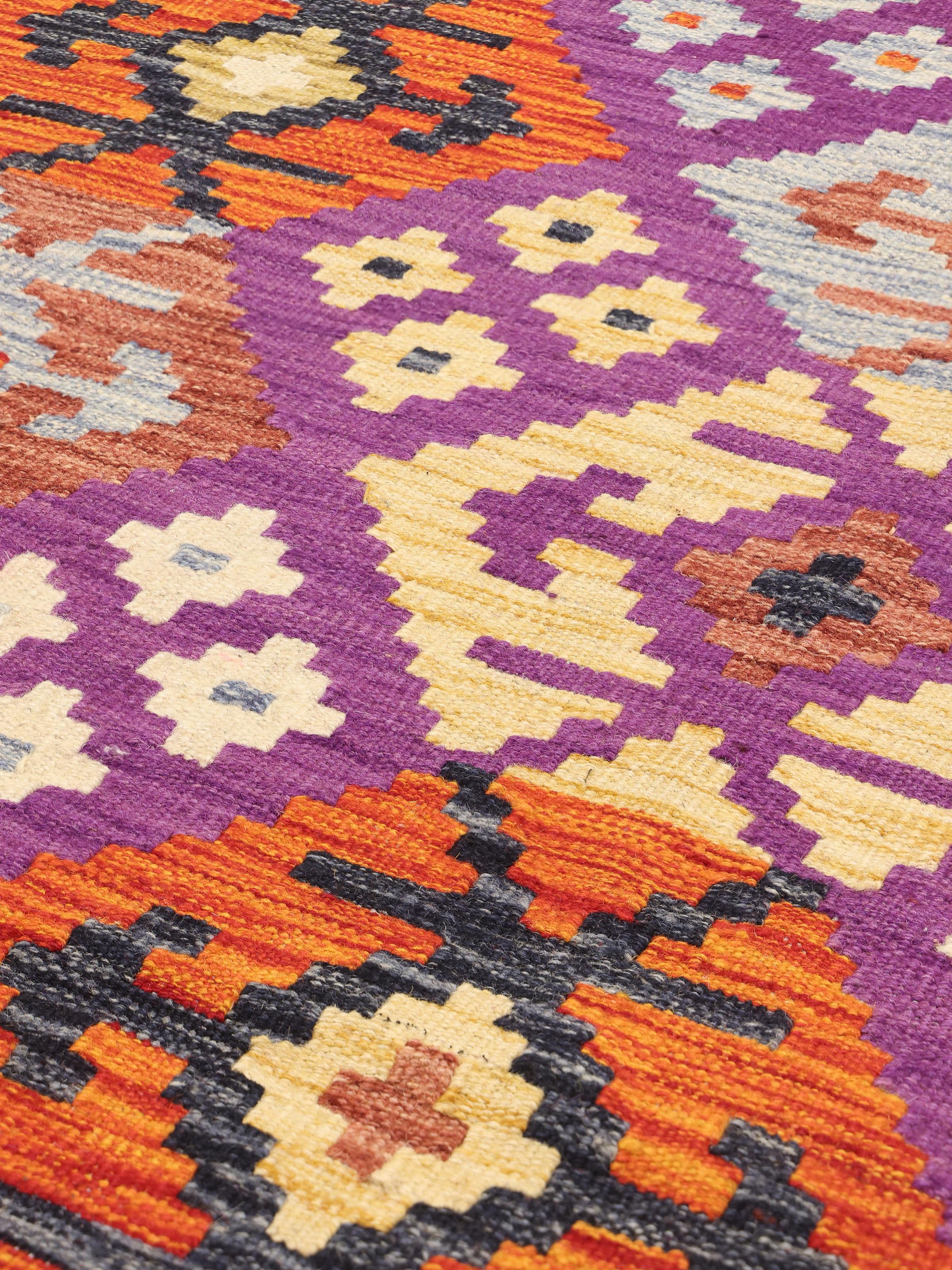
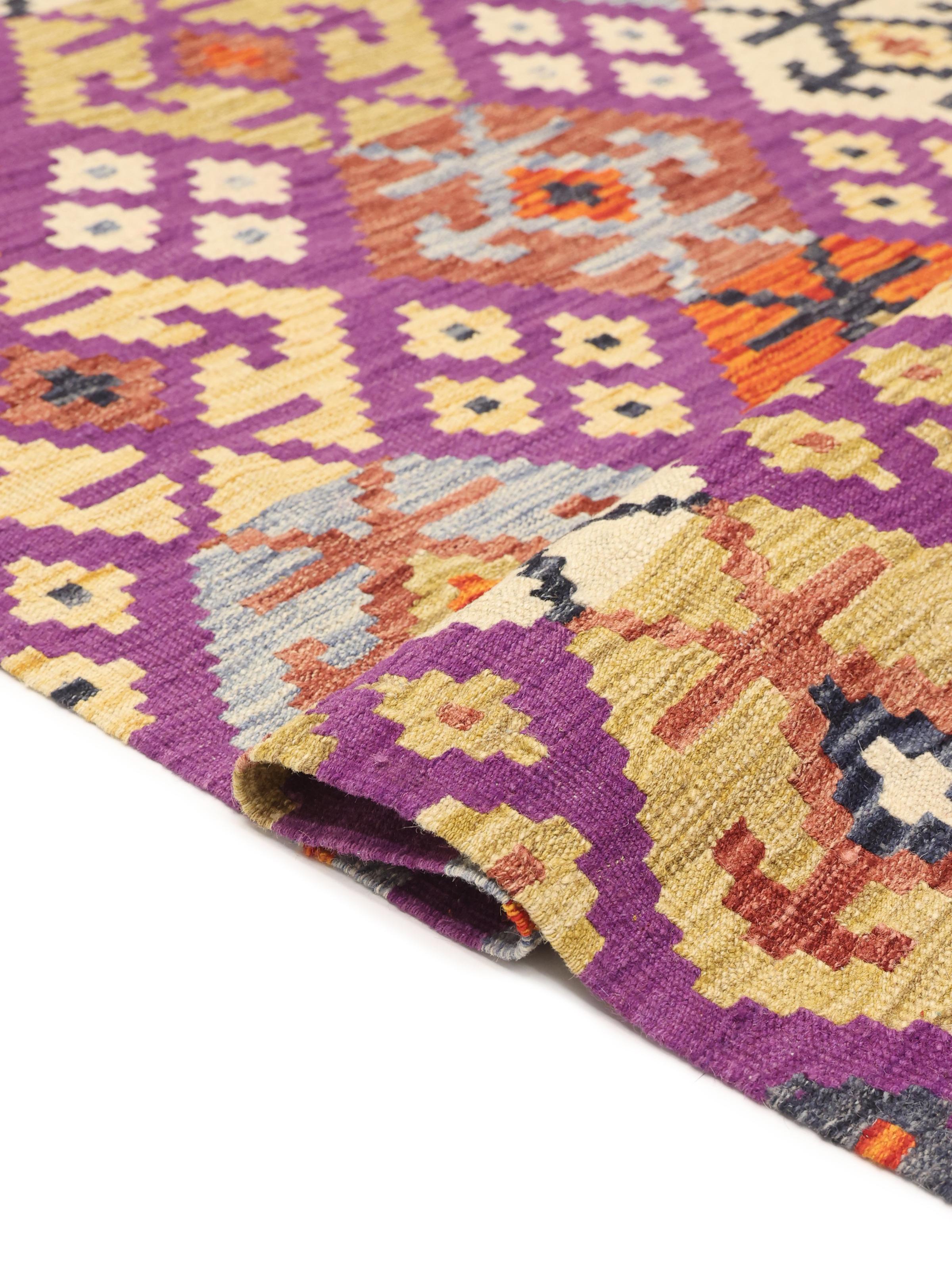
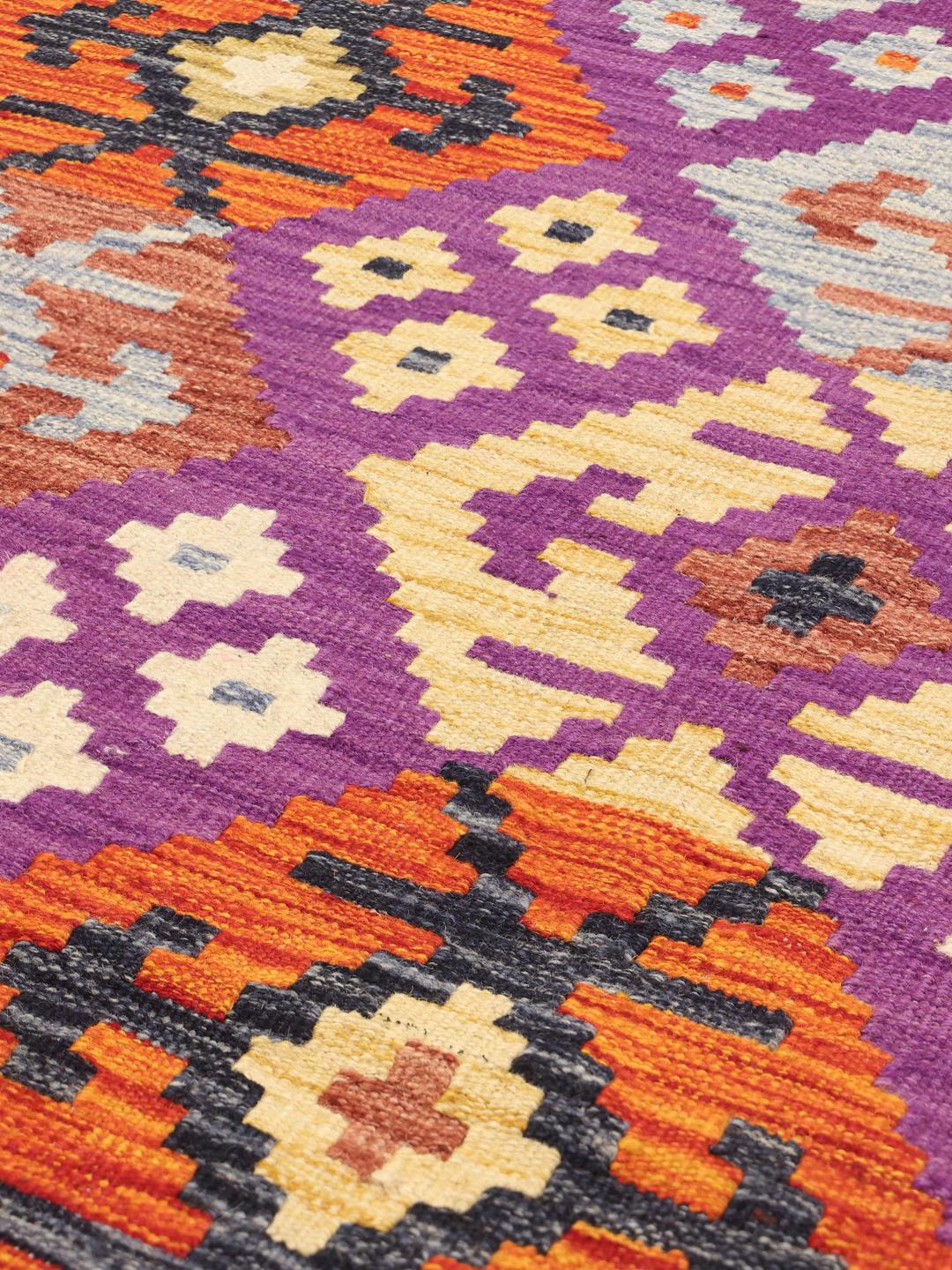
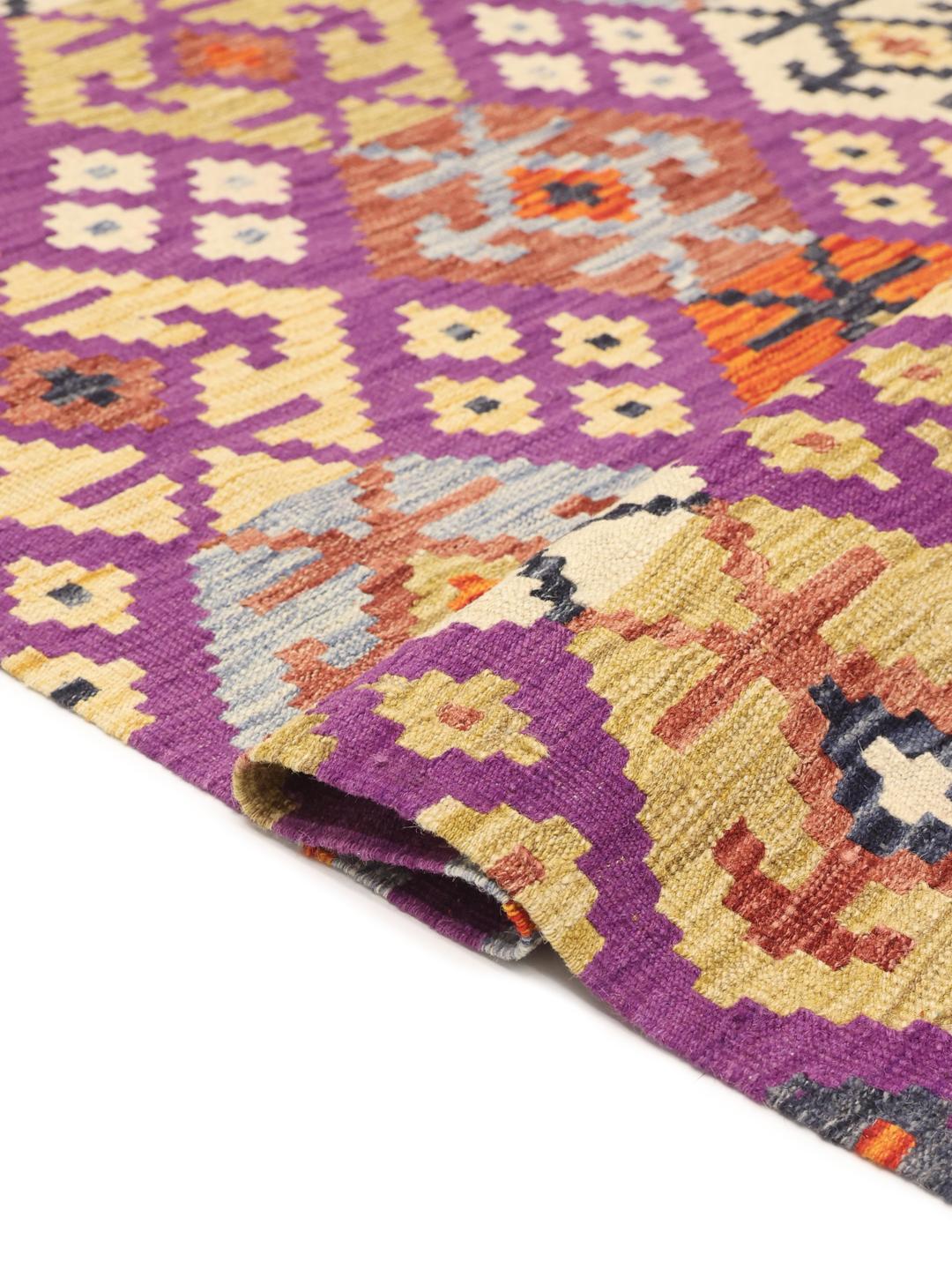
The term 'Kelim' refers to the flat-weaving technique used to create these textiles. Unlike pile rugs, a Kelim is created by interweaving the warp and weft strands, resulting in a surface without a raised pile. This construction method allows for sharper, more graphic patterns and makes the rug lighter and more portable, reflecting its historical roots in mobile lifestyles.
Signature elements of these rugs include the use of bold geometric motifs, such as diamonds, triangles, and stylized floral shapes, often arranged in repeating patterns across the field. The use of vibrant, often naturally derived colours is a hallmark of the tradition, with each colour telling a story of the specific region and materials available to the weaver at the time of creation.
Owning a piece from this tradition is an opportunity to connect with a rich cultural heritage. These rugs are highly valued by collectors for their authenticity, the skill required in their creation, and the way they bridge the gap between historical craft and modern interior aesthetics. Each piece is a testament to the artisan's vision and the enduring legacy of Middle Eastern textile arts.