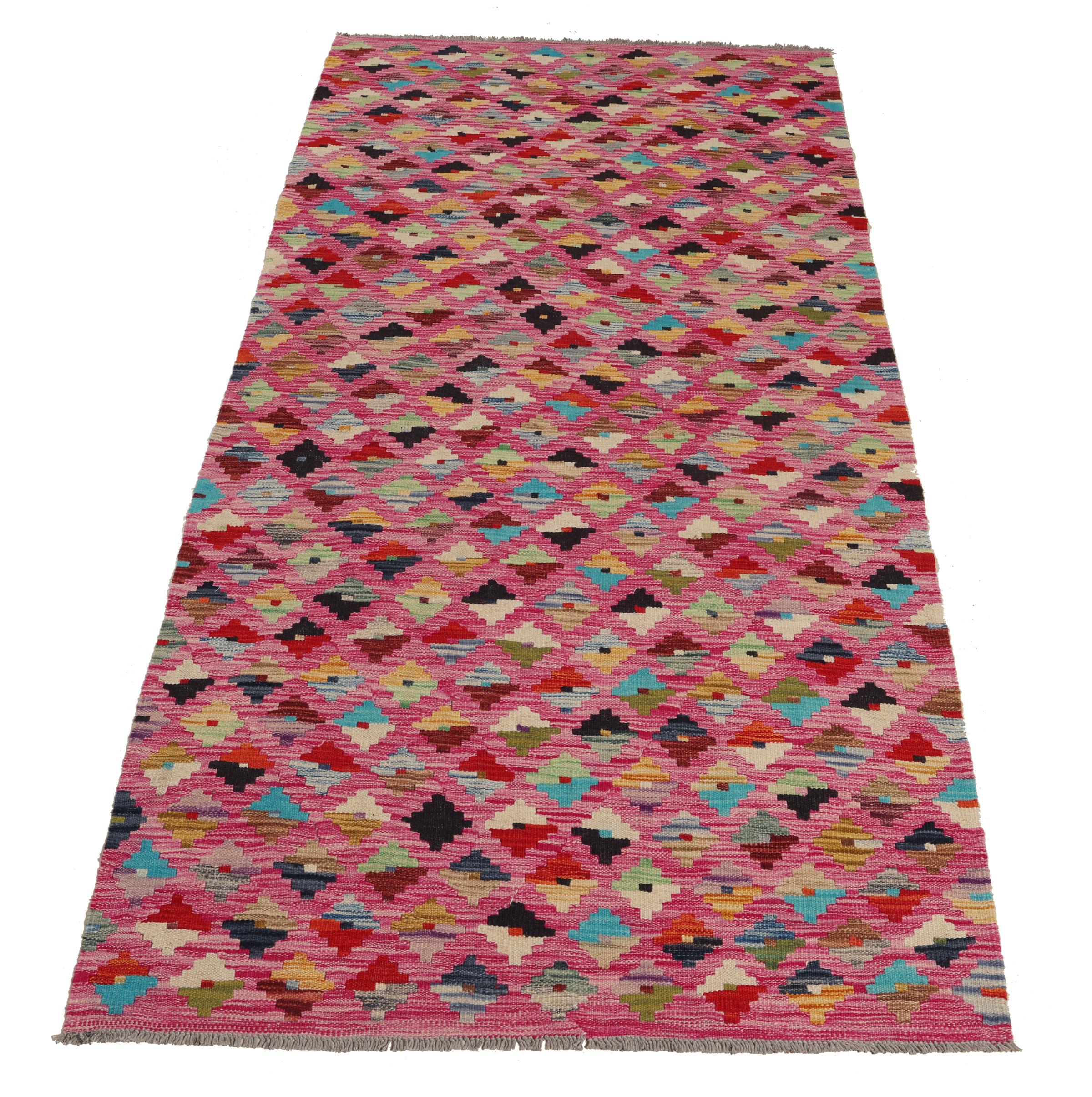
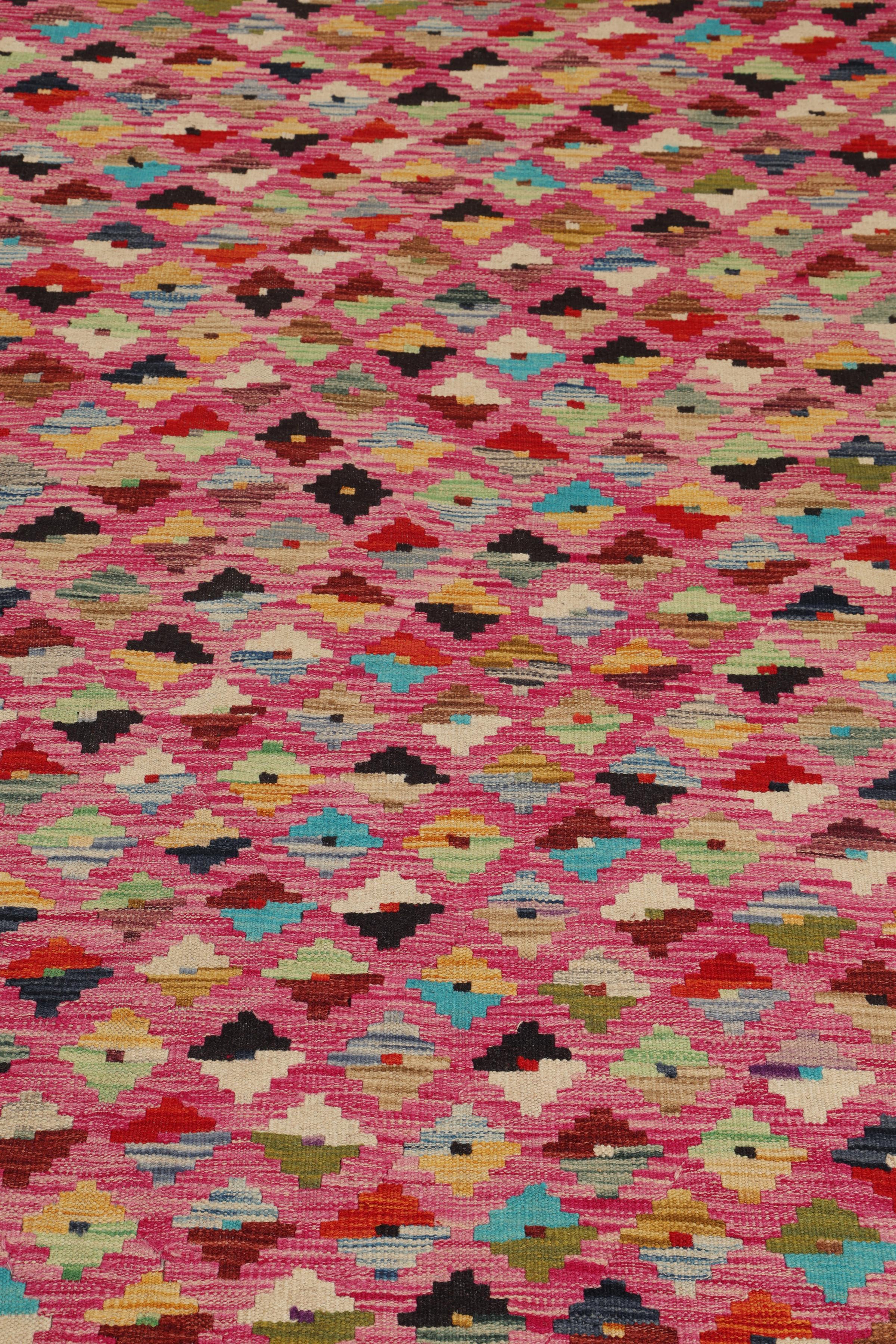
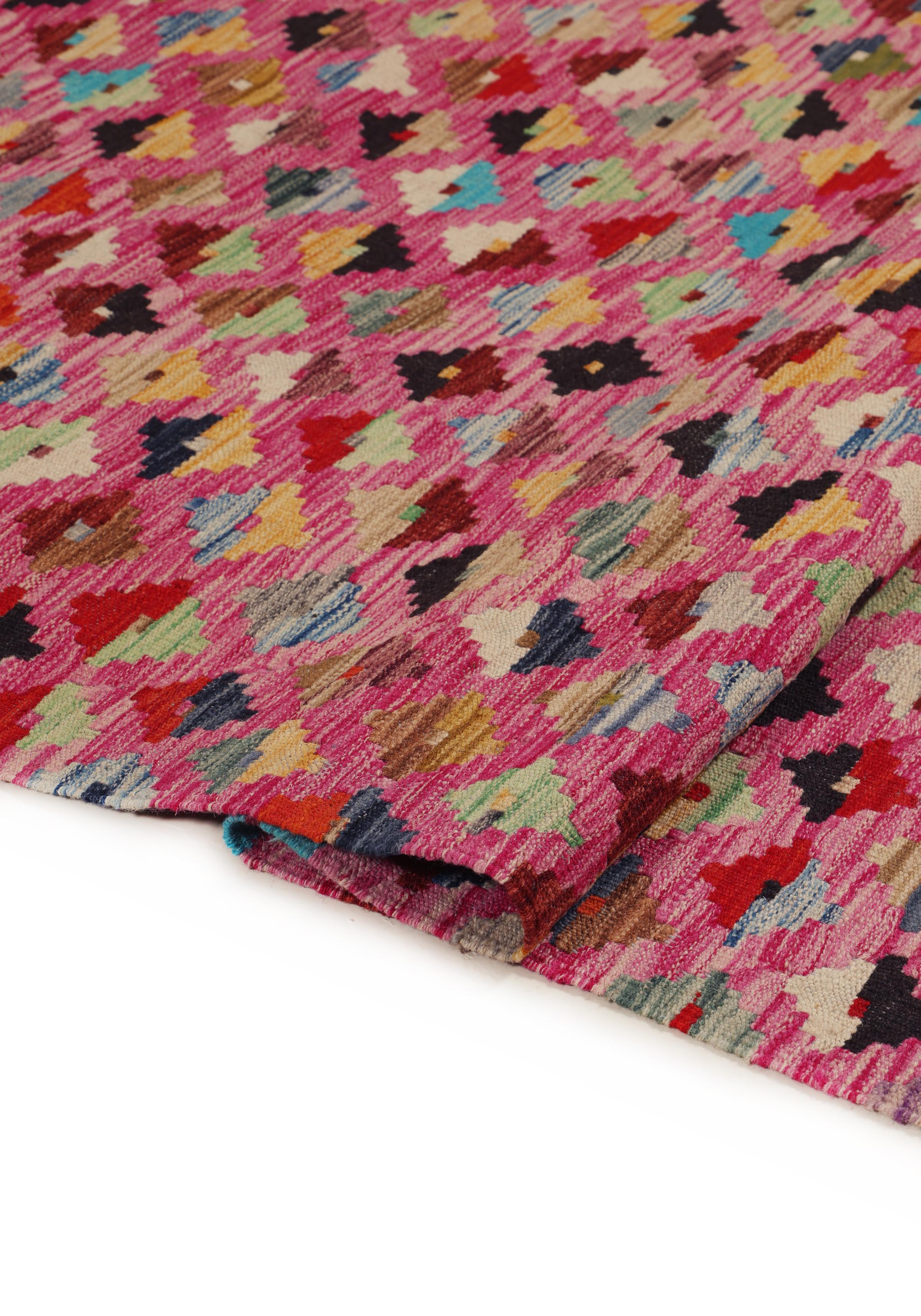
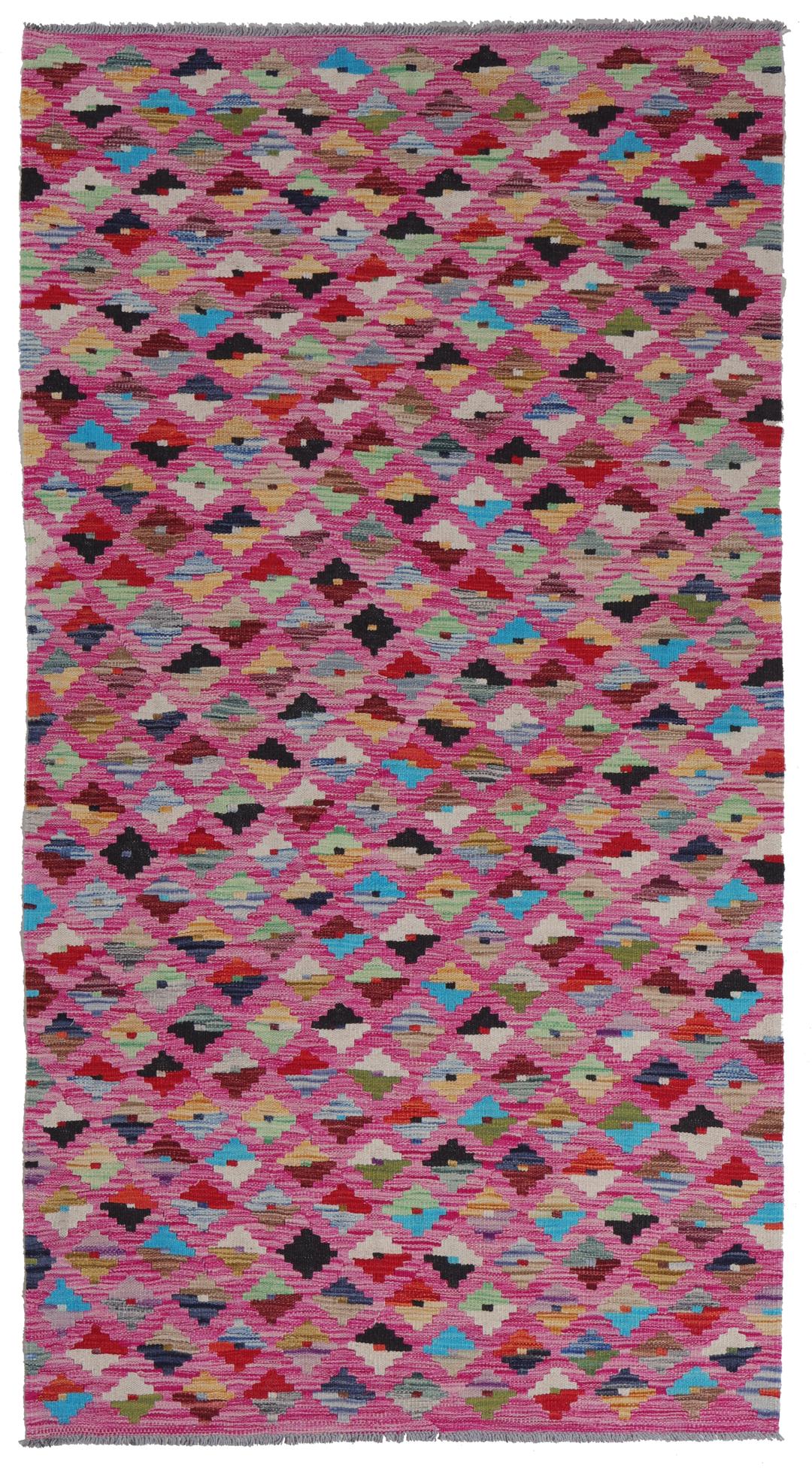
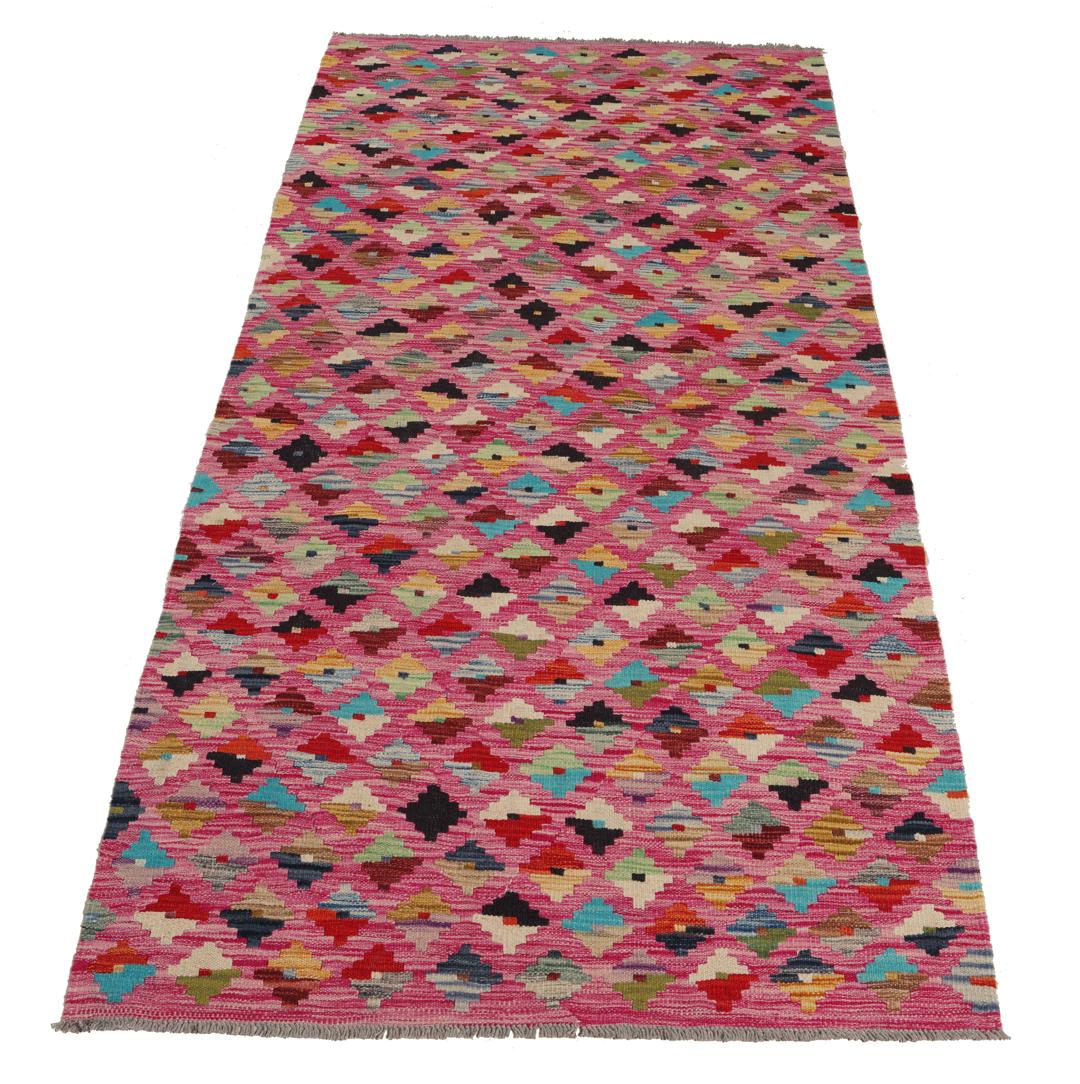
The tradition of Middle Eastern Kelim weaving is deeply rooted in the nomadic and semi-nomadic cultures of the region. These rugs were historically created by tribal groups not only for their beauty but as essential, portable items for life on the move. Today, these designs continue to be produced in Afghanistan, drawing on centuries of cultural history and regional motifs.
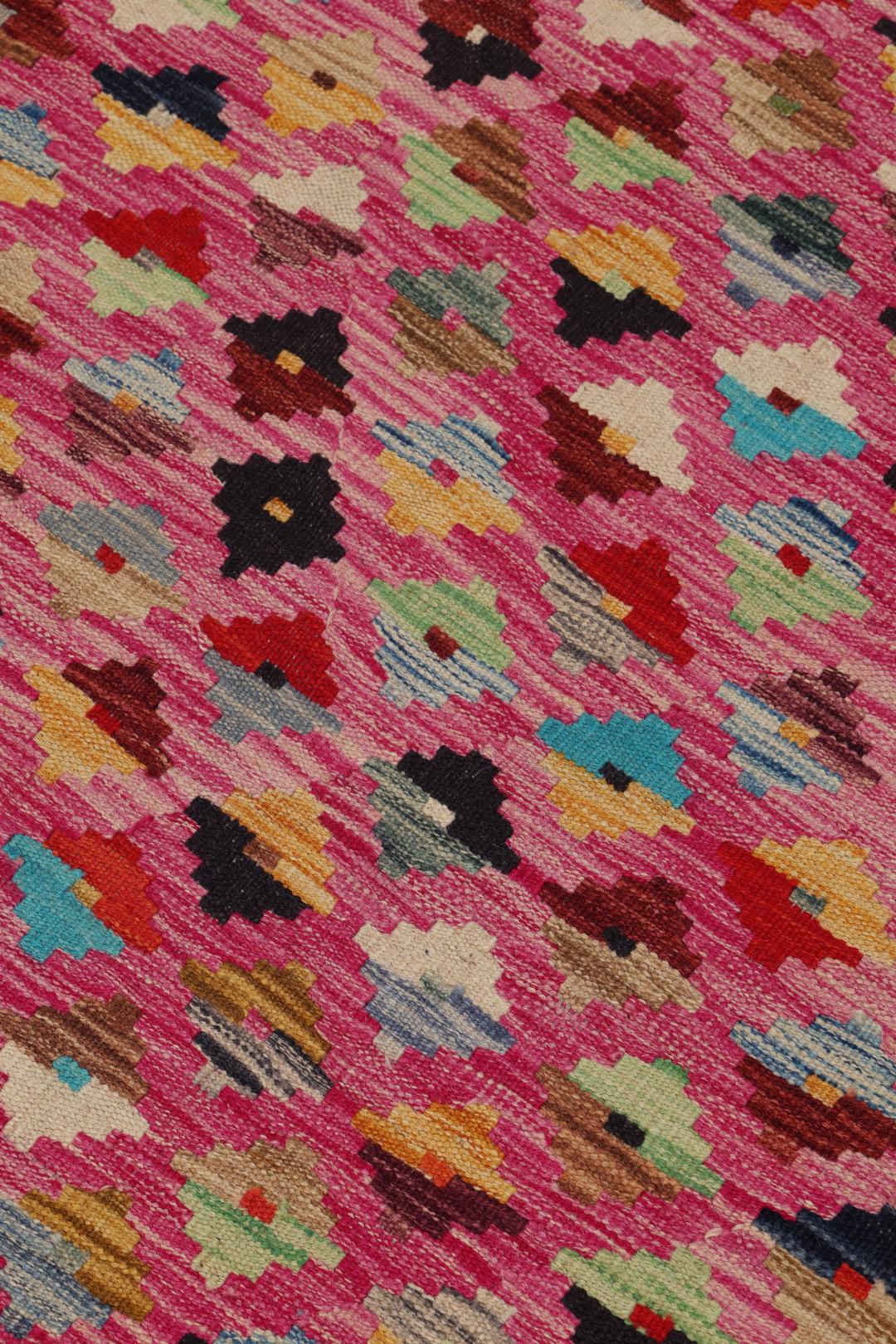
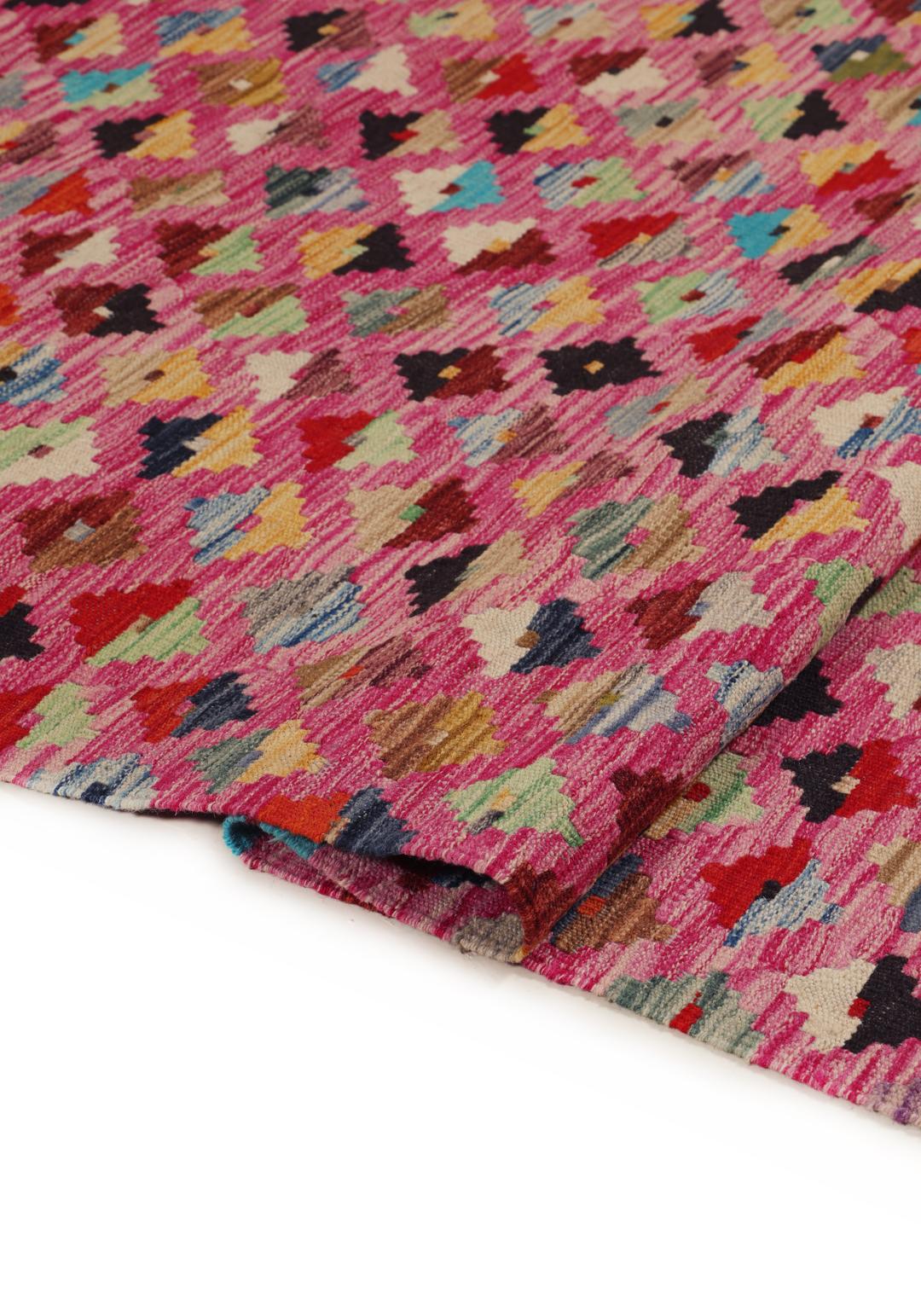
The term Kelim refers to a flat-woven textile, meaning these rugs are created without a knotted pile. This technique produces a thin, reversible rug that is incredibly durable and lightweight. Because they lack a foundation of pile, the skill of the weaver is revealed in the precision of the tapestry weave, which creates clean, sharp lines and vibrant, saturated blocks of colour.
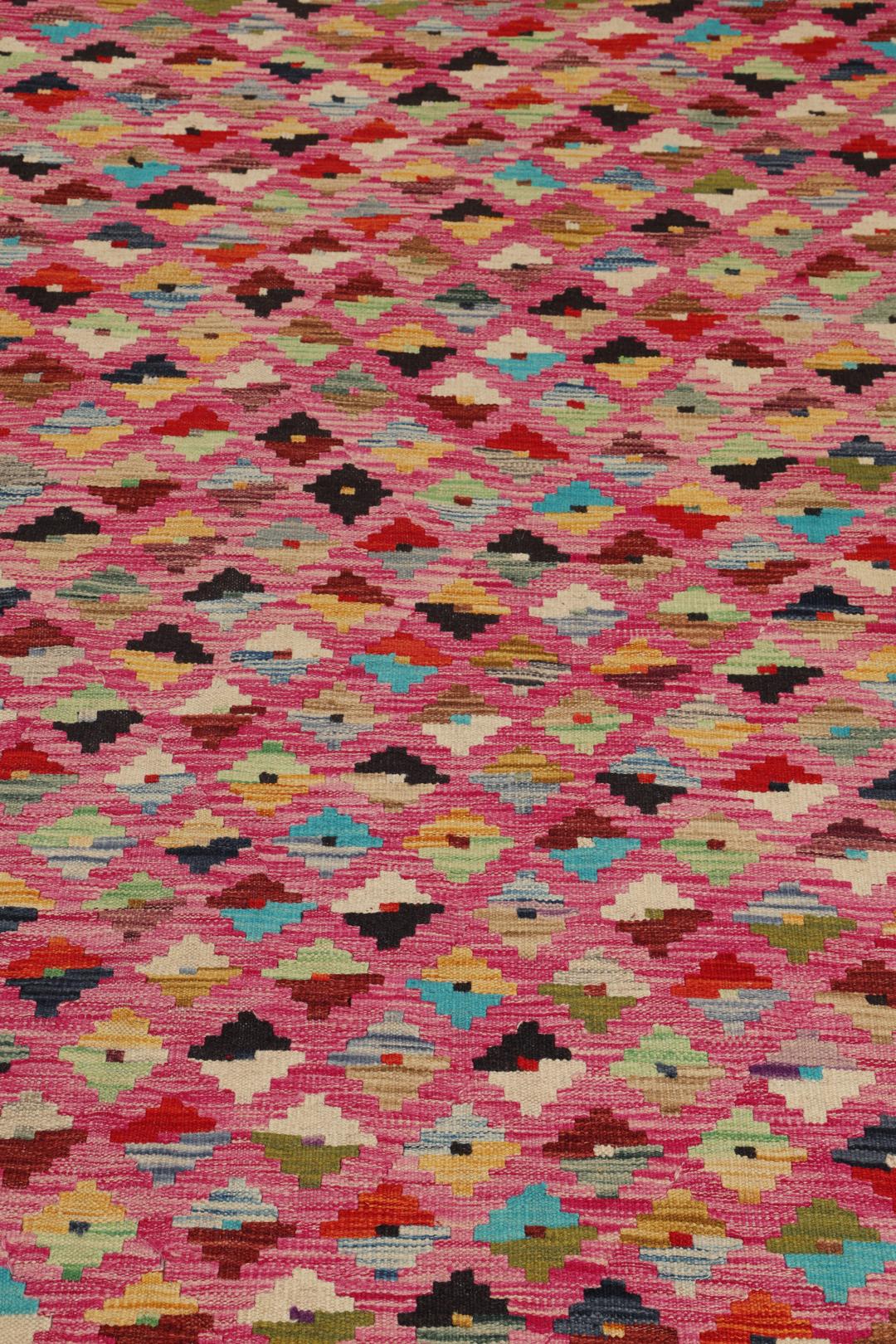
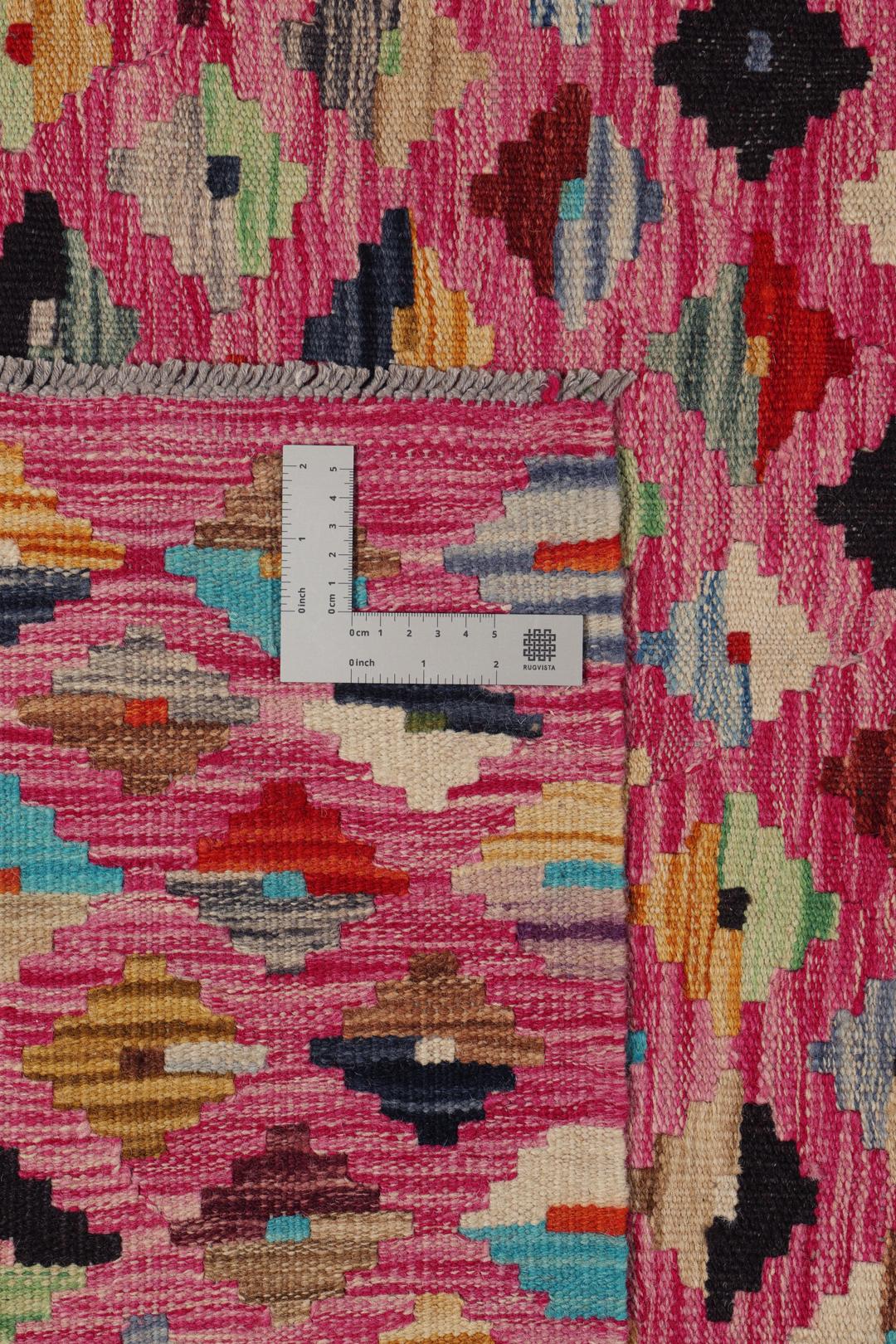
Signature elements of these rugs include geometric motifs, such as the diamond shapes seen here, which are often arranged in repeating sequences. These patterns are not merely decorative but are symbols and visual languages passed down through generations. The use of vibrant, bold colours is a hallmark of the Old Style aesthetic, designed to bring warmth and joy to the interior of a home.
Owning an Afghan Kelim is a way to preserve a rich cultural heritage. Collectors and enthusiasts value these pieces for their authenticity, the human effort woven into every thread, and the way they bridge the gap between ancient nomadic traditions and contemporary home design. Each rug is a unique artefact, holding both historical significance and artistic value.