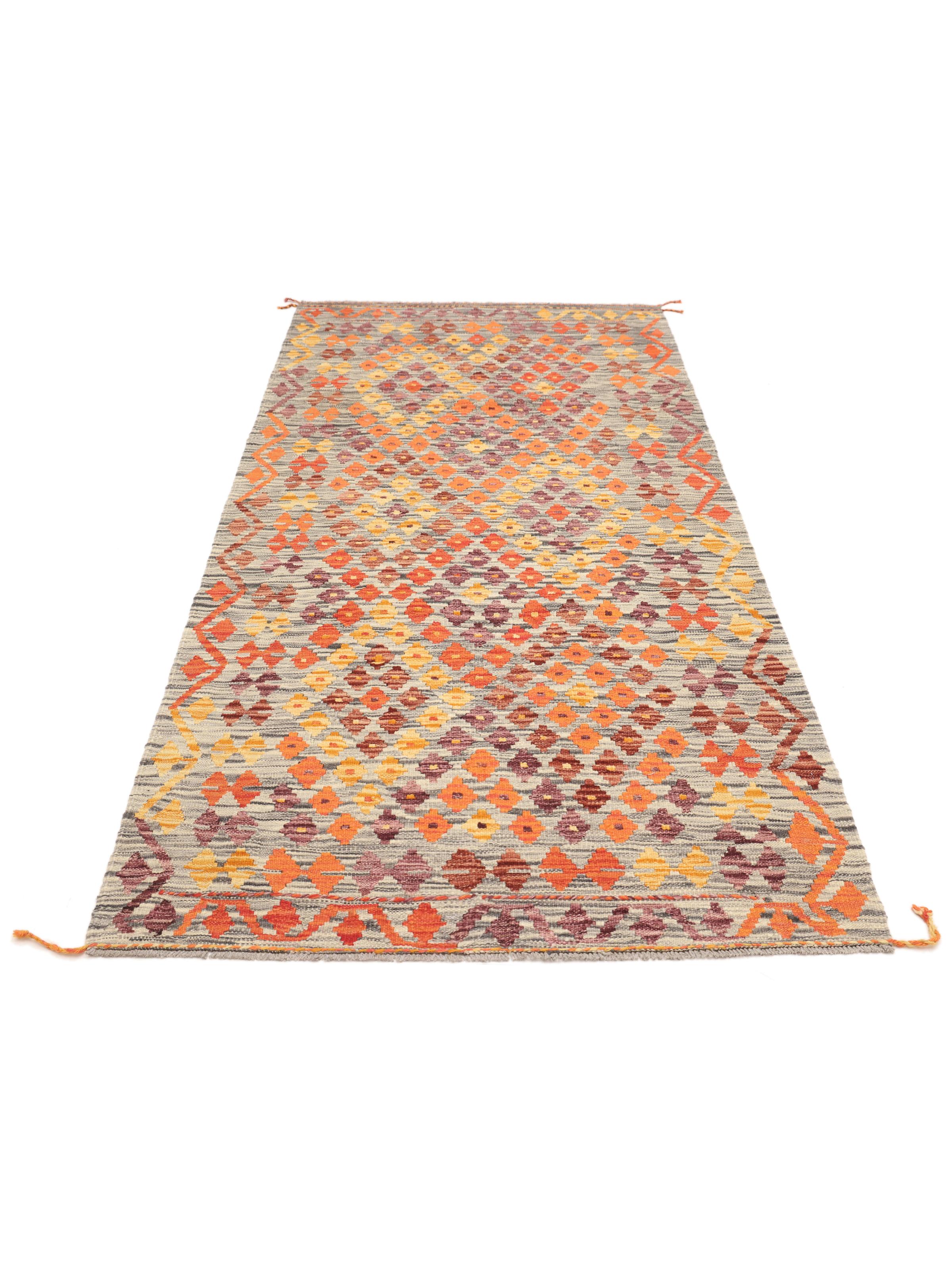
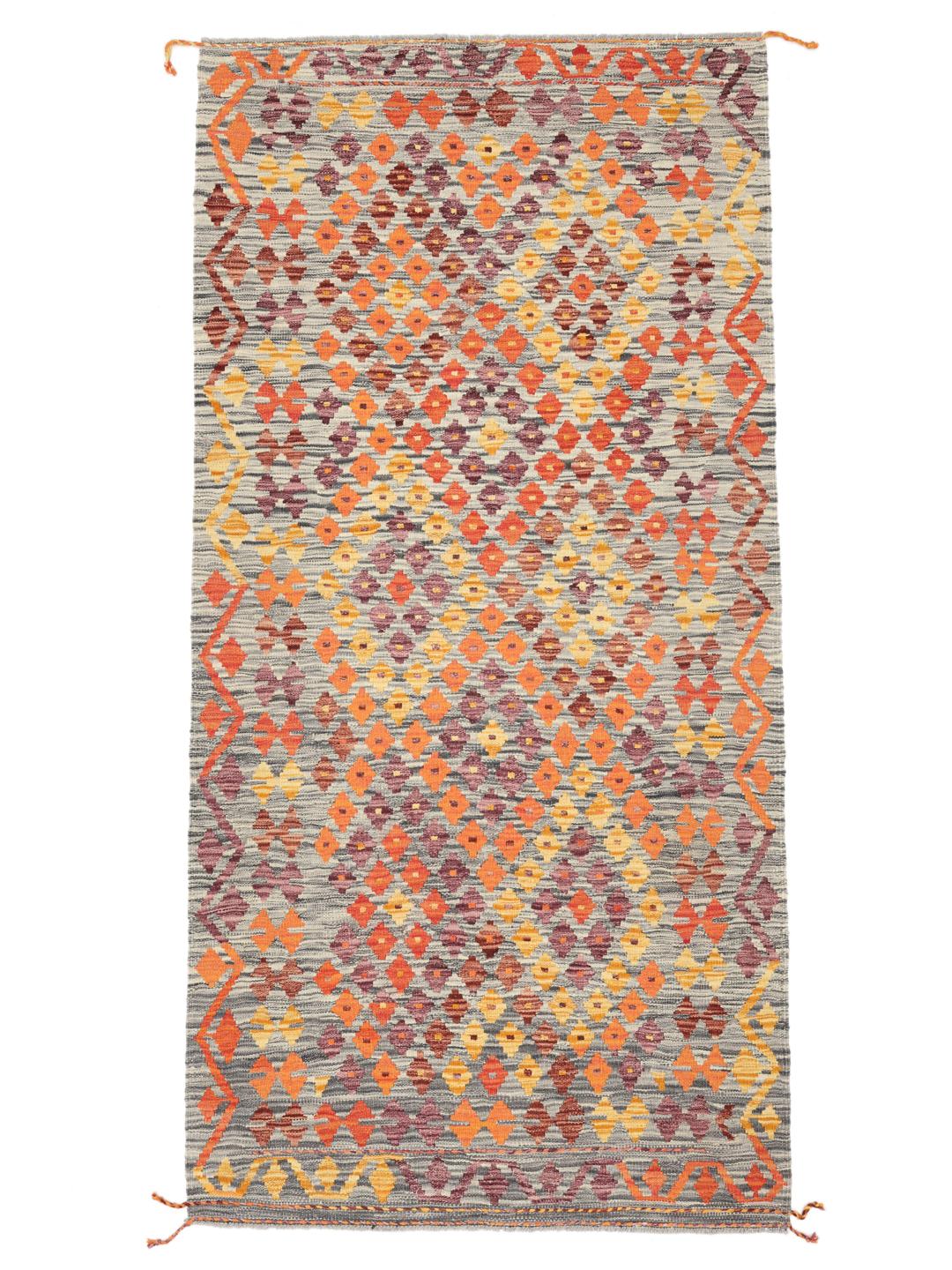
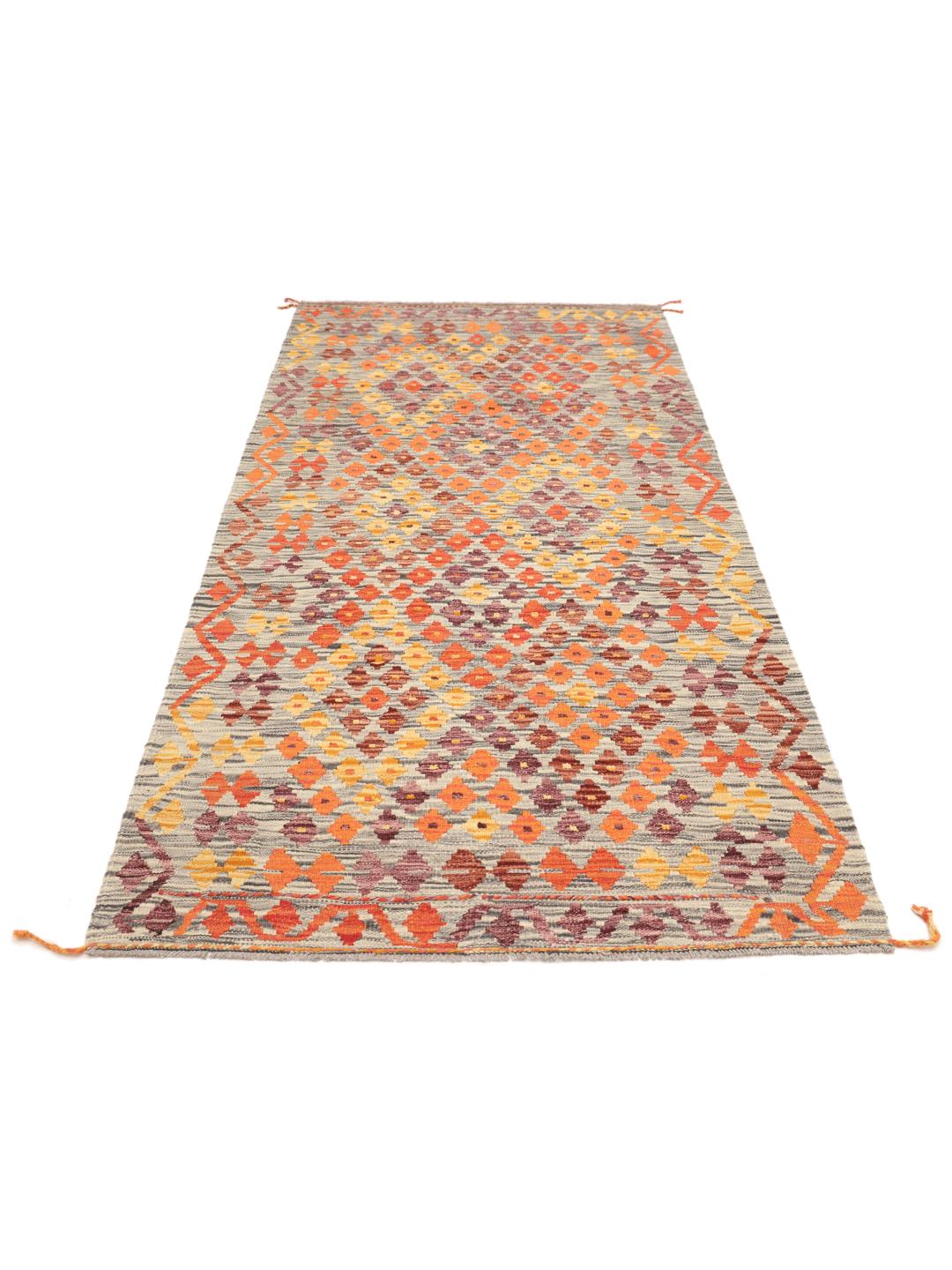
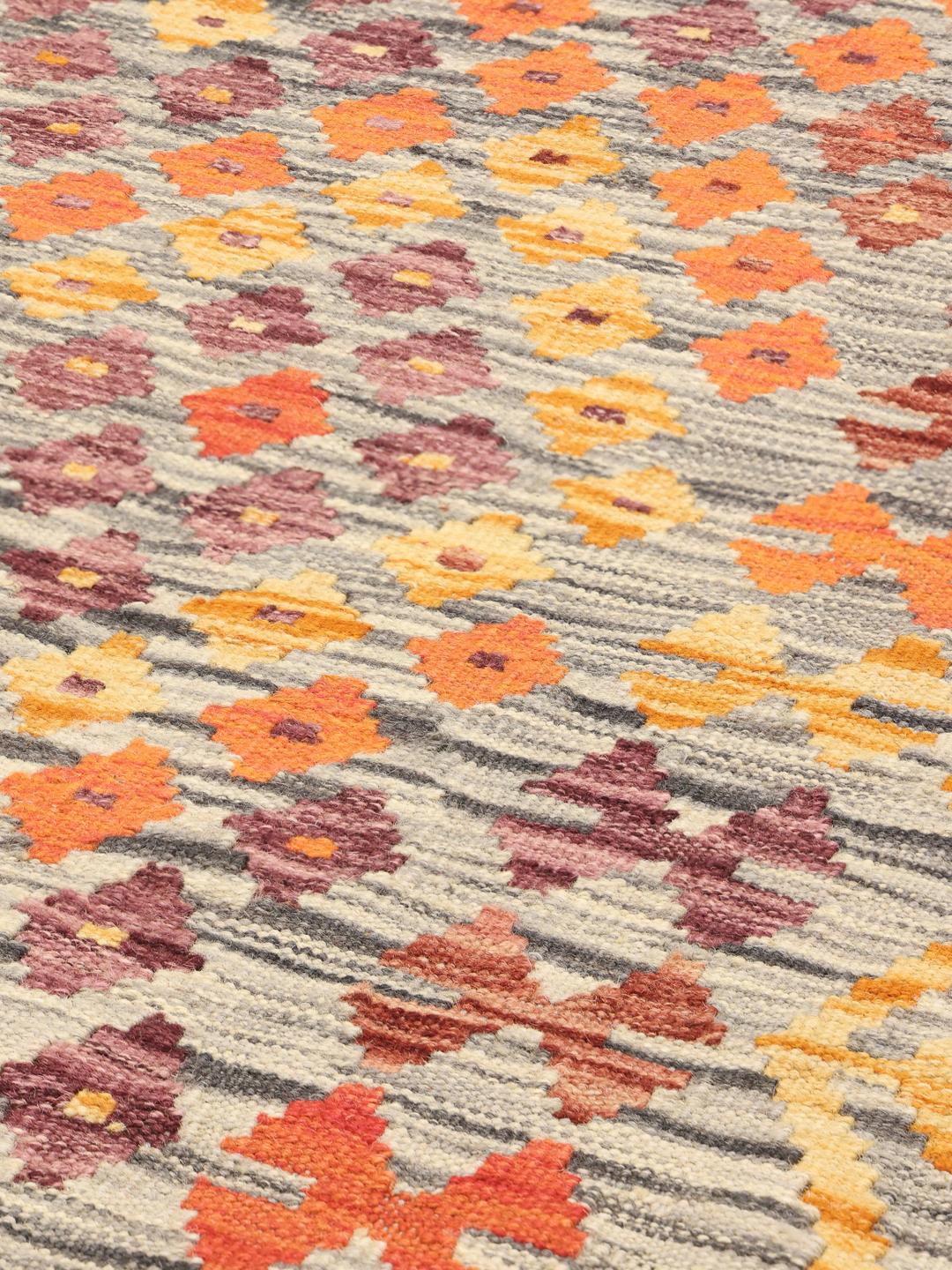
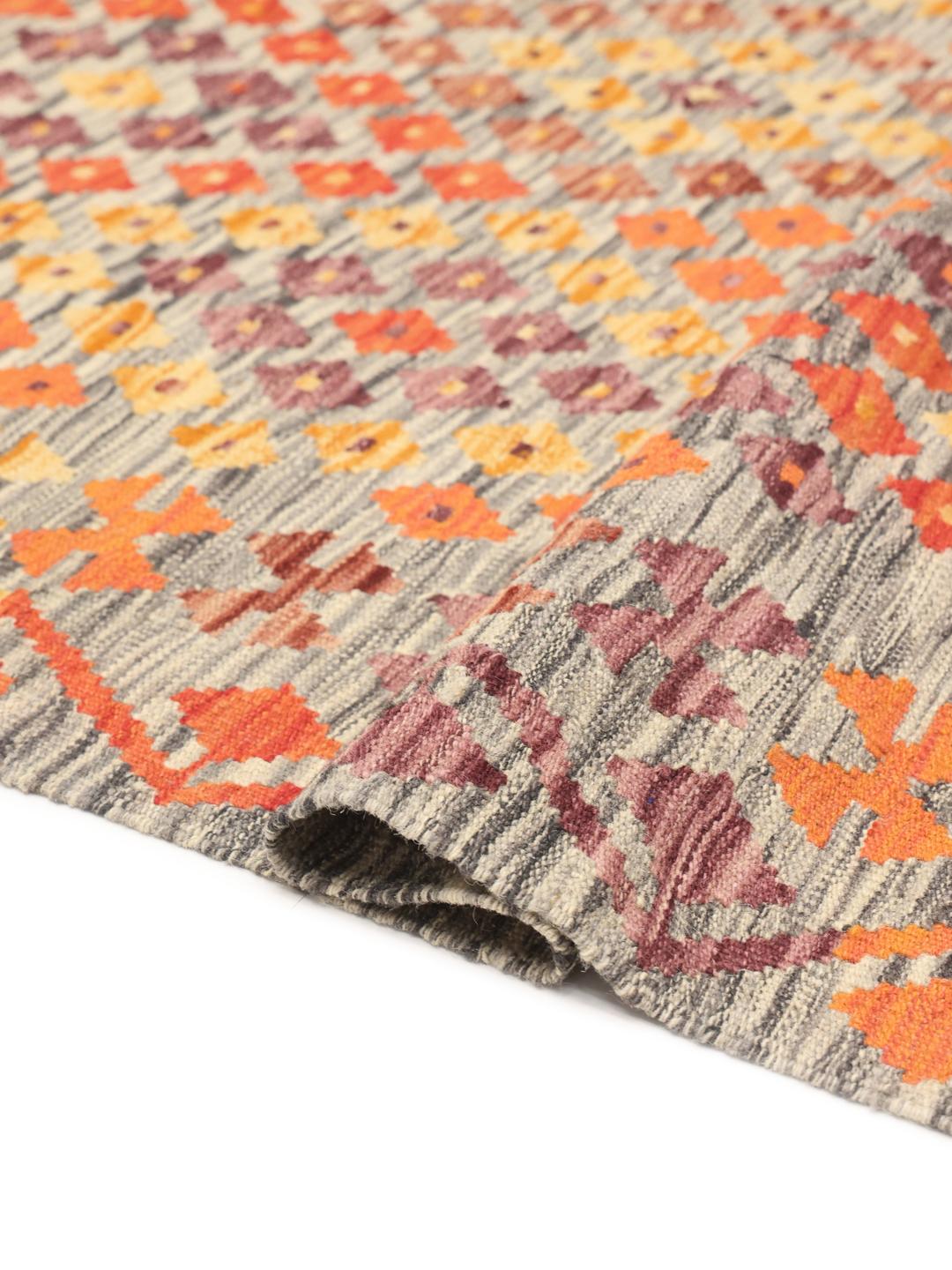
The tradition of weaving Kelims in Afghanistan is deeply rooted in the nomadic history of the region. These flat-weave rugs were historically created by tribal communities for practical purposes, such as floor coverings, wall hangings, or saddlebags, reflecting a culture that valued both utility and artistic expression.
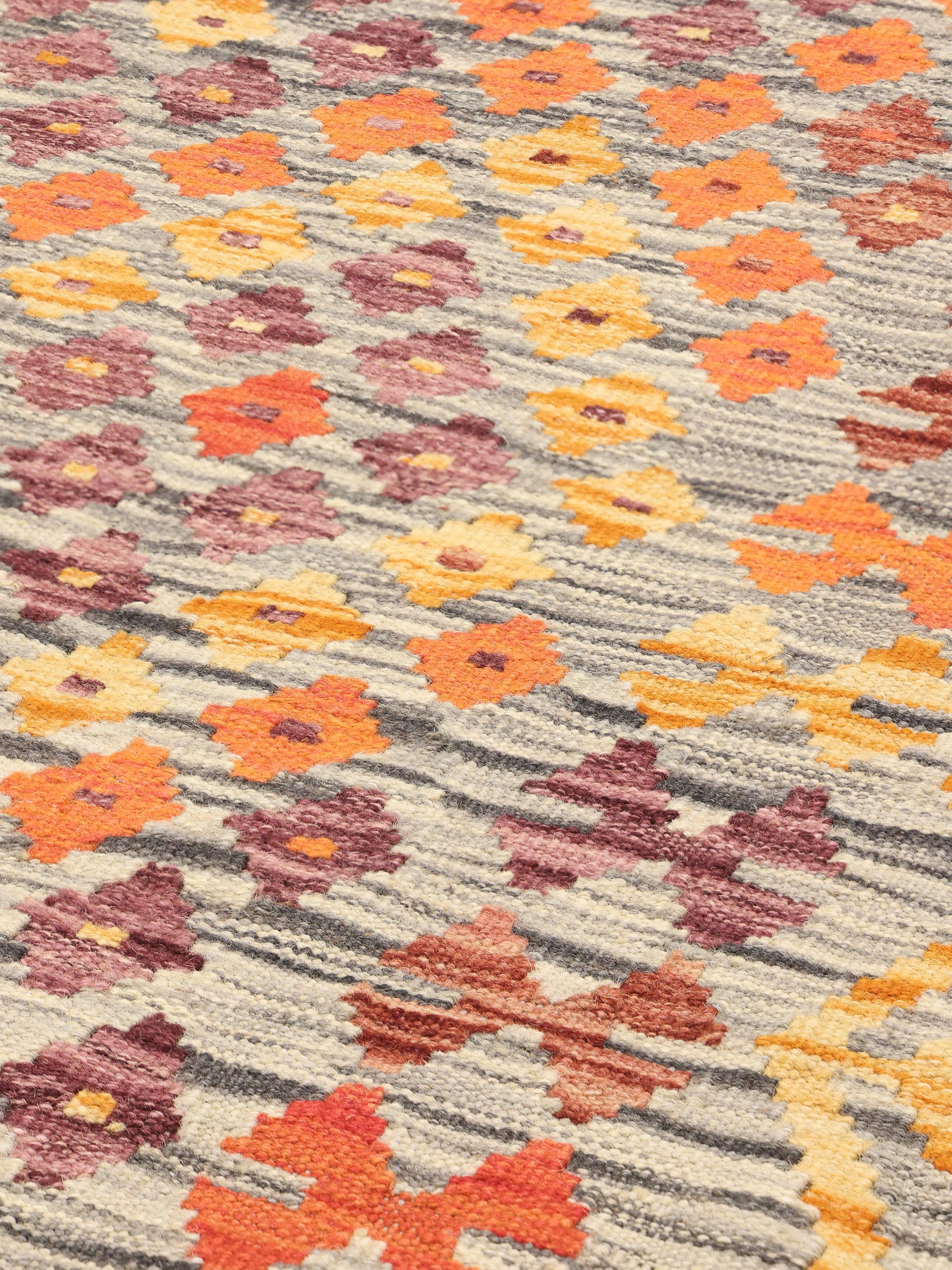
The term 'Kelim' refers to the specific tapestry-weave technique where the weft threads are pulled tightly over the warp threads to hide them, creating a clean, reversible surface without a pile. This method is highly prized for its durability and the ability to produce sharp, crisp geometric patterns that remain vibrant over decades of use.
Signature design elements in Afghan Kelims often include bold, repeating geometric shapes such as diamonds, triangles, and stylised floral motifs. The colour palettes are traditionally derived from natural dyes, which impart a rich, muted depth that evolves beautifully as the rug ages, often resulting in unique variations that highlight the organic nature of the materials.
Collectors value these pieces for their authenticity and the glimpse they provide into the historical narratives of the Middle East. Owning an Afghan Kelim is more than just purchasing a floor covering; it is an investment in a living tradition, preserving the skill and artistic heritage of the weavers who have kept these techniques alive for centuries.