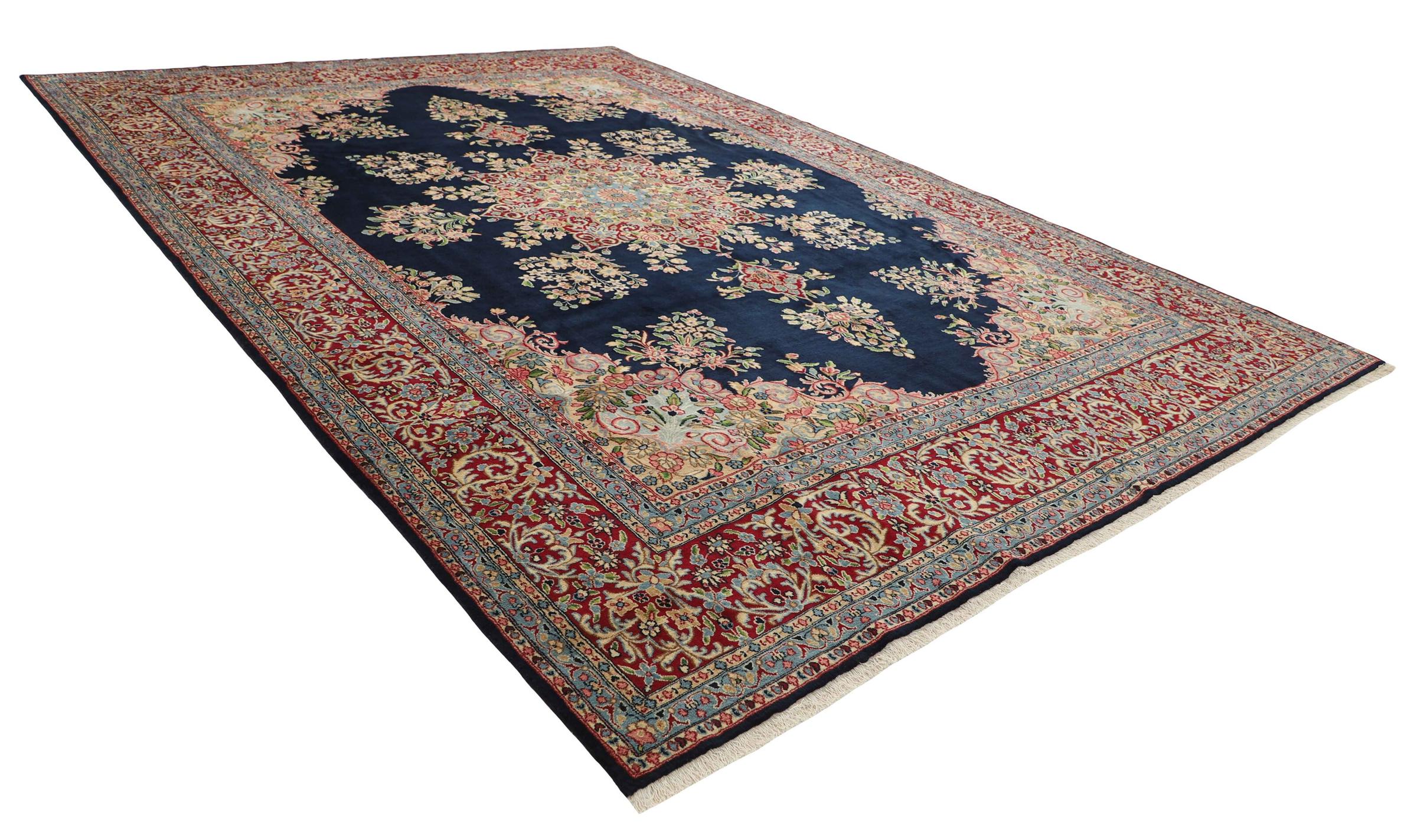
Kerman rugs originate from the desert city of Kerman in the southeastern part of the Middle East, a region with a centuries-old tradition of creating some of the most sophisticated and refined floor coverings in the world. Historically, these rugs were highly sought after by royalty and nobility, known for their artistic depth and the exceptional quality of their wool.
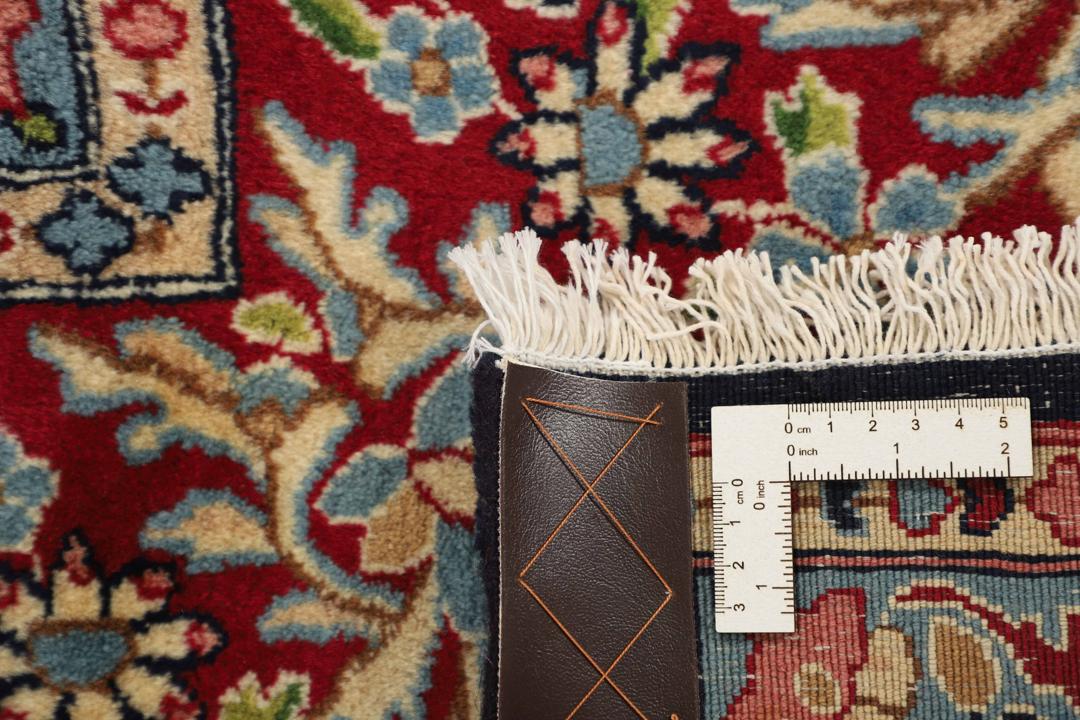
The term Kerman refers to both the geographical origin and a specific style of weaving that emphasises elegant design and high-quality materials. These rugs are typically characterised by their soft, lustrous wool, which takes dyes exceptionally well, allowing for the wide and harmonious colour palettes that have become a hallmark of the region's output.
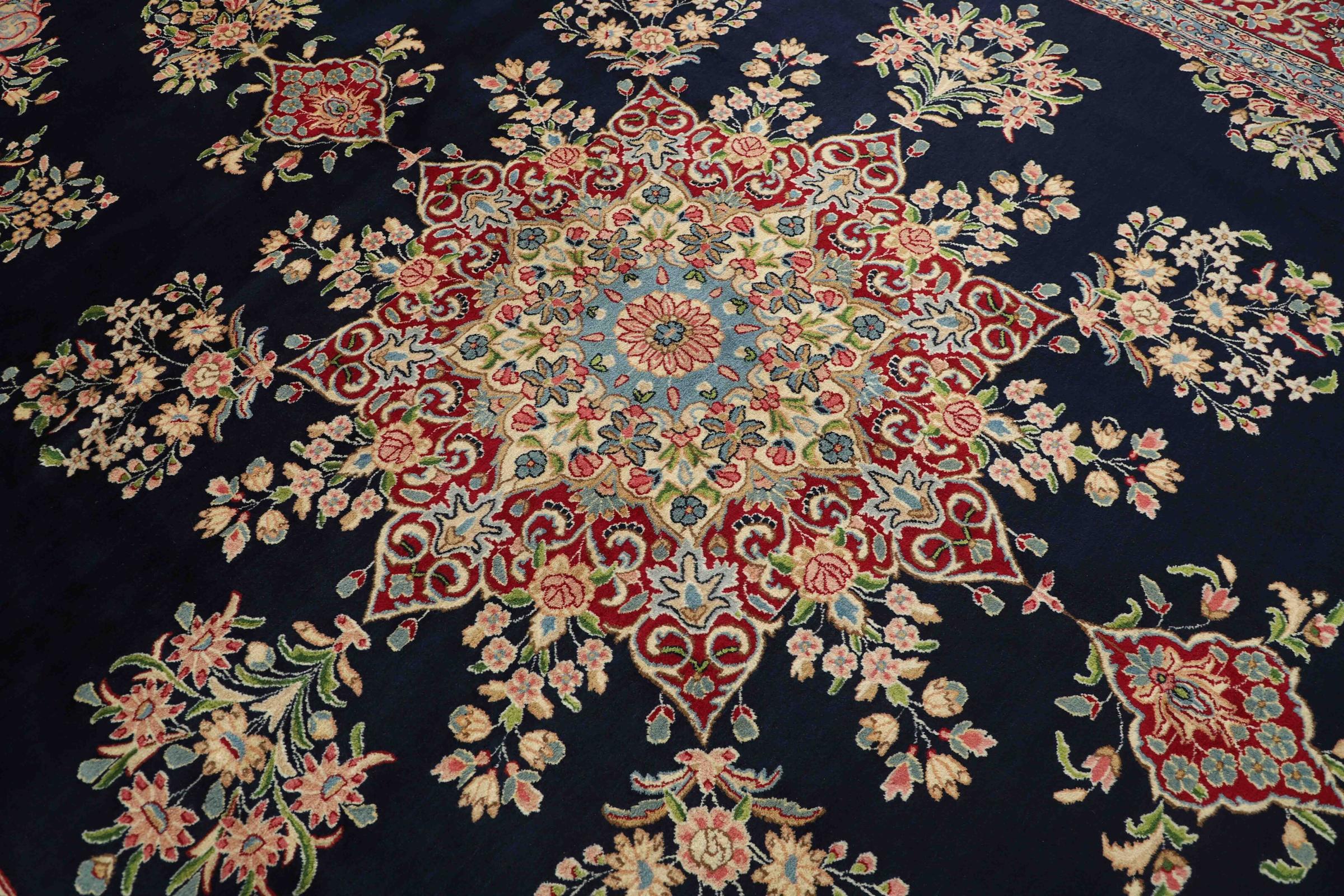
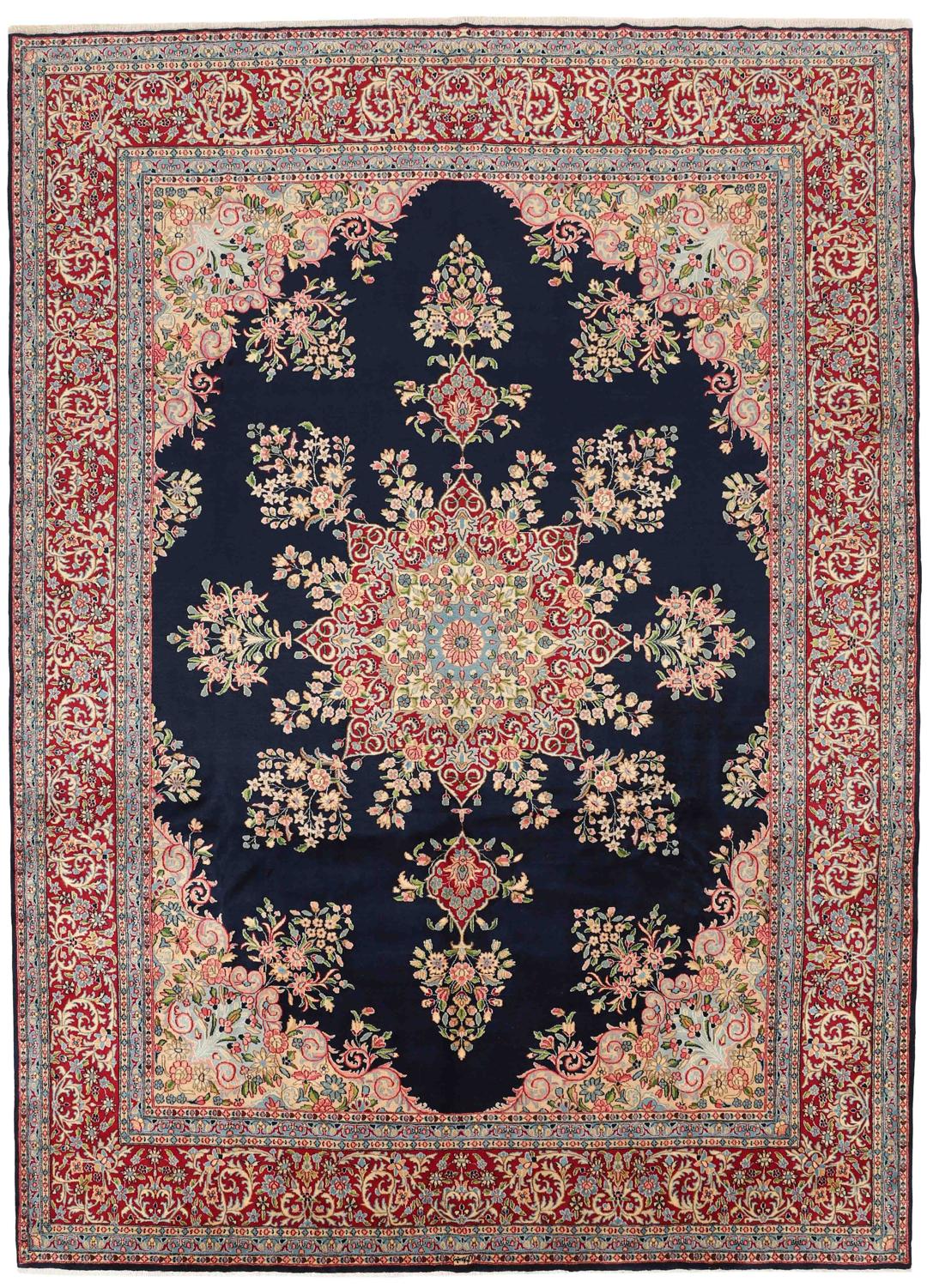
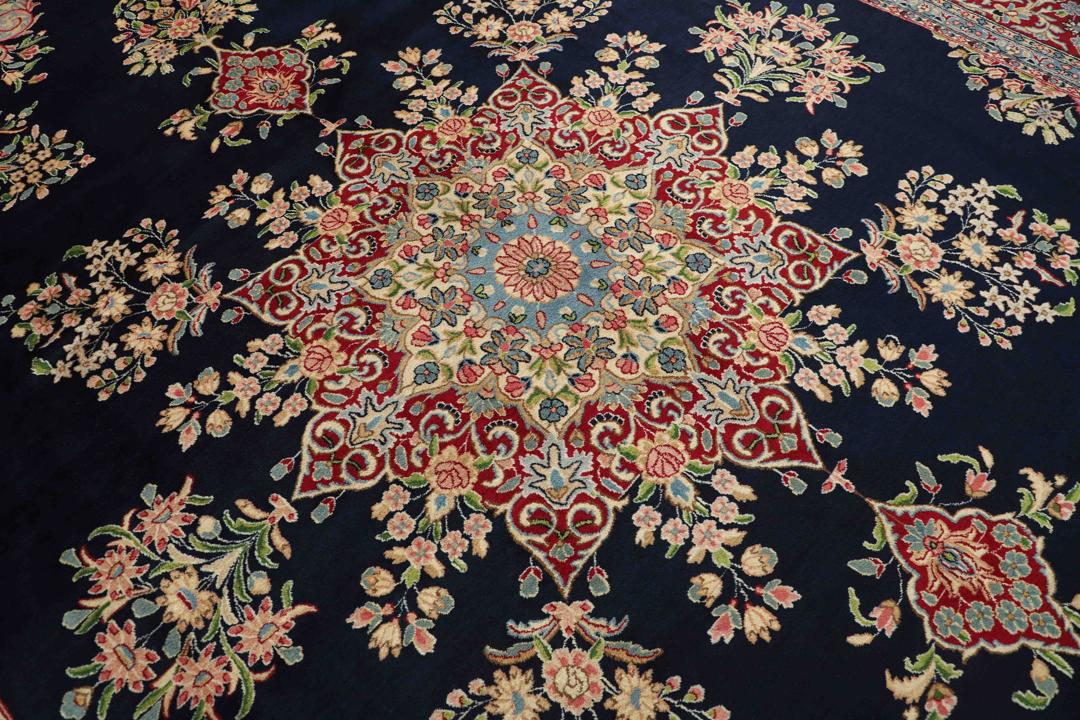
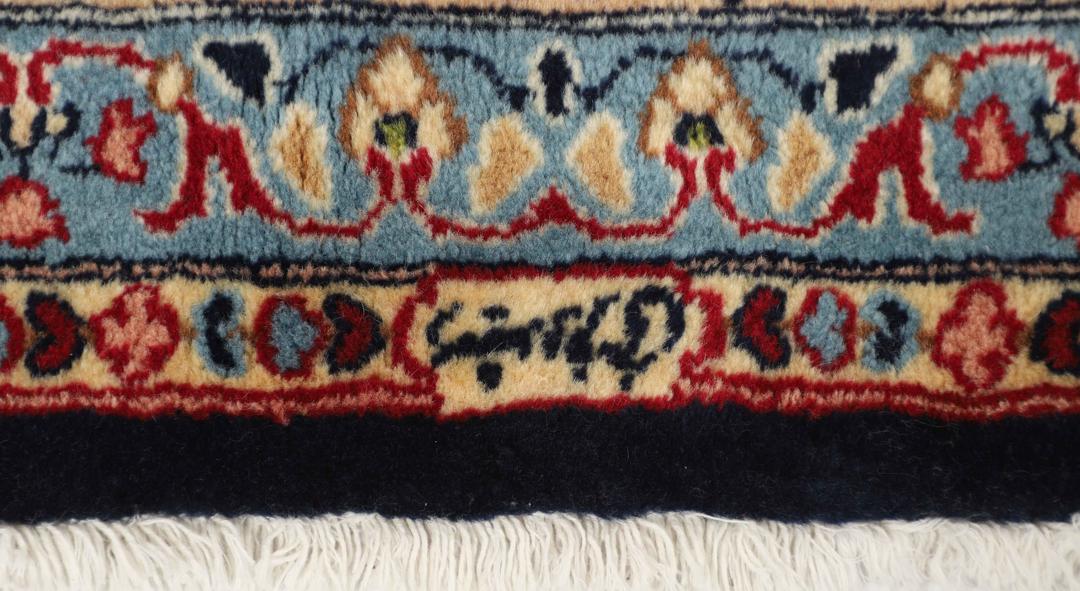
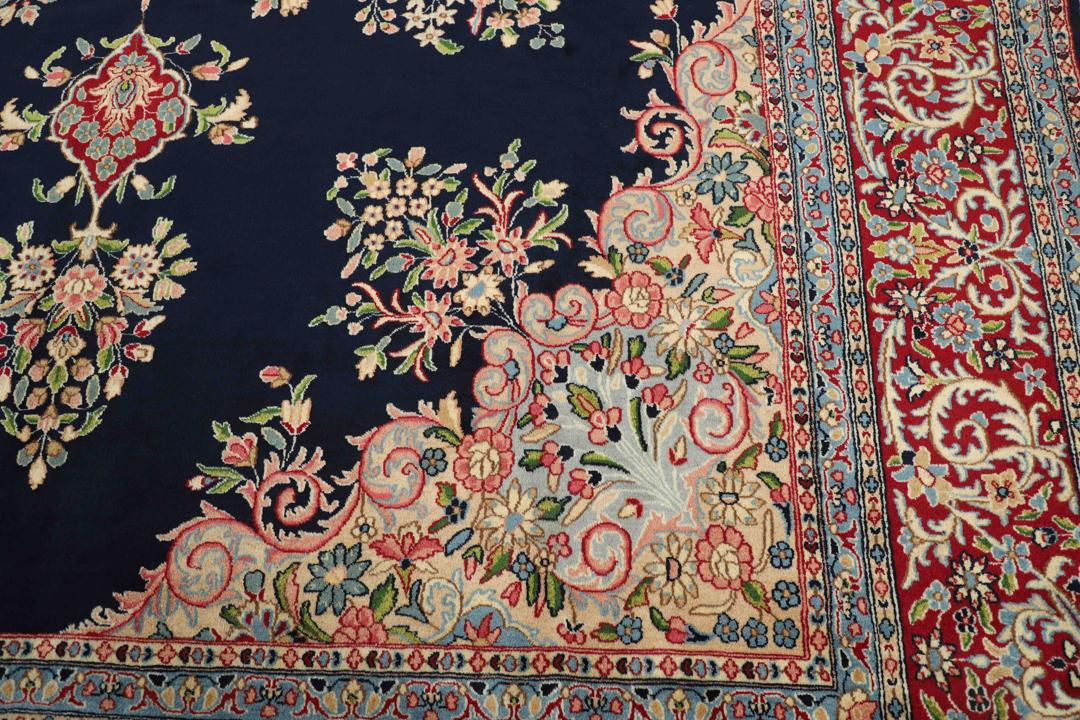
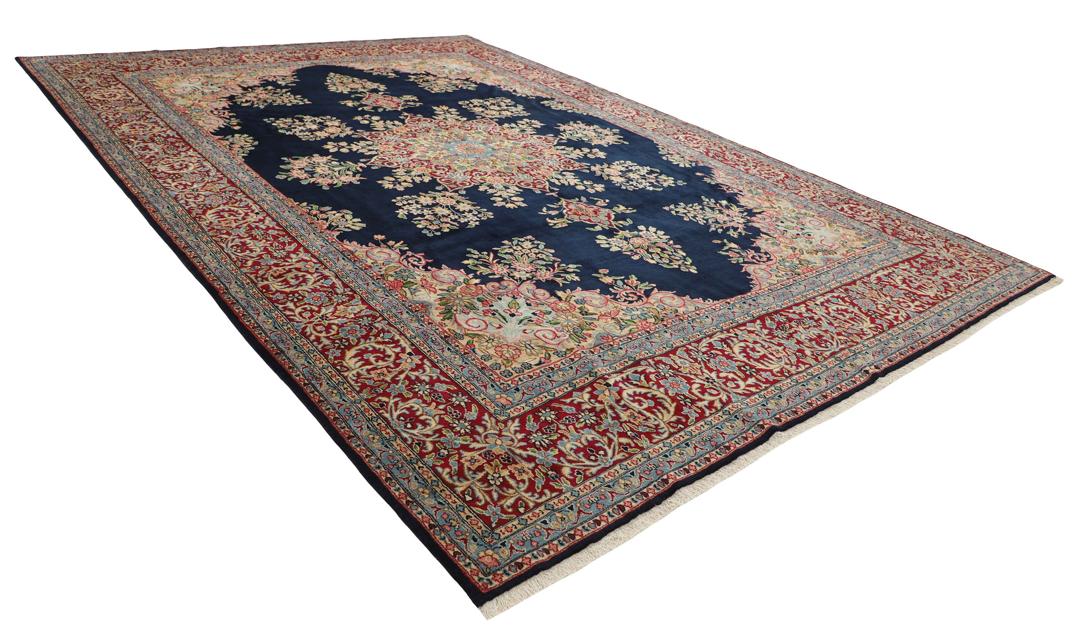
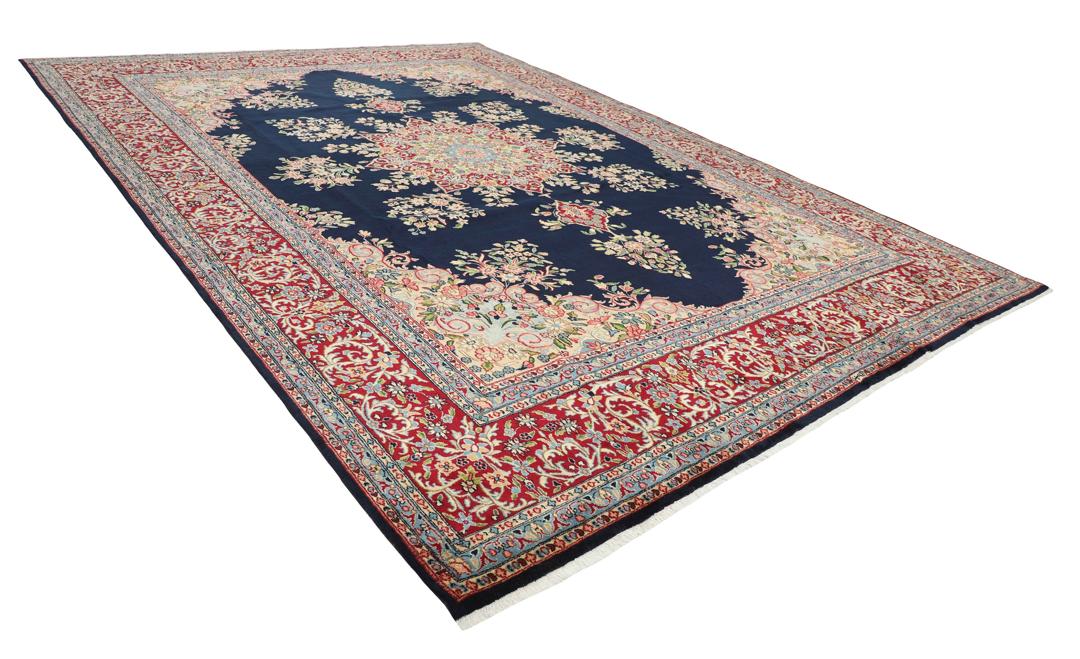
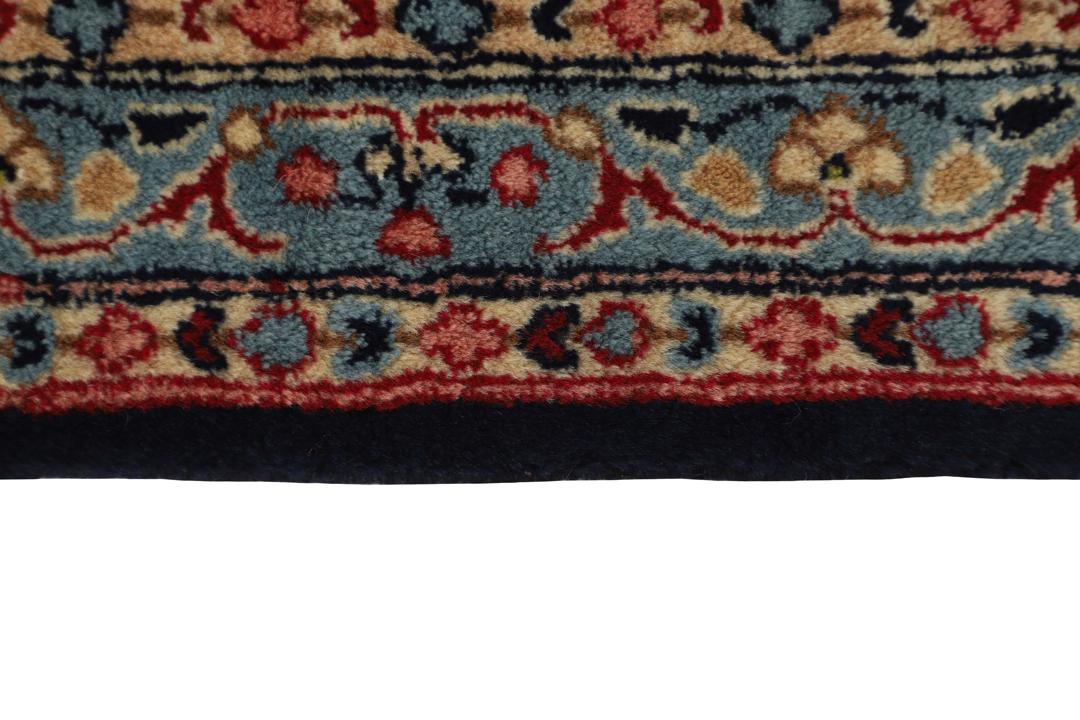
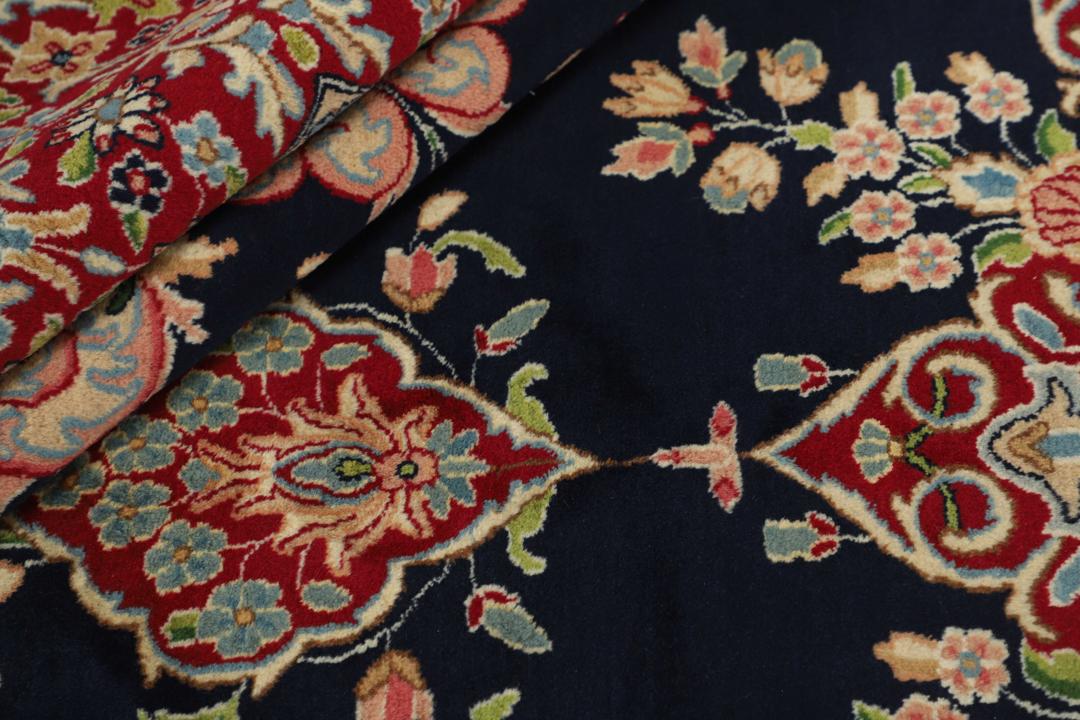
Visually, Kerman rugs are famous for their elaborate floral patterns, often featuring a central medallion surrounded by a sea of intricate vines, palmettos, and blossoms. While many traditional examples lean towards softer tones, the use of a deep, dark blue field like the one seen here creates a dramatic contrast, highlighting the precision of the floral details and the formal border elements.
Owning a Kerman rug is an investment in cultural heritage. Collectors and enthusiasts value these pieces not only for their aesthetic beauty but for the immense skill required to produce such detailed, balanced compositions. It is a piece that carries the weight of history, representing a tradition of craftsmanship that has been passed down through generations.